Tag: Economic Trends

  • Pakistani rupee gains 20 paisa against US dollar

    Pakistani rupee gains 20 paisa against US dollar

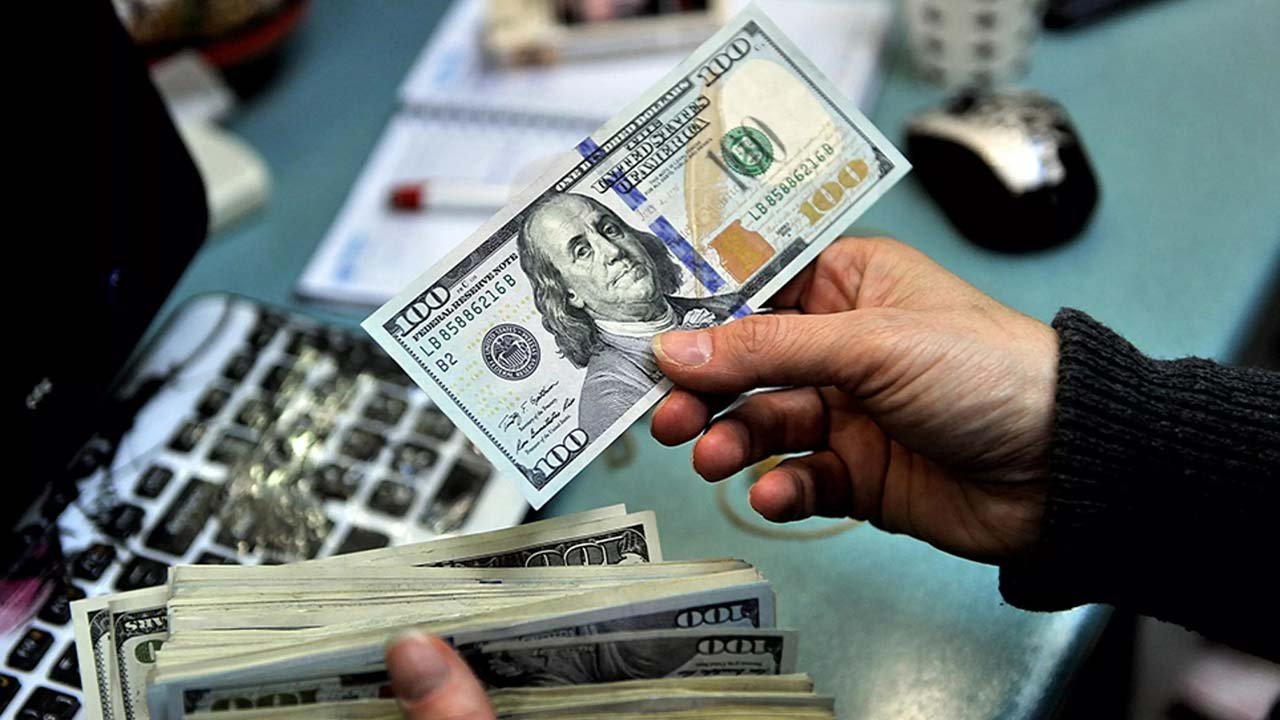
    The Pakistani rupee (PKR) extended its positive trajectory against the US dollar for the sixth consecutive session, appreciating by 0.07 per cent in the inter-bank market on Tuesday.

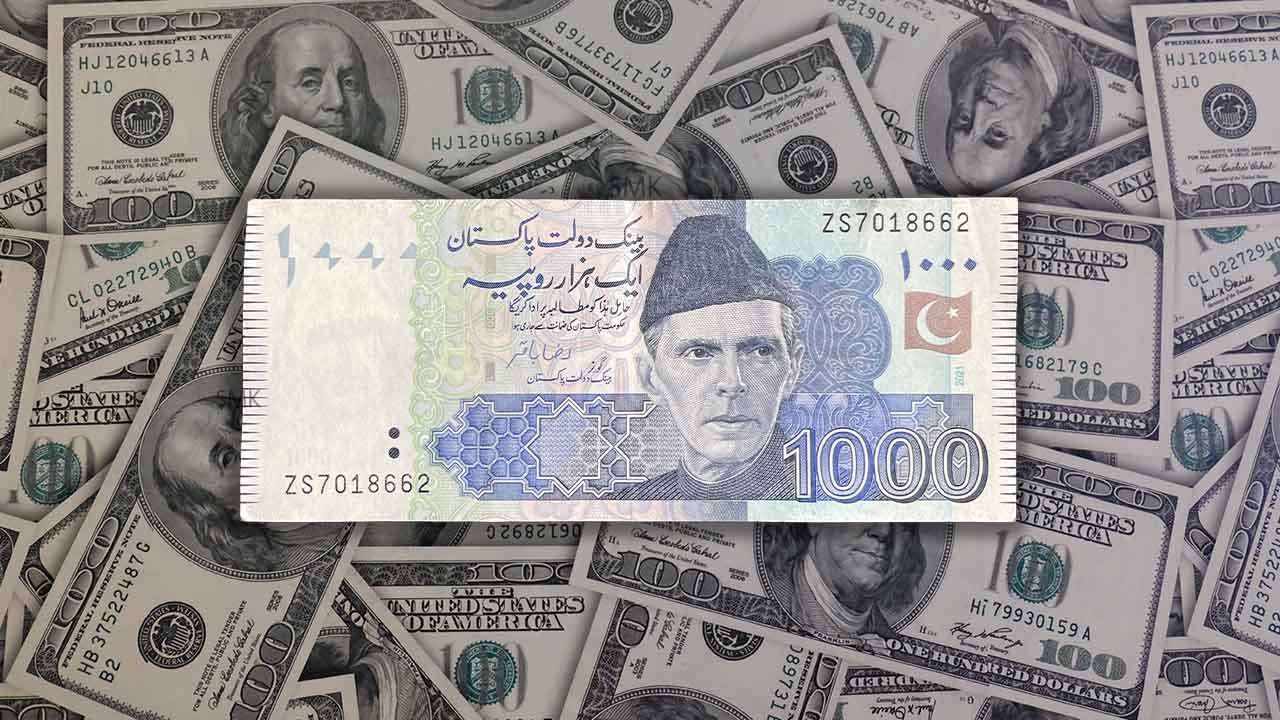
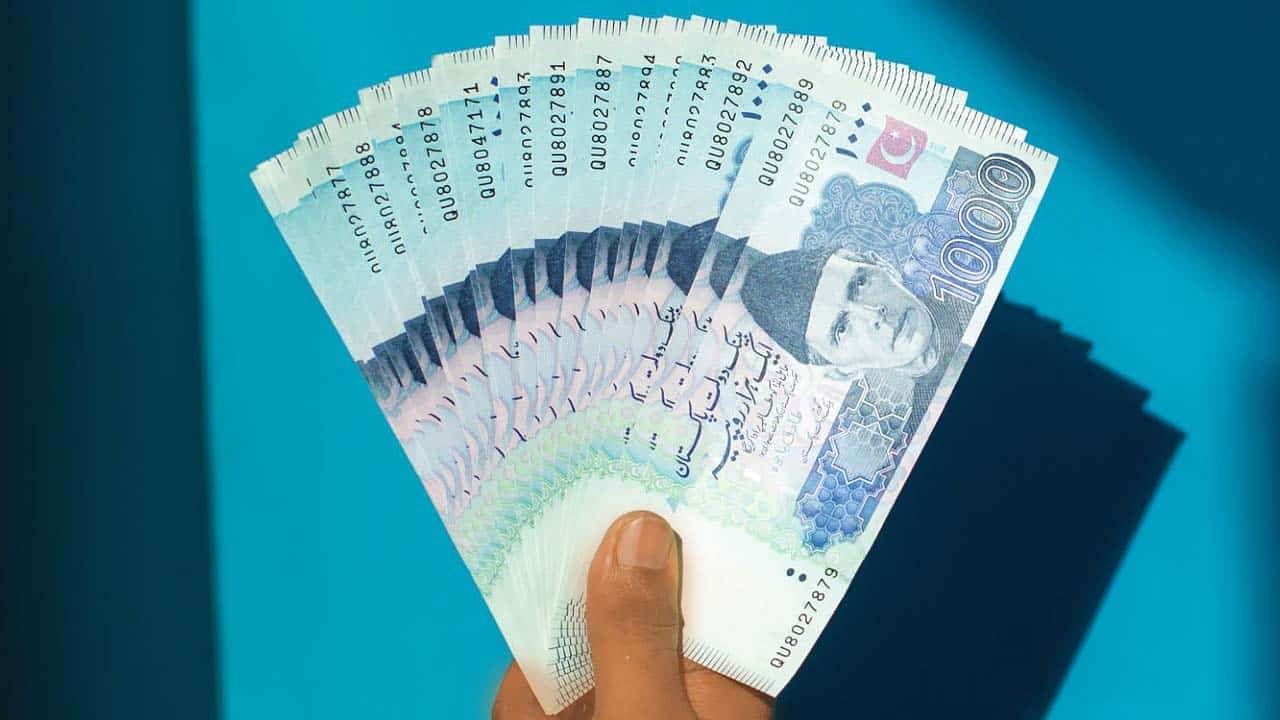
    According to the State Bank of Pakistan (SBP), the rupee concluded at Rs283.01, marking an increase of Re0.20.

    In the previous session, the rupee saw a marginal gain, settling at Rs283.21 against the US dollar.

    Meanwhile, in a noteworthy development, Pakistan secured $4.285 billion from various financing sources in the first five months (July–November) of the current fiscal year 2023–24.

    This represents a decrease from the $5.114 billion borrowed during the corresponding period in 2022–23, as disclosed by data from the Economic Affairs Division (EAD).

    On the global front, the US dollar experienced a 0.3 per cent decline against the yen, maintaining its position close to a four-month high of 140.95 reached last week.

    Additionally, the greenback lingered near approximately five-month lows against the Australian and New Zealand dollars.

    This was attributed to the strength of risk-sensitive currencies, driven by the anticipation that the US Federal Reserve might initiate interest rate adjustments as early as the beginning of next year.

    In the realm of commodities, oil prices stabilised on Tuesday as investors assessed the potential repercussions on oil supply arising from attacks by Yemen’s Iran-aligned Houthi militants on ships in the Red Sea.

    These attacks have disrupted maritime trade, compelling companies to reroute vessels. Notably, crude prices surged nearly 2 per cent on Monday due to concerns about trade disruptions through the Suez Canal, a vital shipping route that accounts for approximately 15 per cent of global shipping traffic.

    Brent crude declined by 12 cents to $77.83 per barrel.

    The US West Texas Intermediate crude for January, set to expire on Tuesday, experienced a decrease of 62 cents, reaching $71.85. In contrast, the more active February contract only incurred a marginal loss of 3 cents.


  • Gold prices surge in Pakistan: 24-karat soars to Rs217,600 per tola

    Gold prices surge in Pakistan: 24-karat soars to Rs217,600 per tola

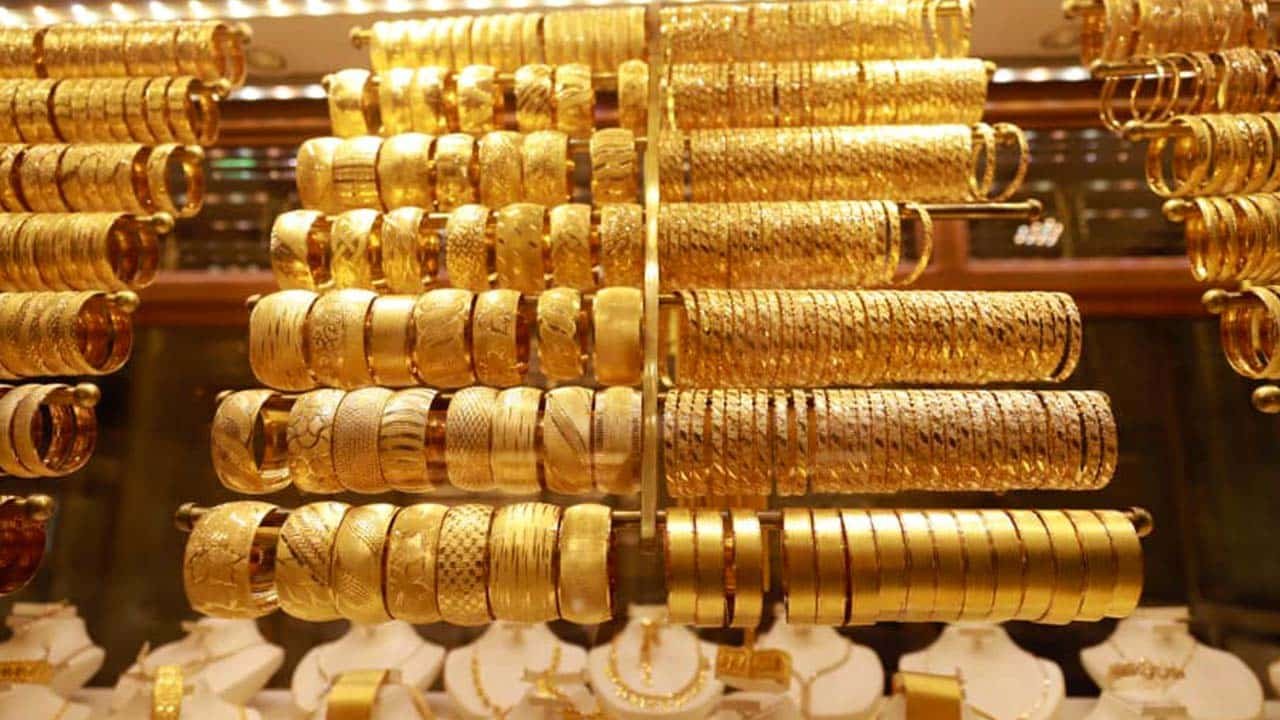
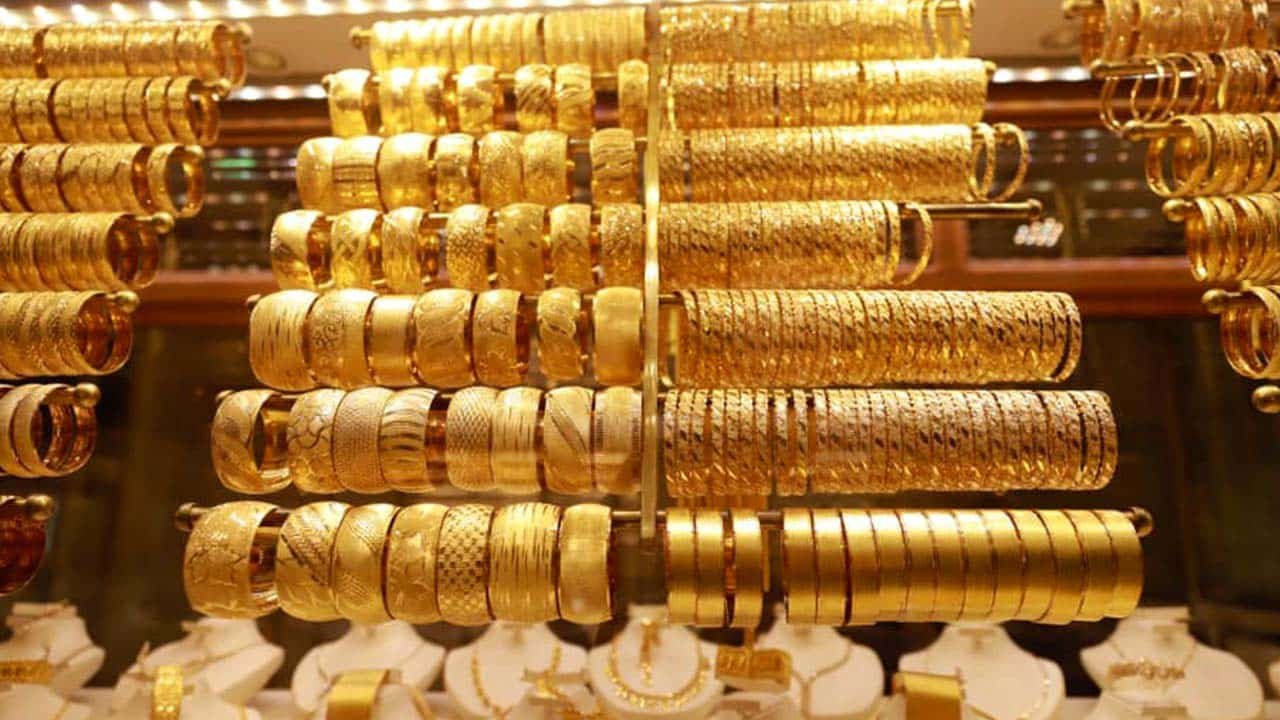
    The price of 24-karat gold per tola witnessed a surge, rising by Rs400 and reaching Rs217,600 on Tuesday, as compared to its previous closing at Rs217,200.

    Similarly, the cost of 10 grammes of 24-karat gold also experienced an uptick, increasing by Rs343 to Rs186,557 from Rs186,214.

    Meanwhile, the rates for 10 grammes of 22-karat gold climbed to Rs171,011 from Rs170,696, as reported by the All Sindh Sarafa Jewellers Association.

    In contrast, both the per-tola and 10-gramme silver prices remained stable at Rs2,670 and Rs2,289.09, respectively.

    On a global scale, the price of gold saw an increment of $4, reaching $2,047 from $2,043, according to the Association.

    Simultaneously, the Pakistan Stock Exchange (PSX) witnessed a significant downturn in intra-day trading on Tuesday, with the benchmark KSE-100 index plummeting by over 2,600 points.

    The PSX reported a loss of 2,633 points, causing the 100 index to dip below the 63,000-point threshold, trading at 62,571 around 2:30 pm.

    This decline comes after a sustained bullish trend lasting over a month, which followed the successful conclusion of a staff-level agreement with the International Monetary Fund (IMF).

    Market analysts attribute the bearish trend to stocks in the exploration and production (E&P), fertiliser, and banking sectors.

    Throughout the session, profit-taking was evident, contributing to the index fluctuating by over 2,500 points.

  • Pakistani rupee appreciates 0.02% against US dollar to close at Rs283.21

    Pakistani rupee appreciates 0.02% against US dollar to close at Rs283.21

    In a continuing upward trend, the Pakistani rupee demonstrated resilience in the inter-bank market by securing gains against the US dollar for the fifth consecutive session, appreciating by 0.02 per cent on Monday.

    According to the State Bank of Pakistan (SBP), the rupee closed at Rs283.21, marking an increase of Re0.05.

    Throughout the preceding week, the rupee exhibited a noteworthy appreciation, gaining Re0.61 or 0.21 per cent to settle at Rs283.26 against the US dollar in the inter-bank market.

    This marks the fifth consecutive week of the rupee’s advancement against the dollar, a momentum attributed to the recent announcement of a staff-level agreement (SLA) between Pakistan and the International Monetary Fund (IMF) concerning the first review of the $3 billion Stand-by Arrangement (SBA).

    Since the revelation of the SLA on November 15, the local currency has strengthened by Rs4.88, or 1.7 per cent, against the greenback.

    Meanwhile, on a global scale, currencies commenced the week with caution following significant fluctuations in the previous week, driven by various central bank meetings, including rate decisions from the Federal Reserve, the European Central Bank (ECB), and the Bank of England (BoE).

    The greenback, which had been bolstered throughout most of 2022 and 2023 by aggressive rate hikes from the Fed and expectations of prolonged higher rates, experienced a notable decline of approximately 1.3 per cent against a basket of currencies last week in response to the outcomes of the Fed’s policy meeting.

  • Gold price in Pakistan settles at Rs216,800 per tola

    Gold price in Pakistan settles at Rs216,800 per tola

    In a noteworthy shift, the per-tola price of 24 karat gold witnessed a decrease of Rs1,800, settling at Rs216,800 on Saturday.

    This marks a discernible drop from its previous standing of Rs218,600 during the last trading day.

    Similarly, the cost of 10 grammes of 24 karat gold experienced a dip of Rs1,543, now standing at Rs185,871 as opposed to its previous valuation of Rs187,414.

    Meanwhile, the prices of 10 grammes of 22-karat gold also exhibited a downward trend, reaching Rs170,382 from Rs171,796, as reported by the All Sindh Sarafa Jewellers Association.

    Contrastingly, the prices of silver remained unchanged, with per tola and ten gramme silver holding steady at Rs2,670 and Rs2,289.09, respectively.

    Taking a broader perspective, the international gold market saw a decline as well, with the price of gold dropping by $15 to $2,040 from its previous position at $2,055, according to the latest report from the Association.

    This shift in the precious metals market has sparked interest and attention within financial circles.

  • Gold price in Pakistan experiences massive single-day gain of Rs5,700 per tola

    Gold price in Pakistan experiences massive single-day gain of Rs5,700 per tola

    In a significant development, gold staged a recovery from its recent five-session decline in Pakistan on Thursday, driven by a surge in the global market.

    The domestic market witnessed a notable upswing in gold prices today, surging to Rs218,300 per tola after a massive single-day gain of Rs5,700 per tola.

    According to data provided by the All Pakistan Gems and Jewellers Sarafa Association (APGJSA), the 10-gramme gold price in Pakistan experienced a surge, reaching Rs187,157 after a significant uptick of Rs4,887.

    This marks a considerable shift from Wednesday’s scenario, when gold prices in Pakistan witnessed a decline of Rs1,000 per tola.

    Internationally, the gold market reflected this positive momentum, setting the rate at $2,052 per ounce with a $20 premium on Thursday. This uptick translated into a $54 increase in the international market, as reported by APGJSA.

    Simultaneously, silver rates observed an upward trend, climbing by Rs70 and settling at Rs2,650 per tola.

    While these developments unfolded in the precious metal markets, the Pakistan Stock Exchange experienced a tumultuous Wednesday, initially plummeting by over 1,900 points.

    Despite the initial setback, the market rebounded, ultimately concluding the business day with a loss of over 1,100 points.

    The benchmark KSE-100 index kicked off Thursday’s session on a pessimistic note, extending its downward trajectory to revisit the previous day’s lows of approximately 64,400.

    However, buyers intervened, successfully defending this level once again.

    The index maintained a rangebound pattern for the remainder of the session, closing at 65,450.19, marking an increase of 170 points or 0.26 per cent day-over-day.

  • Interbank closing: Pakistani rupee gains 10 paisa against US dollar

    Interbank closing: Pakistani rupee gains 10 paisa against US dollar

    The Pakistani rupee (PKR) demonstrated resilience for the third consecutive session against the US dollar (USD), marking a 0.04 per cent appreciation in the interbank market on Thursday, according to the State Bank of Pakistan (SBP).

    The PKR settled at Rs283.51 after an increase of Rs0.10. This positive trend follows Wednesday’s marginal gain, where the rupee settled at Rs283.61 against the USD.

    In contrast to major currencies, the local currency experienced a loss of Rs2.64 against the Euro, closing at Rs308.49 compared to the previous value of Rs305.85.

    The British Pound strengthened by Rs2.91, concluding at Rs357.96 in comparison to Rs355.05 from the preceding day.

    The Swiss franc also witnessed gain of Rs1.46, closing at 325.35 compared to Rs323.89 in the previous session.

    Against the Japanese yen, PKR lost 5.23 paisa, settling at Rs1.9972 versus Rs1.9449 a day ago.

    In the ongoing financial year, the PKR has appreciated against the dollar by Rs2.48, or 0.87 per cent.

    However, in the current calendar year, it has depreciated by Rs57.08, or 20.13 per cent.

    In a related development, the Asian Development Bank (ADB), in its latest report, Asian Development Outlook (ADO), highlighted that Pakistan’s overall recovery is still constrained by moderate confidence and high inflation eroding purchasing power.

    The ADB noted that Pakistan’s inflation rate averaged 28.5 per cent over July–October but is expected to ease amid fiscal consolidation, monetary tightening, and improved availability of food and key imported inputs.

  • Overseas workers’ remittances to Pakistan dip to $2.3 billion

    Overseas workers’ remittances to Pakistan dip to $2.3 billion

    In November 2023, overseas workers sent a total of $2.3 billion in remittances to Pakistan, reflecting an 8.6 per cent decrease from the $2.5 billion recorded in October 2023, as per data released by the State Bank of Pakistan (SBP). 

    However, on a yearly basis, there was a 3.6 per cent increase in the monthly inflow compared to the same month in the previous year.

    Remittances are a crucial element in supporting Pakistan’s external accounts and play a vital role in boosting the country’s economic activity while also supplementing the disposable incomes of households dependent on remittances.

    The recent rise in remittances was attributed to an improved exchange rate following a crackdown against currency smugglers and hoarders. 

    This crackdown resulted in a reduction of the rate gap between the open and interbank markets. However, despite this positive trend, remittances have observed a decline on a monthly basis again this November.

    In the first five months of the fiscal year 2024, remittances amounting to $11 billion have been recorded, in contrast to $12.3 billion in the same period of the previous year.

    Breaking down the remittances, it was noted that overseas Pakistanis in Saudi Arabia sent the highest amount in November 2023, totaling $540.3 million. 

    This amount represented a 12.5 per cent monthly decline but was 5.5 per cent higher than the remittances in the same month of the previous year. 

    Remittances from the United Arab Emirates (UAE) also declined on a monthly basis by 13.6 per cent, from $473.9 million in October to $409.4 million in November. 

    However, there was a yearly improvement of 7.6 per cent. Remittances from the United Kingdom increased by 3.5 per cent to $341.7 million compared to October 2023.

    Conversely, remittances from the European Union declined by nearly 10 per cent on a monthly basis, amounting to $268.3 million in November 2023. Overseas Pakistanis in the US sent $261.5 million in November 2023, experiencing a month-on-month decrease of 7.7 per cent.

  • Gold price increases to Rs213,100 per tola

    Gold price increases to Rs213,100 per tola

    The gold price in Pakistan witnessed an increase on Friday, with the cost of 24-karat gold rising by Rs1,300 per tola, settling at Rs213,100 in today’s session.

    The Karachi Sarafa Association reported that the closing price for 10 grammes of 24-karat gold was Rs 182,698, indicating a loss of Rs1,114.
    Meanwhile, 10 grammes of 22-karat gold saw an increase, reaching Rs166,452, up by Rs1,022.

    In contrast, the silver prices remained unchanged in the domestic market, with 24-karat silver and 10 grammes of 24-karat silver closing at Rs2,580 and Rs2,211.93, respectively.

    It is noteworthy that domestic gold prices are influenced by fluctuations in international prices and changes in the local currency’s interbank exchange rate.

    Despite intraday gains, the Pakistani rupee (PKR) is facing its fourteenth consecutive loss against the USD.

    The depreciation of PKR against the USD leads to an increase in the value of PKR-denominated gold since gold is denominated in US dollars.

    On the global front, international gold prices experienced a decline, marking the second consecutive week of losses. International spot gold is currently trading at $1,954.29, down by 0.20 per cent for the day.

  • Pakistan’s debt burden surges by Rs14,506 billion in one year

    Pakistan’s debt burden surges by Rs14,506 billion in one year

    Pakistan’s international debt burden has continued its ascent, soaring to a staggering Rs63,966 billion as of the conclusion of August 2023.

    In a recent briefing session focused on the nation’s debt situation, it was disclosed that foreign debt had surged to $24,174 billion by the end of August, while local debt had concurrently reached Rs39,791 billion.

    The data presented during the briefing demonstrated a substantial increase of Rs14,506 billion in total loans over the past year. 

    It’s worth noting that in August 2022, the loan volume was a more modest Rs49,571 billion. During that period, the foreign debt stood at $18 trillion, and the local debt was at Rs32,152 billion.

    Prior to this development, the International Monetary Fund (IMF) had demanded a tax collection plan of Rs6,670 billion from Pakistan by June 2024. 

    An IMF review mission arrived in Pakistan to assess the country’s economic performance during the initial three months of the current fiscal year, spanning from July to September.

    The IMF has insisted on a comprehensive tax collection report from all sectors as part of its projection report. 

    Negotiations for the next $700 million tranche commenced on Thursday.

    According to ARY News, reports indicate that the IMF team has emphasised the importance of the Federal Board of Revenue (FBR) achieving its tax collection revenue targets without any shortfall.

     Furthermore, the IMF team has called for a report from the FBR on the progress of tax cases pending in court.

    The FBR has shared details of one million new taxpayers added to the tax net with the IMF team, and the IMF has requested specific data on tax collection from various sectors. 

  • Pakistan’s October inflation eases to 26.9%

    Pakistan’s October inflation eases to 26.9%

    In October, Pakistan witnessed a year-on-year headline inflation rate of 26.9 per cent, as reported by the Pakistan Bureau of Statistics (PBS) on Wednesday.  

    This figure represents a notable decrease from the previous month’s reading of 31.4 per cent in September. Additionally, the month-on-month inflation rate for October showed a 1.1 per cent increase. 

    When considering the average inflation from July to October, it amounted to 28.48 per cent, a contrast to the 25.48 per cent recorded during the same period the previous year. 

    In its most recent ‘Monthly Economic Update and Outlook’ report, the Ministry of Finance projected that consumer price index (CPI)-based inflation in Pakistan for October would fall within the range of 27 per cent to 29 per cent.  

    The ministry anticipated that inflation would exhibit a more contained trend compared to the elevated levels observed during the first quarter of fiscal year 2024. 

    The Pakistan Bureau of Statistics further distinguished between urban and rural inflation rates. In urban areas, the year-on-year CPI inflation increased to 25.5 per cent in October 2023, marking a decline from the 29.7 per cent observed in the previous month and the 24.6 per cent recorded in October 2022.  

    On a month-on-month basis, urban inflation experienced a 1.1 per cent increase in October 2023, compared to a 1.7 per cent increase in the previous month and a 4.5 per cent increase in October 2022. 

    Similarly, in rural areas, the year-on-year CPI inflation rose to 28.9 per cent in October 2023, which represented a decrease from the 33.9 per cent recorded in the previous month and the 29.5 per cent in October 2022.  

    On a month-on-month basis, rural inflation increased by 1.1 per cent in October 2023, in contrast to a 2.5 per cent increase in the previous month and a 5.0 per cent increase in October 2022.