Tag: economic turmoil

  • IMF’s disapproval of budget raises odds of default and economic fallout for Pakistan

    IMF’s disapproval of budget raises odds of default and economic fallout for Pakistan

    In a recent report, the International Monetary Fund (IMF) expressed criticism of Pakistan’s latest budget, increasing the likelihood that the lender may withhold the much-needed aid before the bailout programme concludes at the end of June.

    According to Bloomberg, this development could lead to a severe dollar shortage in the first half of the upcoming fiscal year, potentially resulting in a higher chance of default, lower growth, and increased inflation and interest rates.

    The IMF’s critique of the budget stems from its belief that it does not adequately address the need to broaden the tax base and includes a tax amnesty. The current foreign currency reserves of Pakistan stand at $4 billion. However, with approximately $900 million in debt repayment due this month, the reserves will deplete by the end of June unless the expected IMF aid materialises.

    The country faces the challenge of repaying an additional $4 billion between July and December, which cannot be rolled over. Given the projected reserves falling below $4 billion at the start of fiscal year 2024, default seems highly probable, according to the report titled “Pakistan Insight.”

    The absence of an IMF programme would significantly limit the options for obtaining fresh external funding. The report suggests that negotiations for a new bailout agreement with the IMF are unlikely to commence until after the elections in October. Furthermore, even if an agreement is reached, actual aid disbursement under a new programme would not occur until December.

    In the meantime, Pakistan must focus on conserving dollars by restricting import purchases and maintaining a surplus in its current account balance to fulfill its obligations. To avert default in the first half of fiscal year 2024, the country will also need to seek assistance from friendly nations.

    The report warns of severe consequences for Pakistan’s economy if the anticipated IMF aid is not received by the end of June. Import restrictions will need to remain in place, and the State Bank of Pakistan is expected to raise interest rates above the current level of 21 per cent to further reduce demand for imports and preserve foreign exchange reserves.

    The report’s base case assumes that the State Bank of Pakistan will maintain its current policy stance until December, but that prediction relies on the assumption of IMF aid arriving by the end of June.

    Continued import restrictions and a weaker Pakistani rupee are likely to contribute to higher inflation in fiscal year 2024 compared to current forecasts. It is projected that inflation will average around 22 per cent, while increased borrowing costs and limitations on importing raw materials will further hamper production and dampen consumption.

    In addition, if the expected IMF aid does not materialise this month, the report predicts that Pakistan’s growth in fiscal year 2024 will be much weaker than the current forecast of 2.5 per cent.

    Furthermore, the higher interest rates resulting from the aid shortfall will lead to increased debt servicing costs for the government. The report reveals that approximately half of the fiscal year 2024 budget is allocated to debt servicing, exacerbating the country’s fiscal challenges.

    With the IMF aid hanging in the balance, Pakistan faces a critical period in its economic trajectory, where strategic financial decisions, reliance on friendly nations, and stringent economic measures will be essential to avoid further complications and ensure stability in the future.

  • Historic high: Gold price in Pakistan soars to record-breaking Rs225,300 per tola

    Historic high: Gold price in Pakistan soars to record-breaking Rs225,300 per tola

    Pakistan’s economic turmoil and an increase in international gold rates have led to a new high in the value of the precious metal in the country.

    According to data provided by the All Pakistan Sarafa Gems and Jewellers Association (APSGJA), the rate of gold (24 carats) surged by Rs2,600 per tola and Rs2,229 per 10 grams to reach Rs225,300 and Rs193,158, respectively.

    The price of gold in the international market also rose by $29 to settle at $2,044 per ounce. In Pakistan, the rising gold rate is a consequence of weakened economic fundamentals, rupee depreciation, and record-high inflation.

    During such times, people prefer to buy gold as a hedge against inflation and currency depreciation. Furthermore, the delay in an agreement with the International Monetary Fund (IMF) for a much-needed economic bailout has led to increased demand for gold as it negatively impacts the currency market.

    The APSGJA also revealed that the price of gold is Rs2,500 per tola “undercost” in Pakistan as compared to the Dubai market, indicating that the Pakistani gold market is currently cheaper than the global market.

    Finally, the rate of silver also increased to a new high in the country, with the rate of silver rising by Rs120 per tola and Rs102.88 per 10 grams to settle at Rs2,870 and Rs2,357.68, respectively.

  • IMF receives assurance of $1 billion from UAE to support Pakistan’s economy

    IMF receives assurance of $1 billion from UAE to support Pakistan’s economy

    In a significant development towards reviving the stalled bailout programme, the authorities in the United Arab Emirates (UAE) have pledged to provide $1 billion in bilateral support to Pakistan, according to Finance Minister Ishaq Dar.

    Dar tweeted, “UAE authorities have confirmed to the IMF for their bilateral support of $1 billion to Pakistan.” He also stated that the State Bank of Pakistan is currently in the process of completing the necessary documentation to receive the deposit from the UAE authorities.

    Pakistan was required to provide assurance that its balance of payments deficit is fully financed for the remaining period of the IMF programme, which has been stalled since November last year. Last month, the IMF’s Director of Strategic Communications, Julie Kozack, emphasised that “timely financial assistance from external partners will be critical to support the authorities’ policy efforts and ensure the successful completion of the review [with Pakistan].” She added, “Ensuring that there is sufficient financing to support the authorities is the paramount priority. A Staff Level Agreement (SLA) will follow once the few remaining points are closed.”

    Earlier this month, Saudi Arabia also pledged to provide a $2 billion loan to Pakistan, according to Pakistan’s Minister of State for Finance Aisha Ghaus Pasha. The country’s economic situation has been further exacerbated by months of political and economic turmoil, crippling floods last year and record inflation. Pakistan has been grappling with a debt crisis and foreign exchange reserves have fallen to less than four weeks of imports.

    In an effort to ease the situation, China has agreed to refinance $2 billion, of which $1.7 billion has already been credited to Pakistan’s central bank. China also rolled over a $2 billion loan last month, providing relief during Pakistan’s acute balance of payments crisis. However, talks with the IMF for a delayed $1.1 billion loan tranche, part of the bailout agreed in 2019, have been ongoing.

  • Donald Blome assures Pakistan of US cooperation on IMF deal

    The US Ambassador to Pakistan, Donald Blome, expressed hope for a deal between Pakistan and the International Monetary Fund (IMF), stating that Washington was prepared to support the country’s efforts to resume its stalled $6.5 billion bailout program.

    Speaking at an event on Tuesday, Blome assured journalists that the IMF bailout package for Islamabad would take its final shape in a couple of days. He added that the United States was ready to cooperate with Pakistan to help address the issue and expressed a willingness to help Islamabad with its ongoing terrorism challenges.

    Blome recently visited important cities in Pakistan to meet with groups from different walks of life and noted that there had been significant progress in diplomatic relations between the two countries.

    Pakistan and the IMF have been in discussions regarding a stalled bailout package since late last year, with the country seeking a $1.1bn tranche to address its worsening balance of payments crisis and to enable friendly affluent capitals to provide assistance to overcome ongoing financial complexities.

    Both sides are engaged in negotiations to reach a mutually agreeable package that would help the cash-strapped nation come out of its ongoing economic turmoil.

    Interestingly, Finance Minister Ishaq Dar had previously stated that Pakistan would strike a staff-level agreement (SLA) with the IMF in a few days, as the government remained committed to completing the loan program signed in 2019.

    However, after failing to convince the lender, Dar had reportedly contacted the US envoy earlier this week to get “lenient treatment” from the Fund, which has been persistent with its demands.

  • Ishaq Dar denies reports of financial emergency amidst economic turmoil

    Ishaq Dar denies reports of financial emergency amidst economic turmoil

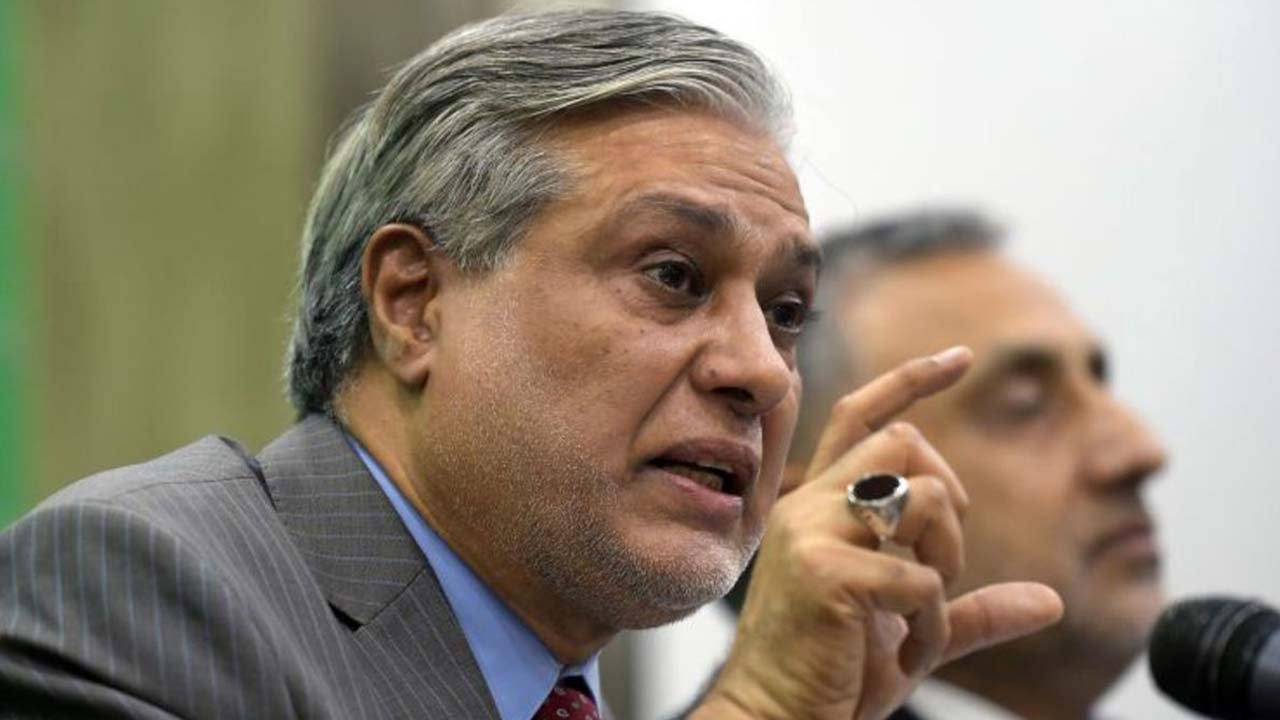
    On Friday, Federal Minister for Finance and Revenue Ishaq Dar denied reports suggesting Pakistan should impose a financial emergency, amidst constant criticism over the current economic turmoil. He berated Imran Khan-led Pakistan Tehreek-e-Insaf (PTI) for spreading “fake news” about Pakistan heading towards default. Dar blamed the previous PTI government for pushing the nation of 220 million people on the brink of default, claiming that it was the coalition government that saved the country by prioritising the state over politics.

    Dar recalled that when the Pakistan Democratic Movement (PDM) ousted Khan through a no-confidence motion, the leaders of the coalition government had decided to keep aside all political interests in the wider interest of the state. He stated that the PTI leaders have been calling him out since the rupee plunged to a historic low of Rs285.09 a day earlier while February’s inflation hit nearly a 50-year high of 31.5 per cent.

    Expressing his surprise and concerns over Khan’s continuous criticism of the coalition government, he said: “I am unable to understate whether he (Khan) has a problem in his leg or brain.” Instead of protecting the national interest, PTI’s leadership tried to sabotage the International Monetary Fund (IMF) deal, Dar said. “Khan’s attitude is selfish.”

    According to Geo, Dar reiterated that Pakistan has neither defaulted in the past nor will it default in the future. Referring to Khan’s remarks about default, the finance minister said that the PTI chairman’s statements adversely affect the country’s financial markets. He, however, admitted that the State Bank of Pakistan’s (SBP) reserves fell below $3 billion. It should be noted that the liquid foreign reserves held by the country stand at around $9 billion as of February 24 while the net reserves held by commercial banks stand at around $5.5 billion.

    The finance minister revealed that China has renewed a facility under which Pakistan expected an additional inflow of $500 million in the “next few days”. He highlighted the PDM-led government’s economic achievements, stating that the foreign exchange reserves held by the SBP climbed to $3.8 billion from $2.8 billion recorded last month. He maintained that the government returned $6.5 billion of foreign debt during the current fiscal year.

    Dar drew a comparison between the economic performance of nearly four years of PTI and almost 11 months of PDM-led government. He shared numeric data to prove that Khan and Co. did everything to “destroy the country,” but the numbers show who is sincere with the country. Dar argued that the opposition — the PTI — has not really improved Pakistan’s standing. However, Pakistan will escape the economic quagmire, he said, adding that the country is making repayments to bilateral and multilateral lenders and has made payments beyond its capacity.