Tag: economics

  • Claudia Goldin wins Nobel economics prize for work on women’s pay

    Claudia Goldin wins Nobel economics prize for work on women’s pay

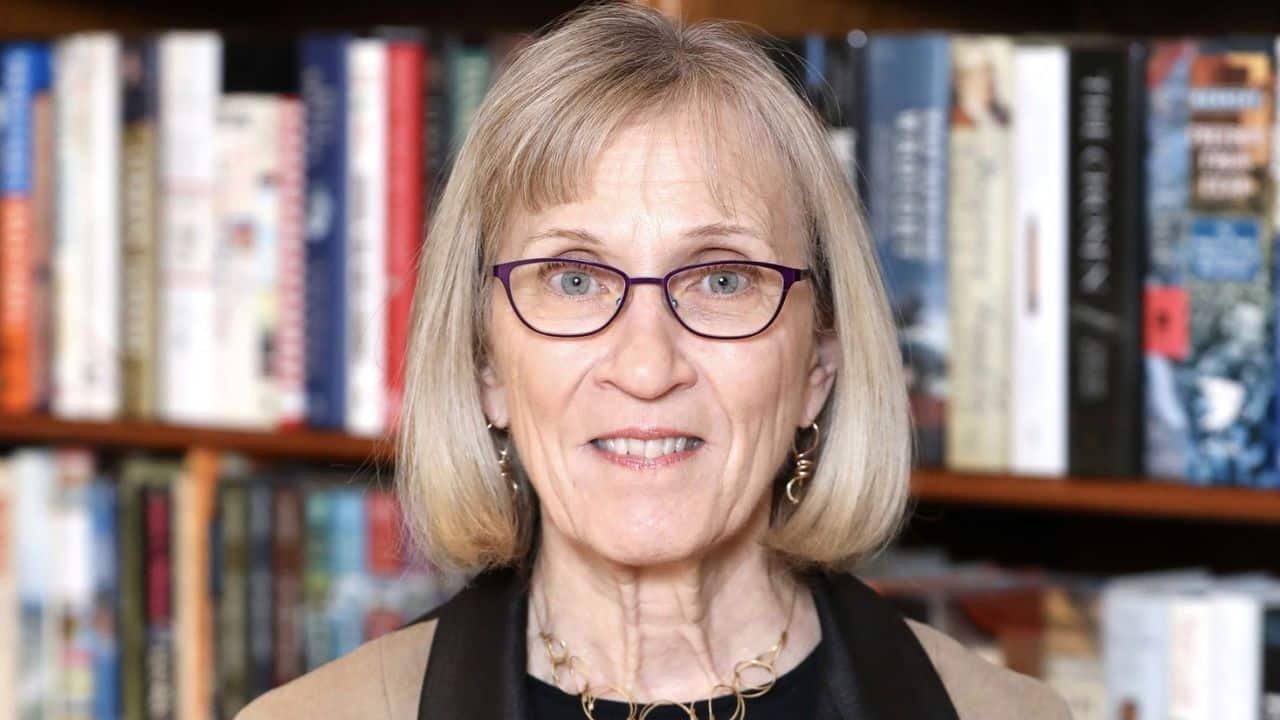
    An economic historian and Harvard professor, Claudia Goldin, has been awarded with the Nobel Prize in economics for her work examining the gender pay gap.

    Goldin’s unprecedented research highlights the fact that women, despite their higher academic qualifications, are paid less than men; and that mostly this difference arises after childbirth.

    “This year’s Laureate in the Economic Sciences, Claudia Goldin, provided the first comprehensive account of women’s earnings and labour market participation through the centuries,” the Royal Swedish Academy of Sciences said on Monday.

    “Her research reveals the causes of change, as well as the main sources of the remaining gender gap.”

    After Elinor Ostrom in 2009 and Esther Duflo in 2019, Goldin is the third woman to be awarded the Nobel Prize in economics — a category with the lowest number of female laureates.

    Goldin’s research examines data tracing 200 years of women’s participation in the workforce in the United States.

    As per her research, a woman’s role in the job market and her pay are, in part, decided by individual decisions, including educational choices, as well as broad social and economic changes.

    The prize committee highlights that while much of the earnings gap historically could be explained by differences in education and occupational choices, Goldin “has shown that the bulk of this earnings difference is now between men and women in the same occupation, and that it largely arises with the birth of the first child”.

  • Khalifa nan-khatai lover, US Ambassador Donald Blome wants more women in the Pakistani workforce

    Khalifa nan-khatai lover, US Ambassador Donald Blome wants more women in the Pakistani workforce

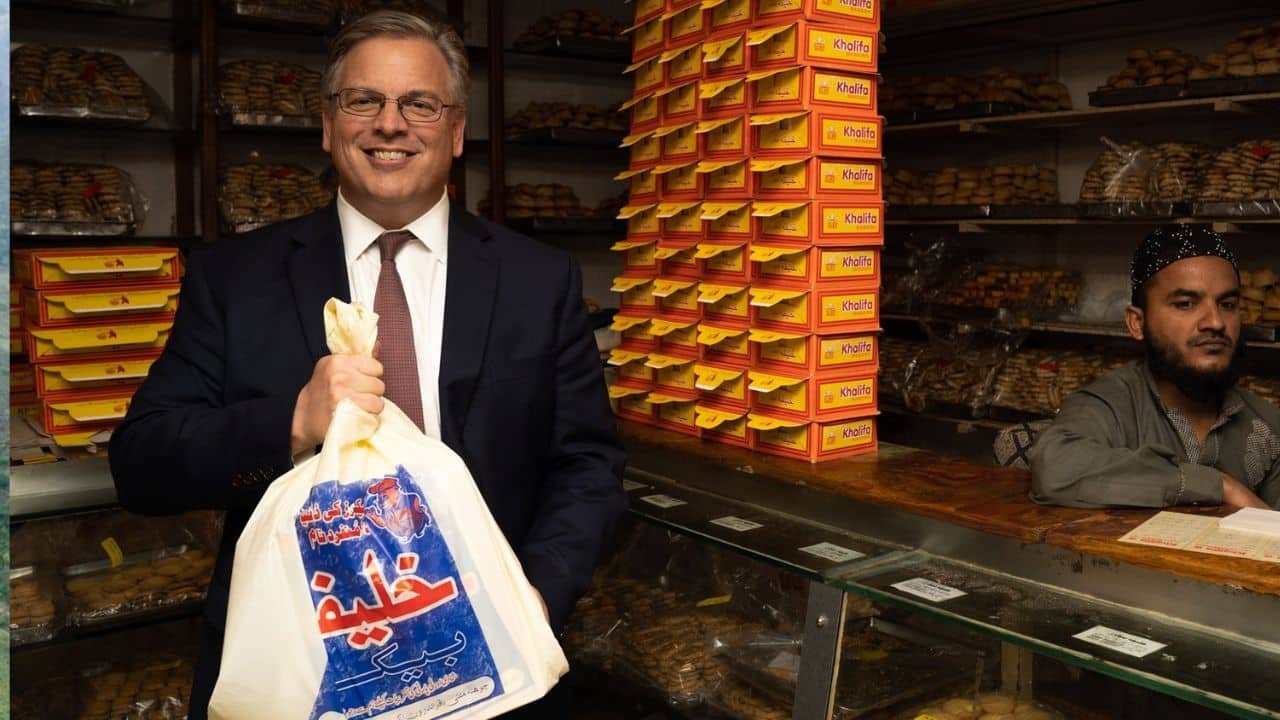
    US Ambassador to Pakistan, Donald Blome, visited Lahore from September 4-6 and The Current got the opportunity to sit down with him and have a little chat.

    And yes, you read it correctly. The ambassador is a lover of Khalifa nan-khatai. He told us that he discovered the biscuits last year when he came to Lahore. Later, during his February trip, he even stopped by Khalifa Bakers in the Walled City.

    Visit to Lahore
    Over the course of his latest tour, Ambassador Blome visited PepsiCo’s FritoLay Snack plant and NetSol Technologies Ltd. While the focus of the ambassador’s trip was to foster the economic ties between the United States (US) and Pakistan, special emphasis was placed upon the importance of human rights and inclusive workspaces — particularly in regards to women.

    “It is not just a matter of simply hiring — there are things you have to change, and ensure a welcoming environment for women with different needs and different requirements to excel in the workforce,” he pointed out.

    Playing a leading role in corporate social responsibility, American-based companies have not only created employability in Pakistan, but they endeavour to cater to the local communities through initiatives that actively work towards women’s empowerment as well as education, health, disaster relief, and skills development.

    Ambassador Blome cited a USAID programme in partnership with PepsiCo that aims its attention on women farmers of Pakistan who are working in one of the more difficult areas, toiling under a strenuous work environment.

    Cultural Barriers
    Taking into consideration the socio-domestic constraints that often restrict women from growing in their careers, Ambassador Blome believes that practical initiatives can make workplaces more inviting for women in Pakistan.

    “It is the simple things; like having child care facilities, providing safe transportation — beyond that is developing a culture that ensures that equal chance is given to women to advance within their jobs and careers, and that they are valued in the same way every other employee is valued.”

    He further stated that he hopes American firms like PepsiCo, which has advanced gender parity in managerial roles globally, are exemplary models providing a leadership structure for the local businesses.

    “A lot of things work through to get there. But many Pakistani companies are also trying to head in that direction,” Ambassador Blome acknowledged.

    Success stories
    While a number of US businesses have actively countered gender inequality, Ambassador Blome particularly highlighted the digital sector as a success. He mentioned that not only more women are being employed by IT firms but certain institutes have been accommodating by providing opportunities for flexible work like allowing to work partly at home, partly in office.

    NetSol Technologies, an American software company, is known for being an “equal opportunity employer with the largest concentration of female employees in Lahore”.

    This year, they took an initiative to encourage women back into workspaces — women who are married or left the job after having a baby. This was carried out by creating women-exclusive jobs which catered them through on-office facilities.

    Ambassador Blome, however, also hailed a number of “impressive” Pakistani women-led organisations that are in the lead when it comes to facilitating women.

    “It is a whole constellation of different issues that come together,” he underlined.

    “If companies are able to make that work [i.e. create inclusive workspaces], it would be incredibly effective because it brings unique talents and energy, and it is something badly needed for Pakistan. The participation of women in force is too low here and it hurts the country in many ways — to forgo this incredible resource the country has.”

  • Finance Ministry hits out at Atif Mian’s ‘nonsensical’ label for Pakistan’s economic policies

    Finance Ministry hits out at Atif Mian’s ‘nonsensical’ label for Pakistan’s economic policies

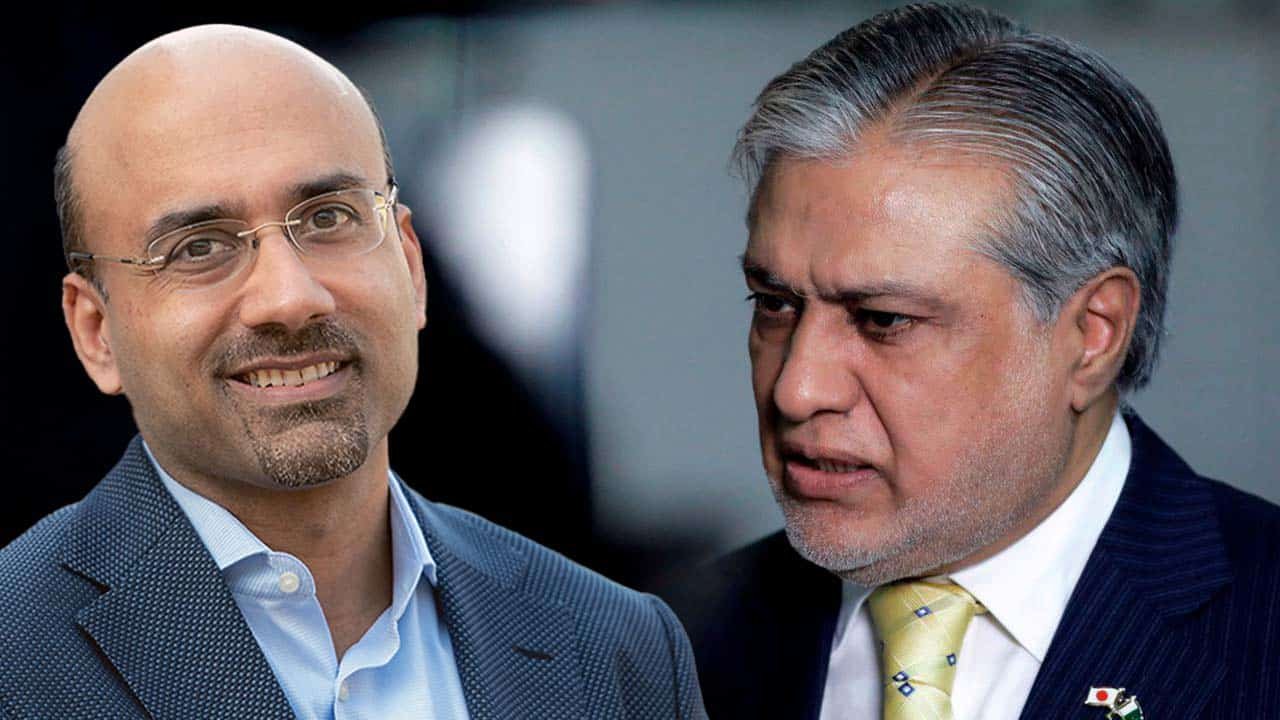
    The Ministry of Finance strongly responded on Saturday to recent remarks made by Pakistani-American economist Atif Mian, criticising his lack of practical understanding of economics.

    Mian had labelled the government’s economic policies as ‘nonsensical’ and suggested that Pakistan should take decisive actions to restructure its economy, citing Ghana and Sri Lanka as examples. In response, the Ministry of Finance dismissed Mian’s comments as a veiled suggestion of default and argued that his critique was purely theoretical, lacking practical insight into economics.

    The ministry refuted Mian’s comparison of Ghana and Sri Lanka, pointing out that Pakistan’s economy and population are significantly larger, making the analogy misplaced.

    Regarding Pakistan’s debt structure, the ministry clarified that less than 10 per cent of the debt consists of commercial bonds/sukuks, with the next maturity due in April 2024. The majority of the debt is owed to multilateral and bilateral creditors, who have not indicated any risk of default.

    The ministry expressed disappointment that Mian overlooked the significant reforms undertaken by Pakistan in the past nine months. These reforms included market exchange rate adjustments, interest rate modifications, mid-year taxation to improve the fiscal position, levies on petroleum products, and non-monetisation of the fiscal deficit. These actions were implemented under an unprecedented IMF programme.

    Despite the delay in reaching a staff level agreement with the IMF, the ministry assured that Pakistan’s economy would continue on the path of reform towards stability and sustainable growth.

    The ministry dismissed Mian’s unwarranted comments on nominal exchange rates, stating that Pakistan’s real exchange rate is estimated to be 15 per cent undervalued, reflecting improving fundamentals.

    In terms of petroleum prices, the ministry highlighted that historically, Pakistan has sold petroleum products at significantly lower prices compared to regional countries. Imposing additional taxes on consumers, especially given the recent price hikes and rising inflation, would be unwise.

    The ministry attributed Pakistan’s current economic crisis to international shocks, including the COVID-19 pandemic, the Ukraine war, and devastating floods. It emphasised that the present government has successfully overcome the challenges inherited from an overheated economy and breached IMF conditionality. The current account deficit has been significantly reduced, indicating progress in balancing payments.

    Lastly, the ministry pointed out that Mian failed to consider the unprecedented political challenges faced by Pakistan. It concluded by expressing optimism that with the likelihood of political stability emerging soon, a major economic turnaround is expected.

    Overall, the Ministry of Finance strongly rebutted Mian’s criticism, emphasising the government’s commitment to reforms and the resilience of Pakistan’s economy.

  • The recent ban on imports might barely make a dent

    The recent ban on imports might barely make a dent

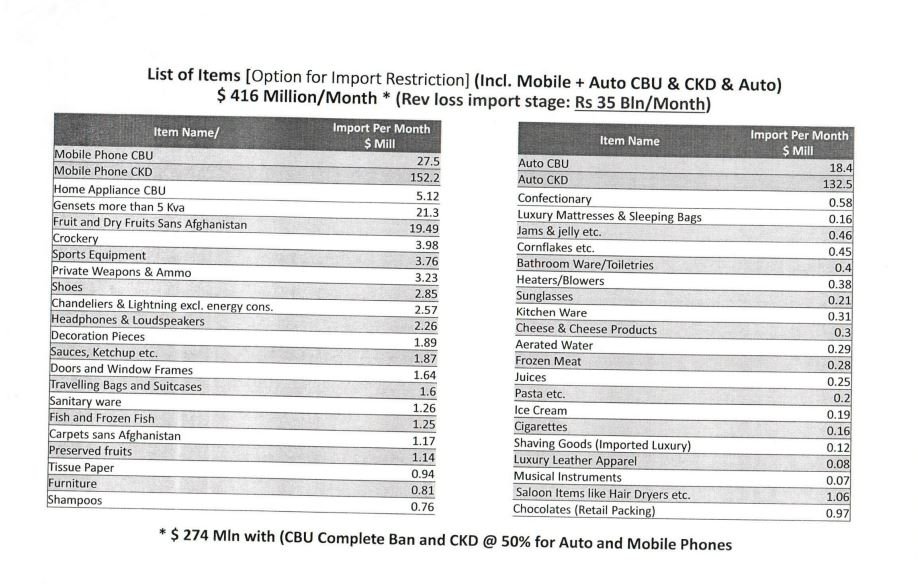
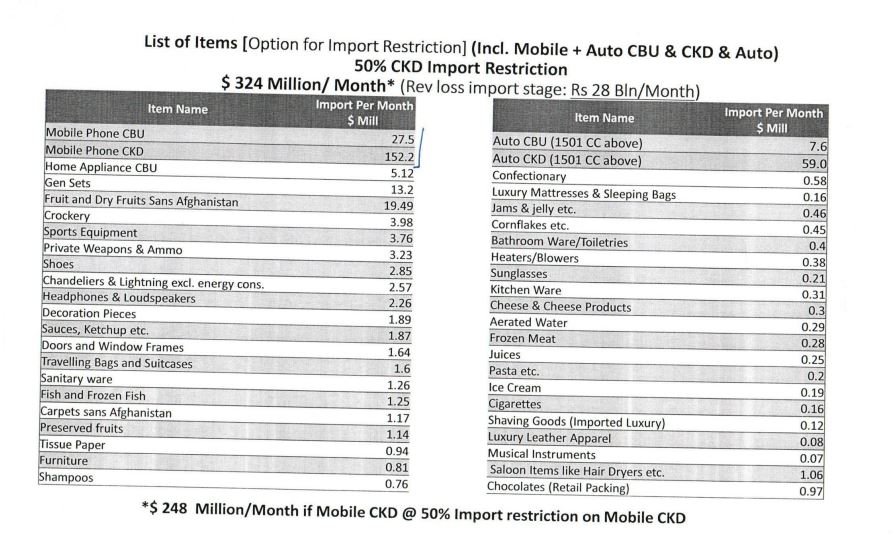
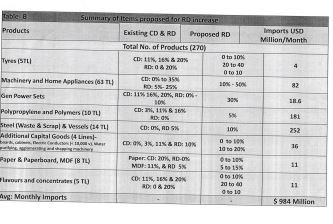
    On Thursday, May 19th, 2022, the federal cabinet issued a list of 41 items which will be banned from being imported for two months. This is in an attempt to address the current account deficit. The list of products is banned from being imported into the country, which means that essentially any shops or restaurants which rely on using these products will be forced to find local alternatives.

    These products will be banned regardless of what branding or packaging they use and only on the basis of whether the specific product is imported or not. Even products which are imported from abroad but packaged locally, will now be banned.

    Economists, university professors and business journalists took to Twitter to analyze and assess the merits and demerits of this decision. The discussion around luxury products and the fact that a lot of products which are labelled as “luxury items” are actually essential. Sanitary imports, valued at $16.4m are wrongly categorized as non-essential and although local alternatives also exist but it is definitions like these which disallow such decisions to be founded in research and expertise.

    The valuation of these imports which was published by the Pakistan Bureau of Statistics, was being quoted to ridicule the decision by many. What’s interesting to note is that most brands which appear to be entirely local, import a major chunk of their supply and will now be forced to smuggle goods instead.

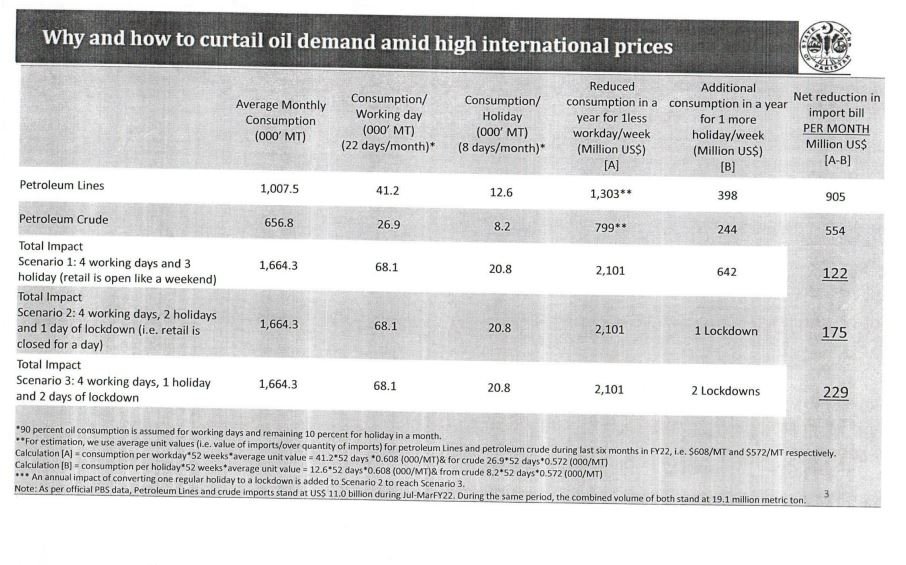
    Only from the data shared by PBS it becomes clear that for the fiscal year 2022, June to March, the total value of petroleum imports was $11 billion, while the total value of banning all these non-essential “luxury” items is a total $984 million, which forms only about 8.9% of the total value of petroleum imports.

    In conversation with Profit Magazine’s Ariba Shahid, she clarified that this would still prove to be a largely fruitless move since the most significant chunk of the import bill is still being used up to run the energy sector without any thought being given to the humongous fuel subsidies . “For a very long time the State Bank of Pakistan has been talking about how if we remove the oil component from it, the current account deficit is improving, which is true and basically means that people are not spending money to buy other items and most of the import bill is petrol and soy bean oil.”

    Economists Ammar Khan and Atif R Mian also took to Twitter to analyze this decision of “patchwork economics”. Commenting on this unsustainable gap in Pakistan’s balance of payment, on April 15th, 2022 during a discussion on Pakistan’s economy at Princeton University, he explains that for Pakistan to grow it is a necessary condition for Pakistan to deal with this problem and digs deeper into the structure of the economy. He particularly takes apart urban land reforms, the necessity to levy a capital gains tax on speculative real estate transactions and analyzes how Pakistan is not even economically stable enough to grow at the rate of India and Bangladesh and it is primarily due to the elite capture of the economy that disallows the economy to attempt to fix its loopholes.

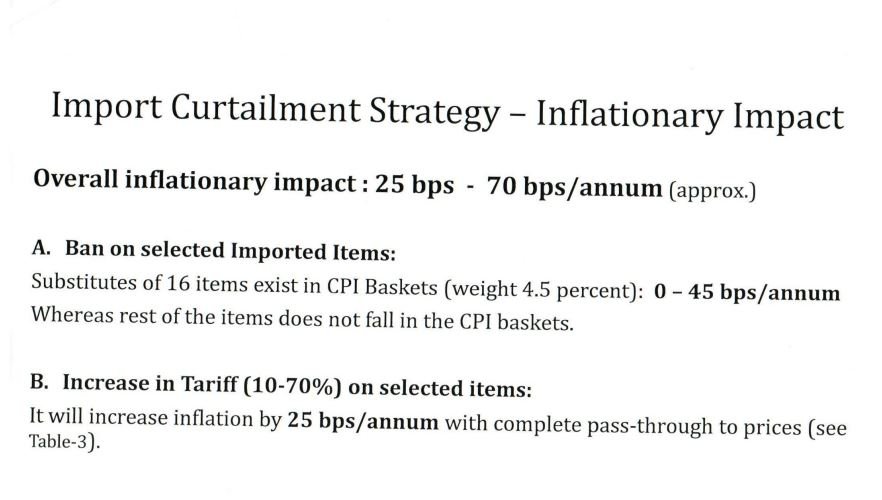
    Echoing similar sentiments, Ariba Shahid explained that due to a weaker economy, the import bill is not as significantly high due to a reduced demand pull because of a lowered purchasign power and hence banning these products will be insignificant and might barely make a dent in the current account deficit. “The need of the hour is to reverse the fuel subsidy,” says Shahid, “This decision will swell up the grey market economy and smuggling will increase.”