Tag: economists

  • Survey: Imran Khan emerges as top choice for financial experts to revive Pakistan’s economy

    Survey: Imran Khan emerges as top choice for financial experts to revive Pakistan’s economy

    In a recent Bloomberg survey conducted among Pakistani finance professionals, incarcerated former Prime Minister Imran Khan emerged as the leading choice to oversee the country’s economic recovery.

    Despite being barred from contesting the upcoming February 8 election, Khan’s enduring popularity was cited as a crucial factor by respondents, who believe he could implement market-focused reforms in the long term.

    The survey, which included 12 traders, economists, and analysts from major brokerages, placed three-time former premier Nawaz Sharif in the second position. Respondents acknowledged Sharif’s experience in government and speculated that his alignment with the powerful military contributed to his standing.

    Bilawal Bhutto Zardari, a member of the influential Bhutto clan, secured a distant third place, with some survey participants expressing reservations about dynastic politics.

    Bloomberg Economics conducted an analysis of Pakistan’s misery index, combining inflation and unemployment rates, revealing that Sharif’s party had a better track record in managing the economy over the past three decades compared to rivals, including Khan.

    Despite Khan’s three court convictions and election disqualification, questions about the legitimacy of the upcoming polls are surfacing among independent observers and voters.

    With almost 129 million eligible voters set to cast their ballots, concerns are growing about the electoral system’s integrity in the absence of the country’s most popular politician.

    Pakistan’s National Assembly has completed a full term only three times in its 76-year history, and political observers note rising discontent with the electoral system in Khan’s absence.

    Khan, convicted of graft in August, received another jail sentence on Tuesday for his involvement in publicising a classified diplomatic cable. On Wednesday, he and his wife, Bushra Bibi, were sentenced to 14 years in jail for a case related to the illegal selling of state gifts.

    As Khan faces legal challenges, Sharif and his Pakistan Muslim League-Nawaz are gaining support from voters. Sharif’s return from exile last year, widely seen as a deal with the military, has boosted his popularity, particularly in Punjab, Pakistan’s most populous province.

    The respondents to the Bloomberg survey unanimously agreed that Pakistan’s economic survival hinges on a new International Monetary Fund (IMF) loan. Half of them believe the country can withstand six months without a bailout, while the ongoing nine-month IMF programme is set to conclude in March, with about $1 billion in dollar-denominated debt due in April.

    Key findings from the January survey include expectations of 2.65 per cent economic growth in the fiscal year starting July, the government’s estimate of 2 per cent to 2.5 per cent expansion in the current fiscal year, a forecasted moderation of inflation to 25.05 per cent by the fiscal year ending June (currently at about 30 per cent), and a consensus that Pakistan cannot survive for more than a year without an IMF bailout.
  • ‘ISPR did not interview Hafeez Shaikh for caretaker prime minister’: Journalist Nadeem Malik

    ‘ISPR did not interview Hafeez Shaikh for caretaker prime minister’: Journalist Nadeem Malik

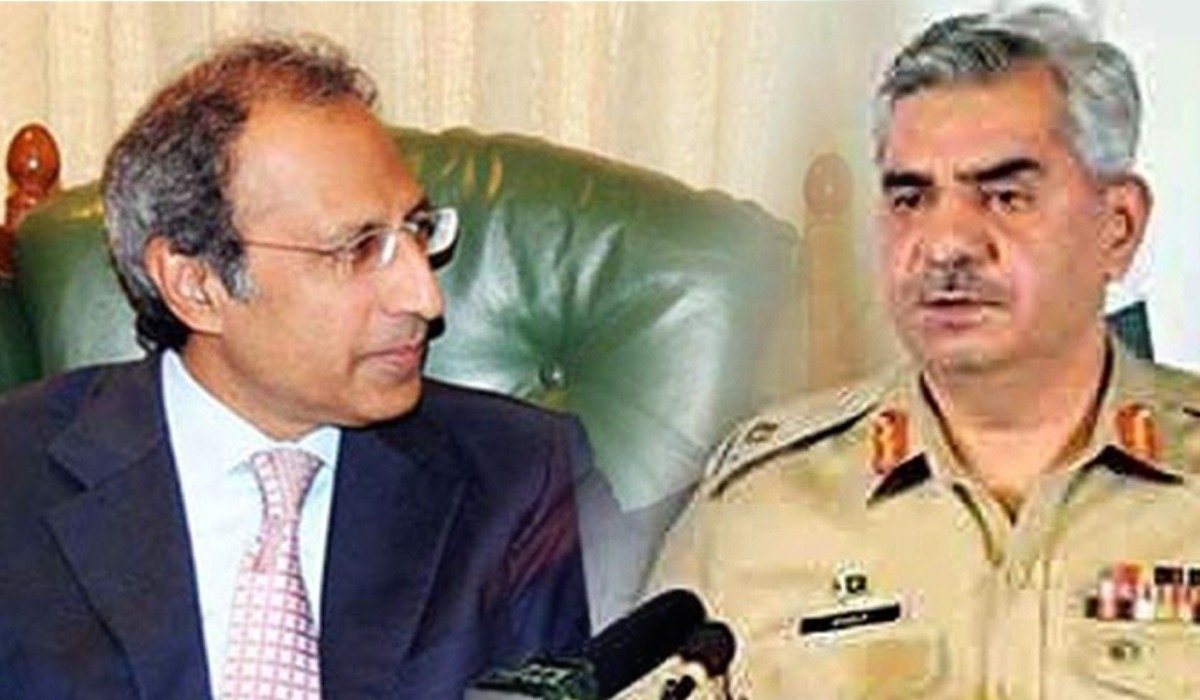
    “The ISPR is saying we have not interviewed anyone nor contacted Hafeez Shaikh. It’s not our work to appoint a caretaker prime minister. A caretaker prime minister will be made through constitutional means,” revealed Senior journalist Nadeem Malik during his political talk show “Nadeem Malik Live” on Samaa News. He was quoting the military’s media wing, Inter-Services Public Relations (ISPR).

    Former Interior Minister Sheikh Rasheed claimed that interviews of economists for the seat of the caretaker prime minister are being conducted in Islamabad and Rawalpindi.

    Senior journalist and anchorperson Hamid Mir also refuted Rasheed’s claims by quoting ISPR.

    The statement came as former Finance Minister Abdul Hafeez Shaikh returned from the United States after the Sindh High Court (SHC) granted him a 10-day transit bail and ordered NAB not to arrest him. Reportedly, he was accorded extraordinary protocol at Karachi Airport on Tuesday.

  • ‘Inconvenience is highly regretted’: IBA cancels Dr Atif Mian’s lecture on economy

    The Institute of Business Administration (IBA), one of the best business schools in Pakistan, has cancelled a talk by top economist Atif R Mian on Pakistan’s poor economic growth without any plausible cause.

    In a tweet, the IBA wrote: “Dr Atif R. Mian’s lecture “Why has economic growth fallen behind in Pakistan?” scheduled on November 5, 2020 has been cancelled. Inconvenience is highly regretted.” There was no further explanation by the school on why the lecture was cancelled. Dr Mian has yet to comment on the development.

    Observers say that the economist was disinvited from the lecture probably because of his affiliation with the minority Ahmadiyya community. However, this is not the first time Atif Mian, who teaches at ivy league Princeton, has faced discrimination due to his faith.

    He was appointed by Prime Minister Imran Khan in the Economic Advisory Council after the ruling Pakistan Tehreek-e-Insaf (PTI). However, the post was short-lived after the government came under fire for appointing an Ahmadi to the economic body. It subsequently backtracked and sacked Atif Mian from the advisory council, much to the chagrin of progressive quarters.

    Dr Atif is John H. Laporte, Jr. Class of 1967 Professor of Economics, Public Policy and Finance at Princeton University, and director of the Julis-Rabinowitz Center for Public Policy and Finance at the Woodrow Wilson School. He is the first and only person of Pakistani origins to have been named on the IMF’s list of ‘top 25 brightest young economists.’  

    The 39-year-old has dedicated his time to studying the connections between finance and the macro economy. An expert on international debt markets, his latest book, House of Debt, builds on data to describe how debt precipitated the ‘Great Recession’. He is often the go-to economist for the world media on the subject.

  • ‘Unrealistic and meaningless’: Economists react to PTI govt’s second federal budget

    ‘Unrealistic and meaningless’: Economists react to PTI govt’s second federal budget

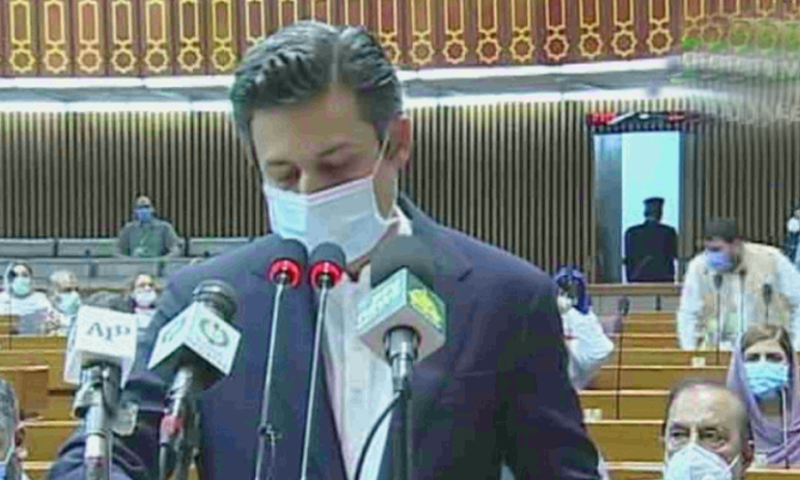
    The Pakistan Tehreek-e-Insaf (PTI) government has unveiled a Rs7.13 trillion budget for the upcoming fiscal year, which was presented before the parliament by Industries Minister Hammad Azhar amid opposition members’ protest against the same for being “anti-people”.

    But while the budget, which Prime Minister (PM) Imran Khan’s team claims will bring relief to the masses in coronavirus times, is drawing mixed reactions from political leaders and the general public, what do economists have to say about it?

    MUZZAMMIL ASLAM:

    “Given the GDP [gross domestic product] projections (2.1%) for next year, it is apparent that the government has failed to provide impetus to the economy. This has highlighted resource constraints the current government is facing. The government is basically relying on the stimulus of 1.2 trillion it provided during COVID-19 and is now consolidating its finances due to [the] IMF [International Monetary Fund] programme.”

    YOUSUF NAZAR:

    “Budget making has been reduced to a meaningless annual ritual given the overall dismal performance in meeting the targets, a performance which had little to do with the pandemic. Given that Pakistan’s economy is contracting for the first time in history, I had hoped that the government will come up with a plan to revive growth. A big near term risk to growth is the locust attack. I don’t see anything in the budget to help the agriculture sector face this threat. On a broader note, the government seems lost and overwhelmed by the economic contraction. I don’t see how it succeed in meeting the revenue target through privatisation when the business confidence is so low and the premier appears to be, honestly, clueless about we need to do to reform the economy, reset spending priorities and revive confidence in the government.”

    FARHAN BOKHARI:

    “It is an unrealistic budget that is based on an unrealistic tax collection target. The budget should have included a bold plan to cut losses in public sector companies and an equally bold plan for tackling losses in the energy sector. Pakistan additionally needs an emergency plan to raise agricultural productivity as agriculture is the only sector of the economy that has recorded some growth. Such big moves require a national political consensus which is missing as the premier refuses to talk to other mainstream political leaders.”

    According to Hammad Azhar, the Federal Board of Revenue (FBR) revenue target for next year has been kept at Rs4.95 trillion, while defence allocations amount to around Rs1.3 trillion.

    READ: Twitter loses it over Rs1.29 trillion budget for defence, Rs83.63 billion for education

    The federal development programme has been budgeted at Rs650 billion to support growth prospects.

    The budget for fiscal year (FY) 2020-21 comes at a time when the country is battling the COVID-19 pandemic that has served a severe blow to the economy. According to reports, it has been formulated considering the impact of the virus and to give relief to the citizens, as part of which no new taxes have been imposed.

    Check out the budget document here.