Tag: economy

  • National Assembly passes mini-budget to meet IMF targets

    National Assembly passes mini-budget to meet IMF targets

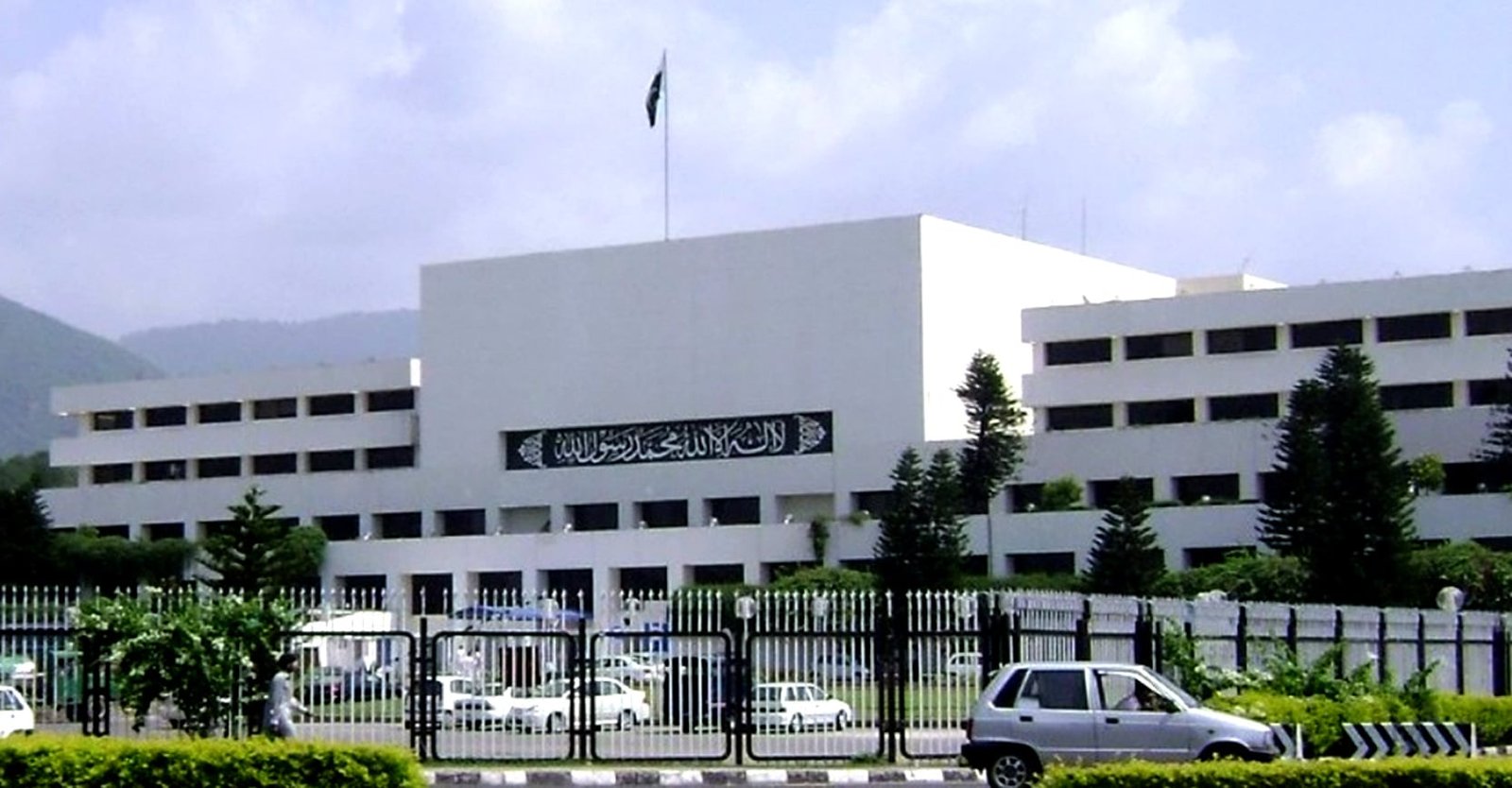
    The National Assembly of Pakistan passed the Finance (Supplementary) Bill, 2023, aimed at amending certain laws relating to taxes and duties. The bill is intended to generate an additional Rs170 billion within the next four and a half months, to fulfill the last prior actions agreed upon with the International Monetary Fund (IMF).

    Pakistan’s reserves have fallen to a critically low level of $2.9 billion, which experts believe is sufficient for only 16 to 17 days of imports. The completion of the ninth review of a $7 billion loan programme with the IMF would lead to a disbursement of $1.2 billion, as well as unlock inflows from friendly countries.

    The Finance Minister, Ishaq Dar, introduced the bill to the National Assembly on February 15, and the formal debate started on it after moving a motion by Commerce Minister Syed Naveed Qamar on February 17. In his concluding speech during the NA session, Dar said the new taxes proposed in the bill would not affect the poor segments of society, as most of the new taxes are being imposed on luxury items that they don’t use.

    The government has also proposed an increase of Rs40 billion in the budget of the Benazir Income Support Programme (BISP) to help the poor cope with rising inflation.

    The Finance Bill aims to increase the general sales tax (GST) rate from 17 per cent to 18 per cent, with an increase to 25 per cent on luxury items. The bill proposes to raise the federal excise duty (FED) on cigarettes, and aerated and sugary drinks. GST on 33 categories of goods covering 860 tariff lines, including high-end mobile phones, imported food, decoration items, and other luxury goods, will increase from 17 per cent to 25 per cent, however, the raise will be notified through another notification.

    The excise duty on cement has been raised from Rs1.5 to Rs2 per kilogram, a measure expected to generate an additional Rs6 billion. An excise tax of 10 per cent has been proposed on non-aerated drinks like juices, including mango and orange, to raise an additional tax of Rs4 billion.

    The finance bill also proposed a 10 per cent withholding tax on functions and gatherings held in marriage halls, marquees, hotels, restaurants, commercial lawns, clubs, community places, or other places, expected to raise Rs1 billion to Rs2 billion from this tax. The excise duty on carbonated or aerated drinks has been raised to 20 per cent from 13 per cent to generate an additional Rs10 billion for the government.

    The proposed increase in excise duty on business, first, and club-class air tickets will raise an additional Rs10 billion for the government, with a tax rate of 20 per cent (or Rs50,000, whichever is higher) proposed on the value of air tickets.


  • Pakistan’s export market takes a hit: Textile group exports down 14.83% in January

    Pakistan’s export market takes a hit: Textile group exports down 14.83% in January

    According to the Pakistan Bureau of Statistics (PBS), the country’s textile group exports declined by approximately 8.17 per cent during the first seven months (July-January) of fiscal year 2022-23, totaling $10.039 billion as compared to $10.933 billion during the same period of the previous year.

    The data also showed that textile group exports witnessed a year-on-year decline of 14.83 per cent in January 2023, amounting to $1.321 billion, compared to $1.551 billion during the same month in the previous year. Additionally, on a month-on-month basis, the textile group registered a negative growth of 2.53 per cent compared to $1.356 billion in December 2022.

    Cotton yarn exports experienced a negative growth of 34.66 per cent during July-January, totaling $449.419 million compared to $687.857 million during the same period in the previous year. On a year-on-year basis, cotton yarn exports registered a negative growth of 12.34 per cent, while on a month-on-month basis, it registered a growth of 27.22 per cent.

    Rice exports declined by 15.82 per cent during the first seven months of fiscal year 2022-23, totaling $1.083 billion compared to $1.286 billion during the same period in the previous fiscal year. Overall, the country’s exports during July-January 2022-23 totaled $16.499 billion (provisional) compared to $17.739 billion during the corresponding period of the previous year, showing a decrease of 6.99 per cent.

    In January 2023, the country’s exports amounted to $2.244 billion (provisional) compared to $2.313 billion in December 2022, reflecting a decrease of 2.98 per cent and a decline of 14.15 per cent compared to $2.614 billion in January 2022. The primary commodities of exports during January 2023 were knitwear, readymade garments, bed wear, cotton cloth, rice others, towels, cotton yarn, made-up articles (excluding towels and bedwear), rice basmati, and surgical goods and medical instruments.

  • Honda Atlas passes on sales tax burden to customers with another massive price hike

    Honda Atlas passes on sales tax burden to customers with another massive price hike

    Honda Atlas Cars announced on Friday that it would be increasing the prices of its completely knocked down (CKD) models in response to a rise in sales tax.

    The car manufacturer cited several reasons for this decision, including the devaluation of the Pakistani rupee against the US dollar, a volatile business environment, and the increase in sales tax.

    As a result, the company will raise the prices of its CKD models by up to Rs550,000, marking the third hike.

    The new retail sale price (RSP) will be effective for all new orders placed from February 18 onwards.

    Here are the new prices of all Honda cars:

    Model Od price New price Hike
    City MT 1.2L Rs4,329,000 Rs4,579,000 Rs250,000
    City CVT 1.2L  Rs4,469,000 Rs4,729,000 Rs260,000
    City CVT 1.5L  Rs4,739,000 Rs5,019,000 Rs280,000
    City Asp MT 1.5L Rs4,939,000 Rs5,229,000 Rs290,000
    City Asp CVT 1.5L Rs5,119,000 Rs5,419,000 Rs300,000
    BR-V CVT S Rs5,649,000 Rs5,949,000 Rs300,000
    HR-V VTI Rs6,799,000 Rs7,199,000 Rs400,000
    HR-V-VTI S Rs6,999,000 Rs7,399,000 Rs400,000
    Civic 1.5L M CVT Rs7,299,000 Rs7,779,000 Rs480,000
    Civic 1.5L Oriel M CVT Rs7,599,000 Rs8,099,000 Rs500,000
    Civic RS 1.5LL CVT Rs8,649,000 Rs9,199,000 Rs550,000
    Honda Cars Latest Prices in Pakistan – February 18, 2023

    Customers who have existing back orders as of February 17 will also be subject to the new retail sale price. Additionally, a 1 per cent additional sales tax will be applied to all back orders that have been paid in full as of the previous price increase letter, dated February 6.

    Honda Atlas Cars stated that any unclear back orders, with the exception of the Civic model, that are due up until March 23 can be invoiced if full payment (February 6 price + 1 per cent additional sales tax) is received by February 27 (with an instrument date of February 27). However, the automaker noted that the prices are subject to change and that the prices prevailing at the time of delivery will be final. Any changes in government levies or taxes will be borne by the customers.

    Furthermore, Honda Atlas announced an increase in the rates of its motorcycles the day before.

  • IMF should protect low-income people in Pakistan’s economic crisis: Human Rights Watch

    IMF should protect low-income people in Pakistan’s economic crisis: Human Rights Watch

    International Monetary Fund (IMF) should collaborate with the government of Pakistan to protect the economically disadvantaged by expanding social protection systems and minimizing reforms that may have adverse effects on the most vulnerable population, according to Human Rights Watch.

    The country is currently grappling with pressing issues such as inflation, poverty, inadequate governance, limited reserves, and high unemployment. Pakistan initiated discussions with the IMF on February 1st to formulate a plan to revive the economy, including securing the ninth tranche of $1.1 billion in loans from the $6.5 billion bailout.

    “Millions of Pakistanis have been pushed into poverty and denied their fundamental social and economic rights,” said Patricia Gossman, associate Asia director at Human Rights Watch.

    In addition, she emphasized that the IMF and the Pakistani government have a duty to manage this crisis in a manner that prioritizes and safeguards the well-being of low-income individuals.

    According to data from the State Bank of Pakistan (SBP), foreign exchange reserves have reached their lowest level at $3.09 billion, a decrease of 16%, sufficient to cover less than three weeks of imports.

    Pakistan is currently experiencing its highest inflation rates since 1975, with the cost of perishable food items rising by over 60% in January. In response to IMF demands, the government of Pakistan recently raised prices of petrol and diesel by Rs35 and removed the cap on the dollar, as it was a crucial condition of the IMF and the dollar should be market-driven.

    The ongoing negotiations with the International Monetary Fund (IMF) are aimed at concluding the ninth review of the IMF’s Extended Fund Facility, designed to support countries facing balance-of-payments challenges.

    The completion of this review would provide the necessary clearance for the IMF’s bailout installment, which would alleviate the severe shortage of foreign exchange and enable access to additional funding sources, including from multilateral and bilateral donors.

  • Pakistani traders threaten to launch nationwide protests if new taxes imposed

    Pakistani traders threaten to launch nationwide protests if new taxes imposed

    Traders in Pakistan have threatened to launch a nationwide protest in response to the government’s potential imposition of new taxes to meet the International Monetary Fund’s (IMF) conditions. The Central Organisation of Traders has called for the government to reduce the salaries of army generals, judges, and parliamentarians instead.

    On Saturday, representatives of the Central Organisation of Traders spoke to the media in Islamabad and announced their plan for a protest movement starting on February 13th if the new taxes are introduced. The leaders of the organization warned the government that the current economic situation in the country cannot withstand further taxation of the general public and the trading community.

    They expressed dismay that the state of the economy of a nuclear country was in dire straits and the situation was worsening with each passing day, and said that the public should not suffer because of the “flaws or crimes committed by the leaders of this country.”

    “Our reaction will be severe if more taxes worth billions of rupees were imposed, as being reported in the media,” Kashif Chaudhry, the organisation’s president, said, asking the stakeholders, including the ruling elites, to make “sane decisions” if they want to improve the economy.

    Mr Chaudhry has proposed that the government reduce the expenses of high-level officials such as the President, Prime Minister, legislators, judges, army officers, and bureaucrats. He believes the government should immediately decrease “non-productive expenditures” by half.

    The trader representatives have also made demands of the government. They have called for the creation of both short-term and long-term economic policies and for more consistent income tax collection across all sectors, instead of imposing billions of dollars in new taxes.

    “I assure the government that the business community was ready to contribute to steering the country out of the current economic crises and we traders are ready to pay fixed taxes,” he said.

    Khawaja Salman Siddiqui, the chairman of the organization, criticized Finance Minister Ishaq Dar. According to Siddiqui, Dar was appointed by the PML-N to stabilize the economy and prevent the depreciation of the rupee, but he failed to deliver on his responsibilities.

    Mr Siddiqui said putting an artificial cap on the dollar’s rate led to a wide gap between the interbank and open market rates, and despite the demand to remove the cap, Mr Dar “remained stubborn and did not listen to anybody.”

    Other speakers called for the implementation of the decision of the Federal Shariat Court to make Pakistan’s economy interest-free to “eradicate exploitation in the system.”

    According to Dawn, the speakers also suggested an amnesty program that would allow wealthy individuals to repatriate their foreign wealth. The government could then borrow money from these individuals and provide them with profits instead of taking loans from the International Monetary Fund (IMF) and World Bank with unfavorable conditions.

  • The petrol hike might make you cry but at least these hilarious memes won’t

    The petrol hike might make you cry but at least these hilarious memes won’t

    How do Pakistanis start a Sunday morning?
    Apparently, by learning about how their budgets will be stretched out even further.
    Pakistanis woke up on Sunday morning to learn that a new petrol hike had announced by the Finance Minister, Ishaq Dar. In a press conference, he revealed that a Rs 35 increase would be applied from 11 am on that very day.
    Well how do Pakistanis deal with the crashing economy, no electricity and crushing debt? With some killer memes.

    Well how do Pakistanis deal with the crashing economy, no electricity and crushing debt? With some killer memes.

    It sparked some ideas about some creative ways to travel.

    The superior gender FTW.

    *wink wink*

    Get her a diamond ring? Taking her on a date to an expensive restaurant? Ditch all of that because a better idea dropped.

    BRB learning how to speak in Korean

    PLEASE

    In other words:

  • Dar vs Khan: Ishaq challenges IK to live debate on economy

    Dar vs Khan: Ishaq challenges IK to live debate on economy

    Finance Minister Ishaq Dar, in a televised address on Friday, strongly criticised Pakistan Tehreek-e-Insaf (PTI) Chairman and former Prime Minister (PM) Imran Khan’s economic policies and challenged him to hold a “live debate” with him on the economic crisis.

    The finance czar started by saying that the incumbent government sacrificed politics for the sake of the country.

    Taking a jibe at Khan’s address in which he narrated his economic successes, Dar said that the speech was “full of lies” and that he quoted wrong figures.

    “You [Khan] can hold a live debate and bring the economic survey and State Bank documents,” he said, asking the PTI chief to not mislead the public by quoting ‘wrong figures’.

    Speaking about Imran’s claims of creating 55 million jobs, the finance minister argued that the economic survey from the PTI setup showed that only 33 million jobs were created.

    Accusing Khan of creating the ongoing economic crisis, he said that inflation rate was 8.6 per cent under the former Pakistan Muslim League-Nawaz (PML-N) government, which spiked to double digits during the PTI era.

    Shedding light on International Monetary Fund (IMF), Dar said when Imran realised he was being ousted, he disowned all the agreements and left behind landmines, adding that Pakistan had only completed one IMF programme in its history which was under the leadership of Nawaz Sharif.

    Dar also claimed that during their previous tenure international rating agencies predicted Pakistan would join G20 by 2030.

  • Bilawal blames PTI policies for TTP attacks

    Bilawal blames PTI policies for TTP attacks

    Foreign Minister (FM) Bilawal Bhutto-Zardari— who is currently in Davos for the World Economic Forum’s (WEF) annual meeting— has spoken to Al Jazeera about the recently held conference in Geneva for Pakistan’s devasting flood losses, a looming economic crisis and the soaring threats of terrorism.

    In his interview, the 34-year-old minister blamed the previous government led by Pakistan Tehreek-e-Insaf (PTI) for its wrong approach and “policy of appeasement” towards the Taliban.

    He said, “I believe that the previous government had the wrong approach. Its policy of appeasement towards the Taliban has created problems for the people of Pakistan”, adding that this approach has been ended by the incumbent government.

    He said that recently the government also had a national security meeting and it was decided then that Pakistan would adopt a zero-tolerance policy against terrorist groups.

    Talking about the oppressive Taliban reign in Afghanistan, Bilawal urged the world to continue engaging with Afghanistan as it is the only solution. He said, “We [Pakistan] are neighbours, we couldn’t separate if we wanted to. The only way to enhance leverage on both sides is to continue to engage with them.”

    “I do not think turning our back and disengaging is an option. And it’s certainly not an option for Pakistan which shares such a long and porous border with Afghanistan”, he said, highlighting that both “Pakistanis and Afghanis are victims of terrorism”.

    About the economic and food crisis back home, the minister pointed out that Pakistan is not alone in facing the economic crisis as the world is also suffering and these all are the result of post-covid and Russia’s invasion of Ukraine.

    However, he hoped that the situation will get better in the coming days. `

    Terming the Geneva conference “resilient”, he thanked the international community for pledging more than $9 billion for Pakistan’s flood rehabilitation and climate resilience building.

  • Plans of long-term caretaker govt in pipeline, claims journalist

    Plans of long-term caretaker govt in pipeline, claims journalist

    News anchor Meher Bokhari in her programme ‘Program Hum Meher Bokhari Kay Sath’ on Hum News has claimed that a crucial meeting has taken place where plans of installing a long caretaker government in Pakistan have been discussed.

    She said that considering the worsening economic conditions in the country, the caretaker government can be in place for six months or even two years, emphasising that the situation has slipped out of politicians’ hands.

    During her show, she pointed out that the incumbent government has failed to steer the country out of the economic crisis, despite making promises to do so. Moreover, she said that since the takeover of the coalition government, the dollar value rose exponentially, plunging the country into economic disaster.

    She highlighted Pakistan’s failure to get the next International Monetary Fund’s (IMF) tranche and the reluctance of friendly countries to help Pakistan.

    Reacting to the journalist’s claims, Pakistan Tehreek-e-Insaf (PTI) senior leader Fawad Chaudhry termed it a “stupidity”, stressing that the “country’s crisis is more political than economic”.

    In a tweet, he said that these are “schemes” to keep Imran Khan out of politics but are not in Pakistan’s favour. Terming general elections as the only solution to the country’s problems, he added that PTI will resist the move of forming a technocrat government.

    However, Finance Minister Ishaq Dar on Wednesday assured the Pakistan Stock Exchange (PSX) that the country will not default but admitted that the economy is in a “tight position”.

    “It’s been three months since I took charge. We hear every day that we will default. How will there be a default? There is no chance that Pakistan will default,” the finance minister said.

    It should be noted that the financial situation in the country is perilous with inflation at the highest levels in recent years. A day earlier, the price of gold rose by Rs4,500 to a fresh all-time high of Rs182,700 per tola. The price of gold has increased by more than Rs20,000 per tola since the beginning of December.