Tag: economy

  • Gen Bajwa says he will retire in November

    Gen Bajwa says he will retire in November

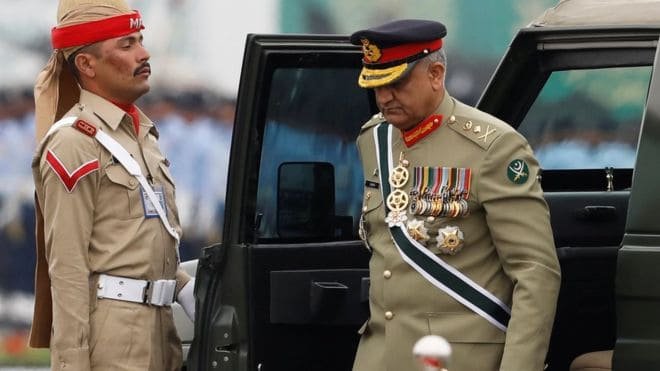
    Putting months of speculation to rest, Chief of the Army Staff (COAS) General Qamar Javed Bajwa has reiterated his promise to leave office after completing his second three-year term in November, adding that he would fulfil the pledge he made earlier.

    The army chief made these remarks at a lunch at the Pakistan Embassy in Washington.

    The COAS also stated that the armed forces have distanced themselves from politics and want to stay out of it in the future as well.

    “There can be no diplomacy without a strong economy,” said the army chief stressing that restoration of the ailing economy of the country should be the priority of every stakeholder of the society.

    After the lunch, Gen Bajwa went to the Pentagon for a meeting with US Defence Secretary Lloyd Austin.

    According to the ISPR, Gen Bajwa called on retired General Lloyd James Austin III, Secretary of Defence; Jacob Jeremiah Sullivan, National Security Adviser; and Wendy Ruth Sherman, Deputy Secretary of State.

    The army chief arrived in the US on September 30 and met with UN officials in New York.

    General Bajwa is heading a delegation that will stay in the US for another couple of days, diplomatic sources said, terming the visit an important one that portrayed “robust relations” between the two countries.
  • Ishaq Dar aa nahi rahay, aa gaye hain: Dar takes oath as senator

    Ishaq Dar aa nahi rahay, aa gaye hain: Dar takes oath as senator

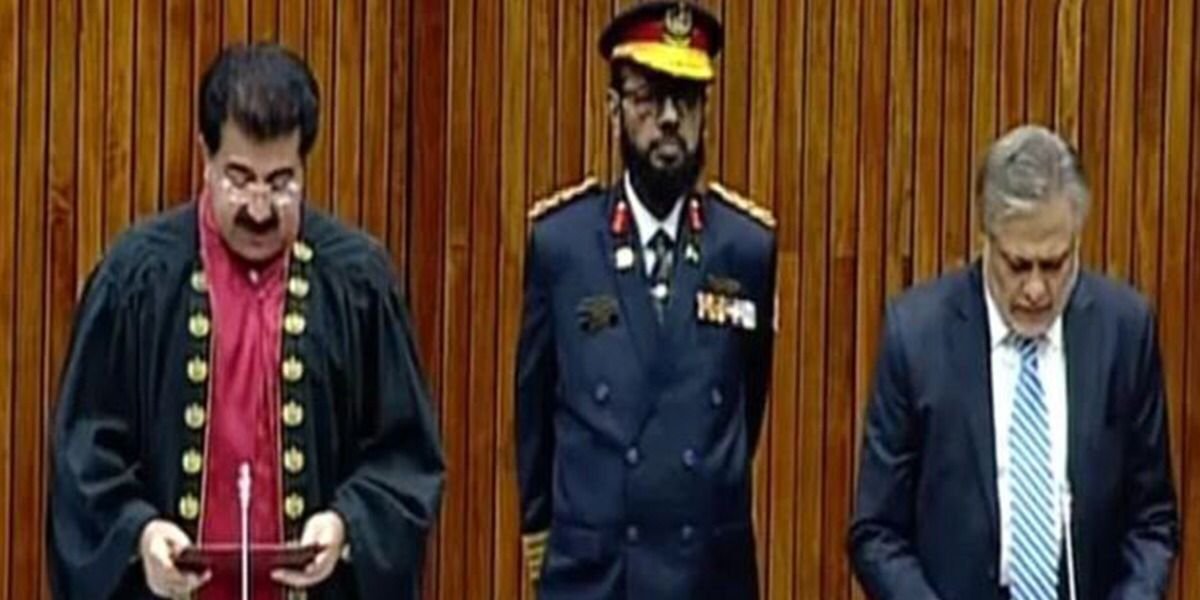
    Pakistan Muslim League-Nawaz (PML-N) leader Ishaq Dar on Tuesday, September 27, took oath as a senator after living five years in self-imposed exile in the United Kingdom.

    Senate Chairman Sadiq Sanjarani administered the oath amid ruckus created by the opposition. Pakistan Tehreek-e-Insaf (PTI) members tore copies of the agenda of the meeting to register their protest and also surrounded the dais.

    Dar touched down in Pakistan with Prime Minister (PM) Shehbaz Sharif on the night of September 26. He will be sworn in as the federal finance minister tomorrow (September 28) at 10am.

    Talking to reporters at the airbase, Dar said: “I will try my best to fulfill all the responsibilities. We will try to take the country out of the economic swamp it is stuck in […] the way we did in 1998-1999 and 2013-2014.”

    President Arif Alvi will administer oath to Dar at Aiwan-e-Sadar. All arrangements for the oath-taking ceremony will be completed by tomorrow morning.

    The incumbent minister, Miftah Ismail, had resigned from his post on Sunday evening.

  • India beats UK to become fifth-largest economy in the world

    India beats UK to become fifth-largest economy in the world

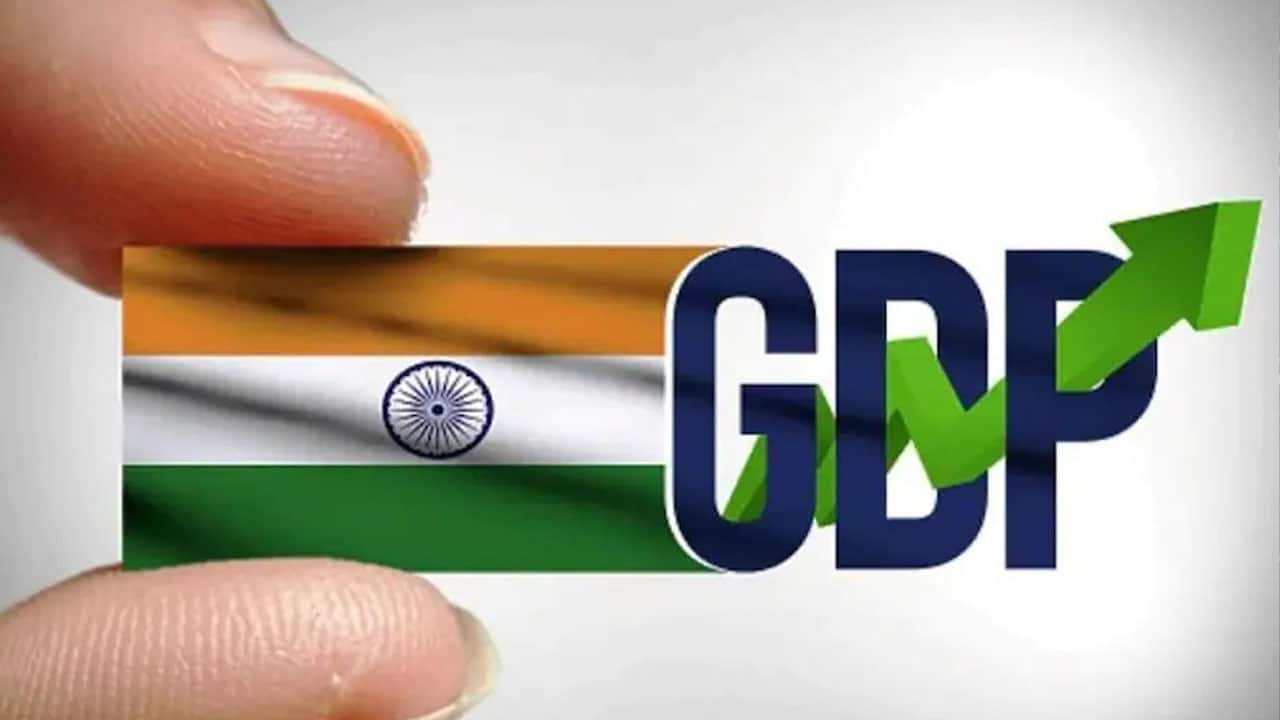
    India has surpassed the United Kingdom to take over as the world’s fifth-largest economy. The country was ranked as having the fifth-largest economy after outperforming England in the first three months of 2021.

    The UK has moved up to the sixth spot from where it was rated during the 2019 fiscal year. According to a survey by Bloomberg, the US economy was worth USD 854.7 million in ‘nominal’ cash terms in the quarter ending in March, compared to USD 816 million for the UK.

    According to reports, the mark was calculated using an adjusted basis and the dollar exchange rate on the last day of the relevant quarter.

    The update was released two days after the government published the first-quarter GDP figures.

    According to statistics, the Indian economy is expanding by 13.5 per cent annually. Despite the fact that this figure was lower than the RBI’s prediction, the rate is reported to be the highest among emerging nations.

    This fiscal year, India is expected to grow at a rate of about 7 per cent.

  • IMF Executive Board meeting to discuss revival of loan plan today

    IMF Executive Board meeting to discuss revival of loan plan today

    The International Monetary Fund (IMF) executive board will meet on Monday (today) to discuss the bailout plan for Pakistan.

    The 8th and 9th tranches, totaling over $1.2 billion, are anticipated to be disbursed with board approval.

    According to Geo, Pakistan also requested that the Extended Fund Facility (EFF) be increased from $6 billion to $7 billion and that the term be extended from September 2022 to June 2023.

    If the contract is approved by the board, the IMF will give Pakistan an initial payment of roughly $1.2 billion and could give up to $4 billion during the remaining months of the current fiscal year, which started on July 1.

    The board gave its approval for the transfer of $1.386 billion to Pakistan under the RFI in April 2020 to help with the economic effects of the Covid-19 shock.

    Additionally, according to The Wall Street Journal, Pakistan has secured at least $37 billion in foreign loans and investments in recent weeks, saving it from a financial catastrophe similar to that of Sri Lanka.

    The restart of the programme will greatly benefit the government led by Prime Minister Shehbaz Sharif as it will assist prevent what would be the second default in Asia this year after Sri Lanka.

    Bloomberg estimates that Pakistan would have to pay at least $3 billion in debt payment during the first half of the fiscal year 2023.

    The State Bank of Pakistan anticipates that foreign exchange reserves would increase to around $16 billion this fiscal year from $7.8 billion, thanks to the IMF loan opening the door for additional funding.

  • PCB to donate earnings from match against England to flood victims

    The Pakistan Cricket Board (PCB) has announced that gate earnings from the first T20I against England will be donated to the Prime Minister’s Flood Relief Fund 2022.

    The match will be played on September 20 at the National Stadium in Karachi and will begin at 7:30pm (local time).

    The PCB has urged cricket supporters and fans to buy tickets in large quantities once they go on sale online the following week in order to show solidarity with all those affected by the floods.

     “We at the PCB express our grief and sorrow for all those affected by the extreme monsoon rainfall and floods, which has ​resulted in havoc and devastation beyond imagination, killing over 1,000 and leaving around a million homeless. As cricket unites our proud nation, we stand firmly with the victims and all those involved in​ the flood relief and rescue operations,” said PCB chairman Ramiz Raja in a statement.

    According to the data issued by the National Disaster Management Authority(NDMA), at least 1,033 people have died in floods caused by heavy rains in the country.

  • Pakistan is drowning. Why don’t we care until it’s too late?

    Floods in Pakistan have affected more than 30 million people, which is about 15 per cent of the country’s population. More than a thousand people have lost their lives and millions have been displaced, prompting the government to proclaim a national emergency. This is one of the worst natural calamities in recent times. The harrowing videos and pictures on our television screens and social media show massive devastation, pain, tears, and death spread across the country. Entire villages have been washed away, and there are places that have been fully drenched due to the inundated rain and floods, turning them into islands without any access to the outside world. There are places without electricity, without internet, without phone data, without roads, and without food and help. What Pakistan witnessed in the 2010 floods is not even close to what the country is facing today. A decade later, the country is fully swamped with water. Unfortunately, we the people woke up a little too late to this harsh reality. With every passing day, the death toll increases and so does the destruction.

    The national response has been slow, to say the least, but mercifully all governments, federal and provincial, are actively helping the flood victims. Prime Minister Shehbaz Sharif has been actively visiting the flood-affected areas and trying to be at the top of his game by showing empathy towards the needy and has categorically said that it is time Pakistanis show unity and keep everything aside to save the flood victims while Chairman PTI Imran Khan will be hosting a telethon for fundraising on Monday. However, Khan has said that the PTI’s movement for Haqeeqi Azadi will continue alongside its flood relief work. PTI held a jalsa in Jehlum for its fight for haqeeqi azadi on August 27. A PTI member took to the stage and said that overseas Pakistanis should not give funds to the flood victims because the present government took away their right to vote. Khan also reiterated that his struggle against thieves will continue whether come what may. Such calamities demand a bipartisan approach from our leaders but well here too we have managed to fail our country. Khan seems pretty adamant that his quest against those he does not approve of will continue, even if there is a flood or war. PPP Chairman Bilawal Bhutto-Zardari has said that the Opposition can keep playing “jalsa, jalsa” while they will deal with the flood catastrophe.

    The question remains: will the politicians be able to let their politics take a backseat for now and show some empathy towards their own citizens? Can’t politics, the numbers game, and the blame game wait? For once, our politicians should look beyond their own personal interests and agendas and stand united. Our politicians must give priority to those millions of people who have been affected by floods. It is time that all Pakistanis must donate wholeheartedly. The people need to be prompt with their help and generosity. We hope that partisan politics is put on hold, and all political leaders fully dedicate their voices and efforts to helping the flood victims. They need to be rescued right now and relief efforts must continue. They will later need to be rehabilitated and relocated. It will take a lot of resources and hard work. We must all come together to help them right now. Our political battles can wait.

  • ADB projects Pakistan’s economy to ‘recover slightly’ in FY23

    ADB projects Pakistan’s economy to ‘recover slightly’ in FY23

    In FY2023, Pakistan’s Gross Domestic Product (GDP) growth is expected to modestly improve due to structural changes, according to the Asian Development Bank (ADB).

    According to the bank’s most recent Asian Development Outlook Supplement, Pakistan’s GDP growth is predicted to decrease in FY22 (which ends on June 30, 2022), as a result of fiscal tightening measures taken to control rising demand pressures and contain external and fiscal imbalances.

    As the country’s inflation surged from 12.3 per cent in December 2021 to 21.3 per cent in June 2022, the bank slightly lowered Pakistan’s inflation for FY22 and dramatically for FY23.

    “In addition to the effects of elevated global energy and food prices, the government’s efforts to revive the stalled International Monetary Fund (IMF) programme has meant raising power tariffs and withdrawing subsidies in the oil and power sectors,” said ADB.

    In comparison to Sri Lanka, which boosted its policy rate by 950 basis points over the previous six months, the State Bank of Pakistan (SBP) has upped interest rates by 525 basis points since January 1. This also makes it one of the most active central banks in the region.

    The ADB also reduced its 2022 growth prediction for Asia and issued a warning that things could become worse as a result of the conflict in Ukraine and supply chain disruptions that are expected to drive up costs.

    Read more: Pakistani rupee plunges to Rs227 against US dollar at midday trading

    Although Covid-19’s effects had subsided, the region was now dealing with the consequences of Russia’s invasion of Ukraine, lockdowns in China, and aggressively raised interest rates, according to the Manila-based lender.

    The bank reduced its 2022 growth prediction to 4.6 per cent to reflect the decline in developing Asia, which runs from Kazakhstan in Central Asia to the Cook Islands in the Pacific.

    South Asia’s economy is anticipated to grow less than the projected rate of growth in the Asian Development Outlook 2022.

  • Edible oil and ghee prices may decrease soon: Miftah Ismail

    Edible oil and ghee prices may decrease soon: Miftah Ismail

    The price of edible oil and ghee has decreased, according to Finance Minister Miftah Ismail, who expressed hope that the reduced costs will result in a reduction of Rs100 to Rs150 in the price of edible oil in the local market.

    The finance minister expressed optimism about lower petroleum product prices in the near future while speaking at a press conference alongside Bilal Kayani, a member of the Ministry of Finance’s Privatization Committee.

    He claimed that because the price of crude on the international market had dropped to $100, Pakistan’s citizens would “benefit” from lower prices at the “right time.”

    Miftah noted that lower pricing will also result in lower import costs for Pakistan.

    The finance minister continued to criticise the Pakistan Tehreek-e-Insaf (PTI) administration, stating that the previous administration had left an economic minefield but that despite difficulties, the economy was now stabilising and foreign exchange reserves were increasing.

    Imran’s administration left behind a “record trade deficit,” Miftah continued. The finance minister explained the $6 billion loan package for Pakistan from the International Monetary Fund (IMF) and expressed optimism that any outstanding concerns will be handled quickly so that the nation may get the next instalment.

    Additionally, he stated that because wheat prices were stabilising on the global market and that tenders will soon be opened, flour prices would decrease on the local market.

    Due to the fact that Russia and Ukraine are two of the world’s top producers of wheat, wheat prices reached historic highs at the commencement of the Russo-Ukrainian War in February of this year.

    The country’s persistent power shortage was also brought up by the finance minister, who noted that current generation levels are below the necessary 30,000, but expressed optimism that the problem would be resolved in the upcoming weeks.

    He claimed that the PTI government failed to release LNG tenders in a timely manner, which is why there is currently a shortage of liquified gas, and blamed the Imran-led government for the power problem.

    Major LNG producers throughout the world are now supplying Europe with LNG as a result of the continent’s reduction in its reliance on Russian gas, and fuel is in short supply for other consumers.

    The government is vigorously supporting the use of solar energy, Miftah continued, and a nuclear power plant will soon be put into operation.

  • CM Hamza announces free electricity for households consuming up to 100 units

    CM Hamza announces free electricity for households consuming up to 100 units

    Punjab Chief Minister (CM) Hamza Shehbaz announced on Monday the provincial government would bear the power cost of households consuming up to 100 units of electricity in a month.

    “I was told not to take big decisions without the cabinet’s consent to steer the backward class out of difficult economic conditions. I was told that it could become a NAB case, but I said that I am ready to face any difficulty to give relief to people,” said Hamza Shehbaz.

    The CM conveyed that the provincial government would pay the full bill of consumers using up to 100 units of electricity per month under the Punjab Chief Minister’s Roshan Gharana Programme. The consumers using up to 100 units of electricity in each of the past six months will be able to avail the facility, the CM said and emphasised that the programme would benefit almost half of the population of the province.

    “This will act as an incentive for those who use more than 100 units of electricity to save energy,” Hamza hoped.

    Hamza said that there are 4.4 million families using 100 units in Punjab, i.e. 55 million people in the province use less than 100 units per month.

    “The economic situation will be back on track,” he promised. He vowed that “the genie of inflation will be put back into the bottle and the dying economy will be revived with the grace of Allah Almighty and help of masses”.

  • FBR collects highest-ever tax of Rs6 trillion in FY22

    FBR collects highest-ever tax of Rs6 trillion in FY22

    The Federal Board of Revenue (FBR) achieved a significant feat by collecting a record Rs6,000 billion in revenue during the previous fiscal year 2021–2022.

    The FBR reported that during the current fiscal year, it collected Rs2,205 billion in income tax, Rs2,773 billion in sales tax, and Rs1,007 billion in customs duty. The organisation in charge of collecting taxes also released Rs305 billion in refunds during that time.

    According to former finance minister Shaukat Tarin, the government of Imran Khan’s policies and the country’s economic growth allowed FBR to meet its revenue goals.

    Tarin insisted that the government should continue enforcing the prior administration’s tax laws. According to Tarin, the government shouldn’t impose additional taxes on the current taxpayers. Heavy taxes shouldn’t be imposed on the economy’s productive sectors, he continued.

    The government has given the general public significant tax breaks on a number of necessities, but the FBR claims that these tax breaks haven’t prevented revenue collection from continuing on an unprecedented and constant growth trajectory. Sales tax on all POL products has been eliminated for the first time in the nation’s history, costing the FBR Rs45 billion per month.

    In order to maximise revenue potential through digitization, transparency, and taxpayer facilitation, the FBR has implemented a number of novel interventions at both the policy and operational levels. In addition to ensuring transparency, facilitating taxpayers, and making business easier, this has led to a steady increase in revenue collection.