Tag: economy

  • PM Imran says had no idea how to run govt for first three months

    PM Imran says had no idea how to run govt for first three months

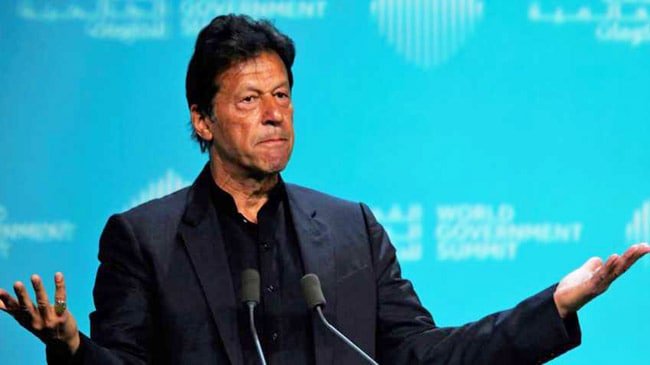
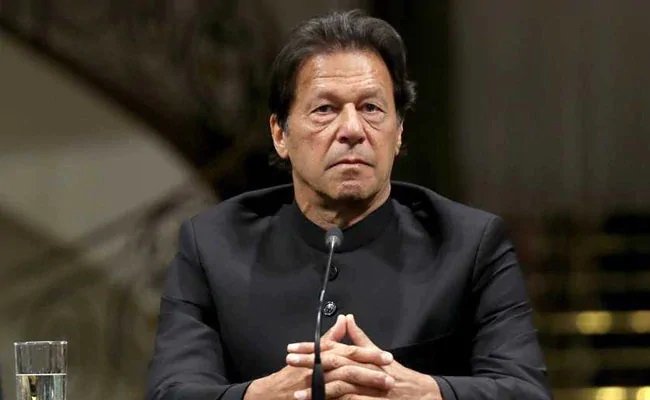
    Prime Minister Imran Khan has said when his party, Pakistan Tehreek-e-Insaf (PTI), came to power it virtually had no idea how to run the government and it took them at least three months to understand the state of affairs.

    Addressing a special ceremony to sign ‘Performance Agreements of the Federal Government for the Year 2020-21’ in Islamabad, the PM said the new government shouldn’t assume power without preparation. “From the outside, it looked different compared to what is actually happening within the system,” the PM said.

    “When the PTI came to power, it took us three months to understand things and form our team,” he said, adding that Pakistan needed to review its systems. “We’re gradually learning things.”

    According to the premier, this system that keeps the incoming governments in the dark about the state of affairs must be changed. “We need to tweak it, so a new setup can be given enough time to learn the ropes after a comprehensive briefing by the outgoing government,” he said, adding that the first thing was that we should review the system and after once your team was made, then it should be given full time to prepare.

     Imran said it was his habit to look at everything in his life to see what could be done better or improved.

    “We have two-and-a-half years left to make the government’s performance better. We no longer have any excuses. It’s time for us to perform… It’s time for performance now. We need to put pressure on ourselves to perform and our ministers also need to put pressure on themselves to improve performance as well,” he added.

  • Pakistan, IMF and our economic future

    Pakistan, IMF and our economic future

    Pakistan is looking to resume the IMF’s $6 billion programme to bring in some much-needed foreign exchange. The programme was earlier suspended due to the government’s unwillingness to increase power tariffs and bring in a mini-budget. The negotiations for programme resumption were further delayed due to COVID-19 but IMF came to the government’s rescue with $1.4 billion emergency financing, which helped the country sail through tough times.

    But now we are back to square one, and it’s time to take some hard decisions.

    Reportedly, IMF is expecting Pakistan to significantly increase electricity prices, bring in additional revenue measures and introduce a few legal amendments. Pakistan was expecting an IMF mission in December to negotiate the conditions, but it seems that IMF is expecting some solid prior actions by the government, before it plans a review mission.

    There is no doubt that an electricity price increase is inevitable to reduce the mounting circular debt, and new tax measures are critical to help the government reach the ambitious Rs4.9 trillion revenue target. But the government is worried on two counts: not only will these measures be unpopular and further strengthen the opposition’s narrative around inflation but will also make a dent in government’s efforts to stimulate the economy. The prime minister has already given a nod to the electricity price increase; however, it is not clear if this increase is enough and how soon the government will be able to pass this on to consumers.

    However, irrespective of whether the government ends up taking these unpopular yet necessary measures or if the IMF ends up showing some flexibility, it remains to be seen if we can keep on relying on these ad hoc measures, pushing electricity tariffs up for the paying consumers and squeezing the existing taxpayers to meet the ever-increasing targets.

    Pakistan has availed 21 IMF programmes over the past 60 years; however, these programmes failed to bring in any sustainable improvement in Pakistan’s worsening conditions. Pakistan’s repeated boom-bust episodes are now a characterising feature of its economy, where sprouts of growth are inevitably followed by prolonged slumps.

    All political governments start in the midst of a balance-of-payment crisis, necessitating going for an IMF programme. IMF brings in foreign exchange to avoid a default but also fiscal and monetary tightening, which slows down growth. As soon as the IMF goes away, the country takes no time in coming back to its expansionary fiscal and monetary policies, owing to political reasons and mostly to win the next election. This in turn increases the demand for imports, increasing the trade deficit, and the country is pushed into yet another balance-of-payments crisis and the cycle starts all over again.

    But every time, Pakistan’s economic indicators sink a bit further than the previous episode. It is clear that we are on an unsustainable economic trajectory, but our political shortsightedness prevents us from seeing what’s written on the wall.

    What can break this vicious cycle? The answer is actually not that difficult. What we need is a serious dose of structural reforms, where we expand the tax net, do away with the exemptions enjoyed by powerful lobbies, control power thefts and line losses, stop the bleeding by state-owned enterprises, rationalise the ever-growing subsidies and strengthen and diversify our exports base. But these reforms require paying high political costs and compromising on short-term gains for the longer-term future.

    IMF is also no stranger to these solutions. Almost all recent IMF programmes have stressed these reform areas, but every time they end up being content on short-term corrective measures rather than the so-called structural benchmarks.

    A research paper by Harvard Kennedy School in 2015 highlighted that IMF ironically adopts a serial lending pattern. More than one-fourth of IMF member countries were part of an IMF programme for fifty percent of the duration since they became a member. Another 37 per cent have been on IMF programmes for 40 per cent of the time or more. This makes it quite evident that Pakistan, like many other developing economies, has ended up being addicted to this repeated dose of IMF money, without ever fixing the underlying problems.

    Recent months, however, have shown some positive signs, with the government mulling over restructuring plans for SOEs like Pakistan Steel Mills and PIA, announcing ambitious and futuristic power sector reforms, re-negotiating contracts with Independent Power Producers (IPPs), stimulating export industries, and even taking stock of the massive subsidy stock.

    The market-based exchange rate regime adopted by the government has already put in place an auto-corrective measure, whereby any significant current account imbalance will lead to currency devaluation, making imports expensive, reducing demand and narrowing the trade deficit.  However, the government needs to follow through on its plans and build further on this groundwork.

    These measures will undoubtedly be hard to put in place, but sooner or later someone has to go this road. If the present government pushes through on these reforms, it can help the country break out of this vicious cycle and can create a name for itself in Pakistan’s economic history. If not, we’ll be knocking on IMF’s doors yet again in another 4-5 years, but in a much worse condition.
  • Dollar down by Rs1.77 in two days, Rs159.28 is the new rate

    Dollar down by Rs1.77 in two days, Rs159.28 is the new rate

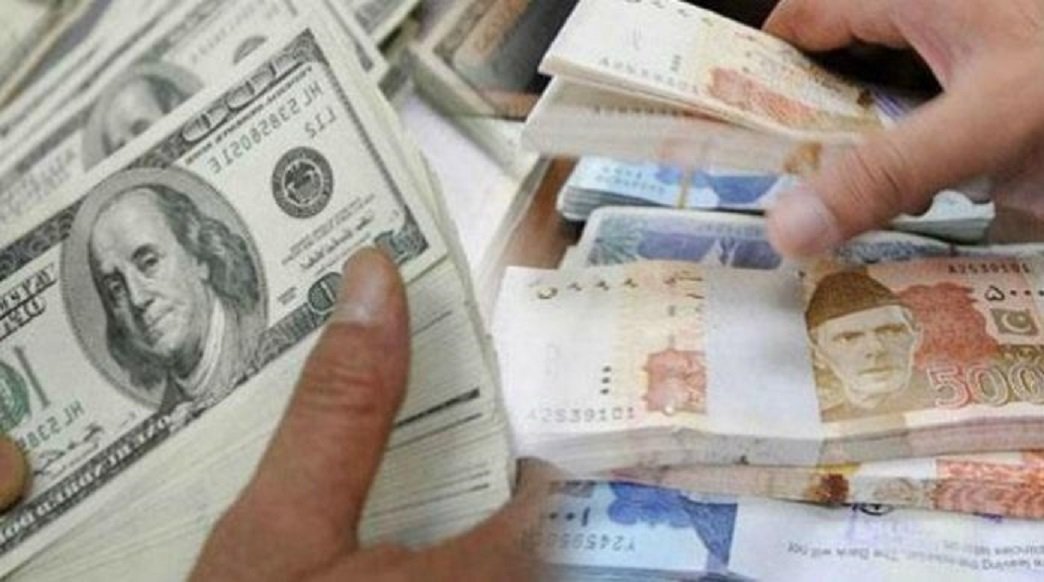
    Continuing with the previous day’s momentum, Pakistani Rupee gained another 81 paisas against the United States Dollar (USD) in the interbank on Wednesday.

    According to a State Bank of Pakistan (SBP) tweet, USD opened at Rs160.09 and closed at Rs159.28. The local currency had gained Re0.96 against the greenback on Tuesday.

    Money dealers in the market attributed this rally of rupee against USD to encouraging economic indicators as well as the global downfall of the greenback. On the other side, they added, importers are being careful in buying goods from their foreign suppliers owing to the second wave of COVID-19.

    On Tuesday, rupee had weakened against USD. The buying rate of USD was Rs160.4 while it was sold at Rs161.2 at the opening of trading in Pakistan’s currency market on November 24.

    Other currency rates had then been recorded as follows:

    Currency Buying Selling
    Australian Dollar 116 118 
    Canadian Dollar 121 123
    China Yuan 24.45  24.6 
    Euro 188.5 192 
    Japanese Yen 1.55 1.58
    Saudi Riyal 43 43.5 
    UAE Dirham 43.55 44 
    UK Pound Sterling 212.5  215.5 
  • PM believes his popularity is rising, opposition is propagandising inflation

    PM believes his popularity is rising, opposition is propagandising inflation

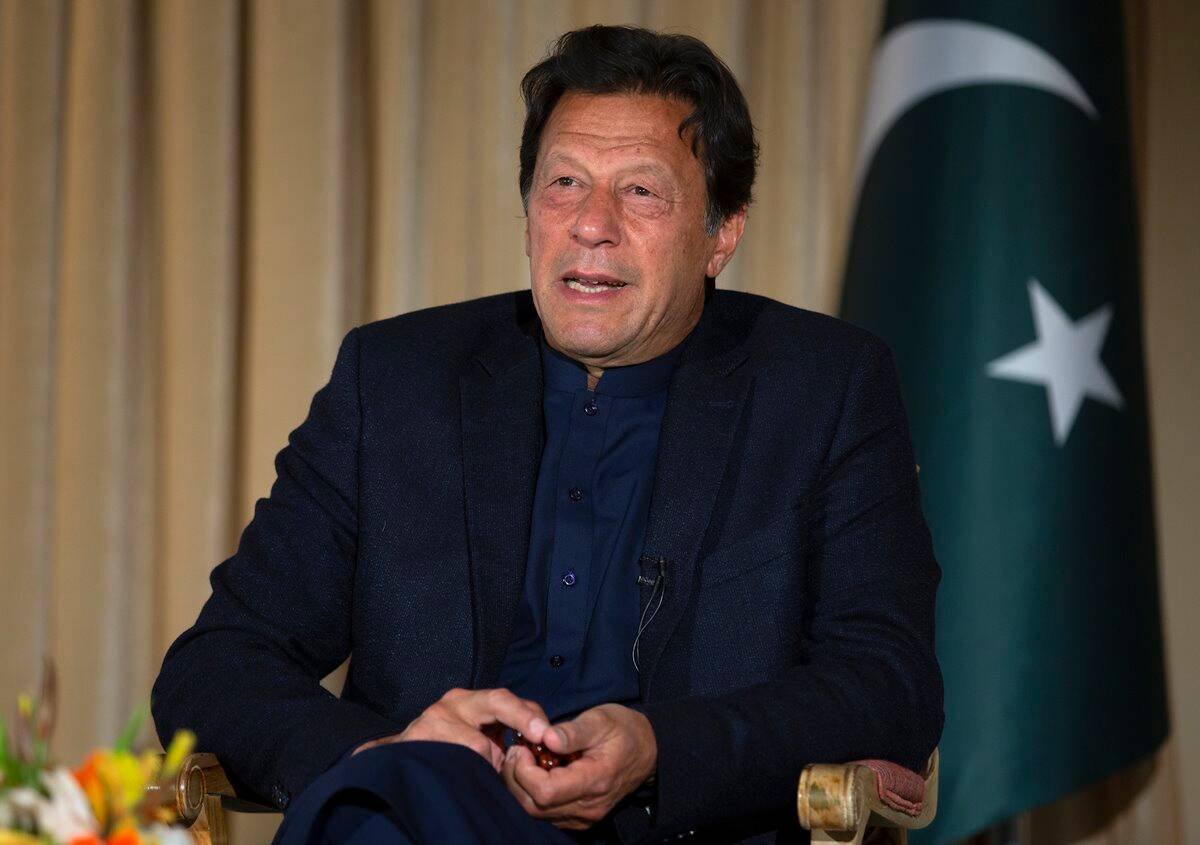
    Prime Minister (PM) Imran Khan has said the opposition was just propagandising inflation as all economic indicators were highlighting a positive trend, The News reported.

    He expressed these views while chairing a meeting to review the overall political situation in the country as well as the government’s media strategy. Imran directed his economic team to highlight the successes achieved by the government in the media.

    He said the political leaders responsible for the current economic mess were misleading the masses to save their face and politics. He maintained that it was due to the policies of the previous governments that the masses were suffering, say media reports.

    “We have overcome the effects of their economic decisions after two years of work and finally the economy is witnessing stability,” he added. The premier said the benefits of growing economy would soon be shifted to the masses.

    “The economic team should tell the masses as to how the previous governments ruined the economy,” he said.

    The premier added that the public gatherings in Swat and Hafizabad had once again proved that the Pakistan Tehreek-e-Insaf (PTI) enjoyed the confidence of masses.

    “PTI will also clean sweep the Gilgit-Baltistan elections as the support of the people at the rallies prove the rise in our popularity,” he said.

  • Canada wants 1.2 million immigrants to accelerate economy

    Canada wants 1.2 million immigrants to accelerate economy

    Canada plans to bring in 1.2 million immigrants over the next three years to fill the gaps in its labour market and boost the economy, hard hit by the COVID-19 pandemic.

    Speaking to reporters in Ottawa, Immigration Minister Marco Mendicino said the federal government aims to accept 401,000 new permanent residents in 2021, another 411,000 in 2022, and then 421,000 in 2023.

    “Before the pandemic, our government’s goal to drive the economy forward through immigration was ambitious. Now it’s simply vital,” said Mendicino, who tabled the new immigration targets earlier in the day.

    Robert Falconer, a refugee and immigration policy researcher at the University of Calgary School of Public Policy, tweeted Friday that if the government meets its goals, the next three years will be “the highest years on record since 1911”.

    Canada’s immigration system has long been held up as a model, as it has historically brought in skilled workers as well as refugees and individuals seeking to reunite with family members already in the country.

    The country closed its borders to most immigrants in March due to COVID-19. Through August, it had settled 128,425 newcomers, Reuters news agency reported – less than half of the 341,000-person target it had set for 2020.

    The COVID-19 pandemic also has put glaring inequalities and longstanding problems with Canada’s immigration system under increased scrutiny.

    Many asylum seekers and refugees face poor working conditions, while several key industries in Canada, such as healthcare, food processing and farming, rely on workers whose precarious immigration status places them at risk of abuse.

  • Pakistan’s soft image can only be portrayed through tourism: PM Imran Khan

    Presiding over a meeting of the National Coordination Committee (NCC) on tourism in Islamabad, Prime Minister (PM) Imran Khan said that Pakistan is blessed with different climatic zones and numerous untapped tourist points. He said that the government is focused on eco-tourism to ensure environmental conservation while managing and looking after tourist spots.

    According to details, PM Khan said that the government would provide all possible facilities for the development as well as the promotion of the tourism sector in the country. This initiative would not only generate revenue but also provide employment opportunities for the people of Pakistan.

    Previously in his first televised address to the nation, soon after taking oath, PM Imran had said: “Pakistan has huge tourism potential. We will promote tourism to strengthen the economy.”

    Special Assistant to the Prime Minister (SAPM) for Overseas Pakistanis Sayed Zulfiqar Bukhari briefed the committee about the progress of the development of the tourism sector. He also informed that substantial work has been undertaken for the development of religious tourism.

    It is pertinent to mention here that the World Tourism Forum 2021 will be held in Pakistan. According to Zulfi Bukhari, the forum will be a five-day event with over 1,000 foreign visitors expected to attend.

    “The World Tourism Forum will have three days for conference and two days for tourism”, the SAPM had said.

    Meanwhile, American business magazine Forbes has also listed Pakistan as one of the ten must-visit destinations for those who’re looking for something offbeat.

  • ‘Imran govt took more loans in two years than Nawaz govt in three tenures’

    ‘Imran govt took more loans in two years than Nawaz govt in three tenures’

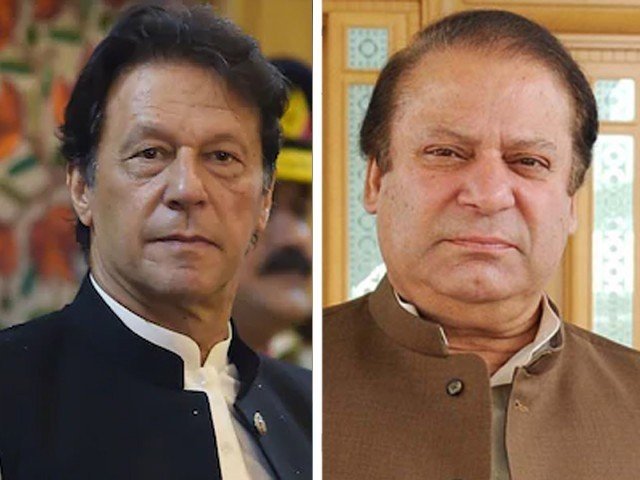
    The Prime Minister (PM) Imran Khan-led Pakistan Tehreek-e-Insaf (PTI) government has borrowed more money in two years than all loans taken by former PM Nawaz Sharif’s governments over 25 years in all three tenures, Pakistan Muslim League-Nawaz (PML-N) chief Shehbaz Sharif has claimed.

    The statement came as senior leaders of the PML-N, at a press conference in Islamabad, took turns to criticise the government’s performance in different areas, while presenting a white paper titled “Destruction of National Power” on the PTI’s two-year rule.

    They accused the government of having ruined the country’s economy through its incompetence and pro-elite policies, saying the ruling party had promised a new Pakistan but the people today were yearning for “old Pakistan”.

    According to Dawn, the criticism began with PML-N president and opposition leader, Shehbaz Sharif, lashing out at the premier, saying it did not know the basics of governance and did not care about issues facing the masses.

    “When we talk about the tabdeeli sarkar [regime of change], we don’t find anything to acknowledge but sadness and pain in the past two years,” he said, adding that inflation caused due to the government’s policies had brought the common man “to the brink of destruction”.

    In contrast, he claimed, the PML-N during its tenure under Nawaz’s leadership carried out “historic development” and completed projects at a fast pace that resulted in prosperity.

    He said the incumbent government had “ridiculed” the China-Pakistan Economic Corridor (CPEC) and levelled allegations against the PML-N. “But not a penny’s worth of corruption could be proven. Their plans backfired,” Shehbaz added.

    He said the PTI had failed to prove corruption in any of the projects started by Nawaz despite its “incessant propaganda”.

    Today, he said, sugar was being sold at above Rs100 per kilogramme and was being imported, even though previously the government had allowed its exports to benefit certain persons.

    He noted that it was the “first time in the country’s 72-year history” that there was a shortage of wheat even though the harvesting season had not yet ended, while a minister was wondering where the millions of tonnes of wheat collected by the government went. “Who is he asking? They should know where it went [and was] smuggled to,” Shehbaz said.

    He also said the government had given the public the “biggest shock” by raising petroleum prices even though international prices were very low, and it raised electricity prices to control circular debt but the prices were “touching the sky”, beyond the reach of the common man.

    “Enough electricity exists in the country but load-shedding is still ongoing due to this government’s worst incompetence,” the PML-N president alleged.

    Shehbaz also said the government had devalued the rupee by 40 per cent but in spite of this, no substantial rise in exports was seen. He further said it was the second time in Pakistan’s history that GDP growth had gone negative, to -0.4pc.

    Khawaja Asif and Shahid Khaqan Abbasi also criticised the government for its “failure” on the foreign policy front and over energy sector losses.

  • KYA BOLA? (Jul 15): ‘Horn Bajaao Hukmaraan Jagaao’ to ‘Jiyalo ko cheeni choro ko jawaab dena khoob aata hai’

    KYA BOLA? (Jul 15): ‘Horn Bajaao Hukmaraan Jagaao’ to ‘Jiyalo ko cheeni choro ko jawaab dena khoob aata hai’

    Following are some of the best snippets from Urdu newspapers on July 15, 2020, which The Current takes no responsibility for.


    ‘Horn Bajaao Hukmaraan Jagaao’

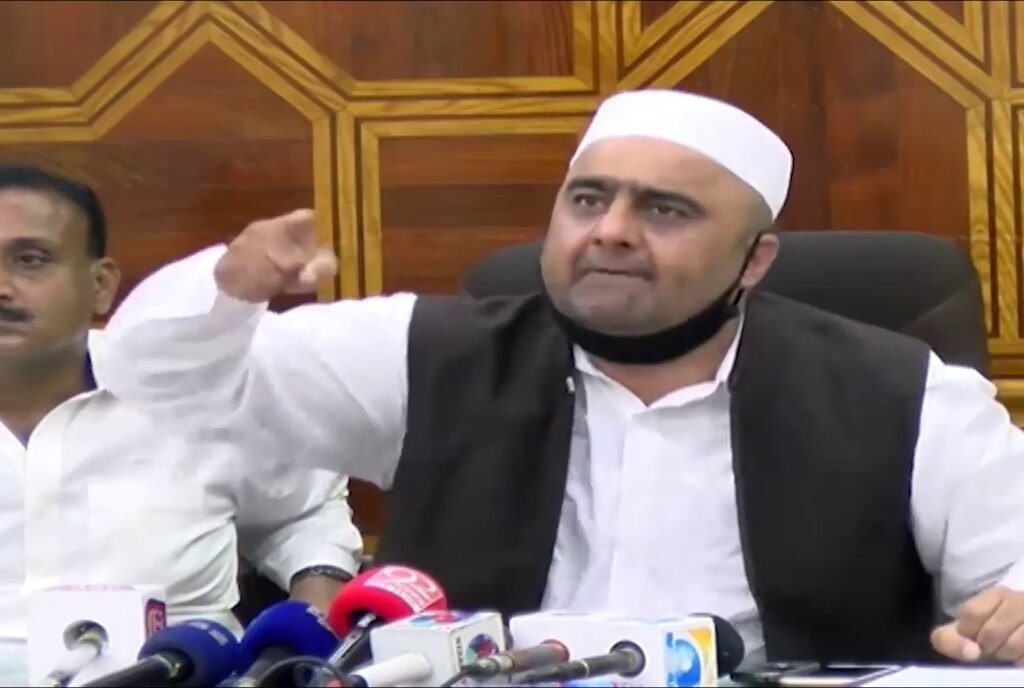
    According to Daily Dunya, the Pakistan Association of Tour Operators has become part of traders’ protest movement “Horn Bajaao Hukmaraan Jagaao”. Launching the movement, trade union member Naeem Mir said,“Agar hukoomat horn se naa jaagi tou taajir baraadari hukoomat ka band bajaa de gi”.


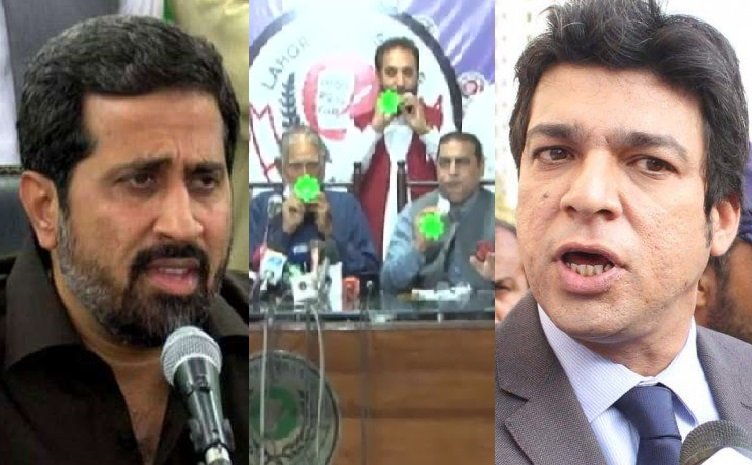
    ‘Faisal Vawda kis ka kis se manaazra krwa rahay hain’

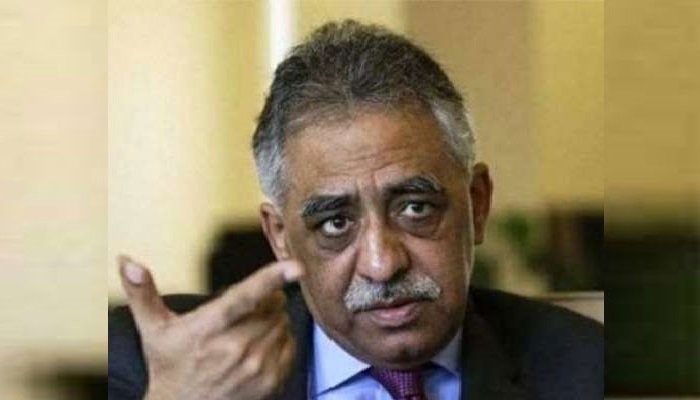
    According to Daily Dunya, Pakistan Muslim League-Nawaz (PML-N) has accepted Federal Minister Faisal Vawda’s challenge of a debate on the economy. PML-N stalwart and former Sindh governor Muhammad Zubair has said that Dr Waqar Masood, who is Pakistan’s longest-running secretary of finance, was part of the PML-N government’s economic team for five years.

    Prime Minister (PM) Imran Khan’s finance aide Hafeez Shaikh, on the other hand, was a part of Pakistan People’s Party (PPP) government. “Faisal Vawda kis ka kis se manaazra krwa rahay hain!” he maintained.


    ‘Jiyalo ko cheeni choro ko jawaab dena khoob aata hai’

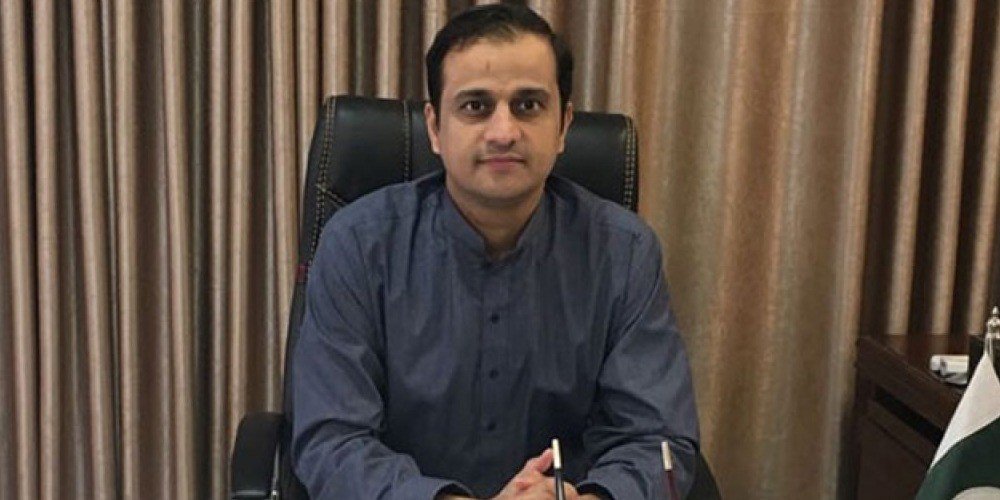
    Daily Jang has reported that Sindh government spokesperson Murtaza Wahab, in response to Punjab Information Minister Fayazul Hasan Chohan’s verbal attacks against PPP chief Bilawal Bhutto-Zardari, has said that“Jiyalo ko cheeni choro ko jawaab dena khoob aata hai,”  taking a dig at the government members in Punjab over their alleged involvement in activities that had led to a sugar crisis earlier this year.

  • Selective lockdown

    Selective lockdown

    Prime Minister (PM) Imran Khan has reiterated that there will not be another lockdown. “It is tantamount to shutting down the entire economy to contain the spread of coronavirus. My views have been quite clear on this from the first day.”

    He said that Pakistan is not like Singapore or New Zealand or Taiwan with smaller populations and is also not a rich country to afford a lockdown. PM Imran said smart lockdown will be imposed after identifying hotspots and blamed the people of Pakistan for not following SOPs.

    Pakistan’s coronavirus cases are more than 141,000 while deaths are 2,647. The number of cases keeps rising rapidly each day, which hospitals seem unable to deal with. Oxygen cylinders are unavailable in most cities or are available at exorbitant prices while prices of oximeters, medicines and other supplies have also shot up. Pakistan’s health sector will not be able to deal with such a huge crisis in the coming days.

    “I have been saying this repetitively that you must take precautions… I am disappointed to see that our people have been very careless,” said PM Imran who had once likened COVID-19 to flu.

    He said that masks are now mandatory and both the administration and volunteers of the Tiger Force will ensure this.

    It is easy for the government to ask people to follow the SOPs and take precautions while not taking responsibility for its policy failure. When lockdown was first imposed in the country, it should have been extremely strict followed by aggressive testing. Lockdown should not have been lifted for Eid when cases were on the rise. The government not just lifted the lockdown but also kept downplaying the virus despite warnings from health workers and senior doctors. No wonder then that people are not taking coronavirus seriously. It is the government’s responsibility to implement rules; people all over the world are not responsible unless rules and laws are strictly implemented. The government should consider temporary lockdown in cities where administration finds it difficult to control the spread of coronavirus, increase the number of tests, create more awareness by telling people how serious this virus is.

    Countries that locked down early and strictly have been able to return to normal much faster and are open to a large extent. In Pakistan, we have been busy in comparisons or criticism of other countries’ strategies while no effective policy has been in place here.

    Reports indicated that the Punjab government was considering imposing a strict two-week lockdown in Lahore at the recommendation of the World Health Organization (WHO) due to the rising number of cases but PM Imran rejected the proposal.

    Selective lockdown is not a solution because its implementation will be extremely difficult. It seems as if the government has adopted the policy of ‘to each his/her own’ when it comes to dealing with the coronavirus. Let’s not forget that countries that have gone down this road have not been able to save their economy either. We should act before it is too late.

  • 10 million Pakistanis to fall below poverty line

    10 million Pakistanis to fall below poverty line

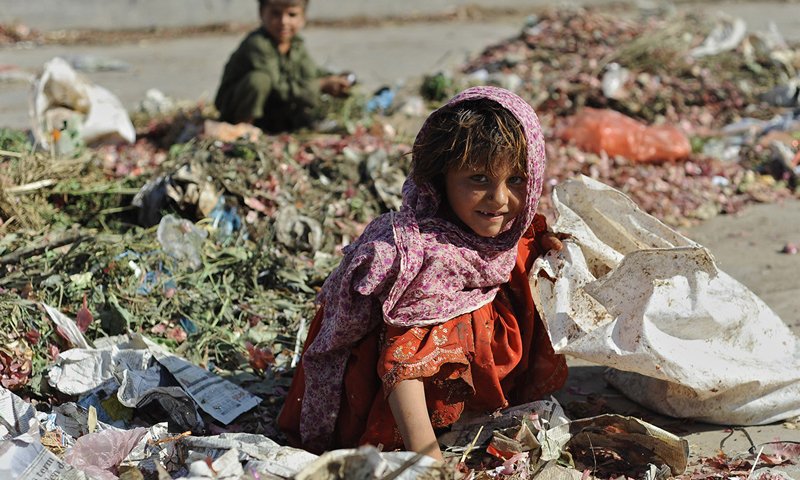
    At least 10 million more Pakistanis will drop below the poverty line because of the toll of the COVID-19 pandemic, the government’s new economic survey estimates.

    Around one in four Pakistanis are currently too poor to meet basic needs, but the figure is predicted to rise closer to 30 per cent of the world’s sixth most populous nation.

    “The COVID-19 outbreak is expected to have a negative impact on Pakistan’s economy, and the number of people living below the poverty line may rise from the existing figure of 50 to 60 million,” the survey says.

    The government’s annual Economic Survey also warned that the economy would contract for the first time in 68 years.

    “The country’s provisional gross domestic product (GDP) growth rate will likely contract 0.4 per cent instead of growing 3.3 per cent as previously forecast,” Adviser to Prime Minister (PM) on Finance Abdul Hafeez Shaikh told a news conference.

    The adviser said the International Monetary Fund (IMF) and World Bank (WB) were making bleaker assumptions keeping in view the severity and duration of the coronavirus pandemic. “In my view, we will have a better estimation when this year ends on June 30.”

    He highlighted the government’s swift and decisive policy actions since the start of the current fiscal year, including resource mobilisation, completion of the IMF programme, austerity measures and monetary policies helping stabilise the economy.

    The adviser stated that these measures helped the economy to reverse large external and internal imbalances. He said that significant improvement in external accounts was made as the current account and trade deficit witnessed a substantial contraction.

    “Foreign reserves steadily improved. There was an increase in foreign direct investment (FDI). The credit rating profile also improved. Fiscal performance remained strong during the first three quarters of the outgoing fiscal year, on the back of consolidation efforts and targeted reforms.”

    “To mitigate the socio-economic impact of the pandemic, the government announced a stimulus package of Rs1.24 trillion and offered further relief measures through the State Bank of Pakistan (SBP). The policy rate was also cut by 5.25pc to 8.0pc,” he said, adding that monetary and fiscal policy interventions had been made to restore economic activity in this difficult time and to reduce negative effects on poverty and unemployment.