Tag: economy

  • Time for kindness

    Time for kindness

    With at least 1.2 million confirmed cases and 64,000 deaths across the globe, the new coronavirus aka COVID-19 pandemic is continuing to take a toll on the world. The economic impact is so huge that it is being compared to the Great Depression.

    Managing Director of the International Monetary Fund (IMF) Kristalina Georgieva says this is an economic crisis like no other. “Never in the history of the IMF have we witnessed the global economy coming to a standstill. It is way worse than the global financial crisis.”

    Countries are fast realising that the impact of this virus is so huge — and unpredictable at the same time — that whatever they do may not be enough.

    First, it was about creating and spreading awareness as not many were taking it seriously. Then came the lockdowns, partial or complete, in many countries. Now there are some other stark realities that people are facing; financial woes being one of them. Social-distancing is a privilege. Not everyone can afford it. Lockdowns have helped contain the spread to a certain extent but the economic impact on daily wagers, the lower middle class and many others will be quite harsh. Thus, governments and private citizens must step in to help. 

    A Facebook post doing the rounds about a university van driver in Pakistan is heartbreaking. According to the post, the driver has been calling up students asking for his monthly charges but not many are responding to his calls/texts. We need to understand that in these tough times, we must help those who are less privileged than us. Those who have given leave to their domestic staff must pay their salaries — and if possible, an advance salary as well. Help those around you who you think need it. Buy rations or donate to charities and organisations like the Edhi Foundation that are doing credible work and helping people in these troubling times. 

    Another tragic aspect is that those who fall victim to corona have to deal with the illness alone — away from family and friends — in order to keep others safe from the virus. Burying those who die of coronavirus has also become an ordeal. Family members and friends can only say goodbye from a distance. Funerals in the time of coronavirus are quite different. Coronavirus has changed the world so drastically that people cannot even grieve together anymore. These are the new realities until a cure is found. 

    We will keep learning new things with each passing day. We will see the world change. People will be hungry, frustrated, desperate, scared, depressed, angry and much more. But we must be kind and understanding for this is what humanitarianism is all about. Be human! Be safe.

    FOLLOW THIS LINK FOR LATEST CORONAVIRUS UPDATES FROM PAKISTAN

  • Inflation at seven-month low in March

    Inflation at seven-month low in March

    Pakistan’s Consumer Price Index (CPI)-based monthly inflation slowed to 10.24 per cent in March 2020 as compared to the previous month, Pakistan Bureau of Statistics (PBS) reported.

    This is the second month in a row that the CPI reading has eased by more than 2 per cent. The bureau had recorded CPI inflation at 12.4 per cent in February. Inflation at 10.2 per cent is the lowest reading in the past seven months.

    According to PBS data, commodity prices remained largely unchanged and markets functioned normally in March despite partial lockdown of the country to control the spread of coronavirus.

    In addition to fuel charges, the prices of food items, including pulses, fresh vegetables and wheat, which have been the main drivers of inflation, also saw a significant downtrend, the bureau said.

    However, it added, the real impact of slash in demand or short supply of commodities due to the shutdown of the market is yet to come.

    “The government’s move to keep the trade of groceries unaffected may support the fall of inflation even in the coming months.”

    The average inflation in the first nine months (July-March) of fiscal year 2020 stood at 11.53 per cent, which in the same period of the last year was 6.3 per cent.

    As per the data, the rate of inflation during the month under review slowed down both in urban and rural areas. Food inflation in urban areas that stood at 15.2 per cent in the preceding month eased to 13 per cent in March. Similarly, in rural areas, the food inflation pace slowed down from 19.7 per cent in February to 15.5 per cent last month.

  • Coronavirus lockdowns: What is govt doing for the poor?

    Coronavirus lockdowns: What is govt doing for the poor?

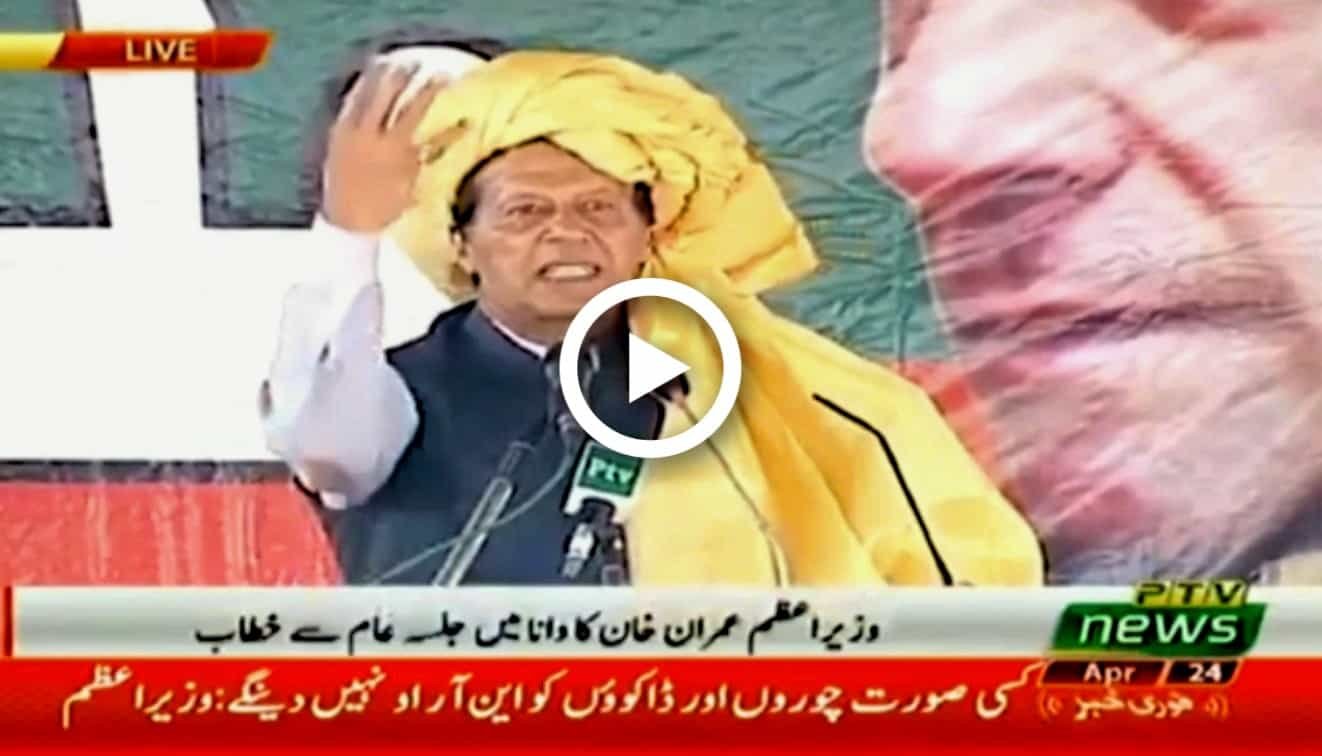
    Prime Minister (PM) Imran Khan has announced his government’s plans to help those facing extraordinary difficulties in the wake of nationwide lockdowns as the new coronavirus — COVID-19 — continues to spread.

    Here’s all you need to know:

  • Coronavirus: PM wants rich countries to waive off Pakistan, other poor countries’ loans

    Coronavirus: PM wants rich countries to waive off Pakistan, other poor countries’ loans

    Prime Minister (PM) Imran Khan has said that rich countries should waive off the loans of poor countries in order to help the latter curb spread of the new coronavirus — COVID-19 — that has become a global pandemic.

    In an interview to a foreign media outlet, the premier predicted that the novel coronavirus would destroy the economy of developing countries. 

    “In case we get swamped by this virus, our health facilities will not be able to cope with it,” he added.

    He also urged the United States (US) to lift sanctions over Iran as they were in a terrible state due to the pandemic and the sanctions had already impoverished Tehran.

    WATCH VIDEO:

    To a question, PM Imran regretted Afghan President Ashraf Ghani’s statement about Taliban. “Solution to the Afghan conflict lies in talks between the shareholders.”

    He said after coming to power, his government had worked on the Afghan Peace Deal with the US and Pakistan was an ally of the US for peace as he had always opposed Islamabad’s inclusion in the war against terror.

    “An extremist government is ruling over India and I have apprised the United Nations (UN) about the grave rights violations of Muslims in India by the Modi government,” he said.

  • Coronavirus can cause $5 billion loss to Pakistani economy

    Coronavirus can cause $5 billion loss to Pakistani economy

    The Asian Development Bank (ADB) has given a “hypothetical worst-case scenario” that shows Pakistan’s economy sustaining a whopping $5 billion loss due to the outbreak of the new coronavirus, in which case Pakistan’s GDP will go down by 1.57% and 946,000 people will be unemployed, The Express Tribune reported.

    According to the report published Friday, the global GDP will also be affected from $77 billion in the best-case scenario to $347 billion in the worst-case scenario, with China affected the most.

    ADB projected that Pakistan’s economy may face $16 to $61 million losses due to the spread of COVID-19, while in a one-page paper issued by Tola Associate — tax and corporate advisors — it was also claimed that the economy of the country will sustain a $5 billion loss due to coronavirus.

    The firm based its claim on an ADB publication.

    According to the estimates published by the ADB the impact of the coronavirus, in terms of the global GDP ranges from $77 billion in best case scenario to $347 billion in worst-case scenario, or 0.1% to 0.4% of the global GDP.

    The report said the total losses likely to be sustained by Pakistan will be only $16.23 million in best case scenario. It projected that in best case scenario, Pakistan’s agriculture and mining sector could sustain a loss of $5.5 million; business trade, personal and public service $5.54 million; hotels and restaurants $0.67 million;  light and heavy manufacturing $3.6 million and transport services $0.92 million.

    In moderate case scenario, the projected losses to be faced by Pakistan are $34.2 million. In worst case scenario, the projected losses to be faced by Pakistan are $60.8 million.

    In the worst case scenario, Pakistan’s agriculture and mining sector will face $21.7 million losses; business and trade $18.8 million losses; hotel and restaurants $2.4 million losses; light and heavy engineering $14.6 million losses; and transport services $3.4 million.

    While discussing the hypothetical worst case scenario, the ADB projected that Pakistan’s economy will lose $5 billion. There will be $1.5 billion loss to agriculture and mining; $1.94 billion to business and trade; $253.7 million in hotel and restaurants; $671 million to light and heavy engineering and $565.6 million loss to transport services.

    In addition to the global slowdown, the fear caused by the COVID-19 is going to cause an estimated loss of $1.5 trillion across the globe in hypothetical worst case scenario. The lockdown has slowed down the pace of the Chinese economy, if compared to the last 30 years.

    Coronavirus losses will depend on the magnitude of the problem and the scale of the underlying uncertainties in countries which have strong trade and production linkages with China, according to the Tola Associate.

    According to the ADB estimates, around 946,000 people will be unemployed in Pakistan in hypothetical worst case scenario.  The net effect of the drop in oil prices due to coronavirus is neutral, yet alarmingly negative for the economy of Pakistan.

    If this crisis prolongs, it will eventually lead to a significant increase in expenditures; a further slowdown in tax collection; a rise in inflation; and an increase in the fiscal deficit.

  • Inflation: PM seeks ISI, other agencies’ help

    The Pakistan Tehreek-e-Insaf (PTI) government has sought the help of Inter-Services Intelligence (ISI) Intelligence Bureau (IB) and Federal Investigation Agency (FIA) to present monitoring reports regularly, as Prime Minister (PM) Imran Khan directs for a large-scale crackdown on smuggling of edibles and other commodities, The News reported.

    According to reports, the premier has asked the Interior Ministry, law enforcement agencies of the federal and provincial governments, and Federal Board of Revenue (FBR) to collectively take action against the menace of smuggling. He has also directed the Interior Ministry to present a report on related measures and a comprehensive strategy on the matter within 48 hours.

    He emphasised that keeping in view the recommendations of the task force formed to combat smuggling, short-term, medium-term and long-term measures should be initiated.

    The decision was taken at a high-level meeting, presided over by PM Imran and attended by Minister for National Food Security Makhdoom Khusro Bakhtiar, Minister for Planning Asad Umar, Adviser to the PM on Commerce and Trade Abdul Razak Dawood, interior and national food security secretaries, and acting FBR chairman among other senior officials.

    The meeting took stock of the demand and supply of essential commodities and their prices with particular reference to their smuggling. The report on progress so far made on the establishment of markets at the western border was also presented at the meeting. The PM directed accelerating the pace of establishment of markets and observed that because of smuggling of food items, common man was facing difficulties.

    “The menace of smuggling is causing losses worth billions to the national economy. Combating this menace is in national interests,” he contended, adding that prices of food items must be brought down by up to 20 per cent.

    The premier also made it clear that no negligence would be tolerated with regard to smuggling.

  • The inconvenient truth about Pakistan’s economy

    Battle of narratives confuses ordinary citizens who are less interested in politics and are more keen to know where the economy is actually heading, what they should expect in terms of growth and whether Pakistan can offer them a prosperous future.

    Economy is the hottest subject these days. Political zealots from opposing sides pick and choose data snippets of their choice, build an argument and relentlessly attack the other party.  On one hand, the Pakistan Tehreek-e-Insaf (PTI) social media machine keeps focusing on massive current account deficit and export decline during Pakistan Muslim League-Nawaz’s (PML-N) tenure, while the PML-N social media warriors rely on abundant ammunition provided by high inflation and slowing down economy.

    This battle of narratives, however, confuses ordinary citizens who are less interested in politics and are more keen to know where the economy is actually heading, what they should expect in terms of growth and whether Pakistan can offer them a prosperous future.

    Let’s first understand the origin of the present economic crisis.

    For years, Pakistan’s foreign exchange inflows — earned through exports, foreign direct investment, remittances and official development assistance — have been lagging behind its forex outflows required to pay for its imports. But this gap increased considerably in recent years, thereby forcing the country to excessively rely on external borrowing. The problem was further compounded by the overvalued exchange rate that was held artificially high during the last government’s term. This overpricing made imports cheaper and exports expensive, further enhancing the trade deficit. As a result, the current account deficit went as high as about $1.5 to 2 billion a month, which became unsustainable. The PTI government sought help from friendly countries like Saudi Arabia and China and managed to get more than $6 billion in loans or deferred payments. But without working on reducing the current account deficit, even this didn’t last long.

    The situation was no better on the fiscal front. Pakistan has been generating far less revenue than what it was spending, leading to huge fiscal deficits, which were again financed through borrowing. The state-owned enterprises kept on draining the exchequer and the circular debt kept on piling up, crippling the government. This unsustainable financial situation compelled Pakistan to knock at the doors of the International Monetary Fund (IMF).

    IMF is considered the lender of last resort and provides a bailout to a country to avoid an economic crisis when no other lender is willing to step in. But in return, it puts down certain conditions for the borrower, to put its house in order. The same happened with Pakistan.

    Pakistan has a resilient economy on the back of its 200+ million-strong population, abundant natural resources and a vibrant private sector. About two-thirds of the Pakistani population is youth, making it the youngest country in South Asia and skilling this workforce can do wonders for the country.

    To immediately curtail the current account deficit, Pakistan had to significantly devalue its exchange rate to bring it in line with its market value. But this sudden devaluation overnight made imports expensive, including petrol, leading to a round of imported inflation. Along with consumer goods, industrial goods and raw materials also became expensive. Many industries such as automotive had to pass this increase on to consumers, putting their products out of reach of many, slowing down the consumer demand for them.

    The government also had to raise prices of gas and electricity to reduce the fiscal deficit, fueling inflation. Mismanagement leading to food supply disruptions, such as wheat and flour crisis, also played its part in further pushing the inflation higher. In anticipation of the inflationary pressure, the government had already increased the interest rates. But these high interest rates, while curbing inflation, made borrowing expensive for the businesses, thus taking a further toll on their growth.

    Factories had to cut down production. Unemployment rose. And the economy started to slow down. It was as if an over-heated engine was suddenly sprayed with a splash of cold water.

    The tight fiscal and monetary policies, which were unavoidable to reign in out of control current account and budget deficits, also brought in inadvertent consequences making life hard for the people. And this is how the government ended up where it is right now. The inflation is still rising, growth is nowhere in sight and the government keeps on mulling over ways to cut corners to meet stringent IMF conditions.

    The dark night of economic hardship will be over soon. But what matters is if we can take some hard decisions during this time, correct the imbalance between our public sector spending and income, develop our export base and pull Pakistan out of its perpetual reliance on foreign and domestic borrowing.
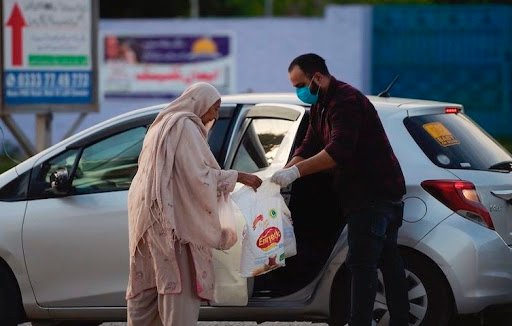
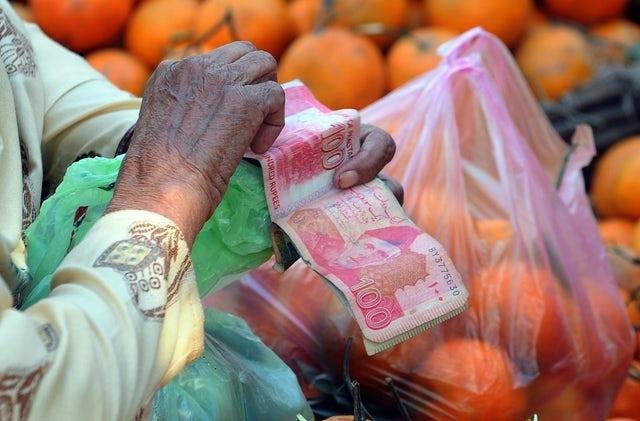
    But all is not doom and gloom. Pakistan has a resilient economy on the back of its 200+ million-strong population, abundant natural resources and a vibrant private sector. About two-thirds of the Pakistani population is youth, making it the youngest country in South Asia and skilling this workforce can do wonders for the country. Not only does the country have 10+ million expats, forming the sixth-largest diaspora in the world, but their remittances have also been growing. Since the year 2000, remittance inflows to Pakistan have grown by 19-20 times in real terms. Moreover, in recent years, China has pumped in billions of dollars, as part of the China-Pakistan Economic Corridor (CPEC), improving Pakistan’s infrastructure and putting it on the Belt Road Initiative (BRI) map. The improved connectivity can yield sizeable trade and investment dividends for Pakistan.

    Given this tremendous economic potential, it is quite likely that as soon as the government will ease out the fiscal and monetary policies, the economy will rebound. But that growth can only be sustained if our trade deficit does not go out of control, our manufacturing sector has the capacity to expand and we can generate enough investments to sustain the growth momentum. And for this to happen, our public sector needs to be more efficient and give more space to the private sector to grow. It also requires that the government should reduce its non-productive expenditure and increase public investments, broaden the tax base and use the tax money effectively to stimulate the economy and stop using state-owned enterprises like Pakistan International Airlines (PIA) and Pakistan Railways (PR) for patronage and instead make them self-sustainable and profitable entities.

    The dark night of economic hardship will be over soon. But what matters is if we can take some hard decisions during this time, correct the imbalance between our public sector spending and income, develop our export base and pull Pakistan out of its perpetual reliance on foreign and domestic borrowing.
  • 31% Pakistanis lost their jobs in 2019: report

    31% Pakistanis lost their jobs in 2019: report

    A global research company, IPSOS, conducted the second Global Consumer Confidence Index survey which revealed that about 31% of Pakistanis have either lost their jobs or know people who lost their jobs in 2019.

    It also stated that around 83% of Pakistanis are fearful of losing their jobs and inflation, unemployment and increasing poverty were the problems that were the most worrying for them.

    People are also uncomfortable making big expenditures. According to the survey, 91% of people are less comfortable buying a car or a home compared to a year ago. 90% are scared of making major household expenses.

    The survey also stated that 17% of businessmen fear going into a loss and only 21% believe that the country is going in the right direction.

    Meanwhile, Prime Minister Imran Khan is hopeful that 2020 will be the year of jobs in Pakistan right after the economy stabilization plan. He said that the media had tried to ‘insult’ and attack him for his goals.

    Results of the survey are based on a nationally representative sample of 2,900 people aged between 19 and 65. It was conducted in December 2019.

  • IN DATA: ‘Pakistan’s economy has crashed 13 times in 60 years,’ says Economist Atif Mian

    In an article in the New York Times, Economist Atif Mian discusses what has led to the persisting economic crisis, and what can save Pakistan’s economy.

    SWIPE RIGHT: Atif Mian’s key points

    His key points include the facts that Pakistan’s volume of exports has not risen since 2005 and the government is running on borrowed money right now, but people are ready for a change. He states that Pakistan elected Imran Khan because they want a change in their daily life.

    Delving a little deeper into what Mian mentioned and the links that he provided in his article, the following infographics show the state of Pakistan’s economy.

    World Bank rankings on Pakistan ease of doing business.

    Pakistan, since 2005, has remained an increasingly difficult place to invest in. The ranking in 2020 is 108, which means that ease of doing business has gotten better as compared to 2015 — when it stood at 138. The best time to invest in Pakistan was 2005, when the ranking was even better — at 65. The lower the World Bank’s ranking, the easier the time is to invest in Pakistan.

    The level of investment by private and public sectors during the 1980s and up until 2015

    The graphic above shows that the best time for public and private investment in Pakistan in relation to the Gross Domestic Product (GDP) — any country’s total value of goods produced and services. The best time to invest in Pakistan was in the early 1990s and has been declining ever since.

    Foreign Investment in Pakistan, India and Bangladesh during the years

    The chart above shows that Pakistan had the highest amount of foreign investment in 2004, but it has been declining ever since (with a minimal boost in 2008).

    https://public.flourish.studio/visualisation/1079785/
    Pakistan has performed the least compared to other countries in Asia

    As compared to other countries in Asia, Pakistan’s investment status is the lowest, especially in recent times.

  • Pakistan outperforms leading stock markets, including Germany, Russia

    Amid efforts by Prime Minister (PM) Imran Khan’s team to stabilise the country’s economy, Pakistan has outperformed some of the world’s leading stock markets, including those of Germany, Sweden, Russia and Ireland.

    According to Bloomberg, Pakistan’s stock market surged by 30% (almost 10,000 points) during the past three months, outperforming the leading stock markets. Ireland’s stock market rose by 19%, followed by Russia’s RTS Index with a 16% increase, Sweden OMX Stockholm 30 with 14% and Germany’s DAX Index that increased by 13.9%, during the same period of time.

    Pakistan’s KSE-100 Index has advanced to the highest level in seven months, after falling to the lowest in almost five years in August, amid attempts by the government to stabilise the economy with a $6 billion loan from the International Monetary Fund (IMF) after a deficit blowout.

    At the same time, bond yields have begun to fall after peaking around 14% mid-year, making debt investments less attractive.

    Even over a week after the report, the stock market remains positive and continues its upward trend. On Tuesday, it touched over 40,000 points in the beginning trade hours. This came a day after the stock exchange gave the highest monthly return in over 6.5 years as the benchmark index rallied past 40,120 points.

    The upward trends in the market, coupled with Moody’s — financial services company — upgrading credit rating of Pakistan, have boosted the confidence of investors. The collective response and profits for traders and investors are making the local market lucrative for prospect interests within and without the country.

    This has materialised also in figures of net-buyers. More people are currently buying shares compared to those selling them.

    According to Samaa, Moody’s expects the current account deficit of Pakistan to continue narrowing in the current and next fiscal year, averaging around 2.2% of the GDP. It was more than 6% in the fiscal year 2018 and around 5% in the fiscal year 2019.

    The stock market had investors pulling out their funds since it plummeted to below 29,000 points in August, owing to the political instability causing negative sentiment and pushing stocks to the verge of a crash. Contrary to the erstwhile beliefs and speculations, the market hit on Monday its highest benchmark index in over 6 months, while the ROI were recorded to be the most since May 2013.