Tag: economy

  • Four Pakistani beggars went to Saudi Arabia under guise of Umrah

    Four Pakistani beggars went to Saudi Arabia under guise of Umrah

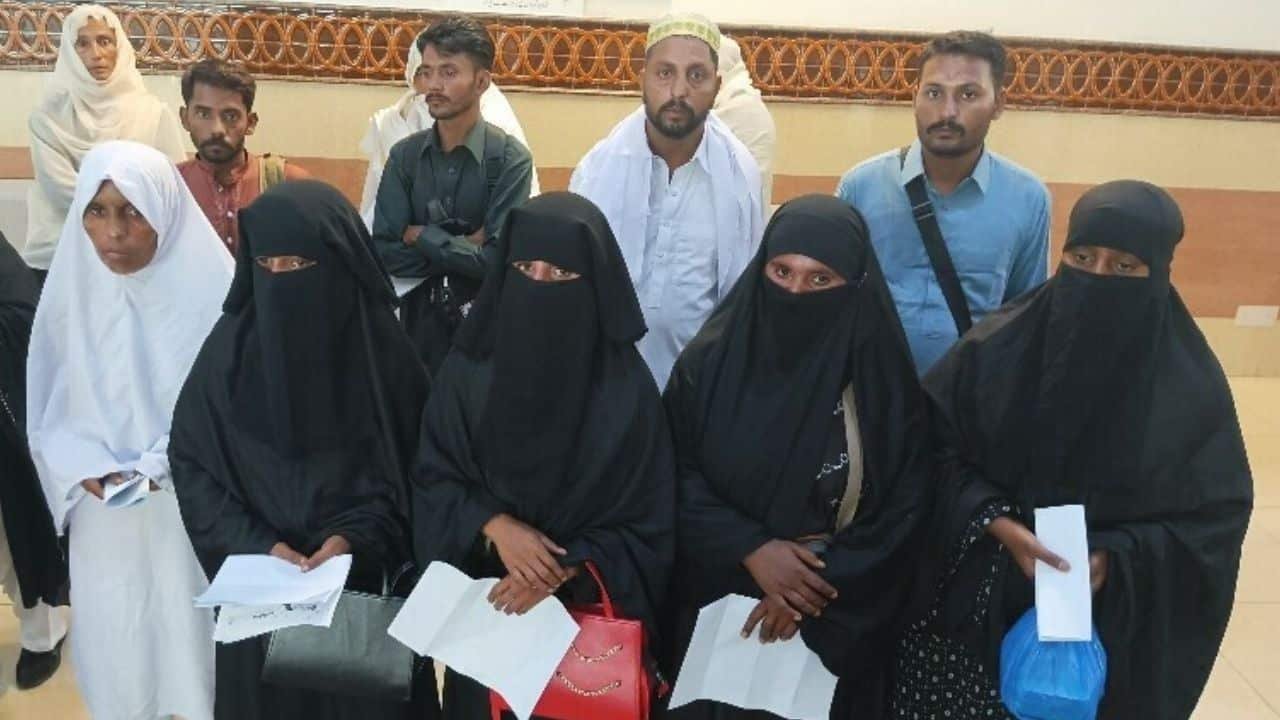
    The Anti-Human Trafficking Circle Lahore of the Federal Investigation Agency (FIA) has arrested four suspects who went to Saudi Arabia to beg under the guise of Umrah.

    Among the four suspects were two women and two men.

    According to the spokesperson of FIA, the accused were offloaded by FIA Immigration at Lahore Airport. They had reportedly gone to Saudi Arabia, Iran and Iraq several times to beg, and were to be received by Pakistani agents on arrival in Saudi Arabia.

    Half of the money earned through begging was to be given to the agent.

    So far, a case against the accused and the agents has been registered while investigations are underway.

  • Want a phone on instalments? The govt has good news for you

    Want a phone on instalments? The govt has good news for you

    The Caretaker Federal Minister for IT, Dr. Umar Saif, has said in a conversation with Samaa that by January 2024, people will be able to buy Pakistani-made mobile phones in installments.

    Dr. Saif pointed out that Pakistan has the fifth largest population and the seventh largest telecom industry in the world; 33 national companies have made 57 million low-cost mobile phones, of which one crore 20 lakhs have been exported.

    Made-in-Pakistan phones will be less expensive and will cost an average of 15 thousand rupees.

    He added that having 1.5 million cell phone users in the country is a big deal; and despite the lack of foreign exchange, most mobile phones are imported, asserting that there is no reason why mobile phones cannot be assembled and manufactured within the country.

    He questioned that if India can manufacture iPhones, why can’t Pakistan too. According to Dr. Saif, Pakistan’s IT exports are 2.6 billion dollars while India’s is 150 billion dollars because there is a lack of trained manpower since only 120 thousand people are available here.

    He asserted there is a need to train students in universities and he aims to upskill two lakh people as well as establish e-employment centres for five lakh freelancers in the next two years.

    The caretaker IT minister is also determined to take IT exports to 10 billion dollars.

  • Pakistani Hajjis to get special perks to make pilgrimage easier

    The Ministry of Religious Affairs has unveiled its Hajj policy for 2024, designed to bring a revolutionary transformation to the pilgrimage journey for Pakistani pilgrims.

    Caretaker Religious Affairs Minister Aneeq Ahmed announced this game-changing policy, which will be presented to the cabinet for approval within the next 10 days.

    The most striking feature is the introduction of a short Hajj option, where pilgrims have the flexibility to go for Hajj from 18 to 30 days, which empowers pilgrims to customise their journey as per their preference.

    QR codes for suitcases

    The new policy also introduces technological advances in which each Hajj pilgrim will be provided with two specially designed suitcases adorned with QR codes. These QR codes will contain essential information such as the pilgrim’s name, passport number, residence, school number, and other pertinent details. This innovation aims to streamline logistics and enhance security during the pilgrimage.

    Special Mobile Package

    In a significant step towards connectivity, the ministry has secured an agreement with a Saudi Arabian mobile phone company to offer a special mobile package exclusively for Hajj pilgrims. Priced at Rs 4,000, it enables pilgrims to make audio and video calls, ensuring they can stay in touch with their families back in Pakistan throughout their Hajj journey.

    Minister Aneeq Ahmed expressed his optimism about these advancements, stating, “Now Pakistani pilgrims will not be lost in the crowd. These changes are designed to simplify the Hajj experience, enhance communication, and provide pilgrims with peace of mind.”

    Additionally, the Saudi government has offered official residences for Pakistani pilgrims, further easing their accommodations during their sacred journey.

  • Govt’s borrowing soars to over Rs1.6 trillion in three months, marking a fivefold increase from last year

    Govt’s borrowing soars to over Rs1.6 trillion in three months, marking a fivefold increase from last year

    In the current fiscal year, FY24, the federal government’s net borrowing to meet its financial obligations for governing the nation amounted to Rs1.6 trillion.

    According to official data released by the State Bank of Pakistan (SBP), the government secured loans exceeding Rs1.6 trillion in cash from the domestic banking sector during the first quarter, up significantly from the Rs261 billion borrowed during the same period in the previous year.

    During this period, the government obtained a net loan of Rs98 billion from SBP. It’s worth noting that the government is obligated to adhere to International Monetary Fund regulations, which prohibit direct borrowing from the central bank.

    Additionally, the government raised Rs1.5 trillion from scheduled banks in the first quarter of FY24 (up to September 8) to address the budget deficit.

    The net borrowing by the government for budgetary support in FY23 totaled Rs3.74 trillion, marking an increase from Rs3.13 trillion in FY22.

  • World Bank urges urgent economic reforms in Pakistan to tackle rising poverty

    World Bank urges urgent economic reforms in Pakistan to tackle rising poverty

    The World Bank has issued a grave warning regarding Pakistan’s economic state, urging the nation to take swift action. They propose taxing key sectors like agriculture and real estate while reducing wasteful expenditures to stabilise the economy. This endeavour aims for a significant fiscal adjustment, equivalent to over 7 percent of Pakistan’s economic size.

    The World Bank also revealed alarming statistics, with poverty levels surging to 39.4 percent in the last fiscal year, pushing an additional 12.5 million people below the poverty line. Currently, nearly 95 million Pakistanis live in poverty.

    To address these challenges, the World Bank has drafted a set of policy recommendations in collaboration with stakeholders, focusing on low human development, unsustainable fiscal practices, overregulation in the private sector, and issues in the agriculture and energy sectors.

    Immediate measures include raising the tax-to-GDP ratio by 5 percent and reducing expenditures by about 2.7 percent of GDP, primarily targeting previously protected sectors.

    Tobias Haque, the lead country economist at the World Bank, underscores the need for substantial policy changes, given Pakistan’s economic and human development crises.

    According to Express Tribune, the World Bank’s recommendations encompass a range of fiscal reforms, including the removal of tax exemptions, increased taxation on real estate and agriculture, and mandatory use of CNIC for transactions.

    Furthermore, the institution advises cutting energy and commodity subsidies, implementing a single Treasury account, and adopting temporary austerity measures for short-term savings. Medium-term savings entail streamlining federal spending and enhancing the quality of development expenditures.

    Najy Benhassine, the country director for Pakistan at the World Bank, emphasises the importance of political consensus and domestic solutions to address Pakistan’s challenges.

    The World Bank highlights the need to address the human capital crisis, reduce energy subsidies, and promote inclusive, sustainable, and climate-resilient development in Pakistan. These measures are imperative to stabilise the nation’s precarious economic situation and alleviate the growing poverty crisis.

  • Pakistan imports tea worth Rs31.64 billion in just two months 

    Pakistan imports tea worth Rs31.64 billion in just two months 

    According to data from the Pakistan Bureau of Statistics (PBS), Pakistan’s imports of food items in the first two months of the fiscal year 2023–24 amounted to Rs378.98 billion. 

    The PBS data reveals that during this two-month period, Pakistan imported tea worth Rs31.64 billion, a notable increase from Rs20.23 billion during the corresponding period in the previous year.  

    Additionally, Pakistan imported palm oil valued at Rs158.7 billion and soybean oil worth Rs13.56 billion. 

    Furthermore, Pakistan imported pulses worth Rs48.25 billion and dry fruits valued at over Rs2 billion during the same two-month period. 

    It is worth noting that in July, the State Bank of Pakistan (SBP) lifted all import restrictions as part of its efforts to meet the conditions set by the International Monetary Fund (IMF). 

    Read more: Pakistani rupee gains value, now at Rs292.78 per US dollar 

    The central bank issued a circular to abolish these import restrictions and authorised banks to facilitate remittances to clear more than 6,000 containers. 

    The SBP clarified in the circular that remittances would be made available for all imports following the implementation of the latest order. 

  • ‘Laggay raho bhai’: Yet another petrol hike has celebrities completely speechless

    ‘Laggay raho bhai’: Yet another petrol hike has celebrities completely speechless

    Friday’s petrol price hike has completely shocked social media. The Ministry of Finance said on X (formerly Twitter) announced that the cost of petrol has risen by Rs 26.02 per litre, coming to Rs331.38 per litre, while high-speed diesel (HSD) saw a hike of Rs17.34 per litre, settling at Rs329.18 per litre.

    Social media users were enraged at the constant price hikes, and celebrities were no exception.

    Singer and actor Ahmed Ali Butt slammed how the public was more concerned with the price of the upcoming iPhone 15 than they were with the ongoing petrol price hike.

    “As a nation we have lost all will to fight against this inflation which is due to corruption and bad economic policies,” he shared on Instagram.

    Veteran comedian and actor Sohail Ahmed took to X, formerly Twitter, to request current government to stop implementing policies that are exploiting common folks.

    Screenwriter Khalil-ul-Rehman Qamar asked all Pakistanis to pray during these difficult times.

    Maybe is mushkil waqt mein thora humor hi chal jata hai? Rabya Kulsoom joked that before any Pakistani, it was the petrol price that reached to the moon!

  • Help us give you the content you want

    Help us give you the content you want

    Your feedback matters!

  • 98 percent of Pakistanis unhappy with country’s direction, survey

    98 percent of Pakistanis unhappy with country’s direction, survey

    Along with the country’s economy, restoring the declining confidence of Pakistani consumers is a big challenge for the caretaker government.

    Apsus Pakistan released the third quarter survey report of Consumer Confidence Index.

    According to the survey report, 98 per cent of Pakistanis are not happy with the country’s direction, while the number of Pakistanis who consider the direction to be correct has come down to merely 2 per cent.

    According to the report, Pakistanis are disappointed with the country’s economy and their own financial situation, 76 per cent of Pakistanis say the country’s economy is weak and 68 per cent say their financial situation is precarious.

    The survey also revealed that 66 per cent of Pakistanis are not optimistic about improvement in the country’s economic conditions, even in the next six months, while 60 per cent see their financial conditions becoming weaker in the future.

  • Pakistan’s textile exports dip 6% in August 2023, posing economic challenges

    Pakistan’s textile exports dip 6% in August 2023, posing economic challenges

    Pakistan’s textile sector has experienced a continued decline in exports, with provisional data released by the All Pakistan Textile Mills Association (APTMA) indicating that in August, exports reached $1.48 billion, down by 6 per cent compared to the same month in the previous year when they stood at $1.58 billion.

    Moreover, the data reveals that Pakistan’s textile exports for the first eight months of the calendar year 2023 have seen a significant drop of 19 per cent, totaling $10.58 billion, as opposed to the $13 billion recorded during the equivalent period in 2022. This year-on-year decline raises concerns for Pakistan’s economy, especially in light of its foreign exchange shortage, which has already led to a depreciation of the rupee by more than 25 per cent in the inter-bank market since the beginning of 2023.

    However, there is a glimmer of optimism as monthly figures indicate a 13 per cent improvement in textile exports, rising to $1.48 billion in August compared to $1.31 billion recorded in July.