Tag: economy

  • Who ‘run the world’? Taylor Swift and Beyoncé are fuelling the US economy

    This is definitely an un-cruel Summer

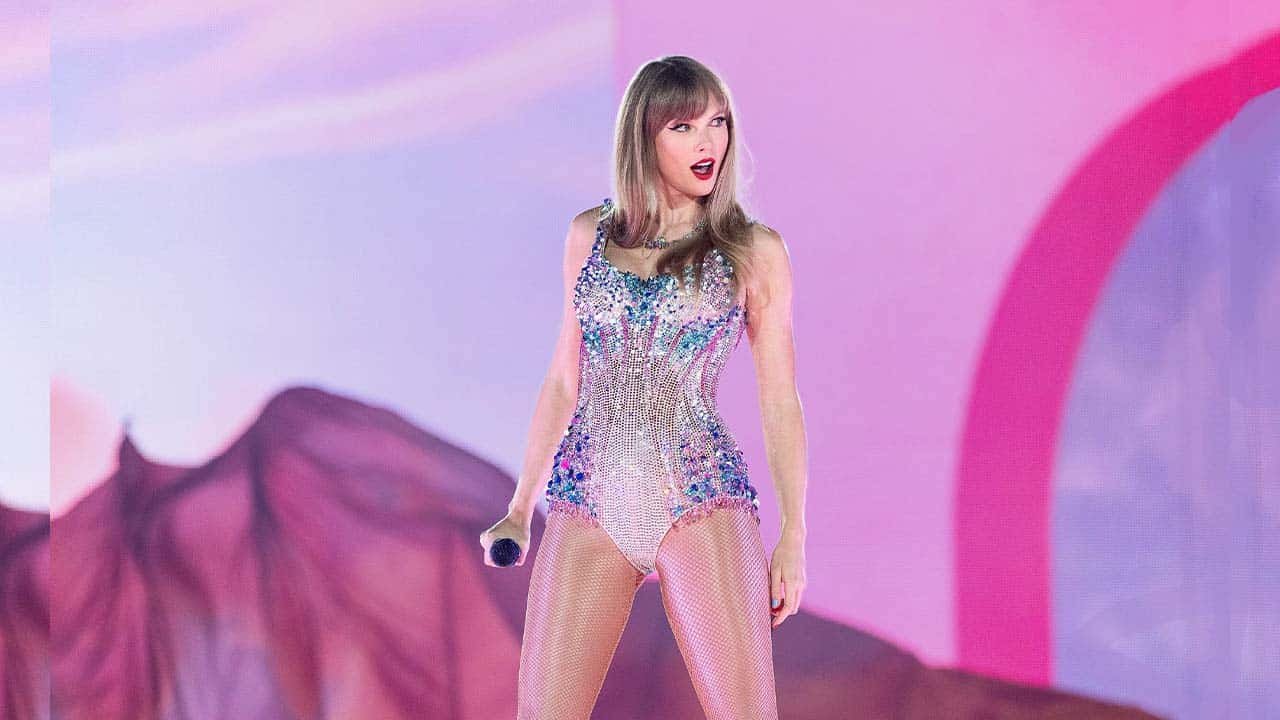
    The US economy can thank Taylor Swift and Beyonce for the extra leg up. According to CNBC, Swift’s critically acclaimed Era’s tour is set to make more than $1 billion, making it the highest grossing tour of all time. While Beyonce’s ‘Renaissance’ tour, according to CBS, could rack up more than $2 billion from concert shows.

    The anticipation of the tours, as well as the two pop icons, has also reportedly boosted local tourism within America, with brands and small business stores churning out creative ways to captivate fans, greatly boosting their income. According to the New York Times, a survey by the Federal Reserve shows hotel revenues have risen in the Philadelphia region, where Swift has booked stadiums for her tour, and Sweden has already said Beyonce’s tour is to thank for to help recover from inflation.

    Moreover, AirBnB reported that the most popular tourist destinations during the Fourth of July weekend was not Greece or Italy, but Ohio city, where Taylor was hosting a concert.

    Small business owners told The New York Times that their earnings tripled in income since the tours began, as Swifties and the Bey Hive flock to athetize their looks ahead of concerts. Shade Hotel in California spoke to the publication about hosting a Taylor Swift-pre party where guests could wear costumes, sip on the ‘Lavender Haze’ cocktail- boosting their earnings.

    Similarly, the bead industry has also witnessed a revival after a lyric from Taylor’s song ‘Midnights’ album went viral. ‘So make the friendship bracelets, take the moment and embrace it’, the lyrics said. Fans began showing up to concerts wearing friendship bracelets, and viral videos on social media show fans exchanging bracelets with each other, with the likes of Nicole Kidman and Keith Urban joining in.

    Speaking to Seattle Times, a staff member of Maple Leaf’s Beadworld said that since the Era’s tour began, they’ve attracted more clients than they can handle.

    “We were full all day,” Sands said. “Definitely busier than normal.”

    Nail technicians and hair salons can thank the Bey Hive for the tripling their income. Raven Voorhees told The New York Times she spent the entire summer working with clients attending Beyonce’s concerts, requesting colors alligned with the themes of the Renaissance tour.

    “It’s boosting business,” Ms. Voorhees said. “We’re talking about someone who’s paying about $60 max for her service to now $150 because she’s doing a new set, she’s getting the works, all of the nail art and then, even after that, having to come back and having to do it again.”

    It turns out even public transit services can thank Beyonce and Taylor Swift for never going out of style. In Los Angeles buses stayed open late for concert-goers, thanking Swift for the boost.

    “We’re enchanted that Taylor Swift fans have given a big boost to public transit across the United States this year — and we’re looking forward to spending our midnights with many of you very soon,” the city’s metro system punned on its website.
  • Economists predict ‘Barbenheimer,’ Taylor Swift, and Beyoncé will inject billions into US economy

    Economists predict ‘Barbenheimer,’ Taylor Swift, and Beyoncé will inject billions into US economy

    Taylor Swift, Beyoncé, and the “Barbenheimer” fever are making a substantial positive impact on the United States economy. According to Bloomberg Economics, the tours of these mega stars and the success of their blockbuster films are projected to contribute a significant sum of $8.5 billion (S$11.5 billion) to the US economy in the third quarter.

    The concerts alone, with nearly 50 shows scheduled, could boost the US gross domestic product (GDP) by $5.4 billion. Additionally, the films “Barbie” and “Oppenheimer” are anticipated to result in approximately $3.1 billion in consumer spending and export revenue from international ticket sales.

    This combined effect is expected to lead to a 0.7 per cent increase in annualized real personal consumption expenditures and a 0.5 per cent rise in GDP during the July-through-September period. Economists Anna Wong and Eliza Winger have revised their growth forecasts for this period, attributing the adjustment in part to these notable gains. This economic outlook further reinforces the ongoing strengthening of the American economy, which has been evident in recent months.

    The current economic landscape shows signs of easing inflation and a stable labor market, which are propelling consumer spending. This positive scenario is causing some economists to postpone their predictions of an impending recession, while others are reconsidering their projections altogether.

    Nonetheless, the analysts at Bloomberg argue that the benefits generated by the movies and tours are temporary in nature. They highlight the absence of Beyoncé and Swift performances in the US during the last quarter of the year and describe the Barbenheimer event as a rare occurrence. Moreover, the US economy remains vulnerable to a drop in demand, and challenges persist in the housing market due to low supply and rising mortgage rates.

    The Bloomberg economists emphasise that a significant portion of the current economic vigor is linked to short-term factors. In their assessment, These factors create a facade of robust consumption, when in reality, it is losing momentum. Importantly, their evaluation only accounts for ticket sales for “Barbie” and “Oppenheimer” up until Wednesday, and they do not include the net-export effects of the four concerts Swift is performing in Mexico City this week.

  • IMF and Pakistan discuss circular debt and energy sector losses in virtual meeting

    IMF and Pakistan discuss circular debt and energy sector losses in virtual meeting

    Pakistan and the International Monetary Fund (IMF) recently discussed the country’s energy sector losses and efforts to reduce circular debt during a virtual meeting. The government is committed to adjusting fuel prices and quarterly tariffs to eliminate circular debt accumulation.

    According to The News, a new plan called the Circular Debt Management Plan (CDMP) was shared with the IMF. This plan involves revising fuel price adjustments and quarterly tariffs upward to counter circular debt growth. The IMF expressed concerns about the plan’s sustainability due to slower recoveries.

    The government was advised to create an effective strategy to tackle this issue. The meeting took place virtually on a technical level. The newly appointed Finance Minister, Dr Shamshad Akhtar, is expected to hold a virtual meeting with the IMF team soon.

    The IMF’s first review is scheduled for October or November and will be based on economic data from the initial quarter (July–September) of the current fiscal year.

    Pakistan and the IMF signed a $3 billion bailout package under the Standby Arrangement in July 2023. Pakistan has already received $1.2 billion, with two more reviews planned to release the remaining $1.8 billion by March or April 2024.

  • Pakistani rupee slides to Rs297.13 against US dollar on first day of the week, losing Rs1.35

    Pakistani rupee slides to Rs297.13 against US dollar on first day of the week, losing Rs1.35

    The Pakistani rupee (PKR) continued its decline against the US dollar on the first working day of the week. PKR went down by 0.45 per cent, which is about Rs1.35, and closed the day at Rs297.13 in the interbank market, as reported by the State Bank of Pakistan.

    This shows that over the past five trading sessions, the Pakistani rupee has lost a total of Rs8.64. It’s important to note that on the previous Friday, the rupee had closed at Rs295.78 after losing 0.86 paisas, which is about 0.29 per cent.

    Looking at last week, from Tuesday to Friday, the Pakistani rupee experienced a significant loss of Rs7.29. This indicates a period of notable fluctuation for the rupee in the foreign exchange market.

  • Pakistan puts brakes on diesel imports: Economic slowdown and smuggling impact

    Pakistan puts brakes on diesel imports: Economic slowdown and smuggling impact

    In response to a drop in demand within Pakistan due to an economic slowdown and smuggling from Iran, the country opted not to import high-speed diesel (HSD) in July.

    Around 70 per cent of Pakistan’s diesel is consumed by its transport and agriculture sectors. However, these sectors have been severely affected by the economic crisis and the fact that Pakistani diesel is more expensive compared to the cheaper Iranian fuel.

    In the same period the previous year, Pakistan imported 162,000 metric tonnes of HSD. An industry expert stated, “The economic slowdown has greatly affected the transport sector’s operations, and even the agricultural sector’s diesel consumption has been low.” He also noted that daily diesel consumption through legal channels had dropped from 22,000 metric tonnes to 15,000 metric tonnes.

    Pakistan State Oil (PSO), the largest oil importer, postponed its planned HSD imports for July because local refineries had enough stock to meet the reduced demand. Another source explained, “If HSD had been imported, refineries would have had to stop operations as the local transport sector wouldn’t have been able to absorb their diesel output.”

    According to Geo, it is expected that PSO will not import HSD in August or September either, given the dim demand outlook and the growing price difference compared to Iranian diesel. Notably, Iranian diesel, which costs around Rs200 per litre in border areas, has become a viable alternative, meeting much of the demand in Pakistan.

    In response to an increase in diesel prices by 7 per cent to Rs293.40 per litre on August 15, the consumption of diesel through legal channels has decreased by approximately a third, according to an industry official.

    Given the ongoing circumstances, officials do not anticipate an improvement in diesel consumption patterns. The expected rise in diesel prices will likely further drive the preference for Iranian diesel in the country.

  • Weekly inflation increases to 27.5%, impacting household expenses

    Weekly inflation increases to 27.5%, impacting household expenses

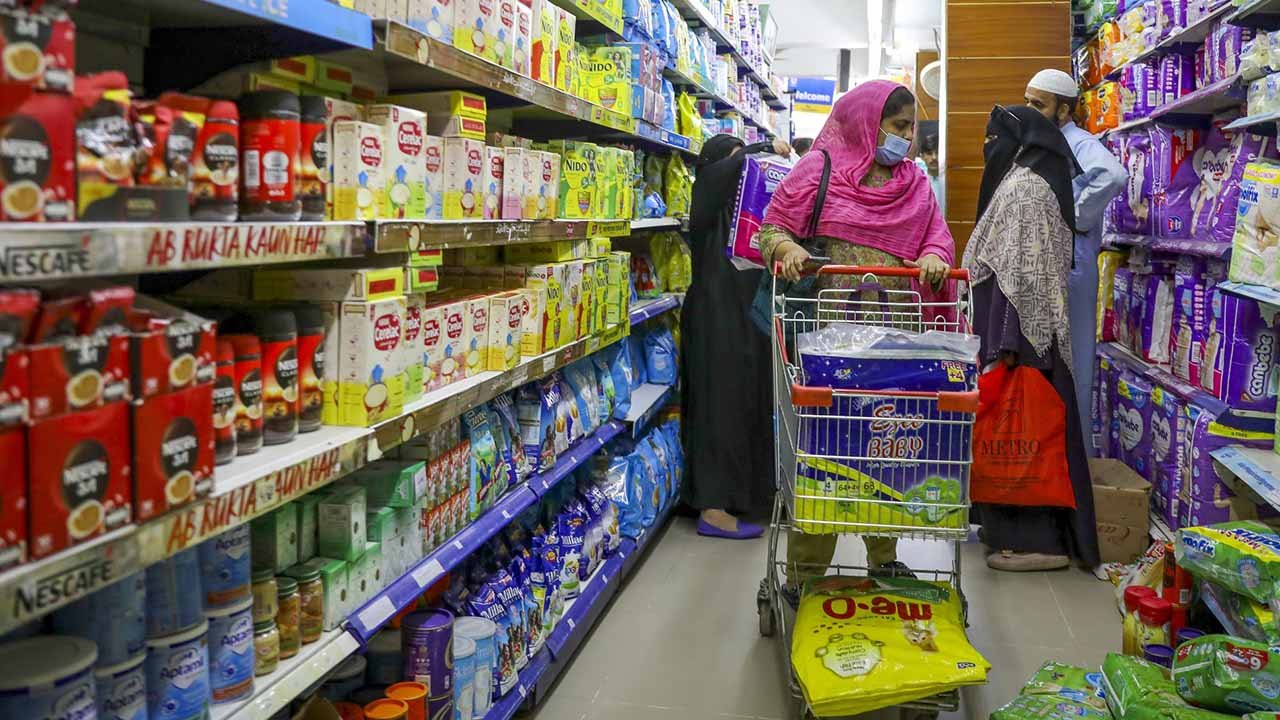
    According to official data from the Pakistan Bureau of Statistics (PBS), the Sensitive Price Indicator (SPI) shows that inflation for the week ending on August 17 increased by 27.57 per cent compared to the same period last year. In simpler terms, things are getting more expensive.

    Looking at shorter periods, within a week, inflation went up by 0.78 per cent. This means prices are rising quickly and there’s no sign of them slowing down, which is worrying for both economists and consumers.

    Comparing some numbers, the overall price index was 275.57 on August 17, up from 273.43 on August 10 this year, and a significant increase from 216.02 on August 18 last year.

    Out of the things people buy, 32 items got pricier, 7 got cheaper, and 12 stayed the same. Among the things that became more expensive this week compared to a year ago were things like chillies powder (up 7.58 per cent), rice irri-6/9 (up 7.48 per cent), garlic (up 5.06 per cent), sugar (up 4.02 per cent), gur (up 3.23 per cent), and chicken (up 2.83 per cent). non-food items like diesel (up 7.29 per cent) and petrol (up 6.40 per cent) also got more expensive.

    On the flip side, the price of some things dropped. Tomatoes got 13.60 per cent cheaper, cooking oil (5 liters) became 1.65 per cent cheaper, and there were smaller drops in prices for things like vegetable ghee and wheat flour.

  • PDM govt adds Rs18.5 trillion to Pakistan’s debt in just 15 months

    PDM govt adds Rs18.5 trillion to Pakistan’s debt in just 15 months

    In a span of just 15 months, the Pakistan Democratic Movement (PDM) government has significantly added Rs18.5 trillion to the country’s public debt, a striking amount surpassing the debt accumulation of its rival, the Pakistan Tehreek-e-Insaf (PTI), during its three-and-a-half-year tenure.

    Between March 2022 and the close of the 2022–23 fiscal year, the gross public debt surged from Rs44.4 trillion to Rs62.9 trillion. This rapid increase of 41.7 per cent in just 15 months occurred without a well-defined strategy to curb it. As a result, the federal government’s debt, for which the finance ministry bears direct responsibility, escalated to Rs60.8 trillion by June 2023. The debt bulletin, published on a recent Wednesday, indicates an addition of Rs18 trillion during the PDM government’s one year and three months in power.

    As per a report in the Express Tribune by Shehbaz Rana, this unsustainable surge in public debt is mainly ascribed to unregulated spending, insufficient revenue collection from areas such as real estate, services, and agriculture, alongside the diminishing value of the Pakistani rupee in comparison to the US dollar.

    It’s worth noting that the government under Imran Khan added Rs18.1 trillion to the public debt over a span of 44 months, a threshold that the current administration led by Shehbaz Sharif managed to surpass in just 15 months. However, it’s important to mention that the debt figure for July has yet to be compiled by the State Bank of Pakistan.

    This trend becomes even more significant when we consider that the combined debt addition by the Pakistan Peoples Party (PPP) and the Pakistan Muslim League-Nawaz (PML-N) from 2008 to 2018 was Rs18 trillion. Another Rs18 trillion was added from August 2018 to March 2022 during Imran Khan’s government, and now the PDM government has contributed an additional Rs18.5 trillion in a remarkably brief period of 15 months.

    Comparatively, from September 1, 2018, to the end of March 2022, the PTI government, on average, increased the public debt by Rs14.5 billion per day, more than double the average daily increase of Rs5.6 billion during the PML-N period. The PDM government has further escalated this daily addition to an average of Rs41 billion.

    By the time the PTI government’s term concluded, the total public debt amounted to Rs44.4 trillion, equivalent to 83.5 per cent of the gross domestic product (GDP) before the economy’s rebasing. Following the rebasing process, there was a 15 per cent reduction in public debt relative to GDP but no reduction in absolute terms.

    At present, the public debt constitutes 74.3 per cent of the GDP. Steep currency depreciation has also contributed to the federal government’s debt. Over the past 15 months, the total domestic debt of the federal government surged to Rs38.8 trillion, an addition of Rs10.8 trillion (or 38 per cent). When Imran Khan left office, the domestic debt stood at Rs28 trillion.

    Alarmingly, the external debt of the federal government surged by 48 per cent to Rs22 trillion within just 15 months, with a net increase of Rs7.1 trillion attributed largely to currency depreciation. By the end of March 2022, the external debt, excluding IMF liabilities, was Rs14.9 trillion.

    External debt constitutes roughly 36 per cent of the total debt, and fluctuations in the exchange rate have a significant impact on debt even without borrowing additional funds. In a span of 15 months, the rupee-dollar parity plummeted from Rs183.5 to Rs286.4, a decline of Rs103 or 56 per cent. This substantial and rapid depreciation has also contributed to inflation.

    On a recent Wednesday, the rupee slid further to Rs295. An immediate outcome of this mounting debt is a considerable rise in the cost of debt servicing. It is projected that debt servicing will exceed Rs5.8 trillion by the end of the last fiscal year. 

    As a result of reckless borrowing, Pakistan’s total debt and liabilities have surged to Rs77.1 trillion, equivalent to 91.1 per cent of the national economy’s size. This ratio is deemed unsustainable for a developing nation like Pakistan.

    During the past four years of the IMF programme, Pakistan struggled to enhance the Federal Board of Revenue’s (FBR) tax-to-GDP ratio, despite it being a priority for both the IMF and the World Bank.

    This raises concerns about the effectiveness of obtaining foreign loans for the sake of tax reform. Moreover, there has been a lack of serious efforts to control expenditures. The Shehbaz Sharif government, like its predecessors, continued to allocate funds to projects and initiatives that fall under provincial jurisdiction as per the constitution.

  • Disney to shut Lucasfilm studio in Singapore

    Lucasfilm’s visual effects and animation studio in Singapore will close down in the coming months due to economic reasons, parent firm Disney said on Tuesday.

    The Singapore studio was set up in the 2000s by Industrial Light & Magic (ILM), which was founded by Star Wars creator George Lucas and is a division of Lucasfilm.

    For years, its home in Singapore was the striking Sandcrawler building, named after the Star Wars transport that inspired its design. Lucasfilm sold the building in 2021.

    “Over the next several months, ILM will be consolidating its global footprint and winding down its Singapore studio due to economic factors affecting the industry,” Disney said in a statement.
    It did not say how many employees will be affected in Singapore.

    Disney said in February it was cutting 7,000 jobs worldwide — part of a reorganisation as its traditional television business erodes and in the face of stiff competition and eroding subscriber numbers for its streaming service, Disney+.

    “Lucasfilm’s decision to wind down its Singapore operations is in response to changes in the industry and business conditions,” Singapore’s Infocomm Media Development Authority (IMDA) and the Economic Development Board (EDB) said in a joint statement.

    “The global media industry is facing disruption from rapid technological advancements, while studios are coping with challenges relating to talent and profitability.”

    The Singapore studio was involved in high-profile Hollywood productions including “Iron Man”, “The Avengers” and Star Wars films, according to the EDB’s website.

  • IMF delegation to evaluate Pakistan’s economic performance during November visit

    IMF delegation to evaluate Pakistan’s economic performance during November visit

    The International Monetary Fund (IMF) is gearing up for a vital visit to Pakistan, scheduled for November. The purpose of this visit is to assess Pakistan’s economic performance, particularly focusing on the period from July to September.

    Reliable sources in financial circles have shared that this visit is part of an ongoing review following the extension of the loan programme. Representatives from the IMF and the caretaker administration will engage in important discussions to gauge Pakistan’s progress and its adherence to the outlined economic targets.

    Reports from ARY News indicate that Pakistan is on track to receive the next portion of financial assistance, which amounts to $700 million from the $3 billion loan programme. This development underscores Pakistan’s dedication to meeting the IMF’s conditions aimed at boosting economic stability and growth.

    Forecasts suggest that the IMF is set to disburse around $1.8 billion in funds to Pakistan by March 2024. This positive outlook reflects the gradual restoration of investor confidence and the promising trajectory of Pakistan’s economy.

    However, the release of these funds hinges on Pakistan’s successful completion of two critical economic reviews. This underscores Pakistan’s commitment to implementing structural reforms and achieving sustainable economic development.