Tag: ECP

  • How politicians are reacting to election date

    How politicians are reacting to election date

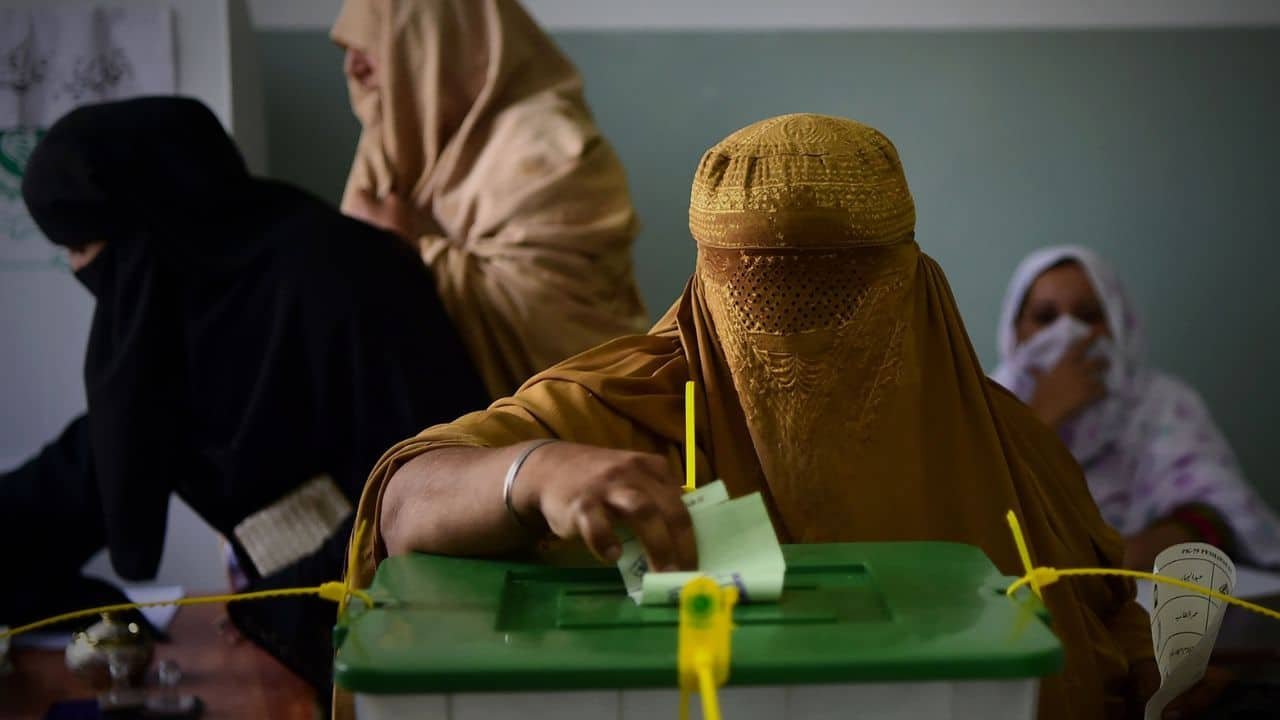
    The Election Commission of Pakistan (ECP) told the Supreme Court of Pakistan (SC) that general elections will take place on February 11, 2024. Different political leaders of multiple political parties reacted to the announcement of election date.

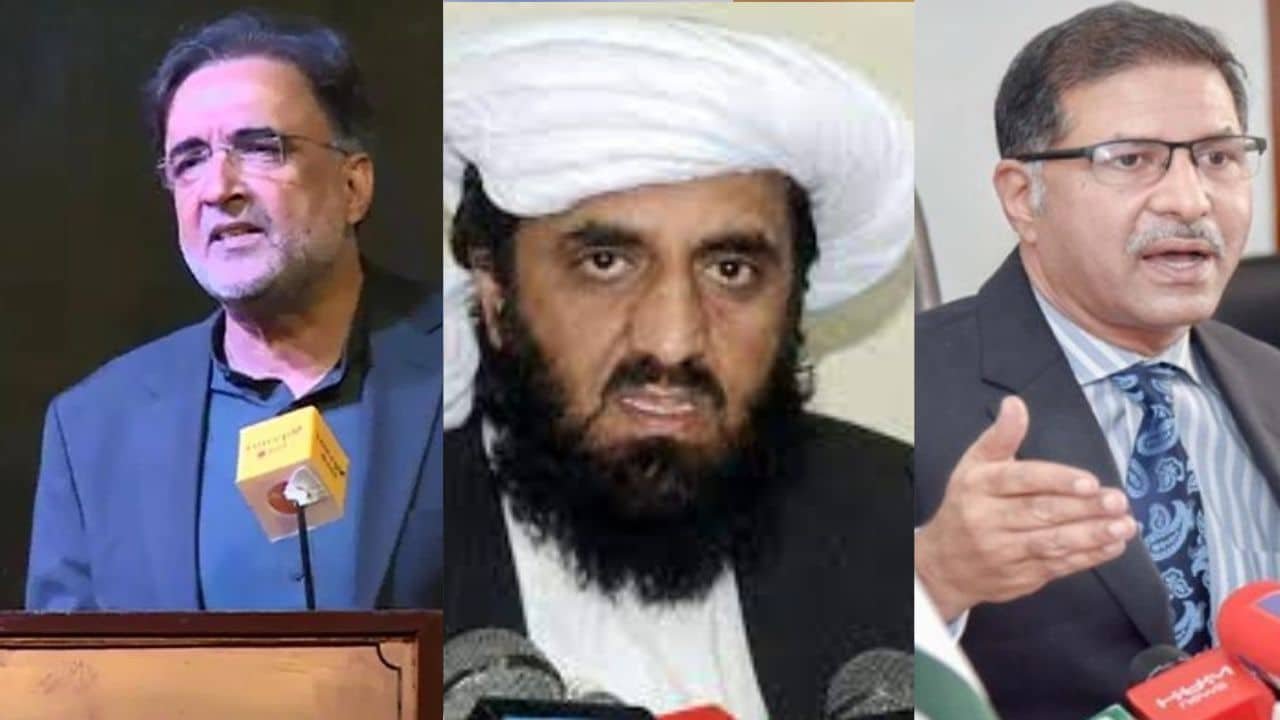
    Pakistan People’s Party (PPP) senior leader Qamar Zaman Kaira told SAMMA TV that the announcement of the election date has helped to end uncertainty in Pakistan politics.

    “The date announcement was necessary so political parties could start the political process. In fact, the PPP has launched the electoral campaign process. Let’s end the uncertainty,” Kaira said.

    Pakistan Tehreek-e-Insaf (PTI) lawyer, Barristor Syed Ali Zafar, said in a tweet that, “Supreme Court has said once date of election given it will be written in stone and shall not be changed. After the meeting between President and ECP, the date will be announced hopefully today. This could be a historic and game changing decision by SC. Constitution is supreme.”

    On the other hand, the Pakistan Muslim League-Nawaz (PML-N) declared the announcement of election’s date a good development.

    PML-N leader Muhammad Zubair said that it’s a good thing that ECP is conducting elections on February 11, 2024.

    “There was uncertainty related to the election in the country. It is written very clearly in the constitution regarding the election,” he said.

    Jamiat Ulama-e-Islam (JUI-F) leader Hafiz Hamdullah also said that his party is ready for elections. “Now the ECP has told the apex court that elections will be held on February 11,” he added.

    Muttahida Qaumi Movement-Pakistan (MQM-P) also stated that conducting elections is a responsibility of ECP. MQM-P’s leader, Amin ul Haq, said that the election date announcement is a good omen and would take the country ahead.

  • Raja Riaz, Rana Sanaullah ki prediction sach sabit hui

    Raja Riaz, Rana Sanaullah ki prediction sach sabit hui

    A three-member bench, headed by Chief Justice Qazi Faez Isa and comprising Justice Aminuddin Khan and Justice Athar Minallah, was hearing petitions filed by the Supreme Court Bar Association (SBCA) and others seeking directives to hold general elections within 90 days as stipulated by the Constitution.

    During the hearing, Election Commission of Pakistan (ECP) lawyer, Sharjeel Sawati, said that elections will be held on February 11, as per Geo News.

    Former leader of the opposition in National Assembly (NA) Raja Riaz had said on August 12 this year that the upcoming general elections would be held in February 2024 – three months later than the constitutionally allowed limit of 90 days.

    Talking to Maria Memon on Sawal ye Hai on ARY News, the Pakistan Tehreek-e-Insaf (PTI) dissident leader said, “Elections will be held 4 to 5 days before or after February 15.”

    While talking to Kashif Abbasi on his program, Off the Record, on Tuesday, August 15, he said, “The ‘elders’ have decided that the general elections will be held in February.”

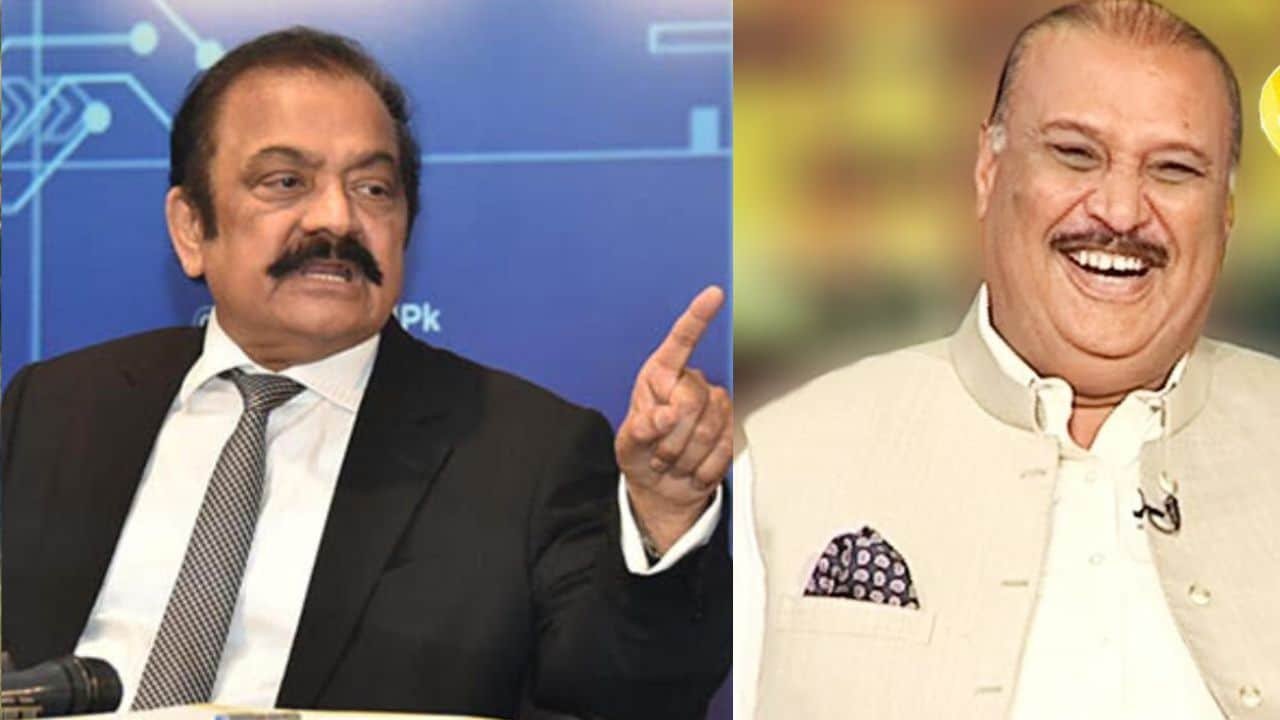
    PML-N leader Rana Sanaullah said on Tuesday, August 15, that his party’s supremo, Nawaz Sharif, was confident that general elections would be held in the country in February next year.

    “He (Nawaz) is sure that elections will take place in February. Delimitation of constituencies has to be completed before then, and it will be completed by December,” Sanaullah said while responding to a question about Nawaz’s expected return to Pakistan during an appearance on Geo News show ‘Aaj Shahzeb Khanzada Kay Saath’.

    READ MORE: Finally, ECP gives date for general elections

  • Finally, ECP gives date for general elections

    Finally, ECP gives date for general elections

    A three-member bench, headed by Chief Justice Qazi Faez Isa and comprising Justice Aminuddin Khan and Justice Athar Minallah, is hearing petitions filed by the Supreme Court Bar Association (SBCA) and others seeking directives to hold general elections within 90 days as stipulated by the Constitution.

    During the hearing, Election Commission of Pakistan (ECP) lawyer, Sharjeel Sawati, said that elections will be held on February 11, as per Geo News.

    After being questioned about wether they have consulted with the president of Pakistan on the date or not, the lawyer was instructed to consult with Arif Alvi today.

    Chief Justice of Pakistan (CJP) Qazi Faez Isa on Thursday remarked that President Arif Alvi violated the Constitution by not giving a date for general elections.

    At the outset of the hearing, Pakistan Peoples Party (PPP) counsel Farooq Naek told the court that his party had submitted the request to become a party in the case.

    After this, PTI’s lawyer Ali Zafar started his arguments by saying that the party has limited its petition to only seeking timely elections.

    “Elections must be held within 90 days after the dissolution of assemblies as per the Constitution,” he stressed. At this, CJP Isa said that the plea seeking polls within 90 days has then become ineffective.

    “The court was told that it was impossible to hold polls within 90 days in the previous hearing,” he remarked.

    Zafar then said that PTI only wants elections.

    He further said that there won’t be any parliament and law if elections are not conducted.

    “Giving a date and schedule of elections are two different things. President Dr Arif Alvi had written a letter to hold consultations with the ECP,” he remarked.

    The CJP observed that the president had written in his letter that the court should look into the matter of elections.
    “Is the president saying that court should take notice of the issue about elections,” he questioned.

    At this, Zafar replied that the president had said that the court can also review the matter.

    CJP Isa then said that the president did not give any date for elections in his letter. “Did the president not fulfil his constitutional duty,” he asked.

    Zafar said that the president fulfilled his responsibility by consulting on the elections.

    On this point, Justice Minallah asked why the president wrote the letter in September and not on August 15 after the assemblies were dissolved on August 9.

    “Did the president only ask the Supreme Court verbally to take notice of the matter,” asked CJP. He further said that the head of state wrote the letter to the ECP and not to SC.

    CJP Isa then questioned whether the apex court had the authority to give a date for polls. “Is it necessary for the president to consult the prime minister to give a date,” he inquired.

    Zafar replied that consultations are not necessary as the president has his own constitutional duty to give a date.

    During the last hearing, the SC had issued notices to the Election Commission of Pakistan (ECP) and the federal government for their input on polls within 90 days.

    The ECP had earlier set the date for elections in Punjab on April 30, but then postponed them to October 8 — in Punjab as well as KPK.

    PTI filed a plea in the top court against this decision.

    On April 4, the SC had ordered the government and the ECP to hold elections for Punjab assembly on May 14 but both institutions said this would not be possible due to shortage of resources, including funds and manpower.

    On September 21, the ECP announced that general elections will be held in the last week of January 2024. However, it did not issue a specific date.

    The commission also published the preliminary constituency lists.
    According to the ECP, objections to the preliminary constituency lists will be entertained until October 26, with hearings on these objections slated to run until November 25.

    The final electoral rolls are scheduled for release by November 30, and within 54 days following this publication, the election commission has outlined the election timetable.
  • ‘Zia-ul-Haq ko Sadar Nahi Maanta’: Chief Justice of Pakistan

    ‘Zia-ul-Haq ko Sadar Nahi Maanta’: Chief Justice of Pakistan

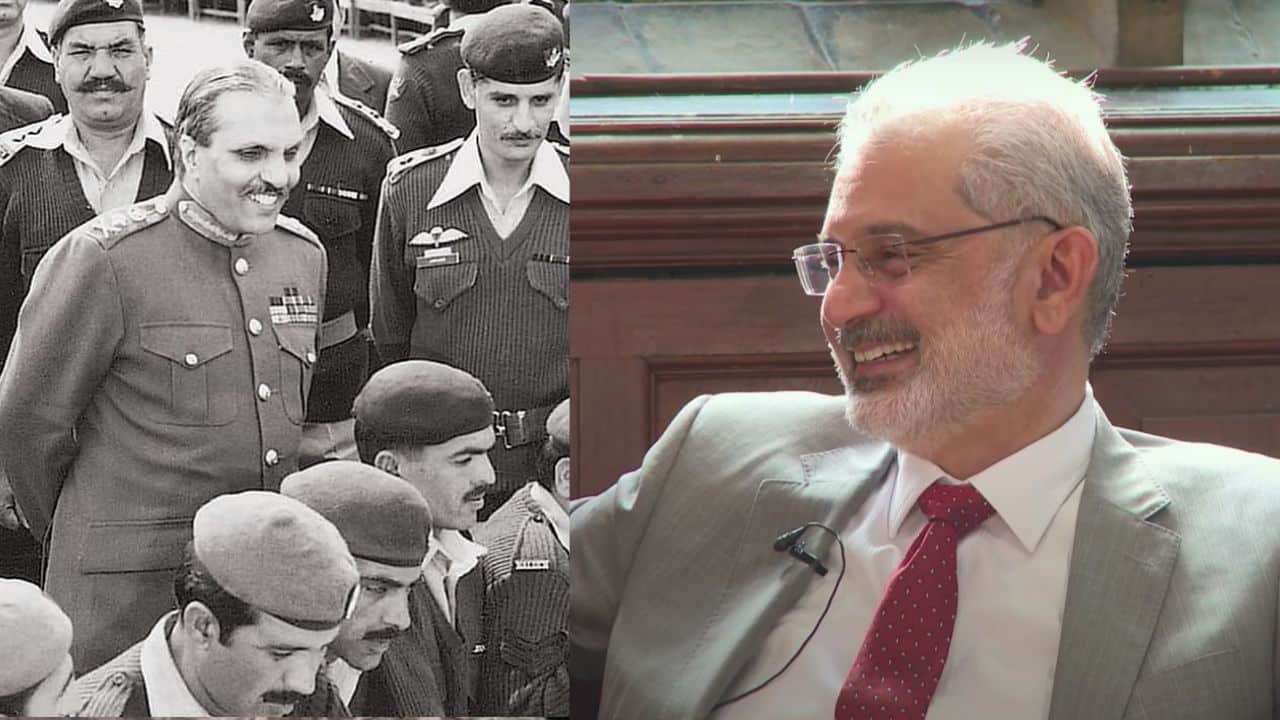
    Chief Justice of Pakistan, Justice Qazi Faez Isa gave an unexpected but strongly worded statement during the hearing of the Faizabad sit-in case, stating that he doesn’t recognize the late military dictator General Zia-ul-Haq as president, as per Neo News.

    During the hearing of the Faizabad sit-in case, Justice Faiz Isa, addressing Ijaz-ul-Haq’s lawyer, said that he does not consider Zia-ul-Haq the President of Pakistan.

    When the Attorney General revealed that Ijaz-ul-Haq’s lawyer had been asked to provide a written reply with an affidavit to withdraw the statement, the lawyer of countered the Attorney General’s statement, denying that he had been asked to retract the statement.

    Ijaz-ul-Haq’s lawyer informed the court that his client had merely stated that his name should be removed from the verdict, to which Chief Justice Justice Faiz Isa remarked that Ijaz-ul-Haq’s name was only mentioned in the report by intelligence agencies, and it was not included in the verdict.

    During the same conversation, when Chief Justice Justice Faiz Isa mentioned that Ijaz-ul-Haq is the son of former army chief Zia-ul-Haq, his lawyer replied that his father was also the President of Pakistan. In response, the Chief Justice stated, “I do not consider Zia-ul-Haq the President of Pakistan. No one can become the President by the force of arms. Do not call Zia the President again in this court.”

    The lawyer of Ijaz-ul-Haq, the son of former military ruler Zia-ul-Haq, asserted that it is documented in the constitution that Zia-ul-Haq was the president. Chief Justice Justice Faiz Isa responded by remarking that Zia-ul-Haq had written in the constitution that he was the president for five years.

    Earlier today, the Supreme Court of Pakistan issued summons for the chairman of the Pakistan Electronic Media Regulatory Authority (PEMRA) following allegations of “media coercion” during the 2017 Faizabad sit-in.

    The summon was initiated by a three-member bench of the apex court, led by Chief Justice of Pakistan (CJP) Qazi Faez Isa, and including Justice Aminuddin Khan, and Justice Athar Minallah.

    The hearing, part of a series of nine review petitions against the Supreme Court’s February 6, 2019 verdict on the Faizabad sit-in case, was marked by significant developments.

    Authored by Justice Isa years before he took oath as the chief justice of Pakistan (CJP), the searing judgement had instructed the defence ministry and the tri-services chiefs to penalise personnel under their command who were found to have violated their oath.

  • Faizabad sit-in: What is happening in court?

    The Supreme Court of Pakistan has issued summons for the chairman of the Pakistan Electronic Media Regulatory Authority (PEMRA) following allegations of “media coercion” during the 2017 Faizabad sit-in.

    The summon was initiated by a three-member bench of the apex court, led by Chief Justice of Pakistan (CJP) Qazi Faez Isa, and including Justice Aminuddin Khan, and Justice Athar Minallah.

    The hearing, part of a series of nine review petitions against the Supreme Court’s February 6, 2019 verdict on the Faizabad sit-in case, was marked by significant developments.

    Authored by Justice Isa years before he took oath as the chief justice of Pakistan (CJP), the searing judgement had instructed the defence ministry and the tri-services chiefs to penalise personnel under their command who were found to have violated their oath.

    Notably, the court addressed the allegations made by Justice Isa in a prior judgment, emphasizing the importance of upholding the Constitution and the rule of law.

    Former PEMRA chairman, Absar Alam, alleged that the then-Director General of Inter-Services Intelligence (ISI), General Faiz Hamid, and his subordinates exerted undue influence on media policies.

    In his written reply, Alam said, PEMRA officials were under pressure from “serving officers”, adding that he himself “received calls” from the then DG(C) Major General (retd) Hamid and or his subordinates complaining that their requests were not acceded to by him.

    “The Applicant-in-Person had been asked to: i) to take action against Najam Sethi a prominent senior journalist; and ii) to completely blackout Hussain Haqqani from TV Channels, however, both illegal/unlawful demands remained unmet,” read the affidavit, seen by Geo News.

    According to the ex-Pemra chairman, Gen (retd) Hamid and or his subordinates “controlled TV Channel policy through illegal/unlawful means by changing their numbers and moving them at the tail end, when they refused to follow instructions”.

    He further said that the situation became “untenable” in April 2017, adding that he addressed the matter in writing to then-prime minister Nawaz Sharif, then-chief justice Mian Saqib Nisar and then-Chief of Army Staff General (retd) Qamar Bajwa, to inform that due to grave threats by unknown persons to Pemra officials for not following instructions fear had paralysed the latter.

    Chief Justice Isa, expressing concern over the government’s handling of the matter, noted that the investigation committee formed by the government was inadequate.

    The fact-finding committee was constituted by the government, on Friday, to investigate the “role and directions” of all “concerned” officials in the management and handling of the sit-in in 2017.

    During the hearing today, Chief Justice Qazi Faez Isa said the apex court wanted to know who was behind the Faizabad sit-in.

    “We want to know who was the mastermind of the Faizabad sit-in,” he remarked, expressing annoyance over the decision not being implemented since its issuance on February 6, 2019.

    “Our job is to order, and your job is to implement,” he stressed, underlining the need for a comprehensive and transparent inquiry.

    In response to these developments, the Supreme Court rejected the government’s fact-finding committee, urging the Attorney-General for Pakistan, Mansoor Usman Awan, to swiftly form a new inquiry commission to ensure the implementation of the court’s verdict on the Faizabad sit-in case.

    The Faizabad sit-in, which occurred in 2017, disrupted daily life in Islamabad for 20 days, resulting in six casualties and numerous injuries.

    The sit-in was organized by the Tehreek-e-Labbaik Pakistan (TLP) to protest alleged modifications to the Khatm-i-Nabuwwat oath during the passage of the Elections Act 2017, later rectified by an act of Parliament.

  • CEC Sikandar Sultan Raja satisfied with Punjab govt initiatives to hold elections

    CEC Sikandar Sultan Raja satisfied with Punjab govt initiatives to hold elections

    Chief Election Commissioner (CEC) Sikander Sultan Raja is satisfied with the initiatives taken by the Punjab caretaker government to conduct polls in the province.

    The CEC gave the statement while discussing the upcoming general elections in today’s meeting with Punjab caretaker cabinet.

    The commission provided an extensive overview of the arrangements for the upcoming provincial elections.

    Provincial election commission members Nisar Ahmad Durrani, Shah Muhammad Jatoi, Ikramullah Khan and Babar Hasan Bharwana also attended the meeting.

    During the huddle, the CEC stressed that general election will be held on time as well as the electoral body will fully support the interim government in conducting a free and fair election in the province.

    Raja has also mentioned that the process of delimitation will be finished by November 30, adding that ECP is ready to conduct free and fair elections in the country.

    The interim Chief Minister (CM), Mohsin Naqvi, said that caretaker government will fully support the electoral body for peaceful and transparent elections.

    “Fool-proof arrangements will be made to ensure the free conduct of elections in Punjab,” CM Naqvi said, adding that the interim government will follow the ECP.

  • General Elections ki date aa gaee?

    General Elections ki date aa gaee?

    The Election Commission of Pakistan (ECP) is getting ready for the next big elections.

    The commission is thinking of setting January 28 as the day for the General Elections in 2024, as per Waqar Satti of Geo News.

    ECP is set to apprise the Supreme Court (SC) after it sought the commission’s response in a case pertaining to timely elections.

    Chief Justice of Pakistan (CJP) Qazi Faez Isa, earlier this week, during the apex court’s hearing on the issue of timely elections, observed that it was “not possible” to meet the 90-day deadline for holding elections and lamented the lack of preparations of the petitioners.

    The CJP’s remarks came as he is leading a three-member bench comprising himself, Justice Athar Minallah, and Justice Amin-Ud-Din Khan to hear petitions filed by the Supreme Court Bar Association (SCBA), Pakistan Tehreek-e-Insaf (PTI), and others, seeking elections within the 90-day constitutional limit.

    During the hearing, the SCBA lawyer apprised the court that the “90-day period will complete on November 3″.

    To this, CJP Isa inquired whether it would even be possible to hold the polls within 90 days, to which the lawyer conceded that even if the top court gives the order even then it will not be possible to hold the elections within 90 days.

    The National Assembly, as well as the Sindh and Balochistan assemblies, were dissolved by the Shehbaz Sharif-led government on August 9.

    This was done so the ECP could have enough time to organize the elections within the 90-day limit.

    However, the ECP had to wait a bit longer to get everything sorted because they needed to consider the new population census approved by the Council of Common Interest (CCI). This meant they had to do some fresh planning and organization.

    The ECP later announced that the new elections would happen in the last week of January 2024. But before they made this announcement, some people had filed petitions in the Supreme Court, asking them to make sure the elections happen within the 90-day limit.

    These petitions were filed a while back but weren’t looked at during the tenure of former Chief Justice Umar Ata Bandial.

  • ‘No evidence that TLP is anti-state party’: Election Commission

    ‘No evidence that TLP is anti-state party’: Election Commission

    The Election Commission of Pakistan (ECP) on Thursday submitted an implementation report in the Faizabad sit-in case to the Supreme Court, stating that there is no evidence that Tehreek-e-Labbaik (TLP) is involved in anti-state acts.

    The ECP sought a report from the Interior Ministry on the involvement of the TLP in anti-state activities, and as per the report, the group was not involved in such activities.
    “There is no evidence that TLP is an anti-state party,” the report states.

    While examining the party’s funding, the ECP discovered a sum of Rs1.5 million received through unauthorized channels by the TLP. However, the commission clarified that this amount, though obtained improperly, couldn’t be considered foreign funding.

    “The TLP’s funding sources were also reviewed and according to the Scrutiny Committee report, the party received Rs1.5 million from prohibited sources, which is little amount for such a party. Such a minor amount received by Tehreek-e-Labbaik cannot be classified as foreign funding,” the ECP report says.

    A three-member bench of the Supreme Court (SC) will take up Faizabad sit-in review petitions for hearing on November 1.

    The bench would be presided over by the Chief Justice of Pakistan (CJP) Justice Qazi Faez Isa. The Registrar’s office of the top court had issued notices to respondents including the Attorney General of Pakistan.
    Faizabad Sit-in
    Back in November 08, 2017, TLP organized a sit-in at Faizabad interchange against the amendments in the Election Bill 2017, changing the word oath to declaration.

    The protesters demanded the resignation of Minister for Law and Justice Zahid Hamid to “protect the identity of the country”.
    The protestors achieved their objective as the Pakistani law minister Zahid Hamid stepped down from his position on November 27, 2017 culminating in an end to the protests that continued for 20 days without harm.

  • ‘No delay in elections’: ECP dismisses remarks by President Arif Alvi

    ‘No delay in elections’: ECP dismisses remarks by President Arif Alvi

    The Election Commission of Pakistan (ECP) has dismissed any notions of delaying the general elections, emphasizing its commitment to the scheduled electoral process despite recent uncertainties.

    Following President Arif Alvi’s statement in an interview with Geo News anchorperson Hamid Mir that have sparked speculations of a delay, the ECP swiftly issued a statement reiterating its preparedness and determination to carry out electoral proceedings as planned.

    “According to the action plan, the final list of constituencies is scheduled to be published on November 30, 2023. This announcement comes after the first phase of constituencies has already been completed, and the second phase, involving the filing of objections, is set to conclude on October 27, 2023,” the statement reads.

    The statement further said that ECP will commence the hearing of objections on preliminary constituencies starting from October 30 or 31, emphasising its commitment to conducting the elections as per the established timeline.

    “The President’s interview had raised concerns regarding a possible delay in the elections, but the Election Commission’s clear and prompt response has put those speculations to rest. The Commission remains steadfast in its efforts to ensure a fair and timely electoral process,” the spokesperson said.

    In an interview with Geo News anchorperson Hamid Mir, President Alvi said he does not see polls taking place in January. He recalled that he made various “efforts” for polls, including letters to the ECP and suggesting a cut-off date of November 6.

    According to the president, the law ministry told him that it was not his prerogative. He stated that free and fair elections and a level playing field were crucial for Pakistan’s progress.

    During the interview, he also alluded to the caretaker government being behind the spate of defections from the PTI. “Whatever the caretaker government is doing — what with people disappearing and reappearing with shifted loyalties,” he said.

    Speaking about the amendments to the Official Secrets Act and the Pakistan Army Act, President Alvi said he “stands by” his claim that he did not assent to tweaks made by the PDM government.

  • ECP invites international observers, media ahead of January elections

    ECP invites international observers, media ahead of January elections

    In a bid to ensure transparency and fairness in the upcoming electoral process, the Election Commission of Pakistan (ECP) extended invitations to international observers and media, signaling its intention to conduct nationwide polls tentatively scheduled for the last week of January 2024, as reported by Nausheen Yusuf for Geo.

    In a two-page invite, sent under Section 238 of the Elections Act, 2017, the ECP explained the process for international observers and media to avail accreditation cards and visas to enter the country for the nationwide polls.

    “The Election Commission has announced General Election is tentatively scheduled in the last week of January 2024. The Election Commission of Pakistan, has an Open Door Policy for accreditation of any national and international Observer subject to the fulfillment of codal formalities (Section 238 of the Elections Act 2017),” said the ECP.

    The commission laid out a detailed procedure for obtaining necessary visas, directing interested parties to the Pakistan Online Portal of the Ministry of Foreign Affairs. Alongside the visa application, applicants were instructed to submit the accreditation application form accessible on the ECP’s official website.

    For the visa process, the ECP has explained that it may be obtained via the Ministry of Foreign Affairs’ “Pakistan Online Portal”. Along with the visa application, those wishing to come to the country for the polls will also need to attach the “accreditation application form” that is available on the ECP’s website.

    “After completion of codal formalities as per law, ECP will issue accreditation cards to security cleared international observers/media and arrange briefings for observers in ECP Secretariat,” added the commission. It also advised them to follow the advisories of the Foreign Office and the interior ministry.

    “We believe that the presence of international observers will add a valuable dimension to the electoral process, ensuring its transparency and impartiality while lending credibility to our electoral process. In this connection, all necessary arrangements will be made available for international observers to carry out their duties effectively and independently,” said the ECP.

    Pakistan has been embroiled in a state of political flux since the removal of the Imran Khan government through a no-confidence motion in April 2022. Subsequently, the coalition government that took over, dissolved the National Assembly on August 9, leading to the necessity of holding elections within 90 days, as per constitutional requirements.

    However, the ECP faced obstacles in meeting the deadline due to the need to establish new electoral boundaries following the approval of the census by the Council of Common Interest (CCI). Notably, the major political parties, including the Pakistan Tehreek-e-Insaf (PTI) and the Pakistan Peoples Party (PPP), had urged the ECP to expedite the electoral process to quell the prevailing political uncertainty in the country.