Tag: ECP

  • Agent in US responsible for any illegal funding, PTI tells ECP

    Agent in US responsible for any illegal funding, PTI tells ECP

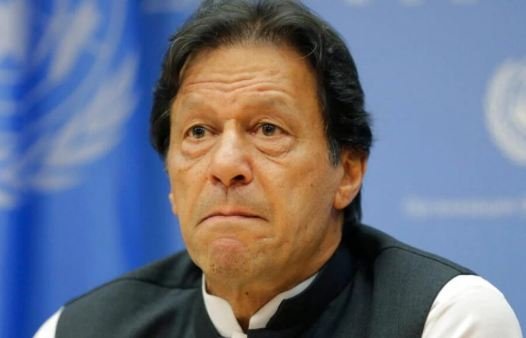
    The Pakistan Tehreek-e-Insaf (PTI) has blamed its agents managing its two limited liability companies (LLCs), saying the responsibility lies with the agents in case of any illegal funding from the United States.

    The Election Commission of Pakistan had started fresh scrutiny of the PTI accounts — a process going on since March 2018. The foreign funding against the ruling party case was filed by its founding member Akbar S Babar in 2014.

    In a response to the petition in the foreign funding case, the PTI, that had denied any links to the foreign funding, said that if the two LLC registered after the written instructions of party chief Imran Khan were involved in the illegal act, it would be due to its agents who were managing them in the US.

    The PTI said in its reply submitted to the ECP said that “any contribution that has been collected by the agent which may be questionable would be beyond the scope of the work/responsibility/instructions given by the principal (respondent)”. Therefore, the “principal will not be liable under Section 228 and not admit/certify such content”.

    Dawn reported that the ECP committee also refused to hand over the PTI’s financial documents to the petitioner’s lawyer due to the concerns expressed by the PTI.

    “The documents include 23 PTI bank statements received on instructions from the State Bank that were mostly concealed from the ECP,” it reported. However, the counsel of Akbar S Babar will be allowed to inspect the documents during the next hearing.

    The petitioner’s counsel Ahmad Hassan Shah said the refusal to share the documents was in contrast to the ECP order of May 2018.

    In a decision, the ECP had killed the PTI’s request to keep these documents and the scrutiny process secret.

    The body’s chairman acknowledged that the PTI’s bank statements and other documents were not being shared with the petitioner on the concerns of PTI.

    At this, the petitioner questioned the transparency of the inquiry, saying how could there be an independent probe if the proceedings were steered by the accused party.
  • ECP finds ‘serious discrepancies’ in Hammad Azhar’s assets: report

    ECP finds ‘serious discrepancies’ in Hammad Azhar’s assets: report

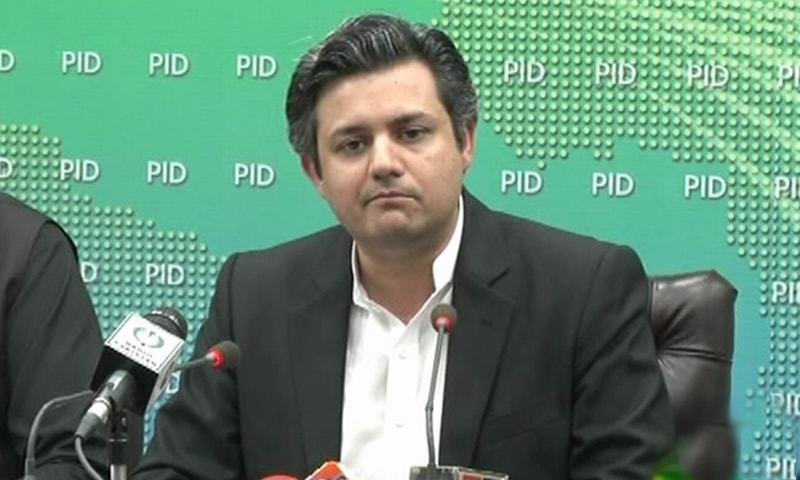
    The Election Commission of Pakistan is likely to take action against Pakistan Tehreek-e-Insaf (PTI) leader and federal minister Hammad Azhar over “some serious discrepancies observed during scrutiny of [his declared] assets”.

    The News reported that the minister did not declare his “shares in a flour mill and few other businesses in one of his declarations submitted to the ECP”.

    “After he became MNA in 2018 and later became a member of the cabinet, the assets declared by him and his spouse were different from those he had declared earlier” while filing his nomination paper, the report said, adding that this prompted ECP to launch the scrutiny some two years back.

    “Our [ECP’s] team found an apparent mis-declaration, serious discrepancies and deficiencies in Hammad’s declarations, and he failed to explain his position before the electoral body scrutinising his and his wife’s assets and liabilities,” the report quoted an ECP official.

    Meanwhile, Hammad Azhar has refuted the content of the report and said that it “is compiled without reading my reply to ECP which easily answered all queries in May 2019”.

    He said the reporter ignored his written filed in the election commission in response to the scrutiny.

    About his response in 2019, the ECP official quoted by The News said that it was “unsatisfactory”.

  • Faisal Vawda to be disqualified for being an American citizen?

    Faisal Vawda to be disqualified for being an American citizen?

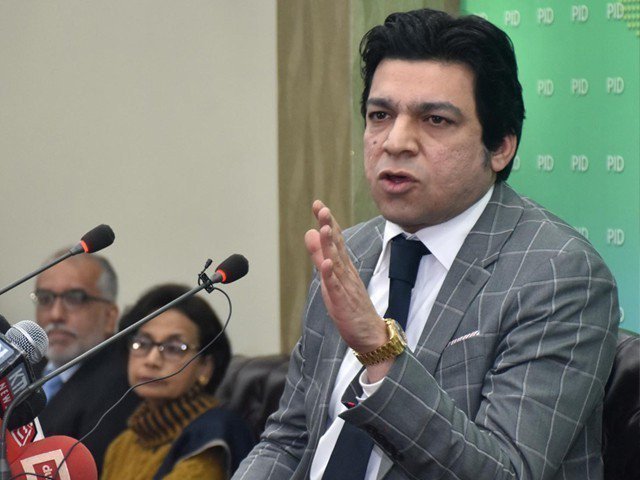
    Federal Minister for Water Resources Faisal Vawda was a dual national by the time of filing nomination papers for 2018’s general election, and concealed his American citizenship by falsely declaring on the oath he submitted to the Election Commission of Pakistan (ECP), The News has reported.

    According to reports, his status was intact not only when he filed nomination papers on June 11, 2018, but even during the scrutiny of the same.

    The Supreme Court (SC), in a recent judgment, has categorically directed that the candidates who previously held dual nationality should have the renunciation certificate at the time of filing of nomination papers. Various lawmakers, including two senators of Pakistan Muslim League-Nawaz (PML-N), have been disqualified by the top court on this count.

    Both of them had applied for the renunciation of foreign citizenship much earlier, but were unable to obtain the renunciation certificate at the time of filing of nomination papers because of long process.

    In Vawda’s case, the last date to file nomination papers for the election held in July 2018 was June 8 and later extended for another three days. Taking his document an evidence, Vawda submitted election papers on the last date — June 11, 2018 — along with an affidavit wherein he declared himself holding no citizenship other than that of Pakistan.

    The returning officer (RO) of NA-249 Karachi — Vawda’s constituency — approved the papers on June 18, 2018. It was only after this approval that the now federal minister applied for renunciation of his United States (US) nationality in US Consulate Karachi, meaning thereby he was American citizen at the time of filing.

    Vawda applied for revocation of his American citizenship in US Consulate Karachi on June 22, 2018. Normally, the process of renunciation of US nationality takes a couple of weeks or even months because it requires clearance from all the concerned departments. However, the US Consulate issued the ‘Certificate of Loss of Nationality’ to Vawda on next working day, documents revealed.

    Three top legal experts from Vawda’s own party, including Federal Minister Fawad Chaudhry and former interim law minister Ali Zafar, are unanimous in their opinion that whoever holds dual nationality at the time of submitting nomination papers is set to not only face instant disqualification, but he or she can also be penalised on the charges of perjury.

    His dual citizenship didn’t go unchallenged. His rival candidate Abdul Qadir Mandokhel of Pakistan People’s Party (PPP) moved Sindh High Court (SHC) in order to disqualify his candidature. However, after a couple of court hearings, Mandokhel withdrew his petition from the apex court. Explaining the reason of pulling out, he told The News he did so “under immense pressure” that he faced not only from certain quarters but also from the leadership of his own party.

    Taking opinion of top legal minds as a guide, Vawda stands disqualified as a member of the Lower House if his case is judged on the same standards which were applied when the apex court dealt with those of leaders of the PML-N, PPP and other political parties.

    A source close to Vawda was quoted as claiming by the media outlet that the now minister was not in favor of surrendering his American passport because he was unsure about winning the election. “However, once he was assured of his victory, only then he applied for the revocation of US citizenship,” he said.

    Meanwhile, ECP spokesperson Nadeem Qasim said the election watchdog cannot take notice on the dual nationality of any parliamentarian by its own. “Someone has to challenge the dual nationality of the said parliamentarian in the court of ECP. If proved that the said parliamentarian was a foreign national at the time of filing of nomination papers, then he will be disqualified,” he was quoted as saying.

  • Imran’s PTI reluctant to let ECP audit its foreign funding

    Imran’s PTI reluctant to let ECP audit its foreign funding

    The Pakistan Tehreek-e-Insaf (PTI) is reluctant to let the Election Commission of Pakistan (ECP) audit its foreign funding as the ruling party has petitioned the Islamabad High Court (IHC) against the top election watchdog’s decision.

    According to Dawn, through a petition filed in the IHC on Thursday, the ruling party has requested the court to restrain the scrutiny committee formed by the ECP from probing its foreign funding.

    On October 10 a three-member bench of the ECP, headed by Chief Election Commissioner (CEC) Justice (r) Sardar Mohammad Raza, had rejected four applications filed by the PTI against the audit of its accounts by the scrutiny committee and directed the panel to continue its work and submit a report as soon as possible.

    Akbar S Babar, a founding member of the PTI, had filed the case in 2014, alleging that the party had illegally collected about $3 million through two offshore companies, and that the money was sent through illegal channels from the Middle East to certain accounts of “PTI employees”.

    He also alleged that the foreign accounts used to collect the funds were not mentioned in the annual audit reports submitted to the ECP by the PTI.

    The party, in one of its petitions, took the plea that since the ECP which comprised the CEC and four members, was incomplete, an order passed by it lacked legal force.

    The scrutiny committee was formed last year to investigate the issue of foreign funding of the PTI in a month, but later the time-limit was extended to an indefinite period.

    During the hearing on October 1, a conversation took place between the CEC and the PTI’s counsel over the disclosure that the party was operating numerous undeclared accounts.

    The party’s lawyer argued that some of the PTI’s accounts might not be in the knowledge of the party’s central office and that the PTI could not be held responsible for its account in Azad Kashmir as it fell under another legal jurisdiction.

    On Aug 22, President Arif Alvi had appointed Khalid Mehmood Siddiqui from Sindh and Munir Ahmed Kakar from Balochistan as ECP members on the posts that had fallen vacant after the departure of Abdul Ghaffar Soomro and retired Justice Shakeel Baloch.

    However, the ECP chief refused to administer oath to the new members on the ground that the appointments had been made without fulfilling constitutional requirements.

    The ECP’s scrutiny committee is headed by the director general law and also comprises two auditors from the defence establishment.

    The ECP was of the view that President Alvi had made these appointments “in violation of clauses 2A and 2B of Article 213 of the Constitution” that made it mandatory for these appointments to be made with the consensus of the prime minister and the Leader of the Opposition.

    However, the committee could not make any significant progress as the PTI did not submit financial documents, particularly statements of its bank accounts, sought by the committee.