Tag: ECP

  • Tribunal declares Imran Khan ineligible to contest polls from NA-122 Lahore

    Tribunal declares Imran Khan ineligible to contest polls from NA-122 Lahore

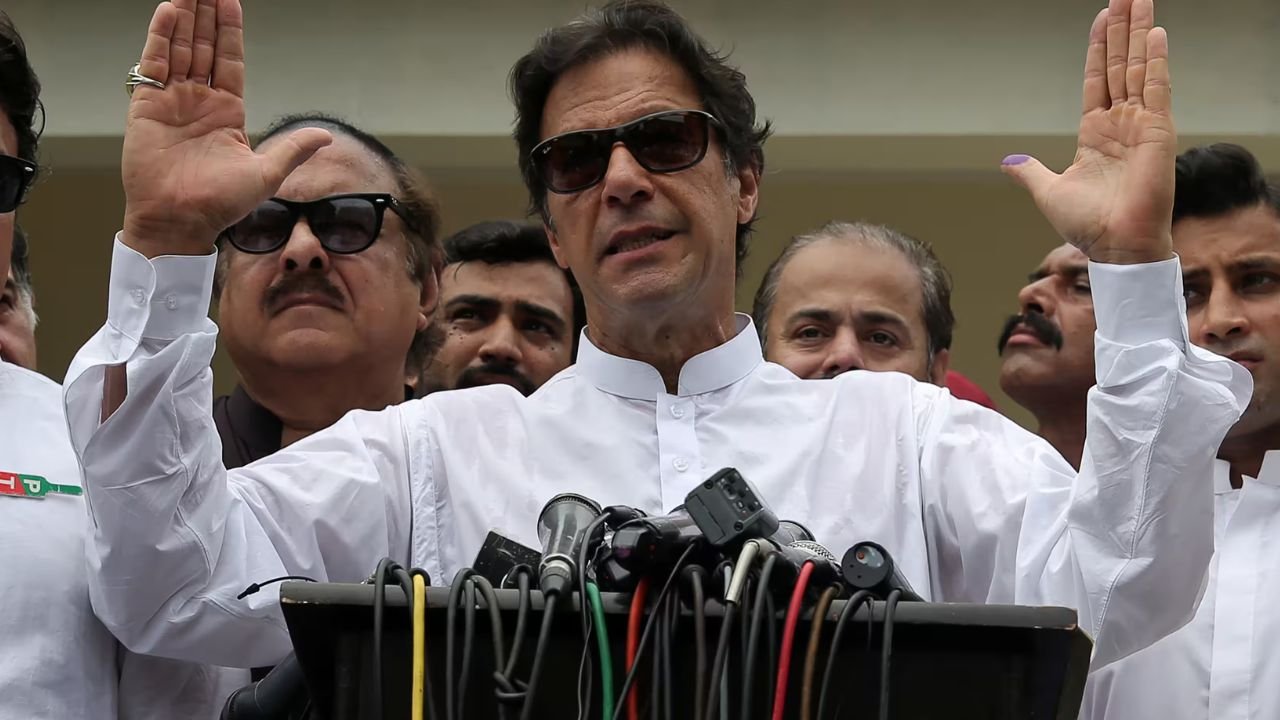
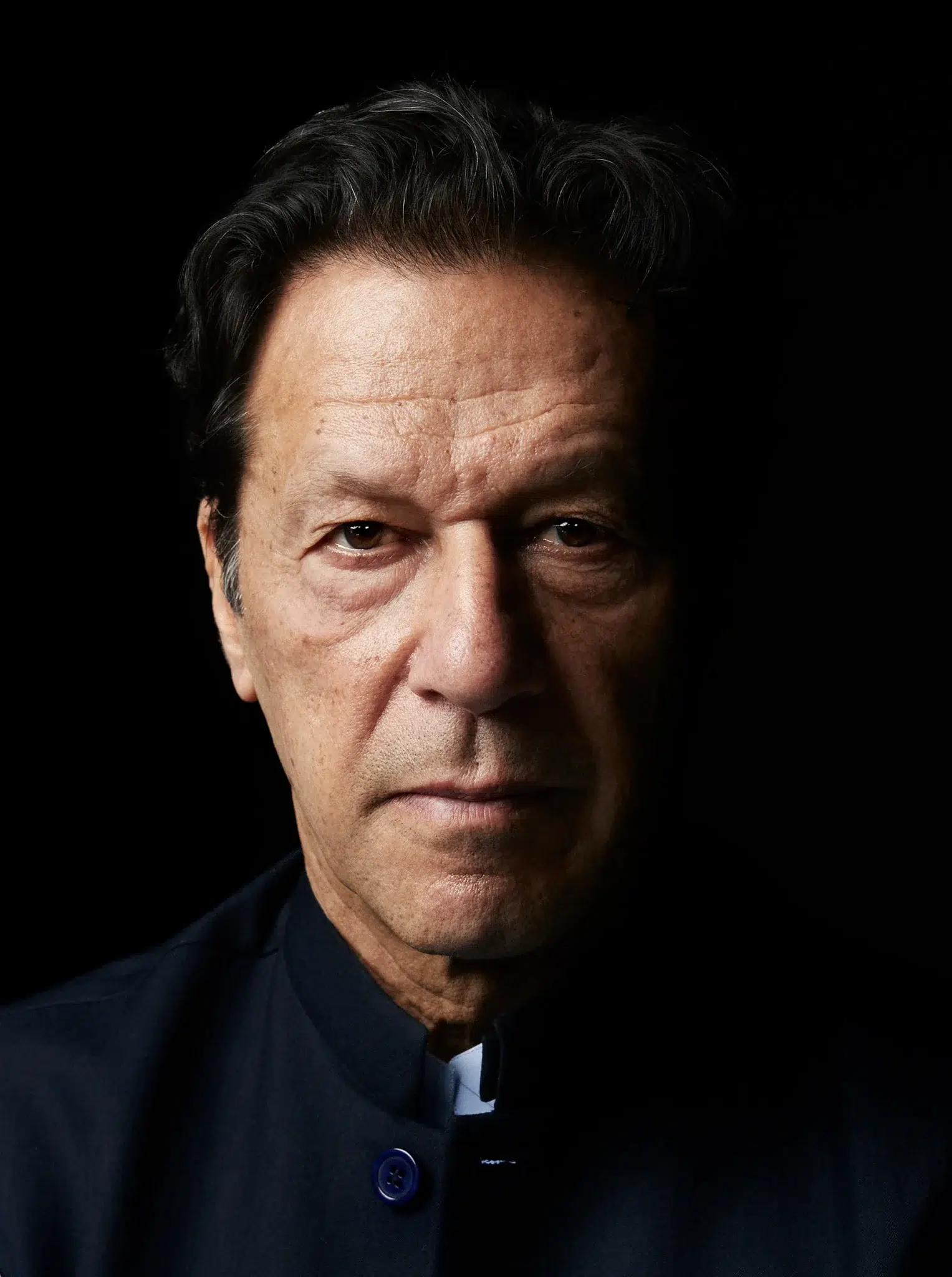
    An election tribunal established at the Lahore High Court (LHC) has validated the returning officer’s (RO) decision to dismiss Pakistan Tehreek-e-Insaf (PTI) founder Imran Khan’s nomination papers from the NA-122 constituency in Lahore.

    The lawyer of the Election Commission of Pakistan (ECP) argued before the tribunal that Imran Khan is not eligible to contest the election and his proposer didn’t reside in the constituency.

    Justice Tariq Nadeem of the appellate tribunal announced the decision after hearing all the parties.

    On December 30, 2023, Imran Khan’s nomination papers were rejected for National Assembly (NA) seats from Lahore and his home town, Mianwali.

    The former prime minister and PTI founder had submitted nomination papers from Lahore’s NA-122 and Mianwali’s NA-89 for the upcoming polls set to take place on February 8, 2024.

    Pakistan Muslim League-Nawaz (PML-N) leader Mian Naseer raised objections to Imran Khan’s nomination papers, mentioning that the PTI founder is disqualified for five years in Toshakhana case, and the ECP found him guilty of corrupt practices under Section 167 of the Elections Act, 2017.

    After viewing the objections, the RO rejected the nomination papers of the former prime minister.

  • Bat is back for PTI

    Bat is back for PTI

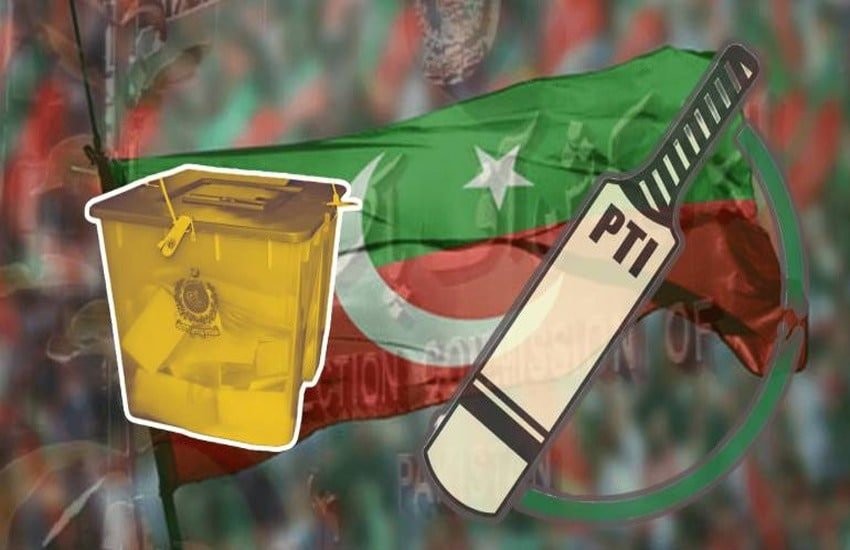
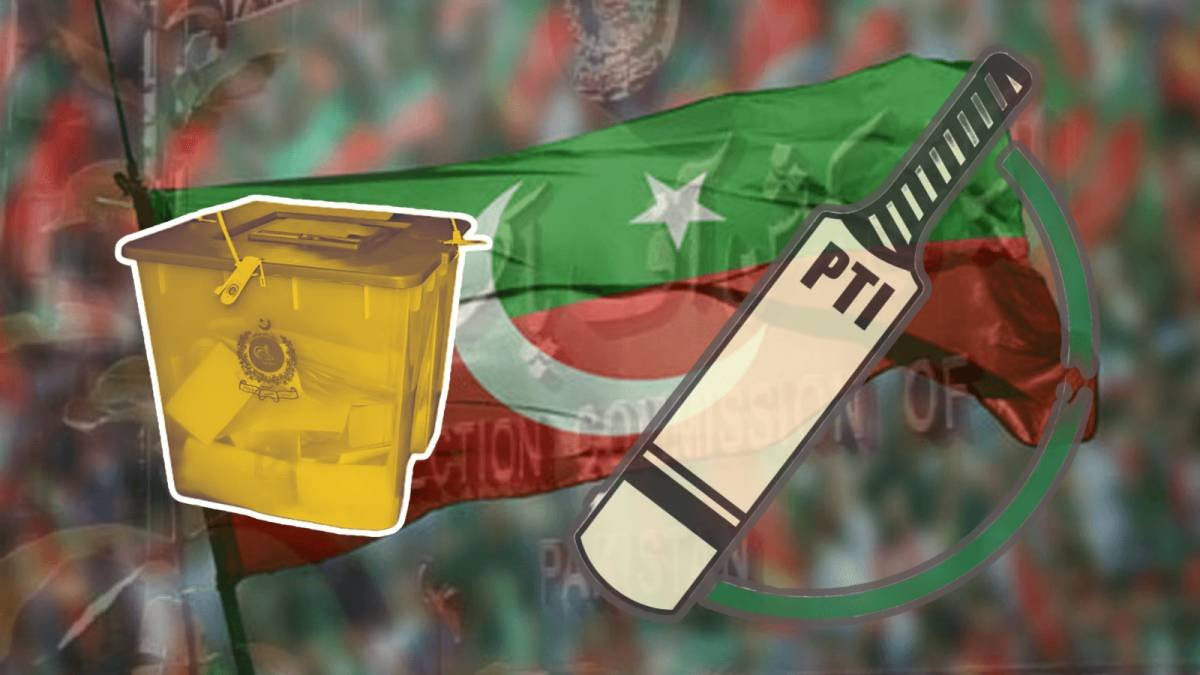
    The Peshawar High Court (PHC) has restored Pakistan Tehreek-e-Insaf’s (PTI) election symbol ‘bat’ after hearing PTI’s petition against the Election Commission of Pakistan’s decision revoking the party’s election symbol and declaring its intra-party polls “unconstitutional”.

    A two-member bench of the PHC was hearing PTI’s writ petition challenging the Election Commission of Pakistan’s (ECP) decision declaring the intra-party election as null and void and revoking their symbol of a cricket bat, a sign that depicts the party’s founder, Imran Khan’s career in the sport.

    In its verdict, the court termed the ECP’s decision “incorrect”.

    A two-member PHC bench comprising Justice Ijaz Anwar and Justice Arshad Ali announced the verdict today. 

    A day earlier, the court heard the arguments by the counsels of Election Commission of Pakistan (ECP) and the PTI.

    Earlier today, Chairman of the Pakistan Tehreek-e-Insaf (PTI), Barrister Gohar Khan, said that the party is withdrawing its plea seeking the ‘bat’ symbol from the Supreme Court (SC), adding that the party is hopeful that Peshawar High Court (PHC) will give a favourable decision in the matter.

    “Today, our petition was fixed at the Supreme Court, but we have withdrawn it,” he said while talking to media outside the apex court, adding that the decision from PHC will be issued in the party’s favour.

    Earlier, the PHC had accepted ECP’s review petition and restored the electoral authority’s ruling on intra-party polls and election symbol of the PTI.

  • No signal from ‘any quarters’ to postpone upcoming polls, Solangi confirms

    No signal from ‘any quarters’ to postpone upcoming polls, Solangi confirms

    The federal Caretaker Minister for Information, Murtaza Solangi, stated on Friday that the interim government has not received any indication from any source to postpone the upcoming elections set to take place on February 8, 2024.

    Earlier on Friday, Senator Dilawar Khan tabled a resolution in the sparsely attended Upper House, which garnered the required support despite opposition from Information Minister Murtaza Solangi and Senator Afnan Ullah Khan of the Muslim League (N).

    Talking to journalists outside the Parliament House, Solangi said: “So far, no signal has been received from any quarters regarding the postponement of elections.”

    He also stated that only the Election Commission of Pakistan (ECP) has the authority to postpone general elections.

    The minister believed that there were no instructions from interim Prime Minister Anwaar-ul-Haq Kakar or the federal cabinet to postpone polls.

    According to Article 218(3) of the Constitution, ECPhas the power to conduct elections, give a date, or change the date for elections, he said.

    “We cannot interfere in the affairs of a constitutional body.”

  • ‘I will impose Article 6 on you after coming to power’, Imran Khan’s threat to ECP

    ‘I will impose Article 6 on you after coming to power’, Imran Khan’s threat to ECP

    The inside story of Pakistan Tehreek-e-Insaf (PTI) founder Imran Khan’s trial in Adiala Jail, in the case of insulting the Election Commission (ECP), and Chief Election Commissioner, has come to light.⁠

    According to the sources who talked to GEO News, PTI founder Imran Khan became very angry during the indictment. Sources claimed that the former prime minister made a serious threat to members of the ECP during the hearing.

    Threatening the four members of ECP, Khan said, “I know your faces and names. I will impose Article 6 on you when I’ll come into power.”

    A hearing of the case against the PTI founder and former PTI leader Fawad Chaudhry proceeded on Thursday in Rawalpindi’s Adiala Jail. According to the charge sheet, Imran Khan and Fawad Chaudhry launched a planned derogatory campaign against the Election Commission in 2022.

  • Finally, some good news for PTI

    Finally, some good news for PTI

    Several Pakistan Tehreek-e-Insaf (PTI) aspirants, along with their allies, re-entered the electoral fray on Thursday following successful appeals against the rejection of their nomination papers by Returning Officers (ROs) during the scrutiny process last week.

    The appellate tribunals, responsible for reviewing appeals against ROs’ decisions, swung into action a day after the deadline for filing appeals expired.

    Rulings were issued on many appeals, while notices were dispatched to the Election Commission of Pakistan (ECP) and other relevant parties for further cases.

    Numerous PTI candidates, facing rejection of their nomination papers, took up the challenge against RO decisions. Simultaneously, objections were raised against the acceptance of Pakistan Muslim League-Nawaz (PML-N) President Shehbaz Sharif’s papers in Karachi.

    According to the election schedule, nomination papers were accepted until December 22, scrutinized by December 30, and the appeal window extended until January 3. The tribunals are expected to conclude all appeals by January 10.

    Among those approved by the appellate tribunals are PTI Central Vice President Firdous Shamim Naqvi for NA-236, Karachi, and party ally Sheikh Rashid and his nephew Sheikh Rashid Shafiq for NA 56 and 57, Rawalpindi. Additionally, several other candidates from various parties, including Ijazul Haq and Punjab Assembly Speaker Sabatin Khan, received the green light to contest elections.

    Firdous Shamim Naqvi took to Twitter (former X) and wrote, “Jibran, Andaleeb and Shiraz, the team that batted for me to get my nomination cleared by the tribunal. My thanks to all those who prayed for my success. I hope to contest with your support and bat for Pakistan. Inshallah we will all succeed on the 8th of February 24.”

    In Rawalpindi, two election tribunals continued hearings on Thursday, deciding a total of 26 appeals—approving 20 and rejecting six. Notably, the tribunals accepted appeals from prominent figures such as PTI founder Imran Khan, former Punjab chief minister Parvez Elahi, and former minister Fawad Chaudhary, prompting notices to the ECP and relevant returning officers.

    Justice Chaudhry Abdul Aziz, a tribunal judge, emphasized the need to adhere to the Constitution and the law during appeal hearings, discouraging the discussion of political matters in court.

    In Islamabad, an appellate tribunal issued notices on appeals from 51 candidates whose nomination papers were rejected, including PTI’s Ilyas Mehrban, Aamir Mughal, Shiraz Kayani, and Zubair Farooq. Tribunal Judge Arbab Muhammad Tahir also sought responses on the appeal against the acceptance of the transgender candidate Nayab Ali’s nomination papers for NA-46 and NA-47.

    Meanwhile, in Karachi, the appellate tribunal at the Sindh High Court accepted the nomination papers of PTI Central Vice President Firdous Naqvi for NA-236, Karachi, declaring objections to his papers as “illegal.”

    The election process is currently undergoing a thorough review, with various candidates and parties actively participating in the appeal process to ensure fair representation in the upcoming elections. The tribunals are expected to play a crucial role in shaping the final candidate list for the upcoming polls.

  • Imran Khan casts doubt on election legitimacy in an article written from jail

    Imran Khan casts doubt on election legitimacy in an article written from jail

    In a recent article for The Economist, Imran Khan, the founder and former chairman of Pakistan Tehreek-e-Insaf (PTI), currently incarcerated, has expressed apprehensions about the legitimacy of the upcoming elections in Pakistan.

    Khan argues that the caretaker governments in place at both the federal and provincial levels are constitutionally illegal due to their failure to hold elections within 90 days of dissolving parliamentary assemblies.

    While the public is anticipating elections on February 8, Khan, who has faced various challenges since a vote of no confidence in April 2022, raises skepticism about the electoral process.

    He points to the election commission’s actions, which he claims include defying the Supreme Court, rejecting PTI nominations, hindering internal party elections, and initiating contempt cases against PTI leaders for criticizing the commission.

    “The country’s election commission has been tainted by its bizarre actions. Not only has it defied the top court but it has also rejected my Pakistan Tehreek-e-Insaf (PTI) party’s nominations for first-choice candidates, hindered the party’s internal elections and launched contempt cases against me and other PTI leaders for simply criticising the commission,” he wrote.

    Khan contends that since his government’s removal, orchestrated by what he terms as “the establishment”—comprising the army, security agencies, and civil bureaucracy—the playing field for PTI has been anything but level. He alleges external interference, specifically from the United States, citing a State Department message urging his removal from the prime minister’s seat.

    Despite subsequent protests and electoral victories in by-elections, Khan argues that the administration that replaced his government led to economic downturns, inflation, and currency devaluation within 18 months. He emphasizes the contrast between PTI’s governance, which garnered international praise, and the subsequent administration’s economic performance.

    Khan claims that various measures have been taken to sideline him politically, including assassination attempts, abductions of party members, and legal harassment. Despite facing nearly 200 legal cases and being denied a normal trial, Khan states that PTI remains popular, with a 66 per cent approval rating, according to a recent poll.

    The former prime minister also raises concerns about the return of Nawaz Sharif, a convicted former prime minister, speculating that Sharif may have struck a deal with the establishment for support in the upcoming elections.

    Khan, who remains incarcerated on charges including treason, expresses doubt about the fairness of the electoral process, claiming that PTI is being denied its basic right to campaign.

    He concludes by advocating for fair and free elections, “The only viable way forward for Pakistan is fair and free elections, which would bring back political stability and rule of law, as well as ushering in desperately needed reforms by a democratic government with a popular mandate. There is no other way for Pakistan to disentangle itself from the crises confronting it. Unfortunately, with democracy under siege, we are heading in the opposite direction on all these fronts.”

    The Economist added an Editor’s Note stating, “The Pakistani government and the U.S. State Department deny Khan’s allegations of American interference, and Khan faces charges under the Official Secrets Act.”
  • No ‘bat’ symbol for PTI: Peshawar High Court

    No ‘bat’ symbol for PTI: Peshawar High Court

    The Peshawar High Court (PHC) has accepted the review petition of Election Commission of Pakistan (ECP) and restored the ECP’s ruling on the intra-party polls and election symbol of Pakistan Tehreek-e-Insaf (PTI).

    Justice Ejaz Khan announced the reserved verdict today after hearing all parties.
    The Election Commission’s lawyer, Sikander Bashir Mohmand, and PTI’s lawyers, including Shah Faisal Uthmankhel and Qazi Anwar, were present in court today.

    The ECP had submitted a review petition in high court against PHC’s order that suspended the ECP’s decision of declaring PTI’s intra-party elections “illegal” and stripped it of using the ‘bat’ symbol.

    In its petition, the ECP requested the court to review the PTI’s intra-party elections and its decision related to the election symbol.
    However, PTI’s chairman, Barrister Gohar Khan, said that PTI will move to the apex court to get justice in this matter.
    “The Supreme Court has already stated that revoking a party’s symbol is tantamount to disbanding the entire party,” the PTI leader said, hoping that his party would get relief from the top court.

  • Peshawar High Court reserves decision on ECP’s petition

    Peshawar High Court reserves decision on ECP’s petition

    The Peshawar High Court (PHC) has reserved its decision on the petition of the Election Commission of Pakistan (ECP) that contested the ruling of its single bench regarding the Pakistan Tehreek-e-Insaf’s (PTI) electoral ‘bat’ symbol and intra-party elections.

    The ECP submitted a review petition in PHC against its December 26 verdict, that suspended the ECP’s order and restored the party’s ‘bat’ symbol until a final decision on the matter.

    ECP, through its order, deemed the intra-party polls of the PTI as “illegal” and revoked its authorization to use the ‘bat’ symbol.

    In response to this decision, the erstwhile ruling party appealed to the Peshawar High Court, requesting the reinstatement of its party symbol in anticipation of the upcoming general elections scheduled for February 8.

  • Imran Khan kitnay ameer hain?

    Imran Khan kitnay ameer hain?

    It’s that time of the electoral season when we find out just how rich are the people who rule us.

    Financial details in nomination papers reveal a noteworthy surge in the assets of former Prime Minister and founding Chairman of Pakistan Tehreek-e-Insaf (PTI) Imran Khan, a rise of a whopping Rs277 million over the past five years.

    According to the documents, Imran Khan’s assets, which were valued at Rs38.694 million in 2018, have now exceeded Rs315.95 million as per the nomination papers submitted for the upcoming elections in 2023.

    Imran Khan has made public the possession of a seven kanal eight marla house in Zaman Park, Lahore, with an associated construction expenditure of more than Rs48.6 million.

    At the same time, the PTI founder also owns another piece of land in Islamabad, much smaller in size though – six kanals and 16 marlas- with a stated market value of over Rs 5 million.

    Additionally, he has disclosed ownership of a 300-kanal land in Bani Gala received as a gift.

    Notably, the former PTI chairman does not own any vehicles, as indicated in his documents.

    Other assets in Islamabad include a Rs120m shop and a two-bed apartment which has been priced at Rs34m.

    According to the documents, the items bought from Toshakhana – the infamous pieces that resulted in a case and disqualification – are valued at over Rs11.8m.

    On the other hand, the PTI founding chairman says his wife – Bushra Bibi – is the owner of 698 kanal in Deepalpur and Pakpattan besides another three-kanal house located at Banigala.

    The financial trajectory showcases a substantial increase in Imran Khan’s wealth.

    He mentioned the value of his assets at Rs38.694m in the 2018 general elections’ nomination papers, which has now reached Rs315.95m, representing a massive jump, out which over Rs60m are in cash deposited with different banks of Islamabad.

    In 2021, he declared assets valued at over Rs141 million to the Federal Board of Revenue, which further rose to over Rs320 million in 2022.

    The Federal Board of Revenue (FBR) certificate attached to his nomination papers for the upcoming elections in 2023 verifies that the current value of Imran Khan’s assets is over Rs315.9 million.

    This revelation holds significance as Imran Khan, the jailed former Prime Minister, gears up to contest the upcoming elections. The submitted details to the Election Commission of Pakistan (ECP) depict a considerable financial evolution over the specified five-year period.

  • No surveys; PEMRA to take action against media channels violating ECP’s Code of Conduct

    No surveys; PEMRA to take action against media channels violating ECP’s Code of Conduct

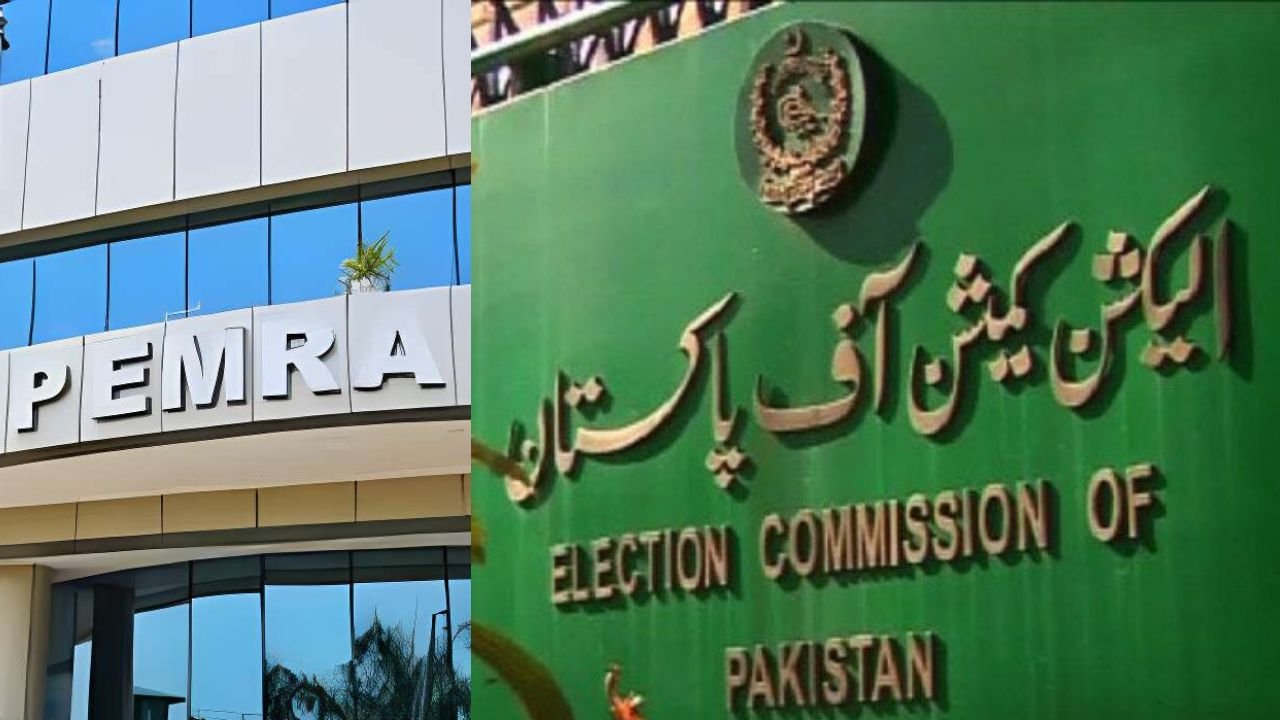
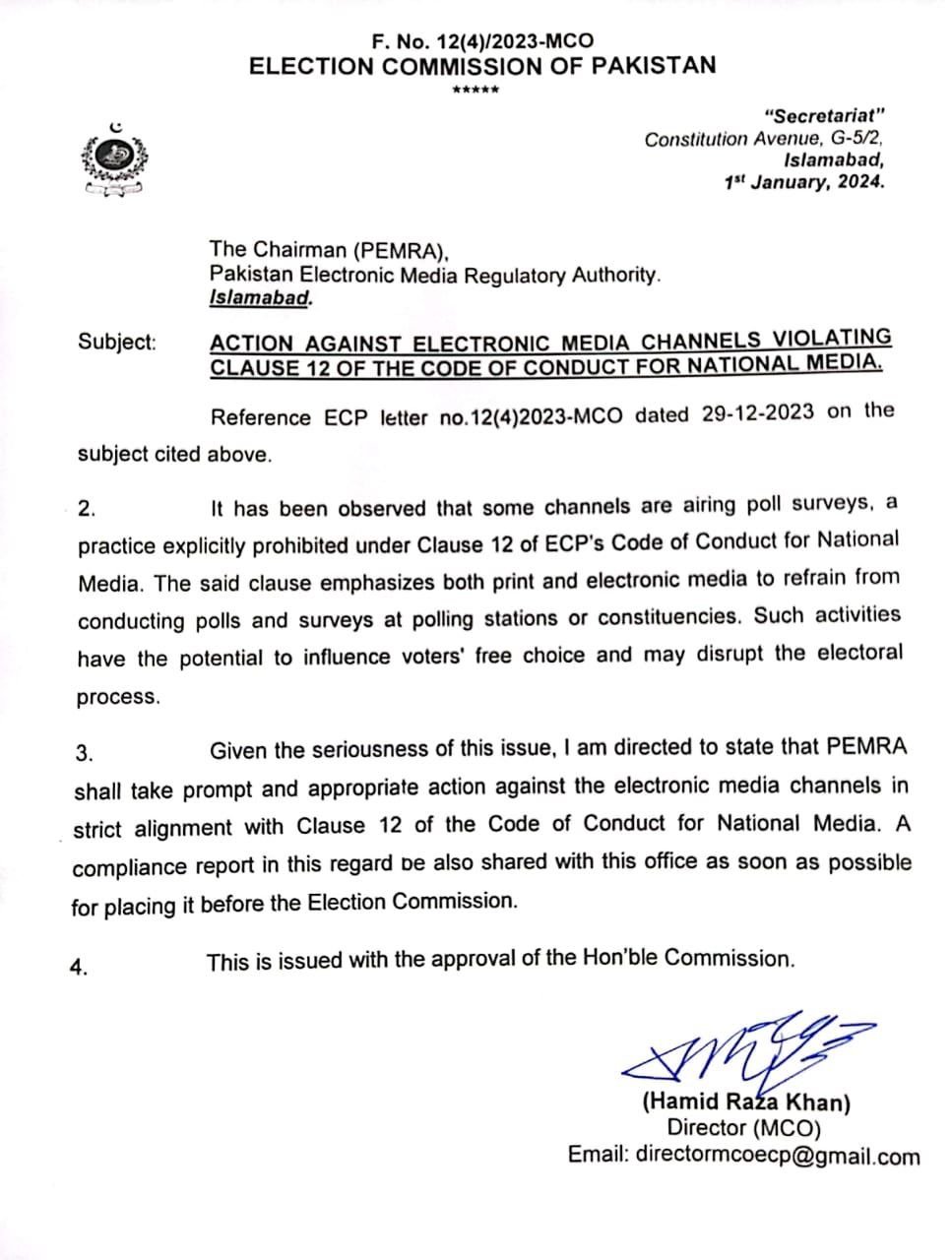
    The Election Commission of Pakistan (ECP) has officially communicated with the Pakistan Electronic Media Regulatory Authority (PEMRA), seeking strict action against media channels found violating the established code of conduct for the upcoming February 8 polls.

    The letter explicitly points out the airing of voting surveys by certain media channels. This practice, as per the ECP’s Code of Conduct for National Media, is prohibited under Clause 12.

    According to Clause 12, individuals working in print, electronic, and social media are prohibited from obstructing the election process and are required to display accreditation cards provided by the Election Commission.

    The ECP emphasized that both print and social media should refrain from conducting polls and surveys at polling stations or constituencies. The electoral watchdog stated that such activities have the potential to influence voters’ free choice and may disrupt the electoral process.

    The letter stated, “Given the seriousness of this issue, I am directed to state that PEMRA shall take prompt and appropriate action against the electronic media channels in strict alignment with Clause 12 of the Code of Conduct for National Media. A compliance report in this regard be also shared with this office as soon as possible for placing it before the Election Commission.”

    The ECP’s comprehensive 18-point code of conduct for media during elections includes provisions preventing the dissemination of content that reflects opinions prejudicial to the sovereignty, uprightness, or security of Pakistan. It also prohibits statements that could harm national solidarity or create a law and order situation.

    The regulatory framework extends to personal attacks on candidates or political parties in media content, mandating that any allegations should include comments from both sides. Monitoring responsibilities are delegated to Pemra, Pakistan Telecommunication Authority, Press Information Department, and the Cyber Wing and Digital Media Wing of the Ministry of Information and Broadcasting.

    The ECP further emphasized that these authorities are accountable for monitoring political parties’ and candidates’ coverage during election campaigns through electronic channels, print, and social media. Details of payments made by political parties and candidates must be submitted within 10 days after the poll day.

    The Election Commission of Pakistan warns that, in case of any violation of this Code of Conduct, it reserves the right to withdraw accreditation from individual journalists or media organizations. The authority to determine violations also rests with the electoral body. The media is also prohibited from airing unofficial results of a polling station until one hour after the close of the poll during the polling process coverage.