Tag: editorial

  • Being a police officer is a thankless job

    Being a police officer is a thankless job

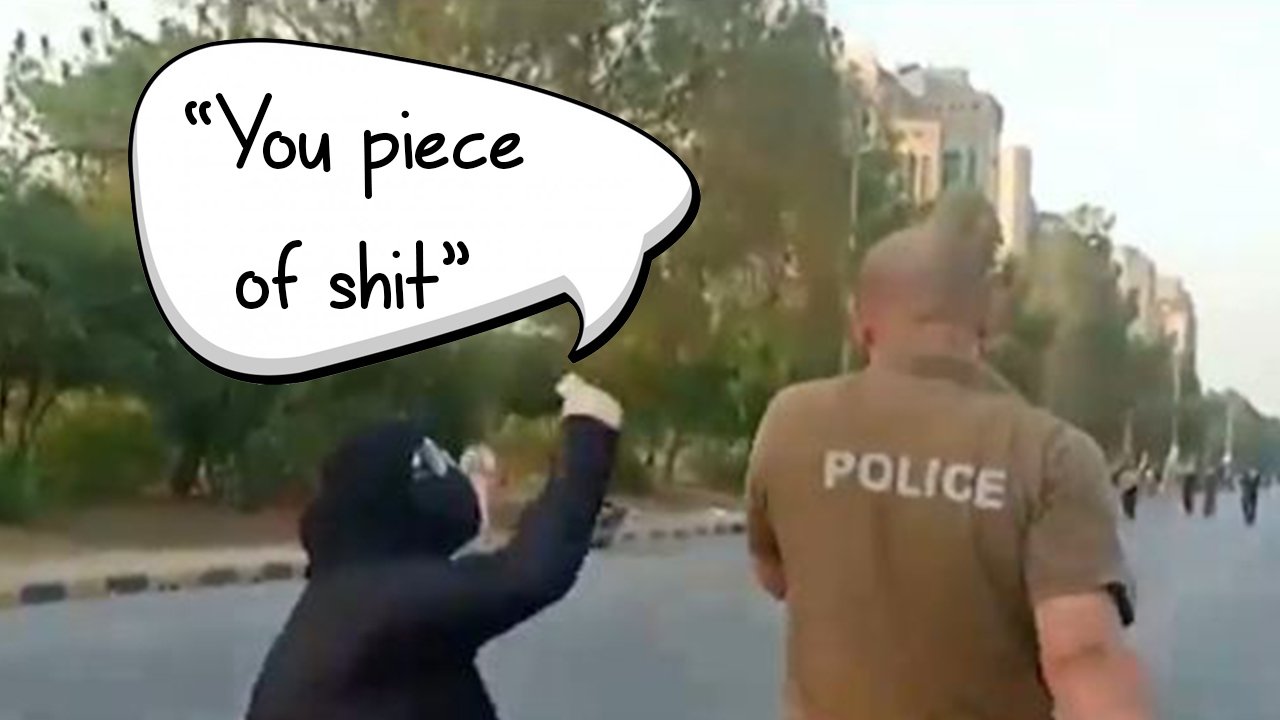
    ‘Piece of shit’ is all it took a woman to demean and disrespect a Rawalpindi constable, Muhammad Shahbaz. During Pakistan Tehreek-e-Insaf’s (PTI) ‘Azadi March’ in Islamabad, a woman wearing a black burqa repeatedly abused and shouted at a police officer for doing his job. The video went viral on social media. Though Shahbaz earned a lot of praise for showing restraint and resolve in the face of abuses hurled at him, the fact remains: why did he have to go through all this? What was the lady trying to prove? What entitled the woman to abuse the officer who was performing the very job he was assigned to do. Imagine if the police officer retaliated and did something in return. But instead of responding to the PTI supporter, the policeman in a rare display of decency and patience ignored the woman and continued walking silently along the road. Later it came to light that the enraged woman was reportedly setting fire to the trees with her companions and lost cool when she was stopped by the policeman and vented her anger on the constable in Islamabad at the time of Azadi March.

    What we witnessed on May 25 is condemnable, especially the brutal crackdown by the government on PTI leadership by using the police. The ruckus created by the government, police, and PTI supporters needs to be addressed. But why should we only blame the police for all of it? They were following orders. The government is responsible for ordering them to unleash police brutality on PTI leadership and supporters. Having said that, no one can deny that the police force is in dire need of reforms. It will take many Muhammad Shahbaz’s to show resolve in difficult and testing times. We can only hope that society learns for the better and gives credit to these officers who are out and about to protect their people. Indeed, being a police officer is a thankless job. I hope we learn to give the officers the respect and due credit they deserve.
  • ‘Arrest, sexism, political victimisation’: Keep women out of your politics

    ‘Arrest, sexism, political victimisation’: Keep women out of your politics

    Politics in Pakistan hits a new low every day. This past week, the nation witnessed two incidents that again prove how women in politics are seen as soft targets to settle political scores. Be it misogyny, sexist remarks targeted harassment or political victimisation — we have seen how women face the brunt of most of these attacks.

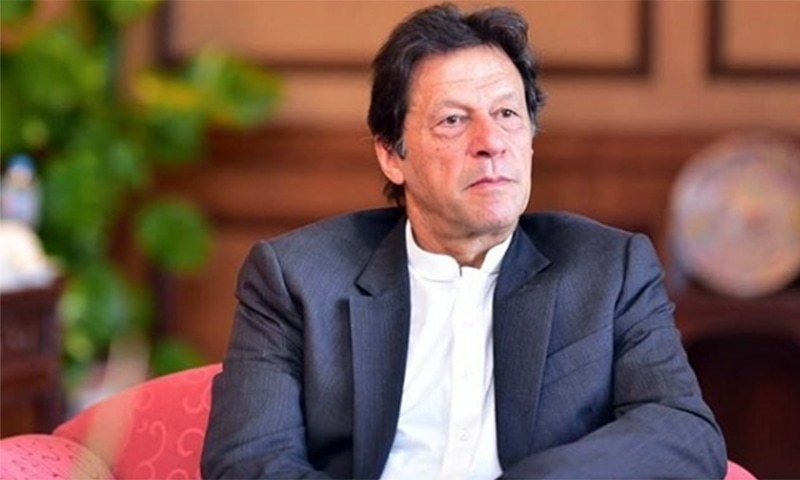
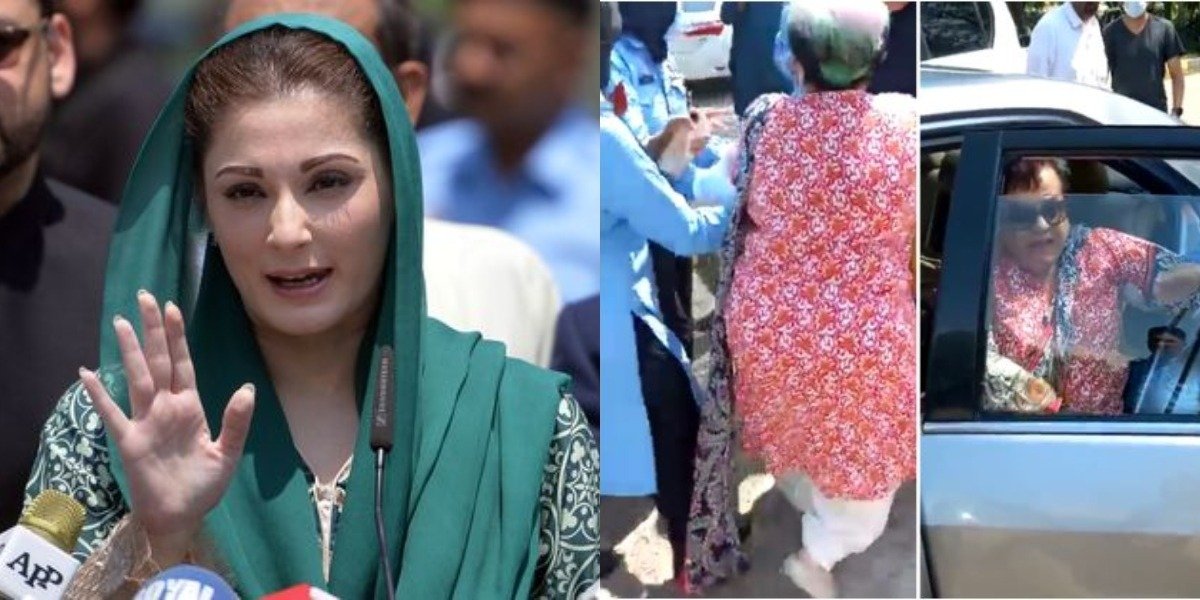
    Case one: Former Prime Minister Imran Khan passed sexist and controversial remarks about Maryam Nawaz at a political rally in Multan on Friday. Khan said: “I was sent the video of Maryam’s speech in which she took my name so many times with such jazba and junoon that I want to tell her to be careful, your husband might get upset at you taking my name so often.” Khan’s misogynistic remarks about his political rival were uncalled for, and not what was expected from a national leader. One would have thought that a man who is almost 70-year-old, whose first wife has had to deal with perpetual harassment to this date, whose second wife faces a plethora of abuse on a regular basis, and whose current wife has not been spared either, would spare women. Yet he made these comments about Maryam Nawaz while addressing thousands of people looking to him as the future of the country. What message is being sent to our younger generation? That it is okay to sexualise women, that it is okay to mainstream misogyny? Where will it stop is what one wonders.

    Case two: Punjab’s anti-corruption department took former human rights minister Shireen Mazari into custody in Islamabad yesterday. A video clip shows female police officers manhandling Mazari after she refused to step out of her car. The way that she was harassed and manhandled and the timing make it look like a clear case of political victimisation.

    Pakistan at the moment is facing a national crisis. The new coalition government is finding it hard to stay afloat, the country needs a financial boost from the International Monetary Fund (IMF) to survive economically. Serious decisions are to be made for the betterment of the country but what are the male politicians doing instead? Demeaning, silencing, and mocking strong women to put them down. Arresting Mazari because she is a vocal critic while demeaning Maryam because she is giving a tough time to her opponents.

    One can criticise anyone’s politics but in the case of women politicians, resorting to personal attacks is unwarranted. Mazari has faced such attacks from the likes of Khawaja Asif and others. Maryam was threatened with violence by Gandapur during the previous government.

    No one is above the law but abuse of power can never be condoned, regardless of who it targets or from where it emanates. Khan must apologise for his remarks about Maryam Nawaz. Such misogyny needs to stop against women. The government has released Mazari but she has been arbitrarily arrested because of the whims of a few men. It is high time that men keep women out of their politics. They cannot scare women into quitting.

  • Civilian governments and completing their term

    Civilian governments and completing their term

    In the wake of the no-confidence move against Prime Minister (PM) Imran Khan by the Opposition, a debate has started about several issues ranging from the government completing its term to defections from the ruling party. In Pakistan’s history, no civilian prime minister has ever completed his/her five-year term. Even when the last two civilian governments completed their tenures from 2008-2018, despite many hiccups and conspiracies against the governments. Of course, we do not know what the result of the latest vote of no-confidence will be, but if we are to believe speculations about what is happening in politics, this government may not survive and even PM Khan may not be able to complete his full term. Ideally, a civilian government, no matter how it has come to power, should be able to complete its full term. In a democracy like Pakistan, there are many factors involved in politics, which is why it is important for democratic governments to complete their tenures. 

    On the other hand, a vote of no-confidence is also a constitutional right that can be exercised in parliament to remove the Prime Minister from office if he/she loses the confidence of the majority of the members of the National Assembly. The number required to dislodge the premier is 172. The Opposition has followed a democratic procedure by moving a resolution for a vote of no-confidence, which requires signatures of at least 20 percent of the total membership of the lower house.

    Under the 1973 Constitution, we have seen two votes of no-confidence in the past against prime ministers. First against Benazir Bhutto in November 1989 and then against Shaukat Aziz in August 2006. Both Bhutto and Aziz survived the votes. After successfully defeating the vote of no-confidence, Benazir Bhutto gave a magnanimous speech and said she bore no ill-will against the opposition. Contrast her words with what is happening today — a prime minister addressing the nation with a short message to join his March 27 rally, bitter words by the ruling party on national television, threats of what is in store for those members who have gone to the opposition’s side, threats of a showdown, etc. This is not how politics should be but unfortunately, we have seen how the discourse over the last few years has led to politicians stooping to the lowest level just to settle scores. Add to it labels like a traitor, apart from other choice words. These add to the toxicity of political discourse, which is telecast live on our television screens.

    Parliament’s fights should be fought on the floor of the house through the vote of no-confidence, not on the streets.

  • Nobel Peace Prize for journalists

    Nobel Peace Prize for journalists

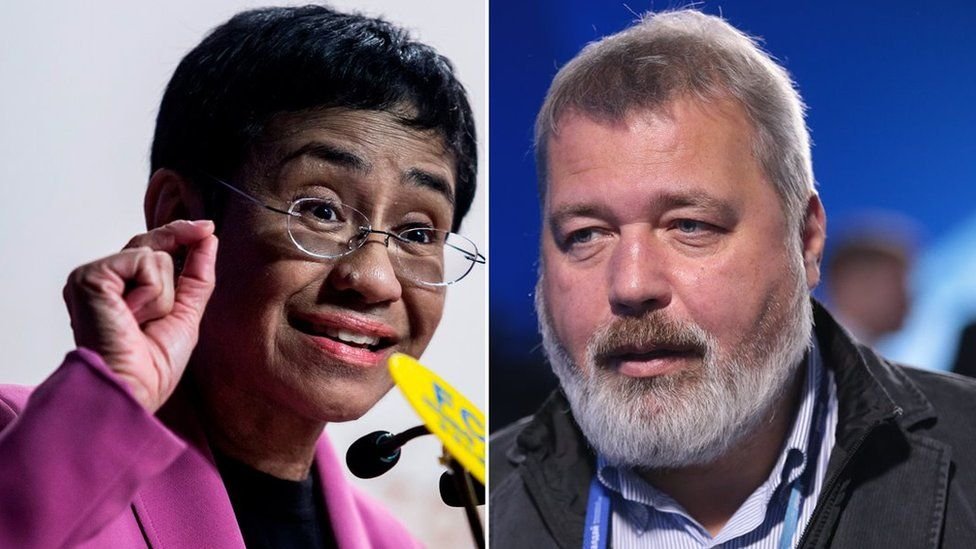
    The importance of free media and freedom of expression was highlighted once again when journalists Maria Ressa and Dmitry Muratov won the Nobel Peace Prize for their fights to defend freedom of expression in the Philippines and Russia. Both of them have done work that led to threats from the rulers of their respective countries.

    The Norwegian Nobel Committee said in a statement that Ressa and Muratov won the Nobel for “their efforts to safeguard freedom of expression, which is a precondition for democracy and lasting peace”. The statement added that “they are representatives of all journalists who stand up for this ideal in a world in which democracy and freedom of the press face increasingly adverse conditions”.

    It is an honour for journalists around the world that people of their fraternity were awarded the most prestigious award for standing up for free media. At a time when journalists are facing problems and many countries are clamping down on free media, it gives journalists more strength and courage when their struggle is recognised. 

    Read more- Journalists Maria Ressa and Dmitry Muratov win 2021 Nobel Peace Prize

    Unfortunately, like many other countries, the space for free media is fast shrinking in Pakistan. The government claims that the Pakistani media is more independent than even western countries but the fact of the matter is that censorship has increased over the years, journalists have faced physical attacks in the capital but no one has been arrested, and relentless attacks against journalists continue online as well.

    The government claims that they do not shy away from sharing facts with the media but in a recent report published in The News, it says that when Geo News sent approximately 400 different queries to 36 key institutions in the past nine months under the Right to Information (RTI) law but 90 per cent of them were either not responded to or simply declined by them. Only 43 (10 per cent) queries were partially responded to by them through either very little or patchy information in 2021.

    It is pertinent that the government realises that the media is not its enemy. Media will act as a watchdog and it is media’s job to report the truth. Journalists will continue to do their job and such tactics will not make them stop. A free and vibrant media is critical for democracy. One should believe in more freedom, not less. Long live media freedom.

  • Malala: Pakistan’s pride

    Malala: Pakistan’s pride

    Malala Yousafzai, a name that evokes different emotions – from pride to love to respect to a need to protect her from everything that is vile. Malala is the youngest Nobel laureate and the second Pakistani to win the Nobel after Dr Abdus Salam. Unfortunately, both Pakistani Nobel laureates have been vilified by many in Pakistani society – Dr Salam for being for being an Ahmadi and Malala for just being Malala.

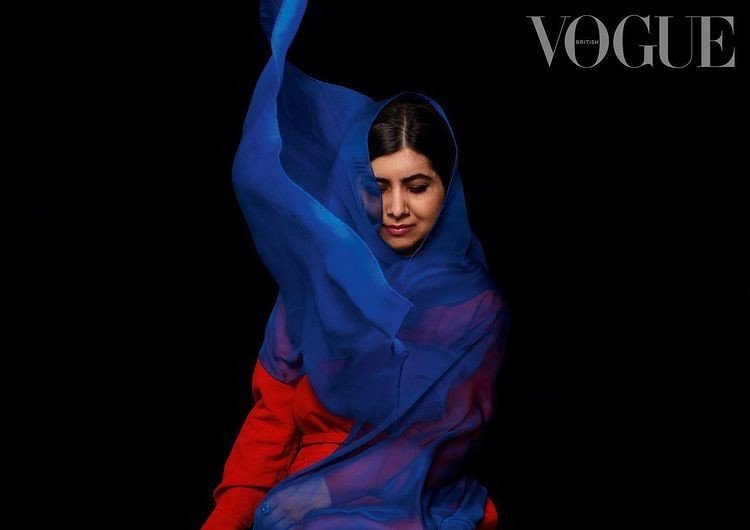
    Malala’s recent interview to British Vogue has created quite a controversy yet again. So much so that the Khyber Pakhtunkhwa Assembly has even asked Malala to explain her comments regarding partnership. This despite the fact that Malala’s father, Ziauddin Yousafzai, explained in a tweet that Malala’s comments were taken out of context by the media and social media and have been spread in a negative way.

    The 23-year-old young girl spoke about several issues – from relationships to wearing a dupatta to politics to college life. In her interview, the young Nobel Laureate defended her choice to wear a dupatta (scarf) to cover her head. “And Muslim girls or Pashtun girls or Pakistani girls, when we follow our traditional dress, we’re considered to be oppressed, or voiceless, or living under patriarchy. I want to tell everyone that you can have your own voice within your culture, and you can have equality in your culture.” She also talked about marriage and how she is unsure about getting married. She was quoted as asking why marriage “can’t just be a partnership”. Several people on social media and our very own Khyber Pakhtunkhwa Assembly have taken this as an opposition to the concept of nikkah or marriage. It seems quite obvious that as any other young girl of the same age, Malala is unsure of what being married entails. She is asking why marriage is seen as just a contract or signed papers and not a partnership… a partnership that is more about companionship, similar values, compatibility, etc. She did not say anything about nikkah or a live-in relationship, which is how her words are being misconstrued and misinterpreted. It is quite appalling to see the way Malala is being attacked for an innocent query.

    This is of course not the first time that Malala is targeted so viciously on social media. That she barely survived a brutal assassination attempt by the Taliban is questioned by the anti-Malala brigade. They call it a ‘drama’. Well, they should be glad that none of them have had to go through this brutality. When Malala released a statement on Israel and Palestine, she was questioned for why it was not worded more strongly. Of course these Twitter warriors did not know that Malala has done far more for the children of Gaza than any one of them. Back in 2014, she gave $50,000 for the reconstruction of Gaza schools. In May this year, Malala donated $150,000 for children in Gaza. But who can argue with social media warriors and conspiracy theorists with logic?

    Let Malala live her life and give her a break. She does not owe anyone an explanation. Long Live, Malala, our pride!

  • Indian farmers’ protest

    Indian farmers’ protest

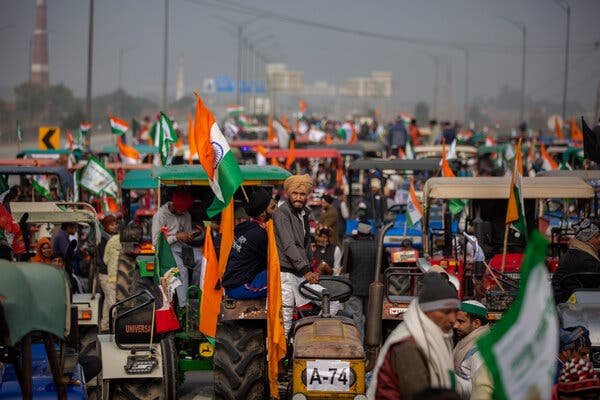
    Farmers across India are protesting against the new agricultural laws. Three laws pertaining to agriculture and farming have been passed in India, which the farmers say will affect their livelihood. It has been around 10 weeks since the farmers have been protesting. On India’s Republic Day, farmers marched on the Indian capital, New Delhi, in tractors and on foot. They stormed the Red Fort and also clashed with the police.

    These protests have evoked a strong reaction from across the world, which has kept the Indian Ministry of External Affairs (MEA) quite busy. From responding to Canadian Prime Minister Justin Trudeau’s supporting remarks for the farmers to even responding to pop star Rihanna’s tweet, the MEA statements have exposed India’s insecurities.

    A country that is very conscious of its international image and that takes pains to glamourise its culture and heritage across the globe, the Indian MEA referred to Trudeau by criticising “some ill-informed comments by Canadian leaders relating to farmers in India”. As if that was not enough of a diplomatic faux pas, Rihanna’s tweet led to a meltdown across India. Modi bhakts even lauded Rihanna’s ex for assaulting her.

    Kangana Ranaut called her a “porn singer”. Teen climate activist Greta Thunberg and Meena Harris, an American lawyer and the niece of US vice president Kamala Harris, also faced the brunt of Indian Twitterati as well as the Indian public. Their posters were set on fire and the Delhi Police registered sedition and conspiracy FIR on Thunberg’s Protest ”Toolkit” that she shared and tweeted in support of the farmers.

    What was even more disappointing but not surprising was how Indian celebrities and sports star like Sachin Tendulkar reacted to these tweets. It was an organised ”damage control” campaign launched at the behest of the Modi government but it backfired. Meena Harris and Greta have said that they will not be intimidated.

    Indians also accused them of taking money to push farmers’ demands. If it wasn’t so toxic, it would have been hilarious. Indian trolls and pro-Modi media (also called Godi media) have relentlessly tried to delegitimise the genuine grievances and demands of the farmers.

    In a capitalist world, farmers across the world are facing a lot of problems. The Indian Farm Laws will leave the farmers at the mercy of corporates. The farmers want them repealed. The Modi government is unmoved, which is expected of a fascist ruler who only believes in the mantra of profit and pushing the greater Hindutva agenda.

    The farmers are giving Modi a hard time that not even the opposition parties have been able to do in India. We hope that the farmers’ demands are eventually met. It will be a victory for labour rights and the marginalised. We stand in solidarity with the farmers.

  • Pakistan’s new social media rules

    Pakistan’s new social media rules

    Pakistan’s new social media rules have ‘alarmed’ the Asia Internet Coalition (AIC), an industry association that promotes the understanding and resolution of Internet policy issues in the Asia Pacific region. It comprises leading internet and technology companies such as Amazon, Airbnb, Apple, Facebook, Google, LinkedIn, Twitter, and Yahoo, among others.

    AIC issued a statement on Thursday about the Removal and Blocking of Unlawful Online Content (Procedure, Oversight and Safeguards) Rules 2020. As per the AIC statement, “The Rules would make it extremely difficult for AIC Members to make their services available to Pakistani users and businesses. If Pakistan wants to be an attractive destination for technology investment and realise its goal of digital transformation, we urge the Government to work with industry on practical, clear rules that protect the benefits of the internet and keep people safe from harm.”

    Digital rights activists in Pakistan have also condemned the move.

    In a world that is now all about technology, Pakistan should be embracing the digital spaces instead of alienating tech giants. Not only will it be a huge blow to everyone in Pakistan who uses the internet but it also means that leading tech companies will not consider investing in Pakistan.

    During the corona pandemic, we saw how tech companies were successful and also made life easier for people during lockdown. It is thus baffling to see a government that always talks about Digital Pakistan and has actually used social media and digital media to its advantage now come up with rules that are draconian and not practical.

    Such shortsighted moves could lead to consequences that we can ill afford. With a struggling economy, we should ideally be more open and welcoming to tech companies. Instead, these companies are now expressing alarm at the new rules.

    If we just look at countries around us, including China and India, they have taken full advantage of the digital world. The US economy is helped immensely by technology companies. Pakistan’s new rules make it almost impossible for international tech companies to even consider opening their offices in the country.

    In the past, the ban on Facebook and YouTube pushed Pakistan back digitally by several years according to digital rights experts. The new rules, if not improved, could have far-reaching consequences. While these companies have not given an inkling of their next move, what if they stop providing these services in Pakistan? We need to factor in that there can be such a possibility and how it will affect hundreds of thousands of users.

    Why is it that we want to ban games or apps or even bring in new rules that take away fundamental freedoms when we are a democratic country and not an autocratic state. It is hoped that the government would rethink this strategy and make Pakistan a more open and tech-savvy country that is on par with the digital world.

  • Of freedoms and censorship

    Of freedoms and censorship

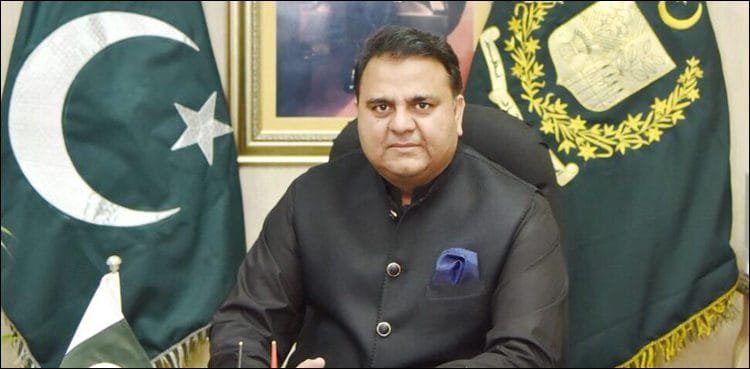
    Pakistan is all set to launch its own version of Netflix. It was announced by Federal Minister for Science and Technology Fawad Chaudhry that his ministry is all set to launch Pakistan’s first OTT (over-the-top) platform like Netflix.

    Chaudhry says that the aim is to put Pakistani content on the map and PEMRA has been asked to prepare guidelines keeping in mind the international market. He maintained that with internet freedom, censorship is unlikely. But in a country where PEMRA has started giving guidelines to products on how to make their television advertisements, where dramas are banned due to ‘indecency’, where video-sharing platforms are banned for spreading immortality, it would be interesting to see if international standards will be maintained without any trouble.

    Pakistan cannot get ahead in technology unless and until we get on with the times and stop censoring content.

    On the one hand, we are fighting censorship in the entertainment side and on the other, our mainstream news media is also facing a tough time. Geo News’ reporter Ali Imran Syed went missing for 22 hours on Friday. Mr Imran Syed was the one who had reported on the arrest of PML-N leader Captain (retd) Safdar from a Karachi hotel and whose CCTV footage was broadcast by Geo.

    Thankfully, the missing reporter returned safely the next day. Information Minister Shibli Faraz prayed for his safe return. According to journalist Mubashir Zaidi’s tweet, Ali Imran “was picked up by mistake regarding investigations of the murder of Maulana Adil. He was picked up for being a lookalike of one of the assassins. What’s surprising is that it took 22 hours to realize that he wasn’t the person they’re looking for.”

    Journalists going missing is not something unheard of in Pakistan. One considers it a miracle when missing journalists come back safely. In any civilised country, a journalist cannot be picked up like this. In Pakistan, we breathe a sigh of relief when journalists return alive. Media freedom is guaranteed under our Constitution but it is something that still alludes us.

    Censorship, be it in the media, entertainment industry, or any other sector, is detrimental to a nation’s growth. We hope that when the Pakistani version of Netflix is launched, the content that we see online will be creative and thought-provoking.