Tag: education

  • Sindh government will start testing for drugs in schools

    Sindh government will start testing for drugs in schools

    Sindh Information Minister Sharjeel Memon has announced that children in educational institutions will undergo drug tests, with positive results reported only to their parents.

    Memon highlighted that President Asif Ali Zardari, upon taking office, had directed officials to combat drug abuse, reflecting his concern over the rising trend of drug abuse.

    At the inaugural meeting of the high-powered anti-narcotics committee, Memon stated that if a child tests positive, only the parents will be informed, and the child will then be questioned about the source of the drugs, including suppliers, dealers, and their accomplices.

    The primary focus will be on making arrests.

  • Bangladesh imposes curfew, calls in military after deadly unrest

    Bangladesh imposes curfew, calls in military after deadly unrest

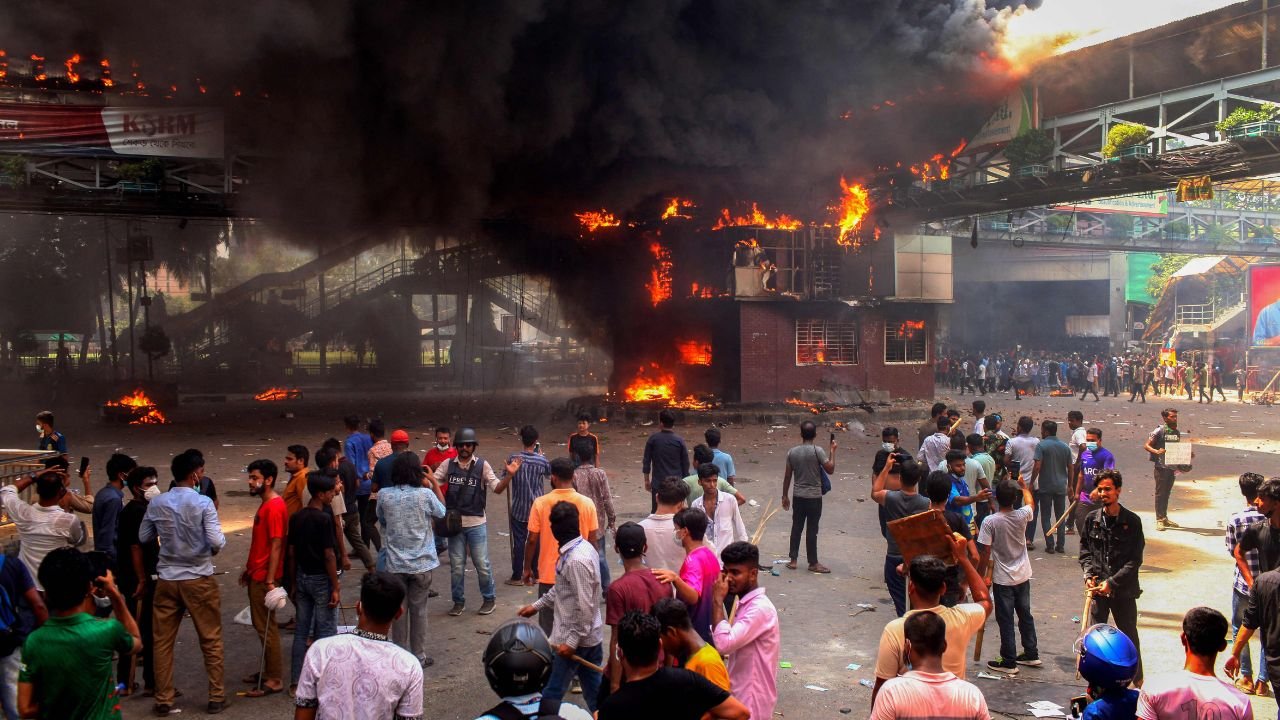
    Bangladesh on Friday announced the imposition of a curfew and the deployment of military forces after police failed to quell days of deadly unrest that has spread throughout the country.

    This week’s clashes between student demonstrators and police have killed at least 105 people, according to an AFP count of victims reported by hospitals, and pose a momentous challenge to Prime Minister Sheikh Hasina’s autocratic government after 15 years in office.

    “The government has decided to impose a curfew and deploy the military in aid of the civilian authorities,” Hasina’s press secretary Nayeemul Islam Khan told AFP.

    He added that the curfew would take immediate effect.

    Police in the capital Dhaka earlier took the drastic step of banning all public gatherings for the day — a first since protests began — in an effort to forestall more violence.

    “We’ve banned all rallies, processions and public gatherings in Dhaka today,” police chief Habibur Rahman told AFP, adding the move was necessary to ensure “public safety”.

    That however did not stop another round of confrontations between police and protesters around the sprawling megacity of 20 million people, despite an internet shutdown aimed at frustrating the organisation of rallies.

    “Our protest will continue,” Sarwar Tushar, who joined a march in the capital and sustained minor injuries when it was violently dispersed by police, told AFP.

    “We want the immediate resignation of Sheikh Hasina. The government is responsible for the killings.”

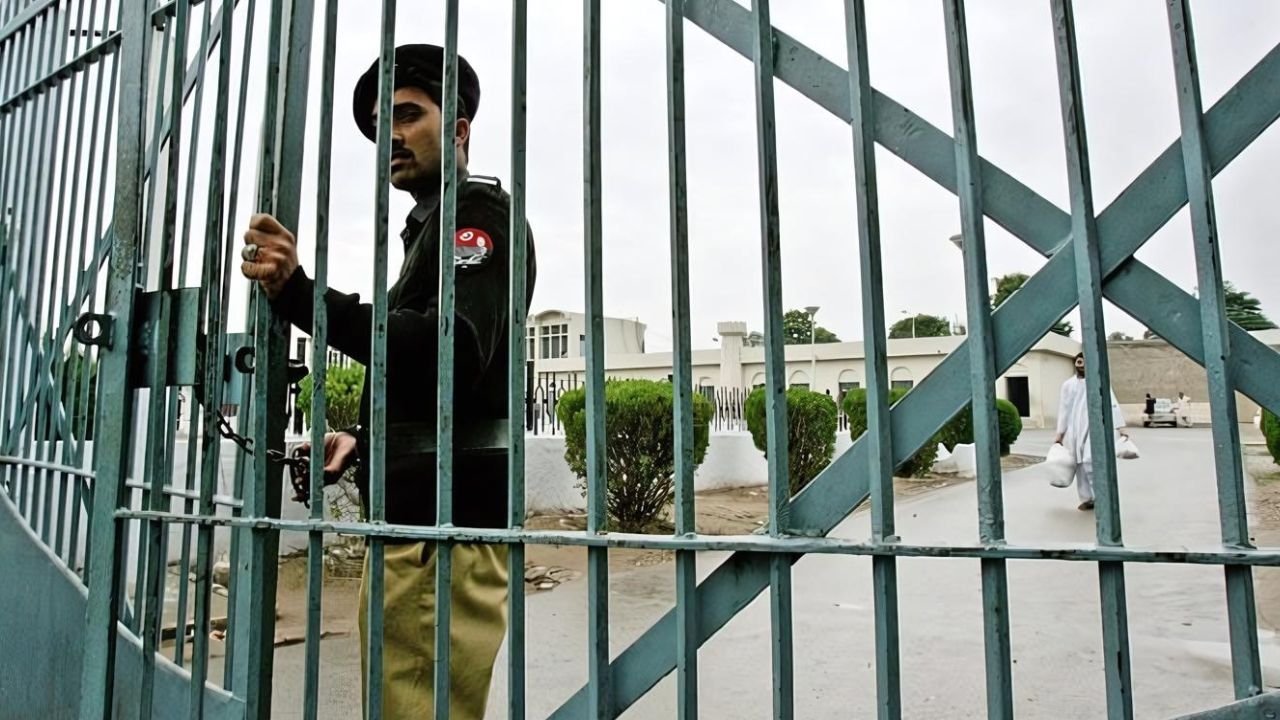
    Student protesters stormed a jail in the central Bangladeshi district of Narsingdi and freed its inmates before setting the facility on fire, a police officer told AFP on condition of anonymity.

    “I don’t know the number of inmates, but it would be in the hundreds,” he added.

    ‘Shocking and unacceptable’

    At least 52 people were killed in the capital on Friday, according to a list drawn up by the Dhaka Medical College Hospital and seen by AFP.

    Police fire was the cause of more than half of the deaths reported so far this week, based on descriptions given to AFP by hospital staff.

    UN human rights chief Volker Turk said the attacks on student protesters were “shocking and unacceptable”.

    “There must be impartial, prompt and exhaustive investigations into these attacks, and those responsible held to account,” he said in a statement.

    The capital’s police force earlier said protesters had on Thursday torched, vandalised and carried out “destructive activities” on numerous police and government offices.

    Among them was the Dhaka headquarters of state broadcaster Bangladesh Television, which remains offline after hundreds of incensed students stormed the premises and set fire to a building.

    Dhaka Metropolitan Police spokesman Faruk Hossain told AFP that officers had arrested Ruhul Kabir Rizvi Ahmed, one of the top leaders of the main opposition Bangladesh Nationalist Party (BNP).

    ‘Symbol of a rigged system’

    Near-daily marches this month have called for an end to a quota system that reserves more than half of civil service posts for specific groups, including children of veterans from the country’s 1971 liberation war against Pakistan.

    Critics say the scheme benefits children of pro-government groups that back Hasina, 76, who has ruled the country since 2009 and won her fourth consecutive election in January after a vote without genuine opposition.

    Hasina’s government is accused by rights groups of misusing state institutions to entrench its hold on power and stamp out dissent, including by the extrajudicial killing of opposition activists.

    Her administration this week ordered schools and universities to close indefinitely as police stepped up efforts to bring the deteriorating law and order situation under control.

    “This is an eruption of the simmering discontent of a youth population built over years,” Ali Riaz, a politics professor at Illinois State University, told AFP.

    “The job quotas became the symbol of a system which is rigged and stacked against them by the regime.”

    ‘Nation-scale’ internet shutdown

    Students say they are determined to press on with protests despite Hasina giving a national address earlier this week on the now-offline state broadcaster seeking to calm the unrest.

    Nearly half of Bangladesh’s 64 districts reported clashes on Thursday, broadcaster Independent Television reported.

    London-based watchdog NetBlocks said Friday that a “nation-scale” internet shutdown remained in effect a day after it was imposed.

    “Metrics show connectivity flatlining at 10% of ordinary levels, raising concerns over public safety as little news flows in or out of the country,” it wrote on social media platform X.

    sa/gle/sst

    © Agence France-Presse

  • Special children of prison officers, officials to get scholarships

    Special children of prison officers, officials to get scholarships

    Scholarships have been approved for special children of officers and officials of the Prisons Department of Punjab.

    The initiative has been approved by Punjab Home Department, on the instructions of Chief Minister Punjab Maryam Nawaz. Each child will receive a scholarship of Rs 72,000.

    The scholarship will be awarded annually by the Punjab Prisons Foundation.

    Special children will be eligible for the scholarship once a year until they reach the age of eighteen years.

    It will require a physical disability certificate and enrollment in a special education institution.

    The Prisons Department has also been instructed to submit the cases of all eligible candidates to the Prisons Foundation by August 14.

  • Students panic as HEC’s degree verification system malfunctions

    Students panic as HEC’s degree verification system malfunctions

    The Higher Education Commission’s (HEC) degree verification system in Lahore has been faulty since the past 10 days.

    According to HEC sources, the malfunction has resulted in the suspension of degree verification for hundreds of students, causing serious issues for those intending to pursue higher education abroad.

    Students have expressed frustration over their futile visits to the HEC office and lack of response. Despite submitting online applications, they have yet to receive the issued challans.

    In response, the HEC administration has indicated that the system’s malfunction originated in Islamabad. They have stated that once the system is repaired, students will receive their challans and appointment dates.

  • 20 year sentence for Saudi teacher over social media posts

    20 year sentence for Saudi teacher over social media posts

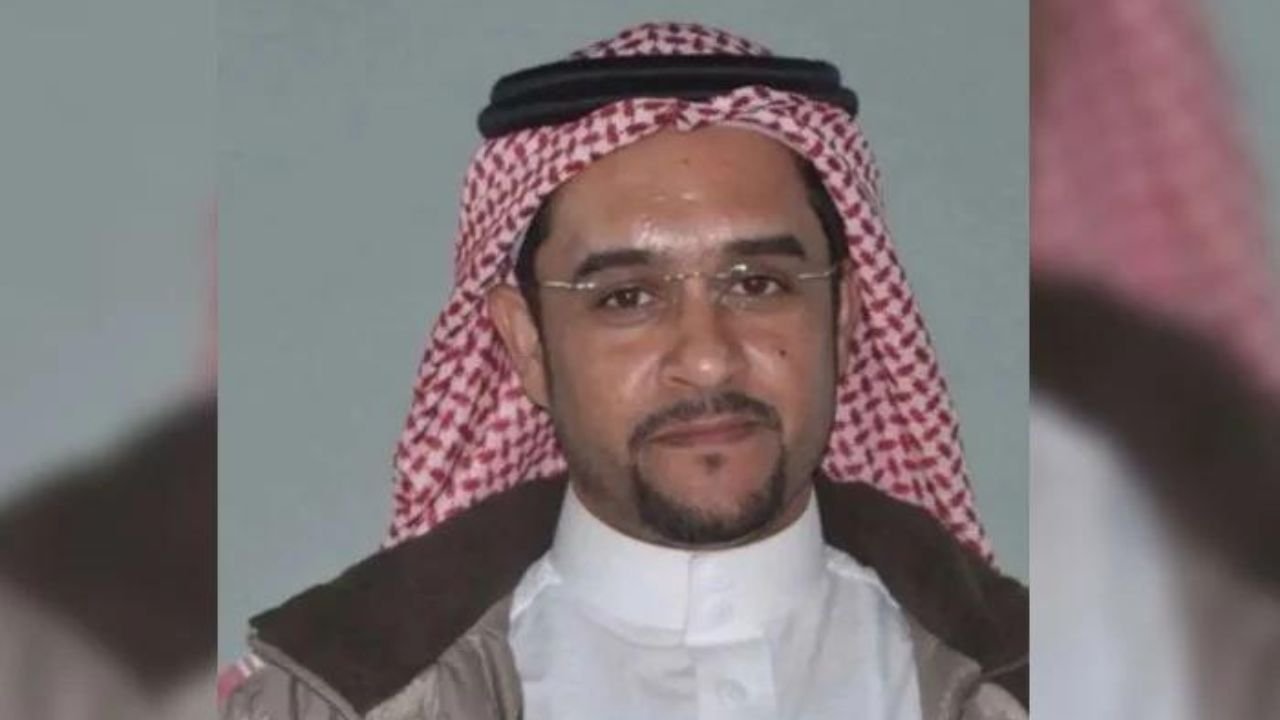
    Saudi Arabia has sentenced a teacher to 20 years in prison over critical social media posts, Human Rights Watch and the convicted man’s brother said Tuesday.

    Asaad al-Ghamdi, 47, was arrested in November 2022, in a nighttime raid on his home in the Saudi city of Jeddah, according to HRW.

    He was convicted on May 29 by Saudi Arabia’s Specialised Criminal Court, which was established in 2008 to try suspects accused of terrorism, the New York-based rights group said.

    He was sentenced “to 20 years in prison on charges related to his peaceful social media activity”, HRW added, calling it “yet another escalation in the country’s ever-worsening crackdown on freedom of expression”.

    Court documents reviewed by HRW showed that Ghamdi was charged with “challenging the religion and justice of the King and the Crown Prince” and “publishing false and malicious news and rumors”.

    According to HRW, the posts used as evidence against him criticised projects related to the Vision 2030 reform agenda.

    One post mourned Abdallah al-Hamed, a leading Saudi human rights figure who died in prison following his conviction on charges relating to his activism.

    Ghamdi faces the same charges as his brother Mohammad, a government critic who denounced alleged corruption and human rights abuses on social media.

    Mohammad was sentenced to death last year based on his social media activity.

    Their third brother, Saeed, an Islamic scholar and government critic living in exile in the United Kingdom, condemned the latest move by Saudi authorities.

    “The accusations are arbitrary and unjust because they are all based on tweets,” Saeed told AFP, commenting on the verdict against Asaad.

    “Maybe I am the target,” he added.

    Over the past two years, the Saudi judiciary has convicted and handed down lengthy prison terms to dozens of individuals for their social media posts, according to rights groups.

    They include Nourah al-Qahtani, who was sentenced to 45 years in prison in 2022, largely over social media posts criticising the government

    Salma al-Shehab, a member of the Sunni-ruled kingdom’s Shiite minority, was sentenced to 34 years behind bars in 2022 for aiding dissidents seeking to “disrupt public order” in the kingdom by relaying their tweets.

    Manahel al-Otaibi, a 29-year-old blogger and fitness instructor, was arrested in November 2022 for challenging Saudi male guardianship laws and requirements for women to wear the customary body-shrouding abaya robe.

    The Specialised Criminal Court sentenced her to 11 years in prison on January 9, but the sentence was only made public later in a Saudi submission to United Nations special rapporteurs enquiring about the case.

  • B Form no longer needed for admission to federal government schools

    B Form no longer needed for admission to federal government schools

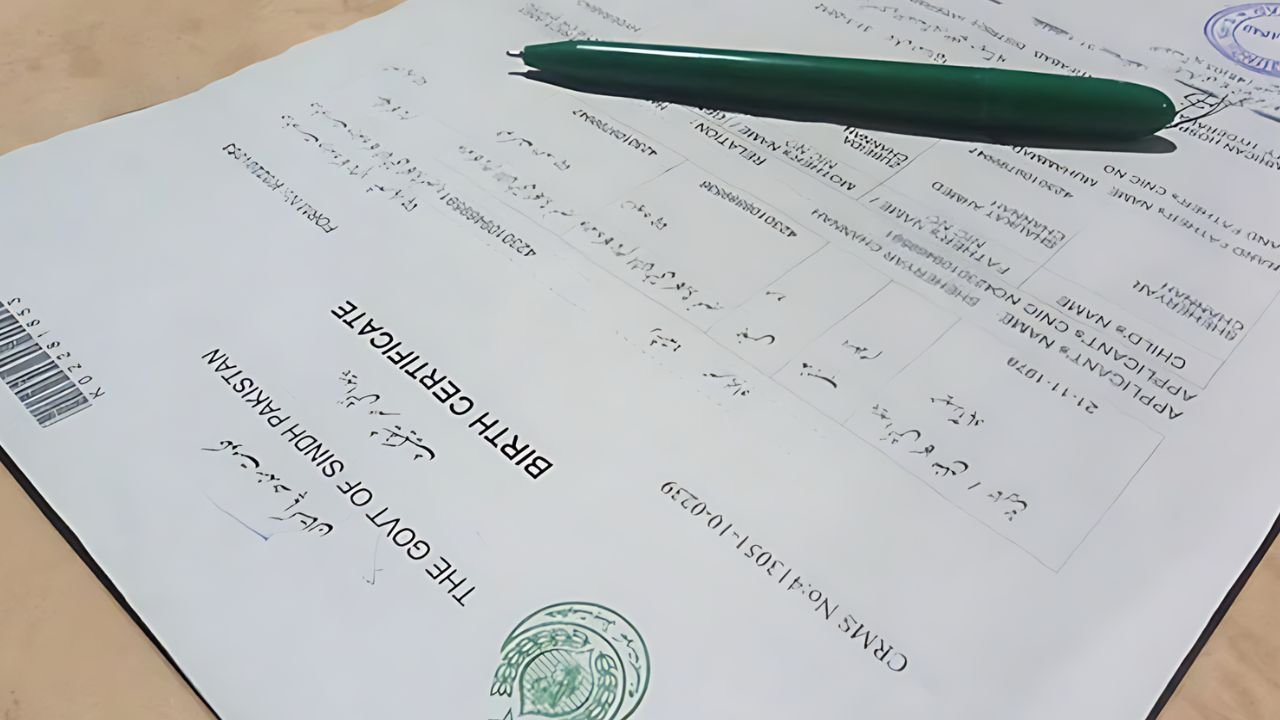
    The government has abolished the B-form — or Child Registration Certificate (CRC) — requirement for admission to federal government schools.

    Geo reports that according to Education Secretary Mohiuddin Wani, the B-form has been one of the major reasons for the growing number of out-of-school children, disproportionately affecting vulnerable populations.

    All children residing in Islamabad, regardless of their documentation status, will now be eligible for admission to government schools.

  • Top UK universities face funding and foreign student shortage

    Top UK universities face funding and foreign student shortage

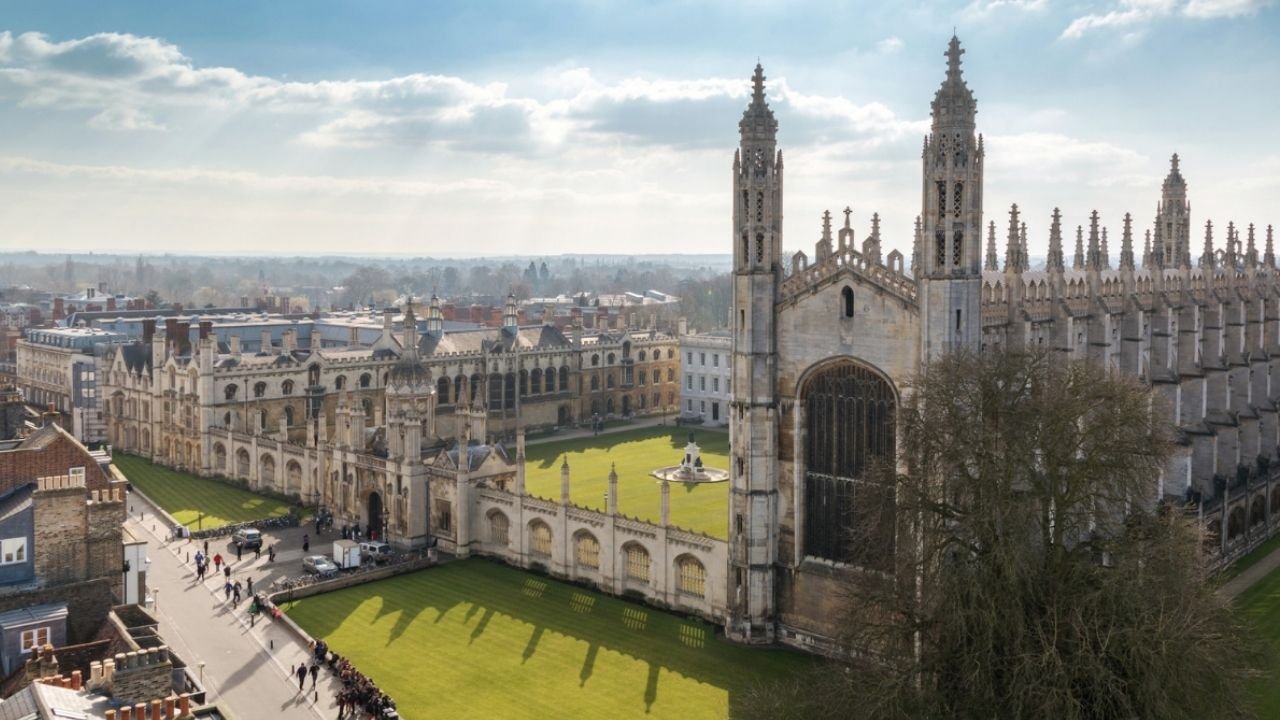
    Some of UK’s top universities could see their attractiveness decline due to hits to funding and tighter regulations on overseas students, the annual QS 2025 university rankings warned on Tuesday.

    Four British universities retained their spots in the top 10 of more than 1,000 universities ranked by Quacquarelli Symonds (QS), a benchmark ranking alongside the Times and Shanghai Jiao Tong University.

    Imperial College London, renowned for its science teaching, shot up from sixth to second place, dethroning for the first time the historically dominant “Oxbridge” duo, with Oxford and Cambridge ranking third and fifth respectively.

    More than half (52) of the UK’s universities were bumped down on the list, out of the 90 that were part of the ranking.

    “This year’s results suggest that British higher education has limited capacity remaining to continue excelling in the face of funding shortages, drops in student applications,” and restrictions affecting the intake of international students, said head of QS Jessica Turner.

    In the last few months, the Conservative government has introduced several measures to reduce regular migration which it judges to be too high.

    These including barring overseas students from bringing dependents and hiking the minimum salary needed for skilled workers visas.

    The policies have been criticised by universities, whose budgets are heavily dependent on the higher fees paid by international students.

    In the first four months of the year, 30,000 fewer student visa applications were made than in the same period in 2023, according to government statistics.

  • For deaf children in Pakistan, school is life

    For deaf children in Pakistan, school is life

    Lahore (Pakistan) (AFP) – At a school for the deaf in Pakistan, the faces of students are animated, their smiles mischievous, as their hands twirl in tandem with their sign language teacher.

    The quiet classes exude joy, led often by teachers who are also deaf.

    “I have friends, I communicate with them, joke with them, we share our stories with each other about what we have done and not done, we support each other,” said Qurat-ul-Ain, an 18-year-old deaf woman who joined the school a year ago.

    More than 200 pupils, children and adults mostly from disadvantaged backgrounds, are among the few given a new fervour for life at this inner-city school in historic Lahore.

    Of more than a million deaf school-age children in Pakistan, less than five percent go to school.

    The figure is even lower for girls and, without a language to express themselves, many children are marginalised by society and even their families.

    “Life is a little difficult. There is a huge communication gap here where people generally don’t know sign language,” said Qurat-ul-Ain.

    At the school run by charity Deaf Reach, pupils learn sign language in English and Urdu before progressing on to the national curriculum.

    Everyone has a name in sign language, which often has to do with a physical characteristic.

    Younger children learn with visuals: a word and a sign are associated with an image.

    Their peers turn their thumbs down for a wrong answer and make the applause sign — twisting hands –- for a correct one.

    Families learning to sign

    Founded in 1998 by an American and funded with donations, Deaf Reach now has eight schools across the country, educating 2,000 students on a “pay what you can afford” basis, with 98 percent of children on scholarships.

    The vast majority of students at the school come from hearing families, who are also offered the chance to learn how to sign and break the language barrier with their son or daughter.

    Adeela Ejaz explained how she struggled to come to terms with her first born son — now 10 years old — being deaf.

    “When I couldn’t understand what he was trying to say he would bang his head against the wall and floor,” the 35-year-old told AFP.

    “It was tough for everyone because no-one knew how to communicate with him. Everyone would tell us he is deaf but I wasn’t prepared to accept that.”

    The mother and son pair are now both learning to sign.

    “I am getting better at signing and I am able to communicate with my son. He’s now become so attached to me.”

    The programme makes extensive use of technology, and offers an online dictionary and a phone app.

    It has also found employment for more than 2,000 deaf people with around 50 Pakistani companies.

    Huzaifa, 26, who became deaf after contracting a fever at a young age, was given a stitching apprenticeship at Deaf Reach to help him into the skilled workforce.

    “Teachers in the government school didn’t know any sign language. They would just write notes on the board and tell us to copy it. We used to get really disheartened, and I would be extremely worried for my future,” he told AFP.

    His family pushed for him to become educated, helping him to learn the basics of sign language before he received formal coaching.

    “My parents never threw me away. They spared no effort in ensuring I was able to continue my education,” he said.

    Without their dedication, he said: “I’d be working as a day labourer somewhere, cutting leaves or cementing walls.”

    Isolated and fearful

    Sign language varies from one country to another, with its own associated culture, and regional variations sometimes exist.

    According to World Federation of the Deaf, 80 percent of the approximately 70 million deaf people in the world have no access to education.

    “I used to sit idly at home, use the mobile or play outside. I never had a clue about what people were saying,” said Faizan, 21, who has been at Deaf Reach for 11 years and dreams of working abroad.

    “Before learning how to sign I used to feel very weak mentally and had an inferiority complex and fear. But thankfully there is none of that anymore.”

    Attitudes towards people with disabilities are slowly improving in Pakistan, which has introduced laws against discrimination.

    “We have seen over the years the mentality change tremendously. From many people hiding their deaf children, feeling embarrassed, ashamed,” noted Daniel Marc Lanthier, director of operations of the foundation behind Deaf Reach.

    Nowadays families are “coming out in the open, asking for education for their children, asking to find employment for them,” he said, though much work remains.

    “With a million deaf children who don’t have access to school, it’s a huge challenge, it’s a huge goal to be met.”

  • German Embassy issues student visa application schedule

    German Embassy issues student visa application schedule

    The schedule of applications for student visas has been announced by the German Embassy in Pakistan.

    Student visa registration for the winter semester 2024-25 starts from May 21.

    According to the embassy, appointments for students with an admission letter for the 2024 summer semester will not be offered by the end of MA, while any admission letter for the 2024 summer semester after May 15 will automatically be cancelled.

    Affected students will be notified via email.

    The move is being taken to streamline the visa process and address the high volume of applications received by the embassy.

    Preference will be given to applicants and PhD students with scholarships from German institutions, while there is a special online registration category for students who have achieved a CGPA of 3.7 or above.

    Applicants must prepare a comprehensive set of documents for their visa application, including various forms, copies of passports and IDs, educational records, proof of financial means and health insurance.

  • Class 9 English paper leaked before examination

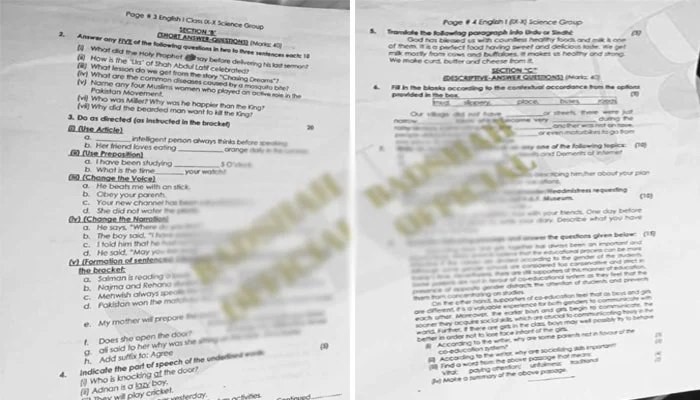
    Class 9 English paper leaked before examination

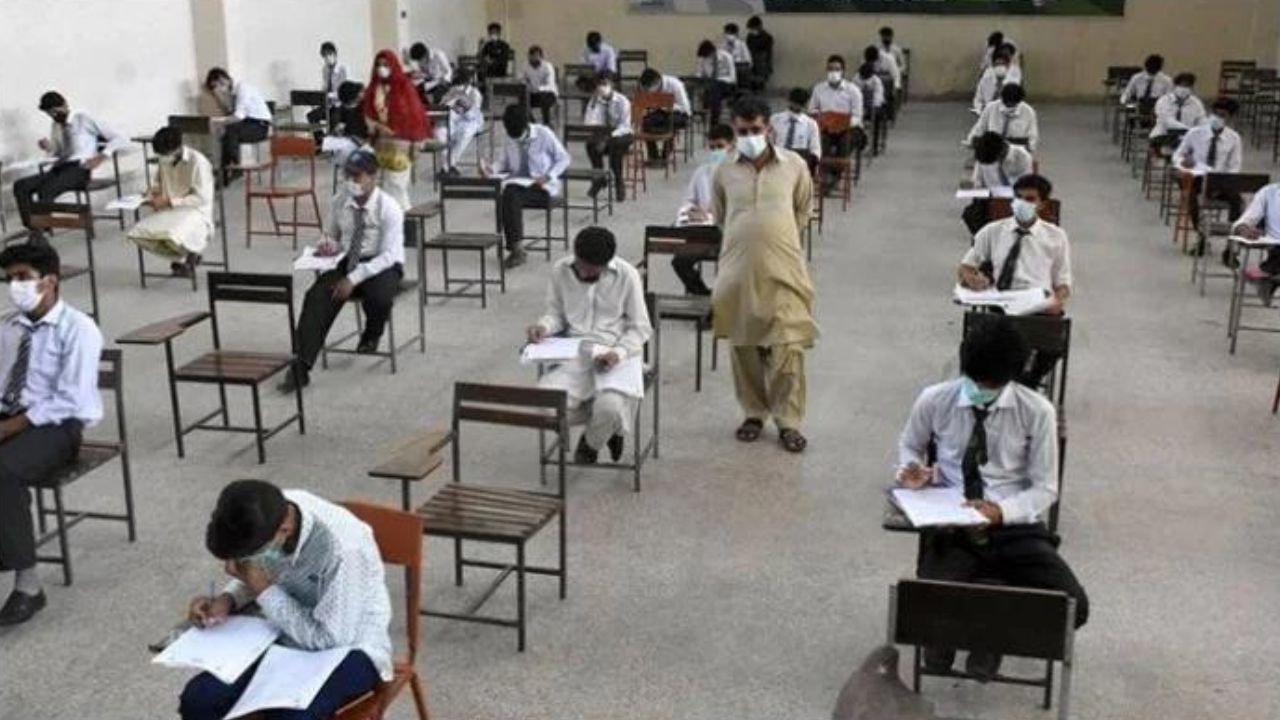
    Matriculation exams are in progress across Sindh including Karachi, where serious lack of management has come to the fore once again.

    According to Geo News, the English paper of class 9 in Karachi went viral on social media before it even started.

    This is not the first case of its kind. A number of matriculation papers have been recently leaked. A physics paper was leaked just a few minutes after the examination started while the mathematics paper was out 30 minutes after the scheduled time.