Tag: education sector

  • Punjab govt approves Rs2.07 trillion budget for four months

    Punjab govt approves Rs2.07 trillion budget for four months

    In a significant development, the Caretaker Punjab Cabinet, under the leadership of Chief Minister Mohsin Naqvi, convened for its 31st session at the Chief Minister’s Secretariat on Monday.  

    During this session, the Cabinet approved a surplus budget of Rs2.07 trillion for the upcoming four months, with a substantial allocation of Rs351 billion dedicated to development projects. 

    It is worth noting that this budget represents a crucial step in the interim governance of the province, as the caretaker government lacks the authority to approve a full-year budget in the absence of an elected government.  

    This temporary budget is designed to ensure that essential ongoing expenses are accounted for, enabling the effective management of the province’s daily affairs. 

    Within this four-month budget, particular emphasis has been placed on directing resources towards critical sectors.  

    Notably, Rs208 billion has been earmarked for the healthcare sector, and Rs222 billion has been allocated for the education sector. An additional Rs10 billion has been allocated to promote the progress of the agricultural sector. 

    In addressing various challenges facing the province, the Cabinet has committed Rs1.80 billion to the National Health Support Programme and Rs5 billion to the Punjab Textbook Board. Moreover, an allocation of Rs7.30 billion has been designated to address climate change issues, reflecting the government’s commitment to environmental sustainability. 

    The Cabinet meeting also saw the finance secretary provide a comprehensive overview of the forthcoming four-month budget, highlighting the robust financial position and surplus resources of the Punjab government.  

    In a significant move, the Cabinet approved a minimum wage of Rs32,000 for workers, effective July 1, 2023, further promoting workers’ rights and economic well-being. 

    Furthermore, the meeting underscored the importance of anti-smog measures in various regions, including Sheikhupura, Sahiwal, Gujranwala, Hafizabad, Lahore, and Kasur.  

    Chief Minister Naqvi urged strict enforcement of regulations on smoke-emitting vehicles and brick kilns by commissioners and deputy commissioners.  

    Stringent measures were also advised for ongoing construction projects, including the regular use of water sprinklers and a strict ban on crop residue burning, contributing to environmental preservation. 

    The Punjab Price Control for Essential Commodities Ordinance, 2023, received the Cabinet’s approval, reinforcing the government’s commitment to regulating essential commodity prices and ensuring consumer protection. 
  • PM Shehbaz allocates Rs14 billion for Pakistan Endowment Fund for Education, adds coding to national curriculum

    PM Shehbaz allocates Rs14 billion for Pakistan Endowment Fund for Education, adds coding to national curriculum

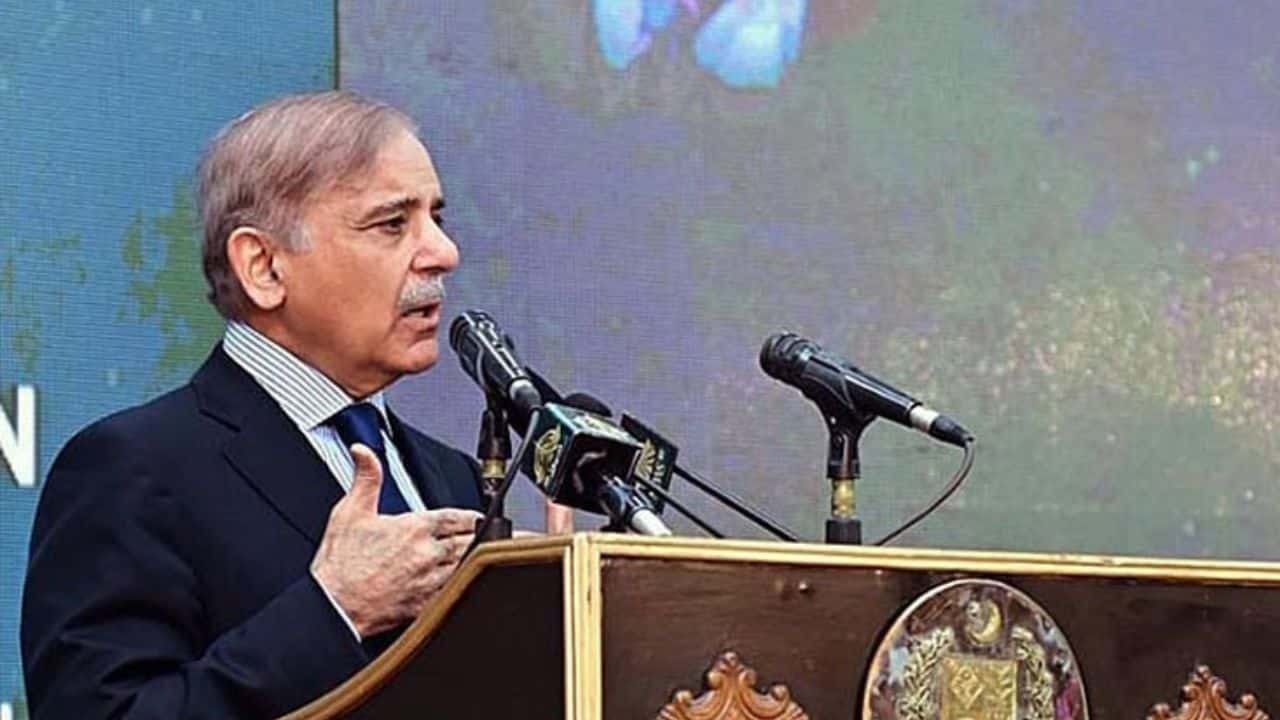
    On Wednesday, Prime Minister (PM) Shehbaz Sharif officially launched the Pakistan Endowment Fund for Education, which includes the incorporation of computer coding and constitutional studies into the National Curriculum. During the launching ceremony, he announced a budget of Rs14 billion for the program over the next four years, with Rs3 billion allocated for the current fiscal year.

    PM Shehbaz Sharif expressed his desire to sustain this project indefinitely, with increased funding, in order to provide maximum opportunities for higher education to deserving students. He emphasised the importance of prioritising the education sector in the future and recommended that the next elected government allocate up to Rs140 billion for the program over the next 10 years.

    The prime minister reflected on his past achievements as the Chief Minister of Punjab, where he initiated the Punjab Education Endowment Fund (PEEF) in 2008 with an annual allocation of Rs2 billion. He proudly mentioned that more than 400,000 students have benefited from this fund and are now serving the country in various professions.

    PM Shehbaz Sharif emphasised that the promotion of education should not be influenced by political motivations, but rather be considered a form of worship. He pledged to focus on underdeveloped areas of the country, where many young people are unable to complete their studies due to limited resources.

    Regarding the financial situation of the country, the prime minister noted that the International Monetary Fund (IMF) board meeting was scheduled for that day, with hopes of approving a $3 billion stand-by agreement with Pakistan. He acknowledged the need for self-reliance and expressed his determination to make serious efforts for the development and prosperity of the country, highlighting China as an example of regaining lost glory through a focus on education and various sectors.

    PM Shehbaz Sharif also mentioned the support received from friendly countries, including China, which had provided $5 billion in the past three months. He further mentioned that Saudi Arabia had sent $2 billion, and another $1 billion was expected from the UAE in the near future.

    During the ceremony, PM Shehbaz Sharif distributed scholarship checks to talented and deserving students as part of the newly launched project. Minister for Education and Professional Training, Rana Tanvir Hussain, explained that the program was designed based on the Punjab Education Endowment Fund (PEEF) and aimed to provide merit-based scholarships to talented students in fields such as engineering, nursing, agriculture, social sciences, and allied health sciences.

    Minister Hussain also mentioned the government’s decision to introduce computer coding and constitutional studies into the national curriculum, considering the current situation. He emphasised that the amended curriculum, agreed upon by all provinces under the leadership of Prime Minister Shehbaz Sharif, was necessary to provide students with quality education and enable them to contribute to the socio-economic development of the country.

    Federal Secretary of Education, Waseem Ajmal, informed that scholarships under the Pakistan Endowment Fund for Education would be provided to students through the Higher Education Commission (HEC) and National Endowment Scholarships for Talent (NEST).

  • Punjab increases govt employees’ pay by 30%, pensioners above 80 to receive 20% raise

    Punjab increases govt employees’ pay by 30%, pensioners above 80 to receive 20% raise

    In a significant development, the interim Punjab cabinet, headed by caretaker Chief Minister Mohsin Naqvi, has approved the provincial budget for the initial four months of the fiscal year 2023-24. The cabinet meeting, held on Monday, saw the endorsement of several key measures aimed at providing relief to the people and promoting various sectors of the economy.

    One of the major highlights of the budget is a 30 per cent increase in salaries for government employees, which will be implemented as an ad hoc relief. This decision is expected to bring significant relief to public servants who have been facing the brunt of rising costs of living. Additionally, pensioners above the age of 80 will receive a 20 per cent increase in their pensions, acknowledging their valuable contributions to society.

    The Punjab cabinet has also taken a bold step to stimulate business growth in the information technology and education sectors. By withdrawing all duties and taxes, the provincial government aims to create a favorable environment for these industries, fostering innovation and progress. An allocation of Rs70 billion has been set aside to provide relief to the people over the course of the first four months of the fiscal year.

    Addressing concerns related to the construction sector, the cabinet rejected a recommendation to increase stamp duty by up to 3 per cent. Instead, it approved fixing the stamp duty ratio at 1 per cent, thereby promoting the growth of the construction industry and encouraging investment in the sector.

    Recognizing the importance of agriculture, the cabinet allocated over Rs47 billion to support and enhance the sector. This move demonstrates the government’s commitment to bolstering the agricultural industry, which plays a crucial role in the province’s economy and livelihoods of the rural population.

    Furthermore, the interim setup has pledged to complete 50 per cent of ongoing development projects within the first four months of the new fiscal year. This ambitious target showcases the government’s determination to prioritise infrastructure development and provide better facilities for the citizens.

    The cabinet’s focus on critical sectors also extends to education and healthcare. An increase of up to 31 per cent in the budget allocation for education and health has been approved for the initial four months of the fiscal year. This decision reflects the government’s commitment to improving access to quality education and healthcare services across Punjab.

    The cabinet’s proactive approach toward promoting technological advancements is evident through the approval to establish an information technology park within the Lahore Knowledge Park. This venture aims to create a hub for technology-driven innovation and attract investment to the region.

    In a noteworthy move, the cabinet also approved the establishment of an endowment fund worth Rs1 billion for journalists. This step recognises the vital role played by journalists in society and aims to support and encourage their professional growth.

    Chief Minister Mohsin Naqvi emphasised that the Punjab budget does not impose any new taxes on the people, providing further relief to the general public. He commended the chief secretary, Planning and Development Board chairman, Punjab finance secretary, and their teams for their diligent efforts in presenting a people-friendly budget.

    The cabinet meeting was attended by provincial ministers, advisors, and secretaries of relevant departments, signaling a collaborative approach to decision-making and ensuring the inclusivity of various stakeholders.

    With the interim Punjab cabinet’s approval of this budget, the province is poised to embark on a path of economic growth, development, and improved quality of life for its citizens.