Tag: education

  • Punjab House in Murree handed over to HEC

    The Punjab House in Murree has been handed over to the Higher Education Department (HEC) for the establishment of Kohsar University, as per a notification issued by Punjab Board of Revenue. The secretary of the Colonies Department has forwarded the notification to the Deputy Development Commissioner of Rawalpindi.

    As per details, the Punjab House in Murree is a mansion built over 96 kanal. It comes under the provincial government and is used for different purposes.

    Read more – Inside pictures of Murree’s Government House Murree are royal

    PTI MNA Sadaqat Ali Abbasi, in a statement, said that along with theory, students will also be given practical education in tourism at the university.

    He further added that in one block of the Punjab House, classrooms will be built and to generate extra income other blocks will be made available to tourists under the supervision of the university. The plan is likely to materialize within the next three years.

    The decision to establish Koshar University in Punjab House was taken two years ago and is in the accordance with the vision of Prime Minister Imran Khan to use government buildings for the interest of the general public.

    Earlier in 2018 and 2019 Punjab’s and Murree’s Governor’s House opened its doors for public respectively. In November 2020, Chaudhry Mohammad Sarwar inaugurated the Governor House Café that is set up in a double-decker bus inside the Governor House in Lahore for the general public.

  • ‘Revise your course, do homework, these aren’t holidays,’ Shafqat Mahmood to students

    Pakistan’s educational institutions had to be closed down because coronavirus infections were rising very fast, Federal education Minister Shafqat Mahmood tweeted Tuesday morning.

    He said it was done with a heavy heart, Geo reported.

    “I request all students to use this time not as a holiday but to revise their courses, do homework,” he said.

    The federal education minister asked students to continue with their studies “as much as possible”.

    Mahmood had made similar remarks last week while talking to Geo Pakistan. He had said the decision to close down educational institutes was taken due to non-compliance with government-issued coronavirus SOPs.

    “The SOPs were not being followed as they should have been,” he had said, adding that health department data showed rapid virus transmission in education institutes.

    Stressing that children’s health cannot be taken lightly, Mahmood said there were around 50 million students across the country i.e. one-fourth of our population. “They can become carriers. So it was necessary to shut down schools.”

  • Twitter loses it over Rs1.29 trillion budget for defence, Rs83.63 billion for education

    With the Pakistan Tehreek-e-Insaf (PTI) government unveiling its second budget in the National Assembly (NA) on Friday, Twitterati are losing it over nearly Rs1.3 trillion being allocated for defence against not even Rs84 billion for education in the Rs7.13 trillion budget for fiscal year (FY) 2020-21.

    One trillion equals 1,000 billion.

    DEFENCE BUDGET:

    According to Dawn, the government has proposed Rs1.29 trillion defence allocation for the next fiscal year, representing an 11.8 per cent increase over the original allocation for the outgoing year. Federal Minister for Industries Hammad Azhar, while presenting the budget in the National Assembly, said that defence and internal security have been given adequate attention in the budget.

    The military had last year forgone a major hike because of the economic challenges then facing the country and settled for a raise of 4.74 per cent, but by the end of the year, it had overshot the allocation by 6.33 per cent.

    The original allocation for last year was Rs1.15 trillion, but according to revised figures presented before the lower house of parliament, about Rs1.23 trillion had been spent. It has now virtually become a norm for actual defence spending incurred in a year to be higher than the original allocation.

    EDUCATION BUDGET:

    Meanwhile, the government has earmarked Rs83.363 billion for Education Affairs and Services against the revised allocation of Rs81.253 billion for the current fiscal year, showing an increase of around 2.5 per cent. The country’s public expenditure on education as a percentage to gross domestic product (GDP) is estimated at 2.3 per cent in the fiscal year 2019-20, which, according to reports, is the lowest in the region.

    An amount worth Rs70.741 billion has been allocated for Tertiary Education Affairs and Services in budget 2020-21, which is 84.9 per cent of the total allocation under this head, while Rs2.931 billion have been earmarked for pre-Primary & Primary Education Affairs, Rs7.344 billion for Secondary Education Affairs & Services and Rs1.237 billion for administration.

    Since the federal government only finances higher education after the 18th Amendment when education as a subject was devolved to provinces, the government has increased the budgetary allocation for the higher education sector from Rs59 billion in 2019-20 to Rs64 billion for the next fiscal year. According to the budget documents, Rs29.470 billion have been earmarked for the Higher Education Commission (HEC) under the Public Sector Development Programm (PSDP) for 2020-21.

    TWITTER REACTS:

    With the nearly 1447.62 per cent difference between the spending on defence and education not sitting well with many, here’s how Twitterati are reacting:

    Some also highlighted how the government had allocated only Rs70 billion for combating the coronavirus and other disasters at a time when dozens were losing their lives to the virus across the country every day.

    What do you think of Budget 2020? Let The Current know in the comments.

    You can go through the budget document here.

  • Cambridge University suspends all in-person classes until summer 2021

    Cambridge University suspends all in-person classes until summer 2021

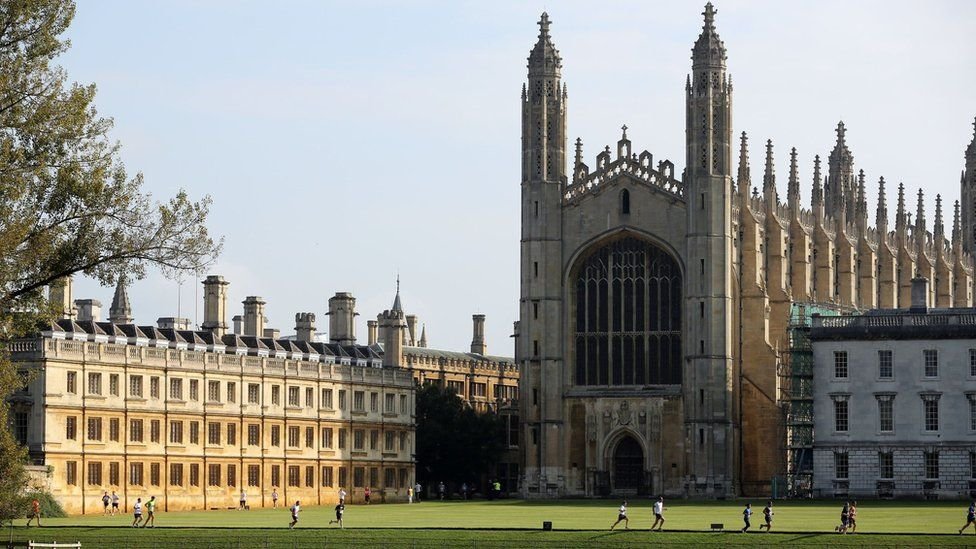
    The University of Cambridge in the United Kingdom has become the first university to announce that it will move all “face-to-face lectures” online for the upcoming 2020-21 academic year. The institution added that it was “likely” social distancing would continue to be required.

    According to a report in The Guardian, the university said that while lectures would continue virtually until summer 2021, it may be possible for smaller teaching groups to take place in person if it “conforms to social-distancing requirements”.

    A statement from the university read: “The university is constantly adapting to changing advice as it emerges during this pandemic. Given that it is likely that social distancing will continue to be required, the university has decided there will be no face-to-face lectures during the next academic year.

    “Lectures will continue to be made available online and it may be possible to host smaller teaching groups in person, as long as this conforms to social-distancing requirements. This decision has been taken now to facilitate planning, but as ever, will be reviewed should there be changes to official advice on coronavirus.”

    All teaching at the university was already moved online in March and exams were being carried out virtually.

  • Rethinking a post-COVID-19 future

    Rethinking a post-COVID-19 future

    “We should not go back to the old ways.”

    We are living through a global pandemic and life as we knew it will perhaps never be the same again, That’s the hope anyway. Because there are a lot of things about the way life was before that need rethinking — and COVID-19 has given us an opportunity to do this.

    In the 21st century, there was life before the virus, there is now lockdown and life during the virus and, at some point, there will be life after the virus — but will the latter be the same as our old way of living? There is much discussion now of ‘getting the economy going’ again, of getting things back to ‘normal’ again but is our plan just to restore the same economic model and the same old systems?

    Or is now the time to rethink the way we live?

    Several falsehoods about our lives have been exposed by the lockdown. Key among these is the myth that the old way of working and studying was the only way: fixed hours of attendance at sites you had to physically travel to. It turns out that this ‘hazri’ culture is not actually essential, and many of these ways of working were just constructs whose aim was to strengthen a type of corporate or darbari culture. Not allowing people to work from home stemmed perhaps from a reluctance to lose control of staff. The institutions that would hire expensive consultants to help them ‘save money’ and work efficiently told us that it was too expensive to have individual desks for staff and subjected them to the horrors of hotdesking. This apparently ‘saved’ some money yet these same organisations would be reluctant to allow staff to work from home routinely even though that would have saved even more money. The permission for ‘working from home’ was given not as the norm, but as some kind of great favour or concession which involved HR, applications and a degree of workplace politics.

    Well now nearly everybody’s working from home and we realise this has actually been possible for many, many years and that perhaps the workplace would have caught up with technology long ago if there weren’t so many dubious management practices and vested interests involved. Apart from the workplace, there is the question of the classroom and what it is — is it a physical reality or an intellectual one? In Britain, university education was once state-funded and all about education rather than businesses.

    “We’ll have to rethink education completely — especially university education.”

    But in the last decade universities have been turned into businesses which are less about education and more about profits. The students are called ‘clients’ and since university fees are now more than three times what they were ten years ago, they are saddled with crippling student debt (student loans are given by a private profit-seeking company). Students invest so much that they are afraid to challenge intellectual views of question anything professors say because they know that they need to get good grades because of their investment. Instead of concentrating on the wellbeing of their students, universities seem to have become more focused on marketing their brand in order to attract a maximum number of ‘customers’ or ‘clients’. But even when the riches poured in, it never seemed to be the academic staff who’d benefit but rather the ‘managers.’

    We’ll have to rethink education completely — especially university education. In Argentina, most young people get their first degree while working full time. Work by day and take evening classes. It might take longer but it definitely seems to be a more productive way to live. Oh, and state universities are free.  Of course, education can not all be virtually based but perhaps a large part of it does need to be.

    Then there’s the question of how society values work. Of how bankers are more highly paid and valued than ‘unskilled’ workers. How financial managers are much better paid than medical professionals. Now we realise who are the professionals that society really needs when in times of trouble: they are the medical professionals, the cleaners, the garbage collectors, the bus drivers, the police, the fire brigade, the people who run food shops and stack shelves. These are essential, these are the people we should value, these are the jobs we need to pay people well to do.

    We need to think of new businesses too. Instead of having an endless number of restaurants and coffee shops to ‘provide employment’ perhaps we should have more businesses whose goal is to contribute to community welfare employing people. We need more cooperative models of working and more localised businesses. Instead of manufacturing fast fashion and throwaway clothes which encourage frivolous spending and whose plastic fibres are clogging up the oceans and rivers, we perhaps should concentrate on businesses that produce food.

    “And guess who governments need to fund now? Not bigshot entrepreneurs and investment bankers, they need to support medical professionals, health workers and research scientists.”

    The virus and subsequent lockdown exposed a number of vulnerabilities in life as we were living it, and one of these was the matter of food production and supply. Perhaps now we need to have a national policy of localised production: local dairy farming, local livestock, locally grown fruit and vegetables. Apart from the fact that this will avoid the issue of complicated supply chains, many people in the health, economic and development sectors have long argued that this is a healthier and more sustainable way to live. This way food production would be organic and fresh – not shipped from the other side of the world. And in terms of food, we need to unlearn the mantra that endless choice is good. The illusion that the more choice you have in choosing, for example, a brand of chocolate shows how ‘free’ you are as people needs to be dispelled. And we need to move back to the idea of quality not quantity in the way we live.

    And new initiatives need to be set up to care for the environment. The enforced detox brought on by the lockdown has shown us bluer skies, clearer air and cleaner waters. We need to have a policy of setting up local initiatives to support this which are goal-oriented and not just motivated by a profit motive.

    And guess who governments need to fund now? Not bigshot entrepreneurs and investment bankers, they need to support medical professionals, health workers and research scientists. And they need to provide free broadband and digital access to all citizens because when push comes to shove this is something that will benefit the whole of society. We need more government spending, new frameworks and new initiatives based on a clear vision of what our priorities are now.

    People and governments need to come together and come up with a new way to live and a new model of economics, We can make a whole new sort of world; a world minus dodgy ‘outsourcing’, privatisation, unsound financial instruments, economic disparity and unbridled greed. But what’s needed is a lot of imaginative ideas and a bold new way of thinking. We need to be creative.
  • Buzdar govt tells schools to slash fees by 20pc, pay staff on time, not fire anyone

    Buzdar govt tells schools to slash fees by 20pc, pay staff on time, not fire anyone

    Punjab Chief Minister (CM) Usman Buzdar has announced his administration’s decision to slash school fees across the province by 20% during the ongoing holidays to safeguard the masses from the global coronavirus pandemic that also continues to take a toll on Pakistan, especially Punjab.

    “All schools have also been instructed to collect fees on a monthly basis,” he tweeted adding that the schools had also been directed to pay the salary of all its staff and teachers on time, and barred from firing anyone.

    The provincial chief executive has reportedly made the announcement as part of government measures to shield the public from the economic impact of the lockdown enforced to contain the spread of COVID-19.

    Earlier in the day, it was reported that the Punjab government was extending the existing restrictions in the province till April 14.

    “Public is requested to follow the guidelines issued by the government and ensure that they don’t leave home unless necessary,” a government spokesperson said.

    https://twitter.com/MusarratCheema/status/1247038746937171968

    According to a notification, the lockdown is being extended due to a rise in the number of cases in the province, which is alarming and highly dangerous for the health of the people.

    “It is mandatory to take all pragmatic and possible measures to contain and counter the further spread of coronavirus on war footings,” the notification said.

    It further said that there were sufficient grounds to proceed under section 144 of “The Code of Criminal Procedure, 1898”, as an immediate preventive and speedy remedy to ensure public safety, conserve lives and maintain peace and tranquillity in the province.

    Punjab has reported the highest number of confirmed cases in the country, 1,493 and 15 deaths.

    On March 23, CM Buzdar had announced a 14-day partial lockdown in the province to curb the spread of the virus.

    Following the announcement, parks and public places were ordered to remain close and pillion riding in the province was banned.

  • Google is helping Pakistan fight coronavirus, here is how.

    Google is helping Pakistan fight coronavirus, here is how.

    According to Pakistan Telecommunication Authority (PTA) press release, Google has introduced various features and tools to facilitate the operations of telecommunication networks to promote learning and access to authentic information in Pakistan.

    The platform has given the Pakistani government an ad-inventory to disseminate accurate information on time.

    Moreover, Google has shared tips and resources for remote workers and students so that they can improve the quality of work and ensure productivity.

    Google has allowed free access to advance ‘Google Hangout’ which means the users will be able to put 250 participants on audio and video calls so the entire class can attend lectures. The participants can record the lectures and save it in google drive so when they cannot join, they can access the lectures when needed.

    Google has also launched a speech-based reading app “Bolo” — based on machine learning — to help children read aloud confidently, using their voice. The app is available in the Urdu language as well.

    Apart from these tools and resources, they have ensured measures to combat misinformation. Google has also attached ‘SOS Alert” banner with news from mainstream outlets and information from recognised health organization such as the World health organization (WHO) and National Institute of Health (NIH).

    These hubs provide a comprehensive overview of the pandemic, information about its symptoms and measures, as well as current statistics and answers to common questions.

    These necassary measures taken by the company because search interest in COVID-19 has continued to climb across the world. At present, this is the most researched topic in the world so it is necassary to curb fake news and misinformation.

    In addition to launching new features on the search engine, the platform has rolled out a website—available at google.com/covid19 — focused on education, prevention and local resources.

    People can find state-based information, safety and prevention tips, search trends related to COVID-19, and further resources for individuals, educators and businesses.

  • Minister announces uniform curriculum for schools across country

    Minister announces uniform curriculum for schools across country

    Federal Minister for Education and Professional Training Shafqat Mehmood has said that the federal government would soon announce a uniform curriculum for the entire country to end disparity between different educational systems in the country.

    “We are in the process of making curriculum for all children across Pakistan, and kids enrolled with government-run or private schools or even madrassas will be taught only one curriculum,” the federal minister was quoted as saying by The Nation at the concluding session of the three-day celebrations in connection with Quaid Day on Wednesday.

    Addressing the event organised by Sindh Madrassatul Islam University, Mehmood said the country was riddled with different systems of education, therefore, the government wanted to introduce a uniform curriculum.

    “These different systems of education have divided the country’s philosophy, and a uniform syllabus will help put an end to this condition,” he said, adding that Tanzeemul Madaris had also accepted his ministry’s suggestion, according to which children in madrassas would be required to appear in matriculation and intermediate examinations.

    Earlier this year, the Punjab government had also promised a uniform curriculum at least for primary schools in the province from 2020.

    “A uniform curriculum for primary schools in the province will be introduced by March 2020,” Schools Education Minister Murad Raas had told the Punjab Assembly in January. Responding to a written question in the provincial house, he had said the curriculum would also include a certain portion of religious teachings and that uniform syllabus for higher levels would be introduced in due course.

    Replying to a query about existence of both English and Urdu mediums in state-run schools, he had chided former chief minister Shehbaz Sharif for it saying the Pakistan Muslim League-Nawaz (PML-N) leader introduced English medium without making available teachers for the purpose.

    He said English would be taught in primary schools as a language and other subjects would be taught in Urdu.

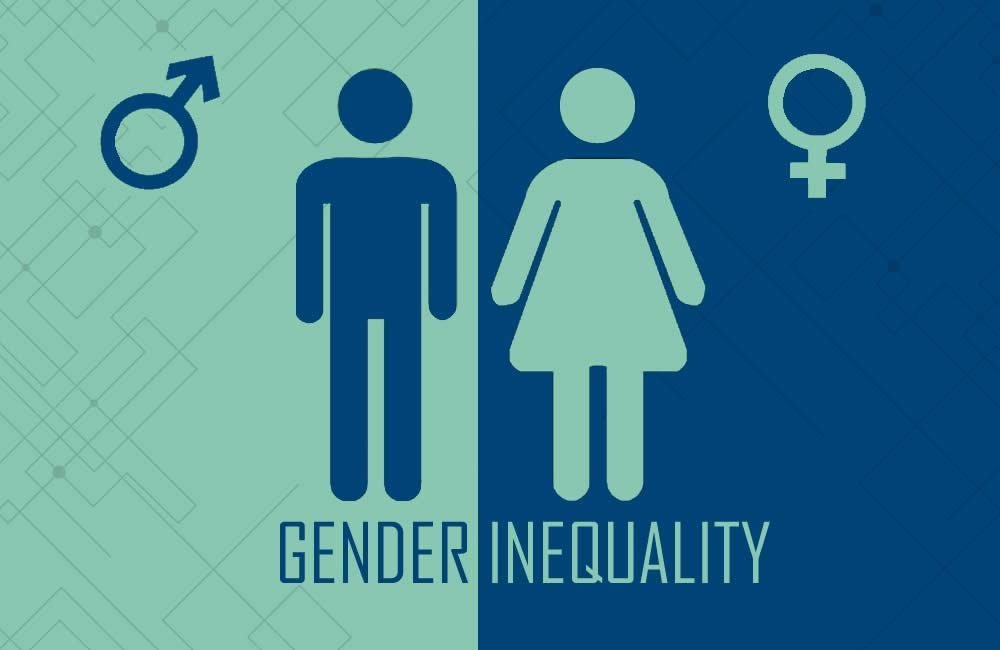
  • Pakistan ranked 151 out of 153 in gender equality index: WEF

    Pakistan ranked 151 out of 153 in gender equality index: WEF

    According to the Gender Equality Index report of the World Economic Forum, Pakistan stood 151 out of 153. The only two countries below Pakistan are Iraq and Yemen.

    Though grand claims have been made about improving educational opportunities for youth, empowerment of democracy and the betterment of health facilities in the country, all have been shattered after the INGO placed Pakistan at number 150 in the list of economic participation and opportunities, 143rd in education attainment, 149th in health and survival and 93 in political empowerment globally.

    While Pakistan stood 112th in 2006, the standing has drastically slipped to 151 in the the last 14 years.

    The report highlights that there is a huge gap of 32.7 percent between men and women in the context of economic opportunities. The gap has also widened to 94.6pc – which means that women do not have the same facilities in comparison to men.

    On the contrary, Bangladesh ranked 50, followed by Nepal 101, Sri Lanka 102, India 112, Maldives 123 and Bhutan 131.

  • We forget…

    It was a cold December morning when Pakistan had woken up to the gloom of having lost Dhaka over four decades ago.

    Leaving their abodes, hundreds of thousands – if not millions – had taken to social networks to vent their frustration over the tragedy that until December 16, 2014, was deemed the darkest in the 70-something years history of the country.

    Little did they know that 150 coffins, 134 of which were to be the heaviest, were to be lifted later that day; that a tragedy much similar to 2004’s Beslan massacre in Russia, was in the offing.

    Six gunmen affiliated with Tehrike Taliban Pakistan (TTP) conducted a terrorist attack on Army Public School (APS) Peshawar at around 10 am. The militants, all of whom were foreign nationals, entered the school and opened fire on staff and children, killing 150, including 134 between the ages of eight and 18.

    The attack sparked widespread reactions from across the country, as condemnations from the public, government, political and religious entities, journalists and celebrities, poured in. Imran Khan’s infamous 126-day Islamabad sit-in as a member of the opposition was also called off.

    While media reacted strongly to the events as major newspapers, news channels and many commentators called for a renewed and strong action against militants, many countries, international organisations and important personalities also condemned the attack.

    Reacting to the carnage at the army-run school, terrorist organisation Al-Qaeda said that “soldiers should be targeted, not their children”.

    Today marks five years since wails of the nation broke through the deafening silence of December amid the state’s failure to protect its own; since those at odds vowed to rise above their differences to unite and fight extremism, and since the moment when we started forgetting yet another tragedy.

    Although it is believed that memories hanging heaviest are the easiest to recall, it is regrettable how we tend to forget even the ones that hold in their crinkles the ability to change not only our lives as individuals but also the fate of the entire nation.

    It is regrettable how we have limited our recalling of these painful memories to certain days such as December 16, without thinking of the families that go through the pain of losing their loved ones, especially minors, all day every day.

    Make no mistake as what we argue is not torturing ourselves with the misery that is our own creation, but what we advocate for is realising every day what led to the tragic episode that should’ve defined us for the generations to come.

    Because it is regrettable how we were let down, it is regrettable how we let down those 150 innocents, regrettable how we let down millions of others killed because of the failure of the state to protect its citizens, and regrettable how many of us fail to realise there still is time for us to pick ourselves up, dust ourselves off and get back in the saddle.

    Here’s to the courageous survivours who beat the cowards five years ago… here’s to the memory of the 150 souls, from the ashes of whom, we must rise.