Tag: education

  • Why do educated girls scare the Afghan Taliban?

    Why do educated girls scare the Afghan Taliban?

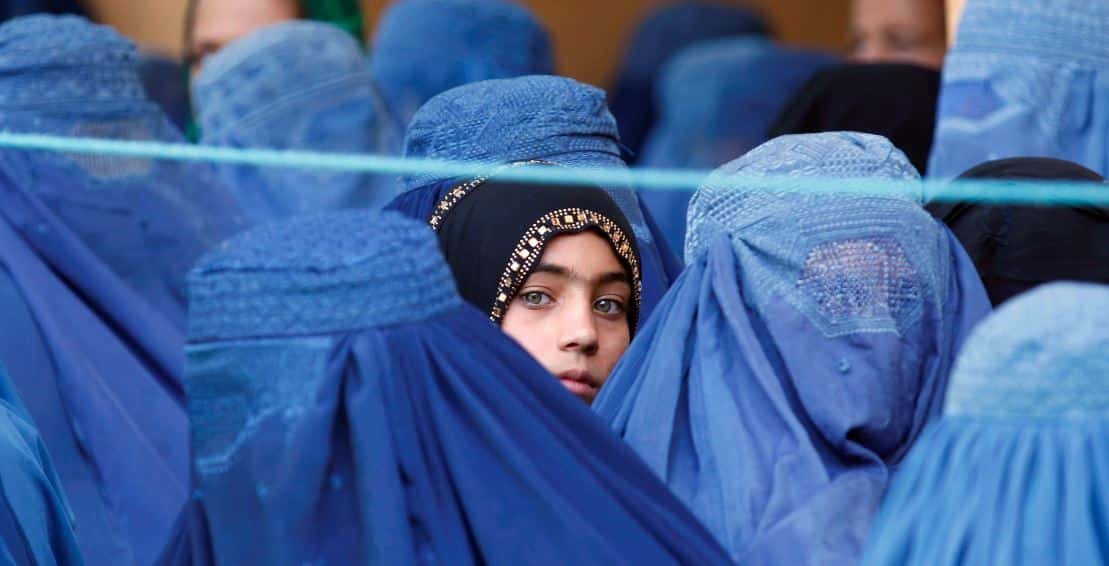
    Afghanistan’s Taliban-run higher education ministry has said that female students would not be allowed access to the country’s universities until further notice, barring them from getting education, something that is their right and a basic necessity.

    Where the Afghan Taliban’s takeover poses threat to many, people questioned what will happen to the women? Will their needs be sabotaged? Will they be treated as a lesser entity of the state? Will the women have freedom to live and recover from the torments of the past? Will the women be given the chance to have a good life? Looking at the present situation, one can only think: Why are the Afghan Taliban so afraid of a woman’s mind? If you educate a woman, you educate an entire generation. But this notion fails to prevail in the region.

    The ban on female education has drawn international condemnation and people across the world are angry at how Afghan women are being treated.

    After the Taliban seized control of Afghanistan in August 2021, they closed schools across the country. Most schools eventually reopened, but girls in secondary school were told to stay at home until conditions— which the Taliban didn’t define— were ready for them to return to classes. The announcement to return to school never came.

    In addition to barring women and girls from education, the Taliban have imposed a raft of rules to govern female behaviour.

    We can only hope that the Taliban recognise women as equals and give them their due right and recognition.

  • Police ranked Pakistan’s most corrupt sector once again in 2022

    Police ranked Pakistan’s most corrupt sector once again in 2022

    Police were found to be on the top rung of the corruption ladder in Pakistan, according to Transparency International Pakistan’s (TIP) National Corruption Perception Survey (NCPS).

    The police ranked the highest in the previous year’s survey as well.

    According to Geo, education was identified as the “most corrupt” sector in Sindh, followed by the police and tendering and contracting, according to a provincial analysis of the three “most corrupt” sectors.

    In Punjab, the police once more took first place, followed by tendering and contracting and the courts.

    The judiciary was thought to be the most corrupt institution in Khyber Pakhtunkhwa, with the police coming in second and tendering and contracting coming in third.

    In Balochistan, contracting and tendering claimed the top spots, with the judiciary and police coming in second and third, respectively.

    The 2022 survey was given to partner organisations by TI Pakistan’s chairman, Justice (retd) Zia Pervez, with the aim of boosting the NCPS’s legitimacy and educating partner organisations on public survey processes.

    He hoped that other government agencies would use the survey’s findings to implement reforms.

    “This will help in reducing corruption and making the lives of the public a little better,” he said.

  • HEC to relaunch PM’s Laptop Scheme soon

    HEC to relaunch PM’s Laptop Scheme soon

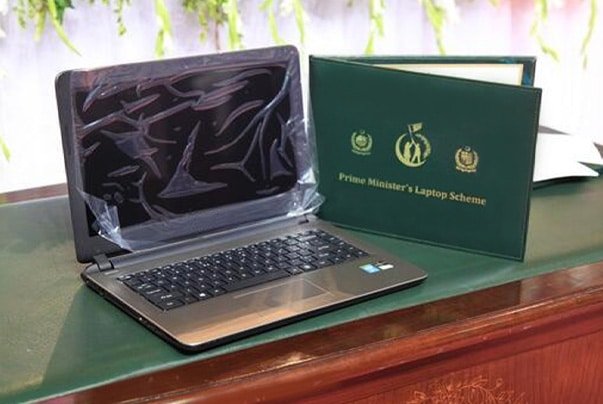
    The Prime Minister’s Laptop Scheme would be relaunched under the Youth Development Initiative, according to Higher Education Commission (HEC) Chairman Dr Mukhtar Ahmed, within the next few days.

    Speaking to the media, he further stated that HEC would launch a programme for online courses for students in Pakistan’s institutions with assistance from Microsoft and other international organisations.

    The declaration follows the historic Prime Minister (PM) Laptop Scheme’s restoration by the Federal Government, which is governed by the Pakistan Muslim League-Nawaz (PML-N).

    Details indicate that the programme, which has a budget of Rs 10 billion, will distribute laptops to students pursuing BS, Masters, M Phil, PhD, and undergraduate degrees.

    A committee headed by Dr Mukhtar Ahmed, the chairman of the Higher Education Commission (HEC), has been formed by the government to complete all issues, including the requirements for students to be eligible for laptops.

    According to Academia Mag, the 14-member committee comprises the Executive Director of HEC, Additional Finance Secretary (Budget) of the Government of Pakistan, a member from Planning and Development Division, Science and Technology, Secretary Higher Education Department Punjab, Secretary Higher Education Department Sindh, Secretary Higher Education Department Balochistan, Secretary Higher Education Department Khyber Pakhtunkhwa, a representative from the National Information Technology Board (NITB), Secretary Higher Education Department Azad Jammu and Kashmir, a representative from Punjab Information Technology Board (PITB) and others.

    The procedure for verifying degrees and issuing certificates of equivalency is likewise being shifted entirely online.

    A growing number of educational institutions were causing financial problems for HEC, he continued, and public universities would henceforth be given funding according on how well they performed.

    “We would request the federal and provincial governments to not establish more public universities until the country’s financial issues are resolved,” he said.

  • Pakistan inflation hits highest level since 1973

    Pakistan inflation hits highest level since 1973

    According to the Pakistan Bureau of Statistics (PBS), Pakistan’s Consumer Price Index-based inflation (CPI) climbed by 27.3 per cent on a year-over-year basis in August 2022 as opposed to an increase of 24.9 per cent the previous month and 8.4 per cent in August 2021.

    Inflation has increased by an average of 26.1 per cent in the first two months of the current fiscal year 2023 compared to 8.36 per cent in 2022. August’s inflation rate was the highest since November 1973.

    According to brokerage house Arif Habib Limited (AHL) the Consumer Price Index (CPI) for the month of Aug’22 clocked in at 27.26 per cent YoY (+2.45 per cent MoM). This takes 2MFY23 average inflation to 26.1 per cent compared to 8.36 per cent in 2MFY22.

    CPI inflation

    Urban

    In August 2022, urban CPI inflation was 26.2 per cent on an annual basis, up from 8.3 per cent in August 2021 and 23.6 per cent the month before.

    It climbed by 2.6 per cent month over month in 2022, compared to 4.5 per cent the month before and 0.5 per cent in August 2021.

    Rural

    In addition, rural CPI inflation reached 28.8 per cent on an annual basis in August 2022, up from 8.4 per cent in August 2021 and 26.9 per cent in the preceding month.

    In August 2022, it climbed by 2.2 per cent month over month, compared to 4.2 per cent the month before and 0.7 per cent in August 2021.

    Further increase expected

    Rising inflation has become a major worry for Pakistan’s economy, which is already experiencing a loss of foreign exchange reserves.

    In the midst of severe flash floods that have resulted in at least 1,100 fatalities, extensive destruction, and millions of displaced people, experts have cautioned that the country will experience additional increases in food costs.

  • We have not invested enough in education, health and infrastructure: PM Shehbaz

    In an interview to The Economist on Pakistan’s Independence Day, Prime Minister (PM) Shehbaz Sharif highlighted the root problems of the economic crisis gripping the nation nowadays.

    Titled “Pakistan’s prime minister on his drive to modernise the country“, PM Shehbaz mainly talked about critical structural flaws that hindered the state’s economy. According to him, the first reason is that Pakistan’s political environment has become increasingly polarised.

    “Instead of debating how to run Pakistan better and rid the country of poverty, political parties have been at each other’s throats,” he pointed out.

    “We have not invested enough in the nuts and bolts of development: education, health and infrastructure. This is in part due to an abysmally low tax take, but it also reflects our priorities in public spending.”

    PM Shehbaz further highlighted the fact that Pakistan has not enjoyed the benefits of globalisation.

    “Today, we hardly make anything that the world wants and our companies remain very comfortable only operating within our borders, often protected by barriers to competition,” he stressed.

    He pointed out that Pakistan’s exports are just 10 per cent. Shehbaz said that where “two out of every three people are below the age of 30 and full of aspirations and where every third person lives on less than $3.20 a day and less than a quarter of our women work outside the home,” it is a moment that merits “serious introspection”.

    Pakistan was one of the biggest victims of state-sponsored terrorism’: PM Shehbaz

    In an interview with Newsweek’s senior foreign policy writer Tom O’Connor, PM Shehbaz said it was no secret that Pakistan was “one of the biggest victims of state-sponsored terrorism that is planned, supported and financed by hostile intelligence agencies”.

    He went on to say that terrorist attacks against Chinese nationals were “aided and abetted by forces inimical to the Pakistan-China strategic partnership”.

    Talking about friction between the US and China, the premier said: “While the Pakistan-China relationship is very special, Pakistan and the US have also maintained a long-standing historic bilateral relationship which covers all issues of mutual interest.”

    He was of the view that the world cannot afford to go back into another “era of Cold War or bloc politics”.

    The premier called for all parties to agree to the “minimum rules of the game in which the welfare of the people remains paramount”.

    “Systematic problems can be fixed through engagement and consultations among all political stakeholders. This course may take time, but is the only way forward for the system to become strong, resilient and efficient.”


  • Here’s how Pakistani students can apply for Moroccan Government Scholarships

    Here’s how Pakistani students can apply for Moroccan Government Scholarships

    The Moroccan Agency of International Cooperation (AMCI) has offered scholarships to Pakistani students who want to enroll in public higher education, technical, and vocational institutions in Morocco for the academic year 2022–2023.

    The deadline for Higher Education Commission (HEC) to receive nominations is set for September 20, 2022.

    How to apply for the scholarship:

    Candidates should choose “Learning Opportunities Abroad” after registering and filling out their profiles.

    All applicants should note that all nominations from Pakistan will be routed via HEC. Applicants should send two sets of AMCI application (French form) along with required documents as mentioned on page-2 of the AMCI application form, in spiral binding and one copy of HEC application form with documents separately in spiral binding on or before, September 20, 2022.

    Read more: Cheapest new cars to buy in Pakistan

    On the basis of the greatest academic merit, HEC will narrow down the list of qualified candidates. Moroccan authorities or universities may test or interview selected Pakistani nominees.

    It is worth noting that French is the primary language of instruction, and only students who have demonstrated proficiency in the language will be allowed to study in Morocco.

  • 17 female students from Pakistan to participate in Energy Scholars Programme in Qatar

    17 female students from Pakistan to participate in Energy Scholars Programme in Qatar

    The US Mission Pakistan has confirmed the commencement of the inaugural four-week Future of Women in Energy Scholars Programme of the US-Pakistan Women’s Council (USPWC). Beginning June 5, 17 outstanding Pakistani female university students will take part in this certificate programme to learn about working in the energy sector.

    By giving young women the chance to study energy issues and energy infrastructure at Texas A&M University’s Qatar campus, this programme will encourage women’s participation and leadership in Pakistan’s energy sector.

    Following their two-week programme in Qatar, the students will return to Pakistan for a two-week familiarisation trip to learn about Pakistan’s energy sector from key Pakistani public and private-sector organisations in Islamabad and Lahore.

    Enrolled Pakistani female students are presently pursuing bachelor’s degrees in science and engineering at private and public universities across the country.

    The US Mission is assisting Pakistani women in pursuing career opportunities in the energy sector and in developing networks for a prosperous future through this programme. “The USPWC Future of Women in Energy Scholars Program will give young women hands-on experience in the energy sector,” said USPWC Executive Director Radhika Prabhu.

  • A new visa scheme allows graduates from world’s top universities to come to UK

    A new visa scheme allows graduates from world’s top universities to come to UK

    Under a new visa scheme, graduates from the world’s finest universities will be able to apply to come to the United Kingdom. The “high-potential individual” path, as per the government, will attract the “brightest and greatest” early in their careers.

    According to BBC, alumni of major non-UK universities who graduated within the last five years will be eligible for the scheme. Graduates will be eligible regardless of where they were born, and they will not be required to apply if they have a job offer.

    If you have a bachelor’s or master’s degree, you will be awarded a two-year work visa, and if you have a Ph.D., you will be given a three-year work visa. If they achieve certain standards, they will be eligible to switch to other long-term employment visas.

    There will be no limit on the number of graduates that are eligible.

    A person must have graduated from a university that was ranked in the top 50 of at least two of the Times Higher Education World University Rankings, the Quacquarelli Symonds World University Rankings, or The Academic Ranking of World Universities in the year they graduated to be eligible.

    The government produced an online list of qualified colleges for 2021 that included 20 US universities, including Harvard, Yale, and MIT.

    The University of Hong Kong, the University of Melbourne, and the Paris Sciences et Lettres University were among the other 17 qualified universities.

    Some scholars, on the other side, have expressed displeasure that no universities from South Asia, Latin America, or Africa have been featured on the list.

    It’s a deeply inequitable method, according to Christopher Trisos, director and senior researcher at the University of Cape Town.

    “They need to be recognised and including varied skills and in-depth knowledge held by many graduates from institutions in developing nations,” he said, if the UK wants to play a part in addressing the century’s big challenges, such as energy access, climate change, and pandemics.

    The visa will cost £715 plus an immigration health premium, which permits migrants to use the NHS in the United Kingdom.

    Graduates will be able to bring their families, but they must have a minimum of £1,270 in maintenance funds. They must also pass a security and criminality check and have at least a B1 intermediate level of English proficiency, which is characterised as having the “fluency to communicate with native speakers without effort.”

    Changes to the plan allow international students studying in the UK to stay and work for up to two years.

    The student visa scheme, which was reintroduced two years ago, overturned a 2012 decision by then-Home Secretary Theresa May, which required international students to leave four months after completing their degree.

    The combination of university lists used by the Home Office “provides independent validation for institutions and opens up the option for new foreign universities to progress up the ranks and join this list in the future,” according to a spokesman for the department.

    They went on to say that each of the qualified universities attracts students from all over the world, and that there are “many alternative paths eligible for graduates from other universities, including the Graduate, Skilled Worker, and Global Talent routes” for graduates from other universities.

    “The approach implies that the UK will grow as a major international hub for innovation, creativity, and entrepreneurship,” stated Chancellor Rishi Sunak.

    Via: BBC
  • UET Peshawar secures top spot in Times Higher Education listing

    UET Peshawar secures top spot in Times Higher Education listing

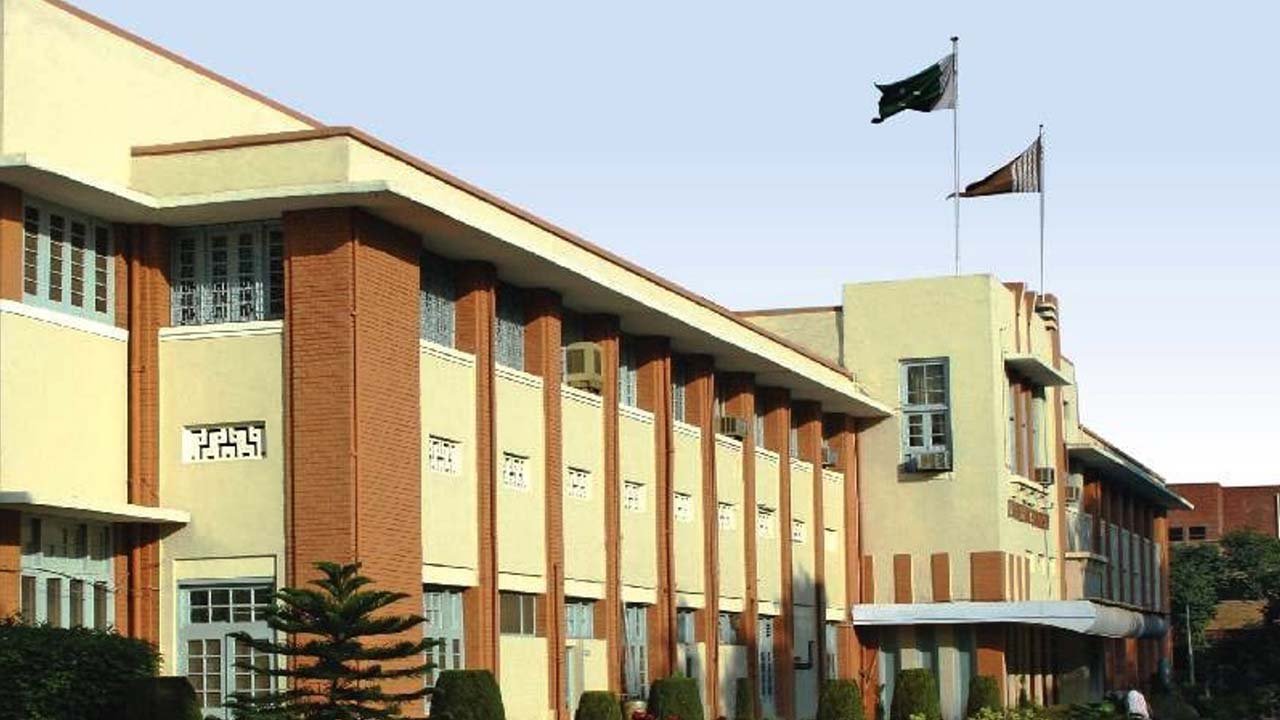
    The University of Engineering and Technology (UET) in Peshawar was ranked first in Khyber Pakhtunkhwa in the ultimate ranking for SDG-17, ‘Partnerships for Goals’.

    This is an outstanding achievement for UET Peshawar, demonstrating the institution’s determination for maintaining pristine educational standards.

    In the fourth edition of the Times Higher Education (THE) Impact Ranking, 2022, UET Peshawar ranks first in Pakistan under the ‘Engineering and Technology’ table and second in the league for SDG-8, ‘Decent work for economic progress’.

    THE is a British journal that monitors worldwide higher education and ranks universities based on their performance in four key areas: research, stewardship, outreach, and teaching, as well as their assessment of the United Nations’ Sustainable Development Goals.

    THE impact ratings highlight an institution’s dedication towards delivering the UN SDGs by considering SDG-17 (Partnership for the Goals) mandatory for listing in the overall standings.

    Prof Dr Iftikhar Hussain, the Vice-Chancellor, commended the employees and faculty on their achievement and noted that the university’s objective is to build meaningful collaborations with local industry, government, and academics for the benefit of society. He lauded ORIC’s and affiliated departments’ efforts in providing frequent updates on the impact rankings through 2022.

    The UN Sustainable Development Summit in September 2015 established the 2030 Agenda for Sustainable Development (the 2030 Agenda), a set of worldwide development goals for the years 2016 to 2030 that builds on the success of the Millennium Development Goals (MDGs).

  • 250,000 students to appear in Matric exams starting today

    250,000 students to appear in Matric exams starting today

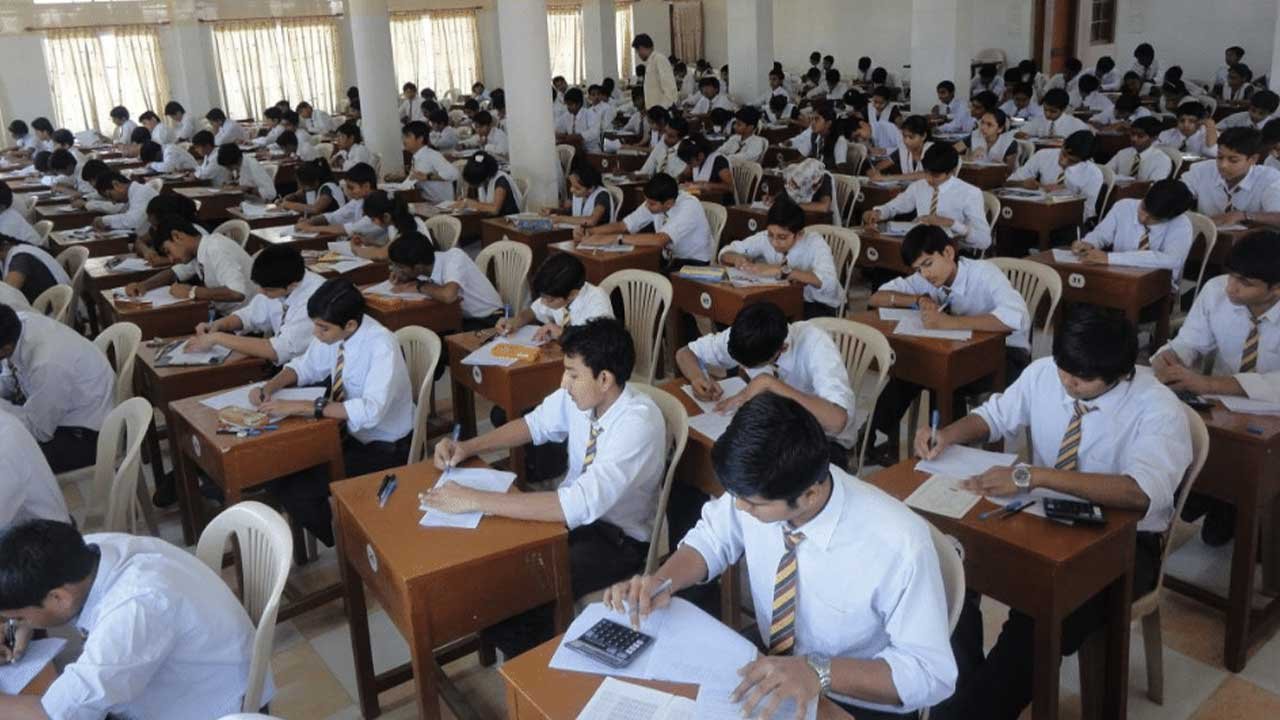
    The Board of Intermediate & Secondary Education (BISE) Lahore will begin Matric (10th Class) examinations on Tuesday (today), with over 250,000 students expected to take part. According to a BISE Lahore official, the Lahore Board has set up 759 examination centers for the exam.

    The 9th Class exams will begin on May 26 and will attract nearly 270,000 students. He noted that Intermediate exams would begin the second week of June 2022, following Matric exams.

    Read more: Dr Murtaza Syed assumes charge as the new Governor State Bank of Pakistan

    BISE Lahore Chairman Mirza Habib Ali stated that these exams will cover the entire course. He also asked the concerned officials to make watertight arrangements for conducting the tests in a transparent and supervised manner.