Tag: education

  • ‘Board exams to be held after July 10,’ says Shafqat Mahmood

    ‘Board exams to be held after July 10,’ says Shafqat Mahmood

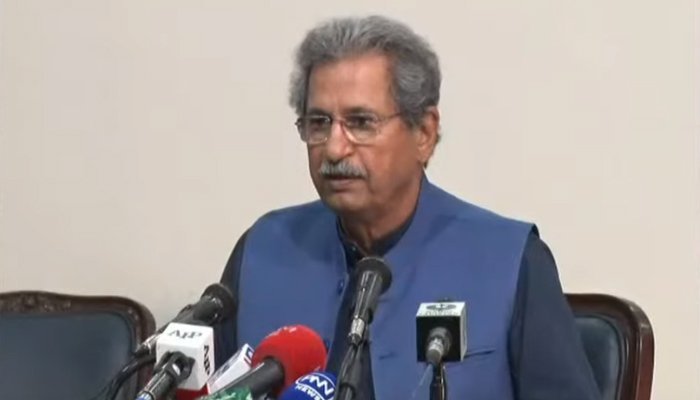
    Federal Minister for Education Shafqat Mahmood said on Wednesday that board exams for students of classes nine and 10 would be held only for elective subjects and mathematics while exams for students of classes 11 and 12 would be held for elective subjects only.

    Mahmood’s press conference came after he chaired a meeting of provincial education ministers and officials from education departments.

    Mahmood said that the issue of resolving the complaint of non-completion of courses by the students was discussed in today’s meeting. “Several months ago, we reduced the curriculum by 40 per cent to make it easier for teachers and students to prepare,” said the minister.

    “It has been decided in the meeting of inter-provincial education ministers that the ninth, 10th, 11th, and 12th examinations will start after July 10,” stated Mahmood. He further added that in this regard, the 10th and 12h examinations will be held first.

    “This decision is taken as students have different streams and directions so they will sit in exams related to their particular subject of interest,” he said.

    “We have also asked boards to keep some gap between the exams,” he said, as he explained the government had taken several steps to ease the process on the students as the educational institutions could not complete the course work.

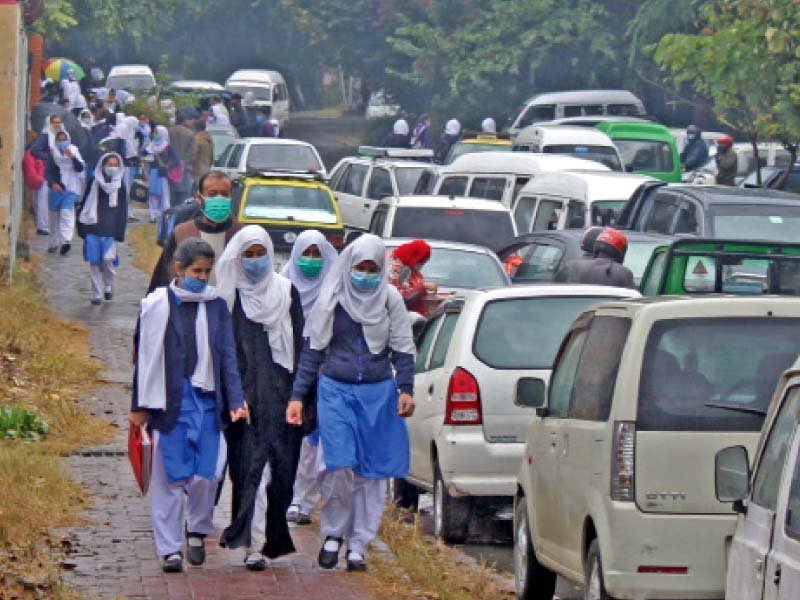
    Mahmood said that the 10th and 12th classes are currently underway. “We have decided to open schools and colleges for the ninth and 11th classes so that they can prepare,” said the minister. “If we do not conduct the exams, then students will not even employ minimum efforts to study,” said the federal minister.

    “No student will be awarded grades without attempting examinations this year,” the education minister added.

    Mahmood further stated that the teachers conducting the board examinations need to be fully vaccinated.

    “There will be no review of the decision to take the exams. Children must prepare for their examination. We have been very lenient with the legitimate demands of the students,” concluded Mahmood.
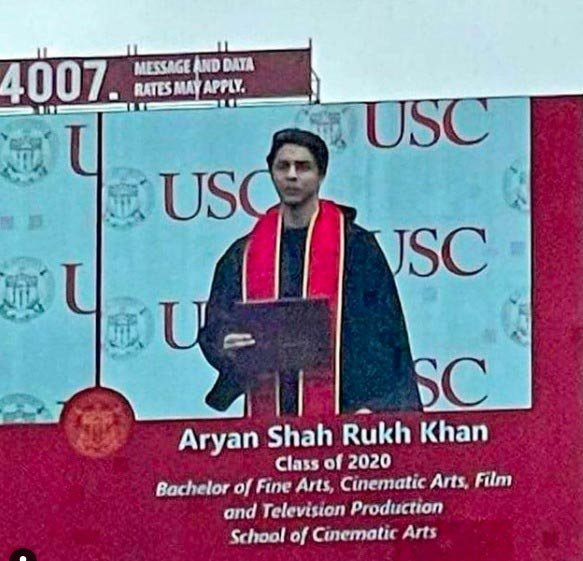
  • Shah Rukh Khan’s son Aryan graduates from University of Southern California

    Shah Rukh Khan’s son Aryan graduates from University of Southern California

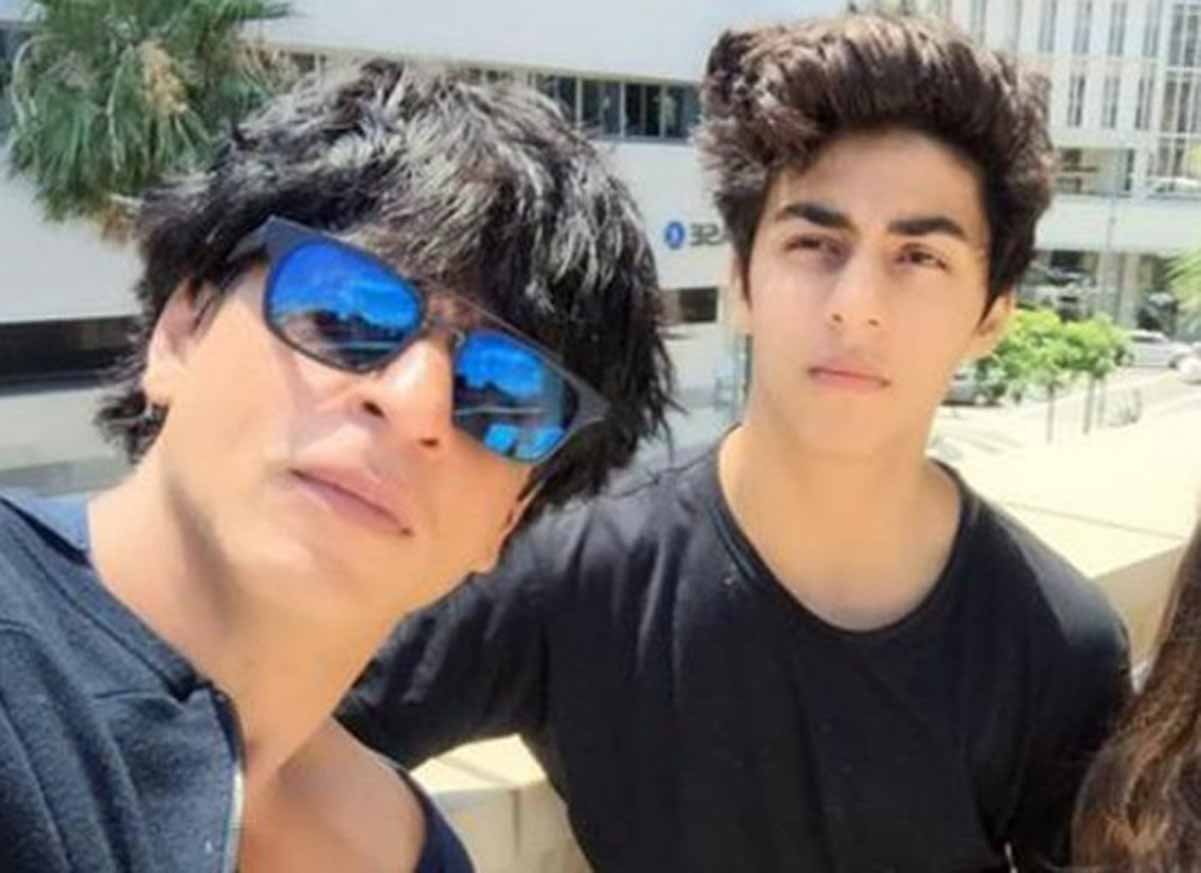
    Shah Rukh Khan’s elder son Aryan Khan has graduated from the University of Southern California (USC) in the United States.

    Read more – Shah Rukh Khan teases fans in witty #AskSRK session

    A picture of the Bollywood superstar’s son in his graduation robe has gone viral on social media. As per details, the graduation ceremony was held recently with social distancing norms in place. It is not yet clear whether SRK and his family managed to attend the ceremony.

    Aryan graduated as part of the Class of 2020 and was awarded the degree of Bachelor of Fine Arts, Cinematic Arts, Film and Television production from the School of Cinematic Arts.

    As per reports, Aryan does not wish to become an actor but hopes to pursue a career as a filmmaker.

    Interestingly, Friends star Lisa Kudrow’s son also graduated from USC’s School of Cinematic Arts on the same day as Aryan. Kudrow’s son Julian graduated as part of the Batch of 2021.

  • Shafqat’s disappointment

    Last month, Minister for Education Shafqat Mahmood voiced his disappointment at the language used by young students on Twitter and social media. Responding to a question by senior anchorperson Asma Shiraz, Mahmood said: “The kind of language these children are using on Twitter, I think it is a collective failure of the government, teachers and parents. One feels ashamed.” Shafqat Mahmood was being trolled by students online for not postponing their exams. Later, the government did postpone the exams till June 15.

    Lawyer and activist Jibran Nasir, who was leading voices to raise the issue of exams on social media and a vocal critic of Shafqat Mahmood, came to the latter’s defence regarding online abuse. Jibran tweeted: “Dear Students, anyone encouraging you to make nasty comments or insulting tweets to highlight your exam issue doesn’t have your best interest at heart. I’ll repeat don’t hurt your cause or embarrass those supporting you by participating in such trends. Keep it clean & respectful.”

    Unfortunately, online trolling and abuse has become a norm in recent years. Trolls are basically people who attack people online in a vicious and malicious way. There are many studies that observe why trolls behave this way. Dr Mark Griffiths, Professor of Behavioural Addiction at Nottingham Trent University, told the BBC that most people troll others “for either revenge, for attention seeking, for boredom, and for personal amusement”. Then there are paid trolls who are part of political parties and other interest groups. It is their job to silence their critics by attacking them. Politicians, journalists, feminists, activists and many others face vicious online troll attacks in Pakistan and other countries. But this does not make it right. Trolls feel powerful because of the anonymity that social media provides. A lot of trolls do not use their own real names and identities. This makes them feel even more ‘powerful’ and they think they can say anything to anyone, be it celebrities, politicians, journalists, etc. Trolls also think that there are no consequences for such behaviour but this is not completely true either. In some cases, trolls who were identified have lost their jobs, have been expelled from educational institutions and some have even gone to jail for threatening others online.

    Shafqat Mahmood’s disappointment is something that everyone who has faced online trolling can relate to. We hope that young students and other people who think they can say anything and everything to strangers just because it’s an online space will introspect and behave more appropriately, as they would do in an offline space. 

  • ‘Educational institutions to remain closed till 23rd May’

    The National Command and Operation Centre has announced an extension in the closure of educational institutions given the prevailing situation of COVID-19 in the country. The decision was taken during the meeting of NCOC held earlier on Saturday.

    “In today’s NCOC session, it is decided that in view of ongoing disease trends, education institutes earlier closed till May 17 will continue to remain closed till May 23,” read a tweet from NCOC’s official Twitter account.

    “Review will be carried out on May 18, 2021,” it added.

    Earlier, the NCOC announced a complete ban on tourism, for both locals and outsiders. The ban shall be observed from May 8-16, the week leading up to and including the Eid holidays. In addition to that, all tourist resorts, formal and informal picnic spots, public parks, shopping malls; all hotels and restaurants in/around tourist/ picnic spots to remain closed.

    On May 7, Pakistan witnessed a death toll of 120. The country has recorded 4,109 confirmed COVID in the last 24 hours with a positivity rate of 8.54%.

  • Students accuse Shafqat Mahmood of ‘destroying careers’, demand resignation

    After Federal Minister for Education Shafqat Mahmood announced on Tuesday that no examinations will take place in the country until June 15 and that O’ and A’ Level exams will now take place in the October-November cycle, students are now demanding Teacher and School Assessed Grades with the hashtags #ShafqatDestroysOurCareer and #ResignShafqatMahmood trending on social media.

    Students are arguing that their study schedules have been disrupted because of the ongoing COVID-19 pandemic and are demanding Teacher Assessed Grades (TAGs) and School Assessed Grades (SAGs). On the other hand, some are even proposing other ways of promoting the students without exams.

    https://twitter.com/dauddogar/status/1387313554647363585

    https://twitter.com/ahmedhaseeb48/status/1387315787459928065

    https://twitter.com/RajaAliuzZaman2/status/1387304518354935808?s=20

    Pakistan is currently experiencing a deadly third wave of COVID-19 with fears of an India-like situation. According to the National Command and Operations Centre (NCOC), 5292 cases and 201 deaths were reported in the last 24 hours.

  • Govt’s ‘Rehmatul-Lil Alameen Scholarship’ to also cover non-Muslims

    Prime Minister (PM) Imran Khan has launched the Rehmatul-Lil Alameen scholarship program for underprivileged students, Radio Pakistan has reported.

    As per details, a budget of 27.93 billion rupees has been approved for this national-level program which will be used over the next five years. The program will be implemented in 129 public sector universities across the country.

    Speaking at the inauguration ceremony in Islamabad, PM Imran said the scholarship will be available to all Pakistanis including non-Muslims, adding that the federal government will annually provide Rs 5.5 billion for 70,000 scholarships. 

    PM Khan said that under the scholarship program a total of 350,000 scholarships will be provided in five years at a cost of Rs 28 billion.

    He further said that the provincial governments of Punjab and Khyber Pakhtunkhwa will also separately provide scholarship to the students.

    Read more – Pakistanis appreciate PM Imran for ‘Koi Bhooka Nahi Soye Ga’ programme

    The premier asserted that the government is especially focusing on the education sector with the aim that “our youth learn from the Sunnah of Hazrat Muhammad Sallallaho Alaihe Wa Salam Khatim-un-Nabiyeen“.

    Meanwhile, speaking on the occasion, Minister for Education Shafqat Mahmood said the Rehmatul-Lil Alameen Scholarship is a nationwide program and will be implemented in 129 universities across the country.  He said fifty percent scholarships will be given to women whilst two percent to specially-abled persons.

    Minister for Information and Broadcasting Fawad Chaudhry and Minister for Human Rights Shireen Mazari also announced the news on social media, encouraging those eligible to apply for it.

    The provinces are also separately pursuing the Rehmatul-Lil Alameen Scholarship program. In Punjab, one billion rupees has been approved for this scholarship program annually, while Khyber Pakhtunkhwa has allocated Rs 427 million for it.

  • Malala dreams to see Pakistan and India as ‘good friends’

    Nobel laureate Malala Yousafzai has expressed her desire to see Pakistan and India as ‘good friends’.

    Read more – Ceasefire, at last

    Talking about her book I Am Malala: The Story of the Girl Who Stood Up for Education and was Shot by the Taliban on the last day of the 14th Jaipur Literature Festival, Malala said: “It is my dream to see India and Pakistan become true good friends and that we can visit each other’s countries. You can continue to watch Pakistani dramas, we can continue to watch Bollywood movies and enjoy cricket matches.”

    “You are Indian and I am Pakistani and we are completely fine, then why is this hatred created between us? This old philosophy of borders, divisions and divide and conquer… they just don’t work anymore. As humans we all want to live in peace,” said Malala.

    The young activist added that the real enemies of both countries are “poverty, discrimination and inequality”.

    She also stressed upon the importance of giving rights to minorities in both countries.

    “Minorities are at risk,” said Malala. “Minorities’ rights are not given to them. Be it Hindus and Christians in Pakistan, Muslims, Dalits and other minorities in India… Palestinians, Rohingya refugees. It is not [just] religion. It is the exploitation of power, it is just elites vs the poor and minorities.”

    Talking about her cause of girls’ education, Malala said that she also dreams of the day when every girl would get to go to school and have access to quality education.

    Malala, who was shot in the head by the Taliban as she was returning home from school in Swat Valley, was awarded the Nobel Peace Prize in recognition of her efforts for children’s rights in 2014. The young activist recently also graduated from Oxford University.

    Read more – US Congress passes ‘Malala Yousafzai Scholarship Act’ for Pakistani women

    She is now internationally known for human rights advocacy, especially the education of women and children.

  • Police bar female students from sitting in front passenger seats over harassment

    Police bar female students from sitting in front passenger seats over harassment

    After complaints of harassment, the Mansehra Traffic Police has barred female students from sitting in the front passenger seats of the public transport across the district.

    According to Express Tribune, the ban was imposed by the police in a bid to curb harassment. The women were subjected to harassment by the drivers as the front section of the Suzuki vans and pick-ups is entirely detached from the rear part of the vehicle.

    The windows in the front are also tainted and the driver could get away with harassment. The traffic police warned that cases could be registered against the public transporters if the ban was violated.

    Last month, the Khyber Pakhtunkhwa government had announced the formation of district protection committees (DPC) for swift implementation of harassment law across the province, according to APP. These committees would be headed by a woman Member Provincial Assembly (MPA) to resolve disputes related to domestic violence or harassment at workplaces.

    In January last year, the provincial assembly had passed the Khyber Pakhtunkhwa Protection against Harassment of Women at Workplace (Amendment) Bill, 2020, targeting the incidents of workplace harassment.

    In case, parties did not agree to the proposed solutions, the case would be referred to District Sessions Judge or Additional District Sessions Judge to decide it within two months. And if any party did not agree with the court’s judgment then appeals against such decisions could be filed in the Peshawar High Court (PHC).

    Under the new act, up to five years of prison time and a penalty or both could be handed. The court can also pass an interim order in such cases.  One-year imprisonment and up to Rs0.3 million fine could be handed in case of violation of the court orders.

  • ‘No jeans, tights, makeup’: Hazara University issues new dress code for students

    The Hazara University in Mansehra has issued a new dress code for students, faculty members and administrative staff.

    According to the notification issued on January 6, female students have been advised to wear abaya/scarf/dupatta in neutral colours without any decorative material. They have also been asked to wear shalwar qameez with dupatta or chaddar.

    Jeans, tights, t-shirts, shorts with jeans or tights, heavy makeup and jewellery have been banned at the university, while female students have also been advised against carrying heavy hand bags.

    Read more – New policy of Bahira University prohibits male, female students from sitting together

    The notification further recommends a dress code for male students which includes, dress pants with dress shirts, dress shoes with socks, shalwar qameez, and warm caps in the winters.

    Shorts, cut-off/toran/skin-fitted jeans, chappals/sleepers of any kind/jewellery, long hair, ponytails, and un-presentable bread have been strictly prohibited for the male students, according to the notification.

    Furthermore, staff and faculty members have been advised to wear “neat, clean and presentable dress and black gown during lectures”.

    “Cut-off/toran/skin-fitted jeans, chappals/sleepers of any kind and jewellery are strictly not recommended for faculty members and staff,” reads the notification.

    Wearing ID cards at all times has also been made compulsory for both students and faculty members.

    Though the new recommendations by Hazara University are being strongly criticised on social media, Spokesperson for the KP government and adviser to CM on Information Kamran Bangash, while talking to Gulf News, welcomed the step saying: “This will end the dress competition between the students and teachers, helping the poor students and their parents. It will also help them focus on their studies.”

  • Punjab schools to open from Jan 18, universities from Feb 1: minister

    Punjab schools to open from Jan 18, universities from Feb 1: minister

    Amid the second wave of coronavirus, the Punjab government has decided to open educational institutions in phases from Jan 18.

    According to provincial education minister Murad Raas, the government has decided to open schools and universities in three phases. In the first phase on Jan 18, schools will resume classes for students of matric and intermediate. In the second phase, the primary and middle schools will resume class on Jan 25.

    In the third phase, the government will reopen universities on Feb 1. The minister said the educational institutions “will have 50 per cent students on alternate days as before”.

    Federal Minister for Education Shafqat Mahmood had announced in November that all schools across the country will close down from 26th to January 10, 2021, to control the spread of COVID-19 in the country.

    Before this, the schools remained closed from March till September amid the first wave of coronavirus. But due to an increase in the infections in the students, the schools were shut down again.