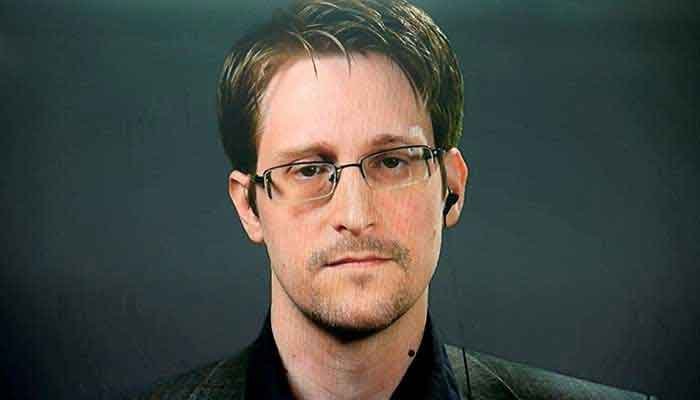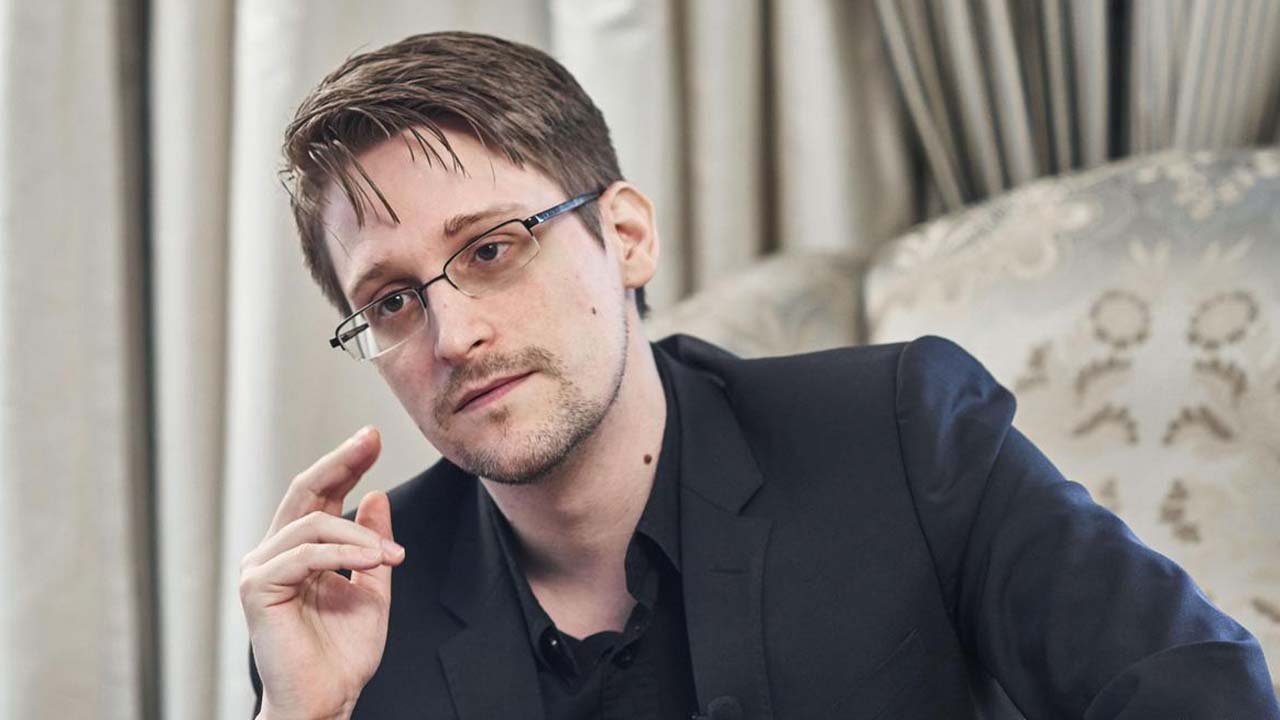
Edward Snowden, a former security expert who exposed top-secret American surveillance programmes and is still wanted by Washington on espionage charges, was granted citizenship by Russian President Vladimir Putin on Monday.
In order to avoid punishment, Snowden, who considers himself a whistleblower, left the United States and has been residing in Russia since that country gave him refuge in 2013.
In a decree that Putin signed, Snowden, 39, was one of 72 foreigners who received citizenship.
His attorneys stated at the time that he was filing for a Russian passport without renunciating his American citizenship when he was given permanent status in 2020.
The state-run news agency RIA Novosti was informed on Monday by Snowden’s attorney, Anatoly Kucherena, that Snowden’s wife, Lindsay Mills, is also in the process of seeking for Russian citizenship. In 2014, Mills accompanied Snowden to Moscow. In 2017, they got married, and now they have a son together.
Additionally, Kucherena stated that because of Snowden’s lack of combat experience, he would not be subject to the partial military mobilisation that Putin ordered last week to support Russia’s waning war in Ukraine. Putin claimed that only individuals with prior experience would be called up for partial mobilisation, but there have been several stories of other people receiving summonses, including those detained during anti-mobilization protests.
According to CNN, White House press secretary Karine Jean-Pierre refused to comment on Snowden’s new passport, and instead referred questions to the prosecutors seeking his extradition. “Soc, since I believe there have been criminal charges brought against him, we would point you to the Department of Justice for any specifics on this,” Jean-Pierre said.
Snowden’s revelations were the largest security breach in American history as it exposed the top-secret NSA programme PRISM’s use of surveillance and the collection of a wide spectrum of digital data.
Putin stated in a documentary directed by American Oliver Stone in 2017 that he did not view Snowden as a “traitor” for disclosing official information.
“As an ex-KGB agent, you must have hated what Snowden did with every fiber of your being,” Stone says in the clip.
“Snowden is not a traitor,” Putin said. “He did not betray the interests of his country. Nor did he transfer any information to any other country which would have been pernicious to his own country or to his own people. The only thing Snowden does, he does publicly.”
Snowden justified his decision to submit a dual citizenship application in 2020.
“After years of separation from our parents, my wife and I have no desire to be separated from our son. That’s why, in this era of pandemics and closed borders, we’re applying for dual US-Russian citizenship,” Snowden wrote on Twitter at the time.
“Lindsay and I will remain Americans, raising our son with all the values of America we love — including the freedom to speak his mind. And I look forward to the day I can return to the States, so the whole family can be reunited,” Snowden added.