Tag: Ehsaas Program

  • Everything you need to know about Ehsaas Rashan programme

    Everything you need to know about Ehsaas Rashan programme

    The registration of poor families whose monthly income is less than Rs31,000 has begun today under the Ehsaas Rashan Programme. Special Assistant to the Prime Minister on Poverty Alleviation and Social Protection Dr Sania Nishtar, giving details of the programme, said that the eligible families will be able to obtain items of daily use like flour, oil, sugar and pulses at subsidised rates from Utility Stores and retail stores (kiryana shops). Small retail stores opened even in streets and localities will also provide this facility if they are registered and authorised for this system.

    Registration process:

    The National Socio Economic Registry (NSER) survey of the Benazir Income Support Programme (BISP) has been completed.  A database of 27 million households was originally developed during a nationwide survey under the Pakistan People’s Party (PPP) government in 2010-11.

    Another survey will be used to identify deserving families for this new pro-poor programme. It will take three or four weeks to complete the process of registration. The beneficiaries will need a mobile phone number registered on their Computerised National Identity Card (CNIC), which will be produced before the specific stores from which purchases on subsidised rates will be sought.

    How will it work?

    The kiryana merchants will require downloading the relevant app on their Android phones, entering CNIC numbers of the customers and pass on the benefits after authentication from the back-end immediately.

    The customer will receive a verification code, which would be entered by the kiryana merchant in the app.

    Eligibility Criteria:

    20 million households across Pakistan with a poverty score of less than 39 and an income of Rs 31,000 per month.

  • PTI presents three years’ performance charter

    PTI presents three years’ performance charter

    Pakistan Tehreek-e-Insaf (PTI) released the party’s performance since it came into power three years ago. The party under its manifesto of ‘Justice, humanity, and selflessness’ claims to have served the people of Pakistan.

    Diplomacy:

    From prioritising economic diplomacy to highlighting Kashmir’s cause on all international forums, Pakistan witnessed an increase in its global and regional relevance in the past three years.

    PTI in its past three years has been countering Islamophobia. The party has been a long-term facilitator of the peace process in Afghanistan.

    The party claims to be aggressively active in exposing the Hindutva Agenda.

    Ehsaas programme:

    The Ehsaas programme has emerged as the largest social protection programme in history by benefiting almost half of the country’s population. ‘Ehsaas Emergency Cash’ has been declared as the third largest social protection programme in the world.

    The World Bank has listed the Ehsaas Emergency Cash programme among the top four social protection interventions globally in terms of the number of people covered. The programme distributed cash among 15 million underprivileged families after they suffered financially due to Covid-19 related lockdowns.

    Education:

    As per PTI’s claims, the government has done revolutionary initiatives for the education sector.

    A uniform education system has been introduced in the country under the Prime Minister’s auspices. The Single National Curriculum (SNC) has been approved and made functional in the country for students from Grade 1 through 5. One system of Education for all, in terms of curriculum, medium of instruction, and a common platform of assessment so that all children have fair and equal opportunities when it comes to receiving a high-quality education.

    Climate Change:

    In the climate change battle, Pakistan has emerged as an inspiration to the world over the course of the last three years. Pakistan has devised peculiar strategies to deal with environmental challenges.

    Under the supervision of the Ministry of Climate Change, the PTI government has been devoted to protecting the environment. From working on ‘Pakistan Clean Air Program’ to ‘Sustainable Forest Management’, PTI praised itself for the work it has done in this department.

    Pakistan launched a number of initiatives including a landmark “10-Billion Tree Tsunami” project that earned global acclaim.

    Reformation:

    Completing its three years in power, PTI claims to have done tremendous work for the restoration of green belts of ICT, Anti-Encroachment Drive, enhanced capacity of Panah Gahs, online token tax payment, and claim that they are some of the major achievements of the Interior Ministry.

    Digital Pakistan:

    Taking credit for the digital transformation of state media project, initiated by the Ministry of Information & Broadcasting, in view of the vision of Prime Minister Imran Khan for a Digital Pakistan, PTI states to have done landmark work towards the digitalisation and modernisation of state media.

    Electoral reforms:

    Electoral reforms, electronic voting, and the voting process for overseas Pakistanis have been major projects spearheaded by PTI. The party has successfully launched electronic voting to aid the process of having smooth and transparent elections.

    To promote transparency and prevent fraud in the elections, the government has developed a model of the electronic voting machine and submitted it for testing.

    The government states that it has done historic work to address the problems of overseas Pakistanis.

    Covid-19:

    Shining through its three years, PTI’s Ministry of Science and Technology helped manufacturing of agricultural and police drones, locally manufactured ventilators, PPAs, sanitisers, diagnostic kits, and biomedical equipment for Covid-19 protection.

    National Command and Operation Centre (NCOC) led by Federal Planning Minister Asad Umar did a commendable job combating the deadly virus. Covid-19 exposed the terrible state of the health sector but NCOC managed to prop up systems on a war-footing to cope with the emergency.

  • ‘No increase in tax rate of mobile phone calls, SMS, internet’: Shaukat Tarin

    ‘No increase in tax rate of mobile phone calls, SMS, internet’: Shaukat Tarin

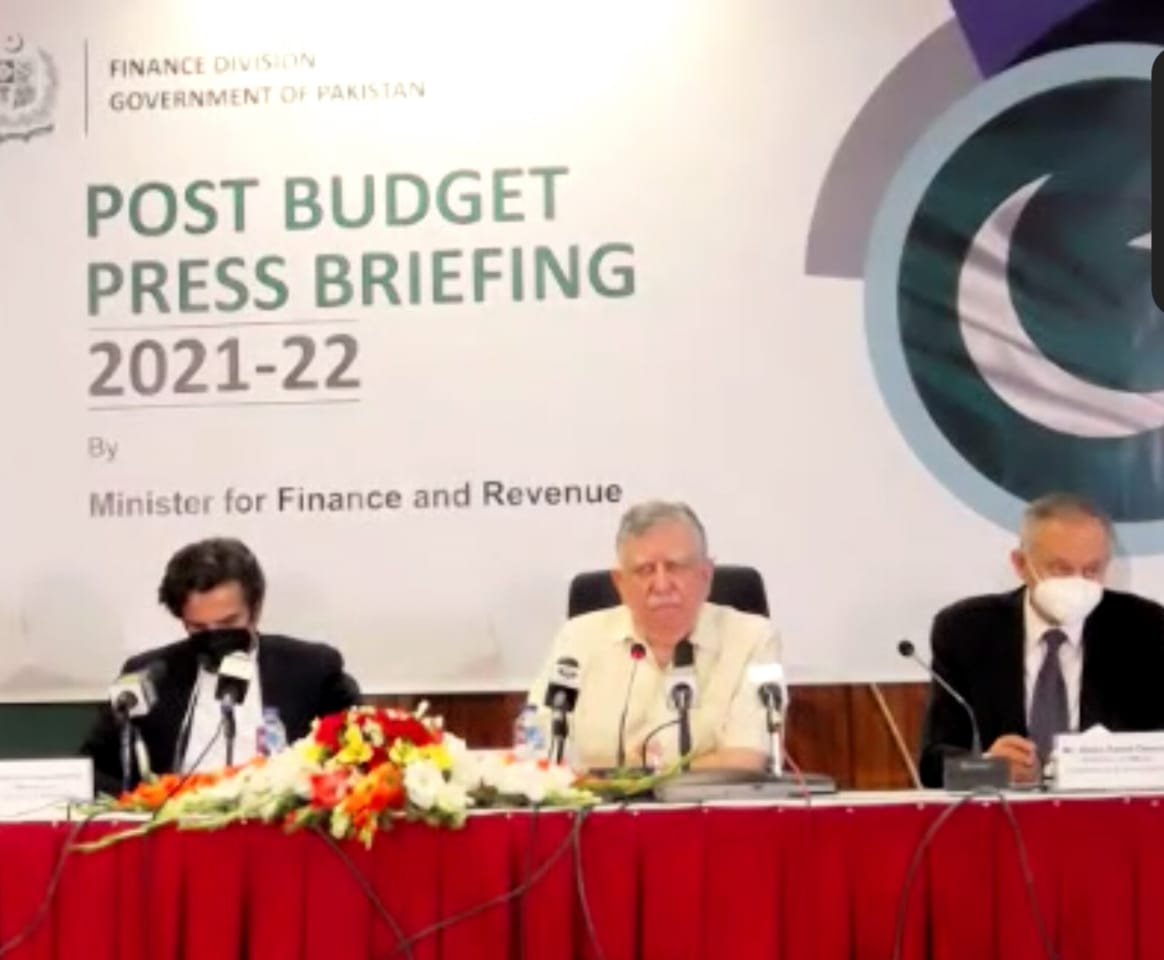
    Addressing a post-budget press conference in Islamabad, Finance Minister Shaukat Tarin said that ” Prime Minister Imran Khan and the cabinet opposed the imposition of tax on mobile phone calls, internet data, and SMS. “Now there will be no increase in the tax rate for all these services.”

    The original decision, if it had been implemented, would have affected over 98 million people.

    Tarin said the government has presented a total growth budget and their challenge is to stabilise growth.

    Tarin said that additional tax of Rs500 billion will be collected in the next financial year. “We have to earn dollars by increasing exports and add an additional tax of Rs500 billion in the next financial year.”

    The finance minister said that Pakistan had to go to the International Monetary Fund (IMF) for help when its position is weak.

    “We need 20 per cent growth in exports. Our savings rate is 15 per cent and our investment rate is up to 16 per cent. If we do not have revenue, how will we achieve growth?”

    Tarin said that the poor in the country have not received loans and training for the last 70 years. Loans up to Rs 2 million will be given to build a roof and loans to poor farmers will go up to Rs 500,000. Pakistan has become a food deficient country and we are now importing what we used to export, Tarin said, adding that the country is importing pulses, wheat, and sugar.

    “We did not pay attention to our crops, but now we will pay attention to it,” he assured.

    “We should not play politics with the poor,” he added.

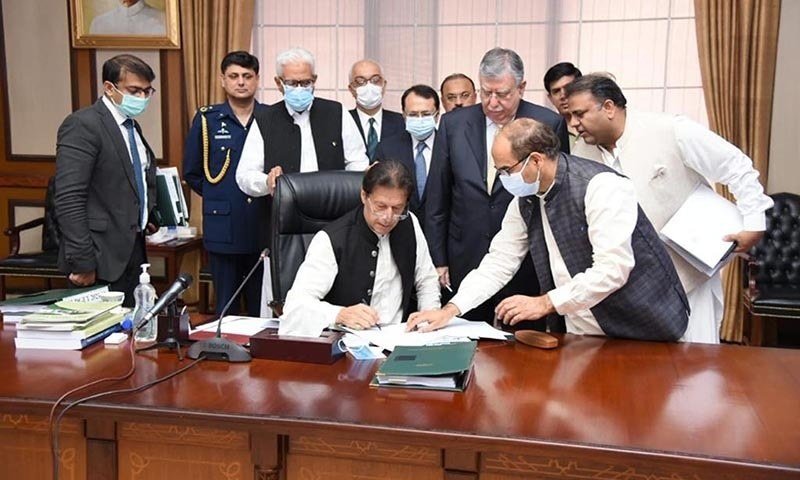
    Tarin unveiled the Budget 2021-22 yesterday. The total expenditure of the budget had been kept at Rs 8,478 billion and had set the tax collection target at Rs 5,829 billion. 

  • Budget explained: How it will affect you

    Budget explained: How it will affect you

    Finance Minister Shaukat Tarin unveiled the budget 2021-22. The total expenditure of the budget had been kept at Rs 8,478 billion and had set the tax collection target at Rs 5,829 billion. 

    Leader of the Opposition in the National Assembly Shehbaz Sharif and Pakistan People’s Party (PPP) chief Bilawal Bhutto Zardari were in the house. Opposition members continued to bang desks and shouted slogans of “Go Niazi Go!” as the minister spoke.

    Earlier, Bilawal met Sharif at his chamber in the assembly and they decided both parties would jointly oppose the PTI’s budget.

    Tarin began his speech by saying it was an honour for him to present the Pakistan Tehreek-e-Insaf (PTI’s) third budget.

    The minister paid tribute to the PTI government for stemming the spread of the coronavirus pandemic and taking steps to ensure businesses did not suffer massive losses in the country due to the lock downs.

    Pension

    Pensioners will get 10 per cent rise. Integrated allowance for Grade 1-5 has been raised from Rs 450 to Rs 900.

    Defence budget

    He said the defence budget of the country had been allocated Rs 1,370bn while the government had earmarked Rs 1,168 bn for development and non-development grants for provinces. 

     Subsidies

    The government had allocated Rs 682bn for subsidies to various sectors of the economy, adding that Rs 479bn had been allocated to run the civil government. 

    Coronavirus

    The government was serious in stemming the spread of the coronavirus and keeping its adverse effects at bay, adding that the government had set aside Rs100bn for it. 

    He announced the government’s initiative to earmark $1.1bn to procure coronavirus vaccines, adding that the government aimed to vaccinate 100mn people by July 2022.

    Ehsaas Emergency Cash Program

    “The government, through the Ehsaas Emergency Cash Programme, provided cash to 12mn people across the country,” he said. The finance minister announced that the government had set aside Rs260bn for the Ehsaas programme in the budget. 

    Remittances

    Tarin said remittances had increased in Pakistan to record levels, adding that these are expected to rise to $29bn by the end of this month. “This is proof of the love that overseas Pakistanis harbour for Prime Minister Imran Khan,” he said.

    Tax Collection

    Speaking about tax collection, he said it had grown by 18% and had crossed Rs4,000bn, adding that critics had no response to the government’s impressive performance in this regard. 

    Growth Sector

    Finance minister announced that the country’s economy was now entering the growth period, adding that almost every sector is growing. 

    He said Pakistan was seeing a “historic growth” in agriculture, stating that apart from cotton, all other crops saw extraordinary increases. He said that growth in the services sector helped improve numbers pertaining to poverty and had also played a major part in generation of wealth in Pakistan. 

    Tarin said the government had kept the growth target at 4.8% for the fiscal year, adding that the government will not leave the poor and the destitute at the mercy of inflation.  “Never in our economic history, were poor people able to realise their dreams,” he said, adding that PM Imran Khan wanted to uplift the poor. 

     Interest-free loans

    He said the government had decided to provide interest-free loans of up to Rs500,000 to the poor. 

     Development package

    He announced that the Public Sector Development Programme will be increased from Rs630 billion to Rs900 billion to counter the adverse impact of the coronavirus pandemic. 

    Tarin announced a development package for 14 districts in Sindh, adding that these will focus on improving education, solving the province’s water issues, and carrying out development in these districts. Rs16.5 billion have been allocated for Karachi-based projects for the fiscal year 2021-22.

    For developmental projects in Gilgit-Baltistan, the government has allocated Rs 40 billion. Meanwhile, Rs 54 billion have been allocated for Khyber-Pakhtunkhwa. Rs 601 billion will be given to South Balochistan for uplift programs, he added.

    Sales Tax

    The minister announced that the government has slashed sales tax on locally manufactured cars from 17% to 12.5%. The government has also exempted Federal Excise Duty (FED) on 850cc cars and will slash duty on electric cars.

    Tarin said the government was slashing withholding taxes on mobile phones, adding that it will be reduced to 10% at first and then 8% later. 

    If mobile phone call duration exceeds three minutes, one rupee per call in addition to the rates of duty will be charged. For SMS service, ten paisa per SMS in addition to the rates of duty will be charged.

    Tax on Internet services not approved by the Cabinet. FED reduced to 16 per cent from 17 per cent . IT and IT-enabled services given zero duty regime status. Data storage and Cloud computing included in the definition of IT enabled services.

    Third-party audit

    Tarin said the government was introducing third-party audits which would thwart the Federal Board of Revenue (FBR) harassing any individual or business entity. He said those who are found guilty of evading taxes or deliberately hiding their income will be fined severely. 

    Energy sector

    In the budget for the next fiscal year, a special plan for the elimination of circular debt would be introduced. “The government plans to reduce line losses through investment,” Tarin added. Moreover, an electric vehicle policy would also be announced.

    Development expenditures

    In the next fiscal year, the government has increased the PSDP budget to Rs 900 billion from Rs 630 billion. Tarin assured that the government would improve road infrastructure. Furthermore, through PSDP, it will invest in high return projects.

    Agriculture

    Talking about agriculture, the minister said that the agriculture sector witnessed historic growth.

    Unveiling the federal budget, the finance minister announced a national agriculture emergency program. The government plans to enhance livestock on modern lines and has decided to allocate Rs12 billion for the most important sector.

    Dasu, Diamar-Bhasha and Mohmand dams are a part of the budget. Rs91 billion have been allocated for water resources. Moreover, Rs14 billion have been allotted for the Neelum Jhelum power project. Tarin mentioned that the ML-1 project will be completed in three packages.

    Sharing the allocations for next year, he mentioned that Rs22 billion have been allocated to produce 100 MW electricity at Jamshoro. Moreover, Rs22 billion have been allocated for coal-based power projects, Rs16.5 billion for Tarbela fifth extension and Rs118 billion for different power transmission lines.

    Climate change

    The federal minister stated that Pakistan is one of the 10 countries most hit by climate change. Highlighting PM Imran’s vision of planting trees, he said Rs14 billion have been allocated for the government’s vision of “One Billion Tree Tsunami.”

    Rs 118 billion have been allotted under PSDP for the social uplift. Non-tax revenues to rise by 22% during FY22, meanwhile federal expenditures to rise 15%.

    Under the budget, $1.1 billion have been allocated for vaccine import.
  • Shaukat Tarin presents the Pakistan Economic Survey 2020-21

    Shaukat Tarin presents the Pakistan Economic Survey 2020-21

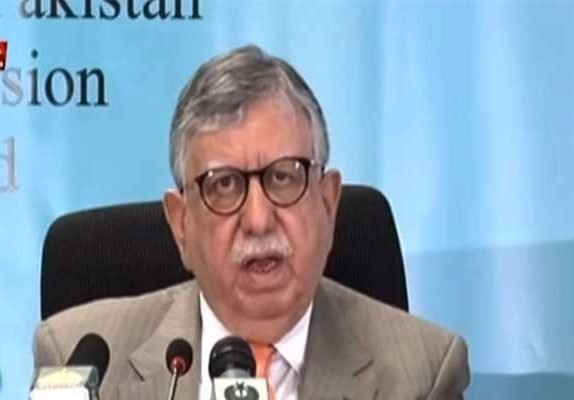
    Finance Minister Shaukat Tarin presented the Pakistan Economic Survey 2020-21 at a press conference in Islamabad on Thursday. However, the document did not have the latest figures on poverty and unemployment.

    Tarin revealed that the industrial and services sectors had helped the country post-Gross Domestic Product growth of 3.94 per cent in the first nine months of the fiscal year [FY](July to March), significantly higher than the target of 2.1 per cent.

    “The agriculture and manufacturing sectors helped the economy grow to 4.4%, laying stress on the need for sustainable growth in Pakistan in the years to come,” added Tarin.

    Coronavirus Pandemic

    The minister opened his press briefing by speaking highly of Prime Minister Imran Khan’s policies in combating the coronavirus pandemic.

    “The government itself had set [GDP] growth will be 2.1pc and the IMF predicted even lower. But the decisions by this government such as incentivising manufacturing and textiles, construction, and interventions in agriculture have helped the economy recover,” said Tarin.

    He said many people lost their jobs when the pandemic hit Pakistan, however, due to PM’s visionary policy of not imposing a complete lockdown across the country, millions of people who were unemployed were hired again. 

    “The economy is recovering,” he said. 

    Remittances

    Tarin said Pakistan’s remittances had broken records, adding that they had crossed $26bn. He said that lately imports, especially food in the form of wheat and sugar, were increasing as Pakistan’s economy was growing at the same time. 

    “We were net exporter of food but now, we have become a net importer,” he said. “Our exports registered a growth but our remittances increased manifold,” he added. 

    Ehsaas Programme

    Tarin spoke highly of the Ehsaas programme, adding that the World Bank had described it as “one of the best and the largest” poverty alleviation initiatives across the globe. 

    “Full credit goes to Sania Nishtar,” he said, adding that handing out cash to 15 million people was not a small achievement.

    Growth rate

    Tarin said he had told the prime minister it was time to focus on sustainable growth “until we go to 5-8pc GDP growth”.

    “We will do interventions and take care of the poor. The poor man has been crushed in this stabilisation phase because the dreams we have shown them have been of a trickledown economy. And this can only happen when growth is sustainable and continuous for 20-30 years,” he said.

    “Countries which had sustainable growth, they grew continuously for 20-30 years. What have we done? Every time we grow by borrowing money, which is credit-based growth.”

    Current Account

    According to the survey, during FY 2021, while the world was reeling from the economic impact of the pandemic, Pakistan’s “external sector appeared as a key buffer for resilience.”

     “The main driver of improvement in current account balance was the robust growth in remittances,” it stated.

    Trade Deficit

    “During July-March FY 2021, export of goods grew by 2.3 percent to $18.7 bn as compared to US$ 18.3 bn the same period last year. Import of goods grew by 9.4pc to $37.4 bn as compared to US$ 34.2 bn last year. Consequently, the trade deficit increased by 17.7per cent to $18.7bn as compared to $15.9bn last year,” the survey said.

    Inflation

    The finance minister said the government wanted to control inflation “but prices are still high and affecting the common man”.

    “So the way to solve this is by increasing production and that is why we have focused on agriculture in this budget,” Tarin said.

    Federal Board of Revenue (FBR)

    Speaking about the FBR, Tarin said he would end the practice of people being harassed by the bureau. “FBR will not audit [businesses or persons] but a third-party audit will be conducted,” he said. 

    International Monetary Fund (IMF)

    Tarin said Pakistan’s negotiations with the IMF were ongoing, adding that the international money lender had asked the government to hike tariffs and increase taxes. 

    The finance minister said Pakistan and the IMF want the same thing; sustainable growth, adding that the country cannot afford to increase taxes or hike tariffs so that the poor and the salaried class do not feel additional burden of inflation. 

    “This is a red line for the prime minister,” he said. “We will not further burden the poor,” he added. 

    Energy Sector

    Tarin said Pakistan’s economy was burdened due to the overcapacity in the power sector, saying that “it was a very big challenge and a black hole” for Pakistan. 

    Privitisation

     Tarin said it was fair to ask how he can privatise state-owned enterprises when all others, before him, promised to do the same but failed to. 

    “Nawaz Sharif used to shout the same slogan during the first time [when he was prime minister] and then for a second time [when he again became the prime minister] and then a third, but nothing happened,” he said.