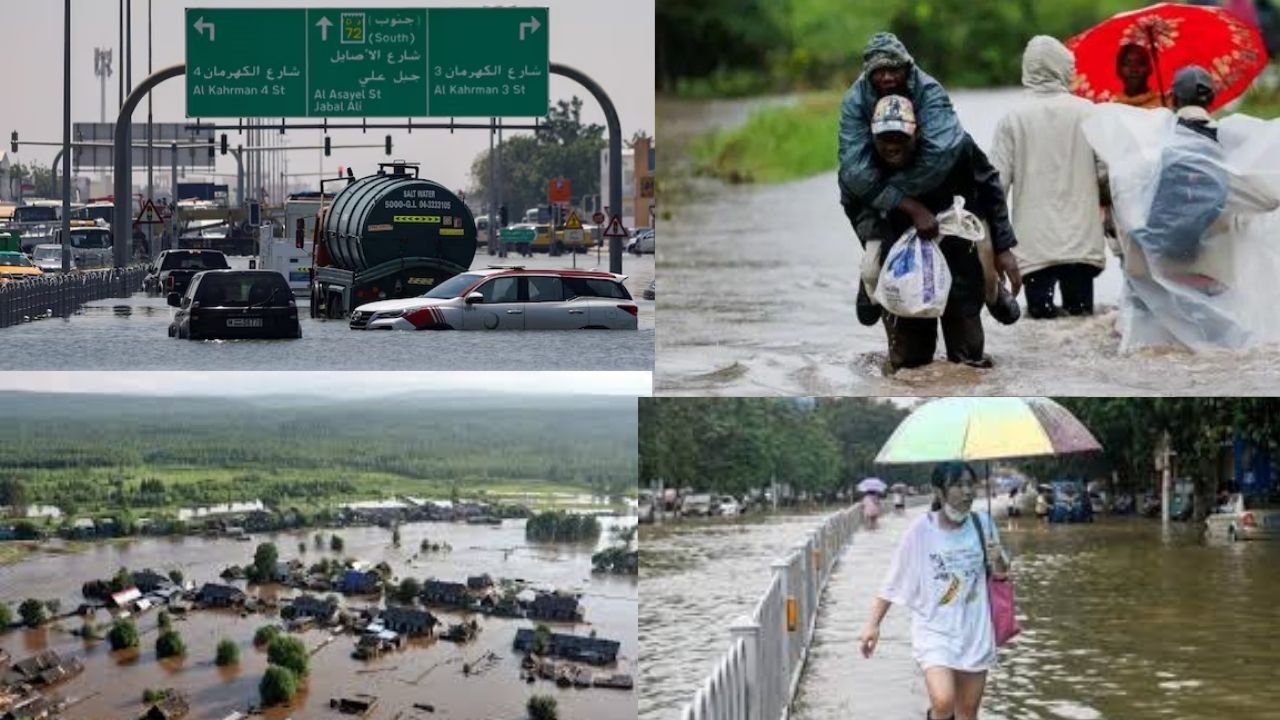
Floods have been tearing a path of destruction across the globe, hammering Kenya, submerging Dubai, and forcing hundreds of thousands of people from Russia to China, Brazil and Somalia from their homes.
Though not all directly attributed to global warming, they are occurring in a year of record-breaking temperatures and underscore what scientists have long warned – that climate change drives more extreme weather.
Climate change isn’t just about rising temperatures but the knock-on effect of all that extra heat being trapped in the atmosphere and seas.
April was the 11th consecutive month to break its own heat record, the EU climate monitor Copernicus said on Wednesday, while ocean temperatures have been off the charts for even longer.
“The recent extreme precipitation events are consistent with what is expected in an increasingly warmer climate,” Sonia Seneviratne, an expert on the UN-mandated IPCC scientific panel, told AFP.
Warmer oceans mean greater evaporation, and warmer air can hold more water vapour.
Scientists even have a calculation for this: for every one degree Celsius in temperature rise, the atmosphere can hold seven percent more moisture.
“This results in more intense rainfall events,” Davide Faranda, an expert on extreme weather at the French National Center for Scientific Research (CNRS), told AFP.
In April, Pakistan recorded double the amount of normal monthly rainfall — one province saw 437 percent
more than average — while the UAE received about two years worth of rain in a single day.
This, however, doesn’t mean everywhere on Earth is getting wetter.
Richard Allan from the University of Reading said “a warmer, thirstier atmosphere is more effective at sapping moisture from one region and feeding this excess water into storms elsewhere”.
This translates into extreme rain and floods in some areas but worse heatwaves and droughts in others, the climate scientist told AFP.
Natural climate variability also influence weather and global rainfall patterns.
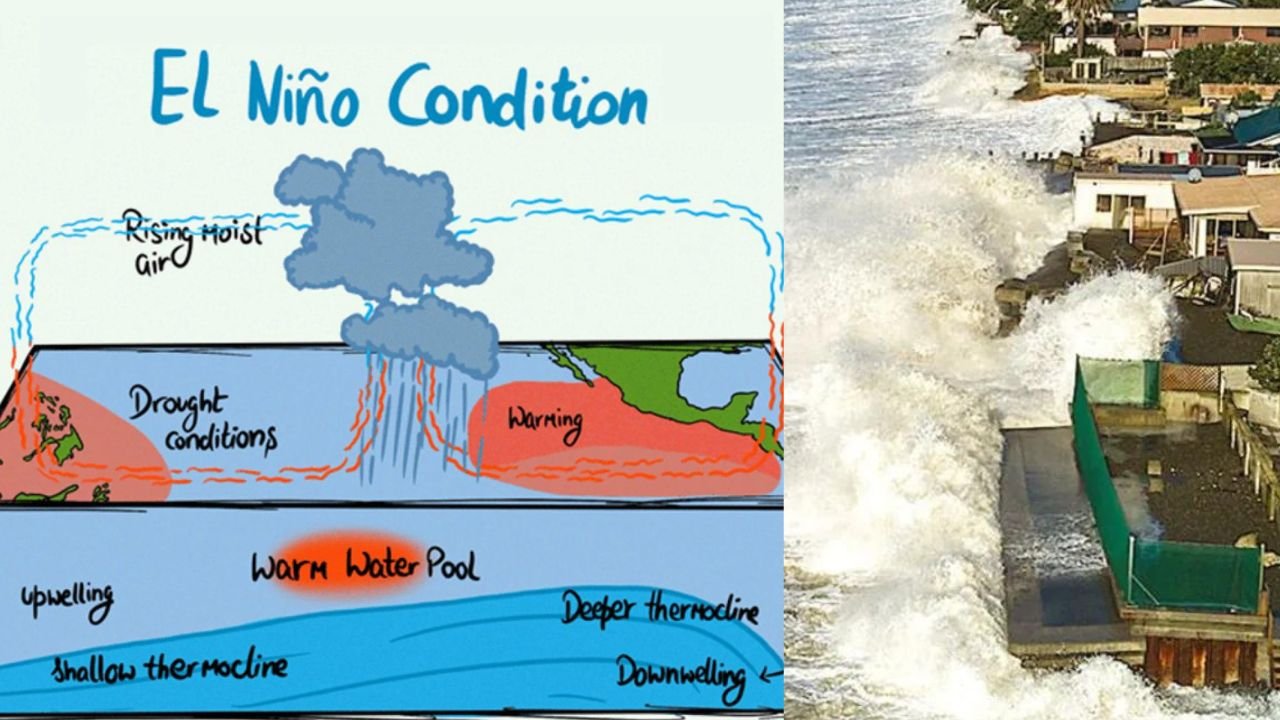
This includes cyclical phenomenon like El Nino, which tends to bring heat and rain extremes, and helped fuel the high temperatures seen over land and sea this past year.
While natural variability plays a role “the observed long-term global increase in heavy precipitation has been driven by human-induced climate change”, said Seneviratne.
Carlo Buontempo, a director at Copernicus, said cycles like El Nino ebb and flow but the extra heat trapped by rising greenhouse gas emissions would “keep pushing the global temperature towards new records”.
Considering the overlapping forces at play, attributing any one flood to climate change alone can be fraught, and each event must be taken on a case-by-case basis.
But scientists have developed peer-reviewed methods that allow for the quick comparison of an event today against simulations that consider a world in which global warming had not occurred.
For example, World Weather Attribution, the scientists who pioneered this approach, said the drenching of the UAE and Oman last month was “most likely” exacerbated by global warming caused by burning fossil fuels.
ClimaMeter, another rapid assessment network who use a different methodology, said major floods in China in April were “likely influenced” by global warming and El Nino.
“It can be difficult to disentangle global warming and natural variability” and some weather events are more clear-cut than others, said Flavio Pons, a climatologist who worked on the China assessment.
In the case of devastating floods in Brazil, however, ClimaMeter were able to exclude El Nino as a significant factor and name human-driven climate change as the primary culprit.
Many of the countries swamped by heavy floods at the moment — such as Burundi, Afghanistan and Somalia — rank among the poorest and least able to mobilise a response to such disasters.
But the experience in Dubai showed even wealthy states were not prepared, said Seneviratne.
“We know that a warmer climate is conducive to more severe weather extremes but we cannot predict exactly when and where these extremes will occur,” Joel Hirschi from the UK’s National Oceanography Centre told AFP.
“Current levels of preparedness for weather extremes are inadequate… Preparing and investing now is cheaper than delaying action.”