The federal Ministry of Interior has confirmed on Thursday morning that internet services on mobile data across the country have been suspended after a dramatic surge of terror attacks just a day before the country goes to polls.
“Recent surge in terrorist activities resulting in precious lives have stirred security environment in the country. In the light of deteriorating security situation and to mitigate potential security threats, need has risen to take by measures to safeguard against it. Therefore, it has been decided to temporarily suspend the mobile services across the country,” a statement issued by the ministry said.
However, WiFi services have not been suspended and remain operational.
The news has been met by dismay on social media as users say it hinders the voting process and blocks candidates from communicating with their polling staff.
On Wednesday, two attacks just a short while apart from each other, killed 27 people in Balochistan while more than 50 people were injured. A grenade attack in Karachi got foiled when the ammo detonated in the hands of the motorcyclist carrying it, while JUI-F’s Hafiz Hamdullah was attacked by gunfire in an assassination attempt that failed.
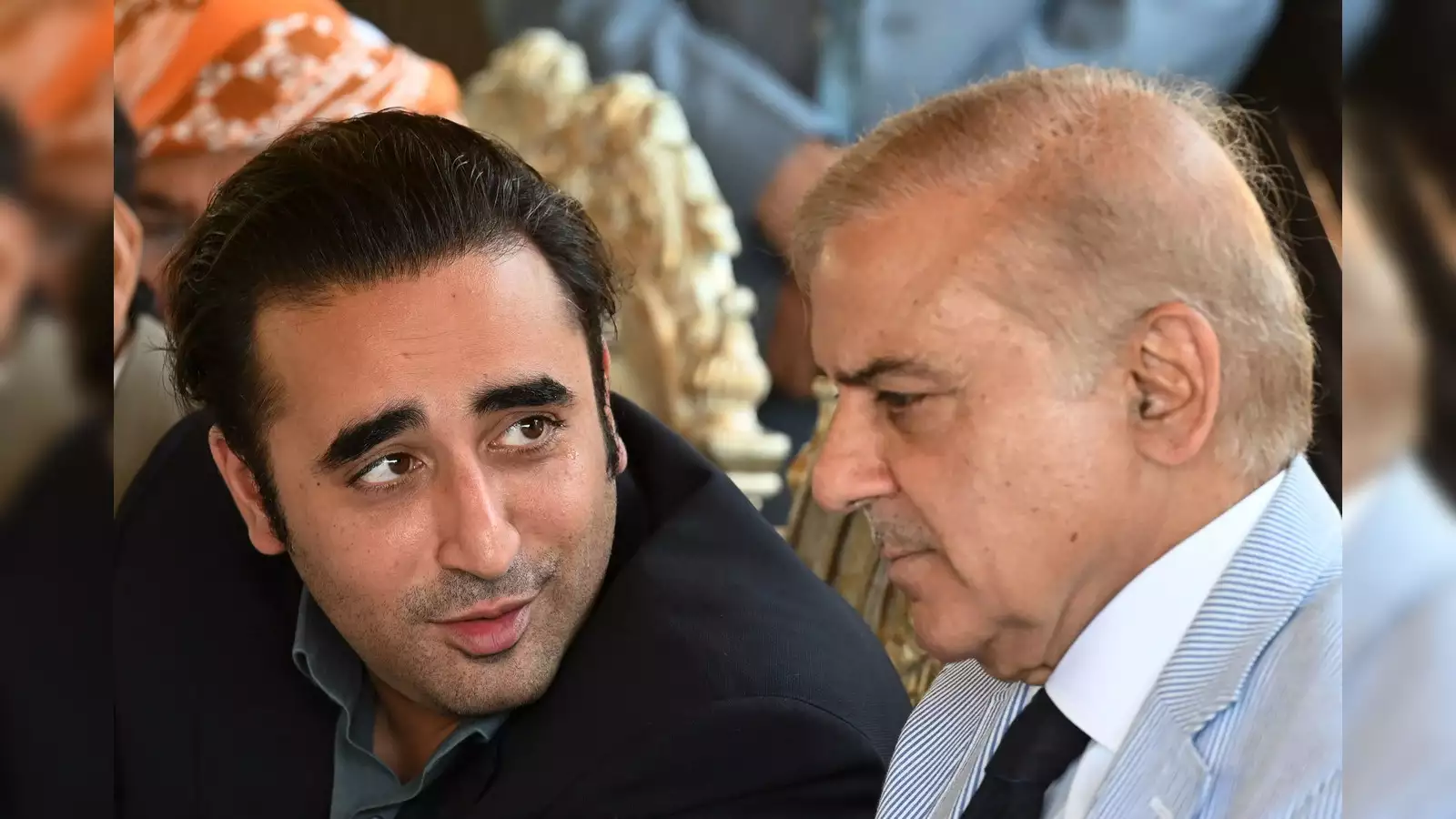
The Pakistan Peoples Party (PPP) Chairman Bilawal Bhutto Zardari, while talking to GEO News, said that he had a good working relationship with Shehbaz Sharif. The former foreign minister also said that Pakistan Tehreek-e-Insaf (PTI) and Pakistan Muslim League-Nawaz (PML-N) are doing ‘politics of hate’.
Bilawal also stated that the politics of hate needs to end, as all politicians should respect each other. On the question of missing persons in the country, a young politician said his party will try to resolve this issue He was also not satisfied with what the caretaker federal government did to the Baloch Long March protesters in December.
A review report of a government organization has revealed that in the general elections to be held on February 8, Pakistan Muslim League-Nawaz (PML-N) will emerge as the largest party, followed by the Pakistan Peoples Party (PPP). The third in line is Pakistan Tehreek-e-Insaf (PTI) while other parties will follow.
Geo’s Umar Cheema reported an official who spoke to The News on the condition of anonymity and said that the government body came up with the analysis based on information gathered through interviews with police sources, revenue department, labor unions and professionals in various sectors.
He explained that the review has been carried out at the police station and union council level. The survey has been done scientifically to remove the possibility of wrong estimates, although the popularity rate of PML-N has been lower in the surveys conducted so far. An optimistic estimate has been made as the party has recorded an increase in popularity since the return of Nawaz Sharif, but no one has so far given an estimate of how many seats the party can win.
International media has also presented Nawaz Sharif as the future prime minister, but whether he will be able to get a simple majority or not is not clear. According to this official assessment, the PML-N will bag between 115 and 132 seats in the National Assembly.
The inclusion of reserved seats for women and minorities would mean that the party would have a chance to form a government alone with a simple majority. It can get close seats, which means PML-N can get a complete majority in the provincial assembly.
PML-N can make a clean sweep in Punjab except for a few districts, says the survey.
According to the estimate, PML-N will form a government with a possible two-thirds majority in Punjab, PML-N will succeed in forming coalition governments in Khyber Pakhtunkhwa and Balochistan, while the PPP has the possibility of forming a government only in Sindh.
The review report says that PPP can get 35 to 40 seats at the center while the independent candidates of PTI can get between 23 to 29 seats. MQM may get 12 to 14 seats, JUI six to eight seats, Q-League and Satwat Pakistan Party are expected to get two to three seats in the National Assembly.
After a hectic election campaign, prominent leaders of the Pakistan Muslim League-Nawaz (PML-N) find themselves in an a quandary, as they gear up for the upcoming general elections.
Despite urging voters to support the party’s ‘sher’ electoral symbol, key figures within the PML-N will be unable to cast their votes for the animal on the National Assembly seat. Instead, they might vote for another animal.
Nawaz Sharif, Shehbaz Sharif and Hamza Shehbaz, all integral figures within the PML-N, are registered to vote in NA-128, where the party has entered into a seat adjustment agreement with the Istehkam-e-Pakistan (IPP) party.
Interestingly, in NA-128, the PML-N has decided not to field a candidate for the National Assembly seat, instead throwing their support behind IPP leader Aun Chaudhry, whose symbol is an eagle.
However, despite this alliance, the three PML-N leaders will still exercise their voting rights for PML-N candidate,Umar Sohail in PP-161.
The PML-N’s election strategy spans across the country, with the party contesting 212 NA constituencies on February 8, while leaving 51 NA seats open for rivals or allies.
Notable among their candidates are Nawaz Sharif, who will be contesting in NA-15 (Mansehra) and NA-130 (Lahore), Maryam Nawaz in NA-119 (Lahore), and Hamza Shehbaz in NA-118 (Lahore). Shehbaz Sharif is set to participate in the elections from NA-123 (Lahore) and NA-132(Kasur).
However, there are several constituencies where the PML-N has chosen not to field candidates, including NA-4 (Swat-III), NA-19 (Swabi-I), and NA-117 (Lahore-I), among others, as part of their strategic alliances and considerations for bolstering their position in the province.
The constituencies where the PML-N has not fielded its candidates are: NA-4 (Swat-III), NA-19 (Swabi-I), NA-20 (Swabi-II), NA-21 (Mardan-I), NA-22 (Mardan-III), NA-44 (Dera Ismail Khan-I), NA-45 (Dera Ismail Khan-II), NA-48 (Islamabad-III), NA-54 (Islamabad-III), NA-64 (Gujrat-III), NA-88 (Khushab-II), NA-92 (Bhakkar-II), NA-117 (Lahore-I), NA-128 (Lahore-XII), NA-143 (Sahiwal-III), NA-149 (Multan-II).
Moreover, the candidates are also not contesting on NA-165, NA-185, NA-190 to NA-204, NA-206 to NA-210, NA-212, NA-214, NA-215, NA-217, NA-218, NA-221, NA-223, NA-224, NA-228, NA-239, NA-245, NA-264 and NA-266.
The former ruling party, in its bid to strengthen its position in the province ahead of the upcoming elections, had entered a seat adjustment agreement with Jahangir Tareen’s IPP.
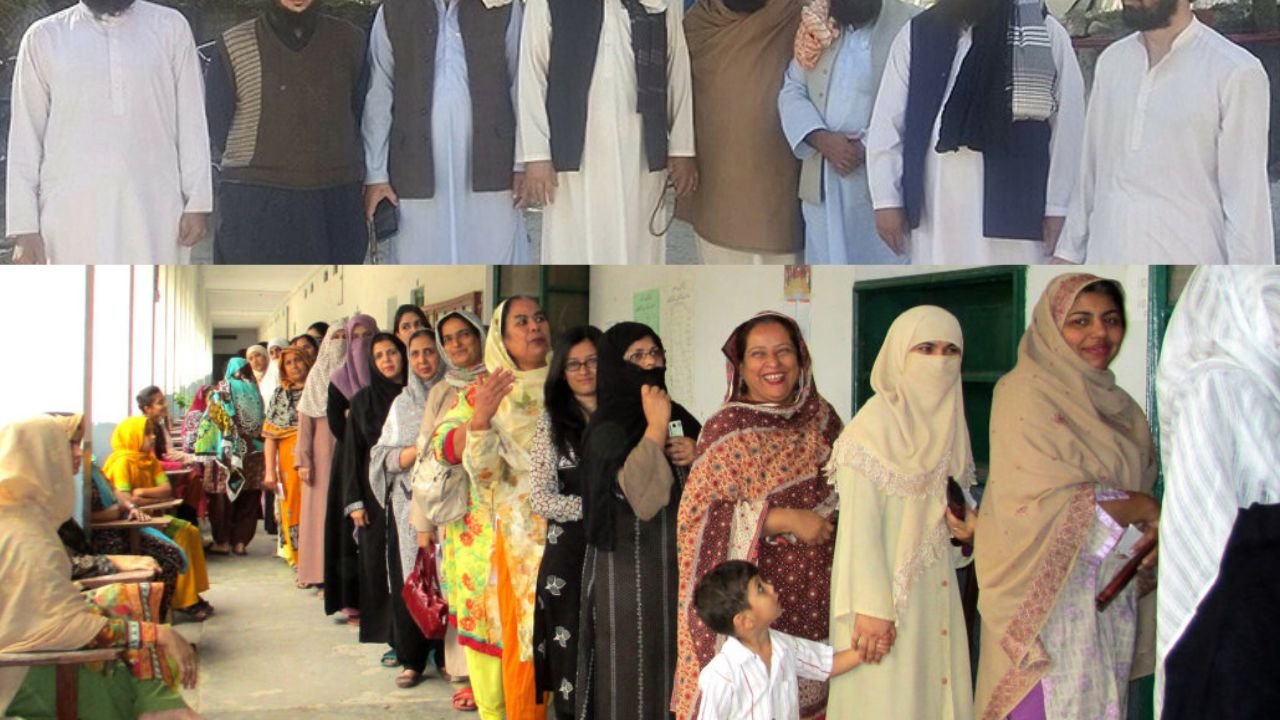
Perched on her traditional charpai bed, Naeem Kausir says she would like to vote in Pakistan’s upcoming election — if only the men in her family would let her.
Like all the women in her town, the 60-year-old former headmistress and her seven daughters — six already university-educated — are forbidden from voting by their male elders.
“Whether by her husband, father, son or brother, a woman is forced. She lacks the autonomy to make decisions independently,” said Kausir, covered in a veil in the courtyard of her home.
“These men lack the courage to grant women their rights,” the widow told AFP.
Although voting is a constitutional right for all adults in Pakistan, some rural areas in the socially conservative country are still ruled by a patriarchal system of male village elders who wield significant influence in their communities.
In the village of Dhurnal in Punjab, spread across crop fields and home to several thousand people, men profess myriad reasons for the ban of more than 50 years.
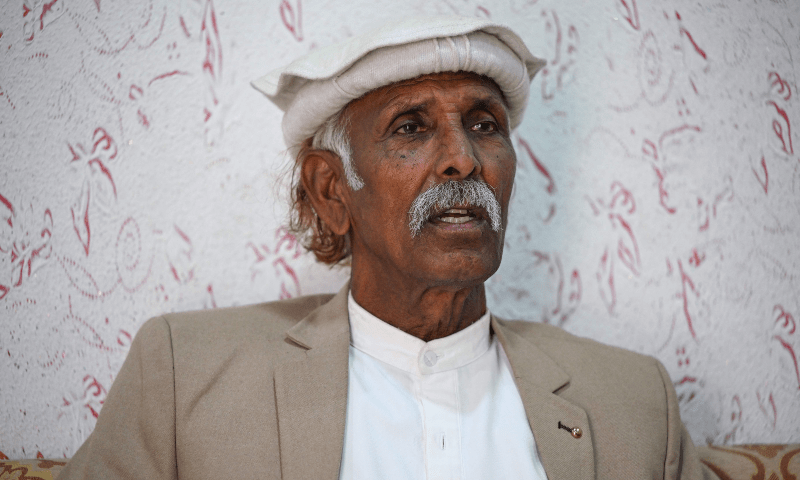
“Several years ago, during a period of low literacy rates, a council chairman decreed that if men went out to vote, and women followed suit, who would manage the household and childcare responsibilities?” said Malik Muhammad, a member of the village council.
In this photograph taken on January 29, 2024, Malik Muhammad, a member of the village council, speaks during an interview with AFP in Dhurnal of Punjab. — AFP
In this photograph taken on January 29, 2024, Malik Muhammad, a member of the village council, speaks during an interview with AFP in Dhurnal of Punjab. — AFP
“This disruption, just for one vote, was deemed unnecessary,” he concluded.
Muhammad Aslam, a shopkeeper, claims it is to protect women from “local hostilities” about politics, including a distant occasion that few seem to remember in the village when an argument broke out at a polling station.
Others told AFP it was simply down to “tradition”.
The Election Commission of Pakistan (ECP) has stressed that it has the authority to declare the process null and void in any constituency where women are barred from participating.
In reality, progress has been slow outside of cities and in areas that operate under tribal norms, with millions of women still missing from the electoral rolls.
The elders in Dhurnal rely on neighbouring villages to fill a government-imposed quota which maintains that 10 percent of votes cast in every constituency must be by women.
Those who are allowed to vote are often pressured to pick a candidate of a male relative’s choice.
In the mountainous region of Kohistan in Khyber Pakhtunkhwa province home to almost 800,000 people, religious clerics last month decreed it un-Islamic for women to take part in electoral campaigns.
Fatima Butt, a legal expert and a women’s rights activist, said women are allowed to vote in Islam, but that religion is often exploited or misunderstood in Pakistan.
“Regardless of their level of education or financial stability, women in Pakistan can only make decisions with the ‘support’ of the men around them,” she said.
Pakistan famously elected the world’s first Muslim woman leader in 1988 — Benazir Bhutto, who introduced policies that boosted education and access to money for women, and fought against religious extremism after military dictator Zia ul-Haq had introduced a new era of Islamisation that rolled back women’s rights.
However, more than 30 years later, only 355 women are competing for national assembly seats in Thursday’s election, compared to 6,094 men, the election commission has said.
Pakistan reserves 60 of the 342 National Assembly seats for women and 10 for religious minorities in the Muslim-majority country, but political parties rarely allow women to contest outside of this quota.
Those who do stand often do so only with the backing of male relatives who are already established in local politics.
“I have never seen any independent candidates contesting elections on their own,” Zara Butt added.
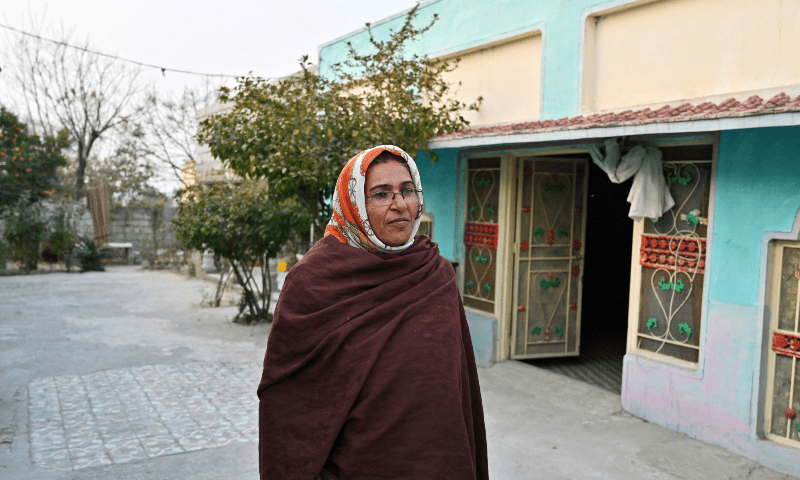
Forty-year-old Robina Kausir, a healthcare worker, said a growing number of women in Dhurnal want to exercise their right to vote but they fear backlash from the community if they do — particularly the looming threat of divorce, a matter of great shame in Pakistani culture.
In this photograph taken on Jan 29, 2024, Robina Kausir, a healthcare worker, looks on during an interview with AFP in Dhurnal of Punjab. — AFP
She credits part of the shift to access to information as a result of the rising use of smartphones and social media.
“These men instil fear in their women — many threaten their wives,” she told AFP.
Robina, backed by her husband, is one of the few prepared to take the risk.
When cricketing legend Imran Khan swept to power in the 2018 election, Robina arranged for a minibus to take women to the local polling station.
Only a handful joined her, but she still marked it as a success and will do the same on Thursday’s election.
“I was abused but I do not care, I will keep fighting for everyone’s right to vote,” Robina said.
Elections are around the corner and ECP has upgraded its helpline number with details of polling stations one can go to cast his or her vote.
Voters are required to send their CNIC number on 8300. Details of the constituencies, both provincial and central, along with the address of the polling station for the polls on Feburary 8 will be revealed.
Previously, sending CNIC only showed the constituencies and registration numbers but now it shows the assigned polling stations too.
In an unfortunate turn of events, one person was killed and another injured in a clash between the workers of Pakistan Peoples Party (PPP) and Muttahida Qaumi Movement-Pakistan (MQM-P) in Karachi’s Nazimabad area, MQM-P has claimed.
The incident took place in the Nazimabad No 2 area late Sunday as political parties are busy campaigning, holding public gatherings and corner meetings to mobilise their supporters ahead of the February 8 elections, according to police, Geo has reported.
Police said clashes erupted between the workers of the two political parties and unidentified persons also lit two vehicles on fire during the violence. They said the deceased person was identified as 48-year-old Faraz.
A video of the incident also emerged online wherein the political activists can be seen hurling chairs at each other.
Abbasi Shaheed Hospital administration said the deceased man was brought to the hospital already dead and added that he died of a bullet in his head. MQM-Pakistan Rabita Committee member Taha Siddiqui claimed that PPP workers opened fire at their office which resulted in the death of UC-incharge. “The Peoples Party [PPP] cannot occupy the city through terrorism,” he alleged while speaking to the media outside the hospital.
In a statement issued following the incident, a MQM-Pakistan spokesperson claimed that PPP workers tried to remove their party’s flag which led to the fight between the workers of the two parties. However, the spokesperson said the dispute between them was settled after some time.
PPP workers returned after two hours with armed guards and resorted to firing which left their worker dead, the statement added.
The MQM-P said a first information report (FIR) of the incident will be lodged following the funeral prayer of the deceased worker.
Addressing a press conference, MQM-P senior leader Mustafa Kamal claimed that the PPP workers carrying Kalashnikovs opened fire at their members following an altercation over flag removal. He claimed that MQM-P workers were unarmed and did not “even throw stones” at them in retaliation. Moreover, he accused PPP leader Asim Hussain of orchestrating the attack on the MQM-P workers. “I am warning for the last time that I will not let my workers even suffer a single scratch,” the MQM-P leader added.
Election campaigns in the past have witnessed episodes of violence, with scores of candidates and voters targeted by bombings and gun attacks.
Parties competing for elections in Kohistan will not be allowed to send female members for door-to-door campaigning to mobilise voters in different constituencies after a 30-member group of clerics — mostly from the Jamiat Ulema-e-Islam-Fazl (JUI-F) — unanimously issued a verdict against it, declaring it un-Islamic.
In their decree, the clerics have strictly banned canvassing by women for the upcoming February 8 general elections.
In a gathering at the JUI-F central office in Kohistan’s Kamila town, Mufti Gul Shahzada of Kandia said: “Taking women door-to-door for seeking votes is against the Islamic injunctions and Shariah.”
At least 400 clerics from different parts of the district attended the gathering and endorsed Mufti Shahzada, as he spelled out six decrees, all related to upcoming elections, in front of them.
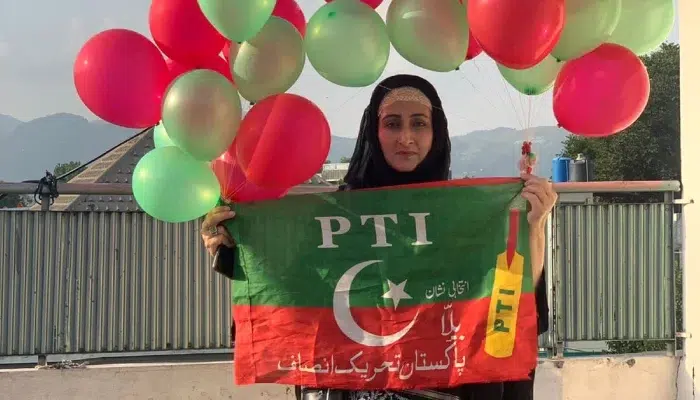
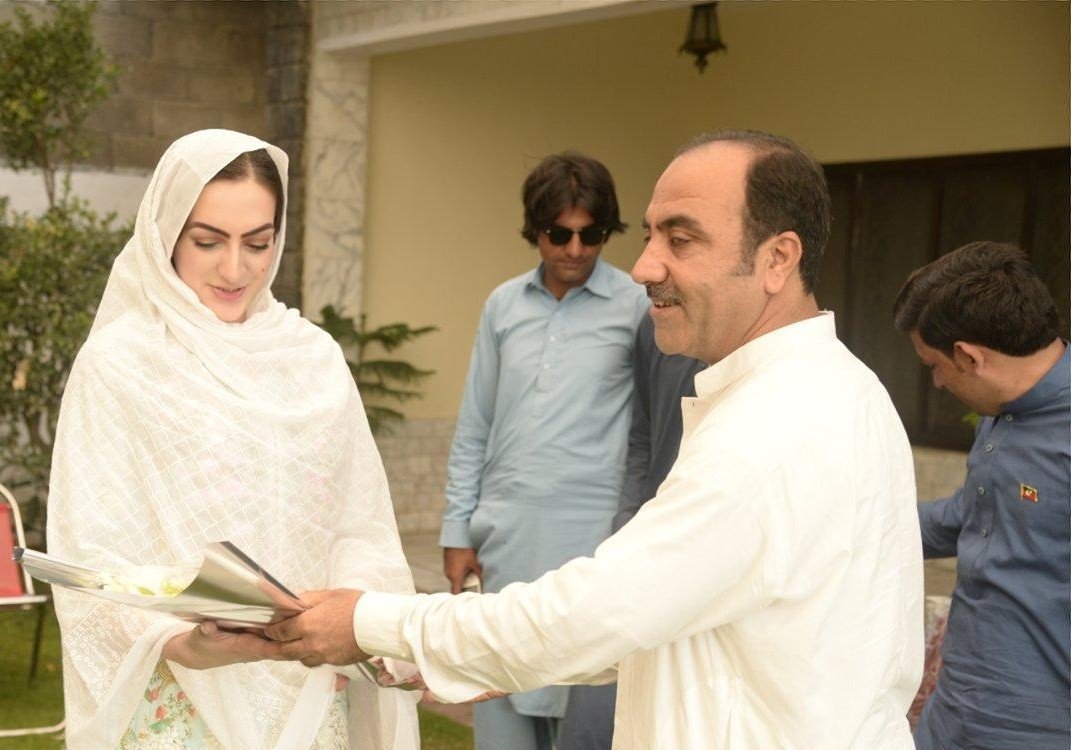
It is important to note that two women aspirants backed by the Pakistan Tehreek-e-Insaf (PTI), including Tehmina Faheem from PK-31 Kohistan-I and former lawmaker Momina Basit, and an independent Sanaya Sabeel from PK-33 Kolai-Palas are campaigning to win seats in the February 8 general elections for the first time in the district’s history.
Tehmina FaheemMomina Basit
Mufti Shahzada told the gathering that all decrees had been issued in light of the current situation. He said these were based on Islamic jurisprudence with references taken from different religious books.
“If anybody votes against Islamic ideology, it means he is testifying to an untrue and biased statement, which is a grave sin and also against Islamic Shariah,” he added.
The clerics warned that taking the Holy Quran to compel people to vote was a sacrilegious act and should never be exercised.
“Those casting votes on the linguistic, regional and clan grounds are also negating Islamic teachings and no such exercise should be carried out in this district,” the mufti added.
When approached, the women contestants in Kohistan in the February 8 general elections said they would give their point of view after consulting their parties, The News reported.
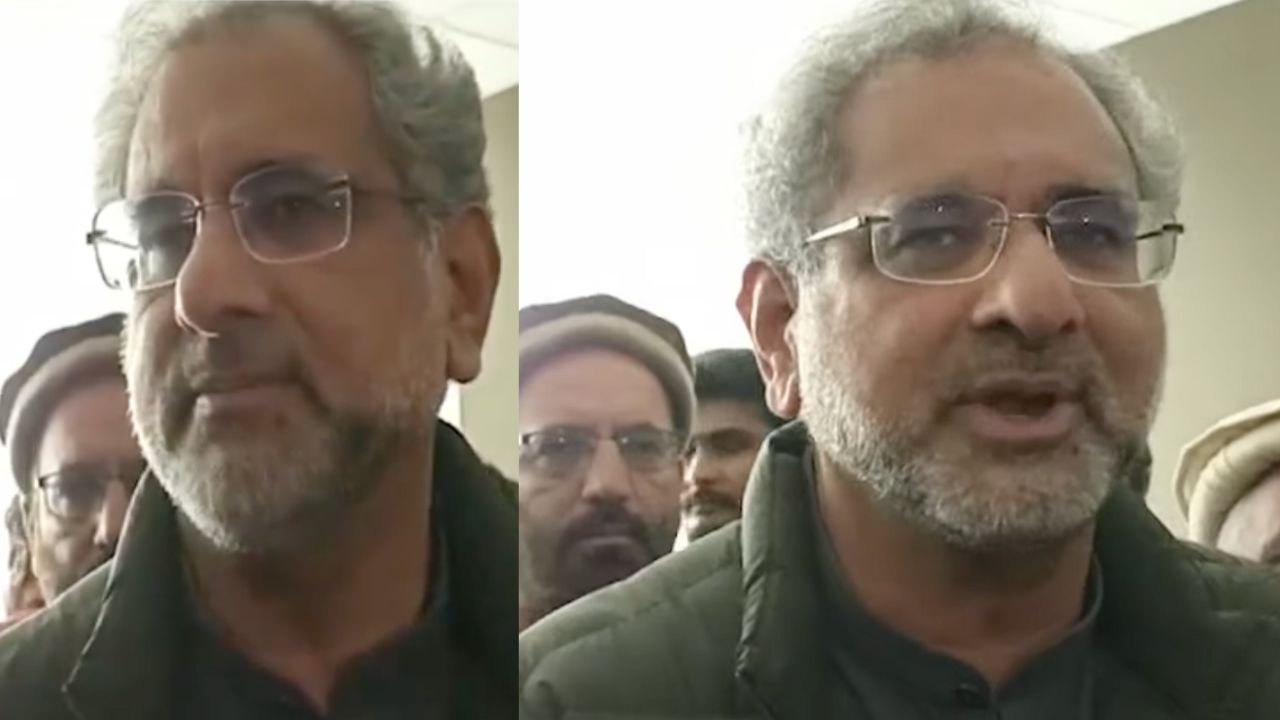
In a statement spoken outside the anti-corruption department office in Rawalpindi, veteran politician and former Prime Minister Shahid Khaqan Abbasi voiced apprehensions about the upcoming general elections scheduled for February 8, asserting that the current electoral landscape could lead to chaos in the country.
“Making an election purposeful is the job of the political leadership. This election has become purposeless. The political, military, and judicial leadership of the country should sit together on the table and determine the way forward for the country,” Abbasi said while talking to media.
He showed up in the office for interrogation in a case related to alleged embezzlement in the Ghora Gali and Marri Road projects.
Abbasi highlighted that it was the responsibility of Chief Election Commissioner Sikandar Sultan Raja, Chief Justice of Pakistan Qazi Faez Isa, and caretaker Premier Anwaarul Haq Kakar to ensure that the upcoming elections were “non-controversial”.
“With each passing day, I become more satisfied that I made the right decision. Such an election, which does not give the country anything other than incitement and flaws; at least I did not play a part in this misdeed,” he said.
He stressed that politicians “should realize that the country can never make progress if its elections become controversial”.
Expressing concern over the potential controversy surrounding the elections, Abbasi stressed that elections are a sacred process and should not be made contentious. He pointed to alleged rigging in the 2018 elections, stating that the system did not function then and is unlikely to do so now.
The former Prime Minister criticized the three largest political parties in the country, asserting that they have failed to address and resolve critical issues. Abbasi predicted the emergence of multiple political parties in Pakistan shortly.
Despite leaving electoral politics, Abbasi clarified that he has not abandoned politics altogether. He mentioned that a decision regarding the formation of a new political party would be made after the upcoming elections.
Addressing concerns about the National Accountability Board (NAB) and other anti-corruption institutes, Abbasi questioned who would hold them accountable, labeling them as the country’s most corrupt organization.
Highlighting the decline in Pakistan’s development graph, Abbasi stressed on an uncontroversial election process.
“Today people ask if the world is making progress then why is Pakistan declining in development graph? Since, 1947 every election has been stolen. The masses are disappointed in the election process. You still have time to make this process uncontroversial,” he said.
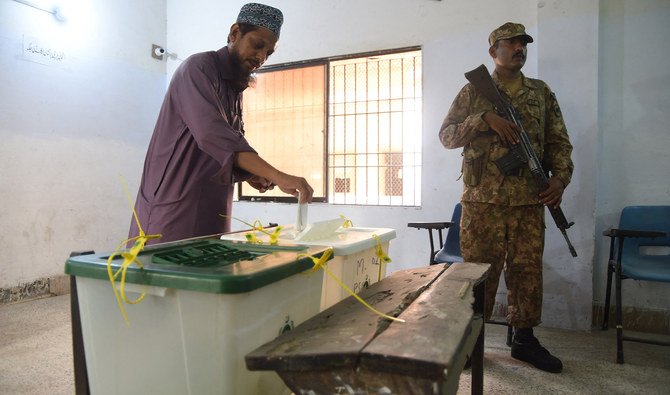
The caretaker federal cabinet on Tuesday approved a summary requesting the deployment of the Pakistan Army and civil armed forces troops to help civil institutions in ensuring the conduct of free, fair, and peaceful general elections scheduled for February 8.
The development occurred during a huddle between the caretaker cabinet and caretaker Prime Minister Anwaar-ul-Haq Kakar.
According to the statement issued by the Prime Minister’s Office, “The troops will perform duties in sensitive constituencies and polling stations and will also act as a rapid response force.”
The federal cabinet unanimously approved the deployment of Pakistan Army and civil armed forces personnel at sensitive polling stations across the country for the upcoming general elections, based on the recommendation of the Ministry of Interior. The Pakistan Army also promised to provide essential assistance for the upcoming general election set to take place on February 8 next month.
Soldiers, along with Rangers and Frontier Constabulary (FC) personnel, will perform election duties.