Tag: #election

  • Spanish PM’s supporters turn out and beg him to stay

    Spanish PM’s supporters turn out and beg him to stay

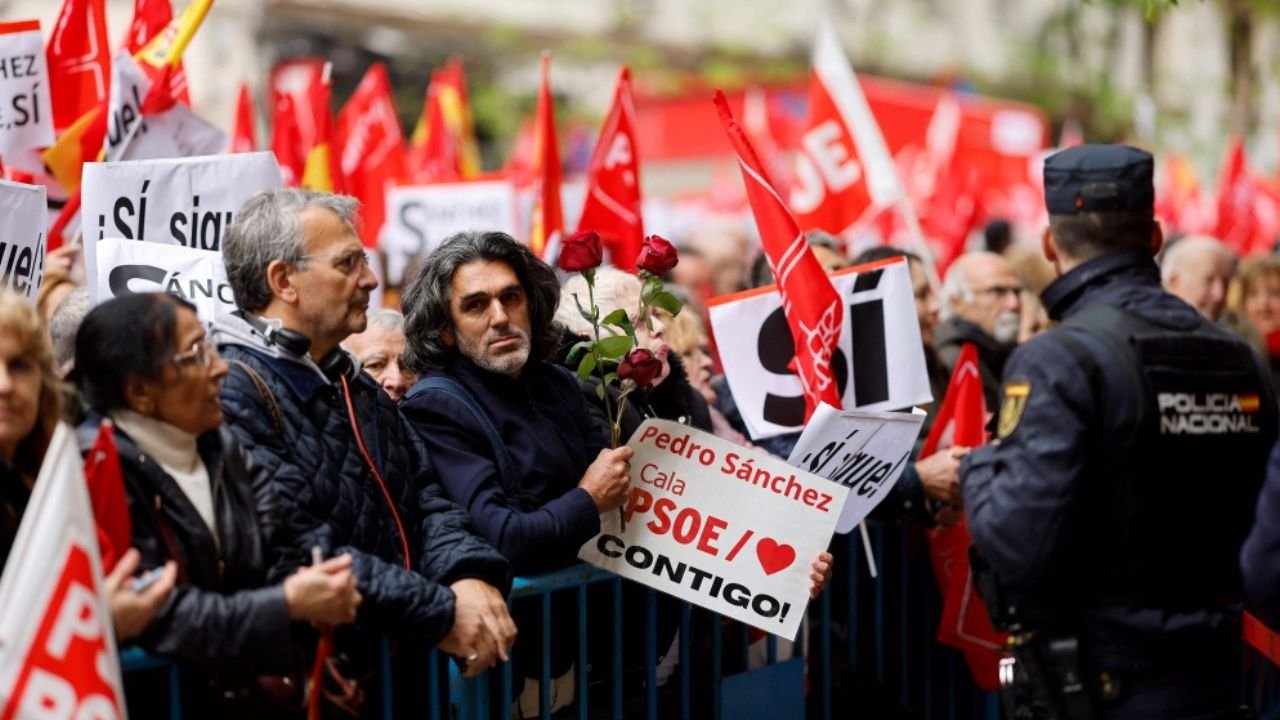
    Madrid, Spain – Thousands of supporters of Spanish Prime Minister Pedro Sanchez rallied at the headquarters of his Socialist party imploring him not to step down over a graft investigation against his wife.

    The 52-year-old, who has been in office since 2018, stunned Spain on Wednesday when he put his resignation on the line after a Madrid court opened a preliminary investigation into suspected influence peddling and corruption against his spouse Begona Gomez.

    Sanchez said he would suspend all public duties until he announces his decision on Monday. The normally hyperactive premier has since remained out of sight and silent.

    According to Madrid city authorities, the crowd rallying on Saturday to beg Sanchez to stay on numbered around 12,500.

    Supporters held up placards saying “Spain needs you”, “Pedro don’t abandon us’, and shouted slogans such as “Pedro leader”.

    “I hope that Sanchez will say on Monday that he will stay,” said Sara Dominguez, a consultant in her 30’s, adding that his government had “taken good steps for women, the LGBT community and minorities”.

    Jose María Diez, a 44-year-old government official who came from Valladolid in northern Spain to express his support, said there was a real possibility that the far-right could take power if Sanchez quit.

    “This will mean a step backwards for our rights and liberties,” he warned.

    Inside the party headquarters, there were similar passionate appeals.

    ‘Pedro stay’

    “Pedro stay. We are together and together we can … take the country forward, Spain can’t step back,” said Budget Minister Maria Jesus Montero, the government number two.

    “Today all democrats, all progressives, are summoned to Madrid against a pack whose only aim is to overthrow a democratic and legitimate government,” said Felix Bolanos, Minister of the Presidency, Justice and Parliamentary Relations.

    At one point, Socialist leaders took to the streets to thank those gathered. “They won’t succeed,” government spokeswoman Pilar Alegria told the crowd.

    The court opened the investigation into Sanchez’s wife in response to a complaint from anti-corruption pressure group Manos Limpias (Clean Hands), whose leader is linked to the far right.

    The group, which has presented a litany of unsuccessful lawsuits against politicians in the past, said on Wednesday its complaint was based on media reports and could not vouch for their veracity.

    While the court did not give details of the case, online news site El Confidencial said it focused on links Gomez had to Spanish tourism group Globalia when carrier Air Europa was in talks with the government to secure a huge bailout.

    The airline sought the bailout after it was badly hit by plunging paseenger numbers during the Covid-19 crisis.

    At the time, Gomez was running IE Africa Centre, a foundation linked to Madrid’s Instituto de Empresa (IE) business school, which had signed a sponsorship agreement with Globalia in 2020.

    Spain’s public prosecutors office on Thursday requested the dismissal of the investigation, which Sanchez said was part of a campaign of “harassment” against him and his wife waged by “media heavily influenced by the right and far right”.

    If Sanchez decides to remain in office, he could choose to file a confidence motion in parliament to show that he and his minority government are still supported by a majority of lawmakers.

    If he resigns, an early election could be called from July — a year after the last one — with or without Sanchez at the helm of the Socialist party.

    The right-wing opposition has accused the prime minister of being irresponsible for putting the country on hold while he mulls his decision.

    “It’s very clear to us that this is all a tactic… We know Pedro Sanchez and things with him always turn out like a soap opera,” Cuca Gamarra, the number two of the main opposition conservative Popular Party, said on Friday.

    “He is making us all wait and the country is at a standstill,” she added.

    du/ach/gv

    © Agence France-Presse
  • Calls for mosque demolition weigh on India’s Muslim voters

    Calls for mosque demolition weigh on India’s Muslim voters

    Muslim teacher Tasleem Qureshi’s walk to the polls on Friday took her past the yellow barricades and police cordon guarding her local mosque — a looming flashpoint in India’s religious divide.

    Her hometown Mathura is the site of the Shahi Idgah, an Islamic house of worship that the Hindu faithful believe was built over the birthplace of the deity Krishna.

    Hindu activists want to “reclaim” the site in a campaign endorsed by members of Prime Minister Narendra Modi’s ruling Bharatiya Janata Party (BJP).

    “The BJP keeps saying that the Shahi Idgah will cease to exist after the elections,” Qureshi, 48, told AFP.

    “We will not let that happen and we will protect it with our lives,” she said.

    Modi is widely expected to win a third term in office once India’s six-week-long election concludes in June, in large part thanks to his championing of the country’s majority faith.

    Mathura is one of several locations across India’s northern heartlands where activists have sought to replace centuries-old Islamic monuments with Hindu temples.

    In January, Modi presided over the inauguration of a grand temple to Ram, one of the most important deities in the Hindu pantheon.

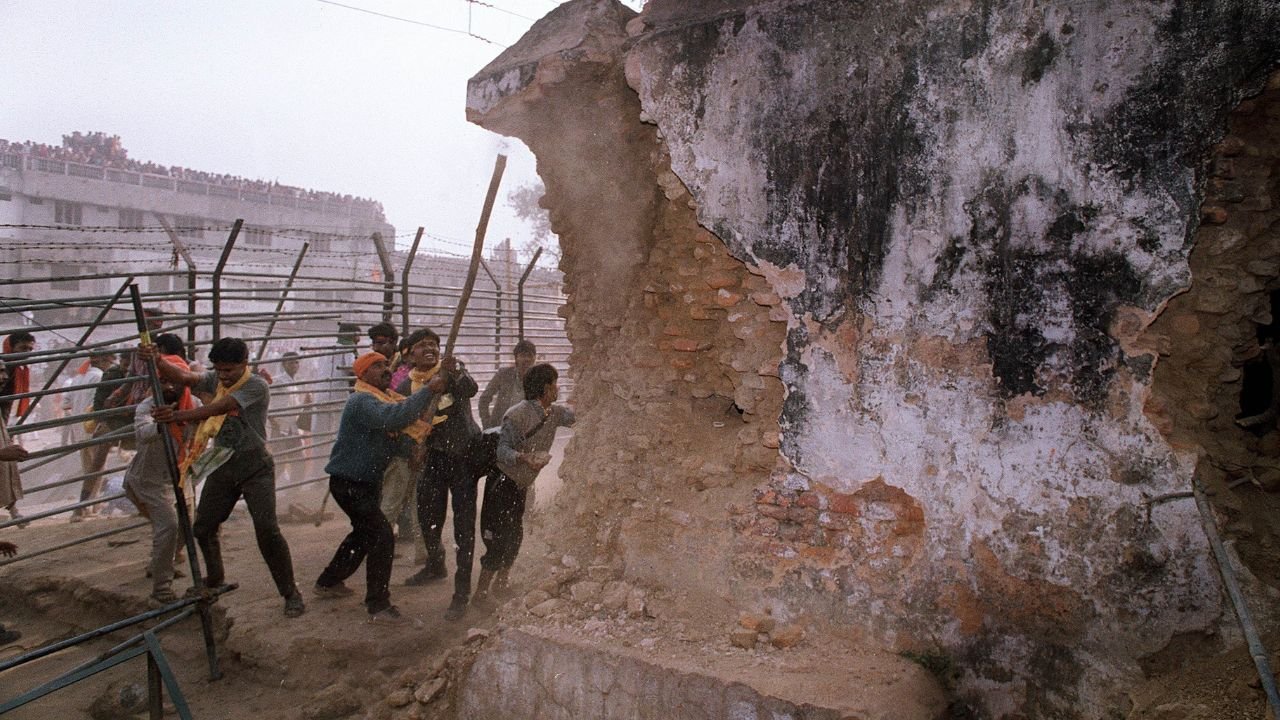
    It was built in the northern city of Ayodhya on the grounds of a centuries-old mosque razed by Hindu zealots decades earlier.

    Modi told an audience of thousands at a glitzy ceremony attended by Bollywood celebrities and cricket stars that India was “creating the genesis of a new history”.

    Construction of the temple fulfilled a long-standing demand of Hindu activists and was widely celebrated across India, with extensive television coverage and street parties.

    Jubilant Hindu activists had proclaimed when the mosque was destroyed that more would follow, identifying the Shahi Idgah in Mathura as one of their future targets.

    Modi’s opponents accuse his Hindu-nationalist government of marginalising India’s 220-million-plus Muslim population.

    He was accused last weekend of “blatantly targeting” the faith in a campaign speech in which he claimed his opponents had once pledged that Muslims had “first right over the nation’s wealth”.

    Temples small and large line Mathura’s narrow, pot-holed streets, teeming with young men offering guided tours for pilgrims.

    The street leading to the mosque has for decades been guarded by a stern, round-the-clock police detachment to prevent vandalism.

    A polling station nearby is testament to the close quarters in which the city’s two main faiths live, with women in Muslim dress voting alongside saffron-clad Hindu priests.

    But with Hindus accounting for more than 80 percent of Mathura’s population, its religious divide is a microcosm of the one across India at large.

    Its parliamentary seat has been held by the BJP since Modi was first elected in 2014, represented by movie star Hema Malini, and the Ayodhya temple’s inauguration has galvanised Hindu voters in the city who support the mosque’s removal.

    Gokul Prasad, an electrician, told AFP that Modi’s inauguration of the Ayodhya temple was the “single most important issue” of the election campaign.

    “Since we live in Mathura so close to the Shahi Idgah, we will obviously vote for Modi,” the 50-year-old said.

    The fate of the Shahi Idgah has also mobilised the city’s Muslim minority.

    But several told AFP that they had lined up to vote on Friday only to find their names were missing on the electoral rolls.

    “They told me neither I nor my husband can vote as our names are not there,” said 55-year-old Rehana Qureshi — no relation to Tasleem — outside a polling booth.

    “We have lived and voted here for generations,” she added. “It seems that the only right we Muslims still have is also being taken away.”

  • Indian election resumes as heatwave hits voters

    Indian election resumes as heatwave hits voters

    India’s six-week election juggernaut resumed Friday with millions of people lining up outside polling stations in parts of the country hit by a scorching heatwave.

    Prime Minister Narendra Modi is widely expected to win a third term in the election, which concludes in early June.

    But turnout in the first round of voting last week dropped nearly four points to 66 percent from the last election in 2019, with speculation in Indian media outlets that higher-than-average temperatures were to blame.

    Modi took to social media shortly before polls re-opened to urge those voting to turn out in “record numbers” despite the heat.

    “A high voter turnout strengthens our democracy,” he wrote on social media platform X. “Your vote is your voice!”

    The second round of the poll — conducted in phases to ease the immense logistical burden of staging an election in the world’s most populous country — includes districts that have this week seen temperatures above 40 degrees Celsius (104 degrees Fahrenheit).

    AFP – MOHAMMED

    India’s weather bureau said Thursday that severe heatwave conditions would continue in several states through the weekend.

    That includes parts of the eastern state of Bihar, where five districts are voting Friday and where temperatures more than 5.1 degrees Celsius above the seasonal average were recorded this week.

    Karnataka state in the south and parts of Uttar Pradesh, India’s most populous state and heartland of the Hindu faith, are also scheduled to vote while facing heatwave conditions.

    Earlier this week, India’s election commission said it had formed a task force to review the impact of heatwaves and humidity before each round of voting.

    The Hindu newspaper suggested the decision could have been taken out of concerns that the intense heat “might have resulted in a dip in voter turnout”.

    In a Monday statement, the commission said it had “no major concern” about the impact of hot temperatures on Friday’s vote.

    AFP – SHARMA

    But it added that it had been closely monitoring weather reports and would ensure “the comfort and well-being of voters along with polling personnel”.

    A wave of exceptionally hot weather has blasted South and Southeast Asia, prompting thousands of schools across the Philippines and Bangladesh to suspend in-person classes.

    The heat disrupted campaigning in India on Wednesday when roads minister Nitin Gadkari fainted at a rally for Modi in Maharashtra state.

    Footage of the speech showed Gadkari falling unconscious and being carried off the stage by handlers. He later blamed the incident on discomfort “due to the heat”.

    Years of scientific research have found climate change is causing heatwaves to become longer, more frequent and more intense.

    AFP – SHARMA

    Friday will also see voting in the constituency of India’s most prominent opposition leader — Rahul Gandhi of the once-dominate Congress party.

    The 53-year-old is fighting to retain his seat in the southern state of Kerala, a stronghold for opponents of Modi’s Hindu-nationalist Bharatiya Janata Party (BJP).

    “It is the duty of every citizen to become a soldier of the constitution, step out of their homes today and vote to protect democracy,” he wrote on X.

    Gandhi is the son, grandson and great-grandson of former prime ministers, but his Congress party has suffered two landslide defeats against Modi in the last two general elections.

    Gandhi has been hamstrung by several criminal cases lodged against him by BJP members, including a conviction for criminal libel that saw him briefly disqualified from parliament last year.

    The opposition alliance has accused Modi’s government of using law enforcement agencies to selectively target its leaders and undermine its campaign.

    More than 968 million people are eligible to take part in India’s election, with the final round of voting on June 1 and results expected three days later.

  • Fake videos of Bollywood stars stir up election worries in India

    Fake videos of Bollywood stars stir up election worries in India

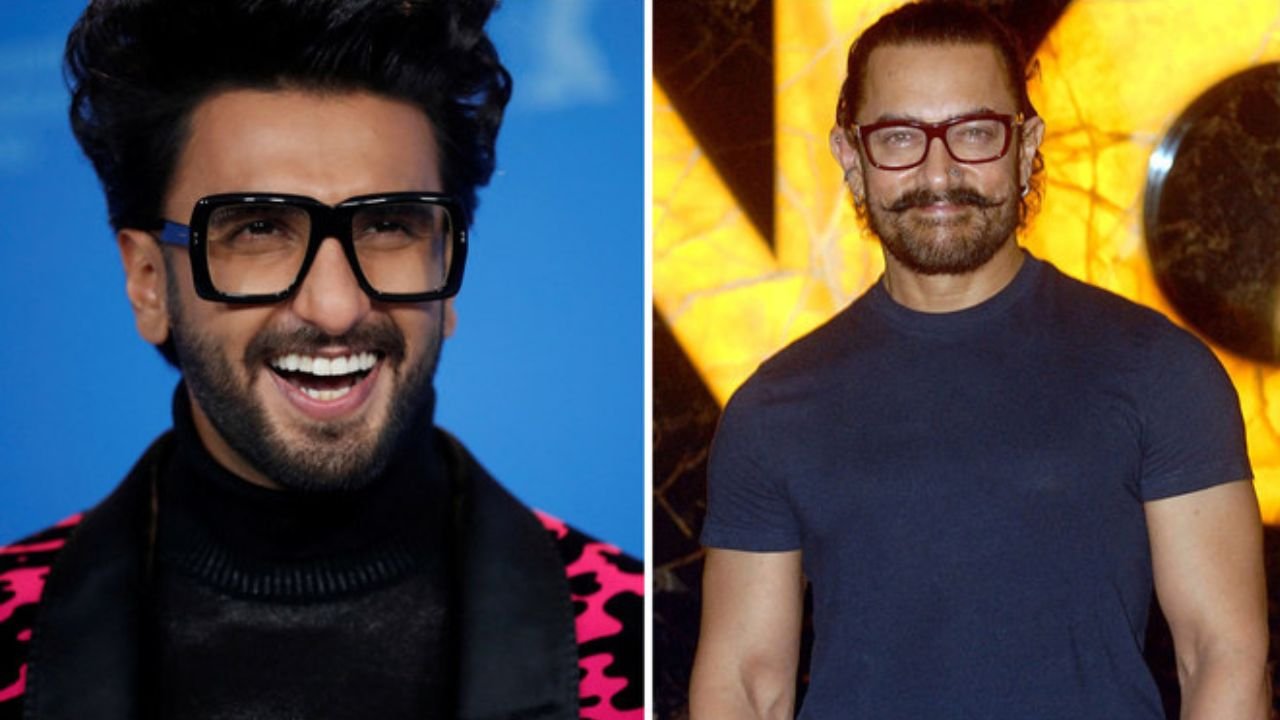
    In some fake videos spreading widely on the internet, two top Bollywood actors from India are shown speaking out against Prime Minister Narendra Modi. They’re asking people to support the opposition Congress party in the current general election. In one video, Aamir Khan talks for about 30 seconds, and in another, Ranveer Singh speaks for about 41 seconds. They say Modi didn’t fulfill his promises during his time as prime minister and didn’t solve important economic problems.

    The fake videos made by artificial intelligence show the symbol and slogan of the Congress party at the end. The slogan is “Vote for Justice, Vote for Congress.” These videos have been watched more than half a million times on social media since last week, according to Reuters.

    The spread of these videos shows how AI-generated content could affect the huge Indian election that began last Friday and will go on until June. AI, or artificial intelligence, creating fake videos, called deepfakes, are becoming more common in elections worldwide.

    Since 2019, in India, there’s been a big shift towards using WhatsApp and Facebook for campaigning. This year’s general election, where Modi is likely to win a third term, marks the first time AI is being used in Indian elections.

    A spokesperson for the Congress party named Sujata Paul shared actor Ranveer Singh’s video with her 16,000 followers on a platform called X on April 17. By Saturday afternoon, her post had been shared 2,900 times, liked 8,700 times, and viewed 438,000 times. Paul told Reuters on the phone that she knew the video was labeled as “manipulated media” by X, but she didn’t want to remove it. When she posted it, she thought the person in the video looked like Singh, and she thought it was ‘creative’.

    The post disappeared from X on Sunday, shortly after Reuters asked Congress’ social media head for comments, but received no response. Both actors have said the videos are fake. Facebook, X, and at least eight fact-checking websites have also confirmed they’re altered or manipulated, which Reuters verified too.

    Aamir Khan was worried about the viral “fake” video, and Ranveer Singh is planning to sue the account that originally released the video. Singh’s team is investigating, said a spokesperson for both actors. Singh warned on X on Friday: “Be careful of deepfakes, friends.”

  • Hindu nationalist Modi the favourite as India votes

    Hindu nationalist Modi the favourite as India votes

    India began voting Friday in a six-week election with an all but assured victory for Hindu nationalist Prime Minister Narendra Modi, as a weakened opposition is pushed to the sidelines.

    A total of 968 million people are eligible to take part in the world’s biggest vote — a staggering logistical exercise that critics say follows a concerted effort to delegitimise rivals.

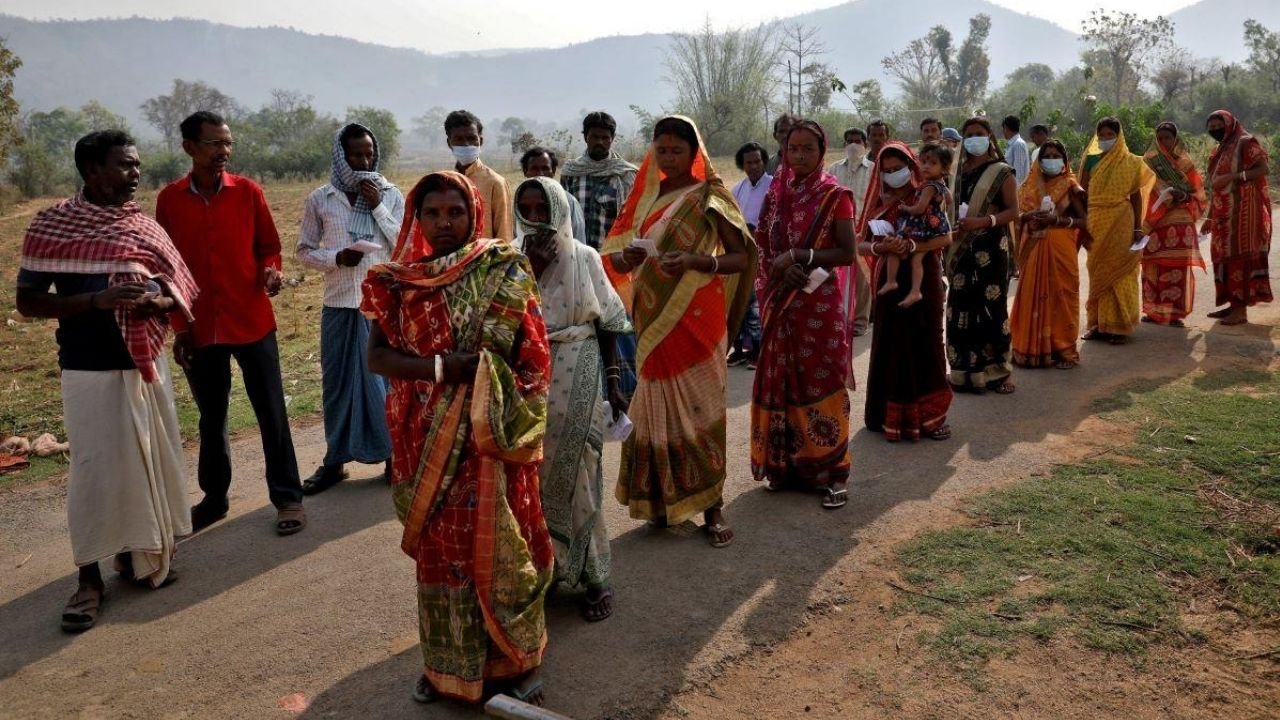
    A long and winding queue was patiently assembled outside a polling station in the Hindu holy city of Haridwar, on the banks of the Ganges river, even before the booths opened.

    “I am here because I am happy about the direction the country is headed,” said autorickshaw driver Ganga Singh, 27. 

    “I will vote keeping in mind not personal welfare but the country’s prosperity.”

    Modi, 73, remains resoundingly popular after a decade in office that has seen India rise in diplomatic clout and economic power, as well as efforts by his government to bring the country’s majority faith in ever closer alignment with its politics.

    “I urge all those voting… to exercise their franchise in record numbers,” he wrote in a social media post on X as the election began. 

    “Every vote counts and every voice matters!”

    Modi has already led the ruling Bharatiya Janata Party (BJP) through two landslide victories in 2014 and 2019, forged in large part by his appeals to the Hindu faithful.

    This year, he presided over the inauguration of a grand temple to the deity Ram, built on the grounds of a centuries-old mosque razed by Hindu zealots.

    “The nation is creating the genesis of a new history,” Modi told the thousands gathered for the ceremony, among them Bollywood celebrities and cricket stars.

    Construction of the temple fulfilled a long-standing demand of Hindu activists and was widely celebrated across India with back-to-back television coverage and street parties.

    ‘Pattern of repression’ 

    Analysts have long expected Modi to triumph against a fractious alliance of more than two dozen parties that have yet to name a candidate for prime minister.

    His prospects have been further bolstered by several criminal probes into his opponents and a tax investigation this year that froze the bank accounts of Congress, India’s largest opposition party.

    Opposition figures and human rights organisations have accused Modi’s government of orchestrating the probes to weaken rivals. 

    “We have no money to campaign, we cannot support our candidates,” Rahul Gandhi, the most prominent Congress leader, told reporters in March.

    “Our ability to fight elections has been damaged.”

    Congress dominated Indian politics for nearly seven decades following independence and remains the only opposition party with a nationwide presence.

    In Haridwar, Gabbar Thakur, who photographs tourists by the Ganges for a living, turned out early to vote. 

    “I am here because I am upset with the government,” he said. “The so-called development hasn’t reached where I live.”

    Modi’s tenure has seen India overtake former colonial ruler Britain as the world’s fifth-biggest economy, and Western nations lining up to court a prospective ally against regional rival China’s growing assertiveness.

    In doing so, they have sidestepped concerns over the taming of India’s once-vibrant press and restrictions on civil society that have seen rights groups like Amnesty severely curtail their local operations.

    Last year, the tax office raided the BBC’s local offices weeks after the British broadcaster aired a documentary questioning Modi’s role in 2002 religious riots that killed around 1,000 people, most of them Muslims.

    While India is constitutionally secular, the country’s 220 million-strong Muslim community and other minorities have felt threatened by the rise of Hindu nationalist fervour.

    Modi’s time in office had seen “a pattern of repression to undermine democracy and civic space”, rights group CIVICUS said in a Wednesday report.

    Opposition alliance 

    Modi’s BJP is challenged by an alliance of more than two dozen parties that have come together in an electoral bloc.

    It has accused Modi’s government of using law enforcement agencies to selectively target its leaders and undermine its campaign.

    Among them is Delhi chief minister Arvind Kejriwal, arrested last month and still in custody on allegations his party received kickbacks in return for liquor licences.

    Gandhi — the scion of India’s most famous political dynasty, whose father, grandmother and great-grandfather all served as prime minister — was briefly disqualified from parliament last year after being convicted of criminal libel.

    The 53-year-old has criticised the government for democratic backsliding and its chest-thumping Hindu nationalism.

    On Friday, his Congress party urged voters to end “hatred and injustice” as polls opened.

    “Your one vote can put an end to inflation, unemployment, hatred and injustice,” it said on social media platform X.

    But Gandhi has already led Congress to two defeats against Modi and his efforts to dent the premier’s popularity have failed to register with voters.

    Published opinion polls are rare in India, but a Pew survey last year found Modi was viewed favourably by nearly 80 percent of the public.

    Voting will be staggered over seven stages between April 19 and June 1, with more than a million polling stations across India.

    Ballots will be counted all at once on June 4 and are usually announced on the same day.

  • Jobs and rights on young voters’ minds for India polls

    Jobs and rights on young voters’ minds for India polls

    New Delhi, India – Around 130 million young adults aged 18 to 22 will be newly eligible to vote in India’s national elections when polls open Friday — more people than the entire population of Mexico.

    AFP asked four first-time voters who were too young to vote in the 2019 elections about who they would support and the issues that mattered to them:

    The student

    Mumbai university student Abhishek Dhotre, 22, said he was unhappy with “the communal discord that is seen all throughout India” as a result of the government’s muscular Hindu nationalism.

    Prime Minister Narendra Modi’s government has brought India’s majority Hindu faith to the forefront of political life.

    That has left Muslims and other minorities anxious about their futures in the nominally secular country.

    Still, with India’s economy growing at a breakneck pace, overtaking former colonial ruler Britain as the world’s fifth-largest in 2022, Dhotre wants Modi and his Bharatiya Janata Party (BJP) to win again.

    “With the flow of development, infrastructure and everything that’s going on, I would prefer the current government to stay,” he told AFP.

    The software developer

    Thrishalini Dwaraknath, 20, epitomises India’s economic changes — she is about to move from Tamil Nadu to the tech hub of Bengaluru, both of them in the south, to work as a software developer.

    “I’m excited to be part of the Indian democracy and voicing my opinion for the first time,” she told AFP. “And I’m glad that my voice matters.”

    She praised Modi’s government for its achievements in office but said it needed to do more to help millions of unemployed young Indians find work.

    India’s annual GDP growth hit 8.4 percent in the December quarter, but the International Labour Organization estimated that 29 percent of the country’s young university graduates were unemployed in 2022.

    “Addressing the skill gap between students and the job market is key,” Dwaraknath said.

    The farmer

    One first-time voter who will definitely not be backing the BJP is Gurpartap Singh, 22, a wheat farmer from the northern state of Punjab.

    Farmers in Punjab were the backbone of a yearlong protest in 2021 against the Modi government’s efforts to bring market reforms into India’s agricultural sector.

    The reforms were later shelved, marking a rare political defeat for the prime minister, but farmers say their demands have still not been met.

    “So many farmers died in the protest,” Singh said. “They have not got justice.”

    Farmers are a significant voting bloc in India — hundreds of millions of people make their living from the land.

    “The government that thinks about the farmers, youth — that is the government that should come to power,” Singh said, adding that the BJP had failed that test.

    The transgender woman

    India’s 1.4 billion people encompass a vast range of backgrounds including a transgender community estimated to be several million people strong.

    The Hindu faith has many references to a “third gender”, and a 2014 Supreme Court ruling said people could be legally recognised as such.

    They nonetheless face entrenched stigma and discrimination, and Salma, a transgender Muslim woman from the Hindu holy city of Varanasi, said she did not expect that to change under another BJP government.

    “All the time this government has stayed in power, they have done nothing good for us,” said Salma, who declined to say who she would vote for.

    “We should get equal rights.”

    burs-ash/slb-gle/lb

    © Agence France-Presse

  • India’s Congress party promises minority protection and jobs

    India’s Congress party promises minority protection and jobs

    India’s main opposition party Congress vowed Friday to protect minorities – generally seen as a reference to the country’s Muslims – while accelerating growth and jobs in a manifesto for an election it is widely expected to lose.

    Nearly a billion Indians will vote to elect a new government in six-week-long parliamentary elections starting on April 19, the largest democratic exercise in the world.

    Many analysts see Prime Minister Narendra Modi’s re-election under his Hindu nationalist Bharatiya Janata Party (BJP) banner as a foregone conclusion.

    Congress led India’s independence struggle and dominated politics for most of the next seven decades but its secularist vision has since struggled against the BJP’s appeal to members of India’s majority faith.

    In its manifesto, Congress promised to protect “linguistic and religious minorities”.

    “The plurality of religions represents the history of India,” it said. “History cannot be altered.”

    India has a long and grim history of sectarian clashes between the country’s Hindu majority and Muslims, its biggest minority faith with 200 million members.

    Party leader Rahul Gandhi — the son, grandson and great-grandson of prime ministers — said the upcoming election was “fundamentally different” from any other in India’s history.

    “It is between those who want to end India’s constitution and democracy and those who want to save it,” he said.

    The Congress manifesto, titled a “justice document”, offered “concrete guarantees unlike Modi’s empty promises”, said lawmaker and lead author P Chidambaram.

    The party has promised to address India’s “massive unemployment” on a “war footing”, adding that it would earmark half of all government jobs for women.

    Young people voted for Modi in droves when he was first elected a decade ago after he said he would create 10 million jobs a year.

    But a recent International Labour Organization (ILO) report warned that India was hamstrung by a “grim” crisis, with unemployment on the rise.

    Congress proposed an unconditional annual cash transfer of Rs 100,000 ($1,200) “to every poor Indian family”, without precisely defining who would qualify.

    The BJP is yet to publish its own manifesto.

  • Jailed Indian opposition politician to run capital from cell

    Jailed Indian opposition politician to run capital from cell

    A senior Indian opposition politician will run the capital from his prison cell, a senior aide said Tuesday, facing down growing calls by rivals demanding he resign.

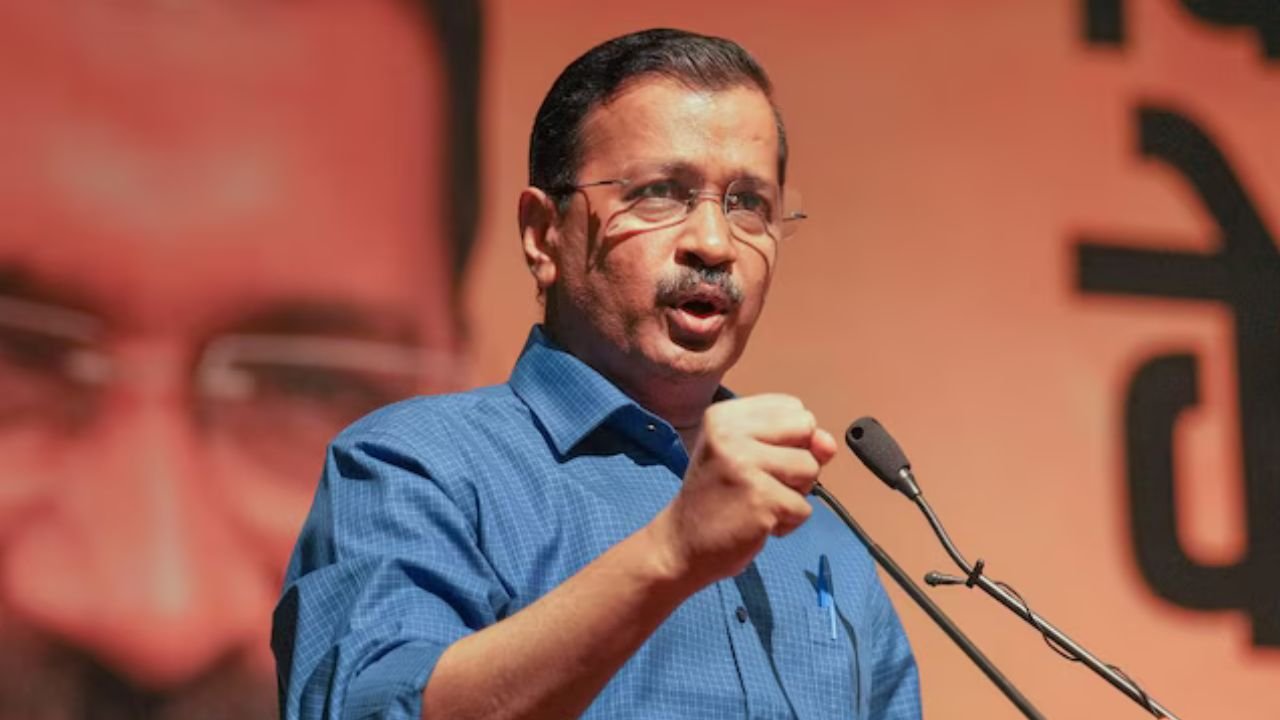
    Arvind Kejriwal, chief minister of New Delhi and a key leader in an opposition alliance formed to compete against Prime Minister Narendra Modi in upcoming elections, was arrested on Thursday in connection with a long-running corruption probe.

    Atishi Marlena Singh, New Delhi’s education minister and fellow member of Kejriwal’s Aam Aadmi Party (Common Man Party, AAP), said “statutory and constitutional provisions” allowed him to remain in his post while behind bars.

    “We are very clear that Arvind Kejriwal will remain the chief minister of Delhi,” Singh, 42, told AFP.

    “If he were to resign when there’s been no trial and no conviction, it opens up the route for other opposition chief ministers to be removed,” she added.

    India’s main financial investigation agency, the Enforcement Directorate (ED), which arrested Kejriwal, has launched probes into at least four other state chief ministers or their family members.

    All the investigations involve political opponents of Modi’s ruling Bharatiya Janata Party (BJP).

    While Modi enjoys high levels of support among his backers, critics accuse him of using law enforcement agencies to intimidate opposition leaders.

    Kejriwal, 55, denies the charges against him.

    His supporters, who held a rally in the city on Tuesday demanding his release, say charges against him are politically motivated and aimed at sidelining challengers of Modi ahead of the polls.

    Modi’s political opponents and international rights groups have long sounded the alarm on India’s shrinking democratic space.

    “All the centre has to do is file some fake cases, and then the ED goes and arrests them”, according to Singh.

    Nearly a billion Indians will vote to elect a new government in six-week-long parliamentary elections starting on April 19, the largest democratic exercise in the world.

    Many analysts see Modi’s re-election as a foregone conclusion, partly due to the resonance of his assertive Hindu-nationalist politics with members of the country’s majority faith.

    Hundreds of BJP loyalists held a rival march through New Delhi on Tuesday, chanting support for Modi and demanding Kejriwal resign.

    “You can run a gang from jail but not a government,” BJP lawmaker Manoj Tiwari told the crowd. “A government cannot be run from prison”.

    In February, Jharkhand state’s chief minister Hemant Soren was arrested and jailed on corruption charges.

    Soren, who denies all charges, resigned and handed power to a colleague.

  • Muslim family attacked by Hindutva extremists during Holi in India

    Muslim family attacked by Hindutva extremists during Holi in India

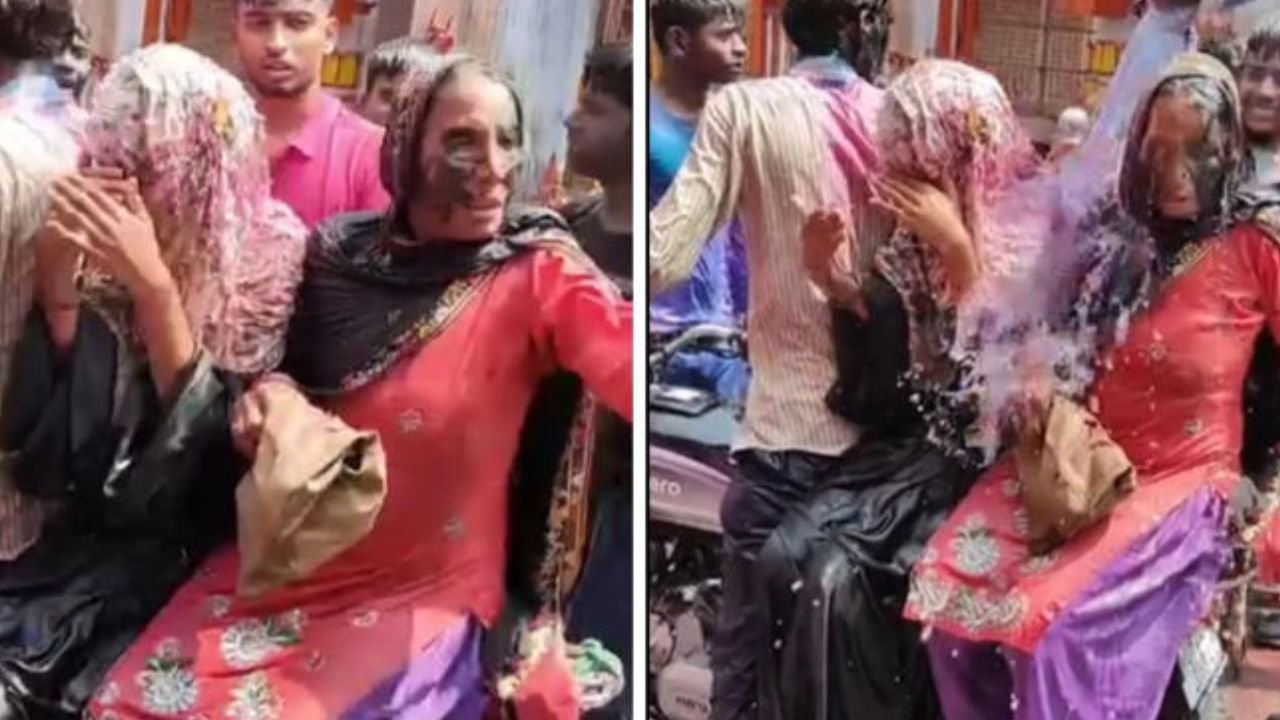
    A Muslim family in India was targeted by a group of young men and boys who sprayed water and Holi colors on them without their consent.

    The incident, captured on video, shows the group forcibly applying colors to the family while chanting religious slogans, ‘Jai Shri Ram’ and ‘Har Har Mahadev’.

    Despite the family’s protests, the harassment persisted, with the perpetrators seen laughing as they continue.

    The Bijnor police arrested one individual and detained three juveniles. Authorities have intervened, emphasizing the necessity of obtaining consent before putting colors on people during the holy festival.

  • Christians in India fearful as election looms

    Christians in India fearful as election looms

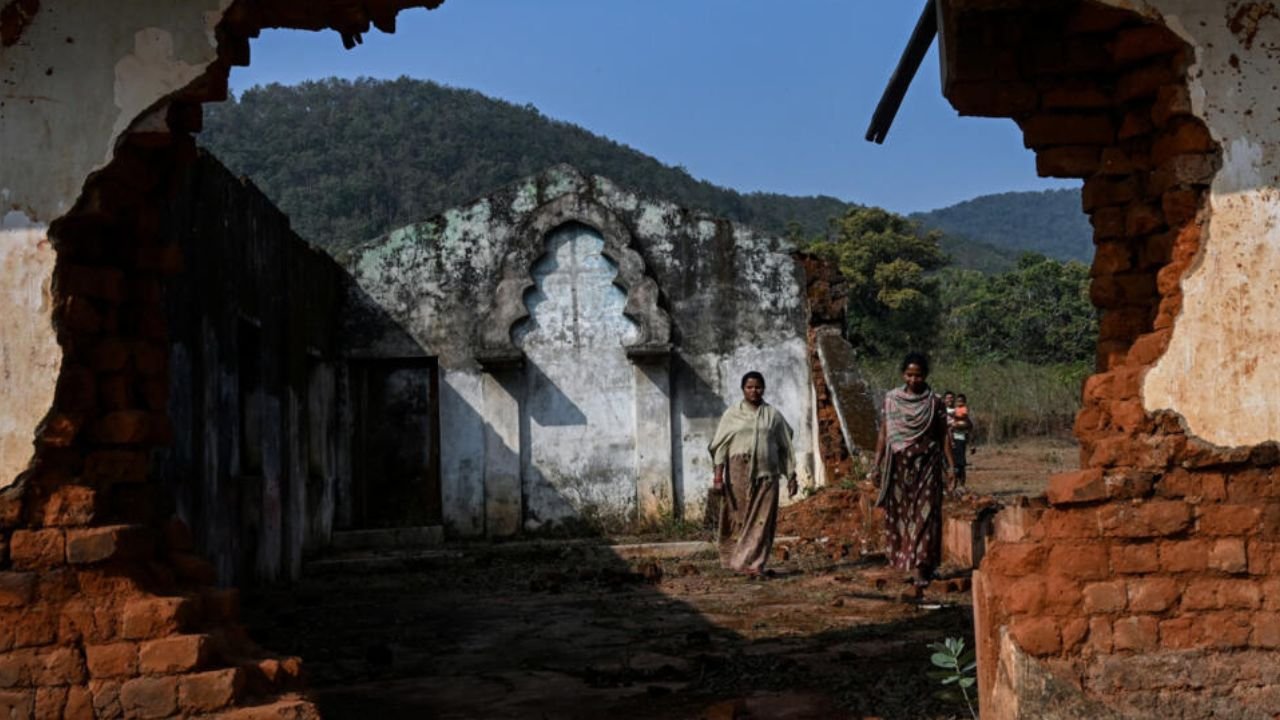
    Irpiguda (India) (AFP) – Church walls crumble in India’s Kandhamal district, where brutal attacks on Christians 16 years ago means many survivors still worry about their minority’s place in a Hindu-majority nation.

    With India’s election on the horizon and Hindu nationalist Prime Minister Narendra Modi widely expected to win, many Christians fear they may once again become targets.

    Deepti was among those attacked in 2008 when mobs rampaged through parts of India’s eastern state of Odisha after the murder of a Hindu priest and his four followers.

    The murder was widely blamed on Christians, and the ensuing revenge rampage left at least 101 people dead.

    Aged 19 at the time, she was gang raped by a mob enraged that her uncle had refused to recant his Catholicism.

    “I remember it every minute,” the 35-year-old domestic worker said in tears, using a pseudonym because she feared being identified.

    “I had been living there since childhood, I recognised them from their voice,” said Deepti, who moved to the state capital Bhubaneswar after the attack.

    “I can still remember each one of them.”

    She was one of scores of women who, according to community leaders, were sexually assaulted across the district.

    Mobs targeted dozens of churches, prayer halls and Christian homes, forcing tens of thousands to flee.

    Last year, the Vatican greenlighted the start of the beatification process towards potential sainthood for 35 of those killed in the violence, a group the church calls the “Kandhamal martyrs”.

    Local Odisha Archbishop John Barwa calls the move a “source of renewed faith and hope”.

    A simple memorial for those who were killed has been erected in the village of Tiangia.

    “Where there is hatred, let me sow love”, the memorial reads, quoting Saint Francis of Assisi.

    ‘Still scared to talk’

    Prasanna Bishnoi, head of Kandhamal’s survivors’ association, said church recognition that people had “died because of their faith” was welcomed — but that honouring the dead did nothing to address the worries of the living.

    “Otherwise, I don’t think it is going to benefit our people,” Bishnoi said.

    Six weeks of voting in marathon general elections begin on April 19, but few doubt the June 4 result — with the ruling Hindu-nationalist Bharatiya Janata Party (BJP), in power for a decade, widely tipped to win again.

    Critics accuse Modi’s BJP of wanting to turn officially secular India into a Hindu nation, something he denies.

    But many Christians worry.

    Right-wing Hindu groups have long accused Christians of forcibly converting Hindus and these allegations, which the community has vehemently denied, have resulted in attacks.

    India has 1.4 billion people and according to the last census, more than two percent are Christians.

    Believers say the religion has been present in the country for nearly two millennia, since the apostle Thomas arrived in the year AD 52.

    The New Delhi-based United Christian Forum (UCF) rights watchdog recorded 731 attacks against Christians in India last year, warning of “vigilante mobs comprising religious extremists”.

    In Kandhamal, the trauma of the 2008 attack haunts survivors, fearful they could be targeted again.

    “Even now the danger persists,” said Raheli Digal, 40, showing AFP the charred walls of what was once her house in Irpiguda village, where the church also lies in ruins.

    “When we remember those old scenes, and watch the news (about ongoing incidents of violence against Christians), we feel scared,” she added.

    “They have been saying for a long time that they won’t let Christians live here.”

    The housewife said she has lived since the 2008 violence in a resettlement camp nearby, and rarely returns to her village.

    “We do not come here… we are still scared to talk to them (Hindus),” she said.

    She sobbed as she described how she hid in the surrounding forested hills, watching as a mob chanting anti-Christian slogans came with blazing torches.

    “They destroyed our home, set it on fire,” she said.

    “We had nothing, not even a piece of cloth, not even water or food,” she added. “We had small children with us — we grabbed them, and ran into the forest.”

    ‘This country is for everyone’

    When Modi in January inaugurated a grand temple to the deity Ram in the northern city of Ayodhya, sparking Hindu celebrations nationwide, Digal and her neighbours stayed home.

    The temple was built on the site of a centuries-old mosque whose destruction by Hindu zealots in 1992 sparked sectarian riots that killed 2,000 people nationwide, most of them Muslims.

    The BJP admits there is a “level of threat perception”, but says it is trying to change that.

    “It is important that we dispel that,” said BJP national spokesman Mmhonlumo Kikon.

    Modi has been “engaging with the Christian community and the leaders to reassure them this country is for everyone — it is not just for the majority community”, Kikon said.

    Bishnoi, from the survivors’ association, said seeing Modi meeting Christians helped him feel “safe”.

    But he also said that reports of violence worried him and cast doubt in his mind.

    “If this government comes to power, then I think minorities will be under pressure,” he said.