Tag: #election

  • Modi opponent challenges arrest ahead of India election

    Modi opponent challenges arrest ahead of India election

    New Delhi, India – A top Indian opposition politician appeared in court Friday to fight his arrest in a case supporters say is aimed at sidelining challengers to Prime Minister Narendra Modi before next month’s election.

    Arvind Kejriwal, chief minister of the capital Delhi and a key leader in an opposition alliance formed to compete against Modi in the polls, was detained on Thursday in connection with a long-running corruption probe.

    He is among several leaders of the bloc under criminal investigation and one of his colleagues described his arrest as a “political conspiracy” orchestrated by the ruling Bharatiya Janata Party (BJP).

    Kejriwal was escorted into a courtroom in the capital by officers from the Enforcement Directorate, India’s main financial crimes agency, to petition for bail while the case proceeds.

    His legal team had originally sought to challenge the legality of his detention in the Supreme Court but Shadan Farasat, a lawyer for Kejriwal, told AFP they would instead contest his remand in a lower court.

    Hundreds of supporters from Kejriwal’s Aam Aadmi Party (AAP) took to the streets on Friday to condemn the leader’s arrest, with police breaking up one crowd of protesters who attempted to block a busy traffic intersection.

    Several demonstrators were detained including Delhi education minister Atishi Marlena Singh and health minister Saurabh Bhardwaj, according to an AFP journalist at the scene.

    Small rallies in support of Kejriwal were held in several other cities around India.

    Kejriwal’s government was accused of corruption when it implemented a policy to liberalise the sale of liquor in 2021 and give up a lucrative government stake in the sector.

    The policy was withdrawn the following year, but the resulting probe into the alleged corrupt allocation of licences has since seen the jailing of two top Kejriwal allies.

    Kejriwal, 55, has been chief minister for nearly a decade and first came to office as a staunch anti-corruption crusader. He had resisted multiple summons from the Enforcement Directorate to be interrogated as part of the probe.

    Singh, the education minister, said Thursday that Kejriwal had not resigned from his office.

    “We made it clear from the beginning that if needed, Arvind Kejriwal will run the government from jail,” she told reporters.

    ‘Decay of democracy’

    Tamil Nadu chief minister M.K. Stalin, a fellow member of the opposition bloc, said Kejriwal’s arrest “smacks of a desperate witch-hunt”.

    “Not a single BJP leader faces scrutiny or arrest, laying bare their abuse of power and the decay of democracy,” he said.

    Modi’s political opponents and international rights groups have long sounded the alarm on India’s shrinking democratic space.

    US democracy think-tank Freedom House said this year that the BJP had “increasingly used government institutions to target political opponents”.

    Rahul Gandhi, the most prominent member of the opposition Congress party and scion of a dynasty that dominated Indian politics for decades, was convicted of criminal libel last year after a complaint by a member of Modi’s party.

    His two-year prison sentence saw him disqualified from parliament for a time until the verdict was suspended by a higher court, but raised further concerns over democratic norms in the world’s most populous country.

    Kejriwal and Gandhi are both members of an opposition alliance composed of more than two dozen parties that is jointly contesting India’s national election running from April to June.

    But even without the criminal investigations targeting its most prominent leaders, few expect the bloc to make inroads against Modi, who remains popular a decade after first taking office.

    Many analysts see Modi’s reelection as a foregone conclusion, partly due to the resonance of his assertive Hindu-nationalist politics with the members of the country’s majority faith.

    abh-sai/gle/mca

    © Agence France-Presse

  • Voting in Indian elections to begin April 19: commission

    New Delhi, India – India’s election commission announced Saturday that national polls would begin on April 19, with Hindu-nationalist Prime Minister Narendra Modi strongly favoured to win a third term in the world’s largest democracy.

    “Date of polling would be 19th of April” for the first phase of the vote, which is staged over several weeks, chief election commissioner Rajiv Kumar told a press conference.

  • Iran counts ballots in vote seen favouring conservatives

    Iran counts ballots in vote seen favouring conservatives

    Tehran, Iran – Iran began counting ballots on Saturday after a vote for parliament and a key clerical body, with local media estimating a low turnout and conservatives expected to dominate.

    Friday’s elections were the first since widespread protests triggered by the September 2022 death in police custody of Mahsa Amini, 22, an Iranian Kurd. She had been arrested for allegedly violating the Islamic republic’s strict dress code for women.

    Iran has also been badly affected by international sanctions that have led to an economic crisis since the last elections in 2020.

    State TV reported early Saturday the “start of vote counting” after polling stations closed at midnight. Voting hours had been extended several times during the day, the official IRNA news agency reported.

    A record figure of 15,200 hopefuls were competing for seats in the 290-member parliament. Another 144 candidates sought a place in the 88-member Assembly of Experts, which is exclusively made up of male Islamic scholars.

    The Assembly selects or, if necessary, dismisses Iran’s supreme leader. Many potential candidates for the chamber were disqualified.

    Local Fars news agency estimated turnout at “more than 40 percent”, among 61 million eligible voters.

    President Ebrahim Raisi welcomed the voters’ “enthusiastic” participation as “another historic failure to (Iran’s) enemies,” according to IRNA.

    Iran considers the United States, its Western allies and Israel enemies of the state and accuses them of seeking to intervene in its internal affairs.

    Reformist daily Ham Mihan ran an opinion piece titled “The Silent Majority”, which said turnout was “estimated to be lower than” in previous elections.

    Iran’s 2020 parliament was elected during the Covid pandemic with a turnout of 42.57 percent — the lowest since the 1979 Islamic Revolution.

    A state TV poll had found more than half of respondents were indifferent about this year’s elections.

    Candidates for parliament are vetted by a body, the Guardian Council, whose members are determined by the supreme leader.

    The present parliament is dominated by conservatives and ultra-conservatives, and analysts expected a similar makeup in the new assembly.

    Despite Supreme leader Ayatollah Ali Khamenei’s appeal for people to cast ballots, many Iranians were split on whether or not to do so.

    Former reformist president Mohammad Khatami was among people who avoided the poll, according to a coalition of parties called the Reform Front.

    In February the conservative Javan daily quoted Khatami as saying Iran is “very far from free and competitive elections.”

    rkh-ap/it

    © Agence France-Presse

  • Do you know how Speaker, Deputy Speaker, Prime Minister, and Leader of Opposition are elected in assembly?

    Do you know how Speaker, Deputy Speaker, Prime Minister, and Leader of Opposition are elected in assembly?

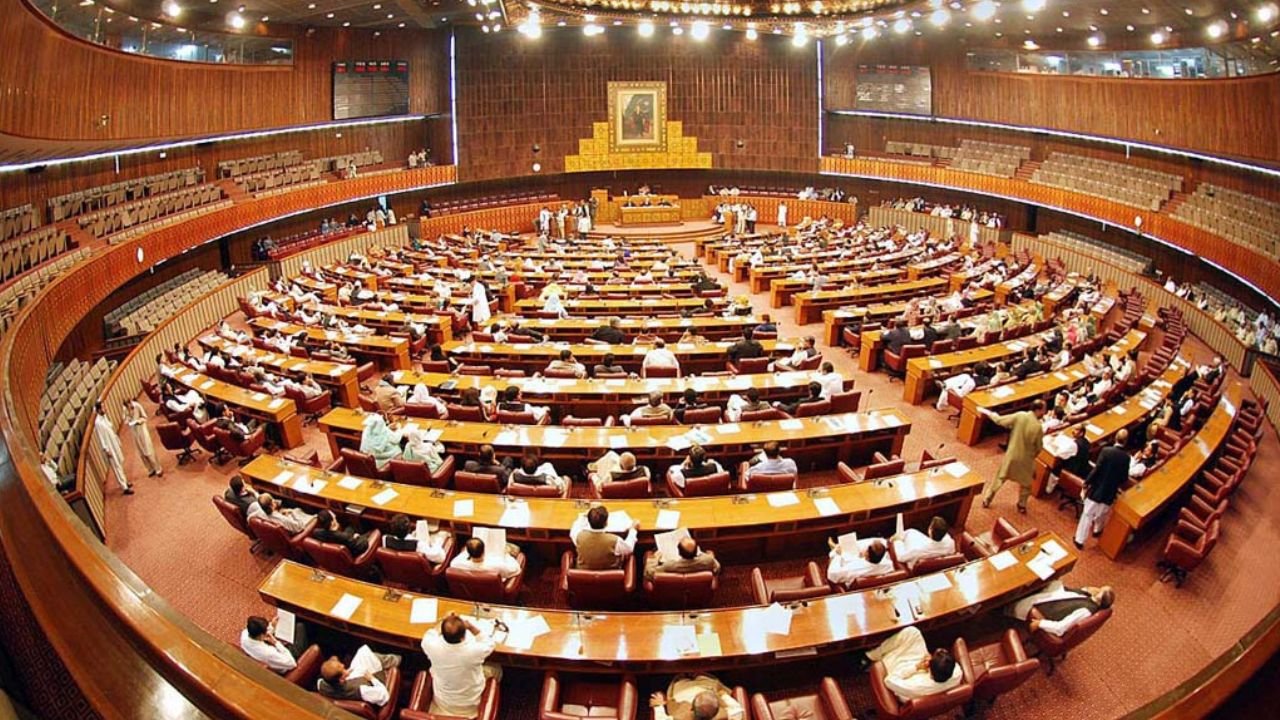
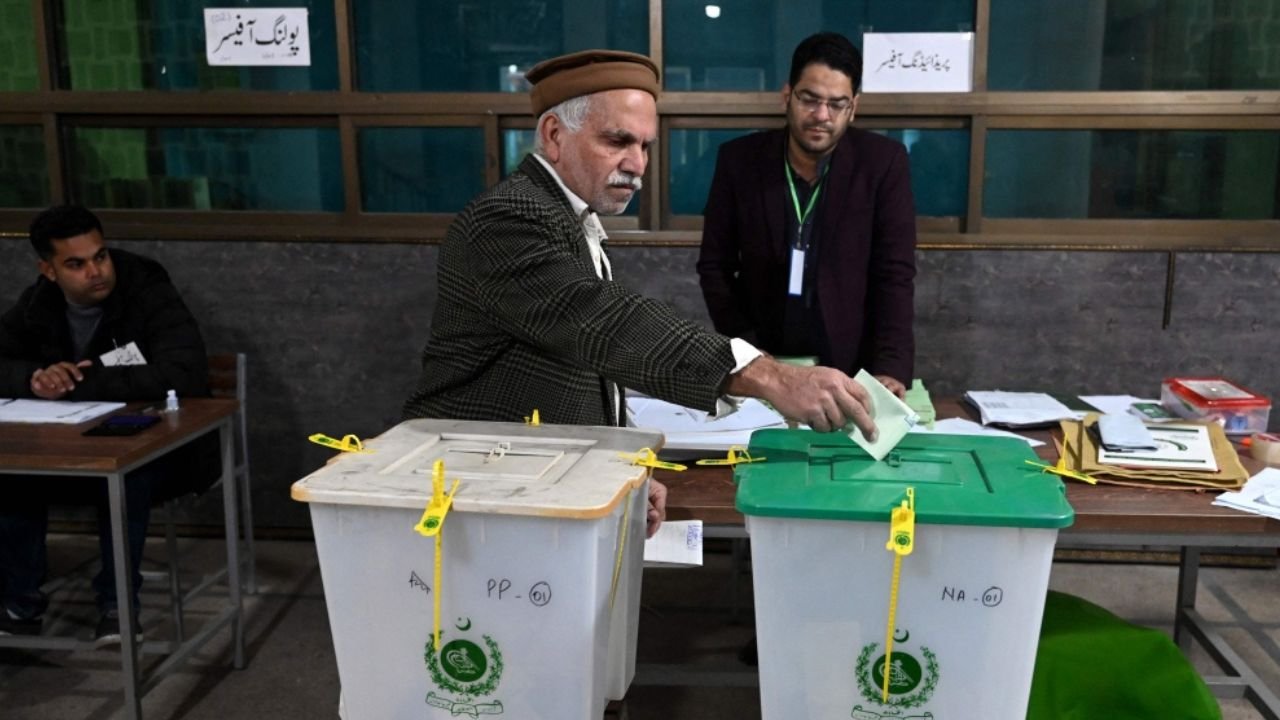
    By constitutional obligation, Speaker Raja Pervaiz Ashraf has convened a session of the newly elected National Assembly, scheduled for February 29th, following the general elections on February 8th. President Arif Alvi’s reluctance to fulfill this duty prompted Speaker Ashraf to take matters into his own hands, ensuring the timely commencement of parliamentary proceedings.

    Oath-Taking Ceremony for Newly Elected Members

    The inaugural session of the new assembly will first see all the lawmakers take oath. In the 336-member house, 60 seats are reserved for women and 10 for minorities.

    Allocation of Reserved Seats

    The Election Commission of Pakistan (ECP) has already allocated 40 reserved women seats to different political parties. These include 20 out of 32 of Punjab, two out of 10 of Khyber Pakhtunkhwa, all 14 of Sindh and all four of Balochistan.

    Seven out of 10 seats reserved for minorities have also been allocated. The ECP is yet to allot reserved minority and women seats to the Sunni Ittehad Council (SIC), which has allied with the PTI.

    Election of Speaker and Deputy Speaker

    Speaker Ashraf, continuing in his role until a successor is elected, will preside over the session’s proceedings.

    “At the first meeting of the Assembly, following a general election, after the members have made oath and before the transaction of any other business, the Assembly shall proceed to elect a Speaker under clause (1) of Article 53, by secret ballot,” states Rules of Procedure and Conduct of Business in the National Assembly, 2007.

    Article 53 of the Constitution of Pakistan says, “After a general election, the National Assembly shall, at its first meeting and to the exclusion of any other business, elect from amongst its members a Speaker and a Deputy Speaker and, so often as the office of Speaker or Deputy Speaker becomes vacant, the Assembly shall elect another member as Speaker or, as the case may be, Deputy Speaker.”

    “At any time before 12:00 noon on the day preceding the day on which the election is to be held, any member may propose another member for election as Speaker by delivering to the Secretary a nomination paper signed by him and accompanied by a statement by the member whose name is proposed that he is willing to serve as Speaker, if elected,” states the official procedure.

    The voting process will be conducted through a secret ballot, and whoever receives more votes will be elected the new speaker of the house. In case the speaker’s election ends in a tie, the election will be held again.

    Subsequently, the new speaker will announce the schedule for the deputy speaker’s election. In the same manner, through a secret ballot, the deputy will be elected.

    Prime Ministerial Election Process

    Once the Speaker and Deputy Speaker are elected, the schedule for the Prime Minister’s election, also known as the leader of the house, will be announced. This process, outlined in Section 91(3) of the Constitution, involves nominations and an open vote by division, requiring a simple majority for victory.

    Section 91(3) of the Constitution says: “After the election of the speaker and the deputy speaker, the National Assembly shall, to the exclusion of any other business, proceed to elect without debate one of its Muslim members to be the Prime Minister.”

    In the same way, nomination papers for the prime minister’s election will be submitted to the assembly’s secretariat.

    While the election for the speaker, his deputy, and the leader of the opposition are free from any religious limitation, the prime minister’s election is open to only the Muslim members of the house.

    “Before voting commences, the Speaker shall direct that the bells be rung for five minutes to enable members not present in the chamber to be present. Immediately after the bells stop ringing, all the entrances to the lobby shall be locked and the assembly staff posted at each entrance shall not allow any entry or exit through those entrances until the voting has concluded,” according to the official procedure for recording of votes in the Second Schedule.

    Under the supervision of the speaker, an open vote will take place — by division.

    For instance, if there are two candidates, the speaker would say that ‘whoever wants to vote for candidate A can go to lobby A’ and ‘whoever wants to vote for candidate B, can go to lobby B’.

    At the entrance of the said lobbies, there will be an member of the assembly secretariat staff who will record every MNAs name in their register. This whole process will be open and people sitting in the galleries will be able to see who votes for whom.

    Here, the political parties have to vote collectively and every member has to vote for the candidate that their party is voting for.

    After every member has picked their lobby and registered their vote, the speaker will call them back and announce the result. To be selected as the prime minister, one needs a simple majority — more than half of the votes in the house i.e. 169 votes out of the total 336.

    Section 91(4) of the Constitution states, “The Prime Minister shall be elected by the votes of the majority of the total membership of the National Assembly: Provided that, if no member secures such a majority in the first poll, a second poll shall be held between the members who secure the two highest numbers of votes in the first poll and the member who secures a majority of votes of the members present and voting shall be declared to have been elected as Prime Minister: Provided further that, if the number of votes secured by two or more members securing the highest number of votes is equal, further poll shall be held between them until one of them secures a majority of votes of the members present and voting.”

    This means that the two most-voted candidates will contest another round of elections till one ultimately gets 51 percent of votes or more, and wins.

    Selection of Leader of the Opposition

    After the Prime Minister’s election, the Speaker will facilitate the nomination of candidates for the Leader of the Opposition, a position crucial for parliamentary balance. The selection process entails the submission of candidate names along with signatures, with the individual garnering the most support from opposition members being appointed.

    “After the [election of the Prime Minister] the Speaker shall inform the members about the date, time and place for submission of a name for the Leader of the Opposition under their signatures,” says the official procedure in Chapter V 39(2).

    The third point of the same section adds, “The Speaker shall declare a member as Leader of the Opposition having the greatest numerical strength after verification of the signatures of the members: Provided that any member who is not signatory to the proposal, if he presents himself before the count, and signs the proposal, shall be included in the count.”

    This announcement will be made right after the prime minister’s election but submission of these lists can take time.

    Changes in Selection Procedures

    Before the implementation of the 18th Amendment to the Constitution, the designation of the opposition leader rested solely with the discretion of the speaker.

    During the era of Parvez Musharraf, this discretionary power was perceived to be misused, notably when Fazlur Rehman was appointed as the opposition leader despite the clear majority held by the PPP and PML-N.

    However, the process has transformed now. In the current scenario, if multiple candidates are contending for the position, they are required to submit lists of opposition members, along with their signatures, to the speaker. The candidate who garners greater support from opposition members will be conferred the title of the leader of the opposition.

    Furthermore, it’s worth noting that in each of the aforementioned elections, the votes of the candidates themselves will also be taken into account.

  • Navalny’s widow says ‘Putin killed my husband’

    Navalny’s widow says ‘Putin killed my husband’

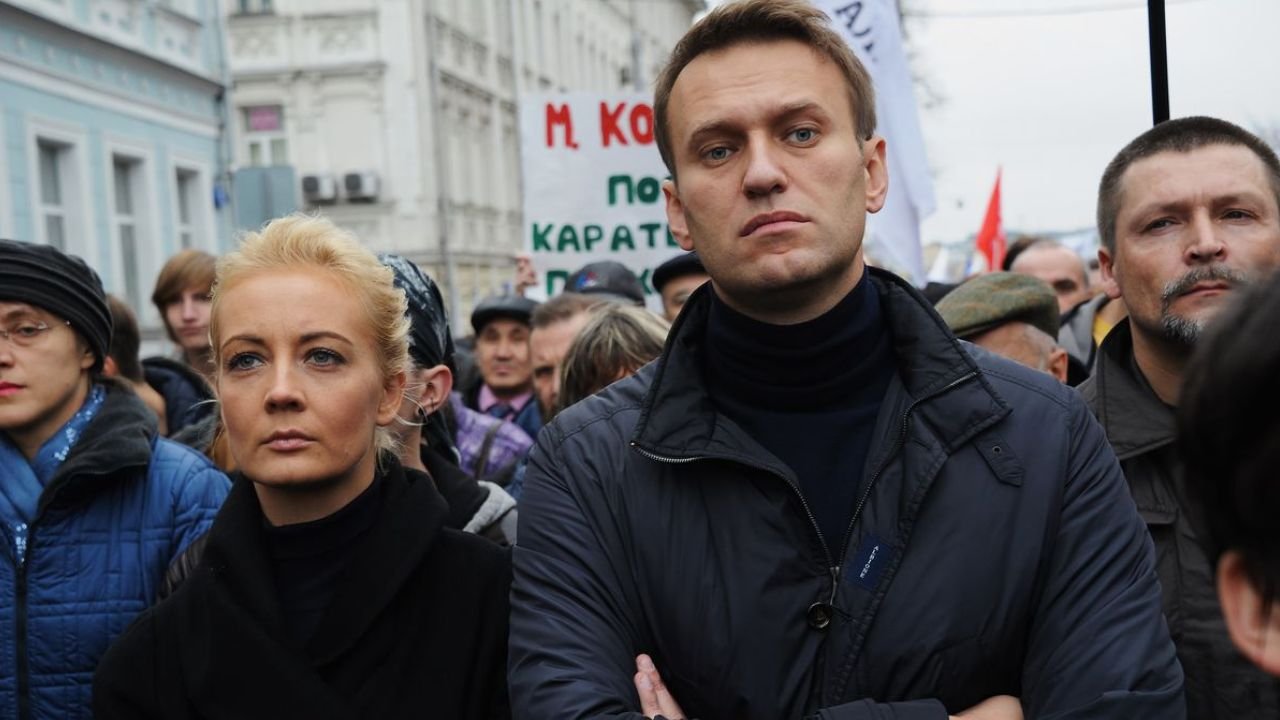
    Warsaw, Poland – Alexei Navalny’s widow said Monday that Russian President Vladimir Putin killed her husband, as she vowed to carry on his work, three days after he died in an Arctic prison.

    Holding back tears in a video address published Monday, Yulia Navalnaya said: “Three days ago, Vladimir Putin killed my husband, Alexei Navalny.”

    Prison authorities said Navalny died after losing consciousness following a walk in his prison colony in Kharp, 2,000 miles (1,200 kilometres) northeast of Moscow inside the Arctic circle.

    “Alexei died in a prison colony after three years of torment and torture,” Navalnaya said Monday.

    Navalnaya, who was by her husband’s side for more than a decade in his fight against Putin, vowed to continue his work.

    “The most important thing we can do for Alexei and for ourselves is to keep fighting, more desperately and more fiercely than before,” she said.

    “We need to seize every opportunity to fight against war, against corruption, against injustice, to fight for fair elections and the freedom of speech, to fight to take back our country.”

    She also vowed to uncover the people who she said had killed her husband.

    “We know exactly why Putin killed Alexei three days ago… We will definitely find out exactly who carried out this crime and how it was carried out. We will name names and show faces,” she said.

    The Kremlin said earlier on Monday that an investigation into Navalny’s death was ongoing and slammed Western governments that have said Putin carries responsibility for his death.

    Russian authorities have so far refused to hand over Navalny’s body to his mother and lawyer, enraging his supports who have said it was a move by the “killers” to “cover their tracks.”

    bur/yad

    © Agence France-Presse

  • Government formation: What will kingmaker PPP do?

    Government formation: What will kingmaker PPP do?

    More than 11 days have passed since the general elections took place, yet the country is without a coherent government formation strategy.

    From every side saying they will form the government to every side saying they will sit in opposition, the situation remains unclear, except for one fact: Pakistan Peoples Party (PPP) is in the driving seat as the Kingmakers.

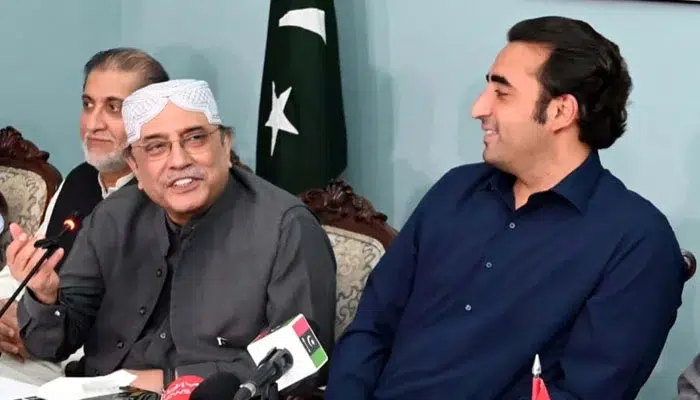
    So what will the party do? Chairman Bilawal Bhutto Zardari revealed on Sunday during a political rally in Thatta, that his party has rejected the power-sharing formula offered to them, but stressed that his father, Asif Ali Zardari, will be the PPP’s candidate for president. “I was told [by PML-N] that let us be the prime minister for three years, and then you can take the premiership for the remaining two years,” Bilawal revealed, adding that he said no to the offer. “I said I do not want to become a prime minister like this. If I become the prime minister, it will be after the people of Pakistan elect me.”

    The PPP chairman also said, without mentioning any names, that his party will align with those who asked for their votes but will not take ministries.

    The former foreign minister also stressed that his father will play a big role in reducing the political tension in the country.

    According to The News, Pakistan Muslim League-Nawaz (PML-N) and PPP are set to hold their fifth meeting today to hash out a formula for the formation of the federal government.

    On the other hand, PPP leader Sarfraz Bugti claimed on Sunday that his party will form the provincial government in Balochistan with the help of PML-N.

    “The PML-N would be our ally in Balochistan [as it has] given us a clear signal to form our government [in the province],” Bugti said while addressing a press conference in Islamabad.

  • Russian opposition leader Alexei Navalny dies in prison

    Russian opposition leader Alexei Navalny dies in prison

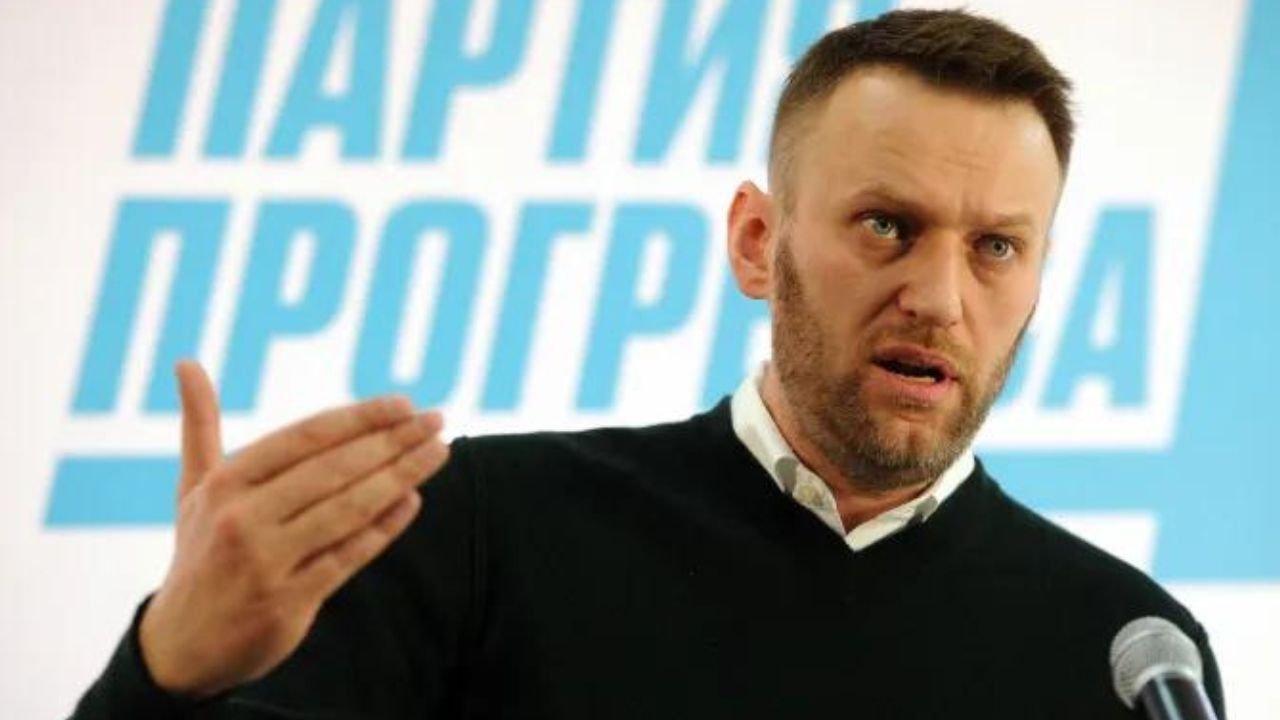
    Moscow, Russia – Russian opposition leader Alexei Navalny died Friday in the Arctic prison colony where he was serving a 19-year-term, Russia’s federal penitentiary service said.

    Western governments immediately attacked the Kremlin over the death of the most outspoken critic of President Vladimir Putin.

    Navalny lost consciousness after a walk and could not be revived by medics, the prison service said.

    “Navalny felt bad after a walk, almost immediately losing consciousness. Medical staff arrived immediately and an ambulance team was called,” it said.

    “Resuscitation measures were carried out which did not yield positive results. Paramedics confirmed the death of the convict. The causes of death are being established.”

    The 47-year-old was Russia’s most prominent opposition leader and won a huge following with his criticism of corruption in Vladimir Putin’s Russia.

    Russia’s Investigative Committee said it had opened an investigation into the death.

    Navalny’s press secretary Kira Yarmysh said his team had not been informed of his death.

    “Alexei’s lawyer is now flying to Kharp,” where his prison colony is, she said in a post on social media.

    Citing his spokesman, Russian news agencies reported that Putin had been informed of Navalny’s death.

    Western governments and Russian opposition figures on Friday said the Kremlin was responsible for his death.

    Latvia’s president said he had been “brutally murdered by the Kremlin”.

    “The Russian government bears a heavy responsibility,” Norway’s Foreign Minister Espen Barth Eide wrote on X, formerly Twitter.

    France’s foreign minister said Navalny had paid with his life for resisting oppression.

    Opposition leader

    Navalny’s exposes, posted on his YouTube channel racked up millions of views and brought tens of thousands of Russians to the streets, despite Russia’s harsh anti-protests laws.

    He was jailed in early 2021 after returning to Russia from Germany, where he was recuperating from a near-fatal poisoning attack with Novichok, a Soviet-era nerve agent.

    In a string of cases he was sentenced to 19 years in prison on charges widely condemned by independent rights groups and in the West as retribution for his opposition to the Kremlin.

    His return to Russia despite facing jail put him on a collision course with Putin, after Navalny blamed the poisoning attack in Siberia on the Kremlin.

    “I’m not afraid and I call on you not to be afraid,” he said in an appeal to supporters as he landed in Moscow, moments before being detained on charges linked to an old fraud conviction.

    His 2021 arrest spurred some of the largest demonstrations Russia had seen in decades, and thousands were detained at rallies nationwide calling for his release.

    In prison, Navalny’s team said he had been harassed and repeatedly moved to a punitive solitary confinement cell.

    He said guards had subjected him and other inmates to “torture by Putin”, making them listen to the president’s speeches.

    From behind bars he was a staunch opponent of Moscow’s full-scale military offensive against Ukraine.

    The Kremlin moved to dismantle his organisation, locking up his allies and sending dozens of others into exile.

    Late last year he was moved to a remove Arctic prison colony in Russia’s Yamalo-Nenets region in northern Siberia.

    The last post on Navalny’s Telegram channel, which he managed through his lawyers and team in exile, was a tribute to his wife, Yulia Navalnaya, posted on Valentine’s Day.

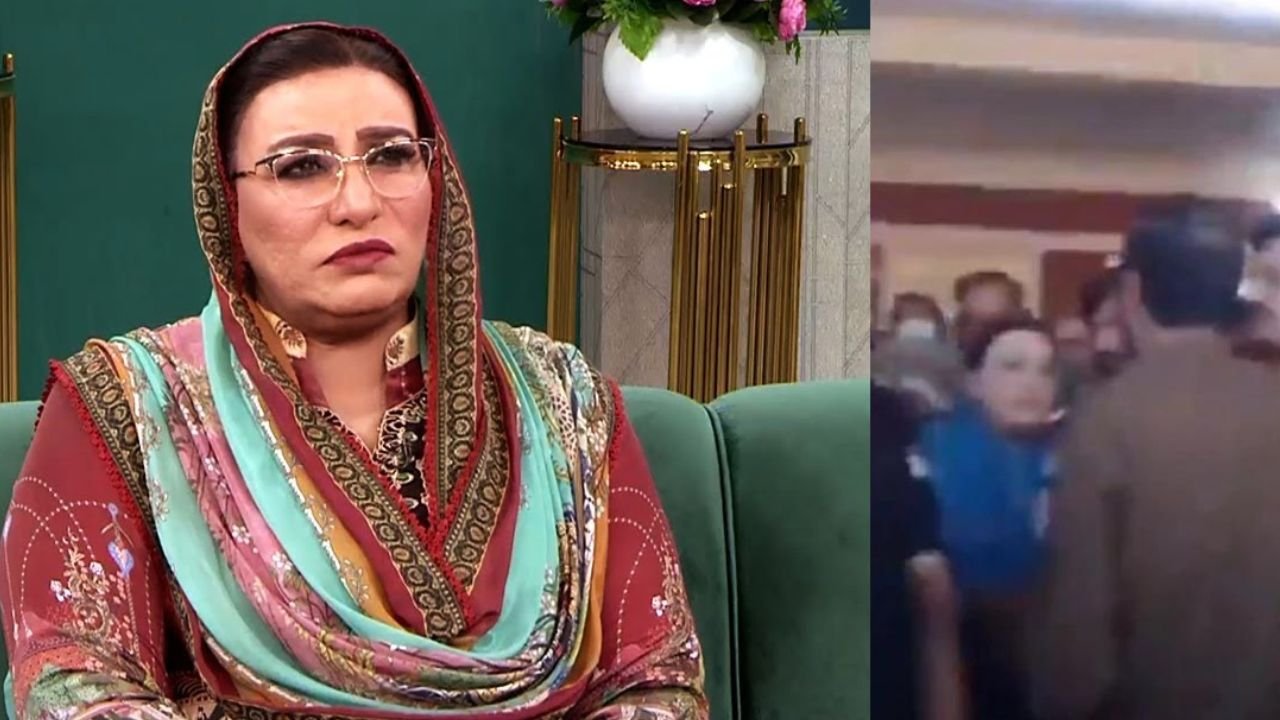
  • Firdous Ashiq Awan apologises for slapping a police officer

    Firdous Ashiq Awan apologises for slapping a police officer

    Istehkam-e-Pakistan Party (IPP) leader Dr. Firdous Ashiq Awan has formally apologised for slapping a police officer during the general elections.

    In a hearing held at the Election Commission, chaired by Nisar Durrani, Awan expressed regret for the incident and sought forgiveness in a written statement submitted to the commission. The affected police officer also submitted a written response during the hearing.

    During the inquiry, a member of the Election Commission questioned Awan, asking who she thought she was to take the law into her own hands.

    Awan responded to the inquiry by stating that she apologizes for her actions, clarifying that the polling stations were in a chaotic state and that she was merely trying to ensure order.

    She further stated that the police were a passive spectator and she felt threatened by the crowd.

    The incident, which sparked widespread criticism on social media, has been under scrutiny by the Election Commission.

    The commission has stated that it will issue further directives regarding the hearing at a later date.

    On February 12, Awan said that she slapped a police officer as the person in uniform was facilitating one political party on election day. The IPP leader also said that if the law does not take its course, then citizens will teach corrupt police officers a lesson.
    The video was widely slammed on social media, with users calling out the IPP leader for resorting to violence.

    Read more: ‘Thappay par thappa’, Firdous explains why she slapped a police officer

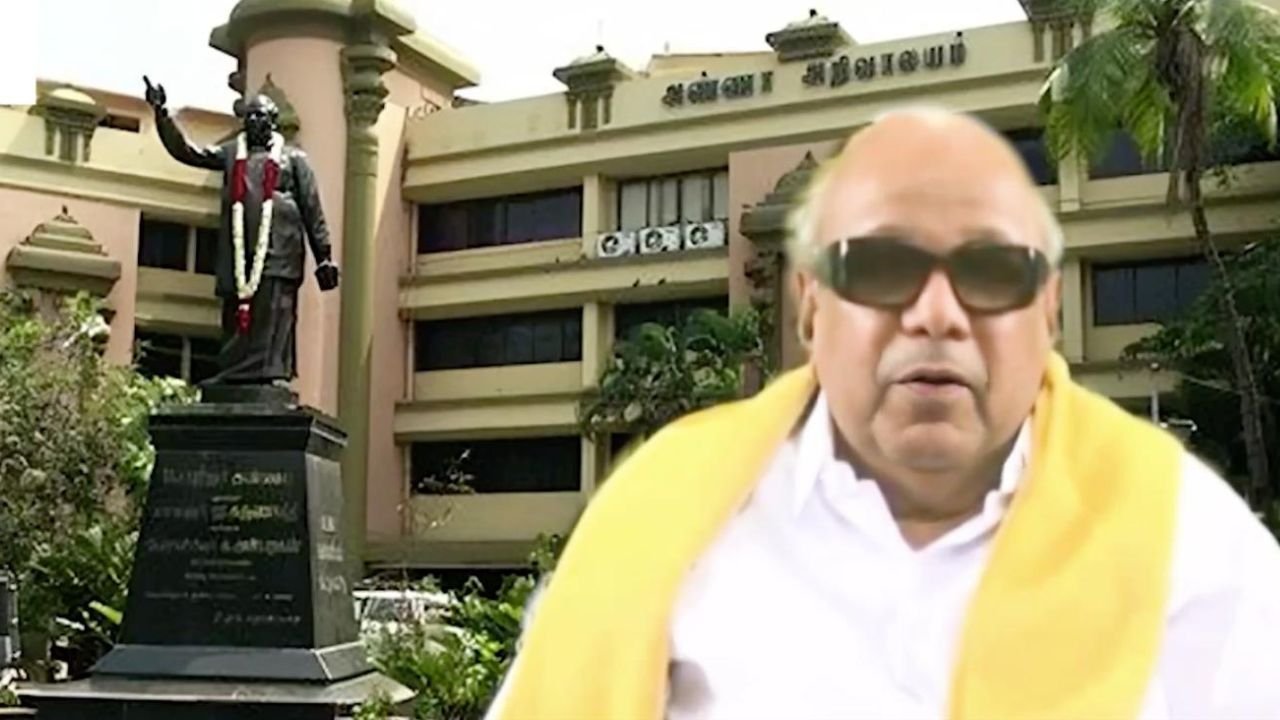
  • Dead politicians come back to life for Indian elections

    Dead politicians come back to life for Indian elections

    Dead Indian politicians are coming back to life with the help of artificial intelligence as the election is around the corner in the country.

    As election campaigns are underway, certain political contenders are resorting to resurrecting dead politicians to appeal to the public. In January, M Karunanidhi, Indian writer and politician, made an appearance during a live assembly via projected screen, and congratulated his “82-year-old friend and fellow politician” TR Baalu on the launch of his autobiographical book.

    Karunanidhi, who died in 2018, has been resurrected thrice as of yet.

    Deep fake speeches have also been used to highlight his son’s achievements, MK Stalin, who is leading the Dravida Munnetra Kazhagam (DMK) party.

    This development raises profound questions about the ethical and legal implications of using AI to resurrect deceased individuals and ascribe opinions to them.

    The decision to utilise AI for elections has multiple downsides such as lack of authenticity, ethics etc.

  • AI giants to unveil pact to fight political deepfakes in year of crucial elections worldwide

    AI giants to unveil pact to fight political deepfakes in year of crucial elections worldwide

    Tech giants including Meta, Microsoft, Google and OpenAI are working on a pact to jointly crack down on AI content intended to deceive voters ahead of crucial elections around the world this year, companies involved said Tuesday.

    Currently under negotiation by the companies, this so-called “accord” on deepfakes and other dangerous content is set to be announced during the Munich Security conference on Friday.

    “In a critical year for global elections, technology companies are working on an accord to combat the deceptive use of AI targeted at voters,” a spokesperson for Meta said in an emailed statement to AFP on Tuesday.

    “Adobe, Google, Meta, Microsoft, OpenAI, TikTok and others are working jointly toward progress on this shared objective,” the statement added.

    According to the Washington Post, which first reported the existence of the project, the companies will agree to develop ways to identify, label and control AI-generated images, videos and audio that aim to deceive voters.

    The idea comes as big tech companies are under considerable pressure over fears that AI-powered applications could be misused in a pivotal election year.

    Meta, Google and OpenAI have already agreed to use a common watermarking standard that would tag images generated by their AI applications, such as OpenAI’s ChatGPT, Microsoft’s Copilot or Google’s Gemini (formerly Bard).

    Recent examples of convincing AI deepfakes have only heightened worries about the easily accessible technology.

    Last month, a robocall impersonation of US President Joe Biden pushed out to tens of thousands of voters urged people to not cast ballots in the New Hampshire primary.

    In Pakistan, the party of former prime minister Imran Khan has used AI to generate speeches from their jailed leader.