Tag: #ElectionCommision

  • Karachi police faces severe shortage of security personnel ahead of General Elections

    Karachi police faces severe shortage of security personnel ahead of General Elections

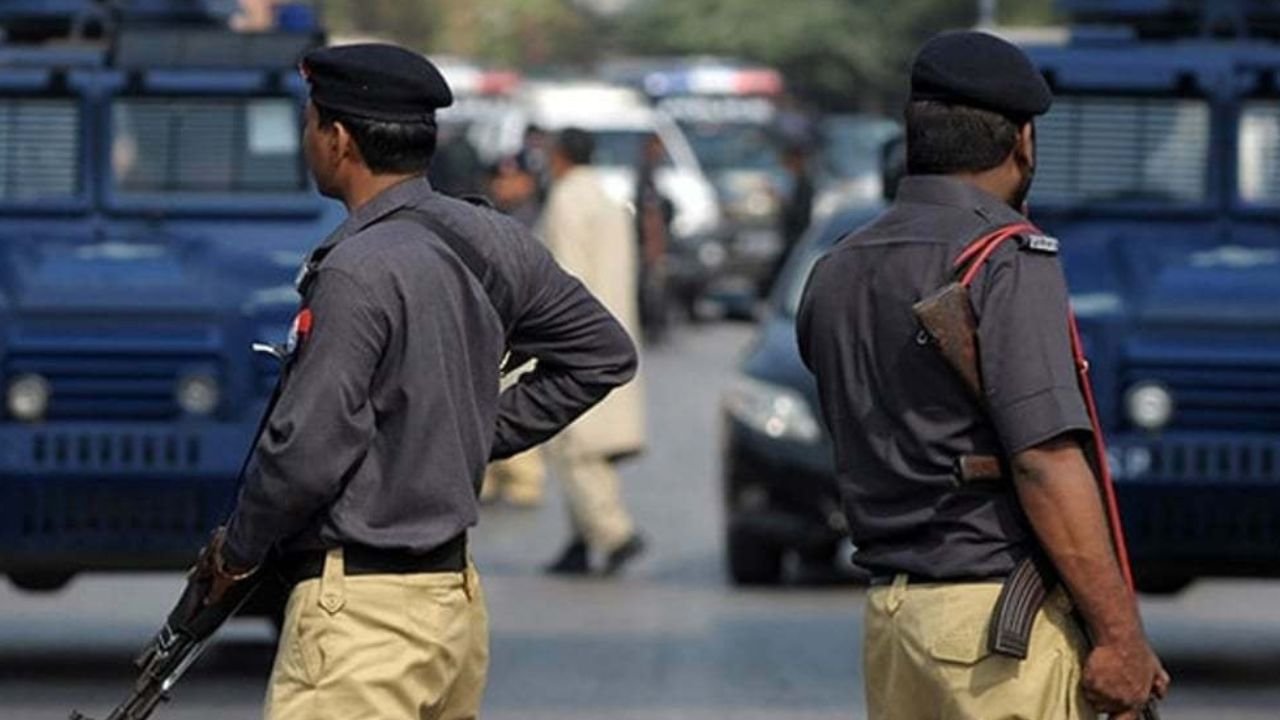
    As the nation braces for the upcoming general elections, Karachi police is facing a substantial shortage of 14,300 security personnel, including female officers.

    As per The News, Khadim Hussain Rind, the additional inspector general (AIG) of Karachi, revealed that the city’s police force had initiated robust security arrangements for the elections scheduled for February 8.

    However, he underscored the significant shortfall in required personnel.

    “Over 46,076 police personnel are needed for the election security plan, while Karachi Police have only 31,776. The required number of female police personnel is also not available,” said the AIG.

    He elaborated on the specific needs for female personnel, highlighting, “At least 3,200 female personnel are required for security arrangements at women’s polling stations while we have 1,200 female personnel. The KPO faces a shortage of 2,000 lady cops.”

    As per the security plan, eight police personnel are required for the most sensitive, six for sensitive and four for normal polling stations each. In Karachi, there are 2,033 most sensitive stations, 3,008 sensitive stations, and 308 polling stations are declared normal, while 16,264, 18,048, and 1,232 personnel respectively are required for them.

    Rind disclosed that 35,544 personnel would be assigned to duty at 5,349 polling stations in the megacity.

    Additionally, a quick response force is set to be deployed at polling stations, with 3,892 personnel assigned to 2,774 buildings. Furthermore, 4,210 police officers will be placed on reserve duty under the supervision of the Deputy Inspector General (DIG), accompanied by nine Senior Superintendents of Police (SSPs), 16 Superintendents of Police (SPs), 57 Deputy Superintendents of Police (DSPs), and 107 Station House Officers (SHOs).

    The AIG outlined plans to allocate 2,430 personnel for various election commission offices, welfare duties, hospitals, and miscellaneous tasks.

    However, he emphasized the glaring shortage of 14,300 police personnel and revealed that multiple options were under consideration to address this gap. Possibilities include deploying lady health workers, and polio staff, or hiring private security guards, anti-encroachment, excise police, anti-corruption, or forest department personnel to bolster the existing security measures.

    As the elections draw near, efforts are underway to mitigate the shortfall and ensure the safety and integrity of the electoral process in Karachi.
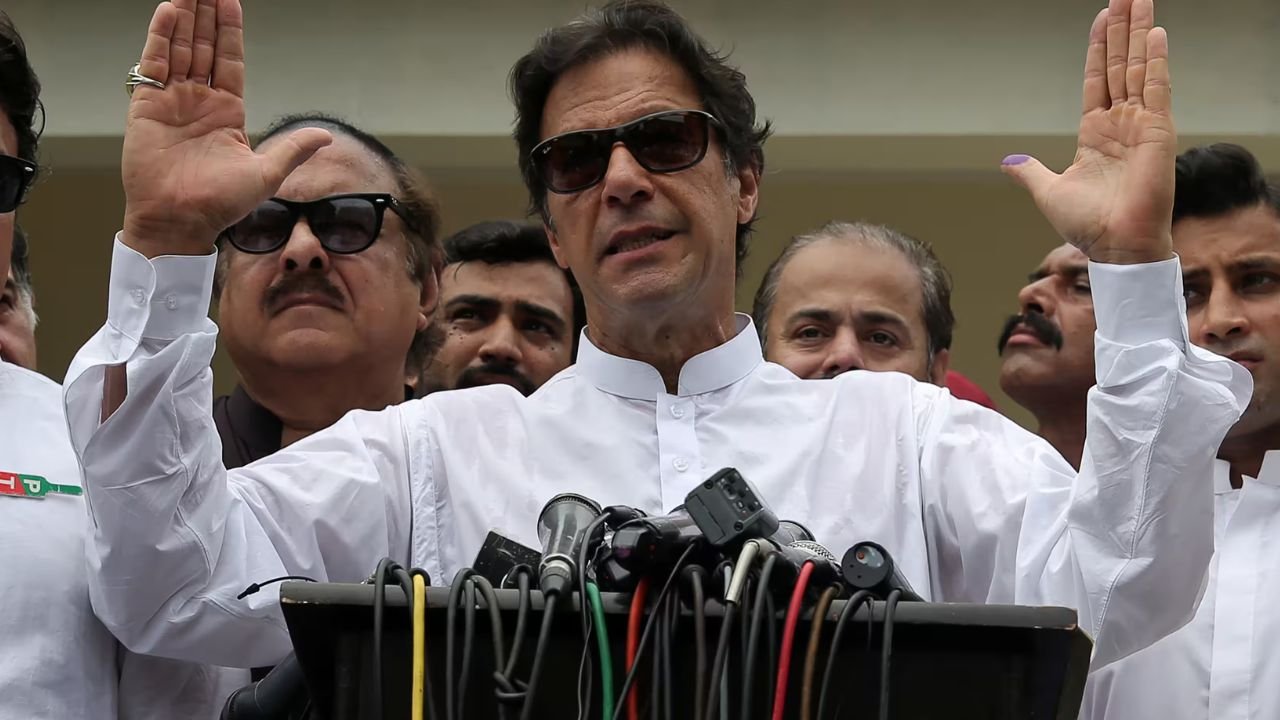
  • Imran Khan casts doubt on election legitimacy in an article written from jail

    Imran Khan casts doubt on election legitimacy in an article written from jail

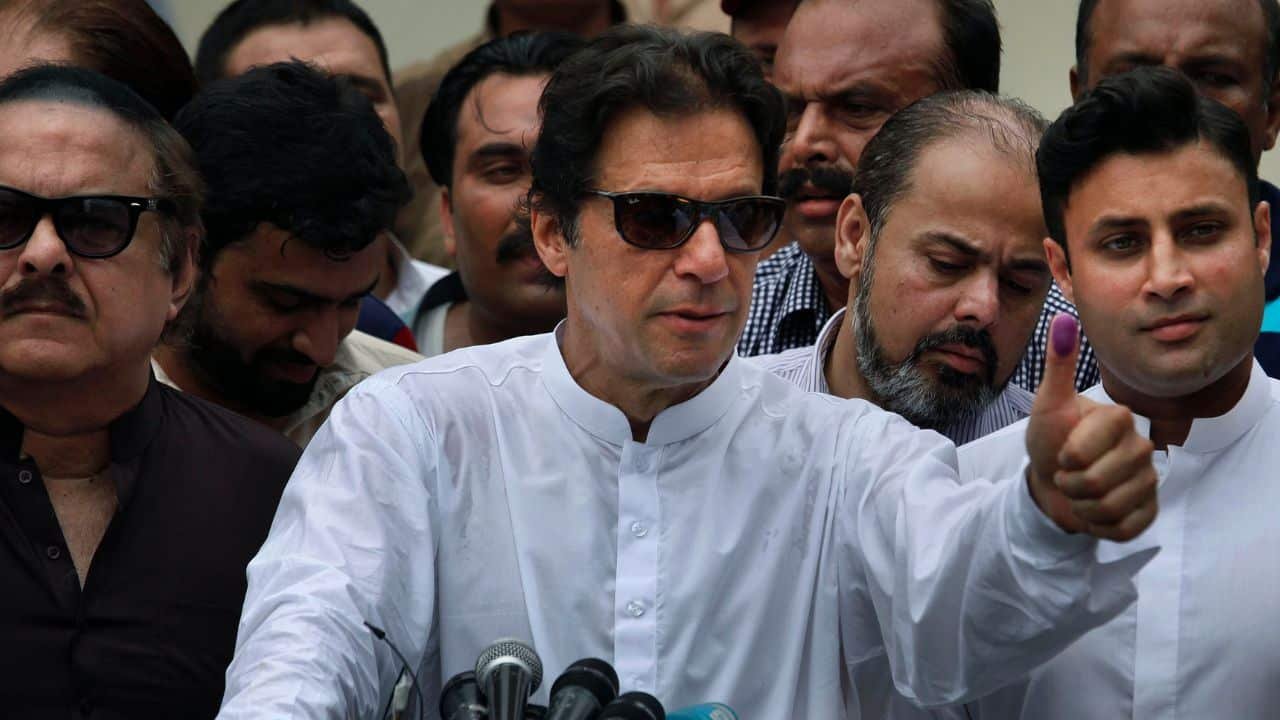
    In a recent article for The Economist, Imran Khan, the founder and former chairman of Pakistan Tehreek-e-Insaf (PTI), currently incarcerated, has expressed apprehensions about the legitimacy of the upcoming elections in Pakistan.

    Khan argues that the caretaker governments in place at both the federal and provincial levels are constitutionally illegal due to their failure to hold elections within 90 days of dissolving parliamentary assemblies.

    While the public is anticipating elections on February 8, Khan, who has faced various challenges since a vote of no confidence in April 2022, raises skepticism about the electoral process.

    He points to the election commission’s actions, which he claims include defying the Supreme Court, rejecting PTI nominations, hindering internal party elections, and initiating contempt cases against PTI leaders for criticizing the commission.

    “The country’s election commission has been tainted by its bizarre actions. Not only has it defied the top court but it has also rejected my Pakistan Tehreek-e-Insaf (PTI) party’s nominations for first-choice candidates, hindered the party’s internal elections and launched contempt cases against me and other PTI leaders for simply criticising the commission,” he wrote.

    Khan contends that since his government’s removal, orchestrated by what he terms as “the establishment”—comprising the army, security agencies, and civil bureaucracy—the playing field for PTI has been anything but level. He alleges external interference, specifically from the United States, citing a State Department message urging his removal from the prime minister’s seat.

    Despite subsequent protests and electoral victories in by-elections, Khan argues that the administration that replaced his government led to economic downturns, inflation, and currency devaluation within 18 months. He emphasizes the contrast between PTI’s governance, which garnered international praise, and the subsequent administration’s economic performance.

    Khan claims that various measures have been taken to sideline him politically, including assassination attempts, abductions of party members, and legal harassment. Despite facing nearly 200 legal cases and being denied a normal trial, Khan states that PTI remains popular, with a 66 per cent approval rating, according to a recent poll.

    The former prime minister also raises concerns about the return of Nawaz Sharif, a convicted former prime minister, speculating that Sharif may have struck a deal with the establishment for support in the upcoming elections.

    Khan, who remains incarcerated on charges including treason, expresses doubt about the fairness of the electoral process, claiming that PTI is being denied its basic right to campaign.

    He concludes by advocating for fair and free elections, “The only viable way forward for Pakistan is fair and free elections, which would bring back political stability and rule of law, as well as ushering in desperately needed reforms by a democratic government with a popular mandate. There is no other way for Pakistan to disentangle itself from the crises confronting it. Unfortunately, with democracy under siege, we are heading in the opposite direction on all these fronts.”

    The Economist added an Editor’s Note stating, “The Pakistani government and the U.S. State Department deny Khan’s allegations of American interference, and Khan faces charges under the Official Secrets Act.”

  • Imran Khan kitnay ameer hain?

    Imran Khan kitnay ameer hain?

    It’s that time of the electoral season when we find out just how rich are the people who rule us.

    Financial details in nomination papers reveal a noteworthy surge in the assets of former Prime Minister and founding Chairman of Pakistan Tehreek-e-Insaf (PTI) Imran Khan, a rise of a whopping Rs277 million over the past five years.

    According to the documents, Imran Khan’s assets, which were valued at Rs38.694 million in 2018, have now exceeded Rs315.95 million as per the nomination papers submitted for the upcoming elections in 2023.

    Imran Khan has made public the possession of a seven kanal eight marla house in Zaman Park, Lahore, with an associated construction expenditure of more than Rs48.6 million.

    At the same time, the PTI founder also owns another piece of land in Islamabad, much smaller in size though – six kanals and 16 marlas- with a stated market value of over Rs 5 million.

    Additionally, he has disclosed ownership of a 300-kanal land in Bani Gala received as a gift.

    Notably, the former PTI chairman does not own any vehicles, as indicated in his documents.

    Other assets in Islamabad include a Rs120m shop and a two-bed apartment which has been priced at Rs34m.

    According to the documents, the items bought from Toshakhana – the infamous pieces that resulted in a case and disqualification – are valued at over Rs11.8m.

    On the other hand, the PTI founding chairman says his wife – Bushra Bibi – is the owner of 698 kanal in Deepalpur and Pakpattan besides another three-kanal house located at Banigala.

    The financial trajectory showcases a substantial increase in Imran Khan’s wealth.

    He mentioned the value of his assets at Rs38.694m in the 2018 general elections’ nomination papers, which has now reached Rs315.95m, representing a massive jump, out which over Rs60m are in cash deposited with different banks of Islamabad.

    In 2021, he declared assets valued at over Rs141 million to the Federal Board of Revenue, which further rose to over Rs320 million in 2022.

    The Federal Board of Revenue (FBR) certificate attached to his nomination papers for the upcoming elections in 2023 verifies that the current value of Imran Khan’s assets is over Rs315.9 million.

    This revelation holds significance as Imran Khan, the jailed former Prime Minister, gears up to contest the upcoming elections. The submitted details to the Election Commission of Pakistan (ECP) depict a considerable financial evolution over the specified five-year period.

  • Murad Saeed’s papers rejected; Imran Khan to pay two lac fine

    Murad Saeed’s papers rejected; Imran Khan to pay two lac fine

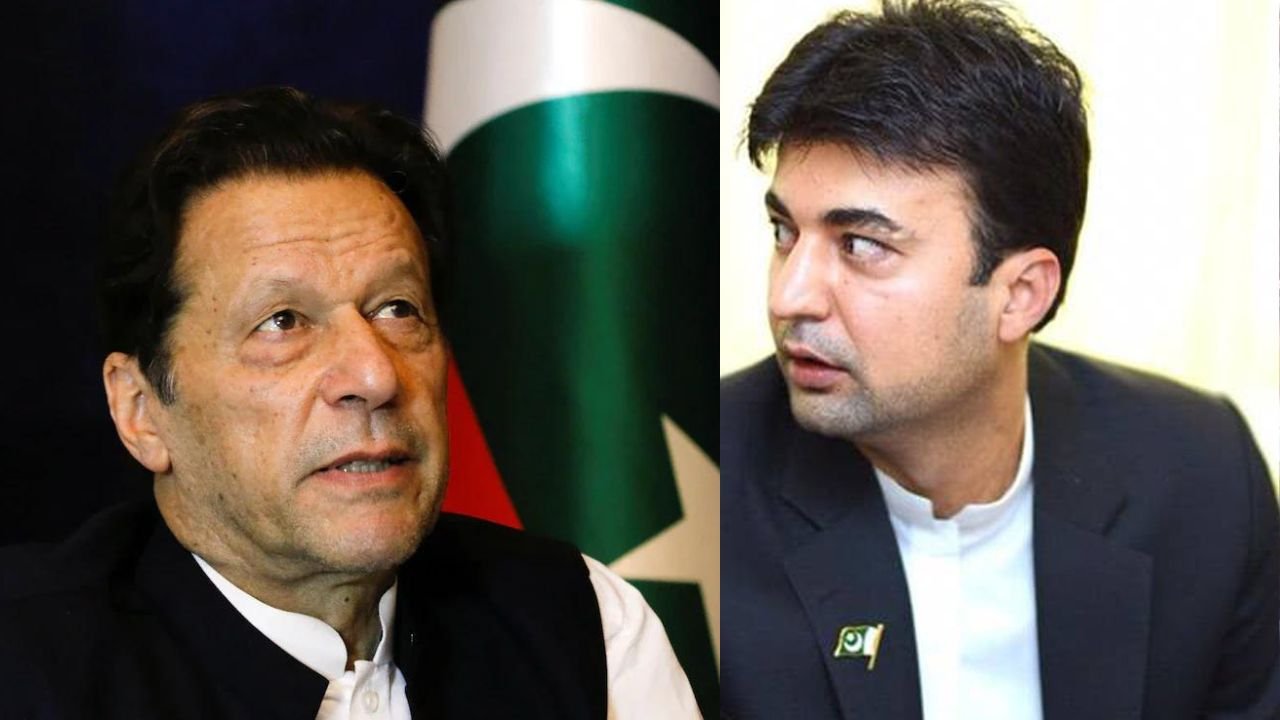
    The Returning Officer (RO) for NA-4 on Friday rejected the nomination papers of Pakistan Tehreek-e-Insaf (PTI) leader Murad Saeed as the candidate was on the absconder’s list.

    Murad Saeed has been absconding since the May 9 incidents.

    PTI’s lawyer has said that he has completed all the documents required by the Election Commission of Pakistan (ECP) and will appeal against the verdict in Peshawar High Court (PHC).

    Meanwhile, the Provincial election commissioner in Khyber Pakhtunkhwa has directed returning officers across different districts to recover unpaid fines from various political leaders, including former Prime Minister Imran Khan, as per Dawn.

    These fines, imposed by the Election Commission of Pakistan (ECP), are under scrutiny as part of the nomination paper review process for the upcoming February 8 elections.

    A letter dated December 28, issued by the provincial election commissioner and obtained by Dawn.com, reveals that a total of 62 political figures from Khyber Pakhtunkhwa (KP) and Punjab have outstanding fines ranging from Rs5,000 to Rs50,000.

    The fines are linked to violations committed during election campaigns, with the severity of the violations determining the penalty amount.

    According to the letter, Imran Khan faces a substantial debt of Rs200,000 to the ECP, making him the highest debtor on the list.

    The former premier allegedly committed four separate violations in March 2022, each resulting in a fine of Rs50,000. Notably, these violations occurred just a month before Imran Khan’s removal through a parliamentary vote.

    Other prominent figures on the list include former Chief Minister of KP Mahmood Khan, who owes Rs150,000 for three violations, and ex-federal minister Murad Saeed, facing a fine of Rs100,000 for two violations.

    Several members of the Pakistan Tehreek-e-Insaf (PTI) and Jamiat Ulema-e-Islam (JUI-P) are also included, with outstanding amounts ranging from Rs50,000.

    The ECP letter states, “Candidates and public office holders [in the past] violated the code of conduct during election campaigns of various previous elections… fines were imposed upon them under Section 234 sub-section (3) of the Election Act 2017.”

    It further notes that some individuals failed to deposit the fines and others filed appeals that were rejected by the ECP.

    The competent authority has directed returning officers to share the list of defaulters and ensure the recovery of unpaid fines during the scrutiny of nomination papers. The deadline for scrutinizing nomination papers is December 30, with the process commencing on December 24.

    The Election Commission of Pakistan (ECP) said on Friday that it will display the final list of the candidates’ list on January 23 (Tuesday).

    According to the electoral watchdog, the candidates will be able to withdraw their nomination papers until Monday, January 22.

    The ECP is expected to display the candidate list on January 20. The appellate tribunals will decide on the appeals until January 19.

    The appeals against RO’s verdict on the special seats can be filed until January 16.

    The electoral watchdog had revised the election schedule for the special seats. The scrutiny of the nomination papers of women and minorities candidates will continue until January 13.

  • PPP doesn’t believe in political adjustments, says Nayyar Bokhari

    PPP doesn’t believe in political adjustments, says Nayyar Bokhari

    The Pakistan People’s Party (PPP) has said that it is dedicated to the welfare of the people rather than engaging in political or electoral accommodations, stated Syed Nayyar Hussain Bokhari, Secretary General of the party.

    Bokhari asserted that the assurance of national prosperity and the prerequisite for national development is rooted in economic stability and political stability, as per The News.

    “For the sake of the state and democracy, the party that gives the charter of democracy will give the charter of economy to ensure prosperity, development and employment for the people of Pakistan,” he said in a statement on Sunday.
    Bokhari expressed confidence in the PPP’s success, emphasizing their commitment to a manifesto centered around national development, prosperity, and performance.

    “As in the past, in 2024, workers, farmers and women will also bring unprecedented plans for prosperity,” he said.
    The senior politician said the leaders and followers of Shaheed Zulfikar Ali Bhutto and Shaheed Benazir Bhutto are expressing full solidarity with the candidates of the PPP.

    Bokhari emphasized that the economic stability would be fostered through the supremacy of the Constitution, ensuring equality and equal rights within a democratic system.