Tag: elections

  • Political stability cannot be achieved with rigged elections, says Shahid Khaqan Abbasi

    Political stability cannot be achieved with rigged elections, says Shahid Khaqan Abbasi

    The Awam Pakistan (AP) party convener, Shahid Khaqan Abbasi, has stated that political stability cannot be achieved in a country with rigged elections.

    “Every system in the world has been tried in this country, and now it’s time to turn to the Constitution,” the former Prime Minister said during the launch of the ‘Foundation and Vision Document’ event for the (AP) manifesto.

    “The country doesn’t function because no one adheres to their oaths,” he opined.
    While talking about the economy, he noted, “The state of the economy today is the same as it was ten years ago.”
    Abbasi mentioned that Independent Power Producers (IPPs) might be an issue, but the real problem is the economy’s failure.
    Former finance minister Miftah Ismail was also present at the event. He said the National Finance Commission (NFC) Award should be reviewed.

    “The government is providing Rs 109 billion to cover the losses of the railways. We bear these losses because the railways operate for the benefit of its employees and officers, not for the public,” he added

  • ECP issues notice to 12 parties for not allocating five percent tickets to women

    ECP issues notice to 12 parties for not allocating five percent tickets to women

    The Election Commission of Pakistan (ECP) has issued notices to 12 political parties, including Jamaat-e-Islami and Awami National Party, for failing to allocate five per cent of general seat tickets to women in the general elections.

    A hearing regarding the implementation of Section 206 of the Election Act has been scheduled for July 25 by the Election Commission.

    The Election Commission has specifically issued notices to Akhtar Mengal of Balochistan National Party, Saad Rizvi of Tehreek-e-Labeek, and Asfandyar Wali of ANP.

    Additionally, notices were served to Hafiz Naeem-ur-Rehman of Jamaat-e-Islami and Khurram Nawaz Gandapur of Pakistan Awami Tehreek.

    The Election Commission is set to hear the case on July 25.

  • In historic first, Mexicans expected to elect woman president

    In historic first, Mexicans expected to elect woman president

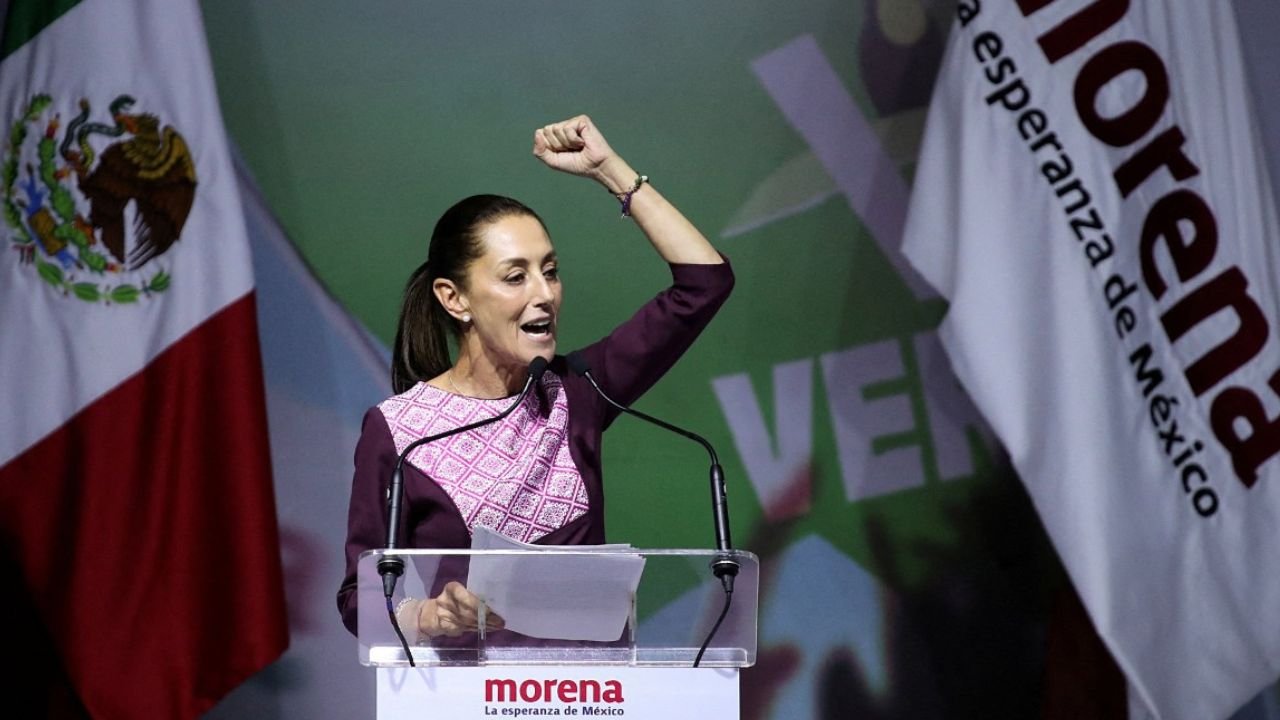
    Millions of Mexicans are expected to vote for their first woman president in a landmark election Sunday, following a long and sometimes acrimonious race overshadowed by soaring political violence.

    In a watershed for a country with a long history of gender discrimination, two women have dominated the contest to lead the world’s most populous Spanish-speaking country.

    Addressing a cheering crowd of thousands at her closing campaign rally, ruling party candidate Claudia Sheinbaum said Mexico was going to “make history” this weekend.

    “I say to the young women, to all the women of Mexico — colleagues, friends, sisters, daughters, mothers and grandmothers — you are not alone,” the 61-year-old said.

    Her vow to champion women’s rights was music to the ears of Evelyn Trasvina.

    “I’m very excited,” said the 42-year-old accountant from western Mexico.

    “Many people have been lifted out of poverty and one of the promises is the recognition of women’s unpaid work,” she told AFP.

    Sheinbaum, a former Mexico City mayor and a scientist by training, was leading her main opposition rival Xochitl Galvez, also 61, by around 17 points in opinion polls days before the election.

    Nearly 100 million people are registered to vote in the country of 129 million, and 61-year-old housewife Rosa Maria Miranda said that criminal violence meant Galvez would get her support.

    “We women are fed up. We’re afraid to go out into the streets,” she said.

    The campaign season ended on a tragic note Wednesday when a gunman shot dead an aspiring mayor in the southern state of Guerrero.

    The attack brought the number of local politicians who have been murdered to at least 24 during what has been a particularly violent electoral process, according to official figures.

    Some non-governmental organizations have reported an even higher toll, including Data Civica, which has counted around 30 killings.

    Sheinbaum has pledged to continue outgoing President Andres Manuel Lopez Obrador’s controversial “hugs not bullets” strategy of tackling crime at its roots.

    Galvez, meanwhile, promised a tougher approach to cartel-related violence.

    “You will have the bravest president, a president who does confront crime,” the outspoken senator and businesswoman with Indigenous roots told her closing rally in the northern city of Monterrey.

    She accused Lopez Obrador of implementing “a security strategy where hugs have been for criminals and bullets for citizens.”

    Sheinbaum owes much of her popularity to Lopez Obrador, a close ally who has an approval rating of more than 60 percent but is only allowed to serve one term.

    It is almost a year since the contest for the ruling party nomination got underway, with Sheinbaum crisscrossing the country to meet supporters.

    The ruling party candidate had the backing of 53 percent of voters as campaigning drew to a close, according to a poll average compiled by research firm Oraculus.

    Galvez, who lashed out at her main rival in a series of televised presidential debates, calling her an “ice lady” and “narco-candidate,” was second with 36 percent.

    The only man running, 38-year-old centrist Jorge Alvarez Maynez, had just 11 percent.

    Tackling the cartel violence that makes murder and kidnapping a daily occurrence in Mexico will be among the major challenges facing the next leader, along with managing migration and delicate relations with the neighboring United States.

    More than 450,000 people have been murdered and tens of thousands have gone missing since the government deployed the army to fight drug trafficking in 2006.

    While Mexican women enjoy growing success in politics and business, gender violence remains a major problem in a country where around 10 women are murdered every day.

    And while millions of Mexicans have escaped poverty in recent years, more than a third still live below the poverty line, according to official figures.

    As well as voting for a new president, Mexicans will choose members of Congress, several state governors and myriad local officials. In total, more than 20,000 positions are being contested.
  • After Raisi’s funeral, Iran’s focus turns to vote for successor

    After Raisi’s funeral, Iran’s focus turns to vote for successor

    After Iran mourned President Ebrahim Raisi, who died in a recent helicopter crash, the nation’s focus turns to an election next month for his successor, with the conservative camp seeking support from Ayatollah Ali Khamenei.

    The lead-up to the early vote on June 28 has opened up the field to a broad range of hopefuls from all political parties. The big question for them is how many candidacies will survive the vetting process in the Islamic republic.

    President Raisi, who had more than a year left of his first term, died on May 19 alongside his foreign minister Hossein Amir-Abdollahian and six others when their helicopter crashed into a fog-shrouded mountainside.

    They were laid to rest in multi-day funeral rites drawing mass crowds of mourners.

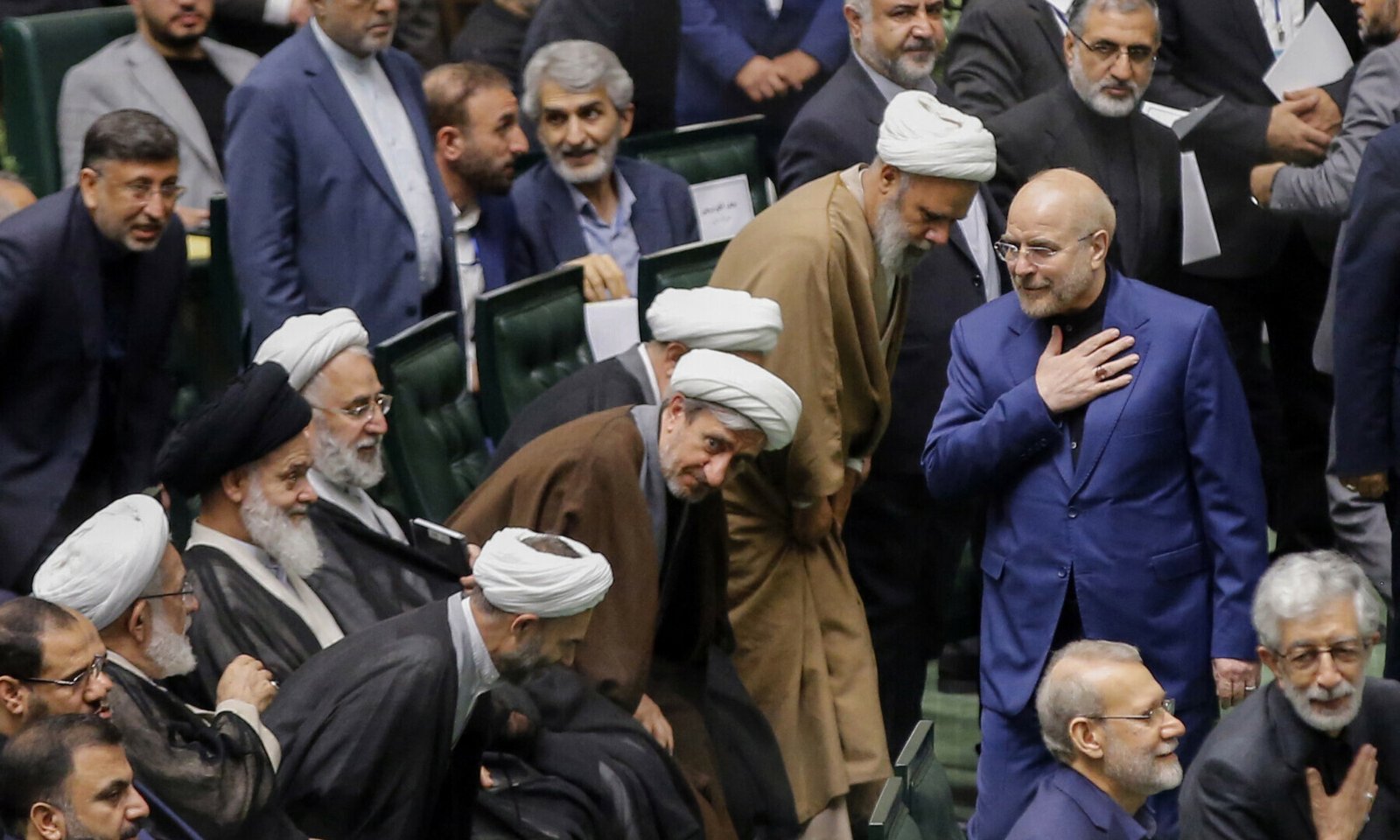
    Iran’s Parliament Speaker Mohammad Bagher Qalibaf (R) greets lawmakers during the inauguration session for the new Parliament in Tehran on May 27, 2024. — AFP

    The June vote will be held during a turbulent time, as the Gaza war rages between Israel and Hamas, and amid continued diplomatic tensions over Iran’s nuclear programme.

    Khamenei, who has the final say in all matters of state, has assigned Raisi’s vice president, Mohammad Mokhber, 68, to assume interim duties for the next few weeks and organise the June election.

    Among other hopefuls, former nuclear negotiator Saeed Jalili was one of the first to announce his candidacy.

    Other contenders include moderate former foreign minister Mohammad Javad Zarif, and centrist Ali Larijani, who served as the speaker in parliament.

    Ex-president Mahmoud Ahmadinejad has so far kept voters guessing and said he is “checking the conditions to decide whether to register”.

    Under Iran’s election process, candidates will have several days to formally register, starting on May 30.

    The final list, however, will depend on the outcome of the validation process by the conservative-dominated Guardian Council following a June 3 registration deadline.

  • Modi files candidacy for India election in Hindu holy city

    Modi files candidacy for India election in Hindu holy city

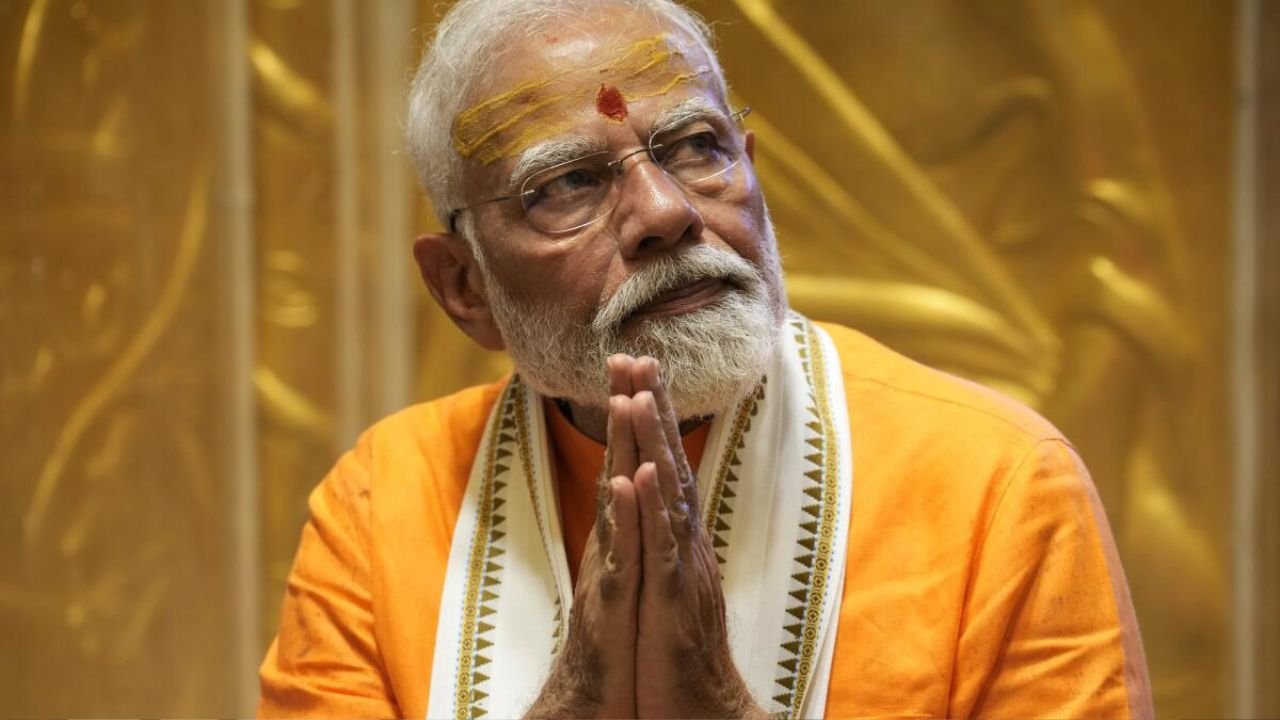
    India Prime Minister Narendra Modi on Tuesday formally submitted his candidacy to recontest the parliamentary seat for the Hindu holy city of Varanasi in a general election he is widely expected to win.

    The marathon six-week poll concludes next month, and the 73-year-old premier used the election formality as a campaign event that paid deference to the country’s majority faith.

    Varanasi is the spiritual capital of Hinduism, where devotees from around India come to cremate deceased loved ones by the Ganges river, and the premier has represented the city since sweeping to power a decade ago.

    Hundreds of supporters had gathered outside a local government office to greet Modi when he arrived to lodge his nomination.

    Footage showed the premier handing over his candidacy paperwork, flanked by a Hindu mystic.

    “It’s our good fortune that Modi represents our constituency of Varanasi,” devout Hindu and farmer Jitendra Singh Kumar, 52, told AFP while waiting for the leader to emerge.

    “He is like a God to people of Varanasi. He thinks about the country first, unlike other politicians.”

    Modi, who has made acts of religious worship a central fixture of his premiership, had spent the morning visiting temples and offering prayers at the banks of the Ganges.

    Tens of thousands of supporters had lined the streets of Varanasi to greet Modi as he arrived in the city on Monday atop a flatbed truck, waving to the crowd from atop a flatbed truck as loudspeakers blared devotional songs.

    Many along the roadside waved saffron-coloured flags bearing the emblem of his ruling Bharatiya Janata Party (BJP), throwing marigold flowers at the procession as it passed by.

    ‘Not wanted’

    Modi and the BJP are widely expected to win this year’s election, which is conducted over six weeks to ease the immense logistical burden of staging the democratic exercise in the world’s most populous country.

    Varanasi is one of the last constituencies to vote on June 1, with counting and results expected three days later.

    Since the vote began last month, Modi has made a number of strident comments against India’s 200-million-plus Muslim minority in an apparent effort to galvanise support.

    He has used public speeches to refer to Muslims as “infiltrators” and “those who have more children”, prompting condemnation from opposition politicians and complaints to India’s election commission.

    The ascent of Modi’s Hindu-nationalist politics despite India’s officially secular constitution has made the Muslims in the country increasingly anxious.

    “We are made to feel as if we are not wanted in this country,” Shauqat Mohamed, who runs a tea shop in the city, told aFP.

    “If the country’s premier speaks of us in disparaging terms, what else can we expect?” the 41-year-old added.

    “We have to accept our fate and move on.”

    abh/gle/mca

    © Agence France-Presse

  • Sanaullah says by-polls results a ‘big message’ for PTI

    Sanaullah says by-polls results a ‘big message’ for PTI

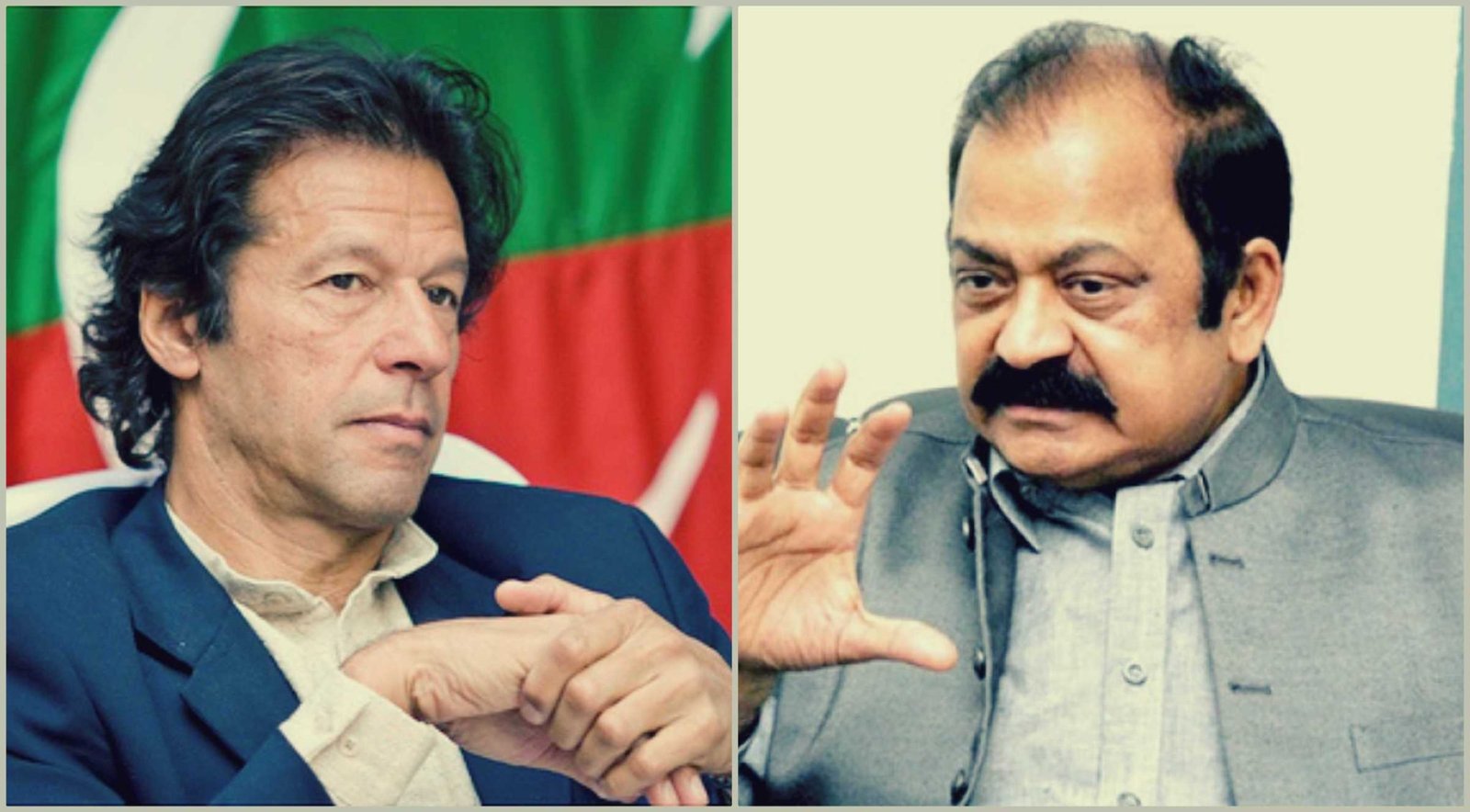
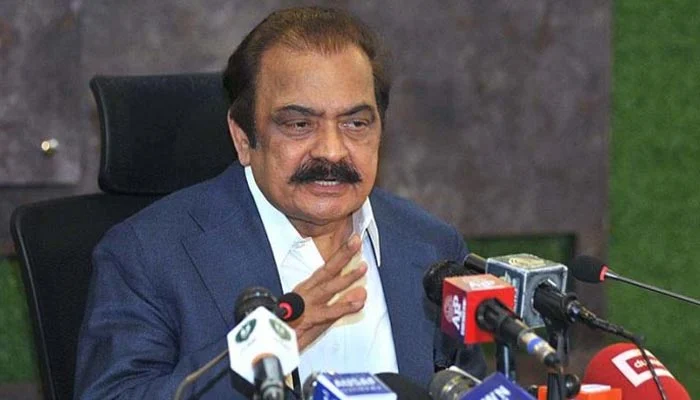
    Pakistan Muslim League-Nawaz (PML-N) senior leader Rana Sanaullah, commenting on the recent by-polls, said that the low voter turnout is a big message for Pakistan Tehreek-e-Insaf (PTI).

    “PTI voters have not come out today [during by-elections],” Sanaullah claimed while speaking on Geo News programme Naya Pakistan.

    Sanaullah also said that any complaints regarding the election process should be brought before the relevant forums.

    Stating that Nawaz Sharif-led PML-N used to raise complaints about the election results “within the system”, he said it was the former prime minister Imran Khan who always tried to “bulldoze” the system.

    Rana Sanaullah expressed satisfaction over the by-polls and opined that voter turnout is usually low in by-polls.

    Meanwhile, PTI’s leader Ali Muhammad Khan alleged that these by-polls were rigged the same way as the February 8 general elections.

    Furthermore, the PTI member expressed satisfaction with the election results of Khyber Pakhtunkhwa (KP).

  • By-polls being held across country; suspension of cellular services in ‘specific districts’

    By-polls being held across country; suspension of cellular services in ‘specific districts’

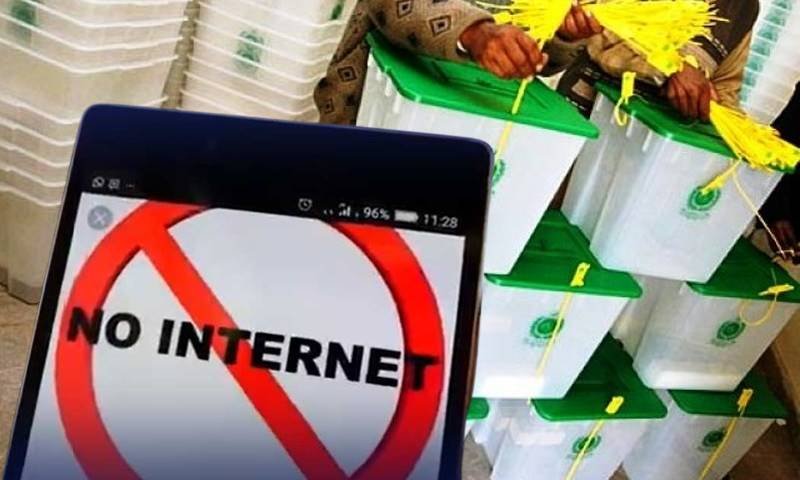
    Polling is underway, across the country, on 21 national assembly and provincial assembly seats amidst the suspension of cellular and internet services in “specific districts” of Punjab and Balochistan in order to maintain law and order situation during the electoral process.

    This is the fist major by-poll since February 8 general elections in the country. The polling started at 8am and will end at 5pm today without any delays.

    The elections are being held on five NA seats, 12 Punjab Assembly seats, two each in Khyber Pakhtunkhwa and Balochistan Assemblies and one in Sindh Assembly.

    The PTA said the decision had been taken on the directives of the interior ministry to “safeguard the integrity and security of the electoral process”.

    It should be noted that cellular and internet services were suspended throughout the country during the February 8 elections as well.

    And access to social media website X, formerly Twitter, has also been blocked since February 17 this year.

  • Jobs and rights on young voters’ minds for India polls

    Jobs and rights on young voters’ minds for India polls

    New Delhi, India – Around 130 million young adults aged 18 to 22 will be newly eligible to vote in India’s national elections when polls open Friday — more people than the entire population of Mexico.

    AFP asked four first-time voters who were too young to vote in the 2019 elections about who they would support and the issues that mattered to them:

    The student

    Mumbai university student Abhishek Dhotre, 22, said he was unhappy with “the communal discord that is seen all throughout India” as a result of the government’s muscular Hindu nationalism.

    Prime Minister Narendra Modi’s government has brought India’s majority Hindu faith to the forefront of political life.

    That has left Muslims and other minorities anxious about their futures in the nominally secular country.

    Still, with India’s economy growing at a breakneck pace, overtaking former colonial ruler Britain as the world’s fifth-largest in 2022, Dhotre wants Modi and his Bharatiya Janata Party (BJP) to win again.

    “With the flow of development, infrastructure and everything that’s going on, I would prefer the current government to stay,” he told AFP.

    The software developer

    Thrishalini Dwaraknath, 20, epitomises India’s economic changes — she is about to move from Tamil Nadu to the tech hub of Bengaluru, both of them in the south, to work as a software developer.

    “I’m excited to be part of the Indian democracy and voicing my opinion for the first time,” she told AFP. “And I’m glad that my voice matters.”

    She praised Modi’s government for its achievements in office but said it needed to do more to help millions of unemployed young Indians find work.

    India’s annual GDP growth hit 8.4 percent in the December quarter, but the International Labour Organization estimated that 29 percent of the country’s young university graduates were unemployed in 2022.

    “Addressing the skill gap between students and the job market is key,” Dwaraknath said.

    The farmer

    One first-time voter who will definitely not be backing the BJP is Gurpartap Singh, 22, a wheat farmer from the northern state of Punjab.

    Farmers in Punjab were the backbone of a yearlong protest in 2021 against the Modi government’s efforts to bring market reforms into India’s agricultural sector.

    The reforms were later shelved, marking a rare political defeat for the prime minister, but farmers say their demands have still not been met.

    “So many farmers died in the protest,” Singh said. “They have not got justice.”

    Farmers are a significant voting bloc in India — hundreds of millions of people make their living from the land.

    “The government that thinks about the farmers, youth — that is the government that should come to power,” Singh said, adding that the BJP had failed that test.

    The transgender woman

    India’s 1.4 billion people encompass a vast range of backgrounds including a transgender community estimated to be several million people strong.

    The Hindu faith has many references to a “third gender”, and a 2014 Supreme Court ruling said people could be legally recognised as such.

    They nonetheless face entrenched stigma and discrimination, and Salma, a transgender Muslim woman from the Hindu holy city of Varanasi, said she did not expect that to change under another BJP government.

    “All the time this government has stayed in power, they have done nothing good for us,” said Salma, who declined to say who she would vote for.

    “We should get equal rights.”

    burs-ash/slb-gle/lb

    © Agence France-Presse

  • Rana Sanaullah says Imran Khan sentences won’t sustain

    Rana Sanaullah says Imran Khan sentences won’t sustain

    Pakistan Muslim League-Nawaz (PML-N) leader Rana Sanaullah has said that the convictions against Pakistan Tehreek-e-Insaf (PTI) founder Imran Khan before the elections damaged the ruling party PML-N.

    He stated that either of the sentences awarded to Khan would not “sustain” before an honest judge.

    “The cases in which the PTI founder was sentenced significantly damaged us [PML-N] in the elections due to the victim card used by the PTI. The manner in which the case proceedings were held and the sentences were awarded, they would not sustain before a judge who upholds principles of justice,” Sanaullah said while speaking to Kamran Shahid on Dunya News.

    Sanaullah even said that either the judge would remand back the case or could even exonerate Mr Khan and further said that his party would have no objection if he got a bail.

    Former interior minister Sanaullah was also of the opinion that PTI took advantage of its victim card and also pushed the country into a crisis – which PML-N government now has to look after.

  • Opposition parties unite to restore democracy

    Opposition parties unite to restore democracy

    Opposition parties Pakistan Tehreek-e-Insaf (PTI), Sunni Ittehad Council (SIC) Jamaat-e-Islami (JI), Pashtunkhwa Milli Awami Party (PkMAP) and a few other groups have joined hands to unite in upholding the supremacy of the Constitution and restoration of democracy in the country.

    The decision was taken in a meeting hosted by Majlis Wahdatul Muslimeen (MWM) where all parties in the capital city got together to protect the country’s Constitution and democracy from threats, their statement read.

    The meeting was attended by PTI Chairman Barrister Gohar Ali Khan, Omar Ayub, Asad Qaiser and Raoof Hasan; Pashtunkhwa Milli Awami Party’s Mahmood Khan Achakzai, Abdul Rahim Ziyaratwal, Sardar Shafiq Khan Tareen and Riaz Khan.

    Leaders of the opposition parties expressed deep grievances over the increasing involvement of establishment in politics. “The establishment’s unconstitutional political role and interference has created a terrible distance between the people and the state,” it was said.

    The meeting also underscored the significance of free and fair elections and the independence of judiciary. They categorically rejected the elections results that were changed.