Tag: elections 2024

  • Trump fined $355 mn, banned from NY business in fraud trial

    Trump fined $355 mn, banned from NY business in fraud trial

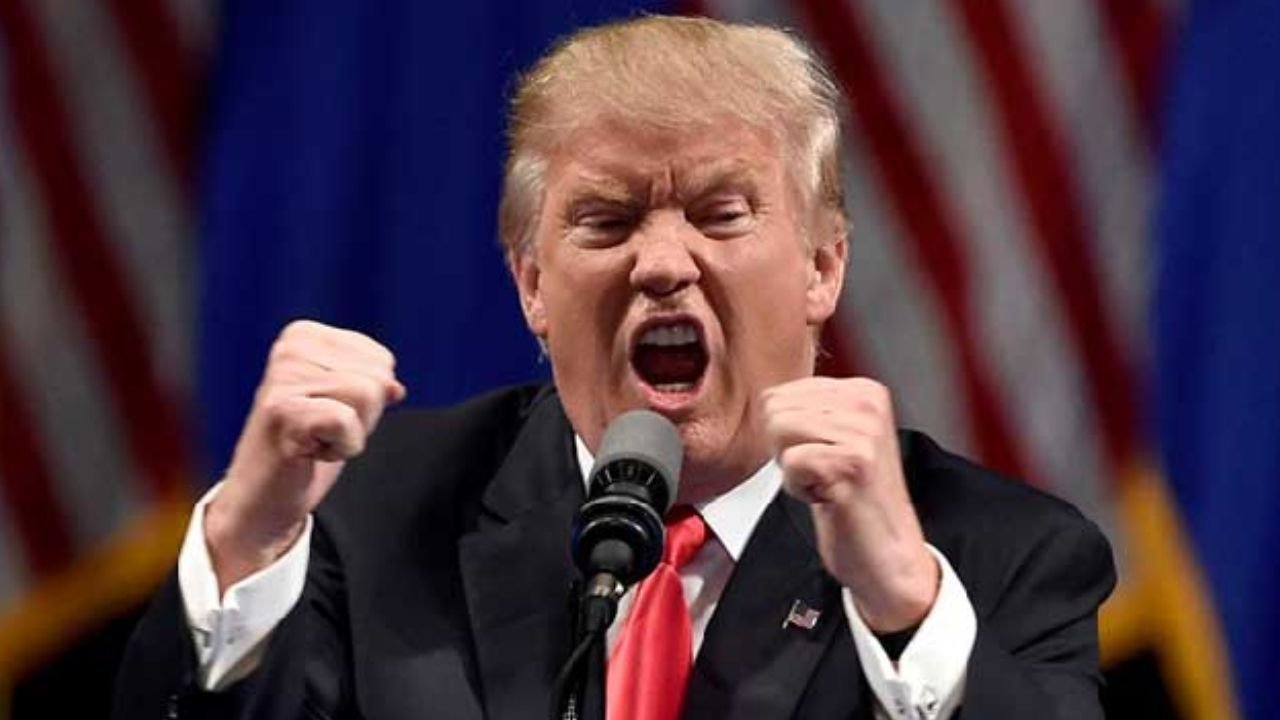
    A New York judge ordered Donald Trump to pay $355 million over fraud allegations and banned him from running companies in the state for three years Friday in a major blow to his business empire and financial standing.

    Trump — almost certain to be the Republican presidential nominee this November — was found liable for unlawfully inflating his wealth and manipulating the value of properties to obtain favorable bank loans or insurance terms.

    Trump lashed out on social media calling the ruling a “Total SHAM,” the judge in the case “crooked” and the prosecutor who brought it “totally corrupt.” His legal team said he would “of course” appeal.

    As the case was civil, not criminal, there was no threat of imprisonment. But Trump said ahead of the ruling that a ban on conducting business in New York state would be akin to a “corporate death penalty.”

    Trump, facing 91 criminal counts in other cases, has seized on his legal woes to fire up supporters and denounce his likely opponent, President Joe Biden, claiming that court cases are “just a way of hurting me in the election.”

    However, Judge Arthur Engoron said the financially shattering penalties are justified by Trump’s behavior.

    “Their complete lack of contrition and remorse borders on pathological,” Engoron said of Trump and his two sons, who were also defendants, in his scathing ruling.

    “They are accused only of inflating asset values to make more money… Donald Trump is not Bernard Madoff. Yet, defendants are incapable of admitting the error of their ways,” he added, referring to the perpetrator of a massive Ponzi scheme.

    Trump’s sons Eric and Donald Trump Jr. were also found liable in the case and ordered to pay more than $4 million each, prompting Don Jr. to claim on social media that “political beliefs” had determined the outcome.

    Engoron also extended the mandate of retired judge Barbara Jones as an independent monitor of Trump’s business affairs, as well as ordering the appointment of an independent director of compliance to the Trump Organization, with candidates to be nominated by Jones.

    “Conditions that Judge Engoron imposed, such as having Judge Jones monitor the Trump companies, may be onerous. I do expect an appeal,” said Richmond University law professor Carl Tobias.

    It was as a property developer and businessman in New York that Trump built his public profile which he used as a springboard into the entertainment industry and ultimately the presidency.

    The judge’s order was a victory for New York state Attorney General Letitia James. She had sought $370 million from Trump to remedy the advantage he is alleged to have wrongfully obtained, as well as having him barred from conducting business in the state.
  • Elections in Indonesia: Ex-general likely to win

    Elections in Indonesia: Ex-general likely to win

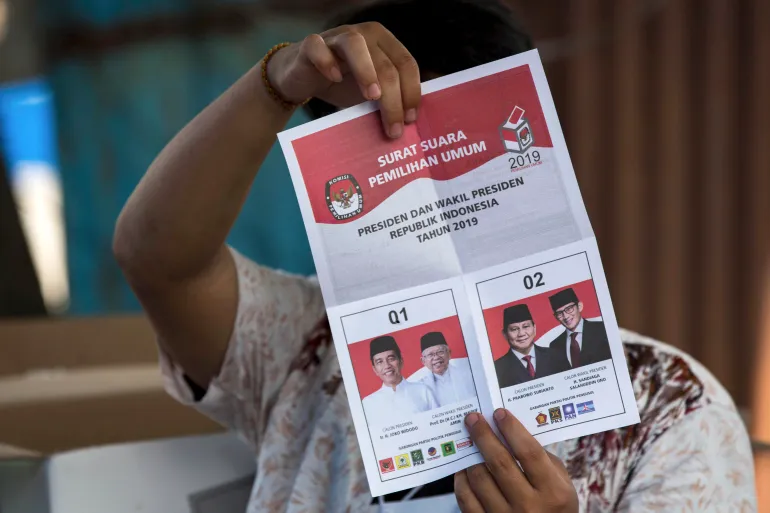
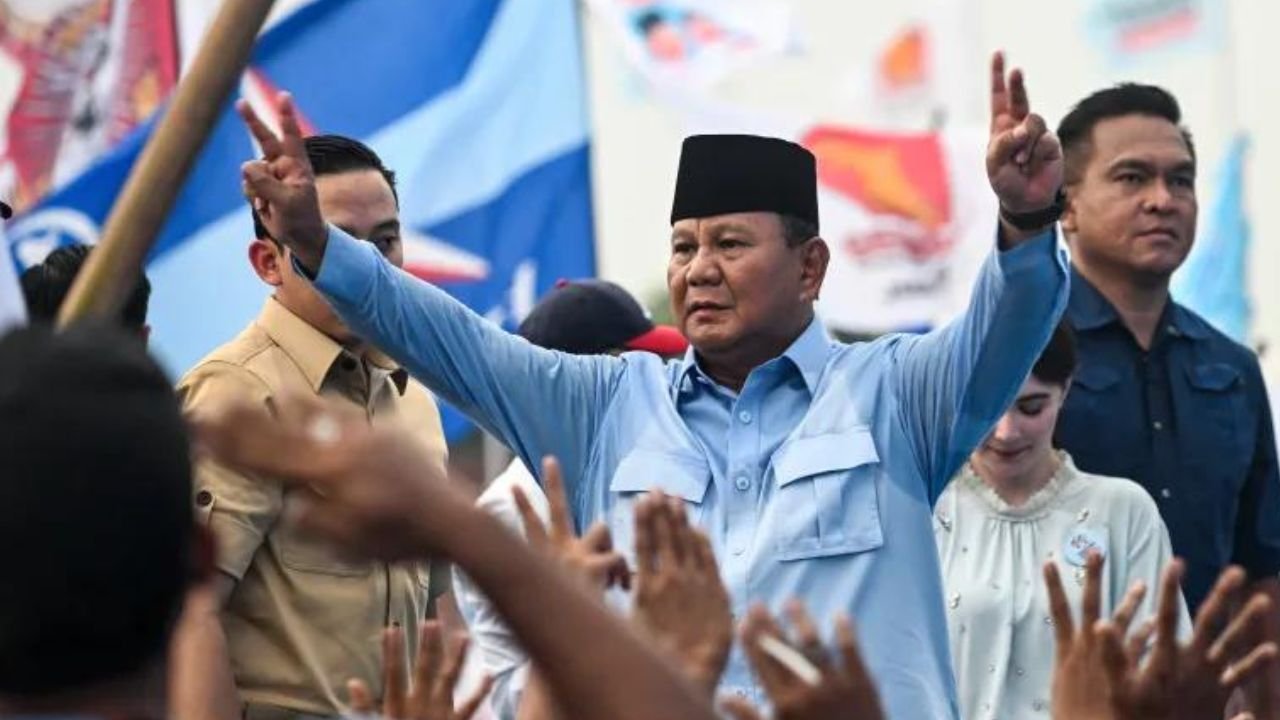
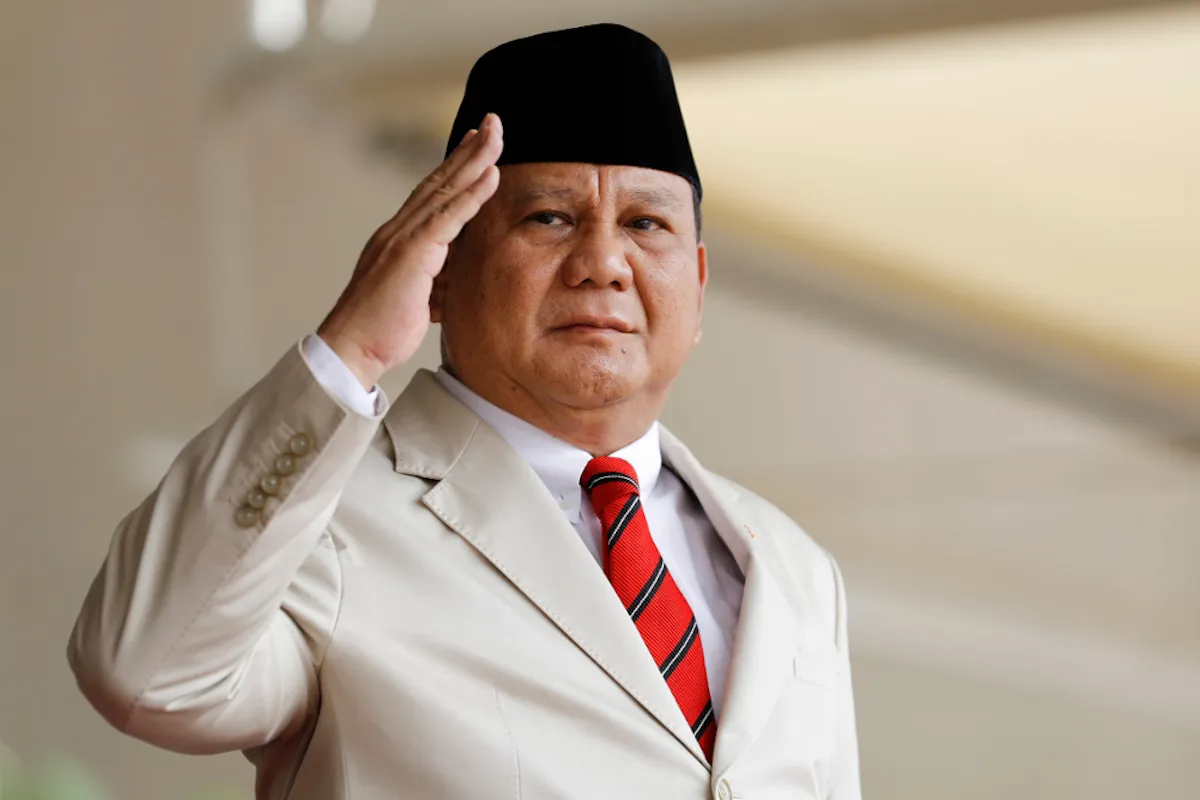
    Indonesians began voting for a new president Wednesday with Defence Minister Prabowo Subianto the frontrunner to lead Southeast Asia’s biggest economy despite concerns over his human rights record.

    Polls project Subianto, a military chief during the Suharto dictatorship a generation ago, to secure a majority and replace popular outgoing president Joko Widodo, who observers claim indirectly supported his campaign.

    The 72-year-old is the clear favourite after a campaign mixing populist rhetoric with pledges to continue the policies of Widodo, who has presided over steady economic growth but reached the constitutional two-term limit.

    “The hope is to win,” Subianto told reporters before voting in Bogor on Wednesday.

    “Come to the voting station… cast your votes according to your conscience.”

    Nearly 205 million people are eligible to vote for Subianto or his rivals, former Jakarta governor Anies Baswedan and former Central Java governor Ganjar Pranowo, in just the fifth presidential election since the end of Suharto’s dictatorship in 1998.

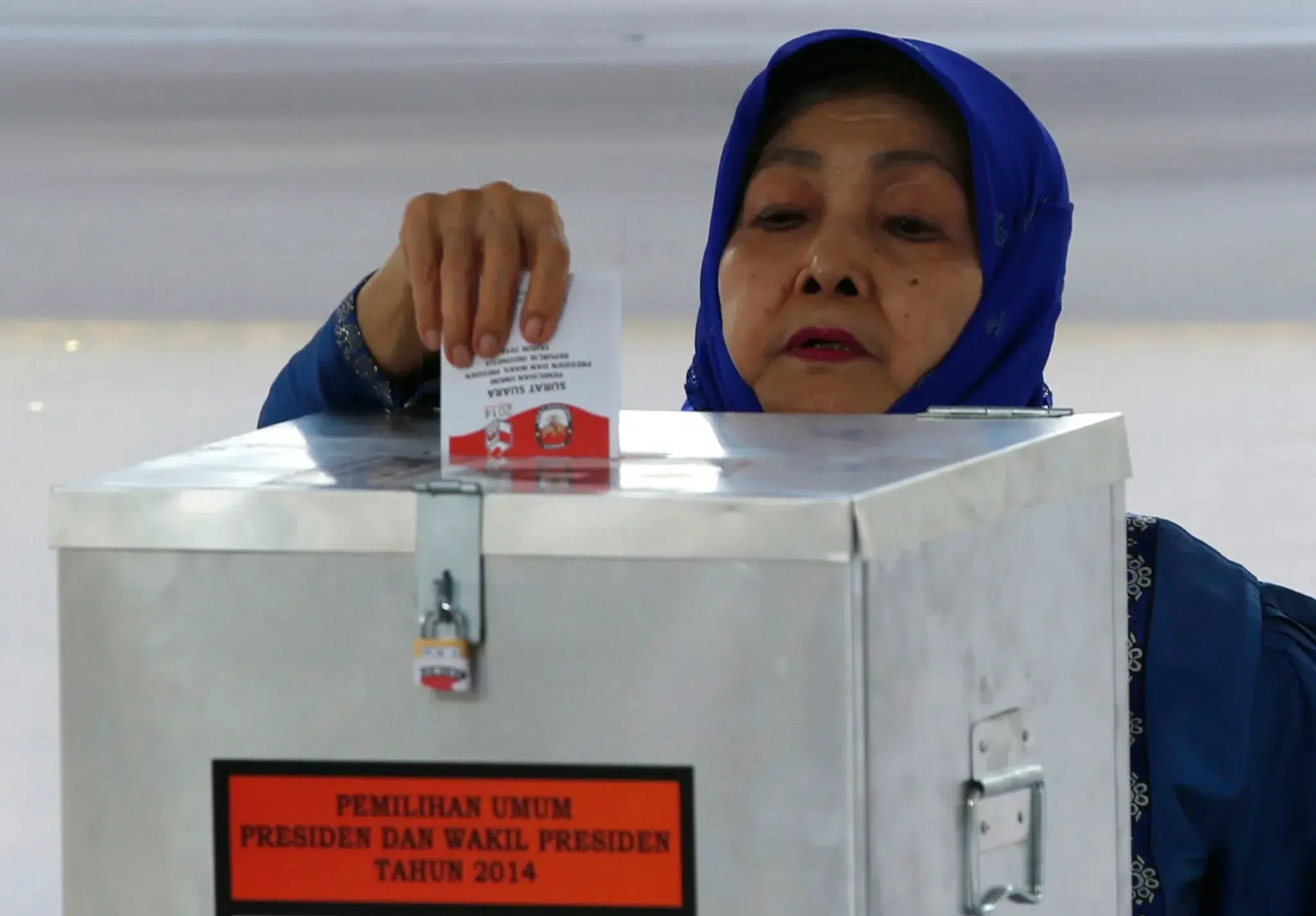
    Polling stations opened at 7:00 am (2200 GMT) in the easternmost region of Papua and were due to close at 01:00 pm (0600 GMT) at the other end of the country in jungle-clad Sumatra.

    A logistical feat involving more than 800,000 polling stations and 20,000 seats up for grabs saw planes, helicopters, speedboats and even cows used to cart ballots around the sprawling archipelago of nearly 280 million people.

    In Papua’s Timika city, officials inspected makeshift polling stations built from logs, metal sheets and palm leaves as voters arrived to eye candidate lists.

    In the capital Jakarta, a thunderstorm deluged 34 polling stations, according to the city’s disaster mitigation agency.

    Workers wearing shirts that read “not voting is not an option” relocated some stations where ballot boxes had been wrapped in plastic, while others used pumps to drain floodwater.

    Official results are not expected until March, but so-called quick counts from government-approved pollsters — shown to be reliable in the past — are expected to indicate the winner later Wednesday.

    ‘Decisive leader’

    Consultant Debbie Sianturi was one of those determined to vote.

    “I want to have a leader that will continue the democracy,” the 57-year-old said.

    Another said Subianto’s experience made him a popular candidate.

    “He has a military background, so I think he will be a decisive leader,” said Afhary Firnanda, a 28-year-old office worker in Jakarta.

    Election commissioner Idham Kholik told AFP all voters should be allowed to cast their ballots if large queues remained when polls closed.

    Subianto needs to claim more than 50 percent of the overall vote and at least a fifth of ballots cast in over half the country’s 38 provinces to secure the presidency.

    If he falls short, a second-round vote will be held in June.

    Baswedan, seen as the favourite to challenge Subianto in that event, told supporters to help ensure a fair vote in the graft-riddled country where voters dip their fingers in halal ink to prevent double voting.

    “Come back to the voting station, monitor the vote count,” he told reporters.

    Pranowo, who entered election day last in polls after once being the front-runner, said he hoped for a clean election.

    “Today is the best time for all to return to the good path of democracy,” he told reporters.

    Commitment to democracy

    Another key factor in Subianto’s popularity is having Widodo’s eldest son, 36-year-old Gibran Rakabuming Raka, as his vice presidential running mate, a move that has raised eyebrows.

    In October, Indonesia’s then-chief justice, who is Widodo’s brother-in-law, changed the rules that had barred candidates below the age of 40 from running for high office.

    Widodo enjoys near-record approval ratings after two terms of solid economic growth and relatively stable politics in the nation’s young democracy.

    However, some legal experts and rights groups have accused Widodo of improperly using government funds to support Subianto.

    Subianto and his aides have rejected accusations of impropriety.

    Subianto was dismissed from the military in 1998 over accusations he ordered the abduction of democracy activists at the end of Suharto’s rule, but he denied the accusations and was never charged.

    He has since rehabilitated his image, thanks in part to a savvy social media campaign targeting Indonesia’s youth that portrayed him as a “cuddly grandpa”.

    But rights groups have expressed alarm that he could roll back hard-won democratic freedoms, pointing to the alleged disappearances.

    “We’ve been always worried about his commitment towards democracy,” said Yoes Kenawas, a researcher at Jakarta-based Atma Jaya Catholic University.

    “If he wins, those questions will always linger.”

  • Caretaker PM Kakar angrily asks: ‘Are you saying I have cancer and it’s my last press conference?’

    Caretaker PM Kakar angrily asks: ‘Are you saying I have cancer and it’s my last press conference?’

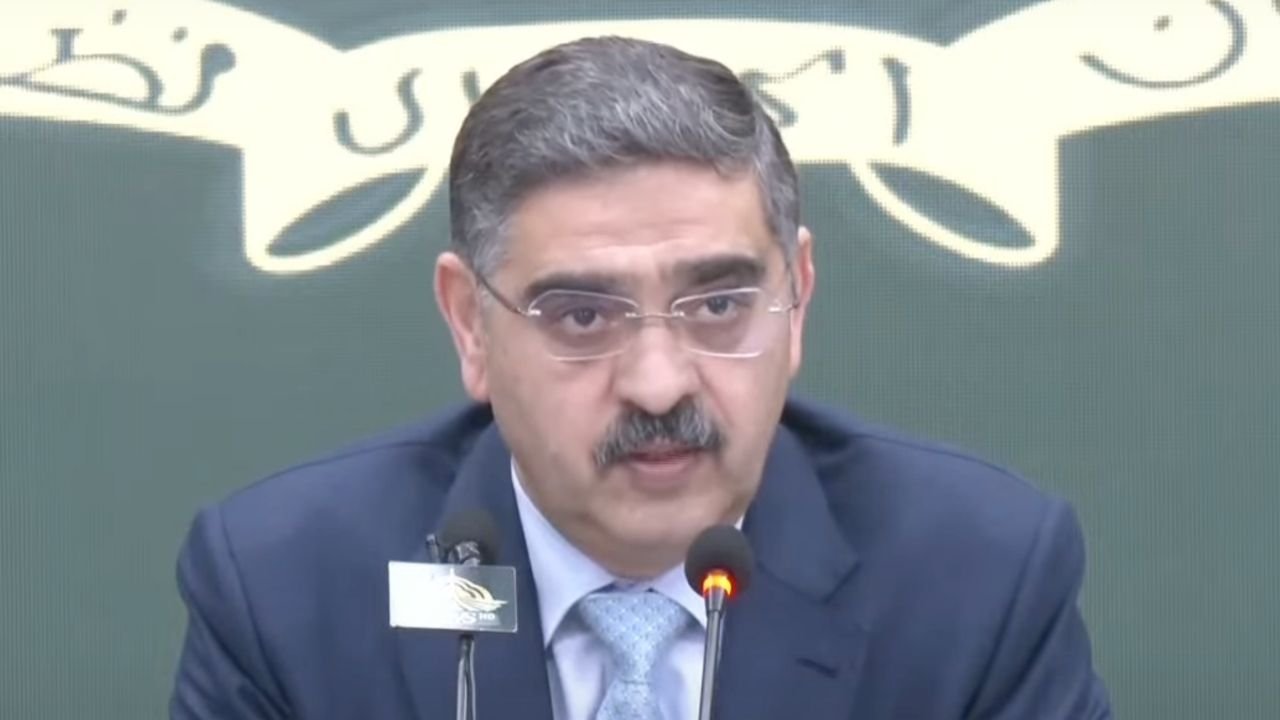
    In a recent press conference, interim Prime Minister Anwaar-ul-Haq Kakar strongly defended the delay in announcing election results, citing security concerns as the primary reason.

    He was asked during the press conference by a journalist, “Probably this is your last press conference, on a lighter note: who told you how long you’ll be Caretaker Prime Minister?”

    To this PM Kakar said, “I am disappointed after giving you a chance. Do I have cancer? As this is my last press conference according to you.”

    While discussing the disruption in mobile services, Kakar emphasized, it was a necessary measure to ensure the safety of voters and prevent terrorist attacks.

    “We could afford delay, but terrorist attacks, we could not […] delay does not mean rigging,” Kakar, whose government was appointed to oversee the country through elections until an elected set-up takes charge, said during a post-election press conference.

    Kakar’s remarks came amidst mounting criticism from various political parties, including Pakistan Tehreek-e-Insaf (PTI), Jamaat-e-Islami (JI), and Jamiat Ulema-e-Islam (JUI-F), who protested the delay in election results, labeling it as potential rigging.

    More than three days have passed since polling day and the complete election results are still pending, with one seat yet to be decided.

    The prime minister informed journalists that in 2018, the entire result-gathering process took 66 hours; however, in 2024, it was completed in 36 hours. The official Election Commission of Pakistan’s (ECP) deadline is around nine hours.

    The premier compared Pakistan’s election process to that of other countries, citing instances of delayed results in Sweden and Indonesia, suggesting that such delays are not uncommon in large-scale elections.

    In response to criticism from foreign governments, Kakar asserted that Pakistan would conduct its investigation if necessary, rather than succumbing to external pressures.

    “These friendly countries, unfortunately, frame their initial assessment on the fabricated and fractured information available on social media and the digital space,” he said.

    “A responsible government should take time and then have a position; that would have been better. If we have to investigate, we will not do it on the demand of the United States, United Kingdom, or the EU,” he further added.

    Kakar noted that Pakistan has its law and will deal with it accordingly. “We did not ask a judicial inquiry on Capitol Hill riots. It is not for us to demand it and it is not for them. For me, the demand of a PTI individual than the US, UK, and EU combined.”

    Acknowledging the possibility of irregularities, Kakar assured that appropriate forums were available for addressing complaints.

    To a question, PM Kakar said that the upcoming elected parliament would decide about the use of Electronic Voting Machines (EVMs) in the elections. “There should be an open discussion on EVMS.”

    Two days back, expressing his annoyance over the delayed election results, President Dr Arif Alvi had said that the country would have been spared the ongoing crisis if the EVMs had been used during the February 8 general elections.

    It is pertinent to mention here that the ECP’s new Election Management System (EMS) fell flat despite the commission’s tall claims.
    Taking to his X handle, the president had said: “Had EVMs been there today, my dear beloved Pakistan would have been spared this crisis.”

  • Azerbaijan’s president contesting for fifth term in re-election

    Azerbaijan’s president contesting for fifth term in re-election

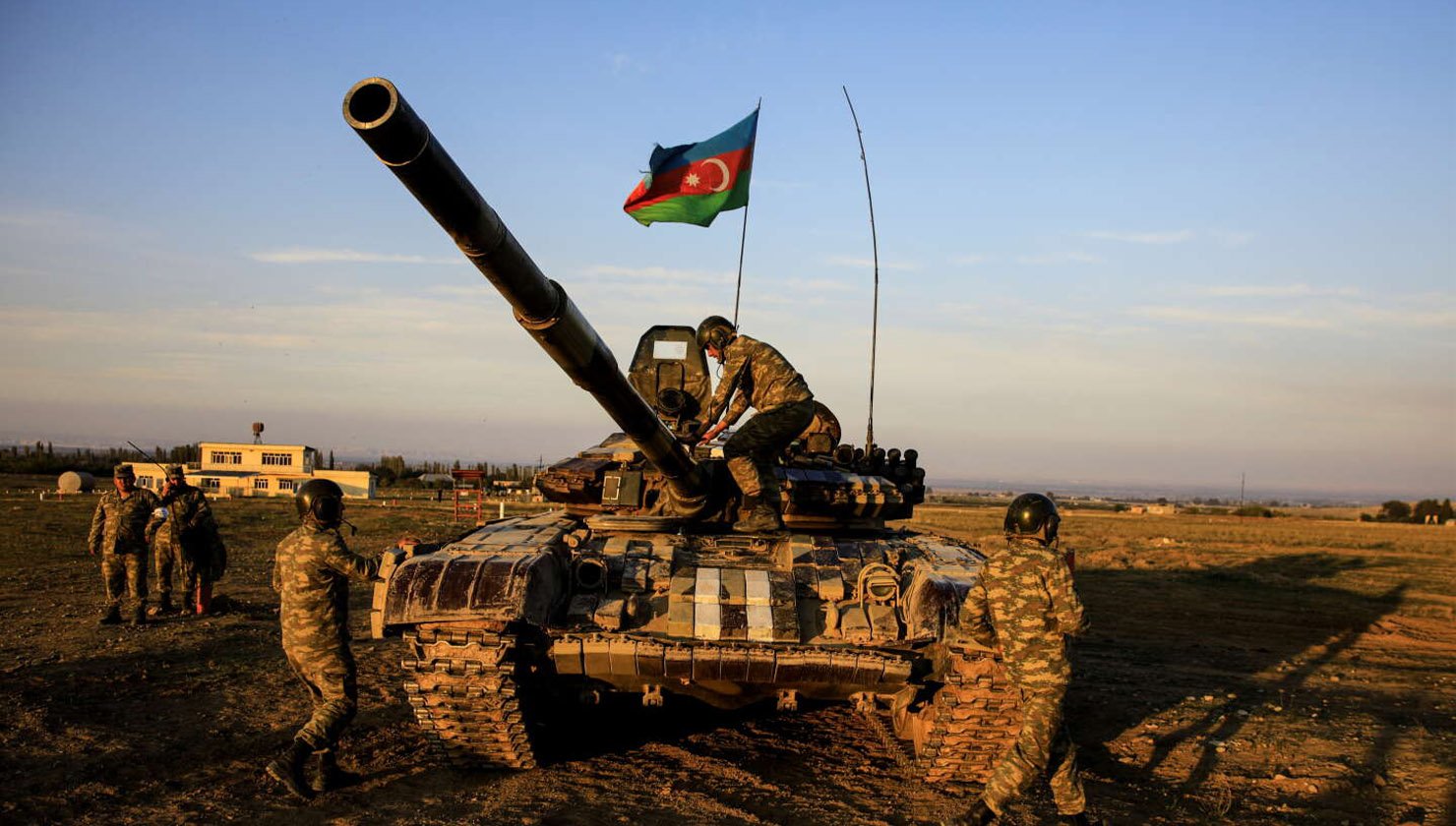
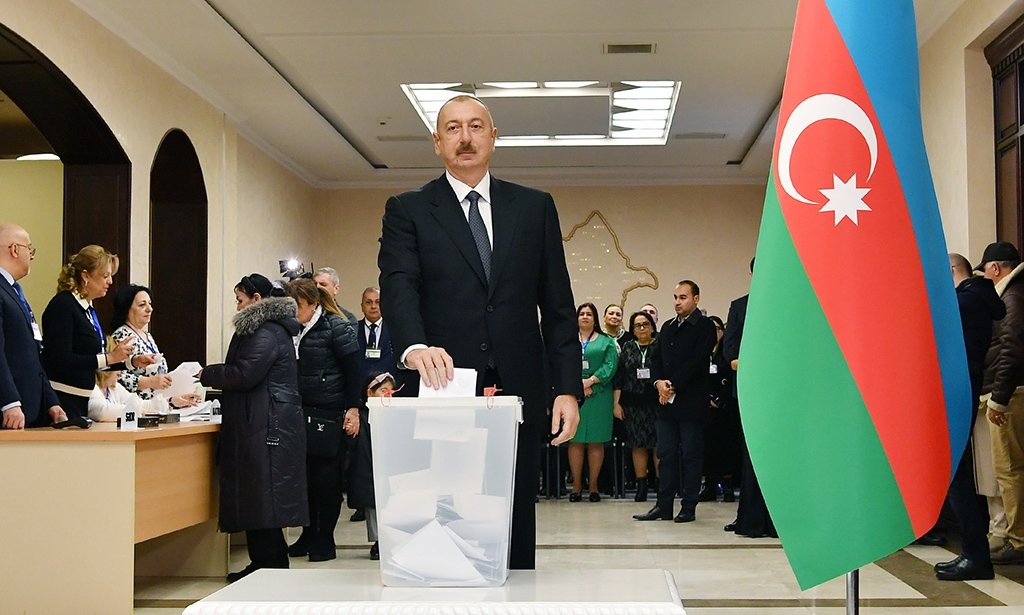
    Azerbaijanis were voting in snap presidential elections on Wednesday, with a fifth term for Ilham Aliyev seen as a foregone conclusion after Baku’s historic victory over Armenian separatists.

    A crackdown on independent media and the absence of any real opposition have boosted the certainty of an easy win for Aliyev, whose troops recaptured the Nagorno-Karabakh enclave in September.

    The oil-rich nation’s main opposition parties are boycotting the vote, which one opposition leader, Ali Kerimli of the National Front party, called an “imitation of democracy.”

    “There are no conditions in the country for the conduct of free and fair elections,” he said.

    The six other candidates who are running are little-known and have been busy praising Aliyev as a great statesman and a victorious commander-in-chief since he announced the elections in December, a year ahead of schedule.

    The country’s Central Election Commission said turnout stood at 38.6 percent by noon, four hours after polls opened.

    In a symbolic gesture, the president and first lady Mehriban Aliyeva went to Karabakh to cast their ballots in the region’s main city of Khankendi.

    For the first time in Azerbaijan’s post-Soviet history, 26 polling stations opened in Karabakh, which has been largely deserted after its entire ethnic-Armenian population — more than 100,000 people — fled to Armenia after Baku’s takeover.

    At a polling station in central Baku, pensioner Shalalya Abbasova, 68, said she cast her ballot for Aliyev because he “did what seemed impossible — accomplished our dream, liberated the occupied territories.”

    ‘Escalating crackdown’

    But another Baku resident, 32-year-old IT specialist Ismet Bagirov, said he decided not to vote as “there is nobody to vote for, there are no alternative candidates”.

    “I know many will vote for Aliyev today because he liberated Karabakh. I thank him for this, but there are fundamental issues in the country that remain unresolved.”

    Last month, Aliyev called the Karabakh victory “an epochal event unparallelled in Azerbaijan’s history”.

    “The elections will mark the beginning of a new era” for the country, he said, adding that the country would hold presidential elections on all its territory for the first time.

    “The outcome of Wednesday’s elections in Azerbaijan is known beforehand, Aliyev is set to win,” said independent analyst Ghia Nodia of the Caucasus Center for Strategic and International Studies.

    “There is no suspense whatsoever in these elections without a slightest sign of competitiveness.”

    Supporters have praised Aliyev for turning a country once thought of as a Soviet backwater into a flourishing energy supplier to Europe.

    But critics say he has crushed opposition groups and suffocated independent media.

    “All fundamental rights are being violated in the country, opposition parties can’t function normally, freedom of assembly is restricted, media are under government pressure, and political dissent is being suppressed,” said Kerimli of the National Front.

    In recent months, Azerbaijani authorities have intensified pressure on independent media outlets, arresting several critical journalists who have exposed graft at high levels.

    “The escalating crackdown by Azerbaijani authorities ahead of the elections is not just an attack on individual rights, it’s a widespread, coordinated assault on civil society and the rule of law,” Amnesty International said on Tuesday.

    Dynastic rule

    Aliyev, 62, was first elected president in 2003 after the death of his father Heydar Aliyev, a former KGB officer who had ruled Azerbaijan since 1993.

    He was re-elected in 2008, 2013 and in 2018, with 86 percent of the votes.

    All the elections were denounced by opposition parties as rigged.

    In 2009, Aliyev amended the country’s constitution so he could run for an unlimited number of presidential terms, a move criticised by rights advocates who say he could become president for life.

    In 2016, Azerbaijan adopted controversial constitutional amendments that extended the president’s term in office to seven years from five.

    Cementing the decades-long dynastic grip on power, the president has appointed his wife Mehriban Aliyeva as first vice president.

    Around six million voters are registered for the election monitored by observers from the Organisation for Security and Cooperation in Europe (OSCE).

  • ‘Anybody but Dar’; Bilawal on next finance minister

    ‘Anybody but Dar’; Bilawal on next finance minister

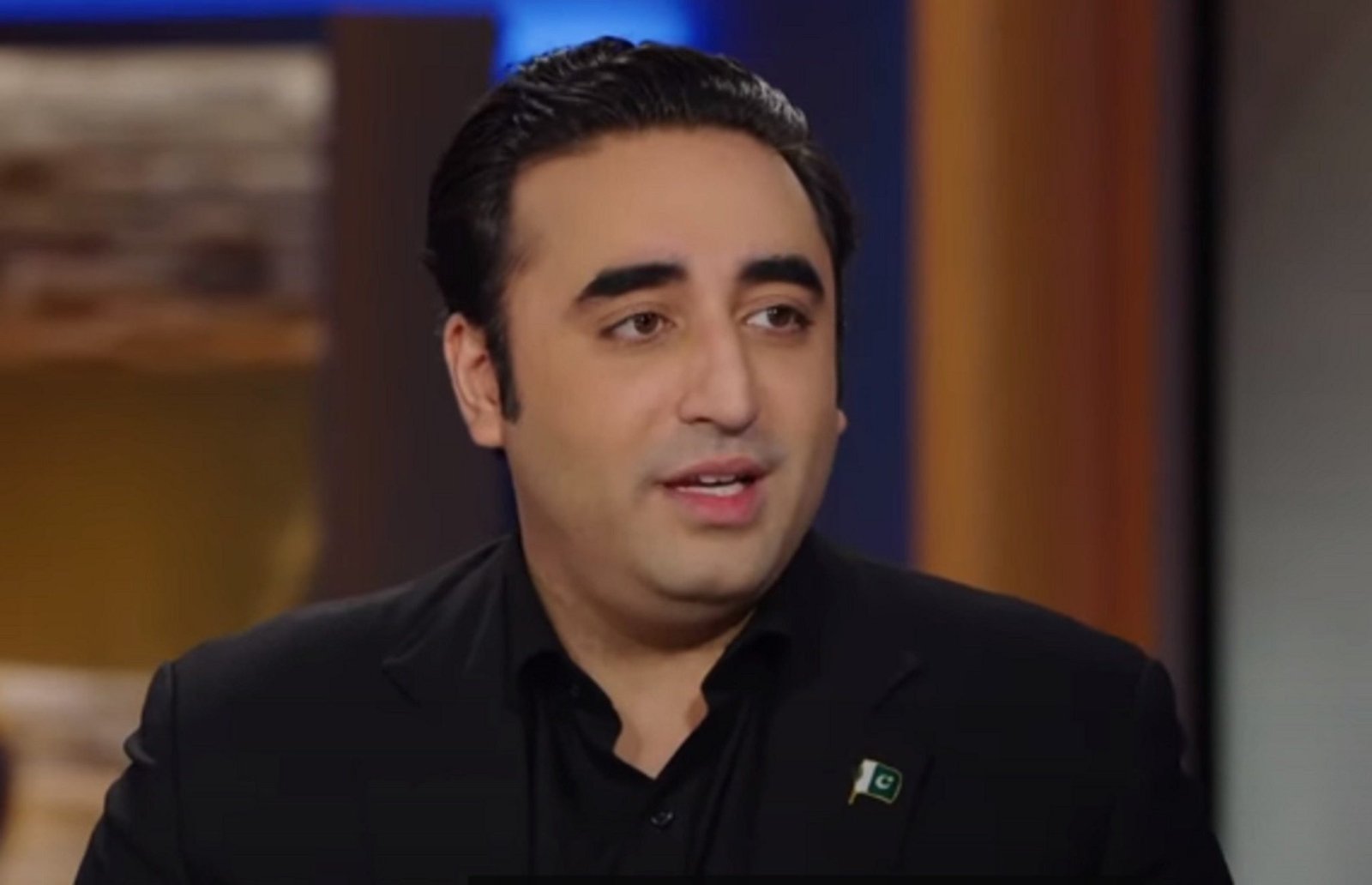
    Pakistan People’s Party (PPP) Chairman Bilawal Bhutto Zardari told in Absa Komal of Dawn News in an interview, “I think the whole nation has a unanimous consensus that anybody but (Ishaq) Dar (should be the finance minister).”

    The former Foreign Minister also criticised his political rivals and said that the Sharifs are vengeful and not capable of dealing with the economic crisis.

    “They [PML-N leaders] aren’t the one to forgive. They harbour animosity, seek revenge, and balance scores at the right time. They only know the politics of revenge. This is their history.” He singled out Pakistan Muslim League-Nawaz (PML-N) head Nawaz Sharif for changing the then finance minister Miftah Ismail during the Pakistan Democratic Movement (PDM) government.

    The PPP chairman predicted that independent candidates will play a vital role in the upcoming polls set to take place on February 8, 2024.

    “A huge number of independent candidates are contesting elections this year. Not only PTI leaders, but even those who are electable and have a political history, or those who failed to get tickets from PTI or PML-N, are contesting.”

  • Flood-affected areas unlikely to produce good voter turnout in Balochistan and Sindh: Report

    Flood-affected areas unlikely to produce good voter turnout in Balochistan and Sindh: Report

    The Centre for Peace and Development Initiatives (CPDI) has stated in a report that over 10 million individuals faced displacement while 2.1 million homes were damaged in Sindh and approximately 100,000 in Balochistan in the devastating floods that hit Pakistan in 2022. The findings of the report reveal that due to financial constraints, there is a possibility that low-income migrated families will not return to cast their votes in the upcoming general elections.

    The lack of Computerised National Identity Cards (CNICs) and damaged pathways to polling stations jeopardise participation of the flood-affected communities, reports Dawn.

    A study by CPDI, conducted in Sindh and Balochistan, identifies multiple problems faced by flood-affected communities which may adversely affect voter turnout. It shows key issues, notably the absence of CNICs and damaged pathways to potential polling stations or school buildings.

    While highlighting the issues, CPDI urged authorities to take immediate measures to facilitate voter turnout in the flood-affected areas specifically in Khairpur, Naushahro Feroz, Naseerabad and Jaffarabad.

    The qualitative assessment was undertaken in the severely affected provinces of Sindh and Balochistan, highlighting various critical issues, including the absence and delays in obtaining national identity cards, damaged infrastructure such as roads and designated polling stations/school buildings, waning interest in political leaders due to insufficient post-disaster rehabilitation efforts, and concerns about the displaced community’s return to exercise their voting rights.

    Additionally, individuals with lifelong injuries may be bedridden, posing a challenge for their participation in the general election (GE) 2024. These findings underscore the multifaceted challenges affecting the electoral landscape in flood-affected regions.

    A significant number of flood victims lost their CNICs (at least one in every household), delays in renewal of CNICs are primarily because of the crowded and limited number of Nadra centres established at village level, residents added that mobile registration vans of Nadra initially helped but were later discontinued.

    “Furthermore, daily wage earners also find it financially burdensome to visit Nadra centres. CPDI urges the authorities to take immediate action to ensure that eligible voters in flood-affected regions receive their CNICs before elections. Moreover, damaged roads and access tracks force voters to take longer alternative routes to reach polling stations, reported in all villages of selected districts in Sindh and Balochistan.

    “Increased distances, combined with high transportation costs, will likely discourage voters, particularly women, elderly, differently-abled and low-income individuals, from travelling to cast their votes. With over 40 per cent of school buildings damaged and incomplete recovery efforts, newly designated polling stations may be distant, posing accessibility challenges for flood-affected residents on polling day without adequate transportation,” the report stated.

  • Bangladeshis promise free and fair elections after US imposed visa restrictions

    Bangladeshis promise free and fair elections after US imposed visa restrictions

    Bangladeshi authorities have assured the United States (US) that they will take steps to tackle and prevent unlawful practices or interference in its election after the US threatened curbs on citizens of the South Asian nation who undermine polls.

    “The government apparatus will take necessary measures to prevent and address any unlawful practices or interference … to compromise the smooth and participatory conduct of the elections,” the Bangladesh foreign ministry said in response.

    “The electoral process will remain under strict vigilance, including by international observers as accredited by the Election Commission,” it added in a statement.

    A day earlier, US Secretary of State Antony Blinken said the United States is adopting a new policy to restrict visas for Bangladeshis who undermine the democratic election process at home.

    Hasina Wajid, who has a tight control over the South Asian nation since coming to power in 2009, has been accused of human rights violations, obliteration of press freedom, suppression of dissent and the jailing of critics, including many supporters of the main opposition Bangladesh Nationalist Party (BNP).

    The BNP has been calling for Hasina to step down and for the next election, due in January 2024, to be held under a neutral caretaker government, a demand her government has rejected.