Tag: elections

  • The ever-looming threat of disinformation in Pakistan

    The ever-looming threat of disinformation in Pakistan

    2024 is surely the most significant global election year in history so far as about 60 countries around the world will hold elections.

    Eyes are on major economies like Russia, India, USA, United Kingdom, and European Union that will also determine the alteration of the geopolitics of the next decade.

    But looming over the polls like a dark cloud is one danger that democracies are, or should be, wary of.

    The World Economic Forum (WEF) recently warned that misinformation and disinformation is a grave threat to the democratic process. This challenge cannot only mislead and influence the opinions of potential voters in already polarised societies, but also “disrupt” economies and even “trigger civil unrest and confrontation”.

    Additionally, with access to Artificial Intelligence (AI), deep fake videos, photoshopped images, voice cloning and illegitimate internet websites are a major hindrance in ensuring free elections and security.

    While AI is meant to serve in public’s advantage, it has been exploited in the worst possible ways.

    To give the most recent example, the Financial Times revealed in a report that a number of AI-generated videos were used during the days leading to the election day in Bangladesh to spread disinformation against the opposition Bangladesh Nationalist Party (BNP) and the U.S. This put in question the integrity of the Bangladeshi government in ensuring free and fair elections.

    Disinformation and Pakistan

    Since the ouster of former prime minister Imran Khan in April 2022 through a vote of no confidence, he has been in and out of court due to cases related to the diplomatic cipher, toshakhana gifts, his marriage to Bushra Bibi and more. Now jailed for 14 years, Khan and his party Pakistan Tehreek-e-Insaf are out of the election however, his party members are independently bearing the flag and have been campaigning for votes.

    Always being ahead of the campaigning game, PTI has conducted virtual jalsas after getting banned from holding in-person assemblies. The party went a step further by putting up an AI generated speech in the voice of Imran Khan.

    So while PTI has been “innovative” in their use of social media since the party has not been allowed to fully carry out their political activities, editor at Geo Fact Check, Benazir Shah, believes that with the lack of regulation in the use of AI, it poses a serious threat in a weak democracy like Pakistan.

    According to DataReportal, with a population of 238.1 million (as of January 2023), and 87.35 million internet users at the start of 2023, Pakistan has been home to 71.70 million social media users i.e. 30.1 percent of the total population.

    Considering the large number of users residing in the country, Hyra Basit, Cyber Harassment Lead at Digital Rights Foundation, asserts that widespread disinformation is primarily linked with lack of digital literacy among the general public. She explains that while media usage is seeped into people’s daily lives, there is no concept of double checking.

    In the recent past, posts on social media circulated with videos from Aurat March 2021 falsely transcripted to blasphemous slogans, deeming the movement as sacrilegious. FIRs were filed against the officials while some women went into hiding due to threats.

    By the time the misleading videos were countered and fact-checked, disinformation had already spread to a wide audience since disinformation tends to spread more quickly than facts.

    Responsibility and Solution

    Journalist Umar Cheema believes that when it comes to countering disinformation, the responsibility largely falls on media as fact-checking is considered one of its domains. Over and above, whenever the state has brought about laws in countering disinformation, it has directly affected journalists in the shape of censorship.

    “We need a paradigm shift in thinking”, he states. “[As journalists] We have learned to question and speak, but we do not know how to find a solution — because it is not considered a part of our duty. However, we must also learn to bring about solutions since disinformation as well as censorship affects us directly.”

    He also points at media platforms and independent journalists who report information without verifying and counter questioning interviewees, and how the use of click-baits also fall in the ambit of disinformation.

    “Our journalism should move beyond this [cursory journalism] or else there is no difference between a layperson and a journalist”, he says.

    However, along with media platforms and fact-checkers, Benzair Shah considers the civil society responsible for ensuring truth in information sharing.

    “When I say “collective effort”, it doesn’t only include journalists, state, and the civil society but especially young people who actively use social media and need to use it more responsibly.

    “The question arises with fact-checking is that how do we pre-bunk disinformation — to ensure [it beforehand] that there is authentic information out there,” she points out.

    She highlights easily available and accessible tools like Google reverse image search that can be used to verify videos and images circulating social media apps.

    Similarly, Hyra Basit asserts that if disinformation in Pakistan is to be countered, “you have to educate and equip people receiving information so they can accept to reject mis/disinformation, question and verify the information they receive.

    Over and above, users need to understand what disinformation is and how they can protect themselves from it.”

    Executive director for Media Matters for Democracy, Asad Baig, underlines that while there are organisations actively countering disinformation in Pakistan, they are not enough and will take a while to establish their footprint on the internet.

    “We need to take a holistic approach towards solving problems around disinformation. Initiatives taken for, for example, elections are temporary and act like a bandaid for a short while.

    “It is important to realise that the challenges for the media in countering disinformation will remain the same before and after the elections as they are right now”.
  • Electioneering in Sindh – VI

    Electioneering in Sindh – VI

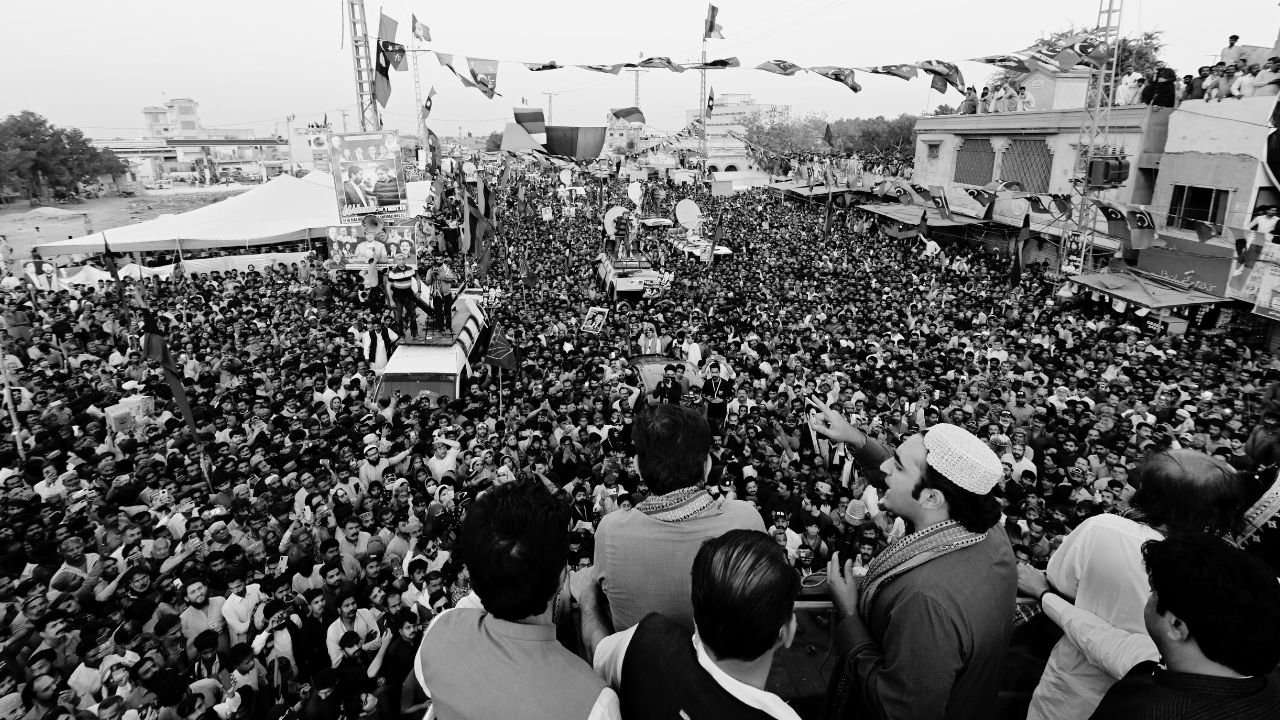
    In the last part of this series on election politics in Sindh, we will look into three districts – Thatta, Jamshoro, and Dadu districts of the Hyderabad division, where four National Assembly (NA) and nine provincial assembly (PA) seats are at stake. On NA 223 Thatta, 12 candidates are contesting the polls. Sadiq Ali Memon of PPP, Imtiaz Ahmed of JI, Junaid Siddiqi of MQM-P, Rasool Bux Jakhro of – and Syed Jameel Ahmed Shah Bukhari of PTI are the main contenders. Looking at the 2018 results, it looks like the PPP candidate has a clear lead over his opponents. Riaz Hussain Shah Shirazi of PPP, Muhammad Farooque of PTI, Abdullah Adam Gandro of JI, Muhammad Arshad Memon of JUI-F, Mahar Ali Shah of QMM are noticeable among the 12 candidates on PS 75 Thatta-I. Going through past results, it seems the PPP candidate is poised to win this seat. Eights candidates are contesting on PS 76 Thatta-II. Altaf Hussain Kachi of TLP, Saeed-Ur-Rehman of JUI-F, Ali Hassan Zardari of PPP, Muhammad Ali Khan of JI, and Muhammad Umer Nahyo of Khadmeen-e-Sindh are the main competitors in this constituency. The PPP candidate can easily win this seat.

    On the single NA seat – NA 226 – of district Jamshoro, the PPP has awarded ticket to Malik Asad Sikander while Munir Hyder Shah, Ubedullha Jamro, Abdul Hakeem Chandio are running on GDA, TLP and PTI tickets respectively. The GDA candidate will try to put up a fight. However, past results show that the PPP candidate will likely stand victorious. Former chief minister of Sindh, Syed Murad Ali Shah, is contesting to retain his seat on PS 77 Jamshoro-I.

    A total of 15 candidates are in the field against the PPP candidate. GDA’s Roshan Buriro, TLP’s Manzoor Ahmed Halepoto and PTI’s Muhammad Farooq are prominent among them. In 2018, Murad Shah beat Jalal Mehmood Shah of SUP, and this time again, he is the frontrunner. Dr. Sikandar Shoro gave a tough fight to PPP’s Malk Asad Sikandar on then PS 82 Jamshoro as an independent candidate; however, later he joined the PPP and is contesting election on PS 78 Jamshoro-II against Badaruddin of TLP, Syed Munir Hyder Shah of GDA, Sadaf Raza Warraich of PML-N and nine other candidates. The main contestants on this seat are PPP’s Sikandar Shoro and GDA’s Munir Shah. Razia of JUI-F, Malik Sikander Khan of PPP, Meer Ahmed of GDA, Muhammad Tayyab Khan of Pakistan Rah-e-Haq Party, Peer Murtaza Ali Shah Jillani of PTI and independent candidate Malik Changez Khan are vying for PS 79 Jamshoro-III. A close contest is expected between PPP candidate Malik Sikander and independent candidate Malik Changez.

    There are two NA seats in Dadu district. On NA 227 Dadu-I, former CM Sindh Liaquat Jatoi is contesting on a GDA ticket after parting ways with PTI. His rivals, among others, are PPP’s Irfan Ali Leghari, JUI-F’s Hajan Khan Leghari, MQM-P’s Zulfiqar Ali and PTI’s Shahana Nawab. PPP’s Irfan Leghari defeated Liaquat Jatoi by getting 95,891 votes while Jatoi got 82,658 in 2018. Incumbency and anger among voters due to the 2022 floods may jeopardise the PPP candidate’s chances of a victory. Rafique Ahmed Jamali of PPP and Karim Ali Jatoi of GDA are again in the field on NA 228 Dadu-II along with 13 other candidates, which include Abdul Majeed Chahwan of MQM-P, Zafar Ali of JI, Rashid Ali of TLP and Abu Bakar of JUI-F. PPP’s Jamali beat Jatoi in 2018 by securing 81,215 votes against Jatoi’s 63,032 while independent candidate Jan Muhammad Panhwar got 19,906 votes. In this constituency, the incumbency factor may go against the PPP candidate.

    On PS 80 Dadu-I, GDA’s Karim Ali Jatoi, PPP’s Abdul Aziz Junejo, MQM-P’s Shahid Hussain Shah, JUI-F’s Taj Muhammad, TLP’s Bashir Sodhar, PTI’s Asghar Ali Sodhar and JI’s Mir Murtaza are prominent among 12 candidates.

    PPP’s absence from the ground during the 2022 floods may favour GDA candidate. Fayaz Butt of PPP, Liaquat Ali Jatoi of GDA, Abdullah of JI, Parveen of TLP, Talib Hussain Panhwar of MQM-P, Muhammad Masood Panhwar of JUI-F and Majeed Khoso of PTI are noticeable among 19 candidates on PS 81 Dadu-II. Although PPP won this seat in 2018, this time the previous ruling party may feel the heat due to its bad handling of the 2022 floods in the area.

    Pir Mujeeb-ul-Haq of PPP is vying on PS 82 Dadu-III against Ashique Ali Zounr of GDA, Shahid Solangi of MQM-P, Zameer Ahmed of JI, Karim Bux Siddiqui of IPP, Zulfiqar Mallah of PTI and 16 other candidates. The GDA candidate will put up a resistance but the PPP candidate has a bit of an upper hand. On PS 83 Dadu-IV, 20 candidates are running for victory, which include Pir Syed Salih Shah Jilani of PPP, Imdad Ali Leghari of GDA, Bandah Ali Leghari (independent) and Anwar Ali Panhwar of PTI. Syed Ghulam Shah Jillani of PPP won this seat in 2018 and after his death, his son Salih Shah Jillani won in the by-elections. Local internal rivalries in the PPP and incumbency factor due to the 2022 floods can cause damage to the PPP candidate here.

  • Local administration can suspend the internet if need be: Murtaza Solangi

    Local administration can suspend the internet if need be: Murtaza Solangi

    Murtaza Solangi, the Caretaker Information Minister, has stated that the government has not given any instructions yet to suspend mobile or internet services on February 8.

    Solangi also stated that the local administration can take any decision as a result of any adverse law and order situation in the area. Pakistan Telecommunication Authority (PTA) can give directions to internet provider to suspend the internet in a specific area.

    He encouraged the public to use their democratic right to vote, as “it shows their patriotism and their love for democratic continuity in the country.”

  • Electioneering in Sindh – V

    Electioneering in Sindh – V

    In this part, we will discuss candidates’ prospects from Hyderabad division, i.e. Tando Mohammad Khan, and Badin districts. There are four National Assembly (NA) and nine provincial assembly (PA) seats in these three districts of Sindh.

    The PPP’s Syed Naveed Qamar is being challenged by 16 candidates on NA 221, which is the sole NA seat of district Tando Mohammad Khan. His main opponents are Mir Ali Nawaz Talpur of GDA, Ahmed Noonari of Khadmeen-e-Sindh, Mohammad Irfan of PTI and Imtiaz Hussain of MQM-P. Naveed Qamar won this seat in the 2018 elections by securing 76,077 votes, while GDA’s Ali Nawaz Talpur and PTI’s Abdul Jabbar Memon got 45,169 and 15,450 votes respectively. Although the PPP candidate has a lead over his close rival from GDA, an interesting contest is expected here.

    In PS 66, 20 candidates are contesting the polls. Among those, Ali Nawaz Talpur of GDA, M. Javed Rajput of MQM-P, Aijaz Ali of JI, Ambar of JUI-F, Pir Muhammad Ali Sarhandi of TLP, M. Altaf Nizamani of PTI and Syed Aijaz Hussain Shah of the PPP are prominent candidates. PPP’s Aijaz Shah won this seat in 2018 by getting 32,659 votes while Mir Ali Hyder Talpur of GDA and Altaf Nizamani of PTI got 20,736 and 13,801 votes respectively. Although Aijaz Shah seems to be all set for victory, nothing can be said till the announcement of the election results.

    On another PA seat, PS 67, a total of 12 candidates are competing for success. Dr. Qadir Magsi, a nationalist contesting from the platform of Khadmeen-e-Sindh, Khurram Karim Soomro of PPP and Abdul Rahim of PTI are prominent candidates on this seat. Abdul Karim Soomro of PPP, father of the present PPP candidate, previously won this seat by beating Abdul Rahim Katiar of GDA and Abdul Latif Soomro of PTI. Nationalists and supporters of Qadir Magsi are confident that he may pull a surprise.

    Badin is one of the real battlegrounds during the 2024 elections. Two friends turned foes, Asif Zardari and Zulfiqar Mirza, are fighting for electoral supremacy on two NA and five PA seats. Mirza clinched Badin in 2017 local bodies elections but could defend just one NA and one PA seat in the 2018 general election. After the restoration of nomination forms by the court, they are still in a legal battle for getting GDA’s symbol. Until they get their symbols, official GDA candidates are Mir Hussain Bux Talpur, Muhammad Hassam Mirza, Mansoor Ali Nizamani, Mir Abdullah Khan, Hasnain Ali Mirza, Muhammad Hassam Mirza and Ameer Hassan Panhwar on NA 222, 223, PS 68, 69, 70, 71 and 72 respectively. The PPP has fielded five winners of the 2018 elections, one runner-up and one new face, which are Mir Ghulam Ali Talpur, Rasool Bux Chandio, Muhammad Halepoto, Mir Allah Bux Talpur, Arbab Amir Amanullah, Taj Muhammad Mallah and Ismail Rahu on NA 222, 223 PS 68, 69, 70, 71, 72 respectively. A close contest is expected on all constituencies except PS 72 Badin-V, where PPP’s Ismail Rahu is in a better position against GDA’s Ameer Hassan Panhwar.

    There are only one NA and two provincial assembly seats for grabs in Sujawal district. Ayaz Ali Shah Sheerazi of the PPP is up against Molvi Muhammad Saleh Alhadad of JUI-F, Muhammad Ramzan Lashari of MQM, Ghulam Sarwar Khatti of TLP and Mumtaz Ali Shah of PTI on NA 224. PPP’s Ayaz Shah Sheerazi won this seat in 2018 by getting 130,000 votes against MMA’s Molvi Saleh, who got 11,184 votes. On PS 73 Sujawal-I, Hussain Shah Shirazi of PPP, Dhani Dino Jakhro of TLP, Muhammad Ismail Memon of JUI-F, Juman Sindhi of Khadmeen-e-Sindh, Deedar Ali of PTI and Manzoor Ali Mallah of MQM-P are notables. PPP’s Shah Hussain Shirazi won this seat in 2018 and he is the frontrunner in 2024 elections as well. Ghulam Fatma of MQM, Muhammad Ali Malkani of PPP, Najeebullah of JUI-F, Ghulam Sarwar Khatti of TLP, and Muhammad Ashraf Thaheem of Khadmeen-e-Sindh are the main contenders among 15 candidates on PS 74 Sujawal-II. Muhammad Ali Malkani of PPP won this seat in 2018 while TLP’s Ghulam Muhammad Naeemi stood a distant second. PPP’s Malkani is a strong candidate on this seat.

  • Electioneering in Sindh – I

    Electioneering in Sindh – I

    For a long time, anti-Pakistan People’s Party (PPP) political parties in Sindh have had a desire to keep it away from power. To achieve their target, they have formed alliances and engineered seat adjustments since 2013, but they have failed at every occasion. Keeping their tradition alive, they have again joined hands by expanding an already existing alliance – the Grand Democratic Alliance (GDA) – and by making seat adjustments with the remaining anti-PPP parties: the Pakistan Muslim League-Nawaz (PML-N), Jamiat Ulema-e-Islam-Fazl (JUI-F), etc., and personalities.

    Administratively, Sindh is divided into six divisions and 30 districts. Voters in Sindh have to directly elect 61 MNAs and 130 MPAs to represent them in the National Assembly (NA) and provincial assembly (PA). PPP leadership is confident that this time it will increase its seat tally from Sindh, but the party’s biggest impediment is internal rivalry of its candidates in different areas.

    On most seats in Sindh, PPP candidates have a clear lead over their opponents, unless a miracle happens. Today we will discuss national and provincial assembly seats in Larkana (eight NA and 17 PA seats) and Sukkur (seven NA and 14 PA seats) divisions, where a close contest is expected or where important candidates are in the running.

    On NA 190 Jacobabad-I, a neck-to-neck fight is expected between traditional rivals, 2018 winner Mohammad Mian Soomro, who is running as an independent candidate, and PPP’s Ijaz Jakhrani. Similarly on PS 1, Jacobabad-I, PPP’s first-time runner Sher Mohammad Mugheri is facing independent candidate Abdul Razzaque Khan. On PS 3 Jacobabad-III, Mumtaz Jakhrani, PPP’ ex-provincial minister and relative of NA candidate Ijaz Jakhrani has rebelled against party decision and is in the race against PPP candidate Aurangzeb Panhwar. This constituency will see a close fight. All these independent candidates have the support of GDA and its allies. Past results suggest that PPP’s Sohrab Sarki is favourite on PS 2 Jacobabad-II. However, JUI-F’s Shafique Khoso is possibly giving him nightmares.

    PPP’s Shabbir Ali Bijarani and JUI-F’s Dr. Ibrahim Jatoi are in the race on NA 192 Kashmore cum Shikarpur. A close contest is expected here because both the candidates have not only party votes at their disposal but they have strong personal support bases too. On PS 5, Kashmore II, JUI-F’s Rab Nawaz Chachar, with the help of his community and the influential Tegho Khan Teghani, can surprise Ghulam Abid Sundrani of PPP. On PS 7 Shikarpur-I, Agha Taimoor Khan of JUI-F, whose peers were associated with the PPP and he himself has remained PPP MPA, is contesting the election against PPP where an interesting contest is expected. PPP’s Arif Mahar is up against JUI-F’s Abid Jatoi on PS 8 Shikarpur-II, where a fierce battle is expected.

    Although JUI-F’s Rashid Mehmood Soomro is up against PPP’s fresh inductee Shahryar Mahar, son of ex-federal minister Ghous Bux Mahar on NA 193 Shikarpur, his actual constituency is NA 194 Larkana where he is contesting elections against PPP Chairman Bilawal Bhutto-Zardari. His brother Nasir Mehmood Soomro is contesting NA 196 Kamber-I against Bilawal Bhutto-Zardari. According to local sources, PPP candidates have an edge over their rivals on these seats. However, PPP will have challenging contests on PS 12 Larkana-III and PS-14 Kamber I.

    On NA 198, PPP’s Khalid Lund will be challenged by independent candidate Faqeer Abdul Haq alias Mian Mithoo, infamous for forced conversion cases. Similarly on PS 18 Ghotki-I, PPP candidate Shahryar Shar is facing sitting PPP Senator Jam Mehtab Dahar and on PS 19 Ghotki-II, PPP candidate Bari Khan Pitafi is facing independent candidate Nadir Akmal Leghari. Both these independent candidates enjoy the support of PPP rivals.

    The PPP has smooth sailing in Sukkur, where former federal minister Khursheed Shah and others are in the run. GDA’s Deedar Jatoi will offer a bit of resistance against PPP’s Nauman Shaikh on NA 200 Sukkur-I and independent candidate Mubeen Jatoi against PPP’s Nasir Shah on PS 25 Sukkur-IV. Nafisa Shah, Qaim Ali Shah and Halar Wassan enjoy one-way traffic on NA 202 Khairpur-I, PS 26 Khairpur-I and PS 27 Khairpur-II respectively. There is a close contest on NA 203 Khairpur-II between Sadaruddin Shah of GDA and Fazal Shah of PPP. While in NA 204 Khairpur-III, PPP’s Javed Shah has a small lead over Moazzam Abbasi of GDA. On PS 27 Khairpur-III and PS 31 Khairpur-VI, PPP candidates Sajid Banbhan and Syed Bachal Shah are in difficult positions against their rivals Ismail Shah and Rashid Shah of GDA. PPP’s Shiraz Rajper and Naeem Kharal are slightly better off against their rivals Rafique Banbhan and Khalid Shaikh of GDA on PS 29 Khairpur-IV and PS 30 Khairpur-V respectively.

    In the next part of this series, we will discuss Shaheed Benazirabad and Mirpur Khas divisions of Sindh.

  • Actions speak louder than symbols

    Actions speak louder than symbols

    Elections are just around the corner. There has been a lot of debate and discussion brimming with political hubris in the months running up to it. As usual, nothing of substantial interest to the people – no concrete plans to try to put the economy on a path to recovery; no public schemes that can mature in the months after the election; nothing for an ordinary Pakistan.

    For months, the political arena has been abuzz with hours of ‘political debate’ on non-issues and as already mentioned, nothing to do with the people of Pakistan. Political parties have focused on everything and anything – as usual – that is important for their leaders. The most important discussion all through December 2023 was on the allocation of political symbols, with some parties afraid their ‘traditional’ symbols would be given to someone else. Can you blame them? These symbols are the only way their voters can identify them on the ballot paper, as a majority are either politically blind or illiterate. The political symbols are like a book with pictures that help everyone to their conclusions about the story regardless of the accompanying words.

    Most parties know the way to their followers’ votes is through their emotions rather than intellect. This helps them since most have not done anything for the people that can be used to woo the voter. Political workers have a special affinity with their party’s symbol, and it works. Many political parties lack substantial projects or even indications that they even attempted to begin any people-friendly projects; therefore, it is better to rile up emotions than logic. Logical voters ask too many questions. Hence the importance of political symbols.

    Promises made during elections are old ones- regurgitated and patched up – echoing for decades without any action to back them up. The only way voters can determine who to vote for is to study a party’s manifestos past and present, which should have been released weeks or months before the polling.

    The main Pakistani political parties launched their manifestos in the last week of January 2024 for elections to be held on February 8, 2024. There is no explanation or apology for this delay, maybe because the parties are aware of how their voters think and behave – at least devoted loyalists will believe anything they promise as a tradition of Pakistani politics.

    They have not impressed critics who commented that the manifestos “lack substance and fail to address the pressing realities of Pakistan”, adding that they rely on promises without offering concrete implementation plans. Others commented that “some have promised much, but most have not bothered at all”.

    Why isn’t this a surprise?

    The main reason for this is that parties know their voters won’t demand to see manifestos – past and present – which allows them space to play as they like.

    Even though the political parties have not given their voters much time – less than 10 days – it wouldn’t hurt for people to do a comparative study of these manifestos with past ones of not only their own party but the others as well.

    A manifesto is an extremely important document that informs voters what to expect from someone they elect to run the country for many years. It should be the first thing to be launched and made available to the public. It is the resume of the party vying for the reins of the country.

    People should not only question parties about what they have planned to make the public’s life better and hold governments accountable throughout their tenure on the promises they had made in their manifesto.

    They should ask what policies and plans has the government made to shield people from miseries; what they planned to stop people from murdering their children and partners, and committing suicide; to provide them employment in the country so that they don’t fall prey to human traffickers; to protect the rights of vulnerable groups like religious minorities; allocating funds to provide basic health and education.

    But this is too much to ask. Voters are indifferent, which is quite dangerous for society and the country. The only beneficiaries are those in power.

    However, it would make an interesting study to see why there is so much public indifference. One reason for this could be the unnatural public devotion to political leaders, some of whom have become demigods. Devotees flock around them regardless of their flaws. It is almost as if they are members of a cult – a political cult. They follow their leader with blank minds, no queries, or interests of their own, believing the mere presence of the leader will solve everything.

    This is not a new phenomenon in Pakistan or global politics, political cult behaviour takes root over years, weakening a conscious society and forcing it to stop asking questions. It has also damaged the political process and democracy itself.

    Like other cults political cults revolve around a personality and their agenda, with followers believing everything and anything, even if it is detrimental to the very structure of society.

    Commenting on the political cult behaviour, Bethany Burum, a research scientist in psychology who teaches a Harvard course on cult behaviour, said in an interview (The Harvard Gazette):

    “Cults manage to shift people’s beliefs rapidly away from the broader society and away from the beliefs they had before they joined. The second thing I emphasize is that cult members act against their own interests and their families’ interests quite strikingly.”

    Pakistan’s political history is a good example cult politics throughout the decades – one person calling the shots devoutly followed by thousands of people from the entire social spectrum and different backgrounds.

    The cult followers don’t care about the larger consequences that directly affect their lives, all they care about are the leader’s words and promises that hold an almost divine value for them. If their leader fails to fulfill a promise, the devotees blame the failure on other forces because their political (cult) leader cannot do wrong.

    And it doesn’t help that the political (cult) leaders provide quick fixes that are temporary but enough to reinforce their powers among the followers.

    Unfortunately, decades of political cults in Pakistan have done nothing to improve the society and bring prosperity to the people. It has only damaged the social psyche and ingrained hopelessness in the people forcing them to wait for the next and ‘real’ messiah. And begin following anyone who promises to break the status quo but never intended to do so.

    Pakistani voters seem to have reached a certain level of complacency that allows them to tolerate the superficial political claims from inefficient people running the country in the name of politics. They rather watch an argument around the allocation of political symbols than worry about what their leader(s) has promised them. It seems they rather believe in miracles than expect change, as that has never really worked out for them.

    It will take decades for the voter to understand the importance of the written manifesto and that actions speak louder than political symbols.

  • Bilawal Nawaz Debate: Who do you think will win?

    Bilawal Nawaz Debate: Who do you think will win?

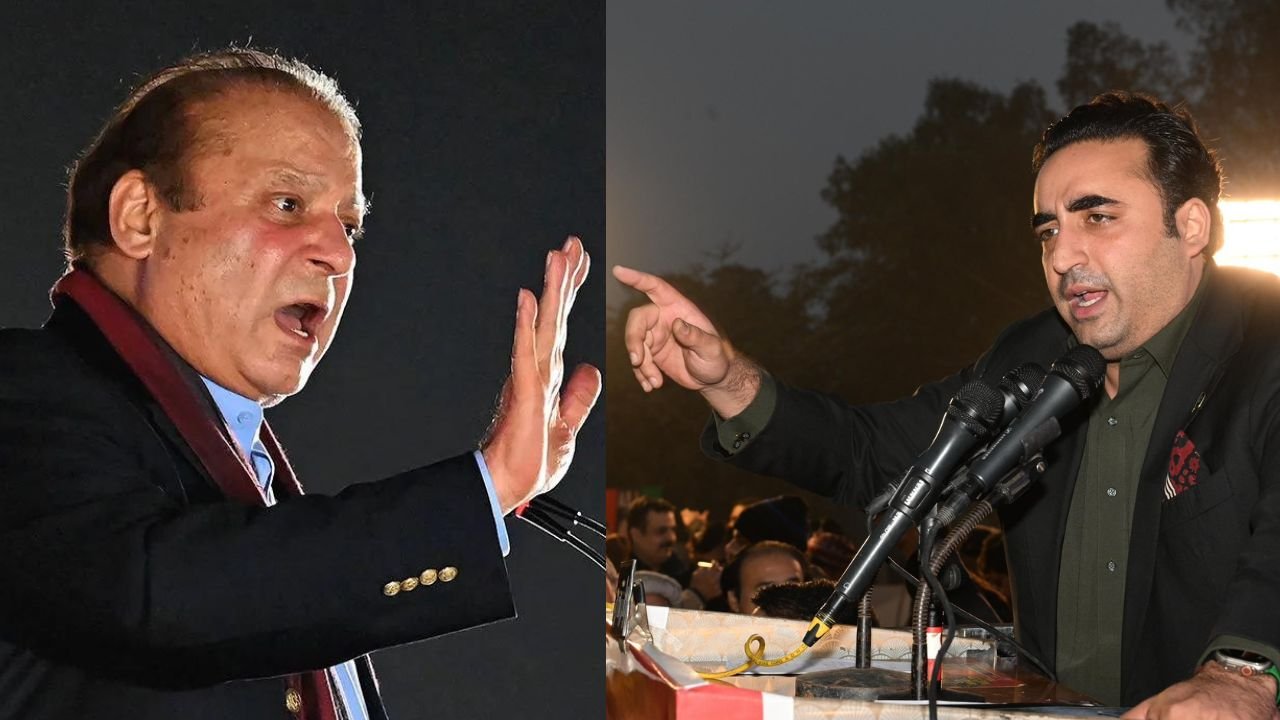
    PML-N President Shehbaz Sharif has called on PPP Chairman Bilawal Bhutto-Zardari to avoid escalating political tensions and refrain from taking political rivalries to extremes.

    The appeal comes in response to Bilawal’s proposal for a debate between him and PML-N supremo Nawaz Sharif ahead of the February 8 general elections.

    Bilawal, during his election trail, has been critical of the PML-N, prompting responses from the top leadership of the opposing party. On Friday, Bilawal proposed a televised debate between him and Nawaz Sharif, citing the global practice of such debates to provide voters with crucial insights into candidates’ plans.

    Shehbaz Sharif, in apparent response to the challenge, suggested that it would have been more meaningful if the invitation had been extended to Nawaz Sharif for an inspection of Sindh rather than a debate.

    In a subsequent exchange, Bilawal demanded clarification on the city and date for the proposed debate. He also suggested Nawaz Sharif could visit Gambat in Khairpur to inspect the Gambat Institute of Medical Sciences and compare it with Punjab’s hospitals.

    “Mian Nawaz Sharif can debate with me in Gambat, Khairpur. He can come and visit the Gambat Institute of Medical Sciences, a hospital that surpasses any hospital in Punjab, and where all treatment is absolutely free,” Bilawal said.

    He claimed that despite being the prime minister thrice, Nawaz had never once visited Gambat. “Or perhaps he would prefer to come to Tharparkar, where we can also inspect the infrastructure, and compare Thar with Cholistan. The coal project in Thar, which you and your brother opposed, is providing cheap electricity not to Karachi, but to Faisalabad,” he said.

    In an interview on the Dawn News show ‘Live with Adil Shahzeb’ aired on Saturday night, Shehbaz Sharif commented on Bilawal’s proposal, acknowledging him as an educated youngster with a future in the country but cautioned against making the political situation tense and taking rivalries too far.

    “I feel that the real thing to do at the end of the day is what we are thinking about the public and what will we end up doing for them. This is what people want to hear from us. They don’t want to hear someone bashing his rivals,” he said.

    “The poor man is drowning in poverty and unemployment. He has been crushed and this is a ‘do-or-die situation’ for Pakistan,” Shehbaz concluded.

    Shehbaz suggested that Bilawal could take Nawaz Sharif on a tour of Sindh instead of a formal debate, allowing for a discussion and comparison of the province. He emphasized the importance of focusing on the public and addressing their concerns, urging political discourse that revolves around the welfare of the people.

    Responding to Shehbaz’s comments, Bilawal Bhutto-Zardari, on Sunday, reiterated his challenge for a debate and requested information on when and where Nawaz Sharif wishes to engage. He affirmed his readiness for any debate and scrutiny, asserting that deflecting from the challenge would not be effective.

    In a post on X (formerly Twitter), Bilawal emphasized the global norm of televised debates and the transparency they provide to voters. He stated that such transparency is crucial for an informed electorate before the voting process. The challenge for a debate continues to add a dynamic element to the political landscape as the general elections draw closer.

  • ECP releases comprehensive summary of polling stations

    ECP releases comprehensive summary of polling stations

    The Election Commission of Pakistan (ECP) has released a detailed summary of polling stations and booths as the upcoming elections are set to take place on February 8, 2024, across the country.

    The electoral watchdog’s data shows that they’ve set up a total of 90,675 polling stations across the country. Out of these, 25,320 are specifically for male voters, while 23,950 are for female voters. They’ll also have 41,405 combined polling stations open for everyone to use.

    In Punjab, the ECP will establish around 50,944 polling stations, including 14,556 for men, 14,036 for women, and 22,352 that both men and women can use. In Sindh, they’re planning to set up 19,006 polling stations, with 4,439 for men, 4,308 for women, and 10,259 where both genders can vote.

    Khyber Pakhtunkhwa (KP) will host around 15,697 polling stations, distributing 4,814 for men, 4,289 for women, and 6,594 combined polling stations. Meanwhile, Balochistan will have 5,028 polling stations catering to both male and female voters.

    Furthermore, the summary stated that Punjab will have 149,434 polling booths, Sindh will have 65,005, KP will have 47,081, and Balochistan will have 14,882.

  • Bilawal shows the ‘reality’ of NA 127

    Bilawal shows the ‘reality’ of NA 127

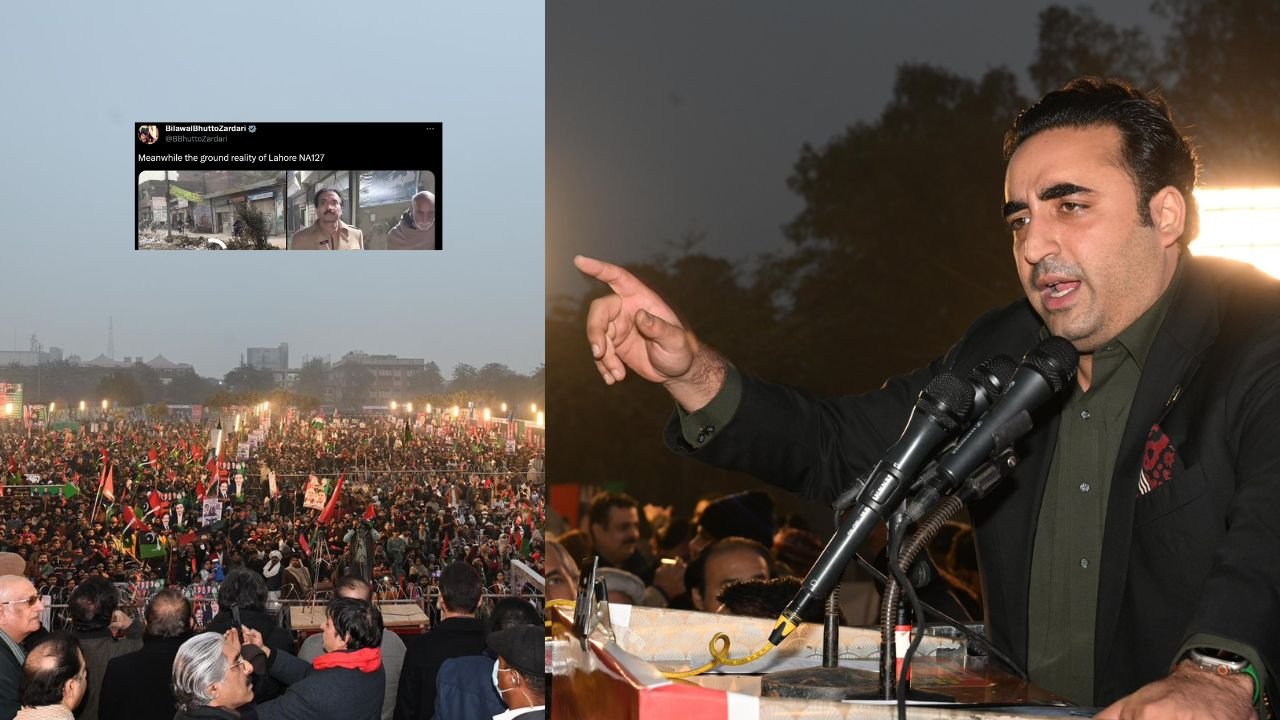
    In an interesting interaction on X (former Twitter), Pakistan Peoples Party (PPP) chairman Bilawal Bhutto Zardari shared videos highlighting the ‘reality’ of NA 127, an important constituency in Lahore.

    Elections are around the corner and candidates from different constituencies are using social media platforms to convince voters to vote for them. Journalist and anchor person Mansoor Ali Khan took to X and shared an image of a banner.

    “Banners displayed in Bilawal’s constituency,” the tweet said while banner stated, “Karachi nahi Lahore Chahiye”.

    Bilawal quote tweeted this with two videos stating, “Meanwhile the ground reality of Lahore NA127.”

    The videos showed debris and garbage in the constituency along with sewerage issues.

    https://twitter.com/BBhuttoZardari/status/1750825107382300907?s=20
  • ‘Ensure uninterrupted Internet access’; Sindh High Court orders on Jibran Nasir’s petition

    ‘Ensure uninterrupted Internet access’; Sindh High Court orders on Jibran Nasir’s petition

    The Sindh High Court (SHC) has issued a directive on Wednesday, instructing the government and the Pakistan Telecommunications Authority (PTA) to ensure uninterrupted internet access until February 8, the scheduled date for the general elections in the country.

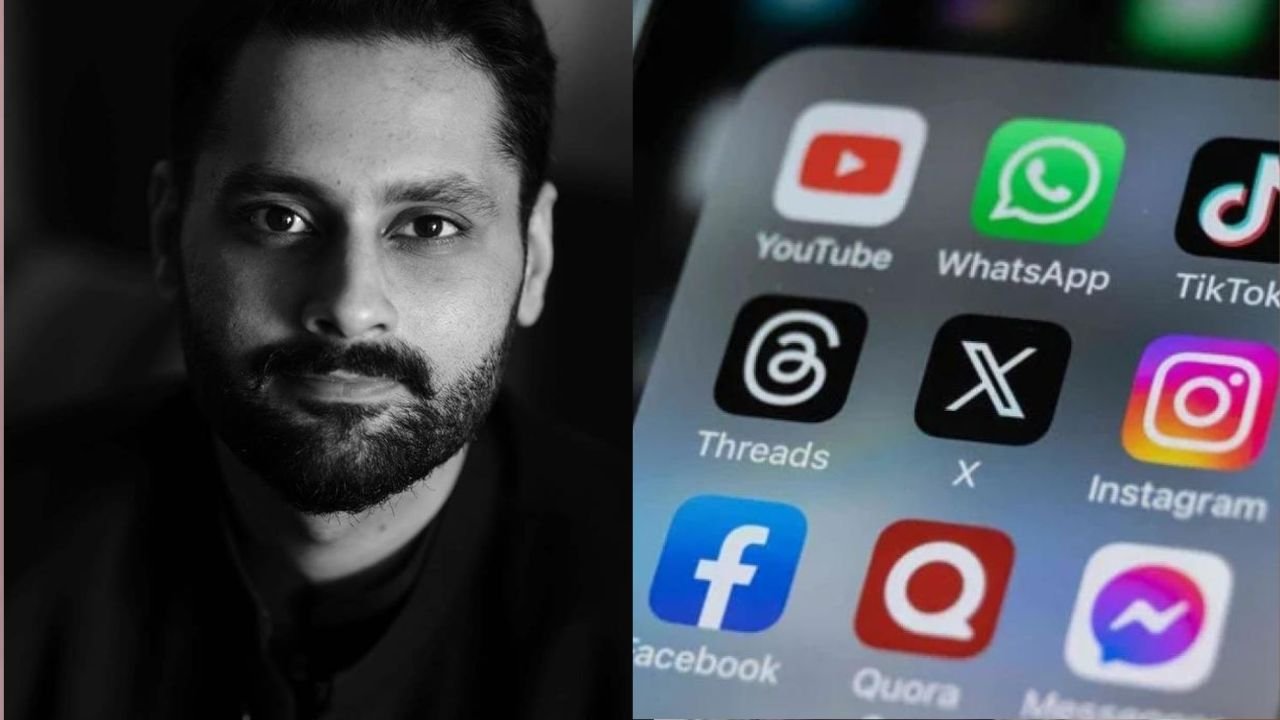
    The order came from a two-member bench led by SHC Chief Justice Aqeel Ahmed Abbasi, following a petition filed by lawyer and independent candidate Jibran Nasir. The petition addressed the recent “unconstitutional” internet outages experienced across the country in the past month.

    Jibran took to X (former Twitter) and said, “SHC has directed PTA and Govt to ensure smooth uninterrupted access to Internet till Election Day 8th Feb to ensure no further pre poll rigging happens and any rigging attempts on Election Day can also be reported through social media.”

    “This is not just stopping the PTI from contesting free and fair elections — which is pre-poll rigging — but is also hindering the way of independent candidates like me,” he stated, highlighting that the internet and social media were efficient and cost-effective platforms to reach out to voters.

    Notably, three nationwide disruptions occurred on December 17, January 7, and January 20, coinciding with virtual events organized by the Pakistan Tehreek-e-Insaf (PTI) on social media platforms. The PTI had recently approached the Supreme Court, urging it to take notice of the suspension of internet services and the blocking of social media websites.

    During a press conference earlier in the week, caretaker Information Minister Murtaza Solangi attributed the outages to “technical” issues and system installations. He also stated that there was “no guarantee” such incidents wouldn’t occur in the future.

    In Nasir’s petition, the PTA, the federal government, and the Ministry of Information Technology and Telecommunications were named as respondents. Nasir argued that the act of shutting down mobile internet and broadband services should be declared as “unconstitutional, illegal, disproportionate, unreasonable, and without lawful authority.”

    The plea further sought the immediate restoration of access to social media platforms and the suspension of any directives restricting access to social media until the conclusion of the general elections.

    In response to the petition, the SHC issued notices to the respondents and directed authorities to ensure uninterrupted internet access until the general elections on February 8. The hearing has been adjourned until January 29.

    Read more: PTA warns of possible internet disruption in next 90 days