Tag: electoral reforms

  • Election Commission adamant about ensuring timely elections

    Election Commission adamant about ensuring timely elections

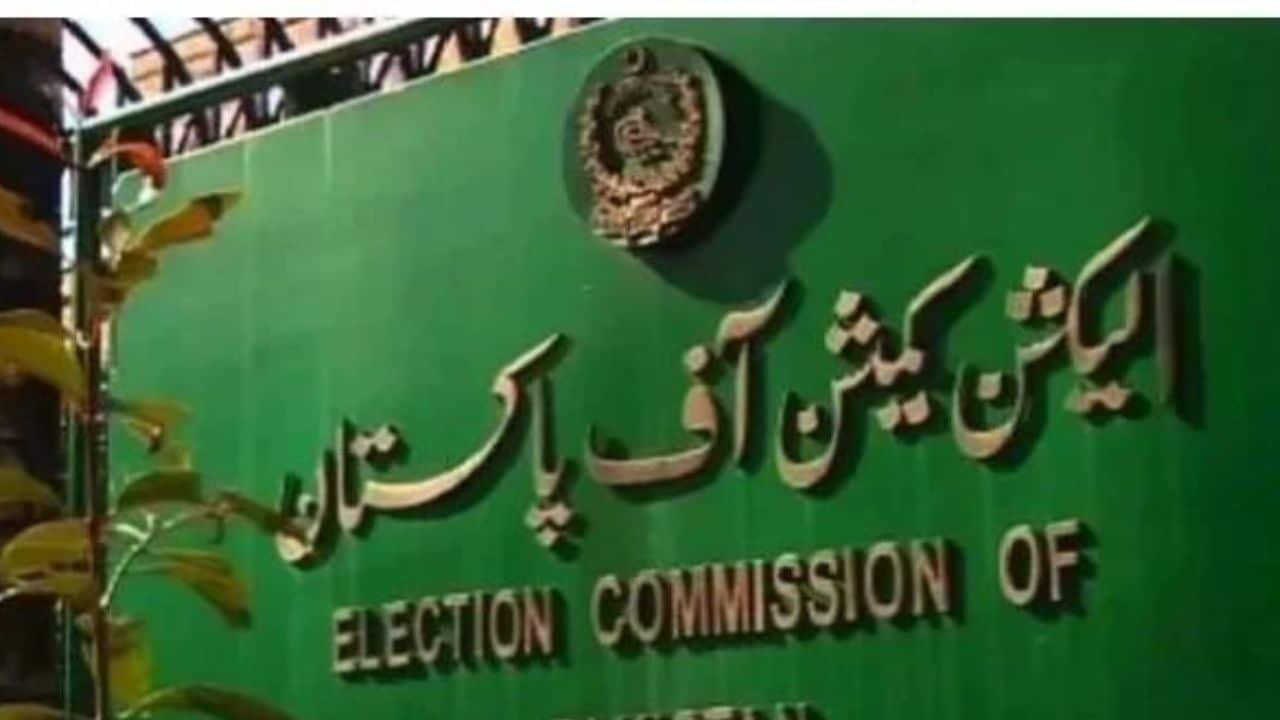
    After completing consultations with political parties, the Election Commission of Pakistan (ECP) on Friday announced that the delimitation process will be finalised by November 30. 

    A statement issued by the electoral body said the purpose of reducing the duration of the delimitation process is to ensure elections are held as early as possible.

    The ECP also said that a date for the elections will also be announced keeping in view the schedule for the delimitation process, adding that the date was announced after deliberation with the parties. 

    A day earlier, the Election Commission said that polls would be held by mid-February at the most or by January end if the delimitation of constituencies is completed earlier. 

    The Election Commission has held consultations with political parties including Pakistan Muslim League Nawaz (PML-N), Pakistan Peoples Party (PPP), Pakistan Tehreek-e-Insaf (PTI), Jamaat-e-Islami (JI), Muttahida Qoumi Movement-Pakistan (MQM-P) Jamiat Ulema Islam-Faiz (JUI-F) and others regarding the road map to general elections. 

    On August 17, the ECP announced the schedule of new delimitations to be carried out as per the new census approved by the Council of Common Interest (CCI) last month. 

    According to the schedule, the new delimitation of the constituencies was expected to be completed in December. However, the date has now been shortened to November. 

    Earlier, the ECP schedule had shown that the fresh delimitation would take nearly four months. 

    Last month, the CCI meeting chaired by then-prime minister Shehbaz Sharif approved the final results of the 7th Population and Housing Census 2023 reporting the country’s population at 241.49 million with a growth rate of 2.55%.

    The CCI approval made it constitutionally mandatory for the ECP to hold elections following fresh delimitations in the light of the results of the 7th census.

    According to Article 51 (5) of the Constitution, the seats of the National Assembly to each province and the federal capital shall be allocated on the basis of population in accordance with the last preceding census officially published.

  • Japan’s ex-PM Shinzo Abe shot dead during electoral campaign

    Japan’s ex-PM Shinzo Abe shot dead during electoral campaign

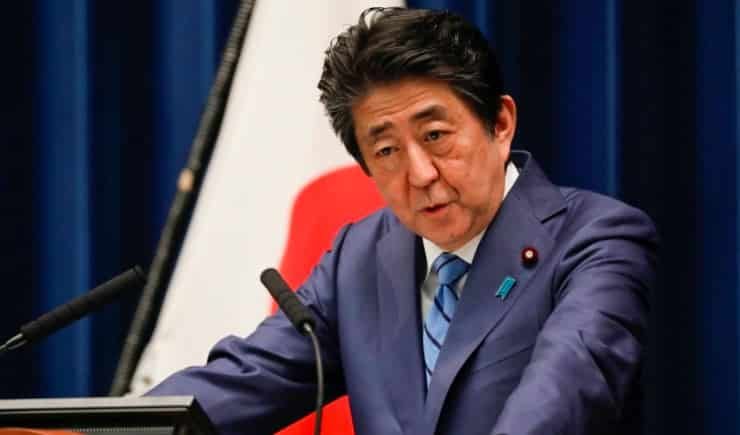
    Former Japanese Prime Minister Shinzo Abe was shot dead on Friday morning while giving a speech in western Japan. He was campaigning for a parliamentary election. Abe was 67.

    Social media videos showed Abe lying bleeding on the ground in the city of Nara, which is close to Kyoto. A few hours later, Prime Minister Fumio Kishida told reporters at a tearful press conference that Abe was in a “very severe condition”. However, he could not sustain the injuries and died. He was shot twice in the neck and left collarbone.

    The suspect reportedly served in maritime self-defence force for roughly three years, up until around 2005. Japanese media reported that he informed the police that he was angry with Abe and intended to kill him.

    The shooter was subdued by security personnel present at the site, and the 41-year-old suspect is currently in police custody.

  • Arif Alvi returns NAB, election amendment bills to PM, says ‘was not informed’ about ‘legislative proposal’

    Arif Alvi returns NAB, election amendment bills to PM, says ‘was not informed’ about ‘legislative proposal’

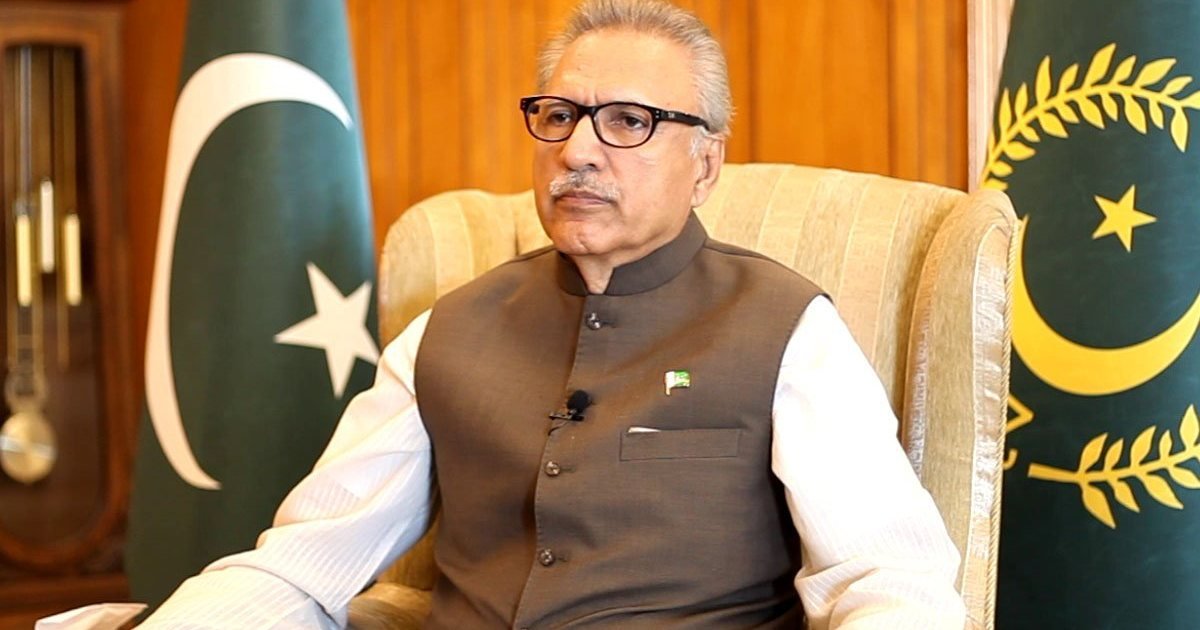
    President Dr Arif Alvi refused to sign the bills seeking amendments in the National Accountability Bureau (NAB) and election laws.

    The bill has been returned back to Prime Minister (PM) Shehbaz Sharif as the president said he “was not informed” about the “legislative proposal” under Article 46 before they were tabled in parliament.

    Last week, the National Assembly (NA) passed bills to scrap election reforms giving overseas Pakistanis the right to vote through i-Voting and electronic voting machines (EVMs), as well as the NAB laws, done during the Pakistan Tehreek-e-Insaf’s (PTI) tenure in power.

    A press release issued by the president’s office said that Article 46 was violated as he was not informed about the legislative proposals before they were brought before parliament. Article 46 states that “the prime minister shall keep the president informed on all legislative proposals the federal government intends to bring before Majlis-e-Shoora (Parliament)”.

  • ‘We want to engage’: Fawad Chaudhry offers conditional friendship to the Opposition

    ‘We want to engage’: Fawad Chaudhry offers conditional friendship to the Opposition

    The Pakistan Tehreek-e-Insaf (PTI) leadership on Tuesday appeared to want to befriend the Opposition and want to reconcile amidst tensions.

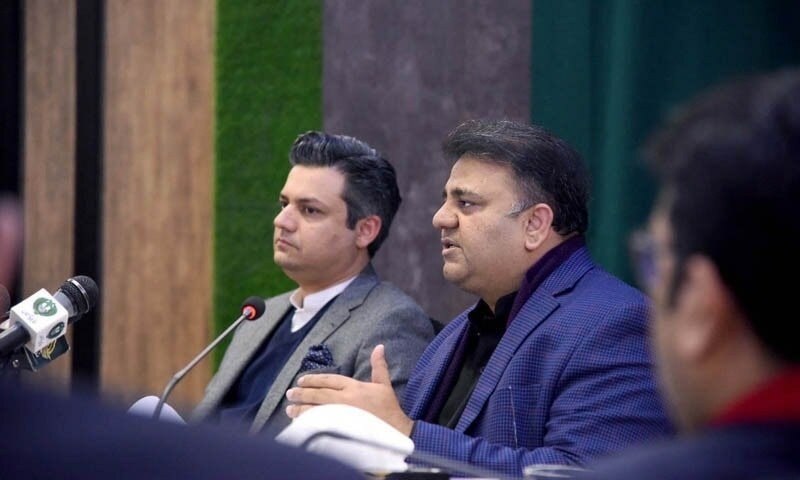
    Informa­tion and Broadcasting Minister Fawad Chaudhry, while addressing a press conference after the federal cabinet meeting, said, “We want to engage the opposition on important national issues like electoral and judicial reforms and the appointment of the National Accountability Bureau (NAB) chairman.”

    Accompanied with Energy Minister Hammad Azhar, Chaudhry said that the National Assembly (NA) Speaker Asad Qaisar and the Prime Minister (PM) himself had invited the Opposition to negotiate on these three issues.

    However, Fawad said that despite constant efforts to engage the Opposition on the government’s reform agenda, they were only interested in formulating conspiracies and trying to topple the government.

    It is pertinent to state here that the Opposition has shown interest in talks with the government, provided the premier himself participated in the talks.

    Fawad categorically said that PM Khan would not sit with any Opposition leader, including Leader of the Opposition in the National Assembly Shehbaz Sharif.

  • ‘All overseas Pakistanis votes shall go to PTI’: Sheikh Rasheed

    ‘All overseas Pakistanis votes shall go to PTI’: Sheikh Rasheed

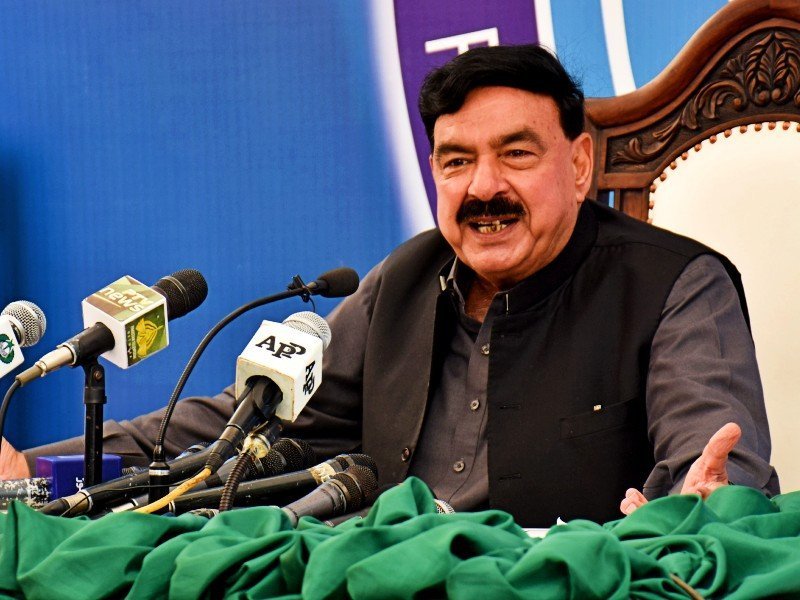
    Interior Minister Sheikh Rasheed on Wednesday, while talking to the media, said that all overseas Pakistanis shall be voting for the ruling Pakistan Tehreek-e-Insaf (PTI) and as a result, the Opposition will have a problem with this.

    “40 of Punjab’s and 80 constituencies of the country will be decided by overseas voters,” said Rasheed.

    “Go to court or do whatever you want, the law has been made and elections will be conducted through the Electronic Voting Machine (EVM),” said the minister.

    Pakistan Muslim League-Nawaz (PML-N) spokesperson Marriyum Aurangzeb commenting on EVMs said, “Elections shall not happen through EVM. Elections and electoral reforms can not be carried out in an undemocratic and authoritarian manner.”

    “They [government] could not get biometrics done for the Corona Fund, Benazir Income Support Programme (BISP) and Health Card, now they are talking about elections on EVM?” added Aurangzeb.

    Aurangzeb further criticising the government said, “Parliament gives funds to the Election Commission of Pakistan (ECP). Funds for national resources and institutions are not Imran Khan’s personal estate.”


  • Joint parliamentary session: All you need to know about what happened

    Joint parliamentary session: All you need to know about what happened

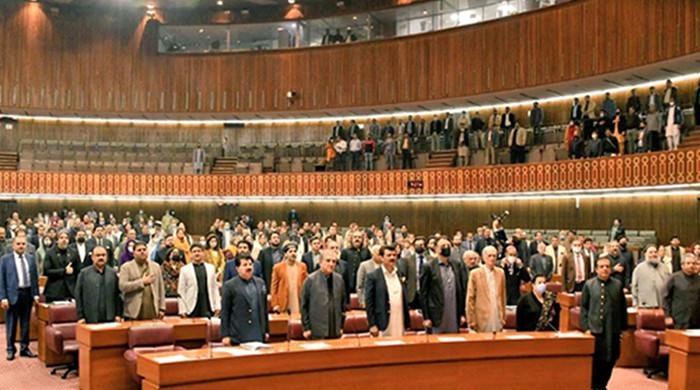
    The much anticipated joint parliamentary session on Wednesday left dark clouds over the future of the country’s legislation system.

    Number game of parliamentarians:

    The government needed a majority in the joint sitting of houses to pass bills where the total strength was 440 members.

    The party position in parliament showed that the treasury had a majority of just two votes if the two Houses were combined together. According to party position, the number of Opposition members in the 440-member joint House came to 219 against 221 treasury members, 221 members of the government and its allies were present with 213 members of the Opposition.

    Bills to be reviewed:

    More than a dozen bills were presented in parliament.

    The major bills: Electronic Voting Machines (EVMs), Voting rights to overseas Pakistanis were passed in the absence of Opposition.

    The other bills include:

    The Anti-Rape (Investigation and Trial) Bill

    The Hyderabad Institute for Technical and Management Sciences Bill, 2021

    The State Bank of Pakistan Banking Services Corporation (Amendment) Bill, 2021

    The International Court of Justice (Review and Re-consideration) Bill, 2021

    Security arrangements:

    The in-house security of the National Assembly (NA) was made to stand in front of the Speaker dice to prevent the Opposition members from reaching the dice and cause a commotion.

    Pakistan People’s Party’s (PPP) leader Hina Rabbani Khar termed the situation as “martial law”.

    https://twitter.com/Hina_RKhar/status/1460907005141467141?s=20

    Ruckus in NA:

    During voting, things got heated up from both sides.

    In a video, PPP’s Qadir Mandokhel can be seen involved in a fight with the government representatives.

    The decorum of the House couldn’t stay still, copies of the agenda books were torn, pieces of paper were thrown at Speaker NA Asad Qaiser.

    A heated exchange of words took place between Qaiser and parliamentarians.

    Qaiser lashing out at the parliamentarians. “Stay within your limits, mend your way of talking.”

    Opposition walkout:

    The Opposition walked out of the House giving the government a chance to pass the bills. They argued that the Opposition’s votes counted were fewer than actual numbers and eventually walked out.

    Session now led by Senate Chairman:

    Speaker Asad Qaiser will no longer be chairing the proceedings after the passage of important legislation. Instead, Senate Chairman Sadiq Sanjrani will lead parliamentary proceedings.

    Reaction:

    Twitterati reacted to the heated situation in parliament.

  • PTI presents three years’ performance charter

    PTI presents three years’ performance charter

    Pakistan Tehreek-e-Insaf (PTI) released the party’s performance since it came into power three years ago. The party under its manifesto of ‘Justice, humanity, and selflessness’ claims to have served the people of Pakistan.

    Diplomacy:

    From prioritising economic diplomacy to highlighting Kashmir’s cause on all international forums, Pakistan witnessed an increase in its global and regional relevance in the past three years.

    PTI in its past three years has been countering Islamophobia. The party has been a long-term facilitator of the peace process in Afghanistan.

    The party claims to be aggressively active in exposing the Hindutva Agenda.

    Ehsaas programme:

    The Ehsaas programme has emerged as the largest social protection programme in history by benefiting almost half of the country’s population. ‘Ehsaas Emergency Cash’ has been declared as the third largest social protection programme in the world.

    The World Bank has listed the Ehsaas Emergency Cash programme among the top four social protection interventions globally in terms of the number of people covered. The programme distributed cash among 15 million underprivileged families after they suffered financially due to Covid-19 related lockdowns.

    Education:

    As per PTI’s claims, the government has done revolutionary initiatives for the education sector.

    A uniform education system has been introduced in the country under the Prime Minister’s auspices. The Single National Curriculum (SNC) has been approved and made functional in the country for students from Grade 1 through 5. One system of Education for all, in terms of curriculum, medium of instruction, and a common platform of assessment so that all children have fair and equal opportunities when it comes to receiving a high-quality education.

    Climate Change:

    In the climate change battle, Pakistan has emerged as an inspiration to the world over the course of the last three years. Pakistan has devised peculiar strategies to deal with environmental challenges.

    Under the supervision of the Ministry of Climate Change, the PTI government has been devoted to protecting the environment. From working on ‘Pakistan Clean Air Program’ to ‘Sustainable Forest Management’, PTI praised itself for the work it has done in this department.

    Pakistan launched a number of initiatives including a landmark “10-Billion Tree Tsunami” project that earned global acclaim.

    Reformation:

    Completing its three years in power, PTI claims to have done tremendous work for the restoration of green belts of ICT, Anti-Encroachment Drive, enhanced capacity of Panah Gahs, online token tax payment, and claim that they are some of the major achievements of the Interior Ministry.

    Digital Pakistan:

    Taking credit for the digital transformation of state media project, initiated by the Ministry of Information & Broadcasting, in view of the vision of Prime Minister Imran Khan for a Digital Pakistan, PTI states to have done landmark work towards the digitalisation and modernisation of state media.

    Electoral reforms:

    Electoral reforms, electronic voting, and the voting process for overseas Pakistanis have been major projects spearheaded by PTI. The party has successfully launched electronic voting to aid the process of having smooth and transparent elections.

    To promote transparency and prevent fraud in the elections, the government has developed a model of the electronic voting machine and submitted it for testing.

    The government states that it has done historic work to address the problems of overseas Pakistanis.

    Covid-19:

    Shining through its three years, PTI’s Ministry of Science and Technology helped manufacturing of agricultural and police drones, locally manufactured ventilators, PPAs, sanitisers, diagnostic kits, and biomedical equipment for Covid-19 protection.

    National Command and Operation Centre (NCOC) led by Federal Planning Minister Asad Umar did a commendable job combating the deadly virus. Covid-19 exposed the terrible state of the health sector but NCOC managed to prop up systems on a war-footing to cope with the emergency.

  • Three-year report card: PTI’s quest to achieve Naya Pakistan

    Three-year report card: PTI’s quest to achieve Naya Pakistan

    As Pakistan Tehreek-e-Insaf (PTI) goes into its third year of being in power, it becomes imperative to review its scorecard and what they have accomplished so far.

    Prime Minister Imran Khan was voted into power based upon the idea of building a ‘Naya Pakistan’. The voters were inspired by a movement that calls for a more equitable approach to governance, particularly one built around the principles of Riyasat-e-Madina.

    Prior to being elected, PTI promised to carry out extensive reforms pertinent to the state’s welfare should they manage to establish a government.

    Governance:

    The PTI government struggled to define its vision and manifest it into an actionable policy based on clear ideas and directives. The party witnessed a continuous shuffle in its cabinet members and lawmakers, sometimes blaming these frequent reshuffles on lackluster performance and incompetence. Every reshuffle saw the party falling into instability which further weakened the overall party narrative of change and transparency.

    Despite having a majority, PTI failed to execute a much-needed face-lift at a provincial level. One of the ruling party’s promises before forming the government was to “spearhead the creation of a South Punjab province on administrative lines”, which is still a work in progress.

    “We want to make Karachi the urban jewel of Pakistan,” the PTI stated in its manifesto. But despite their promises, several projects have yet to be completed.

    PTI aimed to depoliticise the police by building upon Khyber Pakhtunkhwa’s successful police reform model, which was to be replicated nationally. In their own words, the PTI manifesto acknowledges that the police in Pakistan are ill-equipped, poorly trained, deeply politicised, and chronically corrupt. However, very little has been done to enforce the depoliticisation of law enforcement agencies in order to circumvent these deeply entrenched issues.

    Reforming the civil service through transparent and merit-based recruitment with regional representation was another one of the party’s ambitious objectives. Civil service reform also included performance-based promotions and compulsory training at all requisite levels, providing equal opportunities for career advancement. Work is still underway when it comes to reforming the civil service as well.

    Economy:

    Under PTI governance in its first year, the economic growth rate of the country was 5.5 percent, which proceeded to drop to 1.9 percent. During the party’s second year in power, the country witnessed negative growth due to Covid-19. Pakistan’s debt grew from Rs24 trillion to Rs38 trillion in three years.

    From a deficit of $8.56 billion in the calendar year 2019, the current account balance swung into a surplus of $245 million in 2020. But in the first three months of 2021 it swung back to a deficit of $274m, and then registered a further deficit of $188m in April and $632m in May.

    Health:

    A motion to change the name of Benazir Income Support Programme (BISP) faced resistance from the Opposition and was later abandoned. The party instead placed it under the umbrella of Ehsaas — the PTI’s flagship social safety programme.

    The World Bank has listed the Ehsaas Emergency Cash programme among the top four social protection interventions globally in terms of the number of people covered. The programme distributed cash among 15 million underprivileged families after they suffered financially due to Covid-19 related lockdowns.

    Prime Minister Imran Khan’s federal government expanded the Sehat Sahulat Programme on a nationwide scale.

    Over the past three years, the government has announced the extension of health care coverage to journalists, Islamabad police, the transgender community, overseas labourers, and people with disabilities.

    Covid-19:

    National Command and Operation Centre (NCOC) led by Federal Planning Minister Asad Umar did a commendable job combating the deadly virus. COVID-19 exposed the terrible state of the health sector but NCOC managed to prop up systems on a war-footing to cope with the emergency.

    Education:

    Prime Minister Imran Khan said that his focus will be centered on improving public sector education, including madrassas. He also discussed providing young persons with loans to cultivate and promote entrepreneurship.

    A uniform education system will be introduced in the country next year under the Prime Minister’s auspices. The Single National Curriculum (SNC) has been approved and made functional in the country for students from Grade 1 through 5. One system of Education for all, in terms of curriculum, medium of instruction, and a common platform of assessment so that all children have fair and equal opportunities when it comes to receiving a high-quality education.

    In May 2019, the Ministry for Federal Education started the registration process for madrassas in the country. In October of the same year, the Directorate General of Religious Education (DGRE) was set up.

    The party had promised to provide stipends for female secondary school students and to prioritize the upgrade and establishment of schools for girls.

    The Kamyab Jawan Programme (KJP) was launched in October 2019. It is a small-and-medium-enterprise lending scheme, aimed at stimulating job creation and economic empowerment for young persons.

    Furthermore, the Hunarmand Jawan programme is another PTI initiative that aims to promote economic emancipation amongst young people through high-quality training.

    Accountability:

    Prime Minister Imran Khan has been categorically saying that his government would not interfere with the process of accountability and that “every corrupt individual” would have to face justice irrespective of their status or party.

    The National Accountability Bureau (NAB) has seemingly been the most active throughout PTI’s tenure. The anti-graft body had recovered 484 billion PKR over a span of two years from 2018 to 2020. On the contrary, previous governments had managed to recover a mere 290 billion PKR from 1999 to 2017.

    However, the Supreme Court has criticised NAB for “selectively applying its law on individuals” and said that there is a widespread perception of the NAB laws “being employed as a tool for oppression and victimisation of political opponents by those in power”.

    Freedom of speech:

    The PTI government has been determined to control the media through new laws, which will eventually span electronic, print, and digital media platforms.

    Pakistan has recently been criticized both internally and externally for the issues surrounding freedom of speech within its borders.

    Pakistan ranks at 142 on the Reporters Without Borders (RSF) Press Freedom Index. According to the Pakistan Press Freedom Foundation’s report, Pakistan has witnessed the murders of 72 journalists since 2002. Most of these cases remain unsolved.

    Pakistan Media Development Authority (PMDA) has been described in the Ordinance as “an independent, efficient, effective and transparent authority, which will regulate all forms of media, including digital media”.

    Under the Ordinance, print and digital media organisations will also need a license to operate in the country.

    Media bodies and organisations have vehemently opposed the PMDA and criticised it.

    Electoral Reforms:

    PTI has worked towards electoral reforms with great vigor, stating that electronic voting is the only way to ensure transparency and prevent rigging.

    Electoral reforms, electronic voting, and the voting process for overseas Pakistanis have been major projects spearheaded by PTI. The party has successfully launched electronic voting to aid the process of having smooth and transparent elections.

    On June 10th, the National Assembly passed the Elections (Second Amendment) Bill which pertains to fair, free, and transparent elections through a more contemporary approach to technology.

    PTI sees overseas Pakistanis as an asset to the country and has worked to involve them in the election process.
  • We are most affected by the ‘wife’ clause, says PPP’s Naveed Qamar

    We are most affected by the ‘wife’ clause, says PPP’s Naveed Qamar

    The Parliamentary Committee on Legislative Business witnessed objections over a clause of the Electoral Reforms Bill, which calls for disclosing the number of wives with parliamentarians saying they will take it up in the relevant Senate Committee for necessary amendments, reports The Express Tribune.

    Federal Minister for Planning and Development Asad Umar, who was part of the parliamentary meeting, questioned: “We are asked how many wives you have. What is this? What have wives got to do with this?”

    Pakistan Muslim League-Nawaz’s (PML-N) Shahid Khaqan Abbasi, Ayaz Sadiq, and Pakistan People’s Party’s (PPP) Naveed Qamar, too, raised questions over the Electoral Reforms Bill.

    Naveed Qamar said that the PPP was the most affected by the wives’ clause.

    A committee had been set up by Deputy Speaker National Assembly Qasim Suri to approve the bills. A no-confidence motion against the deputy speaker was moved by the Opposition after which Speaker National Assembly Asad Qaiser formed a committee to review the bills.

    Ayaz Sadiq said that if the House is to be run, the bills should be brought to the committee. “We should create terms of reference, important legislation should be made in this committee. If the minister or member has introduced the bill, he can withdraw it in the House.”

    Abbasi said, “Twenty-one days have passed and according to the law, we cannot change it.”

  • ’PPP not discussed in PDM’: Maulana Fazl

    ’PPP not discussed in PDM’: Maulana Fazl

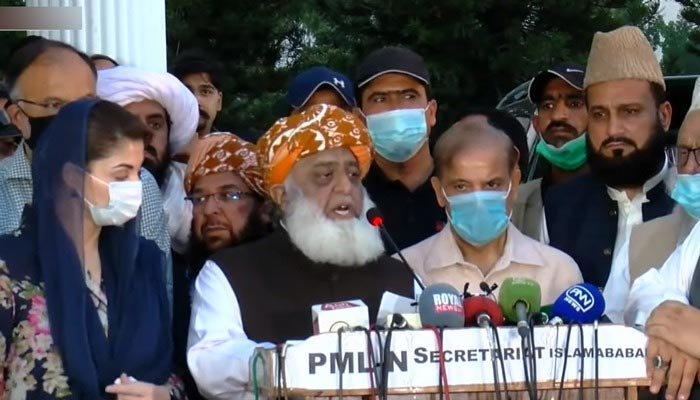
    Pakistan Democratic Movement (PDM) chief Maulana Fazl ur Rehman on Saturday said that the Pakistan People’s Party (PPP) and Awami National Party (ANP) were not discussed in the forum, as they are not part of the alliance.

    “They [PPP] can still contact the PDM leadership and apprise them about their intentions. But it is not something that we will waste time over anymore during PDM meetings,” said Maulana Fazl.

    Earlier on Friday, Shehbaz Sharif said that no party has the right to bring or kick another party out of the alliance. “PDM is a forum and decisions are taken with consensus.”

    PDM also rejected the government’s “one-sided” electoral reforms, which include the use of electronic voting machines (EVMs), and announced a fresh wave of anti-government protests.

    “PDM rejects the government’s unilateral electoral reforms ordinance, including the voting machines, and terms it as pre-poll rigging,” said Fazl.

    In this regard, the Election Commission of Pakistan, which is responsible for holding transparent elections, should call a meeting of all political parties to take a unanimous decision on reforms, Fazl added.

    The Opposition alliance announced a future course of action. On July 4, a massive anti-government protest will be held, followed by another one in Karachi on July 29.

    On the occasion of August 14, a massive protest will be held in Islamabad, with PDM showing solidarity with Kashmiris and Palestinians.

    The Pakistan Muslim League-Nawaz (PML-N) will host a budget seminar soon to form a unified strategy during the budget session, while the task to hold the event has been given to PML-N President Shehbaz Sharif.

    The PDM chief said PML-N supremo Nawaz Sharif attended the meeting via video, while other Opposition party leaders were present in person.