Tag: electric cars

  • Deepal S07 electric SUV launched in Pakistan with a price tag of Rs16.5 million

    Deepal S07 electric SUV launched in Pakistan with a price tag of Rs16.5 million

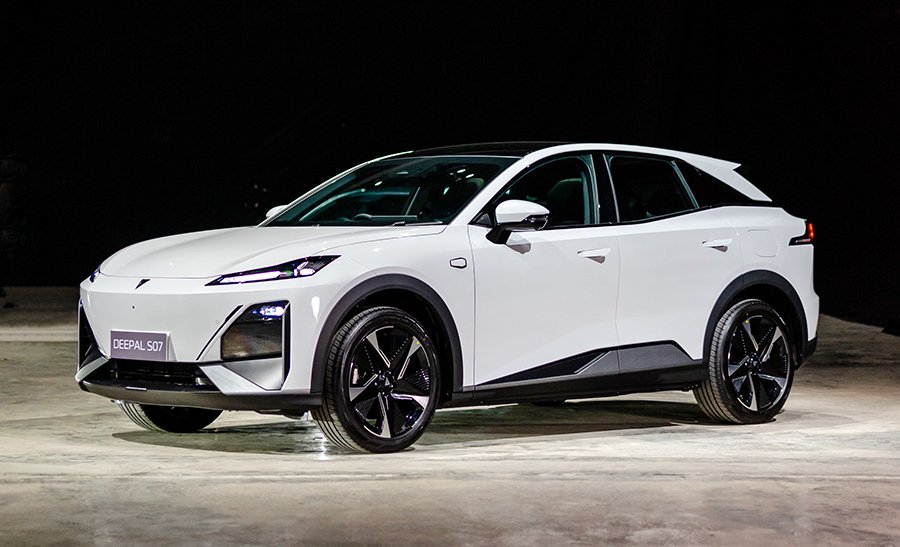
    Master Changan Motors Limited has launched its electric vehicle (EV) brand in Pakistan, unveiling the Deepal L07 sedan and Deepal S07 SUV at an event held at Dolmen Mall Clifton in Karachi on Friday.

    The company has opened pre-bookings for the vehicles, with prices starting at Rs15.5 million for the Deepal L07 and Rs16.5 million for the Deepal S07.

    In a significant move, Master Changan Motors announced plans to invest $50 million across the entire EV value chain in Pakistan. This investment will include the development of EV charging infrastructure nationwide.

    The company is also gearing up to begin completely knocked down (CKD) manufacturing of these vehicles within the next eight to 10 months.

    Both the Deepal L07 and S07 models boast an impressive range of approximately 500 kilometres on a full charge, with charging times estimated to be around four hours.

    “Deepal is a collaboration between Huawei, battery manufacturer CATL, and Changan,” said Master Changan CEO Danial Malik. “Over the next two years, we will be investing $50 million across the EV value chain and launching four new models in various segments.”

    Speaking on the broader impact of electric vehicles, Shabiruddin, the company’s Director of Sales and Marketing, highlighted the potential benefits for Pakistan. “Currently, 59 per cent of Pakistan’s energy consumption is derived from fossil fuels. EVs can address three key issues: reducing pollution, lowering oil imports, and supporting climate change initiatives.”

  • Tesla cancels affordable electric car, shifts focus to Robotaxis

    Tesla cancels affordable electric car, shifts focus to Robotaxis

    Tesla has made a significant shift in its strategy, announcing the cancellation of its long-awaited affordable electric car, a move that has left investors and consumers stunned.

    The decision, revealed by three reliable sources familiar with the matter and corroborated by company messages obtained by Reuters, marks a departure from Tesla’s earlier mission of bringing affordable electric vehicles to the masses.

    The automaker, instead, will pivot its resources towards the development of self-driving robotaxis, utilizing the same small-vehicle platform, according to insiders. This strategic redirection signifies a significant deviation from Tesla CEO Elon Musk’s previous commitments and vision outlined in the company’s initial “master plan” in 2006.

    Musk, who has often emphasized the goal of making electric cars accessible to a broader audience, had initially promised investors and consumers an affordable vehicle following the success of luxury models. However, despite repeated assurances from Musk, including as recent as January, wherein he outlined plans for production at Tesla’s Texas factory by the second half of 2025, those aspirations have been dashed.

    Tesla’s cheapest model currently available, the Model 3 sedan, comes with a price tag of approximately $39,000 in the United States. The now-scrapped entry-level vehicle, often referred to as the Model 2, was anticipated to be priced around $25,000.

    In response to inquiries, Tesla remained silent, offering no official comment on the matter. However, Musk took to social media platform X to dispute the Reuters report, without specifying any inaccuracies, leading to a momentary fluctuation in Tesla’s stock prices.

    Following Musk’s online intervention, where he hinted at an upcoming Tesla Robotaxi unveiling, the company’s shares experienced a rebound in after-hours trading. This abrupt change in direction comes amidst mounting competition in the global electric vehicle market, particularly from Chinese manufacturers offering vehicles at significantly lower price points.

    The decision to prioritize the development of self-driving robotaxis, though potentially lucrative, poses considerable engineering challenges and regulatory hurdles, as highlighted by industry experts.

    Leaks reveal that the decision to scrap the Model 2 was communicated to employees in a meeting held in late February, further underscoring Tesla’s strategic pivot in the face of evolving market dynamics.

  • Toyota is working on fake manual transmission to add excitement to electric cars

    Toyota is working on fake manual transmission to add excitement to electric cars

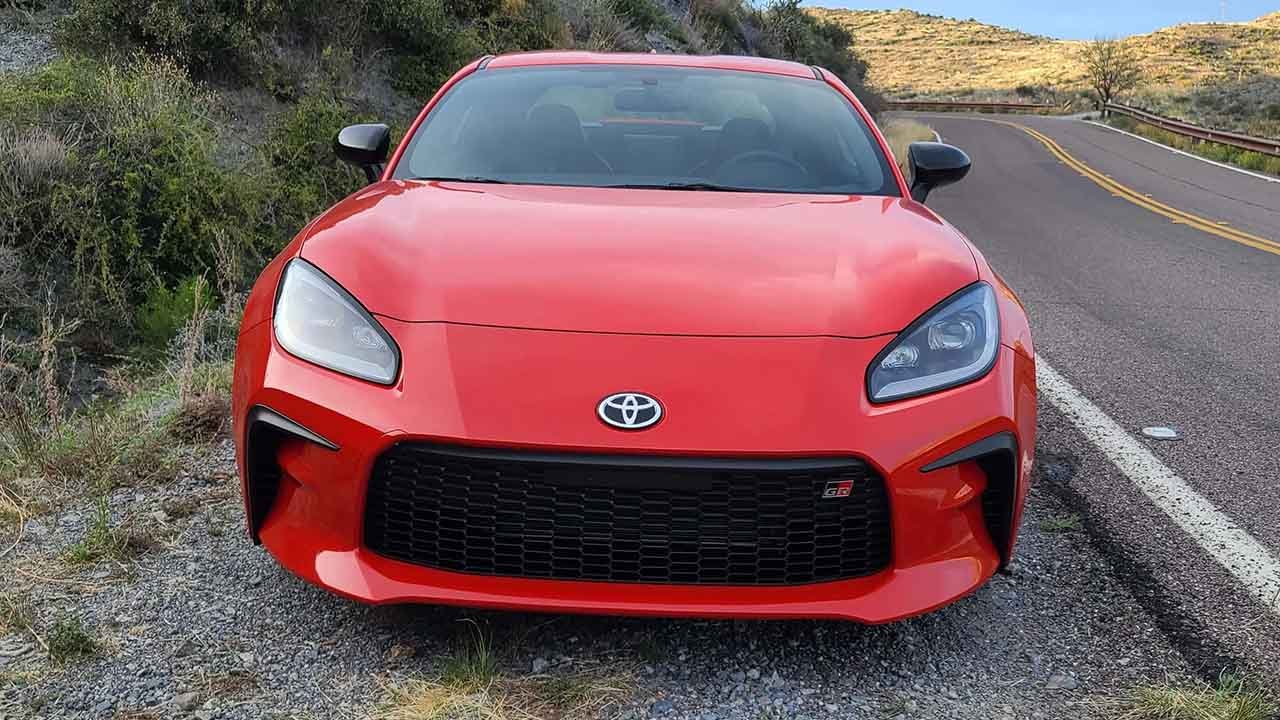
    Toyota engineers have taken a unique approach to attract consumers who find electric cars lacking excitement by working on a realistic-feeling fake manual transmission as a potential feature.

    Although a manual transmission in an electric vehicle would serve no functional purpose, it would cater to enthusiasts who enjoy the experience of shifting gears in their conventional gasoline-powered cars.

    Toyota, a brand historically skeptical of electric vehicles, has been planning a more aggressive foray into the sector. Acknowledging the need to appeal to a diverse range of consumers, the development of features such as a fake manual transmission aims to entice individuals who are not captivated by the typical smoothness and simplicity associated with electric vehicles.

    It is worth noting that the majority of gasoline-powered cars sold in the United States today are equipped with automatic transmissions that require no driver input for shifting gears.

    Manual transmissions, which require the driver to operate a clutch pedal and maneuver a gear stick, are often offered as options for performance cars or inexpensive models. However, manual transmissions are more prevalent in other parts of the world, including Europe.

    In the case of Toyota’s innovation, as revealed in a recent patent application filed in the United States in late May, the electric car would not possess an actual multi-speed transmission. Instead, a shifter would be connected to sensors and a central computer programmed to replicate the sensation of driving a car with a manual transmission.

    Since manual transmission cars vary in terms of engines, transmissions, and gear ratios, the central computer would be programmed to emulate a specific type of manual transmission car. In addition to the conventional brake and accelerator pedals, the driver would also have a clutch pedal to complete the simulated experience.

    Furthermore, drivers will have the ability to “downshift” or engage in engine braking. This process involves selecting a lower gear and releasing the clutch pedal without pressing the accelerator, allowing the friction of the unpowered engine to slow the car without the need for brakes.

    Toyota’s virtual manual transmission incorporates programming that enables drivers to experience the sensation of operating it poorly, to a certain extent.

    If the driver fails to provide sufficient acceleration or selects an incorrect gear, the car will simulate the shaking and bucking experienced in a gas-powered vehicle with a manual transmission. However, the car’s computer will limit the intensity of these effects to prevent undue strain on the battery.

    Importantly, if drivers prefer not to use the fake manual transmission, the car will offer two driving modes: a regular electric vehicle mode and the faux-manual mode.

    While some reports suggest the inclusion of fake engine sounds to accompany the shifting and accelerating actions, the patent application does not explicitly mention it. The availability, timing, and target markets for the electric vehicle equipped with the simulated manual transmission remain uncertain at this point.

    Toyota’s innovative endeavor showcases the company’s commitment to diversifying its electric vehicle offerings and catering to a wider range of consumer preferences.

    By blending the familiarity of manual transmissions with the benefits of electric vehicles, Toyota aims to capture the attention of enthusiasts while providing an engaging driving experience in an increasingly electrified automotive landscape.
  • iPhone manufacturer Foxconn shifts focus to electric cars amidst US-China strained relations

    iPhone manufacturer Foxconn shifts focus to electric cars amidst US-China strained relations

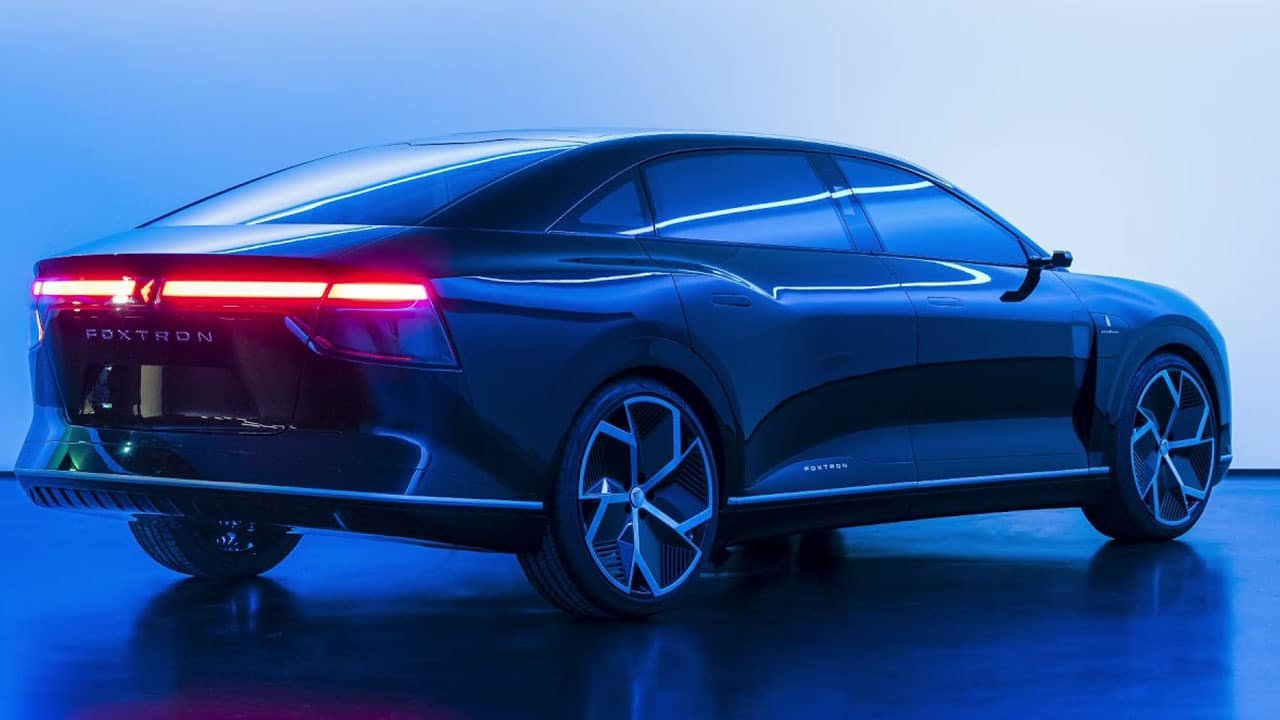
    Taiwanese manufacturer Foxconn, renowned for its production of iPhones, has announced a strategic shift towards electric vehicles (EVs) amidst the strained relations between the United States and China.

    In an interview with the BBC, Chairman Young Liu conveyed the company’s intent to make substantial investments in the EV sector while concurrently diversifying its supply chains away from China.

    Liu acknowledged the importance of peace and stability between the two nations but emphasised the necessity, from a business standpoint, to consider contingency plans for adverse scenarios.

    In response to the prevailing geopolitical tensions, Foxconn has already commenced the relocation of certain production lines from China to alternative locations in Mexico and Vietnam.

    This decision comes as Foxconn finds itself embroiled in a contentious dispute, with Beijing claiming Taiwan as part of China and President Xi Jingping reiterating commitments to “reunification.” Meanwhile, the United States has expressed unequivocal support for Taiwan’s independence, with the looming specter of invasion having cast a shadow over the island nation for years.

    Having originated in 1974 as a manufacturer of television dials, Foxconn has emerged as a global technology powerhouse, amassing revenues of $200 billion. Responsible for over half of Apple’s product output, including iPhones and iMacs, the company also serves an array of esteemed clients such as Microsoft, Dell, and Amazon.

    Foxconn’s unique position as a company that designs products in the United States while predominantly manufacturing them in China has left it navigating a delicate equilibrium between the two global superpowers.

    Chairman Liu articulated his vision of capturing approximately 5 per cent of the global electric vehicle market within the coming years. He outlined plans for establishing Foxconn EV manufacturing facilities in Ohio, United States, as well as in Thailand, Indonesia, and potentially India.

    By pivoting toward electric cars, Foxconn seeks to leverage its technological prowess and industry influence to secure a significant stake in the evolving EV landscape.

  • Hyundai’s upcoming car can run house appliances

    Hyundai’s upcoming car can run house appliances

    Electric vehicle (EV) makers are always looking for ways to increase the appeal of their potential buyers by increasing the novelty and utility of their cars.

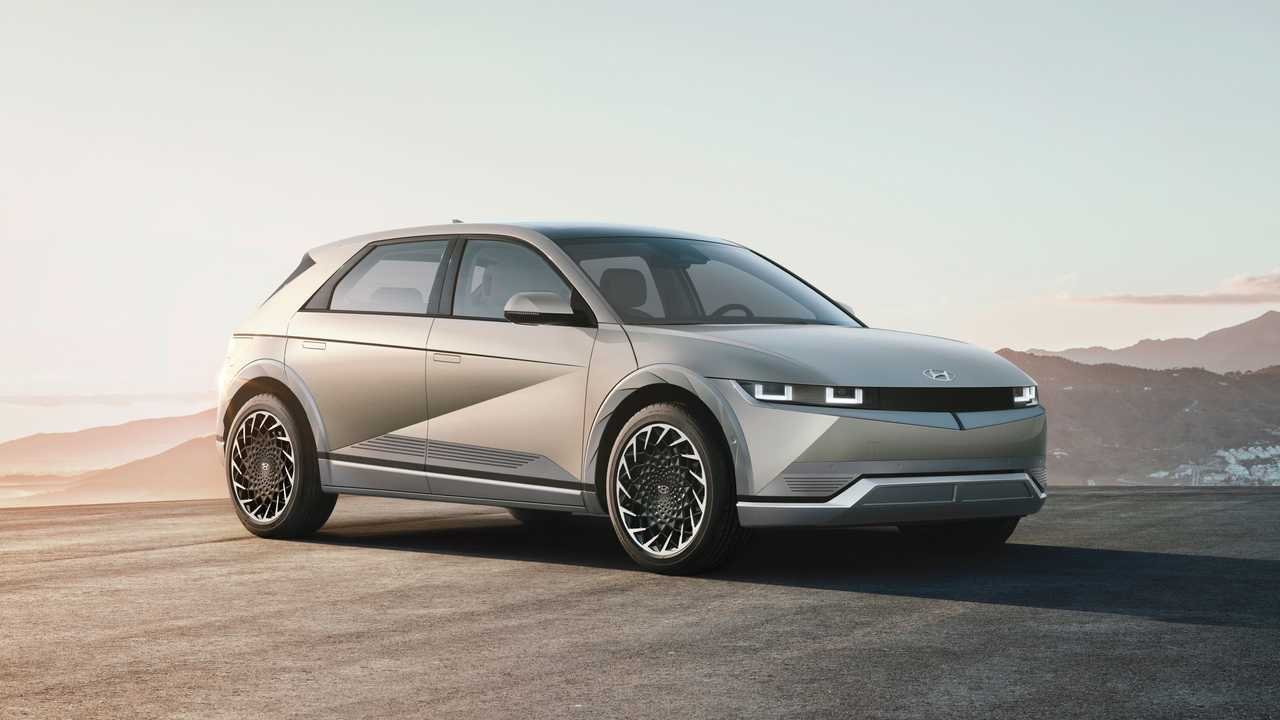
    The latest example is of Hyundai’s Ioniq 5. One of its commercials shows a group of happy and energetic individuals on a camping trip enjoying activities like working out, cooking meals, and watching TV, with all their electronic appliances connected to the Ioniq 5.

    Ioniq 5 can give 3.5 Kilowatt (KW) of power to run appliances like refrigerator, treadmill or run a stove.

    Hyundai aims to seek the attention of young people and they are trying to catch up with the EV pioneers like Tesla and the Volkswagen Audi Group (VAG), among others.

    Hyundai claims to be the first automaker that has developed a car capable of both power consumption and power supply features.

    To meet the competition, General Motor Company (GMC), Tesla and Rivian will also add this feature to their upcoming cars.

    Hyundai has also added the option to add solar power to the car, and it will give an additional 1,300 Kilometer (KM) range to travel.

    Pakistanis often argue that such developments are of no relevance to our market, but bear in mind that the normalisation of EVs across the globe is inevitable, which is why Pakistan’s goal should be to promote EVs in a positive light to facilitate a paradigm shift in Pakistan’s growing automotive market.

  • ‘Vision-S’: Sony surprises consumers with electric concept car

    Many tech companies have been trying to diversify their portfolio but for Sony to launch a futuristic self-driving electric (E)-car is unprecedented.

    At Consumer Electronics Show (CES) 2020 in Las Vegas, Sony surprised the world by showcasing their Vision-S sedan car, which is a fully electric concept car.

    The Vision-S features 33 different sensors inside and outside of the car, multiple widescreen displays, 360 audio, and always-on connectivity, with other items installed after collaboration with companies like BlackBerry and Bosch.

    The Vision-S has 200 kilowatts (kW) dual electric motors connected with all wheels which give an impressive acceleration of 0-62 miles per hour (mph) in 4.8 seconds, along with a top speed of 149 mph, which is 239 in kilometres per hour (kph).

    The interior is very futuristic as one might expect. The stand-out feature is a panoramic touchscreen dashboard linked to Sony’s 360 Reality Audio that gives you a truly immersive experience while driving.

    There have been reports suggesting that due to the hype surrounding the new concept car, Sony is now going to work on an actual car that we can expect to see on the roads in less than six month.

    Check out Sony’s official reveal of the Vision-S sedan

  • Islamabad to get an electric vehicle charging station

    Federal Minister for Science and Technology Fawad Chaudhary has announced that the first electric vehicle (EV) charging station will be launched in Islamabad.

    “Extremely excited to see the launching of first Electric Car Charging Station in Islamabad,” the minister wrote in a tweet.

    He added that the first flagship EV charging facility will be set up at Jinnah Avenue Islamabad soon.

    “The opening of EV charging stations was another target of Ministry of Science and Technology to encourage E-vehicles as future transportation,” he said.

    As the country approved its first-ever electric vehicle (EV) policy last month, vehicles in Pakistan will be shifted on electric power. Under the policy, motorcycles and vehicles would be shifted on electric power, while EV Manufacturing Units would also be established in the country.

  • ‘Pakistan to introduce battery-powered electric buses,’ says Fawad Ch

    ‘Pakistan to introduce battery-powered electric buses,’ says Fawad Ch

    Federal Minister for Science and Technology, Fawad Chaudhry has revealed that Pakistan will become the first country of South Asia which would introduce battery-powered electric buses in the country.

    The minister in his Twitter message has said that the budget of science and technology has increased up to 600% in the current year, adding that he would make efforts to hike the budget to 1000 per cent next year.

    Fawad credited Prime Minister (PM) Imran Khan for his special attention in the sci-tech sector, saying that the government has brought back the country to research and development with the support of the PM.

    Chaudhry said that ministerial commissions are being established with Russia and the government is now focused on the European Union (EU) and United States (US).

    He said, “It is our failure for not manufacturing engines, but we will make up solar panels and lithium batteries in the next three years. The energy system of the country will be completely changed.”

    The minister further announced that Jhelum biotech park will become the largest herbal medicine park of South Asia, whereas, Pakistan will be the first country which would manufacture battery-powered [electric] buses in the region.

    On November 20, it emerged that the government had set to launch electric buses in Pakistan to combat air pollution. The federal government has reportedly signed a Memorandum of Understanding (MoU) with private ride-hailing service to introduce electric vehicles in the country.

    The MoU was signed by Fawad Chaudhary and CEO of bus hailing service in Islamabad on Tuesday, according to Radio Pakistan.

    Under this agreement, the company will introduce electric battery-powered buses and also spend Rs12 billion to expand its transport bus service in the country.