Tag: electricity

  • PPP leader Saeed Ghani terms Punjab govt’s relief in bills a ‘political stunt’

    PPP leader Saeed Ghani terms Punjab govt’s relief in bills a ‘political stunt’

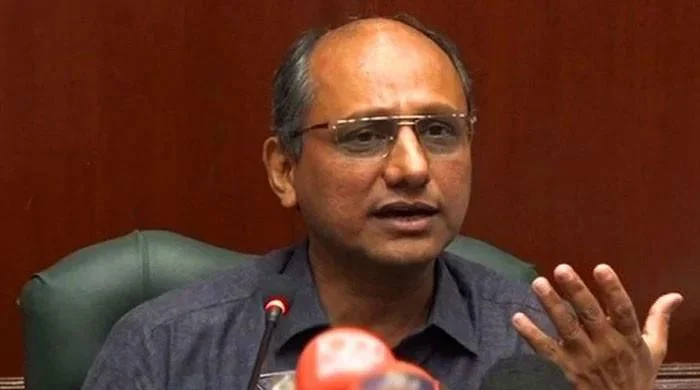
    Sindh Minister for Local Government Saeed Ghani mocked the Punjab government’s recent move to give relief to the masses by reducing electricity prices for just two months, terming it a “political stunt.”

    He said this in response to Punjab’s government’s decision to provide relief to the public by rescuing Rs 14 per unit on electricity bills for two months (August and September).

    Ghani remarked that it was the federal government’s responsibility to provide people with cost-efficient electricity, saying, “Rs 45 billion are being expended for relief for two months only, while scores of relief works could be done with that Rs 45 billion.”

    “The question is what will happen after two months. The consumers will be paying the same [high] prices,” the PPP leader stated.

    Interestingly, Governor Sindh Kamran Tessori asked Chief Minister Murad Ali Shah on Sunday to announce a Punjab government-like relief in electricity bills.

  • ‘Good news’ coming soon on electricity prices: Shehbaz Sharif

    ‘Good news’ coming soon on electricity prices: Shehbaz Sharif

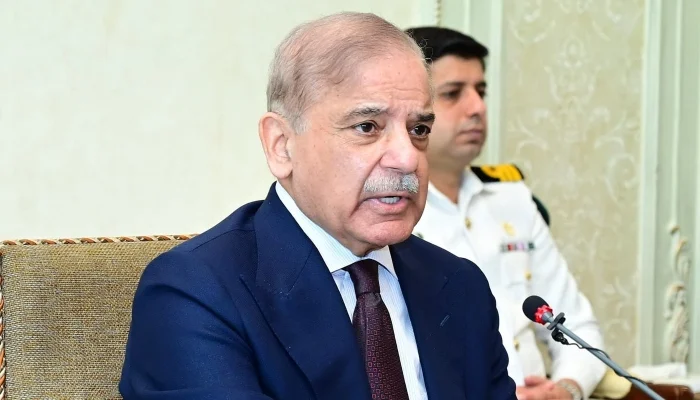
    Prime Minister Shehbaz Sharif said on Wednesday that he will give the nation “good news” regarding reduced electricity costs and a new economic reform plan.

    “Today, there is inflation. People are worried about electricity bills and other problems. However, if not all is good in the country, not all is bad,” said the PM.

    “Our primary focus is on reducing power prices to provide relief to domestic consumers, agriculture, industry, exports, and business sectors. This is essential to navigate the current economic challenges. The competitiveness of our exports is directly linked to affordable electricity,” stated the premiere in an address to newly appointed officials of power distribution companies (DISCOS) on Tuesday.

    He highlighted that the Special Investment Facilitation Council (SIFC) was committed to lowering energy costs, which have placed a significant burden on the debt-ridden nation.

    He pointed out DISCOS’s inefficiencies and corruption, which have led to power theft costing around Rs 500 billion annually.

    “This is your greatest challenge. The government has deliberated on how to improve the system. You must give your best,” the PM stated, stressing that DISCOS officials’ appointments have been made on merit.

  • Employees getting Rs 15 billion of free electricity: Secretary Power Division

    Employees getting Rs 15 billion of free electricity: Secretary Power Division

    The Senate’s Standing Committee on Energy has been briefed by the Secretary of Power Division that 190,000 employees are being given free electricity worth 15 billion rupees annually.

    He said, “Our electricity demand for industry is about 25 percent, decreasing over time.”

    The Secretary explained that 25 million employees of 400 units received a 592 billion subsidy, which has now increased by Rs 692 billion. “244 billion was taken from industry and given to domestic consumers,” he told the Committee.

    Senator Mohsin Aziz remarked, “IPP has become a dragon, and people are on the streets.”

    The federal minister for power and energy said, “Even if we get five rupees from IPP payments, we will help poor people.”

    The minister opined that electricity theft can be reduced with privatisation and digitisation.

  • No immediate relief in sight for high electricity costs, experts warn

    No immediate relief in sight for high electricity costs, experts warn

    Experts have little hope for a reduction in Pakistan’s high electricity prices. The government has turned electricity and petroleum products into revenue sources, and Independent Power Producers (IPPs) face no performance checks or contract revisions, they said, adding that it gives the generators unchecked freedom.

    Experts discussed the issues with DAWN at a seminar titled Pakistan Energy Crisis and IPPs: How Overbilling Impacts Quality of Life and Pathways to Solution, held at the Applied Economics Research Centre (AERC), University of Karachi on Thursday.

    Experts highlighted that over-billing and high electricity costs have become a crisis, adversely impacting poor and middle-income households. This crisis affects their spending on health, education, food, and transport.

    AERC Assistant Professor Dr. Aamir Siddiqui stated that electricity charges are unlikely to decrease soon because the government uses petrol and electricity as revenue sources. With around 100 IPPs and numerous suppliers in the country, electricity prices should at least be stable, but they continue to rise.

    He also noted that Pakistan generates more power than needed, yet load shedding persists. Despite this, the government is not addressing the quality and services of IPPs or revising their contracts, even though payments are made in dollars or equivalent exchange rates.

    Dr. Muhammad Saber, Principal Economist at the Social Policy and Development Center in Karachi, stated that electricity rates will not decrease until the government prioritises public welfare over its own interests. He pointed out that many contracts with IPPs were signed without considering public benefit, and even IPPs not supplying electricity receive timely and full payments.

    AERC Assistant Professor Dr. Fauzia Sohail mentioned that the residential sector is the largest consumer of electricity, followed by the industrial sector. Low and middle-income households are particularly affected by over-billing. Rising electricity charges force people to cut spending on essentials like health, education, food, transport, and housing. This not only adversely impacts these amenities but also drives some low-income individuals below the poverty line, especially in Karachi.
  • Over 1,500 booked after crackdown on electricity thieves in Matiari

    Over 1,500 booked after crackdown on electricity thieves in Matiari

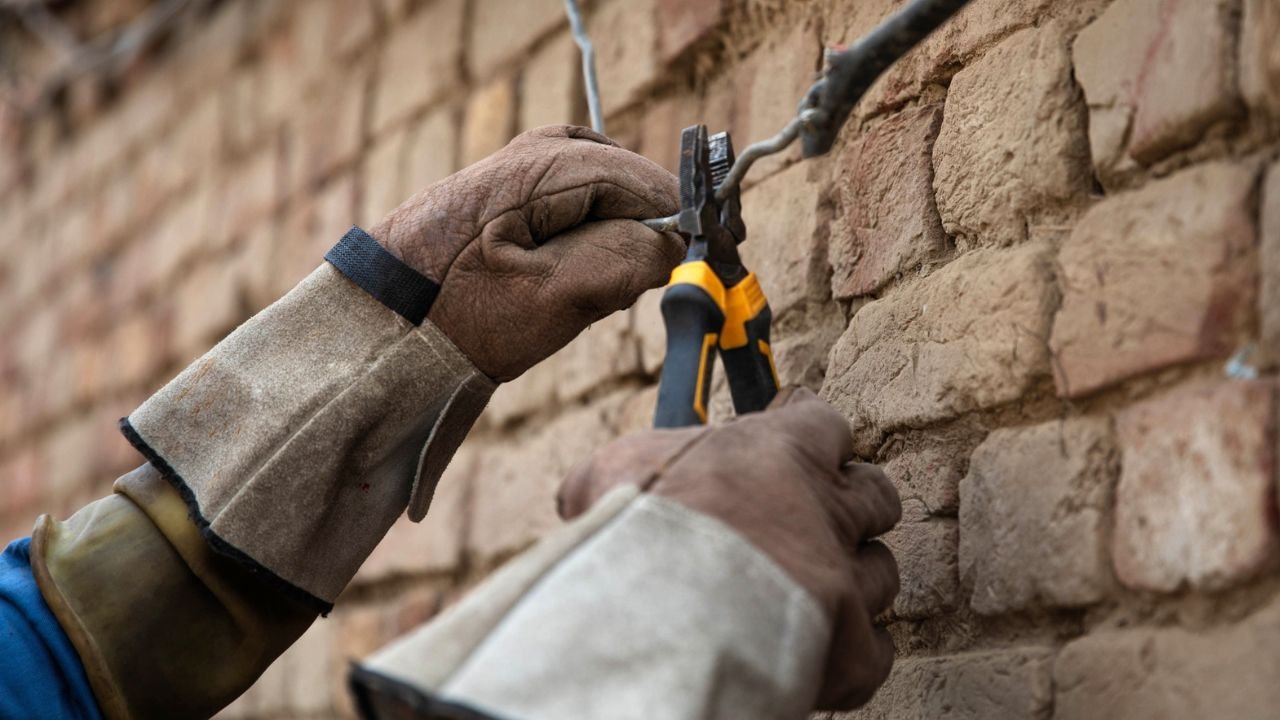
    Hyderabad Electric Supply Company (HESCO) officials have filed 10 cases of electricity theft against over 1,500 individuals during a crackdown on electricity theft in Matiari.

    The cases have been registered at the Hala, New Saeedabad, and Matiari police stations, naming over 1,500 electricity thieves, Geo news reports.

    HESCO officials reveal that approximately 60 per cent of electricity is being stolen across the district. To address this issue, they have initiated a crackdown, registered cases in the first phase, and will begin making arrests in the next phase.

    Many citizens are unaware of the cases filed late at night by HESCO officials, but a significant number of individuals have been named in these cases.

    Hyderabad Electric Supply Company (HESCO) officials have filed 10 cases of electricity theft against over 1,500 individuals during a crackdown on electricity theft in Matiari.

  • Air conditioners are contributing in global warming: Experts

    Air conditioners are contributing in global warming: Experts

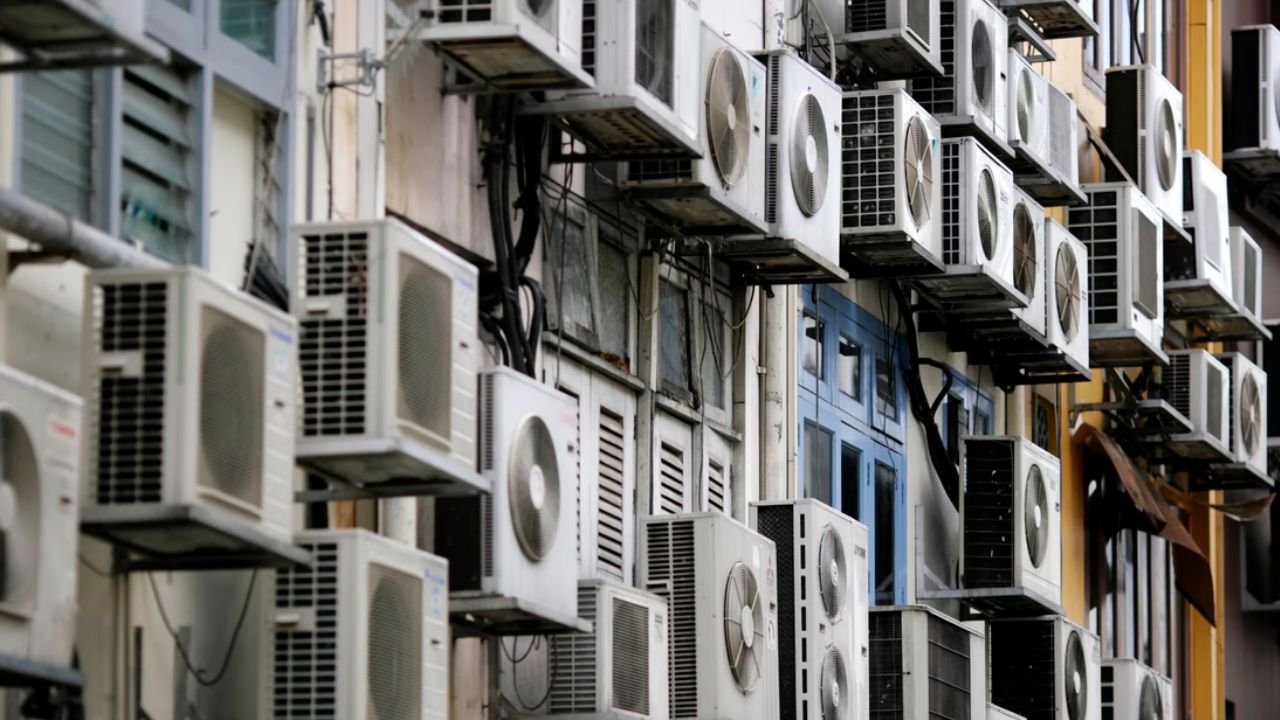
    Experts warn that air conditioners, primarily used to beat the heat and cool rooms, are contributing to global warming by heating up the environment and increasing temperatures.

    In cities where tree cover is decreasing, the number of air conditioners is rising.

    Ecologists from the University of Agriculture explain that while ACs cool indoor spaces, they simultaneously heat the outdoor environment, leading to higher temperatures.

    ACs can raise outdoor temperatures by as much as 60 to 80 degrees Celsius in extreme conditions and has reportedly caused temperatures to rise by half a degree Celsius over the past century.

    Experts further warn that continued proliferation of air conditioners to cool environments could irreversibly damage natural ecosystems.

    Instead of disregarding environmental warnings, experts urge increasing urban tree cover as a sustainable alternative to cooling the environment without exacerbating global warming.

  • One lakh KP families to get free solar from govt

    One lakh KP families to get free solar from govt

    The Khyber Pakhtunkhwa government has decided to provide free solar systems to one lakh families across the province.

    Chief Minister Ali Amin Gandapur has instructed officials to provide solar systems to impoverished families experiencing load shedding in the province. Under this initiative, each eligible family in Pakhtunkhwa will receive a 2 KV solar system.

    These include solar panels, inverters, wiring equipment, bulbs, and fans.

  • Consumers not receiving electricity units at basic rate: Court hears petition

    Consumers not receiving electricity units at basic rate: Court hears petition

    The Lahore High Court has issued a written order for the previous hearing of a petition filed against the imposition of protective and non-protective tariffs on electricity consumers.

    The Supreme Court ordered the public prosecutor to appear with instructions at the next hearing.

    The written order said that according to the petitioner, tariffs related to electricity units have been imposed on the consumers.

    In the written order of the Lahore High Court, it has been said that according to the petitioner, electricity units are not being given to consumers as per the basic rate.

    Yesterday, the Lahore High Court issued a notice to National Electric Power Regulatory Authority (NEPRA) on the petition against the exorbitant increase in the electricity bills of more than 200 units on the basis of protective and non-protective tariffs and sought its response at the next hearing.

    Justice Risal Hasan Syed further questioned on what basis the prices of electricity have been increased.

  • Fixed electricity rates increased for industrial, commercial, agricultural consumers

    Fixed electricity rates increased for industrial, commercial, agricultural consumers

    The government has further increased the price of electricity by five rupees 72 paise per unit, starting July 1.

    Fixed charges will apply to electricity consumers. For non-protected consumers, the new rates are as follows: Up to 100 units, the rate is Rs. 23.73; for 201 to 300 units, the rate is Rs. 32.98 per unit.

    Monthly fixed charges for industrial electricity consumers have risen by 184 per cent, and fixed charges for commercial electricity consumers have increased by 150 per cent.

    Agricultural tubewell customers will see a 100 per cent increase in monthly fixed charges.

    The federal cabinet has approved the increase in fixed electricity charges, as per sources.

    Industrial customers’ monthly fixed charges have reportedly increased from Rs. 440 to Rs. 1250.

    Fixed charges for commercial users have risen from Rs. 500 to Rs. 1250, while fixed charges for agricultural tubewell users have increased from Rs. 200 to Rs. 400, sources report.

  • Another shock for the masses; electricity prices increased

    Another shock for the masses; electricity prices increased

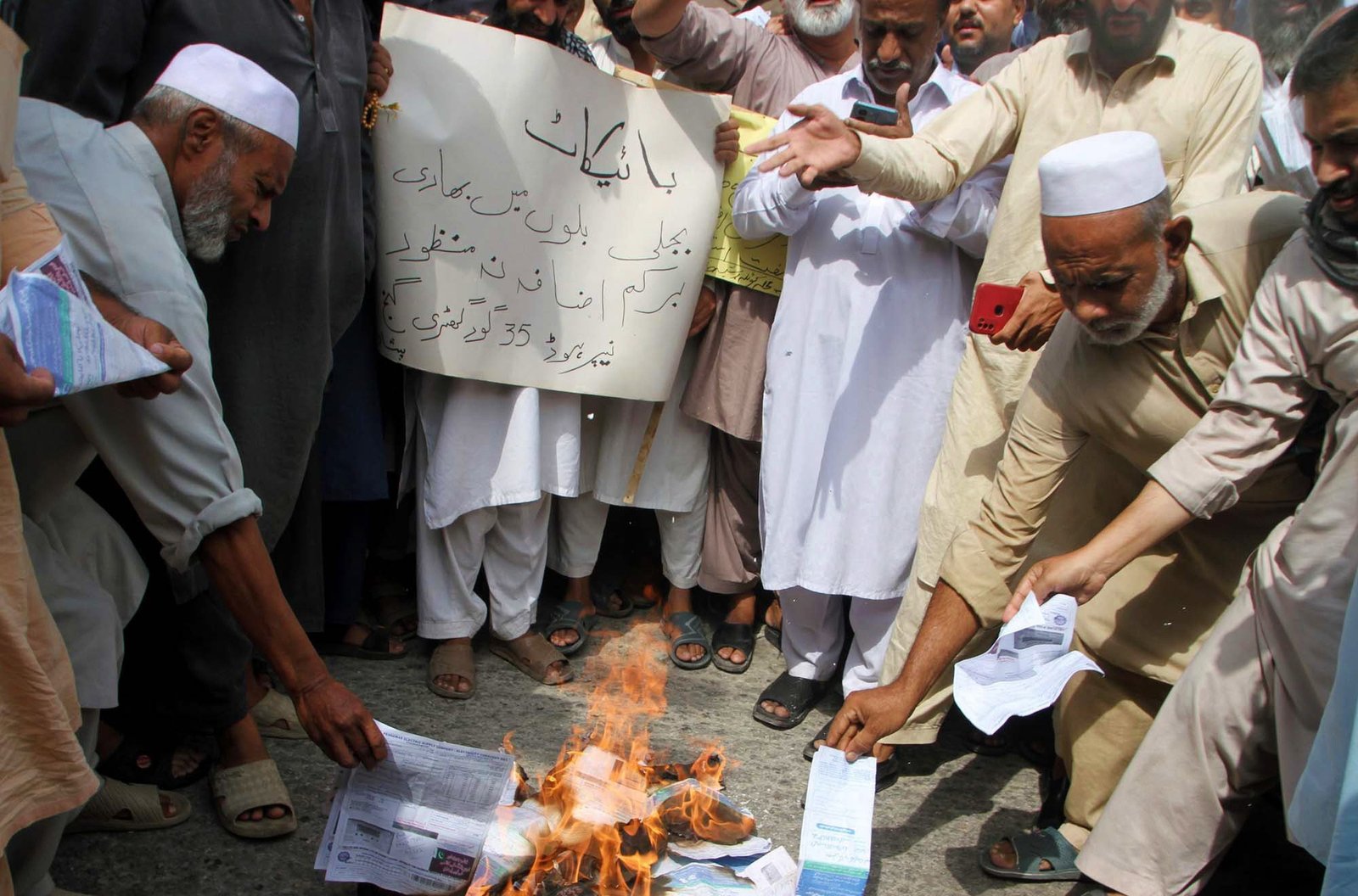
    In another shock to the people, the federal government on Wednesday approved up to 51 percent or Rs 7.12 increase in the per-unit price of electricity from July, The Tribune reported.

    With immediate effect, a whopping 32.5 million consumers, predominantly households, will be compelled to spend an additional at least Rs580 billion in this fiscal year.

    Furthermore, among these 32.5 million consumers, around 26 million households fall in the poorest to low-middle-income groups category. The burden of this price increase will fall on these households.

    The International Monetary Fund (IMF) had set many conditions for the government to qualify for the next bailout package, including increasing the power tariff.

    For the first time, the government has also imposed fixed monthly charges on residential electricity consumers, ranging from Rs 200 to Rs 1,000 per unit.