Tag: electricity bills

  • IMF urges Punjab to end electricity subsidy, imposes more conditions

    IMF urges Punjab to end electricity subsidy, imposes more conditions

    The International Monetary Fund (IMF) has put forward at least three strict conditions in Pakistan after the Punjab province gave Rs45 to Rs90 billion in electricity subsidies for two months.

    Last month, President of Pakistan Muslim League-Nawaz Muhammad Nawaz Sharif announced that Punjab government would provide relief of fourteen rupees per unit to consumers using up to 500 units of electricity in August and September bills.

    The IMF has asked the province to end the temporary subsidy by September 30th while also clarifying that no province w
    could give such a subsidy during the 37-month Extended Fund Facility (EEF) programme.

    According to IMF, it was one of the conditions for the bailout that no provinces would take such a move. This brings into question Prime Minister Shehbaz Sharif’s previous statement when he encouraged other provinces to follow suit of Punjab.

    Tribune reported that the IMF also introduced the condition that would bind the provinces to not introduce any fiscal policy that could undermine the commitments given under $7 billion loan.

    The provinces have committed to signing a National Fiscal Pact by the end of September, which would mean they undertake some expenditures that are currently the federal government’s responsibility.

  • FIA directed to identify and suspend officials involved in overbilling electricity consumers

    FIA directed to identify and suspend officials involved in overbilling electricity consumers

    Prime Minister Shehbaz Sharif has announced stringent measures against officials responsible for overcharging electricity consumers.

    During a meeting in Islamabad on Saturday, attended by Minister for Power Sardar Awais Ahmed Leghari, Minister for Information and Broadcasting Attaullah Tarar, and other relevant officials, the Prime Minister directed the Federal Investigation Agency (FIA) to identify and suspend such officials.

    He emphasised that these actions will not be tolerated, labelling the perpetrators as “enemies of the people.”

    In the same session, the Cabinet Committee on Energy (CCoE) revealed that the circular debt in the power sector had soared to Rs2,655 billion by May 2024.

    The committee, chaired by Prime Minister Sharif, approved the creation of a support unit aimed at enhancing the efficiency of electricity distribution companies (DISCOs), curbing electricity theft, and ensuring timely bill collection.

    This support unit, which will operate for two years after receiving federal cabinet approval, will begin its work with the Multan Electric Power Company (MEPCO).

    The government’s initiatives aim to address systemic issues in the power sector, thereby alleviating financial pressures and improving service delivery.

  • NEPRA wants fixed charges on electricity bills from July

    NEPRA wants fixed charges on electricity bills from July

    The National Electric Power Regulatory Authority (NEPRA) has decided to impose a new electricity tariff by imposing monthly fixed charges for residential consumers from July 1, ARY News reported.

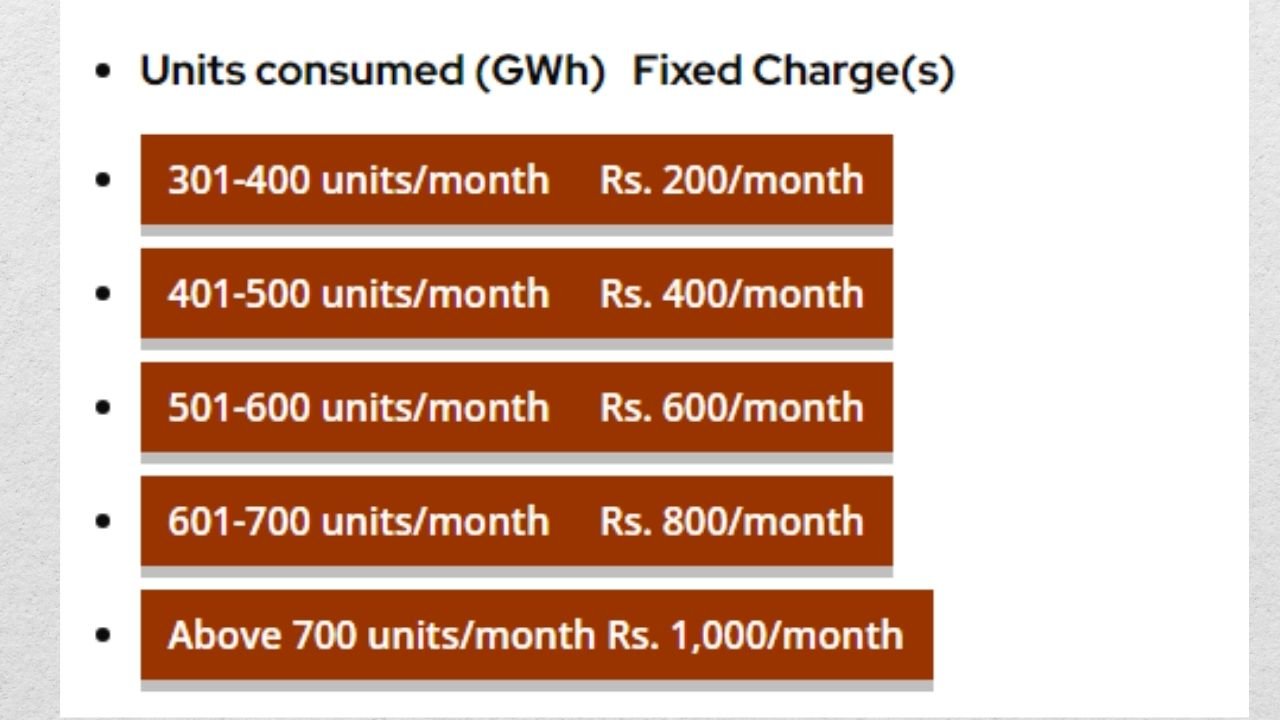
    NEPRA has proposed fixed charges of Rs200-1,000 a month in electricity bills, which the government has yet to approve.

    As per the proposal, domestic consumers using 301-400 units a month will pay Rs 200 per month from July 1, 2024, while those using 401-500 units will pay Rs400, and end electricity consumers consuming 501-600 are to pay Rs600.

    The residential consumers who use the 601-700 units will pay Rs800 a month, and those who use above 700 units will pay Rs1,000 a month.

    Residential consumers using the ToU (time of use) meter will also pay Rs1,000 fixed charges a month.

    Commercial consumers having load less than five kilowatt will also pay Rs1,000 a month as fixed charges. However, users consuming loads of five kilowatt and above will now pay Rs. 2,000 from the existing Rs500, an increase of 300 percent.

    Currently, the total cost of electricity unit comprises 72 percent fixed charges and 28 percent variable charges, according to ARY News.

    After Budget 2024-25, the federal government added Rs. 5.72 per unit in power tariff.

    NEPRA had already announced that the average electricity tariff would rise to Rs. 35.50 per unit from the current Rs. 29.78.

  • NEPRA approves power tariff increase of Rs2.8372 per unit

    NEPRA approves power tariff increase of Rs2.8372 per unit

    In a recent announcement, the National Electric Power Regulatory Authority (NEPRA) has approved a tariff increase of Rs2.8372 per kilowatt-hour (kWh) for all ex-Wapda distribution companies (XWDISCOs).

    This adjustment, reflected in a notification issued by NEPRA, is a result of fluctuations in fuel charges observed during March 2024.

    The tariff adjustment will be applied to consumer bills based on the units billed in March 2024. This increase will be listed separately in consumer billing statements to reflect the additional cost due to fuel charge variations.

    However, NEPRA clarified that this adjustment will not apply to certain categories of consumers, including Electric Vehicle Charging Stations (EVCS) and lifeline consumers, who benefit from lower electricity rates.

    This development follows a request made last month by the Central Power Purchasing Agency (CPPA), a subsidiary of the Power Division, which proposed an additional fuel charge of Rs2.94 per unit to cover the higher costs experienced in March 2024.

    The CPPA reported that the actual fuel cost for the month stood at Rs9.3819/kWh, significantly higher than the reference fuel cost component of Rs6.4417/kWh, leading to the proposed increase.

    After reviewing the CPPA’s request and the associated fuel cost variations, NEPRA concluded that an increase of Rs2.8372/kWh in the national average uniform tariff was justified.

    This adjustment is intended to balance the higher fuel costs incurred in March and ensure that the tariff structure remains aligned with the cost of energy production.

    Consumers are advised to review their electricity bills for March 2024 to understand how this adjustment will impact their total energy costs.

  • Nepra approves Rs7.056 per unit hike for power consumers

    Nepra approves Rs7.056 per unit hike for power consumers

    In a setback for the already burdened public grappling with inflation, the National Electric Power Regulatory Authority (Nepra) has greenlit a fuel cost adjustment, paving the way for a Rs7.0562 per unit increase in tariffs for March 2024.

    This decision grants state-run power distribution companies the authority to impose additional charges, projecting a staggering financial burden of around Rs56 billion on consumers.

    This figure could potentially soar to nearly Rs66 billion, taking into account the 18 per cent general sales tax (GST).

    It’s important to note that this tariff adjustment is applicable across all consumer categories, except for electric vehicle charging stations (EVCS) and lifeline consumers.

    The Central Power Purchasing Agency (CPPA), representing the distribution companies, had initially sought Rs7.13 per unit in its petition.

    Earlier this month, The News highlighted the plea from ex-Wapda distribution companies (XWDiscos) seeking Nepra’s approval for the Rs7.13 per unit increase.

    This was attributed to a significant drop in hydropower production and systemic constraints, such as the incapacity of the high-voltage direct current (HVDC) transmission line to efficiently transport economically viable power from southern producers to the north.

    Amidst these developments, commentators express concern over the substantial surge in fuel costs, reaching Rs14.6206/kWh for January 2024.

    In response, Nepra has taken decisive action, initiating an investigation under Section 27-A of the NEPRA Act to uncover the reasons behind this significant fuel cost, as claimed by CPPA-G for January 2024.

  • NEPRA greenlights Rs1.52 per unit hike in power tariff for Karachi residents

    The National Electric Power Regulatory Authority (NEPRA) has granted approval for an increase in the electricity tariff by Rs1.52 per unit for consumers of K-Electric.

    In accordance with the directive from the Economic Coordination Committee (ECC) in June 2023, NEPRA has issued a notification officially declaring a rise of Rs1.52 per unit in electricity charges, according to a press release.

    These adjustments will be reflected in the monthly electricity bills spanning from December 2023 to November 2024.

    A spokesperson for K-Electric clarified that NEPRA’s notification aligns with a previous ECC decision related to charges from the preceding tenure.

    In a statement, the spokesperson mentioned, “The prolonged duration in finalising KE’s tariff has contributed to the current circumstances, resulting in lower charges from Karachi compared to other regions in the country. Operating within the regulated framework of Pakistan’s power sector, KE, like other DISCOS, adheres to decisions made by the government of Pakistan and NEPRA concerning power tariffs.”

    It is noteworthy that lifeline consumers are exempted from the recent increase in charges, providing relief to this specific consumer group, the statement added.

    In a previous development this month, the Economic Coordination Committee (ECC) made a decision regarding the uniform quarterly tariff adjustments for K-Electric consumers, approving a hike of Rs1.72 per unit.

    The decision entails that the tariff rationalization guidelines previously issued to the National Electric Power Regulatory Authority (NEPRA) shall be applicable to the consumption of July, August, and September 2023, to be recovered from K-Electric consumers in December 2023, January 2024, and February 2024, respectively.

    Subsequent to this decision, the electricity tariff for K-Electric consumers will experience an increase of Rs1.72 per unit.

    Sources indicate that there will be a hike of Rs1.25 per unit in terms of quarterly adjustment from January to March 2023, while Rs0.47 per unit will be increased in terms of quarterly adjustment from October to December 2023.

    These measures are taken to ensure uniform electricity tariffs across the country, as per sources familiar with the matter.

  • Electricity tariff for K-Electric consumers increased by Rs4.45 per unit 

    Electricity tariff for K-Electric consumers increased by Rs4.45 per unit 

     
    Residents of Karachi are set to see an increase in their electricity bills, as the National Electric Power Regulatory Authority (Nepra) has recently decided to raise the power tariff by Rs4.45 per unit for consumers of K-Electric (KE).  

    The decision to elevate electricity rates, as outlined in a notification from the Power Division, was made during the initial quarterly adjustment of the preceding fiscal year. 

    Moreover, additional charges from KE consumers will be applied to their October and November 2023 bills, as specified in the notification. 

    Simultaneously, in response to a request from KE, Nepra has granted approval for the inclusion of actual or prudent expenses associated with the temporary operation of Unit-3 of Bin Qasim Power Station (BQPS-I) from May 1 to August 15, 2021, in the cost calculations. 

    Consequently, prior determinations made by the Authority on September 15, 2021, and May 12, 2022, concerning this matter have been adjusted to accommodate this modification. 

    “In view of the foregoing, the Authority hereby decides to accede to the request of KEL [K-Electric Limited] and allows the actual/prudent cost relating to the interim operation of Unit-3 of BQPS-I (from May 1, 2021, to August 15, 2021). Accordingly, the earlier decisions of the Authority (dated September 15, 2021, and May 12, 2022) in this regard stand modified to this extent,” stated the power regulator. 

    However, a member of the authority, Mathar Niaz Rana, expressed in an additional note that under the Multi-Year Tariff (MYT) plan, KE was obligated to have both phases of BQPS-III operational by December 2019, a deadline they failed to meet. 

    Consequently, they resorted to utilising Unit 3 of BQPS-I, resulting in additional fuel expenses. The cost stemming from this inefficiency should not be passed on to consumers. 

    Nepra conducted a public hearing on January 25, 2023, during which KE was given an opportunity to present its case. 

    According to The News, in the hearing, the utility company asserted that they chose to temporarily utilise Unit-3 of BQPS-1 to meet Karachi’s peak summer demand instead of resorting to more costly power generation methods or implementing power outages, all in the best interest of consumers, as per Nepra Act Sections 31(2) and 32(3). 

  • Punjab mein kahan ho rahi hai sab say ziada bijli chori?

    Punjab mein kahan ho rahi hai sab say ziada bijli chori?

    Ever wondered which district in Punjab has the highest percentage of electricity theft? Well, surprise, surprise, it is Kasur.

    Kasur has left all districts behind when it comes to power theft, as almost half of the total 20 highest loss-making grid stations of Punjab exist there, causing Rs40 billion losses annually, which is 40 percent of the total theft costing nearly Rs 100bn to Lahore Electric Supply Company (Lesco) in the province.

    LESCO has intensified operations against electricity theft in the district.

    “There are total 103 high-loss feeders in all service areas of Lesco falling in Lahore, Kasur, Okara, Sheikhupura and Nankana Sahib. Of these, 77 feeders are in Kasur alone, placing the district on top of the list in power theft,” a LESCO source told Dawn.

    Interestingly, the power thieves stopped pilferage during the daytime due to continuous raids by LESCO teams and resorted to theft during night hours.

    It is pertinent to note that when it was brought to the knowledge of the most senior officials, they directed the authorities in Lahore to suspend supply to such areas during night hours to stop the pilferage. Following this, the power supply was kept suspended for almost 12 hours on Monday night forcing the consumers to involve local politicians (former MNAs, MPAs, etc.) from Kasur and other parts of the division, who approached LESCO management.

    Meanwhile, a senior official of the Ministry of Energy (Power Division) confirmed the development, saying Kasur is like a tribal area causing billions of rupees loss to LESCO because of massive electricity theft.

    “In Punjab, the government has been facing a loss of Rs99bn in the form of power theft. Of this, about Rs40bn theft is being reported from Kasur district (Lahore Division) alone, annually,” the official says.

    There are around 20 highest loss-making grid stations in Punjab, out of which nine are in Kasur district alone, LESCO has, however, been asked not to shut the supply to the high-loss feeders after the local politicians assured of full cooperation with the field teams in eliminating power theft.

    The official says one of the reasons behind the massive power theft in Kasur is that the district includes border areas and belts along the riverbeds of Sutlej and Beas where law enforcement is a hard task.

    “These areas have almost become like tribal belts where criminals routinely flout the law. That is why they are stealing electricity without fear,” he explains.

    Meanwhile, on the 26th consecutive day of the anti-power theft drive, LESCO teams arrested 132 power thieves and detected pilferage on 501 connections in all five districts. According to a spokesman, the applications for registration of FIRs against 498 electricity thieves have been submitted to the respective police stations, out of which 391 FIRs have been registered, while 132 accused have been arrested.

    An official says the connections where power theft was detected include two industrial, nine agricultural, 13 commercial, and 477 domestic, adding that supply to all these has been disconnected. He says all the electricity pilferers have also been charged a total of 758,052 detection units worth Rs39.980 million.

    He says that separately constituted teams also recovered Rs21 million from 1,359 chronic defaulters on Tuesday.
  • New tax to be imposed on citizens soon

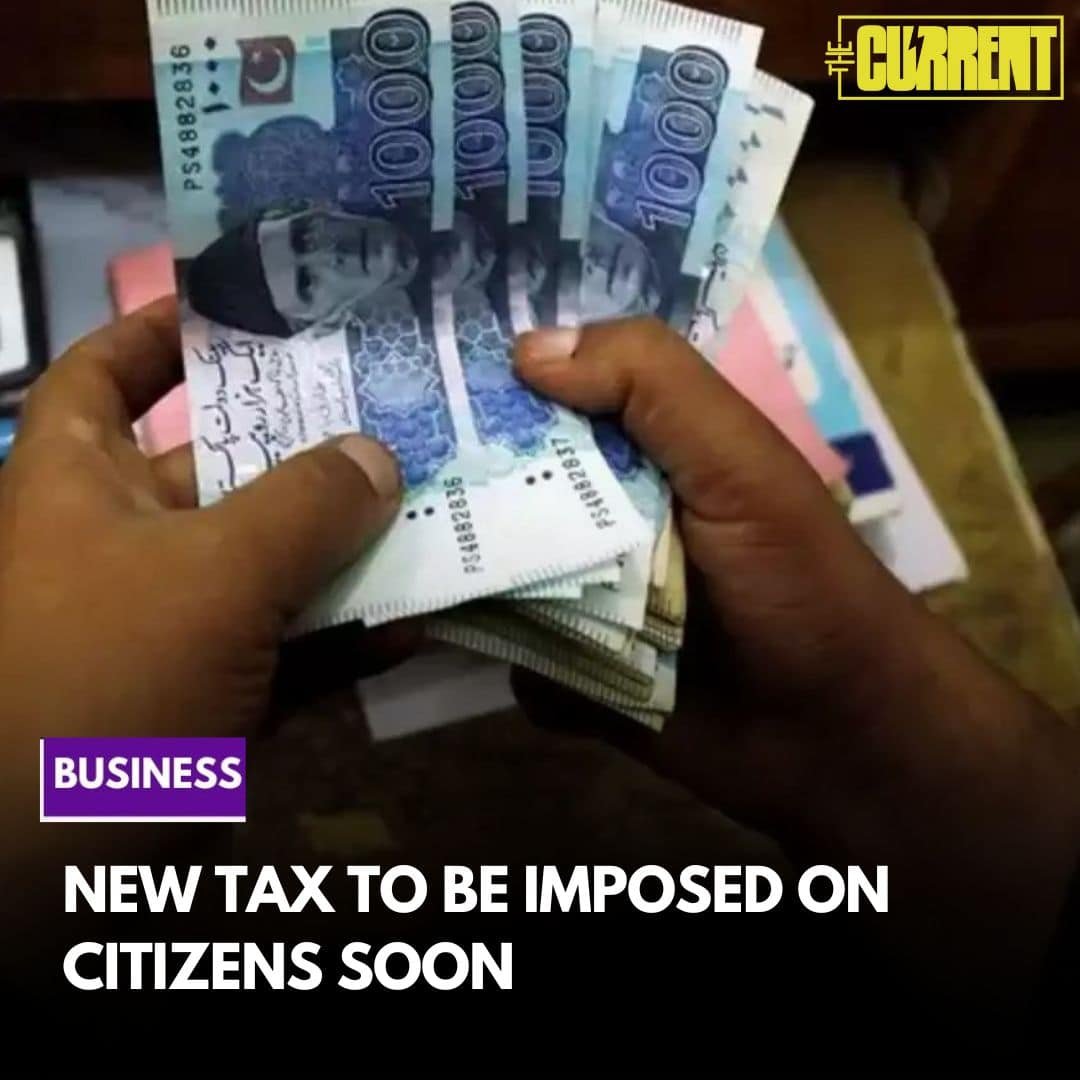
    New tax to be imposed on citizens soon

    The local government has unveiled a new tax that has drawn mixed reactions from citizens. 

    This latest tax, to be imposed in lieu of garbage collection, will be collected from households, shops, petrol pumps, and industrial units on a monthly basis.

    Starting from October, Multan and its neighboring areas will see this sanitation tax in effect. The tax rates are set at Rs50 for houses, Rs200 for shops, Rs1,000 for petrol pumps, and Rs2,000 for industrial unit owners on a monthly basis. 

    The government anticipates an annual revenue boost of approximately Rs4.28 billion through this tax initiative. However, the move has not been met with unanimous approval among citizens, many of whom have criticised it. 

    Meanwhile, amid ongoing discussions concerning the surging costs of electricity production in Pakistan, the Kot Addu Power Company has submitted an application to the National Electric Power Regulatory Authority (Nepra), seeking approval for what could potentially become the country’s most expensive electricity generation tariff.

    The proposal suggests an electricity tariff of Rs77.31 per unit, a significant increase from the current rate of twenty-eight rupees per unit. The power company attributes this substantial hike to rising production costs.

    Notably, the Kot Addu Power Company recently secured a sixteen-month extension during the Pakistan Tehreek-e-Insaf (PTI) administration. However, this extension has not escaped controversy, as the Senate Power Committee has declared it illegal, further fueling the debate over electricity tariffs in the country.

  • Names of politicians not paying their electricity bills made public

    Names of politicians not paying their electricity bills made public

    In a shocking revelation, the Quetta Electric Supply Company (QESCO) has unveiled a roster of prominent individuals who have failed to meet their obligations regarding electricity payments. 

    According to Samaa, this list comprises former Members of the National Assembly (MNAs), Senators, and individuals associated with the transportation industry, thereby bringing to light the substantial unpaid dues of these notable figures. 

    According to a QESCO spokesperson, the most significant defaulter on this list is none other than the former Federal Minister, Mir Hamayoun Aziz Kurd, who is currently indebted to the tune of an astounding Rs4.95 million. 

    Following closely behind, we find former Provincial Minister Asim Kurd with an outstanding balance of Rs2.06 million, while former Interior Minister Mir Zia Ullah Langau’s dues are accounted for at Rs1.57 million. 

    Among other noteworthy entries on this list, former Provincial Minister Zafar Zehri is recorded with unpaid bills totaling Rs1.16 million, former MNA Abdul Qahar Uddin with an outstanding amount of Rs916,253, and former Provincial Minister Sardar Abdul Rehman Khetran showing Rs468,770 in unsettled bills. 

    This compilation also reveals that Feroz Lehri, a prominent transporter, owes QESCO a sum of Rs493,310, while Senator Naseeb Ullah Bazai has failed to clear Rs447,810 in unpaid bills. Additionally, former MPA Haji Ahmed Nawaz’s dues amount to Rs179,009, and tribal leader Wadera Sheeren Marri has an unsettled bill of Rs86,953. 

    KESCO, in response to the rampant issue of electricity theft across Balochistan, including Quetta, has undertaken rigorous measures. According to the spokesperson, a total of 322 cases have been registered against electricity thieves, resulting in the apprehension of 122 individuals.  

    Quetta leads with the highest number of cases at 64, followed by Loralai with 75, Khuzdar with 65, Sibi with 88, and Pishin with 25 cases. In addition to these, 5 cases have been filed in Makran. 

    Read more: Govt considers substantial gas tariff hike as energy concerns loom 

    The stringent crackdown on electricity theft has culminated in the collection of approximately Rs75 million in fines from the culprits, with Rs42.6 million already successfully recovered.  

    In response to non-payment issues in Balochistan, authorities have seized 15 transformers, and an additional 6 illegal transformers have been confiscated. Furthermore, 435 defaulters in Quetta, Loralai, Khuzdar, Pishin, Sibi, and Makran have had their connections disconnected due to their persistent outstanding bills.