Tag: electricity tariff

  • K-Electric seeks NEPRA approval for Rs5.45 per unit tariff hike following petrol price surge

    K-Electric seeks NEPRA approval for Rs5.45 per unit tariff hike following petrol price surge

    Karachi’s power provider, K-Electric, has submitted a request to the National Electric Power Regulatory Authority (NEPRA) seeking approval for a Rs5.45 per unit increase in electricity tariffs under the Fuel Cost Adjustment (FCA) mechanism for May and June.

    If NEPRA approves this request, it will significantly intensify the financial burden on consumers already struggling with high inflation and declining incomes. Citing rising fuel costs, K-Electric has requested a tariff increase of Rs2.53 per unit for May and Rs2.92 per unit for June.

    This proposed hike, if sanctioned during NEPRA’s hearing on 30th July, would impose an additional Rs10 billion burden on consumers.

    This request follows the government’s recent decision to raise the base tariff for domestic consumers by up to Rs48.84 per unit, coupled with increases in the petroleum levy and new taxes on agricultural income.

    According to a Power Division notification, the hike in electricity prices will also affect Karachi consumers. However, those consuming up to 200 units per month will be exempt from the increase for three months.

    NEPRA recently approved the federal government’s application to raise electricity tariffs for domestic, commercial, general services, bulk, and agricultural consumers.

    On 5th July, NEPRA had sanctioned an Rs3.3287 per unit increase in electricity prices for May 2024 due to the monthly FCA, although this did not apply to K-Electric consumers.

    Additionally, the federal cabinet has approved increases in the base tariff by Rs8.04 for commercial consumers, Rs6.62 for agricultural consumers, Rs6.96 for general services, and Rs5.96 for bulk consumers.

    As a result, the base tariff has risen to Rs46.83 per unit for agricultural consumers and Rs61.03 per unit for general services. Bulk consumers will now pay Rs59.96 per unit following an increase of Rs5.51 per unit. The base tariff for industrial consumers remains unchanged.
  • Government to end solar net-metering & introduce gross-metering

    Government to end solar net-metering & introduce gross-metering

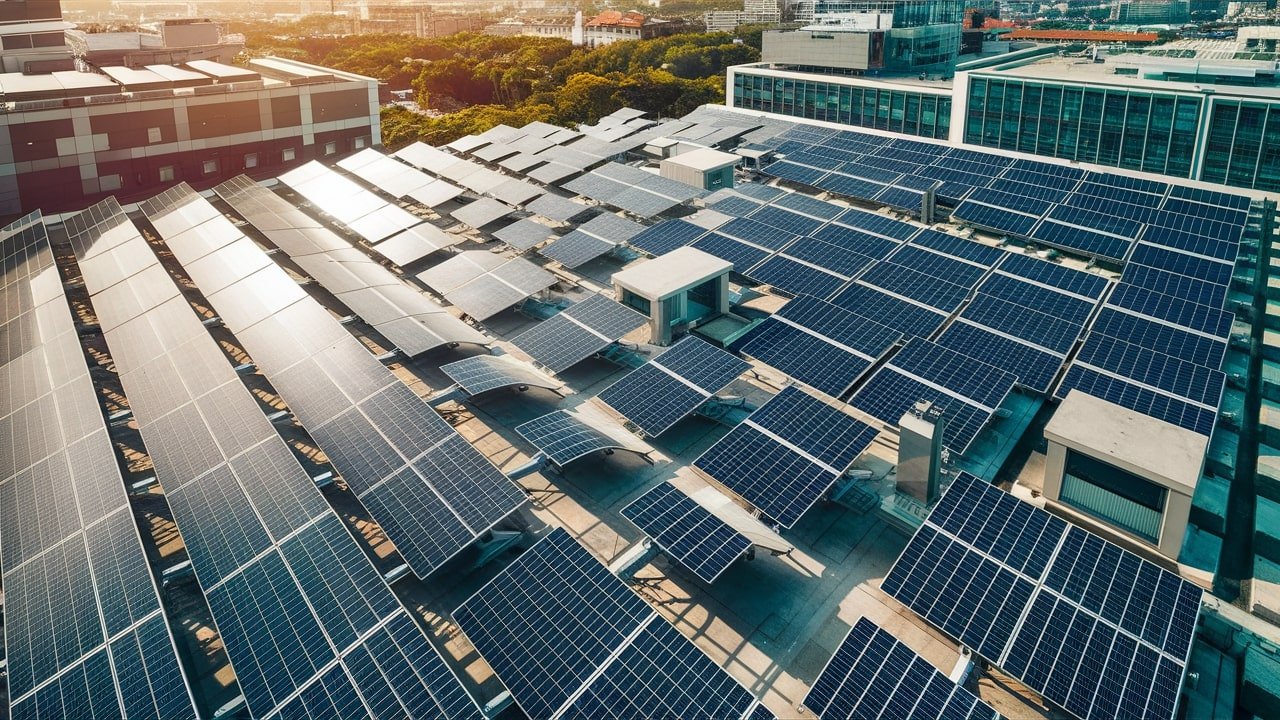
    The government has briefed the International Monetary Fund (IMF) about plans to change the country’s solar power policy, Geo News has reported.

    According to the government, almost 1938 MW of electricity in the system through roof-top solar system under net metering mode.

    Because of this revenue loss of Rs100 billion in the system has been shifted to consumers by passing a hike of tariff to Rs1.90 per unit on those who have not installed solar systems on their roofs.

    The government intends to introduce gross metering instead of net metering.

    The tariff would be reduced to Rs7.5 to 11 per unit instead of Rs21. They will be provided electricity from the national grid at Rs60 per unit during night or peak hours.

    However, under this new policy, a buyback tariff from solar consumers would be brought down to Rs7.5-11 per unit due to a significant decline in solar panel prices and the government would sell them electricity from the national grid at Rs60 per unit during night time or peak hours.

  • Nepra approves Rs7.056 per unit hike for power consumers

    Nepra approves Rs7.056 per unit hike for power consumers

    In a setback for the already burdened public grappling with inflation, the National Electric Power Regulatory Authority (Nepra) has greenlit a fuel cost adjustment, paving the way for a Rs7.0562 per unit increase in tariffs for March 2024.

    This decision grants state-run power distribution companies the authority to impose additional charges, projecting a staggering financial burden of around Rs56 billion on consumers.

    This figure could potentially soar to nearly Rs66 billion, taking into account the 18 per cent general sales tax (GST).

    It’s important to note that this tariff adjustment is applicable across all consumer categories, except for electric vehicle charging stations (EVCS) and lifeline consumers.

    The Central Power Purchasing Agency (CPPA), representing the distribution companies, had initially sought Rs7.13 per unit in its petition.

    Earlier this month, The News highlighted the plea from ex-Wapda distribution companies (XWDiscos) seeking Nepra’s approval for the Rs7.13 per unit increase.

    This was attributed to a significant drop in hydropower production and systemic constraints, such as the incapacity of the high-voltage direct current (HVDC) transmission line to efficiently transport economically viable power from southern producers to the north.

    Amidst these developments, commentators express concern over the substantial surge in fuel costs, reaching Rs14.6206/kWh for January 2024.

    In response, Nepra has taken decisive action, initiating an investigation under Section 27-A of the NEPRA Act to uncover the reasons behind this significant fuel cost, as claimed by CPPA-G for January 2024.

  • NEPRA announces increase in electricity tariff, impacting November bills 

    NEPRA announces increase in electricity tariff, impacting November bills 

    In yet another unsettling development for power consumers already burdened by rising costs, the National Electric Power Regulatory Authority (NEPRA) has announced an increase of Rs0.40 per unit in the electricity tariff.  

    This adjustment, approved by NEPRA in response to the monthly fuel adjustment for September, will result in higher charges on November bills for electricity consumers. 

    It’s important to note that this tariff hike will affect all consumer categories, except for those classified as lifeline consumers and K-Electric users.  

    In October, NEPRA had previously approved a separate increase of Rs1.71 per unit in the electricity tariff, which was attributed to fuel adjustment charges (FAC) for the month of August. This increase was reflected in the bills for October. 

    Additionally, on October 3rd, NEPRA sanctioned a per-unit price increase of Rs 3.28 as part of the quarterly adjustment.  

    This adjustment will entail a recovery of Rs3.28 per kilowatt-hour (kWh) from various consumer categories within power distribution companies (DISCOs) and K-Electric over a six-month period, spanning from October 2023 to March 2024. 

  • Punjab mein kahan ho rahi hai sab say ziada bijli chori?

    Punjab mein kahan ho rahi hai sab say ziada bijli chori?

    Ever wondered which district in Punjab has the highest percentage of electricity theft? Well, surprise, surprise, it is Kasur.

    Kasur has left all districts behind when it comes to power theft, as almost half of the total 20 highest loss-making grid stations of Punjab exist there, causing Rs40 billion losses annually, which is 40 percent of the total theft costing nearly Rs 100bn to Lahore Electric Supply Company (Lesco) in the province.

    LESCO has intensified operations against electricity theft in the district.

    “There are total 103 high-loss feeders in all service areas of Lesco falling in Lahore, Kasur, Okara, Sheikhupura and Nankana Sahib. Of these, 77 feeders are in Kasur alone, placing the district on top of the list in power theft,” a LESCO source told Dawn.

    Interestingly, the power thieves stopped pilferage during the daytime due to continuous raids by LESCO teams and resorted to theft during night hours.

    It is pertinent to note that when it was brought to the knowledge of the most senior officials, they directed the authorities in Lahore to suspend supply to such areas during night hours to stop the pilferage. Following this, the power supply was kept suspended for almost 12 hours on Monday night forcing the consumers to involve local politicians (former MNAs, MPAs, etc.) from Kasur and other parts of the division, who approached LESCO management.

    Meanwhile, a senior official of the Ministry of Energy (Power Division) confirmed the development, saying Kasur is like a tribal area causing billions of rupees loss to LESCO because of massive electricity theft.

    “In Punjab, the government has been facing a loss of Rs99bn in the form of power theft. Of this, about Rs40bn theft is being reported from Kasur district (Lahore Division) alone, annually,” the official says.

    There are around 20 highest loss-making grid stations in Punjab, out of which nine are in Kasur district alone, LESCO has, however, been asked not to shut the supply to the high-loss feeders after the local politicians assured of full cooperation with the field teams in eliminating power theft.

    The official says one of the reasons behind the massive power theft in Kasur is that the district includes border areas and belts along the riverbeds of Sutlej and Beas where law enforcement is a hard task.

    “These areas have almost become like tribal belts where criminals routinely flout the law. That is why they are stealing electricity without fear,” he explains.

    Meanwhile, on the 26th consecutive day of the anti-power theft drive, LESCO teams arrested 132 power thieves and detected pilferage on 501 connections in all five districts. According to a spokesman, the applications for registration of FIRs against 498 electricity thieves have been submitted to the respective police stations, out of which 391 FIRs have been registered, while 132 accused have been arrested.

    An official says the connections where power theft was detected include two industrial, nine agricultural, 13 commercial, and 477 domestic, adding that supply to all these has been disconnected. He says all the electricity pilferers have also been charged a total of 758,052 detection units worth Rs39.980 million.

    He says that separately constituted teams also recovered Rs21 million from 1,359 chronic defaulters on Tuesday.

  • Power company in Punjab wants to set power price at record-breaking high of Rs77.3 per unit

    Power company in Punjab wants to set power price at record-breaking high of Rs77.3 per unit

    In a noteworthy development that has captured significant attention and ignited considerable debate, the Kot Addu Power Company (KAPCO) has formally submitted an application to the National Electric Power Regulatory Authority (NEPRA) for the endorsement of what could potentially become the nation’s most costly electricity generation tariff. 

    This significant step has unfolded against the backdrop of ongoing deliberations concerning the escalating expenses associated with electricity production within Pakistan. 

    The Kot Addu Power Company has put forth a bold proposition, aiming to establish the electricity tariff at an unprecedented Rs77.31 per unit, attributing the primary rationale for this request to substantial hikes in production costs. 

    Notably, the present initial tariff offered by the independent power producer (IPP) company stands at a modest twenty-eight rupees per unit, underscoring the magnitude of the escalation should their proposal garner approval. 

    Adding a layer of complexity to this unfolding narrative, IPP Kot Addu Power, the entity responsible for electricity generation, has been granted a sixteen-month extension during the tenure of the Pakistan Tehreek-e-Insaf (PTI) administration.  

    However, this extension has not been without its share of controversy, with the Senate Power Committee recently deeming it unlawful, further intensifying the discourse surrounding this matter. 

  • NEPRA recommends electricity rate increase of Rs3.28 per unit

    NEPRA recommends electricity rate increase of Rs3.28 per unit

    The National Electric Power Regulatory Authority (NEPRA) has officially proposed to the government an increase in the electricity tariff of Rs3.28 per unit, citing the need for a quarterly adjustment.

    In this proposal, NEPRA is looking to impose an additional financial burden of approximately Rs160 billion on consumers of electricity. According to ARY News, this recommendation has been conveyed to the caretaker federal government through an official summary, outlining the suggested increment of Rs3.28 in electricity rates as part of the fourth-quarter adjustment for the fiscal year 2022–23. 

    The proposed increase, subject to approval by the federal government, would also apply to K-Electric consumers. As a result of this adjustment, power consumers would be required to make additional payments over the next six months, spanning from October 2023 to March 2024. 

    It is worth noting that the proposed surge in power tariffs has incited protests throughout the country, with citizens expressing their displeasure over the considerable rise in electricity costs and the imposition of excessive taxes on electricity bills. In some instances, individuals infuriated by inflated bills have resorted to burning them as a form of protest, while certain political factions have threatened to stage sit-in demonstrations outside K-Electric offices. 

    This unrest surrounding the increased electricity tariffs coincides with Pakistan’s ongoing economic struggles, characterised by financial constraints and an inflation rate hovering around 29 per cent. 

    Furthermore, it is important to highlight that the International Monetary Fund (IMF) has reportedly discouraged Pakistan from offering relief to consumers using over 200 units of electricity on a monthly basis. According to sources, the IMF argued that reducing electricity bills for such consumers would not address the issue of circular debt. 

    Consequently, relief in the form of deferred payments for electricity bills will be exclusively extended to consumers who consistently utilise less than 200 units for six consecutive months. This relief would be rescinded if a consumer’s bill exceeded 200 units within the same timeframe, as per the sources. 

    Caretaker Federal Minister for Energy, Power, and Petroleum, Muhammad Ali, has also announced that the revised electricity tariff will be introduced before October 31. During a press conference held alongside Sindh Governor Kamran Tessori, Minister Ali emphasised the government’s commitment to combating electricity and gas theft through indiscriminate measures. 

    He added that efforts are being made to regulate and potentially lower electricity tariffs, with a goal to supply cost-effective electricity to industries starting on October 31. Muhammad Ali attributed the surge in electricity bills to electricity theft and the increased price of the US dollar. 

    While acknowledging the challenges of amending previous agreements, the minister pledged that the government would explore solutions within the framework of existing arrangements. He also expressed the government’s commitment to promoting solar energy despite the lack of reductions in solar equipment prices, outlining plans to devise a strategy for the promotion of solarization. 

  • PKR to USD: Pakistani rupee drops to Rs288.52 against US dollar

    PKR to USD: Pakistani rupee drops to Rs288.52 against US dollar

    The Pakistani rupee continued its downward trend for the eighth consecutive session, experiencing a depreciation of 0.21 per cent against the US dollar on Tuesday. According to the State Bank of Pakistan (SBP), the rupee closed at Rs288.52, marking a decrease of Re0.6.

    Over the past eight trading sessions, the currency has lost nearly 4.2 per cent or Rs12.02 against the US dollar. On the previous day, Monday, the rupee also suffered losses against the US dollar for the seventh successive session, depreciating 0.39 per cent and settling at 287.92 in the inter-bank market.

    In a significant development, the National Electric Power Regulatory Authority (NEPRA) approved an increase in the basic electricity tariff by Rs7.5 per unit from July 1, 2023, across the country. The chairman’s remarks indicated that this decision was influenced by the election year, and political choices were being made to alleviate the burden on 68 per cent protected consumers.

    On the international front, the US dollar gained strength ahead of three major central bank meetings scheduled for the week. Meanwhile, the euro faced challenges, hitting a two-week low on Tuesday due to a deteriorating economic situation in the eurozone, which complicated the bloc’s interest rate outlook despite the European Central Bank’s (ECB) hawkish stance.

  • Pakistan to implement separate gas tariffs for rich and poor

    Pakistan to implement separate gas tariffs for rich and poor

    Dr Musadik Masood Malik, the State Minister for Petroleum, has announced that the government of Pakistan will implement a new system of gas tariffs that will differentiate between the rich and the poor. The purpose of this measure is to provide relief to low-income citizens who struggle to pay their gas bills.

    According to Dr Malik, the government will apply “various slabs” for the poor that will be “three times less than those of rich using the same or more gas under the same slabs.” He made this announcement during a press conference at the Lahore Press Club on Sunday.

    In addition to this, the government will supply locally explored gas or the reserves to be explored in the future to gas-fired power plants for cheap energy generation. The goal of this measure is to bring down the electricity tariff for the public at large. According to Dr Malik, the cost of generating electricity through LNG is Rs26 per unit, while it is only Rs7 when plants are operated on indigenous gas.

    Dr Malik also pointed out that only 1,000 super-rich people have captured the country of 220 million people. He deplored the fact that Pakistan provides gas at a much lower cost of “just 70 cents” per MMBTU, compared to rich countries like Saudi Arabia, Qatar, and Bahrain, where the cost is $2, $3, and $4 per MMBTU, respectively.

    He also criticised the government’s policies for creating a divide between the rich and the poor. He blamed Prime Minister Imran Khan for turning Pakistan into two countries, one for the rich and the other for the poor. He stated that “one Pakistan is that where a poor man is sent to jail for stealing bread for his children while the other one is that where a man involved in stealing watches and diamonds worth billions of rupees is sitting in his home.” He also stated that “one Pakistan is for the poor seeking money for medicines, while in the other, the people have been importing billions of dollars’ worth of precious vehicles.”

    As a result, Dr Malik announced that the government has decided to tax the rich and the powerful, not the poor or the weaker ones. He stated that the government stands with the poor, which represents around 60 per cent of the population, and that they have either reduced or maintained the gas tariff for them. He maintained that “we are the poor, as we were with them in old Pakistan.”

  • PM Shehbaz approves hike in gas and electricity tariffs to fulfill IMF demands

    PM Shehbaz approves hike in gas and electricity tariffs to fulfill IMF demands

    With only three days remaining to resolve differences, Prime Minister Shehbaz Sharif approved an increase in electricity prices on Monday in an attempt to reach an agreement with the International Monetary Fund (IMF). The annual base tariff is expected to increase by approximately 33 per cent.

    The decision was made during a virtual meeting held at the Prime Minister House after the IMF maintained its stance that Pakistan must fulfill its prior commitments.

    Sources familiar with the discussions indicated that there may be an average increase of Rs7.74 per unit in the base tariffs, but the increase for higher consumption levels will be much higher. Despite this, the Prime Minister still hopes that the Power Division can negotiate with the IMF to reduce the demanded increase.

    With the Prime Minister’s approval, the revised circular debt reduction plan, which includes details of the increase in prices due to quarterly and annual base tariff adjustments, will be shared with the IMF today.

    Power Minister Khurram Dastgir declined to comment on whether the Prime Minister had agreed to increase electricity prices, including the maximum increase for high-end consumers.

    According to sources, the IMF is seeking a 50 per cent increase in prices, while the government is proposing a range of 20 per cent to 33 per cent increase. The discussions began on January 31st and the IMF delegation was in Islamabad until February 9th.

    The IMF has stated that it is in Pakistan at the request of Prime Minister Shehbaz Sharif, with the expectation that the government will implement all of its outstanding actions, including tax increases. If the IMF agrees to the measures proposed by the government, a meeting between Finance Minister Ishaq Dar and IMF Mission Chief Nathan Porter may take place the same day to finalise the measures.

    The sources stated that the Power Division presented several options for increasing tariffs to the Prime Minister, including a Rs4.26 per unit increase in quarterly tariffs and a Rs7.74 per unit average increase in the base tariff.

    The IMF has asked the government of Pakistan to increase electricity prices by over Rs12 per unit to fully cover the additional budget subsidy demand of Rs675 billion. The Power Division believes it can recover Rs43 billion with a lag from July to December 2023, reducing the need for a price hike by the same amount.

    During budget planning, the government allocated only Rs355 billion for power subsidies in the current fiscal year, but the Power Division has requested an additional Rs675 billion in subsidies, bringing the total requirement to over Rs1.03 trillion. In a recent meeting, it was noted that the delayed decision-making has increased the cost of reviving the IMF program.

    The government still hopes the IMF will consider absorbing some of the increase through subsidies, but these subsidies must be supported by additional revenue measures. The IMF also refused the government’s request to exempt up to 300 units for consumers from the price increase, remaining firm on its stance to raise prices for consumers who use 200 units or more per month.

    According to Express Tribune, the Prime Minister has given direction to implement a maximum increase in electricity prices to those with high consumption levels. However, these consumers may struggle to bear the additional cost, which is primarily due to political decisions such as subsidies for exporters and insufficient subsidies in the budget, as well as inefficiencies in the power sector.