Tag: electricity tariffs

  • Inflation has eroded purchasing power of Pakistanis: Bloomberg

    Inflation has eroded purchasing power of Pakistanis: Bloomberg

    A recent Bloomberg report reveals that Pakistan is facing the highest inflation rate in its region.

    The report explains that the Pakistani government has had to raise energy prices significantly to secure a new programme from the International Monetary Fund (IMF).

    Although inflation has decreased somewhat, electricity bills have risen sharply, now often surpassing household rent. This increase in power tariffs, aimed at meeting IMF conditions and implementing required reforms, has led to widespread protests across the country.

    Bloomberg’s report shows that since 2021, electricity prices in Pakistan have soared by 155 per cent. This surge followed the government’s decision to raise both industrial and retail electricity rates to improve the chances of obtaining IMF loans.

    The rising energy costs have worsened the country’s economic crisis, with inflation around 12 per cent—the highest in Asia—reducing people’s purchasing power and leading to a drop in electricity usage as individuals and businesses turn to solar power.

    In July, following the approval of a $7 billion IMF loan, the average residential electricity price increased by 18 per cent. Many residents now find their electricity bills exceeding their monthly rent, which ranges from $100 to $700, according to Samiullah Tariq, head of research at Pakistan Kuwait Investment Co.

    In response to growing public frustration, Prime Minister Shehbaz Sharif has announced a Rs50 billion ($180 million) subsidy over the next three months to help low-income households cope with the higher energy costs.

    The IMF programme is focused on improving Pakistan’s energy sector through cost reductions and the privatisation of state-owned power companies. The power regulator estimates that Pakistan loses about 16 per cent of its electricity due to theft and inefficiencies in its transmission and distribution systems.

    The Bloomberg report underscores the severity of Pakistan’s economic challenges and the urgent need for effective solutions in its energy sector.
  • Nepra approves up to 51% increase in electricity prices for residential consumers

    Nepra approves up to 51% increase in electricity prices for residential consumers

    The National Electric Power Regulatory Authority (Nepra) has approved a significant increase of up to 51 per cent in the base electricity rates for residential consumers. This adjustment is part of a new tariff schedule aimed at addressing rising energy costs.

    Under the revised rates, consumers using up to 200 units per month will see their tariffs remain unchanged until September 2024. However, from October 2024 onwards, substantial hikes will take effect, impacting millions of households across the country.

    For protected consumers using up to 100 units monthly, the tariff will rise from the current Rs7.74 to Rs11.69 per kilowatt-hour (kWh), representing a steep 51 per cent increase.

    Similarly, those consuming between 101 and 200 units will face a 41 per cent increase, with rates jumping from Rs10.06 to Rs14.16 per kWh. Notably, over 15.5 million consumers fall into this protected category.

    Non-protected consumers will also bear the brunt of these increases. For those using up to 100 units, the tariff will rise by 43 per cent, escalating from Rs16.48 to Rs23.59 per kWh. For consumption between 101 and 200 units, the rate will increase by 31 per cent, from Rs22.95 to Rs30.07 per kWh.

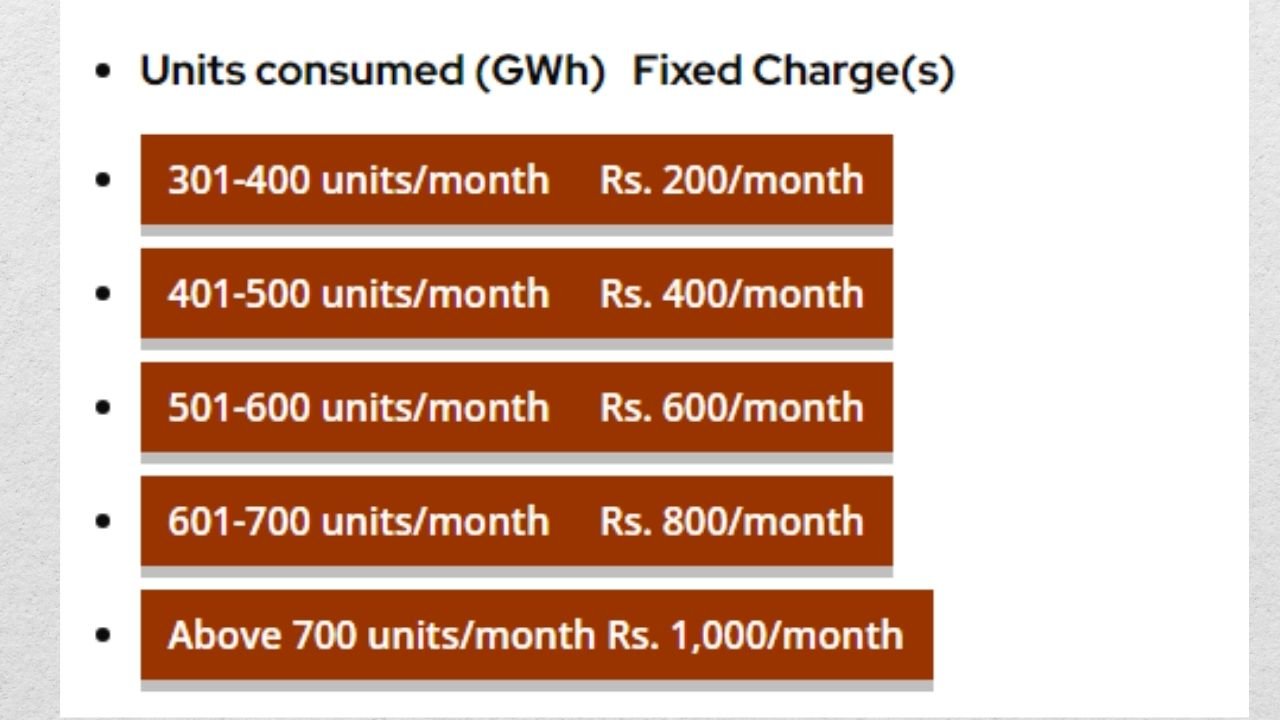
    For consumers exceeding 200 units, tariff increases will vary between 14 per cent and 26 per cent, effective from July 2024, with no additional changes expected for the rest of the fiscal year. Additionally, fixed charges ranging from Rs200 to Rs1,000 per kWh have been introduced for these categories.

    Nepra conducted a public hearing on 8 July to discuss government requests for an additional burden of over Rs700 billion to be passed on to electricity consumers through an average national tariff increase.

    In its final order, Nepra stated, “The authority has no objection in approving the motion along with the subsequent addendum of the federal government.”

    As a result of these changes, the average base electricity tariff will rise by Rs3.29 per unit, bringing it to Rs33.07—an 11 per cent increase compared to the fiscal year 2023-24. This decision marks a significant shift in the financial landscape for residential electricity consumers across Pakistan.

  • NEPRA wants fixed charges on electricity bills from July

    NEPRA wants fixed charges on electricity bills from July

    The National Electric Power Regulatory Authority (NEPRA) has decided to impose a new electricity tariff by imposing monthly fixed charges for residential consumers from July 1, ARY News reported.

    NEPRA has proposed fixed charges of Rs200-1,000 a month in electricity bills, which the government has yet to approve.

    As per the proposal, domestic consumers using 301-400 units a month will pay Rs 200 per month from July 1, 2024, while those using 401-500 units will pay Rs400, and end electricity consumers consuming 501-600 are to pay Rs600.

    The residential consumers who use the 601-700 units will pay Rs800 a month, and those who use above 700 units will pay Rs1,000 a month.

    Residential consumers using the ToU (time of use) meter will also pay Rs1,000 fixed charges a month.

    Commercial consumers having load less than five kilowatt will also pay Rs1,000 a month as fixed charges. However, users consuming loads of five kilowatt and above will now pay Rs. 2,000 from the existing Rs500, an increase of 300 percent.

    Currently, the total cost of electricity unit comprises 72 percent fixed charges and 28 percent variable charges, according to ARY News.

    After Budget 2024-25, the federal government added Rs. 5.72 per unit in power tariff.

    NEPRA had already announced that the average electricity tariff would rise to Rs. 35.50 per unit from the current Rs. 29.78.

  • Reduced electricity prices to spur industrial activity and improve exports: Power minister

    Reduced electricity prices to spur industrial activity and improve exports: Power minister

    Following a reduction in electricity prices for industries, Power Minister Sardar Awais Leghari stated that the government’s decision aims to boost industrial activity and exports.

    Speaking to the media in Dera Ghazi Khan, Leghari highlighted the government’s revolutionary measures to improve the power distribution system. He underscored the government’s commitment to addressing power sector issues, including combating electricity theft.

    Leghari reiterated the goal of eradicating electricity theft nationwide to provide cheaper electricity to the public.

    He also noted the government’s achievement in reducing electricity rates for industries by Rs10.69, which is expected to stimulate industrial activity and generate more job opportunities.

    The minister assured that the government is aware of the challenges faced by farmers and is actively working to provide maximum relief to the public.

    In a related development, Prime Minister Shehbaz Sharif announced on Saturday that government institutions incurring massive losses would be shut down.

    During his address to the nation, the premier stated, “I have decided to close institutions that have become a burden instead of offering assistance,” and added that a ministerial committee has been formed to oversee this process.

    “I will come to you with a new message in a couple of months,” PM Shehbaz said. “I believe this will be a significant step in reducing expenses and saving funds.”

    The premier also mentioned his recent trips to China and the Middle East, noting that commitments for investment were secured during these visits.

  • Caretaker govt decides to transfer ownership of electricity distribution companies to provinces

    Caretaker govt decides to transfer ownership of electricity distribution companies to provinces

    The caretaker government has issued an order for the transfer of ownership of electricity distribution companies to the provinces.

    To accomplish this, the caretaker prime minister has granted approval to submit the summary to the federal cabinet. A decision has been reached to overhaul the existing system concerning the sale, distribution, and pricing of electricity under the caretaker federal government’s jurisdiction.

    As a result of this federal government directive, the practise of implementing a uniform electricity tariff across the nation will be discontinued. Instead, the responsibility for determining electricity rates and providing subsidies will be entrusted to the respective provinces.

    In line with these developments, the Hyderabad and Sukkur Electric Supply Company will come under the ownership of Sindh, while the ownership of the Quetta Electric Company will be transferred to Balochistan, according to HUM News.

    Likewise, the Lahore Gujranwala, Faisalabad, and Multan Electric Supply companies will be transferred to the ownership of Punjab. The Islamabad Electric Supply Company will be jointly owned by Punjab and the Federation, while the Peshawar and Tribal Area Electric Supply Company will be under the ownership of KP.

    As per official documents, a comprehensive policy framework has been formulated for the transfer of distribution company ownership to the provinces. This move is motivated by challenges such as electricity theft and revenue losses, which have placed a strain on the national treasury.