Tag: electricity

  • NEPRA greenlights Rs1.52 per unit hike in power tariff for Karachi residents

    The National Electric Power Regulatory Authority (NEPRA) has granted approval for an increase in the electricity tariff by Rs1.52 per unit for consumers of K-Electric.

    In accordance with the directive from the Economic Coordination Committee (ECC) in June 2023, NEPRA has issued a notification officially declaring a rise of Rs1.52 per unit in electricity charges, according to a press release.

    These adjustments will be reflected in the monthly electricity bills spanning from December 2023 to November 2024.

    A spokesperson for K-Electric clarified that NEPRA’s notification aligns with a previous ECC decision related to charges from the preceding tenure.

    In a statement, the spokesperson mentioned, “The prolonged duration in finalising KE’s tariff has contributed to the current circumstances, resulting in lower charges from Karachi compared to other regions in the country. Operating within the regulated framework of Pakistan’s power sector, KE, like other DISCOS, adheres to decisions made by the government of Pakistan and NEPRA concerning power tariffs.”

    It is noteworthy that lifeline consumers are exempted from the recent increase in charges, providing relief to this specific consumer group, the statement added.

    In a previous development this month, the Economic Coordination Committee (ECC) made a decision regarding the uniform quarterly tariff adjustments for K-Electric consumers, approving a hike of Rs1.72 per unit.

    The decision entails that the tariff rationalization guidelines previously issued to the National Electric Power Regulatory Authority (NEPRA) shall be applicable to the consumption of July, August, and September 2023, to be recovered from K-Electric consumers in December 2023, January 2024, and February 2024, respectively.

    Subsequent to this decision, the electricity tariff for K-Electric consumers will experience an increase of Rs1.72 per unit.

    Sources indicate that there will be a hike of Rs1.25 per unit in terms of quarterly adjustment from January to March 2023, while Rs0.47 per unit will be increased in terms of quarterly adjustment from October to December 2023.

    These measures are taken to ensure uniform electricity tariffs across the country, as per sources familiar with the matter.
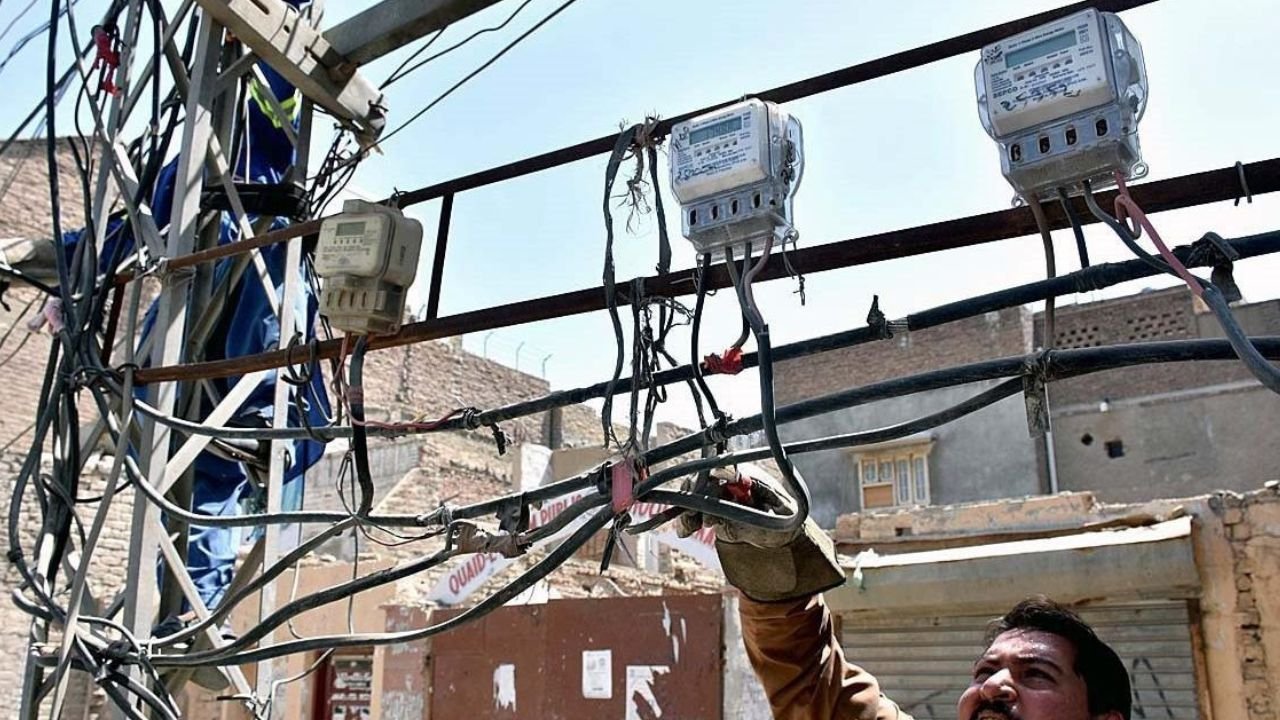

  • Punjab mein kahan ho rahi hai sab say ziada bijli chori?

    Punjab mein kahan ho rahi hai sab say ziada bijli chori?

    Ever wondered which district in Punjab has the highest percentage of electricity theft? Well, surprise, surprise, it is Kasur.

    Kasur has left all districts behind when it comes to power theft, as almost half of the total 20 highest loss-making grid stations of Punjab exist there, causing Rs40 billion losses annually, which is 40 percent of the total theft costing nearly Rs 100bn to Lahore Electric Supply Company (Lesco) in the province.

    LESCO has intensified operations against electricity theft in the district.

    “There are total 103 high-loss feeders in all service areas of Lesco falling in Lahore, Kasur, Okara, Sheikhupura and Nankana Sahib. Of these, 77 feeders are in Kasur alone, placing the district on top of the list in power theft,” a LESCO source told Dawn.

    Interestingly, the power thieves stopped pilferage during the daytime due to continuous raids by LESCO teams and resorted to theft during night hours.

    It is pertinent to note that when it was brought to the knowledge of the most senior officials, they directed the authorities in Lahore to suspend supply to such areas during night hours to stop the pilferage. Following this, the power supply was kept suspended for almost 12 hours on Monday night forcing the consumers to involve local politicians (former MNAs, MPAs, etc.) from Kasur and other parts of the division, who approached LESCO management.

    Meanwhile, a senior official of the Ministry of Energy (Power Division) confirmed the development, saying Kasur is like a tribal area causing billions of rupees loss to LESCO because of massive electricity theft.

    “In Punjab, the government has been facing a loss of Rs99bn in the form of power theft. Of this, about Rs40bn theft is being reported from Kasur district (Lahore Division) alone, annually,” the official says.

    There are around 20 highest loss-making grid stations in Punjab, out of which nine are in Kasur district alone, LESCO has, however, been asked not to shut the supply to the high-loss feeders after the local politicians assured of full cooperation with the field teams in eliminating power theft.

    The official says one of the reasons behind the massive power theft in Kasur is that the district includes border areas and belts along the riverbeds of Sutlej and Beas where law enforcement is a hard task.

    “These areas have almost become like tribal belts where criminals routinely flout the law. That is why they are stealing electricity without fear,” he explains.

    Meanwhile, on the 26th consecutive day of the anti-power theft drive, LESCO teams arrested 132 power thieves and detected pilferage on 501 connections in all five districts. According to a spokesman, the applications for registration of FIRs against 498 electricity thieves have been submitted to the respective police stations, out of which 391 FIRs have been registered, while 132 accused have been arrested.

    An official says the connections where power theft was detected include two industrial, nine agricultural, 13 commercial, and 477 domestic, adding that supply to all these has been disconnected. He says all the electricity pilferers have also been charged a total of 758,052 detection units worth Rs39.980 million.

    He says that separately constituted teams also recovered Rs21 million from 1,359 chronic defaulters on Tuesday.

  • New tax to be imposed on citizens soon

    New tax to be imposed on citizens soon

    The local government has unveiled a new tax that has drawn mixed reactions from citizens. 

    This latest tax, to be imposed in lieu of garbage collection, will be collected from households, shops, petrol pumps, and industrial units on a monthly basis.

    Starting from October, Multan and its neighboring areas will see this sanitation tax in effect. The tax rates are set at Rs50 for houses, Rs200 for shops, Rs1,000 for petrol pumps, and Rs2,000 for industrial unit owners on a monthly basis. 

    The government anticipates an annual revenue boost of approximately Rs4.28 billion through this tax initiative. However, the move has not been met with unanimous approval among citizens, many of whom have criticised it. 

    Meanwhile, amid ongoing discussions concerning the surging costs of electricity production in Pakistan, the Kot Addu Power Company has submitted an application to the National Electric Power Regulatory Authority (Nepra), seeking approval for what could potentially become the country’s most expensive electricity generation tariff.

    The proposal suggests an electricity tariff of Rs77.31 per unit, a significant increase from the current rate of twenty-eight rupees per unit. The power company attributes this substantial hike to rising production costs.

    Notably, the Kot Addu Power Company recently secured a sixteen-month extension during the Pakistan Tehreek-e-Insaf (PTI) administration. However, this extension has not escaped controversy, as the Senate Power Committee has declared it illegal, further fueling the debate over electricity tariffs in the country.

  • PM Kakar nahi jantay kisko mil rahi hai muft bijli?

    PM Kakar nahi jantay kisko mil rahi hai muft bijli?

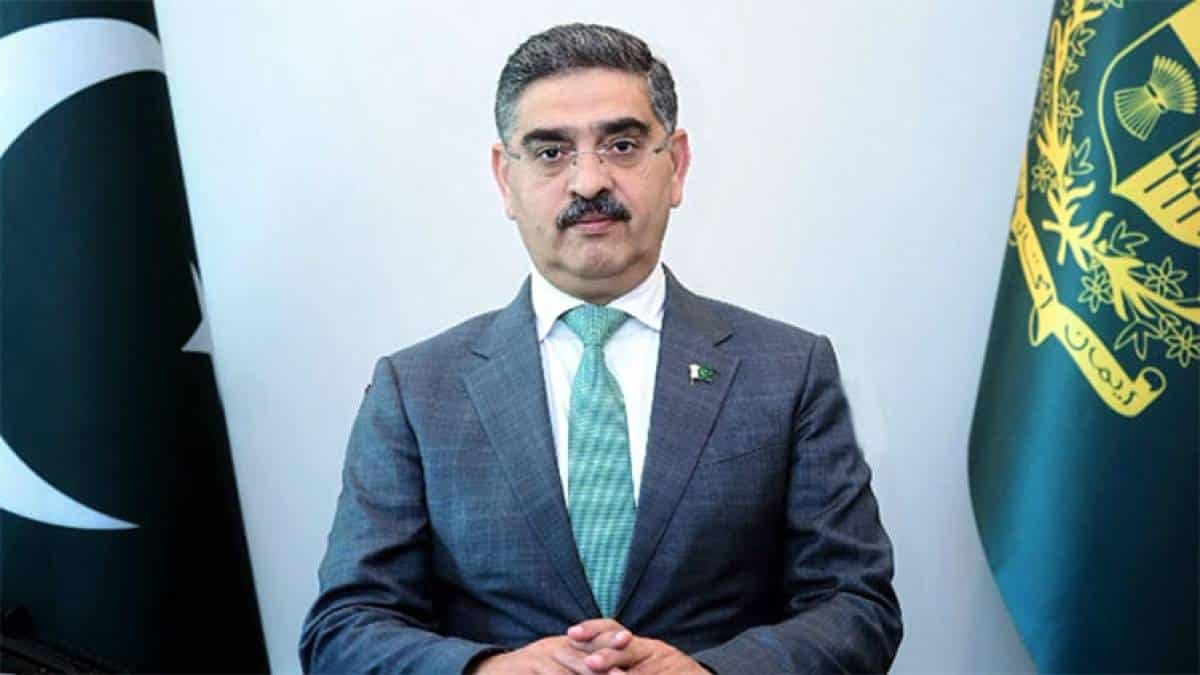
    Interim Prime Minister Anwaar ul Haq Kakar recently gave a statement that only Wapda’s employees, including retired ones, get free electricity and there is no such facility available for anyone else including judges. This statement is factually incorrect.

    Truth is that not only utility bills (including electricity bills) of the serving judges of the Supreme Court and High Courts are paid by the government, but the retired ones also get free electricity of up to 2000 units a month in case of an ex-SC judge and 800 units a month in case of a former high court judge, as per Ansar Abbasi’s report for Geo news.

    Not only this, the president and prime minister also enjoy free utilities including free electricity without any limits but in the case of the ex-president, he is provided 2000 units a month of electricity at the cost of taxpayers’ money.

    President’s Salary, Allowance and Privileges Act, 1975 as amended in 2018 says in Section 7 that the actual charges for electricity and gas consumption shall be paid in each year to the president. After retirement, the president also gets gas to the extent of monthly consumption of 10 HM3 and water, all paid by taxpayers.

    Chairman of National Accountability Bureau (NAB) also enjoys similar facilities as those of a Supreme Court judge, including free electricity. There is no confirmation of what the prime minister has claimed about services’ chiefs.

    In October 2020, Justice Faez Isa and his wife released income tax and asset details in which it was clearly written that post-retirement benefits of a Supreme Court judge include 2000 units of electricity, 25 HM of gas, water and 300 litres of petrol per month.

    High Court Judges (Leave, pension, privileges) order 1997 not only talks about the payment by government for provision of electricity gas and water but also says in Section 28 that a judge on retirement and after his death, the spouse shall be entitled to certain benefits including 800 units of electricity per month as well as 25 HM3 of gas per month.

    All those quasi-judicial public offices including the offices of NAB chairman, federal ombudsman etc where retired judges, or retired civil servants are appointed, the residence utility bills are also paid from the public funds.

    According to a NAB document, “i) Chairman NAB shall be entitled without payment of rent to the use of a residence provided by the Government throughout his term of office maintained at Government expenses with all utilities to be paid on actual basis by the Government. ii) In case of non-availability of Government accommodation or the Chairman chooses to reside in a private residence, the expenses on maintenance and all utilities as per actual, will be paid by the Government, in addition to house rent allowance.”

  • After protests, people going to court against LESCO

    After protests, people going to court against LESCO

    After a sharp hike in electricity bills, an increasing number of cases are being filed against LESCO in courts, as people turn towards legal recourse as a last option.

    More than 400 cases were filed against WAPDA within a week.

    The court, taking immediate action, ordered the department to divide the bills into installments.

    Consumers have said that they do not have any other option but to go to court. They have rejected the increase in electricity bills and appealed to the government to provide immediate relief.

  • Who are the people using free electricity in Pakistan?

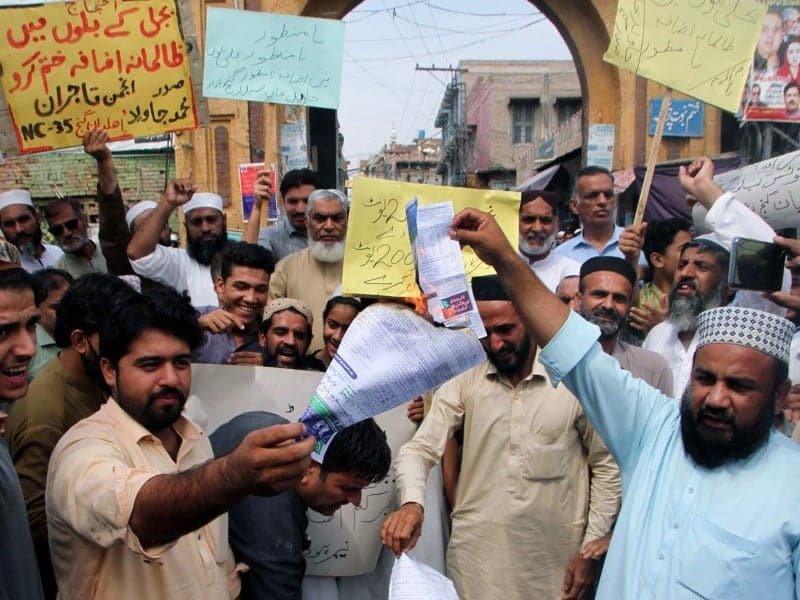
    A sharp hike in electricity bills has led to public protests across the country with consumers burning electricity bills collectively to express their objection to the exorbitant sums. The protesters are demanding that free electricity is not given to WAPDA employees and other officials because it is the general public who has to bear its burden — something they can no longer do.

    We News’ reporter, Bilal Abbasi, has investigated the amount of electricity being used every month by individuals like the Prime Minister, President, Supreme Court and High Court Judges, Federal Ministers, Chairman NAB, Governor State Bank, Senior Bureaucrats and senior government officials.

    Here are the details that We News has uncovered:

    During presidency, unlimited power unit; after retirement, 2000 units per month

    According to the President’s Salary, Allowances and Privileges Act 1975, unlimited electricity units will be provided to the President and after their retirement, the President will be able to use 2000 units per month for free.

    After the death of the president, 2000 units of free electricity will be provided to his widowed wife.

    Similarly, the Prime Minister of Pakistan is also provided unlimited free electricity.

    The Chief Justice of the Supreme Court and other judges have the right to use 2000 units of electricity during and after their service.

    A High Court Judge is provided 800 units of free electricity after retirement.

    22 thousand rupees for utility bills to the Federal Minister

    As per public perception, electricity provided to federal ministers and members of assembly is free of charge; but that isn’t so. Federal Ministers are paid 22,000 rupees in monthly salary to pay all utility bills, while Members of the Assembly are not paid any amount for any utility nor for their official residence ‘Parliament Lodges’.

    Similarly, senior bureaucrats also pay their own electricity bills.

    Chairman NAB 2000 units, Governor State Bank unlimited electricity units

    Chairman NAB is also provided with free electricity units equal to judges of the Supreme Court. They are provided with 2000 units of electricity per month for free.

    The Governor State Bank, however, is provided with unlimited electricity free of cost and the amount is paid by the State Bank. The officers of government institutions are also provided free electricity, but the relevant department/institution pays their bills to WAPDA.

    How many billions of rupees of electricity did WAPDA employees use for free in a year?

    Heavy units are provided free of charge to WAPDA employees and those working in power generation and transmission.

    According to statistics presented by the Ministry of Energy in the Senate Committee, 189,000 WAPDA employees were provided with 34 crore units of electricity for free in a year, using electricity worth 8 billion rupees for free.

    How many electricity units are provided free to WAPDA officers?

    WAPDA earning officers start getting free electricity units from 16th grade onwards. 16th grade officers are provided with 300 units per month, 17th grade officers with 450 units per month, 18th grade officers with 600 units, 19th grade officers with 880 units per month, 20th grade officers with 1100 units while 21st and 22nd scale WAPDA officers are provided with 1300 per month. These power units are provided free of charge. The perks are provided after retirement as well.

  • ‘Ya Allah Reham’: Mohib Mirza, celebrities react to recent electricity bill hike

    ‘Ya Allah Reham’: Mohib Mirza, celebrities react to recent electricity bill hike

    Social media users and public figures expressed outrage over the weekend at the hike in electricity bills. The exorbitant sums led to protests across the country with citizens burning their bills. Caretaker Prime Minister Anwaar ul Haq Kakaar has responded to the outrage by tweeting that an emergency meeting would be called at the Prime Minister’s residence on Sunday to address the sudden hike.

    READ MORE: PM calls emergency meeting as public outcry grows over high electricity bills

    Celebrities have also decried inflation and how it impacts an ordinary citizen’s life.

    Actor Sami Khan shared a tweet by a journalist who shared a video of a man protesting against the price hike, and in the caption he wrote:

    ‘Ya Allah Reham farma.”

    Mohib Mirza addressed the situation with his own hilarious but rather dark twist:
    “Thank god we have not gone on the moon, otherwise the fuel adjustments for the rocket would have been taken from our bills!”

    Actress Mariyam Nafees shared a screenshot of a request of an imam, asking him to pray that inflation goes away, so a family could afford to eat. In the caption, she had requested all her followers to be thankful for having food to eat and a place to stay, because such things are luxuries for others.

  • JI announces protest against inflated electricity bills

    JI announces protest against inflated electricity bills

    The Jamaat-e-Islami (JI) announced on Saturday that it would stage a protest against the exorbitant electricity bills.

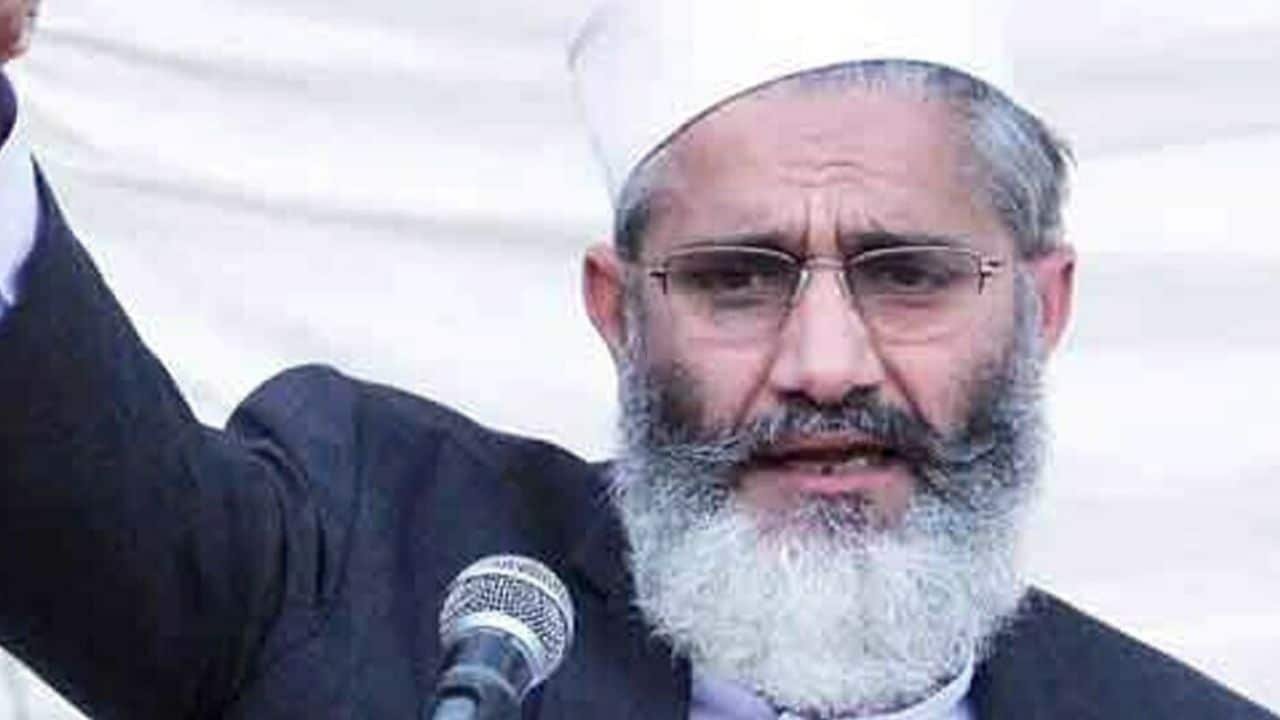
    Addressing a seminar in Lahore, JI Ameer Sirajul Haq lashed out at political opponents and the caretaker government, saying, “The caretaker government is following the footsteps of the previous governments in terms of taking wrong decisions for the sake of the country.”

    “The power bills have increased three times within one month. People have been compelled to commit suicide due to the ballooning inflation. The electricity bill of at least Rs50,000 has been sent to every house,” said Mr Haq.

    He made it clear that the JI would stage a protest outside of the power distribution companies.

    Earlier, interim Prime Minister Anwaar ul Haq Kakar took to X (formerly Twitter) to announce that that he has summoned an emergency meeting over the price of electricity and consumers’ inflated bills, adding that he will hold consultations to provide maximum relief to power consumers.

    The prime minister has directed the Ministry of Energy and power distributions companies to present him with a detailed briefing over the issue.

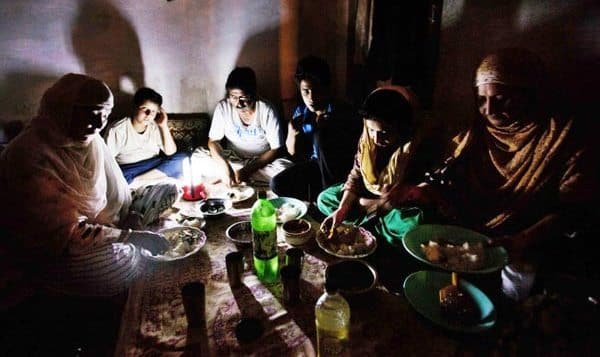
  • No loadshedding during Sehri and Iftar times, PM Shehbaz passes instructions

    No loadshedding during Sehri and Iftar times, PM Shehbaz passes instructions

    Prime Minister (PM) Shehbaz Sharif has directed his government to ensure that there is no loadshedding during Sehri and Iftar times in the holy month of Ramzan— set to start at the end of March.

    He also gave directions that there should be minimum loadshedding in the upcoming summer season and directed authorities to accelerate the process of solarising government buildings.

    He asked for the completion of all projects in the power sector and solarisation in the country within the stipulated time.

    Earlier this year, Pakistan faced an energy crisis when a major power outage left the entire country without electricity for more than 12 hours.

    Amid the energy crisis, last year, the premier formed a committee that worked on reducing electricity consumption in government offices by 30 per cent. He also ordered officials to convert federal government buildings to solar energy at the earliest.

  • Weekly inflation increases more than 38% as prices of petrol and food items hit the roof

    Weekly inflation increases more than 38% as prices of petrol and food items hit the roof

    According to the latest data released by the Pakistan Bureau of Statistics (PBS), the Sensitive Price Indicator (SPI) based inflation for the week ended February 16, 2023, registered an increase of 2.89 per cent. The rise in inflation can be attributed to an increase in the prices of both food and non-food items.

    Food Items that saw an increase in prices

    The following food items saw a significant increase in prices during the week ended February 16, 2023:

    • Cooking oil 5 litre (8.65 per cent)
    • Vegetable ghee 1kg (8.02 per cent)
    • Bananas (8.01 per cent)
    • Chicken (7.49 per cent)
    • Vegetable ghee 2.5 kgs (6.76 per cent)

    Non-food items that saw an increase in prices

    The following non-food items saw an increase in prices during the week ended February 16, 2023:

    • Petrol (8.82 per cent)
    • Diesel (6.49 per cent)
    • Cigarettes (6.18 per cent)

    Year-on-Year Trend

    The year-on-year trend depicts an increase of 38.42 per cent mainly due to an increase in the prices of the following items:

    • Onions (433.44 per cent)
    • Chicken (101.86 per cent)
    • Diesel (81.36 per cent)
    • Eggs (81.22 per cent)
    • Rice irri-6/9 (74.12 per cent)
    • Rice basmati broken (73.05 per cent)
    • Petrol (69.87 per cent)
    • Moong (67.98 per cent)
    • Bananas (67.68 per cent)
    • Tea Lipton (63.89 per cent)
    • Pulse gram (56.93 per cent)
    • Bread (55.36 per cent)
    • Maash (53.42 per cent)
    • LPG (52.68 per cent)
    • Cigarettes (50.02 per cent)

    On the other hand, the prices of tomatoes (65.30 per cent), electricity for q1 (7.50 per cent), and chillies powdered (7.42 per cent) saw a decrease during the same period.

    SPI for the week under review

    The SPI for the week under review in the above-mentioned group was recorded at 234.77 points against 228.17 points registered in the previous week. Out of 51 items, prices of 34 (66.67 per cent) items increased, 05 (9.80 per cent) items decreased and 12 (23.53 per cent) items remained stable.

    SPI for different consumption groups

    The SPI for the consumption group up to Rs17,732, Rs17,732-22,888, Rs22,889-29,517, Rs29,518-44,175 and above Rs44,175 consumption group increased by 2.45 per cent, 2.73 per cent, 2.79 per cent, 2.88 per cent, and 2.94 per cent, respectively.

    Items that recorded an increase in average prices

    The following items recorded an increase in their average prices during the week over previous:

    • Petrol super (8.82 per cent)
    • Cooking oil Dalda or other similar brand (sn), 5 litre tin each (8.65 per cent)
    • Vegetable ghee Dalda/Habib or other superior quality 1 kg pouch each (8.02 per cent)
    • Bananas (8.01 per cent)
    • Chicken (7.49 per cent)
    • Vegetable ghee Dalda/Habib 2.5 kg tin each (6.76 per cent)
    • Hi-speed diesel (6.49 per cent)
    • Cigarettes Capstan (6.18 per cent)