Tag: employment

  • Pakistan’s textile sector witnesses a significant downturn in growth

    Pakistan’s textile sector witnesses a significant downturn in growth

    Pakistan’s Economic Survey 2021-22 reveals that the textile industry expanded by 3.2 per cent during July-March in fiscal year 2021-22, compared to 8 per cent in the same period last year, demonstrating a considerable setback in progress.

    The poundage of the textile sector has declined from 20.9 to 18.16 per cent in QIM 2015-16, but it remains the highest among all LSM sectors, according to Brecorder.

    Woolen segment production grew the most, with a 38.9 per cent increase in blankets, a 27.9 per cent increase in woollen and carpet yarn, and a 19.1 per cent increase in woollen worsted cloth. Yarn and cloth production increased by 0.7 per cent and 0.3 per cent, respectively.

    Congruent production units, invariant capacity and elevated cotton prices owing to demand and supply gap disruptions have moderated the growth momentum of the cotton sector, stated the Economic Survey 2021-22 document, unveiled by Finance Minister Miftah Ismail.

    “Depreciation of PKR restrained the production of jute, as most of the raw material is imported from Bangladesh. However, surge in imports of textile machinery, rising demand for concessionary financing from textile firms and high exports of this sector showing a sizable improvement in the textile sector,” it added.

    With a weight of 6.08 in the LSM, wearing garments has been detached from the textile sector. It grew by 34 per cent compared to 35.6 per cent compression.

    The sector has been growing traction both locally and internationally, with garment production increasing by 34 per cent during the time frame. Garment exports have also increased by 33.9 per cent in aspects of volume.

    Textile is Pakistan’s most valuable manufacturing sector, with the widest production chain and intrinsic value addition ability at each point of the process, from cotton to ginning, spinning, fabric, dyeing and printing, made-ups and garments.

    This sector accounts for well almost one-fourth of industrial value addition and employs approximately 40 per cent of the industrial workforce. Textile products have maintained an average share of about 61.24 per cent in national exports, excluding seasonal volatility.

    In the meantime, knitwear exports decreased by 4.8 per cent in quantity while increasing by 34.1 per cent in value during the period under review. Towel exports totaled $819.6 million, up from $692.1 million, representing an increase of 18.4 per cent in value and 5.1 per cent in quantity.

    The ready-made garment industry has surfaced as a crucial small-scale industry in Pakistan, and it is a good source of providing employment opportunities to many people with a very low capital investment. Exports increased by 33.9 per cent in quantity and 26.2 per cent in value from 27.8 million dozen to 37.3 million dozen worth $2.8 billion, up from $2.27 billion in the same period last year.

    Meanwhile, Pakistan exported synthetic textile fabrics worth $343.59 million in comparison to $269.20 million in the same period last year, representing a 27.6 per cent increase. In terms of volume, synthetic textile exports fell by 33.6 per cent.

    The ceremony was also attended by Ahsan Iqbal, Minister of Planning, Development, and Special Initiatives, Khurram Dastgir, Federal Minister of Power, and Aisha Ghaus Pasha, Minister of State for Finance and Revenue.

    Furthermore, the survey underscored the key features of the government’s policies aimed at restoring macroeconomic stability and putting the economy on a growth path. Addressing the launch event, Miftah Ismail stated that the government has avoided a default due to the difficult decisions made by the current administration. He said that the country is now on the path of stability.

  • A Chinese company will invest $50 million to enhance Pakistan’s agricultural sector

    A Chinese company will invest $50 million to enhance Pakistan’s agricultural sector

    Optima Integration Group of China and Asia Pak Investments of Pakistan agreed on May 23 to invest $50 million in the first stage to enhance agriculture, power, and logistics sector in Gwadar and Karachi.

    The Board of Investment (BoI) facilitated the signing of a memorandum of understanding (MoU) in this respect between the two businesses, which may result in the creation of more than 100 job vacancies in Gwadar and Karachi, as well as the establishment of a high-tech processing facility and technology transition.

    The event was attended by Federal Minister Board of Investment Chaudhry Salik Hussain, who signed the MoU with Optima Integration Group Chairman Sam Siu and Chief Executive Officer of Sino Pak Optima Technologies (SPOT) in the spirit of strengthening business-to-business (B2B) agricultural collaboration among the two nations. Ms Fareena Mazhar, Secretary of the BoI, was also present at the occasion.

    Under the terms of the agreement, the two parties would establish an end-to-end supplier base for seafood [79 breeds of fish have been certified for exporting from Pakistan to China by the General Administration of Customs of the People’s Republic of China (GACC)].

    In the long term, the initiative would grow from fish to beef and goat, beginning with cold chain transporting beef and then expanding with Chinese standard breeding, feedlot operations, immunizations, track and trace technologies, and slaughter and pack facilities in Karachi.

    Read more: SBP hikes interest rate by 150 basis points to control inflation

    Addressing the gathering, Minister Chaudhry Salik Hussain praised the Chinese government’s involvement in Pakistan’s agriculture and livestock sectors, notably the fish and seafood business.

    He briefed the attendees regarding the formation of the Pakistan-China Business and Investment Forum (PCBIF), which was the outcome of a collaboration between the BoI, the Chinese Embassy, and the All-Pakistan Chinese Enterprises’ Association (APCEA). He informed Chinese investors that the BoI would take deliberate steps to assist interested investors.

  • Construction work for Swat Motorway Phase-II to begin next week

    Khyber Pakhtunkhwa (KP) Chief Minister Mahmood Khan will lay the foundation stone for Swat Motorway Phase-II in the next week.

    The CM instructed that development on the Dir Motorway project’s PC 1 for land acquisition be quickened so that practical work on the project can proceed.

    He was presiding over a meeting of the Pakhtunkhwa Highways Authority to discuss the status of various road projects, including the Swat Motorway Phase II and the Dir Motorway.

    The meeting was informed on the status of Swat Motorway Phase II, which will be 88 km long and will be built at a cost of Rs58 billion and will run from Chakdara to Fatehpur. It was also revealed that a contractor deal for the project’s construction had been inked.

    It was revealed that Rs6.7 billion had been allocated for the project’s land acquisition. In addition, section four was implemented for the purchase of land.

    Project Plan

    Swat motorway will have four lanes at first and will be expanded to six lanes later. Chakdara Interchange, Shamozai Interchange, Barikot Interchange, Mingora Interchange, Kanju Interchange, Malam Jabba-University of Swat Interchange, Sher Palam Interchange, Matta Khawazakhela Interchange, and Madin-Fatehpur Interchange would be among the nine interchanges.

    On the Swat River, a total of eight bridges will be built. The project also includes the construction of four rest spots in various places, as well as the construction of connection highways if required.

    PHA officials briefed the meeting on Dir Motorway that an Expression of Interest for a 30 km long Dir Motorway from Chakdara to Rabat had been floated. Three interchanges, four flyovers, 24 bridges, two underpasses, and two tunnels will be part of this road project.

    These developments, according to the Chief Minister, would help boost tourism, trade, and economic operations, making them a “milestone” for the long-term growth of the Malakand division. These initiatives will also provide employment chances for locals in addition to improving transportation facilities.

  • Amazon’s entry to Pakistan expected to create thousands of jobs

    Amazon’s entry to Pakistan expected to create thousands of jobs

    Amazon has finally added Pakistan to its list of seller countries with Pakistanis now able to create accounts using Pakistani credentials and details.

    As per details, several officials including Aisha Moriani (Joint Secretary, Ministry of Commerce), Omer Gajial (Ex-Amazon Category Development Head for Amazon North America division), and Shoaib Sarwar (deputy Consul General, Consulate General Pakistan, Los Angeles) along with the team members of NECC (National Ecommerce Council) and Badar Khushnood from Pakistan Software Houses Association have played an important role in this development.

    This is a huge milestone and will transform Pakistan’s economy as more sellers from the country will visit the platform.

    Earlier, advisor to Prime Minister (PM) Iman Khan on Commerce and Trade, Abdul Razak Dawood stressed that e-commerce has changed the business practice and that Pakistan must pay attention to it.

    Besides, after COVID-19 e-commerce practices have increased by many folds, and it is a great oppertunity for women, Small and Medium Enterprises (SMEs) and entrepreneurs.

    On this occasion, Special Assitant to PM, Dr Shahbaz Gill said: “The contemporary government has achieved a milestone that the country had been unable to achieve for more than ten years.”

    “Pakistan will enter into the global market, and it will generate economic activity of millions, that will also create many employment opportunities, thank you, Imran Khan,” he added.

    In addition, Pakistan’s largest EdTech platform, Extreme Commerce has trained millions of people for Amazon selling and trading and complete e-commerce.

    The company has said that “The new era of e-commerce boom for Pakistan is about to start. Get your agencies ready for more business, aa you are about to get flooded with Pakistani manufacturers and brands who would need your services to take them to Amazon. Do your best, do not let the brand Pakistan down ever again, please.”

    In less than 24-48 hours, Pakistan will hopefully show up in the list of allowed countries for Amazon sellers. You…

    Posted by Extreme Commerce on Wednesday, May 5, 2021

  • Pakistan’s soft image can only be portrayed through tourism: PM Imran Khan

    Presiding over a meeting of the National Coordination Committee (NCC) on tourism in Islamabad, Prime Minister (PM) Imran Khan said that Pakistan is blessed with different climatic zones and numerous untapped tourist points. He said that the government is focused on eco-tourism to ensure environmental conservation while managing and looking after tourist spots.

    According to details, PM Khan said that the government would provide all possible facilities for the development as well as the promotion of the tourism sector in the country. This initiative would not only generate revenue but also provide employment opportunities for the people of Pakistan.

    Previously in his first televised address to the nation, soon after taking oath, PM Imran had said: “Pakistan has huge tourism potential. We will promote tourism to strengthen the economy.”

    Special Assistant to the Prime Minister (SAPM) for Overseas Pakistanis Sayed Zulfiqar Bukhari briefed the committee about the progress of the development of the tourism sector. He also informed that substantial work has been undertaken for the development of religious tourism.

    It is pertinent to mention here that the World Tourism Forum 2021 will be held in Pakistan. According to Zulfi Bukhari, the forum will be a five-day event with over 1,000 foreign visitors expected to attend.

    “The World Tourism Forum will have three days for conference and two days for tourism”, the SAPM had said.

    Meanwhile, American business magazine Forbes has also listed Pakistan as one of the ten must-visit destinations for those who’re looking for something offbeat.

  • 31% Pakistanis lost their jobs in 2019: report

    31% Pakistanis lost their jobs in 2019: report

    A global research company, IPSOS, conducted the second Global Consumer Confidence Index survey which revealed that about 31% of Pakistanis have either lost their jobs or know people who lost their jobs in 2019.

    It also stated that around 83% of Pakistanis are fearful of losing their jobs and inflation, unemployment and increasing poverty were the problems that were the most worrying for them.

    People are also uncomfortable making big expenditures. According to the survey, 91% of people are less comfortable buying a car or a home compared to a year ago. 90% are scared of making major household expenses.

    The survey also stated that 17% of businessmen fear going into a loss and only 21% believe that the country is going in the right direction.

    Meanwhile, Prime Minister Imran Khan is hopeful that 2020 will be the year of jobs in Pakistan right after the economy stabilization plan. He said that the media had tried to ‘insult’ and attack him for his goals.

    Results of the survey are based on a nationally representative sample of 2,900 people aged between 19 and 65. It was conducted in December 2019.

  • Japan opens doors for trained Pakistani labourers

    Japan opens doors for trained Pakistani labourers

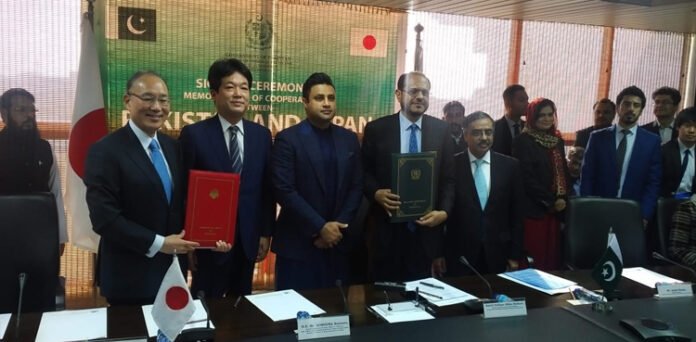
    Islamabad and Tokyo have signed a memorandum of cooperation, under which trained Pakistani labourers would be provided with employment opportunities in Japan, Profit reported.

    The agreement was signed in the presence of Special Assistant to PM on Overseas Pakistanis and Human Resource Development Zulfiqar Bukhari, Japanese Ambassador to Pakistan Kuninori Matsuda, Foreign Secretary Sohail Mahmood and other high-level officials.

    “The newly signed memorandum will help the trained Pakistani labourers get employment in Japan,” said a statement issued by the ministry. “This is a major milestone that will further enhance bilateral ties between both countries.”

    Addressing the ceremony, the Japanese envoy termed the agreement a “special occasion” for both nations, saying that it would play a key role in strengthening the existing ties between Pakistan and Japan.

    “Japanese language and technical expertise are essential for employment in Japan; the country needs approximately 340,000 trained labourers,” he added.

    Speaking on the occasion, Zulfiqar Bukhari highlighted that 65 per cent of the Pakistan population was below the age of 35, adding that employment opportunities were present in 14 sectors of Japan.

    He urged the youth to especially focus on the information technology sector citing future needs.

    On December 20, the Japanese ambassador had met Zulfiqar Bukhari for a pre-discussion on the agreement which is signed on Monday (today).

    According to a statement issued by the ministry, the two sides had discussed a wide range of issues related to trade, tourism and manpower.

    The envoy had informed that Japan would build a network, in collaboration with language universities in Pakistan, and carry out 3 to 6 months language proficiency course with e-learning facilities for far-flung areas so as to accommodate the maximum number of Pakistanis to work in Japan.

    Acknowledging their diligence and social conduct, the ambassador showed his highest gratitude towards 25,000 Pakistanis residing and working in Japan.

  • Report reveals more than 11m Pakistanis went overseas for employment since 1971

    Report reveals more than 11m Pakistanis went overseas for employment since 1971

    More than 11 million Pakistanis have left Pakistan since 1971 to pursue employment opportunities in different parts of the world. 4.2 million of the 11 million were labourers.

    According to a report by the Bureau of Emigration & Overseas Employment, 11,052,663 workers registered for overseas employment with the bureau between 1971 and November 2019.

    While labourers topped the list, drivers came at number two with 1.3m people leaving the country to become drivers.

    Meanwhile, the profession that saw the least amount of workforce export was that of photographers, with only 1,949 leaving the country for overseas employment.

    Of the 11m manpower exports, 4.7m has been categorised as ‘skilled’ and 4.6m as ‘unskilled’.

    Saudi Arabia has been the most popular destination among Pakistani workers seeking employment opportunities. The report says 5.4m Pakistanis registered as employees in the kingdom since 1971. Saudi Arabia also took in the most number of Pakistanis in 2019, with the figure standing at 294,156.

    United Arab Emirates is second on the list with 3.8m Pakistanis working there while Oman (793,454) comes at number three.

  • Unemployed? Here are the reasons why

    Unemployed? Here are the reasons why

    Being unemployed is never easy – on the person, his family or on the society as a whole. Here is what you need to do to get viable employment. 

    To get a job and then to sustain it, a candidate must possess two types of skills: hard skills and soft skills. Hard skills are basically the primary talents one can have like engineering, programming, designing, and so on so forth. On the other hand, soft skills are those that let you manage yourself and people around effectively; some examples are social skills, communication skills, emotional intelligence, time management and so on.

    A person who has both will have better employment opportunities. So what one should do to learn both, especially, if you cannot afford to go expensive university, or you do not have enough time due to personal reasons? 

    Edx.org is a platform created by the world best universities from where you can take many online courses for free. These courses are ranging from computer sciences to creative skills like graphics designing or content creation. There are hundreds of other courses that you can take to polish your hard and soft skills. 

    Be
    mindful of one thing that to grow professionally – you have to develop the
    habit of learning. As a famous American author Alvin Toffler rightly said:

    “Illiterate
    of the 21st century will not be those who cannot read and write, but those who
    cannot learn, unlearn, and relearn.”

    So 2020 is not far away – be comfortable with your anxieties, fears and above all uncertainties. Perhaps, millennials do not have many options to escape this reality.