Tag: Energy Costs

  • Pakistan grapples with 23% surge in power generation costs amidst economic woes

    Pakistan grapples with 23% surge in power generation costs amidst economic woes

    In a startling development, the cost of power generation in Pakistan has surged by a staggering 23 per cent in January 2024, compared to the same period last year, reports the brokerage house Topline Securities.

    The average cost per kilowatt-hour (KWh) soared to Rs13.8, marking a significant increase from Rs11.20/KWh recorded in January 2023.

    The substantial hike in costs is attributed primarily to elevated expenses in power generation from gas and nuclear sources, which witnessed a spike of 43 per cent and 24 per cent, respectively, on a yearly basis. Moreover, the fuel cost for furnace oil (FO) also surged by 22 per cent year-on-year, according to data from Topline Securities.

    This surge comes as a severe blow to the populace, which is already grappling with high inflation and sluggish economic activity. Rising electricity bills have compounded the financial burden on citizens.

    In terms of power generation, Pakistan witnessed a marginal decline of over 2 per cent in January 2024 compared to the same period last year, with total generation amounting to 8,313 GWh (11,175 MW).

    The decline in power generation was predominantly due to a decrease in coal-based generation, which plummeted by 20 per cent year-on-year. Gas and wind power generation also witnessed declines of 10 per cent and 55 per cent, respectively.

    However, there was a 9 per cent increase in power generation on a monthly basis, indicating some fluctuation in the generation patterns.

    Coal emerged as the primary source of power generation in January 2024, constituting 23.4 per cent of the total generation mix, surpassing nuclear and RLNG (re-gasified liquid natural gas). Nuclear energy accounted for 20.8 per cent of the overall generation, while RLNG contributed 18.2 per cent.

    Renewable sources like wind, bagasse, and solar collectively made up a modest portion of the generation mix, indicating a potential for further development and investment in sustainable energy solutions.

    Overall, the surge in power generation costs coupled with a slight decline in generation highlights the challenges facing Pakistan’s energy sector and underscores the need for strategic measures to ensure an affordable and sustainable power supply in the country.
  • Govt may cut petrol price by more than Rs10 per litre

    Govt may cut petrol price by more than Rs10 per litre

    The government is poised to provide significant relief by potentially reducing petrol and diesel prices by Rs13 and Rs15 per litre, respectively, in the upcoming fortnightly pricing update.

    This anticipated reduction is attributed to a noteworthy downturn in international petroleum and diesel prices over the past fortnight.

    The stability of the local currency at a weighted average of approximately PKR 284.33 per USD further contributes to this potential relief. 

    Current estimates as of December 2008 reveal a global decline in petrol and diesel prices by 5.44 per cent and 5.6 per cent, reaching $94.95 and $100.05 per barrel, respectively.

    As the next pricing update is still a week away, the future trajectory of these prices hinges on global market movements and exchange rate fluctuations. 

    Notably, in the preceding fortnight, the government maintained the petrol price at Rs281.34 while reducing the HSD price by Rs7 to Rs289.71 per litre.

  • OGRA notifies major gas price hike for November

    OGRA notifies major gas price hike for November

    The caretaker government’s decision to implement a gas price increase of over 172 per cent for non-protected domestic consumers has left many shocked and outraged.  

    Starting on November 1, the revised prices are set to impose a significant financial burden on households already grappling with financial difficulties. 

    According to the notification released by the Oil and Gas Regulatory Authority (OGRA), the new gas prices represent a substantial hike across various consumption levels.  

    For instance, customers consuming 100 cubic metres of gas per month will now be charged Rs1,000, up from the previous rate of Rs400. Those using 150 cubic metres will see their monthly costs rise from Rs600 to Rs1,200. 

    On the other hand, the price for a monthly consumption of 200 mmbtu has increased to Rs1,600 from the previous Rs800, and for users consuming 300 mmbtu monthly, the cost has risen to Rs3,000 from Rs1,100. 

    Moreover, the charge for consuming 400 mmbtu of gas per month has gone up from Rs2,000 to Rs3,500. For those using more than 400 mmbtu per month, the new rate is Rs4,000, up from the earlier Rs3,100. 

    This significant and unexpected price surge is anticipated to have a severe impact on household budgets, especially for low-income families who heavily depend on natural gas for cooking and heating. 

  • NEPRA announces increase in electricity tariff, impacting November bills 

    NEPRA announces increase in electricity tariff, impacting November bills 

    In yet another unsettling development for power consumers already burdened by rising costs, the National Electric Power Regulatory Authority (NEPRA) has announced an increase of Rs0.40 per unit in the electricity tariff.  

    This adjustment, approved by NEPRA in response to the monthly fuel adjustment for September, will result in higher charges on November bills for electricity consumers. 

    It’s important to note that this tariff hike will affect all consumer categories, except for those classified as lifeline consumers and K-Electric users.  

    In October, NEPRA had previously approved a separate increase of Rs1.71 per unit in the electricity tariff, which was attributed to fuel adjustment charges (FAC) for the month of August. This increase was reflected in the bills for October. 

    Additionally, on October 3rd, NEPRA sanctioned a per-unit price increase of Rs 3.28 as part of the quarterly adjustment.  

    This adjustment will entail a recovery of Rs3.28 per kilowatt-hour (kWh) from various consumer categories within power distribution companies (DISCOs) and K-Electric over a six-month period, spanning from October 2023 to March 2024. 

  • Winter chills and rising bills: Govt may hike gas tariff by up to 200%

    Winter chills and rising bills: Govt may hike gas tariff by up to 200%

    The interim government is in the process of preparing a significant gas tariff increase proposal, set to be presented to the Economic Coordination Committee (ECC) tomorrow. 

    According to ARY News, the Petroleum Division will lay out a plan for a 200 per cent hike in gas tariffs for various consumer categories, with domestic consumers facing a 172 per cent increase in anticipation of the upcoming winter season.

    The proposal encompasses a broad spectrum of changes, including a 200 per cent price hike for different consumer categories and a staggering 3,900 per cent surge in monthly fixed charges for protected consumers, soaring from Rs10 to Rs400.

     For non-protected consumers, the plan suggests an increment of Rs100 for those using 0.25 cubic metres per month, Rs300 per mmBtu for those using 0.60 cubic metres, and up to Rs1,900 per mmBtu for consumers utilising 300 cubic metres per month.

    Export units may see their rates rise from Rs950 to Rs2,050 per mmBtu, while non-export units might face an increase from Rs1,400 to Rs2,600 per mmBtu. The CNG sector could experience a hike of Rs2,595 per mmBtu.

    For other industries, the suggested rates are Rs2,900 per mmBtu for the cement sector and Rs4,400 per mmBtu for the CNG sector. However, the current rates for power generation units and tandoors are expected to remain unchanged.

    Sources indicate that the caretaker finance minister has called for an ECC session at 4:00 pm on Monday, proposing the implementation of these gas tariff adjustments starting on October 1. 

    Earlier, there were reports from within the finance ministry that the International Monetary Fund (IMF) had urged Pakistan to promptly increase gas tariffs by 100 per cent to address the losses and circular debt in the country’s gas sector.

    The IMF, during a virtual meeting with Pakistan’s finance ministry officials, expressed concerns over the failure to raise gas tariffs on July 1, emphasising that this was a violation of their standby agreement. 

    The IMF further advised the recovery of a Rs46 billion loss incurred by gas companies from July to September. It should be noted that caretaker Finance Minister Dr Shamshad Akhtar is currently in China.

  • Things will get more expensive amidst soaring petroleum prices: Finance Ministry

    Things will get more expensive amidst soaring petroleum prices: Finance Ministry

    Due to the persistent escalation in energy and petroleum prices, it is anticipated that inflation will maintain its elevated trajectory in the months ahead.

    In its latest monthly economic update, the Ministry of Finance has presented a forecast indicating that inflation is poised to remain at an elevated level during the upcoming months. The report projects inflation to fall within the range of 29 per cent to 31 per cent for the month of September 2023, primarily attributing this surge to the notable uptick in prices of petroleum products and electricity.

    Furthermore, the report identifies several contributing factors to this inflationary pressure, including the possibility of surging transportation costs, a dearth of essential services and commodities, and the depreciation of the dollar, which has had a mitigating effect on imported inflation.

    In response to these challenges, the finance ministry has implemented rigorous measures to combat illegal currency exchanges and stockpiling activities while actively working to stabilise the exchange rate.

    The report also highlights a global trend of decreasing food grain prices, albeit with notable exceptions such as rice and sugar, whose prices have surged due to the ongoing conflict between Russia and Ukraine.

  • Power company in Punjab wants to set power price at record-breaking high of Rs77.3 per unit

    Power company in Punjab wants to set power price at record-breaking high of Rs77.3 per unit

    In a noteworthy development that has captured significant attention and ignited considerable debate, the Kot Addu Power Company (KAPCO) has formally submitted an application to the National Electric Power Regulatory Authority (NEPRA) for the endorsement of what could potentially become the nation’s most costly electricity generation tariff. 

    This significant step has unfolded against the backdrop of ongoing deliberations concerning the escalating expenses associated with electricity production within Pakistan. 

    The Kot Addu Power Company has put forth a bold proposition, aiming to establish the electricity tariff at an unprecedented Rs77.31 per unit, attributing the primary rationale for this request to substantial hikes in production costs. 

    Notably, the present initial tariff offered by the independent power producer (IPP) company stands at a modest twenty-eight rupees per unit, underscoring the magnitude of the escalation should their proposal garner approval. 

    Adding a layer of complexity to this unfolding narrative, IPP Kot Addu Power, the entity responsible for electricity generation, has been granted a sixteen-month extension during the tenure of the Pakistan Tehreek-e-Insaf (PTI) administration.  

    However, this extension has not been without its share of controversy, with the Senate Power Committee recently deeming it unlawful, further intensifying the discourse surrounding this matter. 

  • Govt raises petrol price by Rs26.02 per litre, diesel by Rs17

    On Friday night, the interim government implemented a significant adjustment in fuel prices. The cost of petrol rose by Rs26.02 per litre, reaching a new rate of Rs331.38 per litre, while high-speed diesel (HSD) saw an increase of Rs17.34 per litre, settling at Rs329.18 per litre.

    The Ministry of Finance made this announcement via a post on X (formerly known as Twitter) after midnight.

    This decision was driven by the continuous upward trajectory of petroleum prices in the global market. It’s important to note that there were no alterations made to the rates of kerosene or light diesel oil.

    This latest price surge closely follows a substantial hike on September 1, when the interim government elevated fuel prices by up to Rs18 per litre. This increase was preceded by similar adjustments made by the interim government on August 15.

    The rationale behind these price adjustments lies in adherence to existing tax structures and import parity prices. These changes were primarily necessitated by currency fluctuations and a slight uptick in international oil prices.

  • Relief plan for electricity bills to be revealed in 48 hours: PM Kakar

    Relief plan for electricity bills to be revealed in 48 hours: PM Kakar

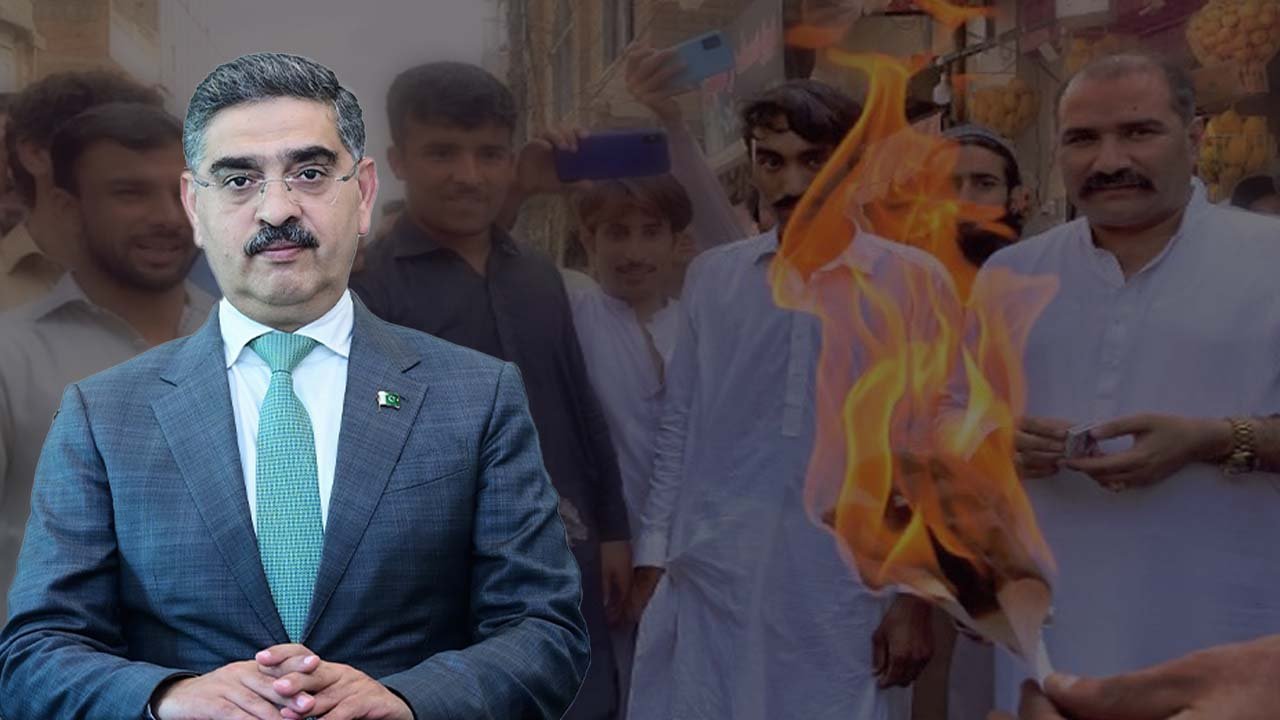
    Caretaker Prime Minister Anwaar ul Haq Kakar made an announcement on Thursday, revealing that his administration will unveil a relief plan for addressing the widespread protests triggered by escalating electricity bills within 48 hours.

    PM Kakar informed me that his government conducted an exhaustive review of electricity bills spanning the last two months. He highlighted that all institutions were questioned regarding their utilisation of complimentary electricity and stressed that the issue of exorbitant electricity bills needed a measured perspective.

    According to Geo, the caretaker prime minister underscored that while the electricity bills must be settled, it is imperative to comply with the terms outlined by the International Monetary Fund (IMF). He attributed the surge in electricity bills to independent power producers (IPPs) and transmission line losses, emphasising that collaboration with the IMF was underway to address the matter. Despite the prevalent inflation, PM Kakar argued against an extensive strike.

    In addressing the allocation of free electricity units, PM Kakar assured that the military does not avail itself of free electricity; rather, it is funded through the defence budget.

    Additionally, he clarified that the judiciary does not enjoy complimentary electricity, and in the Wapda sector, only certain employees from grades 1 to 16 benefit from this provision. Employees in grades above 17 receive free units.

    PM Kakar expressed his perspective that most protests originate from employees in grades 1–16. He suggested redirecting financial assistance towards officers in grades 17 to 22 instead of offering free electricity. He emphasised the need for stakeholders to formulate a policy within the following 48 hours.

    Regarding the impending general elections, PM Kakar assured that the elections would occur as scheduled, with the understanding that the Election Commission of Pakistan holds the authority in this matter. He asserted that adherence to the interpretation of the law by the Supreme Court is essential and should be respected.

    Frustrated citizens, grappling with soaring inflation, have been participating in demonstrations against substantial increases in electricity tariffs and heightened taxes nationwide.

    In light of the ongoing public outcry over exorbitant electricity bills, the caretaker government is contemplating the possibility of allowing individuals burdened by inflation to settle bills for up to 400 units in six-month installments. This proposal emerged following discussions held during a cabinet meeting, which also addressed the influence of IMF conditions on elevated energy costs.

    During the session, caretaker Finance Minister Dr Shamshad Akhtar updated the attendees about ongoing negotiations with the IMF, highlighting its pivotal role in the escalated energy tariffs.

  • NEPRA approves Rs5.40 per unit power tariff increase for quarterly adjustment

    NEPRA approves Rs5.40 per unit power tariff increase for quarterly adjustment

    The National Electric Power Regulatory Authority (NEPRA) has given its approval for a quarterly adjustment, resulting in an increase of Rs5.40 per unit in the power tariff.

    This adjustment comes as NEPRA recognises the limitations of the current structure of electricity distribution companies in providing relief to consumers. However, it’s important to note that this revised tariff won’t apply to Lifeline and K-Electric consumers.

    According to Samaa, NEPRA’s decision to revise the tariff comes after a thorough review of requests from distribution companies to raise the tariff by Rs5 per unit for the fourth quarter of the fiscal year 2022–23. Among these requests, FESCO, GEPCO, HESCO, and IESCO sought increases of Rs23.49 billion, Rs16.13 billion, Rs9 billion, and Rs9 billion, respectively.

    Additionally, LESCO requested a substantial increment exceeding Rs31 billion, while MEPCO, PESCO, QESCO, SEPCO, and TESCO collectively proposed tariff hikes totaling Rs27 billion, Rs9 billion, Rs7 billion, Rs5 billion, and Rs4 billion.

    Consumers should be aware that this tariff adjustment will be gradually recovered during September, October, and November, resulting in an added financial burden of Rs5.40 per unit.

    Distribution companies, in their submissions, highlighted revenue challenges stemming from decreased industrial demand. Particularly, LESCO faced a deficit of three billion units of electricity due to climate-related issues and industrial shutdowns. Both LESCO and HESCO faced higher capacity charges due to industry closures and reduced demand.

    Presently, there’s a backlog of approximately 350,000 pending connections with distribution companies. To recover revenue and address declining demand, the Central Power Purchasing Agency imposed surcharges amounting to Rs7.91.