Tag: Energy crisis

  • Supply-demand gap worsens: Lahore grapples with gas scarcity during key hours

    Supply-demand gap worsens: Lahore grapples with gas scarcity during key hours

    The metropolitan areas of Punjab, including Lahore, are grappling with a shortage of gas following a decline in temperatures, as confirmed by sources within the Sui Northern Gas Company.

    Residents across the majority of Punjab, notably in Lahore, are experiencing gas shortages during essential daily periods—breakfast, lunch, and dinner—due to an escalating disparity between demand and supply exacerbated by colder weather.

    With a demand for gas at 2100 million cubic feet and a supply of approximately 1200 million cubic feet, the gap has intensified the challenges faced by consumers in the region. 

    Notably, earlier this week, the SNGC imposed additional fixed charges on consumers’ November bills with the caretaker government’s approval.

    According to SNGC officials, protected consumers utilising 0.9 hectometers of gas will incur a monthly fixed charge of Rs400. 

    Non-protected users with consumption up to 1.5 hectometers will face an extra charge of Rs1,000 in their bills.

    Surprisingly, even consumers with zero gas usage are obligated to pay a fixed monthly charge of Rs400, as outlined by the recent adjustments in billing practices.

  • Sindh industries to face two-day gas supply suspension due to shortage

    Sindh industries to face two-day gas supply suspension due to shortage

    Gas supply to industries and power plants in Sindh will be stopped for 48 hours starting Saturday, as informed by the Sui Southern Gas Company (SSGC).

    The reason for this interruption is the low gas pressure in the system. There’s been a drop in pressure in the gas lines, leading to reduced supply.

    According to The News, the SSGC stated that due to insufficient gas supply, the available gas has decreased, causing low pressure in the system.

    As per the Gas Supply Agreement (GSA) guidelines for industrial customers approved by the Oil and Gas Regulatory Authority (OGRA) and authorised by the Economic Coordination Committee (ECC) of the cabinet, all industries, including power generation units, will remain closed during this time:

    Starting from 8 AM on Saturday, August 26, 2023, to 8 AM on Monday, August 28, 2023.

    The gas will be supplied according to the established priority order. The company issued a stern warning that strict action would be taken if anyone was found violating these rules during the gas supply suspension.

    The statement also mentioned that if any violations are noted during this gas holiday period, the company will take significant measures, which might even involve the suspension of gas supplies for a minimum of 7 days.

    The company’s strict stance against any breaches during this gas supply suspension underscores the importance of adherence to these measures, with the possibility of severe consequences, including a minimum seven-day disconnection of gas supplies.

  • IMF and Pakistan discuss circular debt and energy sector losses in virtual meeting

    IMF and Pakistan discuss circular debt and energy sector losses in virtual meeting

    Pakistan and the International Monetary Fund (IMF) recently discussed the country’s energy sector losses and efforts to reduce circular debt during a virtual meeting. The government is committed to adjusting fuel prices and quarterly tariffs to eliminate circular debt accumulation.

    According to The News, a new plan called the Circular Debt Management Plan (CDMP) was shared with the IMF. This plan involves revising fuel price adjustments and quarterly tariffs upward to counter circular debt growth. The IMF expressed concerns about the plan’s sustainability due to slower recoveries.

    The government was advised to create an effective strategy to tackle this issue. The meeting took place virtually on a technical level. The newly appointed Finance Minister, Dr Shamshad Akhtar, is expected to hold a virtual meeting with the IMF team soon.

    The IMF’s first review is scheduled for October or November and will be based on economic data from the initial quarter (July–September) of the current fiscal year.

    Pakistan and the IMF signed a $3 billion bailout package under the Standby Arrangement in July 2023. Pakistan has already received $1.2 billion, with two more reviews planned to release the remaining $1.8 billion by March or April 2024.

  • Major maintenance work to cause severe gas supply disruption in Karachi from tomorrow

    Major maintenance work to cause severe gas supply disruption in Karachi from tomorrow

    In a concerning development, the residents of Karachi are set to endure an extensive period of gas load shedding from August 12 to 27, as a critical gas supply of 107 million cubic feet per day (mmcfd) faces disruption due to essential annual maintenance work at the Kunnar-Pasakhi Deep (KPD) gas field.

    The Sui Southern Gas Company Limited (SSGC) has released a notification detailing the maintenance schedule for the KPD gas field, which is slated to be carried out in three phases over the course of 16 days. This maintenance work will necessitate a complete shutdown for eight days, coupled with a partial shutdown lasting four days.

    According to ARY News, the upcoming complete shutdown of gas operations is expected to result in a significant reduction of 107 mmcfd, while the partial shutdown will further trim the gas supply by 50 mmcfd. This unfortunate reduction in gas availability will inevitably impact various sectors, including domestic households, commercial establishments, industrial operations, and even the crucial Kapco power plants that rely on natural gas to generate electricity.

    This unfortunate situation follows closely on the heels of a recent setback faced by the Sui Southern Gas Company (SSGC) when a supply line was damaged during excavation work for the Bus Rapid Transport (BRT) project within Karachi. The 8-inch-diameter gas supply line suffered damage in the vicinity of Safoora Chowrangi, leading to an abrupt suspension of gas supply to neighbouring areas.

    The affected localities encompass a wide range, including vital institutions like the Memon Foundation Hospital and the sprawling Karachi University, as well as residential communities such as Sadi Town, Rimjhim, Rizvia Society, and Down University. Moreover, industrial sites and research facilities like Suparco, Sachal Goth, and surrounding villages have also been grappling with the repercussions of this supply disruption.

    While the inconvenience caused by this unexpected gas supply interruption is deeply felt, the SSGC remains committed to ensuring the completion of essential maintenance work at the KPD gas field. Despite the challenges posed by these circumstances, the SSGC aims to minimise the impact on citizens’ lives and livelihoods to the greatest extent possible.

    As Karachi prepares itself for this period of gas load shedding, residents are urged to exercise prudence in their gas consumption, explore energy-efficient alternatives where feasible, and cooperate with the SSGC’s efforts to manage the situation effectively.

  • Millions in Pakistan without electricity after countrywide outage

    Millions in Pakistan without electricity after countrywide outage

    Millions of Pakistanis were left without electricity on Monday due to a nationwide power outage, which threatened to unleash chaos in the South Asian country, which is already experiencing fuel shortages during the winter.

    The country’s Ministry of Energy said in a statement the country’s National Grid went down at 7:34 am local time, “causing a widespread breakdown in the power system,” according to initial reports.

    “System maintenance work is progressing rapidly,” the statement added.

    A “limited number of grids” in Islamabad and Peshawar have had power restored, the ministry said.

    The duration of the power outage is unknown, but attempts are being made to bring power back to various areas of the country.

    The disruption occurs as the country’s frail economy continues to face numerous difficulties, including a serious energy crisis.

    Earlier this month, Prime Minister Shehbaz Sharif ordered all federal agencies to cut their energy use by 30 per cent. In addition, his administration mandated that all stores and restaurants close at 8:30 pm.

  • Business confidence in Pakistan drops to negative 4%

    Business confidence in Pakistan drops to negative 4%

    Major multinational companies with operations across a variety of sectors in Pakistan have lost faith in the country’s economy. In the previous six months, the Business Confidence Score (BCS) as a whole decreased by 21 percentage points to a negative 4 per cent.

    In the earlier survey, which was conducted in March–April 2022, the score (BCS) was positive 17 per cent. In general, more than half of respondents (56 per cent vs. 19 per cent in the prior study) had a “poor” opinion of the business environment in the previous six months.

     “Going forward, only a net 2 per cent (versus 18 per cent in the previous survey) were ‘positive’ for the next six months and 35 per cent of respondents cited no plans to invest,” according to the “Business Confidence Index Survey Wave 22” of the Overseas Investors Chamber of Commerce and Industry (OICCI), which was held from September to November 2022.

    According to Express Tribune, political unrest, currency depreciation, and rising fuel prices were the top three factors contributing to the recent drop in business confidence. The other two top-five factors contributing to the recent drop in company confidence were the current energy crisis (high power costs) and inadequate commercial and trade policies.

    The services industry experienced a confidence decline of 24 per cent, followed by the retail and wholesale trade sectors (22 per cent), and the industrial sector (20 per cent). 25 per cent of respondents were from the retail and wholesale trade, 33 per cent from the services industry, and 42 per cent from the manufacturing sector.

    Commenting on the survey results, OICCI President, Ghias Khan said in a statement that “The substantial decline in the overall business confidence to negative 4 per cent is regrettable but not surprising considering the highly challenging political and economic situation witnessed during the past six months.”

    “The record level of rains during August leading to severe flooding in Sindh and other parts of the country further restricted business activities,” he added.

    “Foreign investors’ feedback could have been more positive but for serious concerns on a few critical issues like the undue delay in revising the pharma pricing and the extreme delays in overseas (outward) remittances for goods, services and dividends. Such actions are seriously counter-productive when trying to attract FDI (foreign direct investment) into the country,” Khan expounded.

    The main factors affecting business confidence in the country are anticipated to remain political unrest, rising fuel prices, and rupee depreciation.

    OICCI Vice President, Amir Paracha noted that “These are challenging times. Authorities are doing all they can to navigate the situation, including controlling inflation, managing the economy with restricted availability of foreign exchange and other resource constraints.”

    “The key stakeholders, especially foreign investors, will continue to support the authorities in taking long-term policy measures to streamline the economic fundamentals, including fair taxation for all, and facilitate business and investment into the country,” he added.

    According to the most recent survey results, the confidence index for business expansion (extra investment) plans over the next six months has decreased to 18 per cent from 34 per cent in the previous survey/W21.

    Similarly, capital investment (new) plans for the following six months fell sharply to 2 per cent (from 21 per cent in the previous wave).

    Compared to Wave 21, just 7 per cent of respondents in Wave 22 reported an increase in overall employment. A drop in overall employment over the previous six months was mentioned by almost 11 per cent of respondents.

    According to the trade body, “OICCI is the collective voice of major foreign investors. Over 200 members, from 31 different countries, have a presence in 14 sectors of the domestic economy and contribute over one-third of Pakistan’s total tax revenue.”

    In the meantime, on Wednesday, the interbank market saw the rupee fall 0.02 per cent (or Rs0.05), falling to a two-month low of Rs224.16 against the US dollar.
  • Fears of an energy crisis increase as Pakistan fails to clinch an LNG deal

    Fears of an energy crisis increase as Pakistan fails to clinch an LNG deal

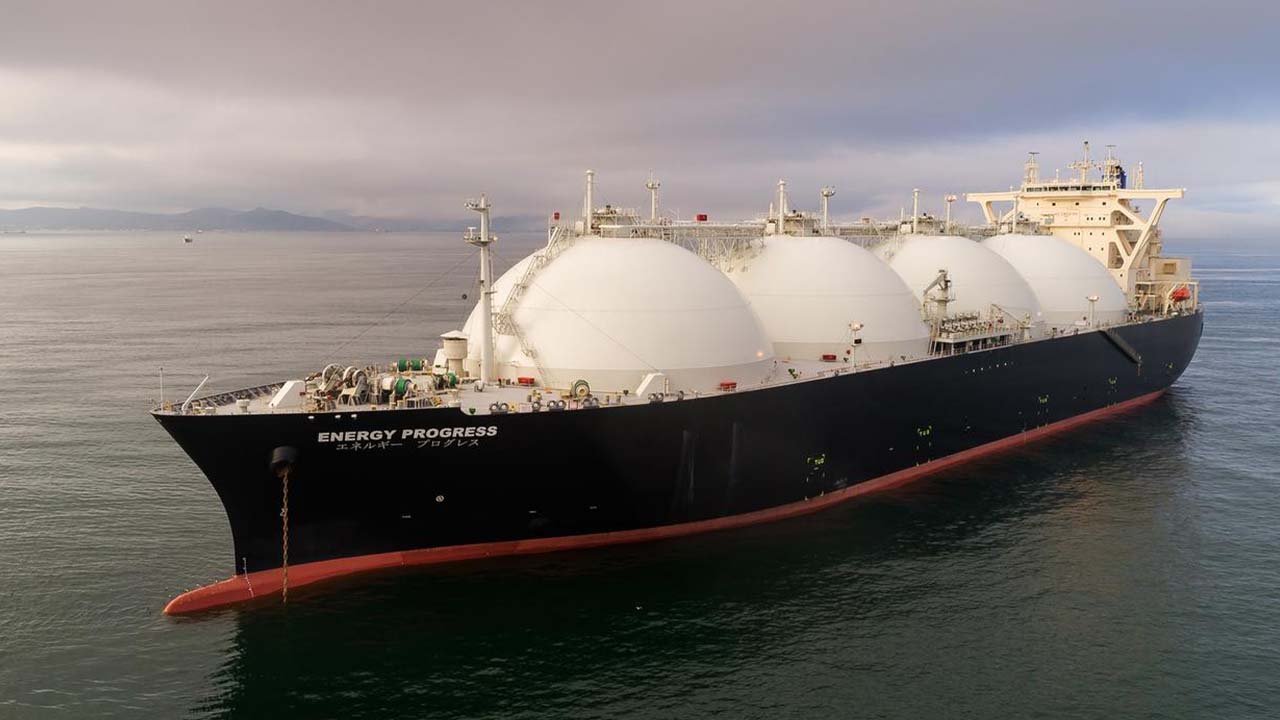
    A tender for the acquisition of liquefied natural gas (LNG) that expired on Monday did not receive a single bid from any overseas suppliers, according to Pakistan LNG Limited (PLL), a wholly-owned subsidiary of Government Holdings Private Limited (GHPL).

    PLL originally issued an invitation for bids in August for 72 LNG cargoes to be delivered over a six-year term from foreign suppliers.

    According to PLL, bids were requested from reputable organisations to convey cargo on a Delivered Ex-Ship basis (DES) at Port Qasim, Karachi, and suppliers had until September 14 to submit their offers.

    “Bid documents shall be available from 10 August 2022 to 13 September 2022,” it said.

    Failure of an LNG contract in Pakistan contributes to the energy crisis

    The Pakistani procurement, which had an expiration date of October 3, saw no suppliers participate, according to PLL bid documents.

    According to the documents, the corporation was looking for one shipment each month for the six-year period.

    PLL was required by the Pakistani government to carry out the business of importing, buying, storing, supplying, distributing, transporting, transmitting, processing, measuring, metering, and selling natural gas, LNG, and re-gasified LNG. Each cargo was to have a volumetric quantity of 140,000m3, it added.

    For the timeframe of July through September, PLL sought worldwide suppliers to submit proposals for 10 LNG cargoes.

    By July 7, suppliers were invited to submit their bids. Each cargo was required to have a volumetric quantity of 140,000m3, according to PLL documentation.

    Bloomberg, citing traders with knowledge of the situation, said that the state-owned LNG purchaser did not receive any bids in a $1 billion LNG purchase tender at the time. The article at the time stated that “it highlights both the scope of the worldwide fuel shortage as well as the unwillingness of suppliers to sell to a country in the depths of an economic crisis.”

    The Russia-Ukraine conflict has caused supply chains to be disrupted globally, which has driven up the cost of key commodities like LNG.

    Pakistan, on the other hand, is experiencing a fuel scarcity, especially in the electricity sector. The most recent development is anticipated to worsen the energy situation, particularly during the winter when there will be an increase in heating demand that would affect both families and companies.

  • Loadshedding in Paris? Symbol of love Eiffel tower will go dark early every night

    Loadshedding in Paris? Symbol of love Eiffel tower will go dark early every night

    One of the best-known and most imitated monuments in the world— the Eiffel Tower— will shut down its lights earlier than usual due to the ongoing energy crisis in Europe.

    The decision was announced by Paris Mayor Anne Hidalgo. The government’s plan includes aiming to save 10 per cent of Paris’ energy consumption during winters. Not just the famed tower but all of the city’s municipal buildings will turn off their lights starting at 10pm. However, public lighting will remain switched on in the city for the safety of its citizens.

    The earlier shutting off of the Eiffel Tower lights will begin on September 21. All lights will be switched off at 11:45pm when visiting time has ended.

    It is pertinent to mention that the tower makes up about 4 per cent of the monument’s annual energy expenses.

    Earlier, it was usually illuminated in golden hues within less than 10 minutes of nightfall and has an hourly 5-minute show of dazzling sparkles until 1am.

    Other actions in the mayor’s plan include lowering temperatures in public buildings, reducing water temperature in swimming pools, and axing hot water in administrative buildings and some public buildings.

    Europe’s energy crisis is one of the many setbacks of Russia’s ongoing invasion of Ukraine. When the war broke out in Ukraine, European nations overwhelmingly supported the young country in its defense against Russian forces. But, historical reliance on Russian energy exports has left the continent reeling under rising energy costs.

  • ‘I am not personally responsible for Khashoggi’s  murder,’ Saudi Crown Prince tells Biden

    ‘I am not personally responsible for Khashoggi’s murder,’ Saudi Crown Prince tells Biden

    United States (US) President Joe Biden on Friday fist bumped Saudi Crown Prince Mohammed bin Salman as he arrived for talks aimed at repairing the relationship between the US and the Kingdom of Saudi Arabia. and shared a fist bump. Biden is in Saudi Arabia for a Summit with the Gulf Cooperation Council (GCC) Council (GCC) countries plus Egypt, Iraq, and Jordan.

    In a brief press conference following his closed-door meeting with the Crown Prince Mohammed bin Salman, Biden told reporters that he discussed journalist Jamal Khashoggi’s murder among other things.

    Saudi Arabia opens airspace for Israel:

    “The Saudis will open their airspace to all civilian carriers. That is a big deal. A big deal. Not only symbolically, but substantively, it’s a big deal. It means Saudi airspace is now open to flights to and from Israel. This is the first tangible step in the path of what I hope will eventually be a broader normalisation of relations.”

    On Yemen:

    “We agreed to work together to deepen and extend the Yemen ceasefire. And you know there’s been — there’s carnage been in Yemen of late. And it’s been in place more than three months, resulting in the most peaceful period in Yemen in seven years.”

    “We further agreed to pursue a diplomatic process to achieve a wider settlement in Yemen. The Saudi — and Saudi leadership also committed to continue to facilitate the delivery of food and humanitarian goods to civilians. In this context, we discussed Saudi Arabia’s security needs to defend the Kingdom, given very real threats from Iran and Iran’s proxies.”

    Saudi investment in US-led technology:

    “We concluded several new arrangements to better position our nations for the coming decades. Saudi Arabia will invest in new US-led technology to develop and secure reliable 5G and 6G networks, both here and in the future, in developing countries to coordinate with the Partnership for Global Initiative — the Global Infrastructure and Investment, which I put together at the G7. This new technology solution for 5G, called Open RAN, will outcompete other platforms, including from China.”

    New cooperation on energy security:

    “Saudi Arabia will also partner with us on a far-reaching clean energy initiative focused on green hydrogen, solar, carbon capture, nuclear, and other projects to accelerate the world’s clean energy transition and to help the US clean energy industry set global standards.”

    “And fifth, we had a good — we had a good discussion on ensuring global energy security and adequate oil supplies to support global economic growth. And that will begin shortly. And I’m doing all I can to increase the supply for the United States of America, which I expect to happen. The Saudis share that urgency, and based on our discussions today, I expect we’ll see further steps in the coming weeks.”

    Khashoggi Murder:

    “With respect to the murder of Khashoggi, I raised it at the top of the meeting, making it clear what I thought of it at the time and what I think of it now. And it was exactly — I was straightforward and direct in discussing it. I made my view crystal clear. I said very straightforwardly: for an American President to be silent on an issue of human rights, is this consistent with — inconsistent with who we are and who I am? I’ll always stand up for our values.”

    While answering a question about Crown Prince’s response to hiss comments about Khashoggi, Biden said, “He basically said that he was not personally responsible for it. I indicated that he probably was. He said he was not personally responsible for it and he took action against those who were responsible. And — and we — and then I went on to talk more about how that dealing with any opposition to the — or criticism of the Saudi administration in other countries was viewed as, to me, a violation of human rights. There was no (inaudible).”

    “The blood of MBS’s next victim is on your hands,” a reported narrated these comments by Khashoggi’s wife about Biden’s visit and asked Biden that what he had to say about it.

    “I’m sorry she feels that way. I was straightforward back then. I was straightforward today,” replied Biden.

    “I didn’t come here to meet with the Crown Prince.  I came here to meet with the GCC and nine nations to deal with the security and the needs of the free world, and particularly the United States, and not leave a vacuum here, which was happening as it has in other parts of the world.”

    He was also asked if he regrets calling the Saudis a “pariah” during his campaign.

    “I don’t regret anything I said,” Biden responded.

  • Energy crisis: Sindh govt announces market closures by 9pm

    Energy crisis: Sindh govt announces market closures by 9pm

    The Sindh government announced that all markets, restaurants, marriage halls and hotels will be closed early in order to save electricity. The decision will remain in force from June 17 (today) to July 16.

    According to an official notification by the provincial Home Department, all markets, bazars, shops and malls will close by 9pm. Marriage and banquet halls will close by 10:30pm, while hotels, restaurants, coffee shops and cafes must shut by 11pm. However, the decision is not applicable to medical stores, pharmacies, hospitals, petrol pumps, CNG stations, bakeries and milk shops.

    The notification reads: “The urgent need to take the effective measures for the conservation of energy in Sindh through a two-pronged approach, i.e. to utilise the daylight hours for business activities and minimise the possible adverse impact of the business activities.”

    However, the All Pakistan Trade Union Association has rejected this decision of the provincial government, reports ARY News.

    Pakistan is facing a serious power crisis due to which the government has resorted to load-shedding all over the country.

    Last week, as part of the government’s ongoing measures to manage the energy crisis, the National Economic Council (NEC) agreed on the closure of markets by 8:30pm in all provinces.

    No power in commercial areas in the evening from 7-10pm

    The Power Division has decided to cut supply to commercial feeders from 7pm to 10pm daily across Pakistan, reports Geo News.

    In this regard, the Ministry of Energy has prepared a summary for the cabinet’s approval. According to the media outlet’s sources, the commercial feeders will not face load-shedding during the daytime, which would save approximately 5,000 MegaWatt (MW).

    Earlier, Defence Minister Khawaja Asif said that a huge amount of electricity can be saved if people start their businesses early in the morning and close by Maghrib prayers. He said that saving electricity means saving oil.