Tag: energy

  • PM Shehbaz announces relief for 17 million power consumers

    PM Shehbaz announces relief for 17 million power consumers

    Prime Minister Shehbaz Sharif stated that 17 million of the nation’s electricity consumers would not be required to pay the excessive fuel cost adjustment (FCA) charges that are included in their monthly bills.

    According to Express, the prime minister outlined the rationale behind the FCA and claimed that it had resulted in a substantial increase in power rates for July and August due to high international oil prices.

    He claimed that following discussions with the IMF, PML-N leader Nawaz Sharif, and other coalition leaders, it was decided that 17.1 million energy users would not be required to pay the FCA.

    The remaining 13 million power consumers who are in a better financial situation are also being reviewed by the government, according to PM Shehbaz.

    Later, the PML-N tweeted that the relaxation will only apply to people with low electricity consumption.

    Shehbaz stated that Power Minister Khurram Dastgir will give a thorough explanation of the announcement’s process and how it would actually operate.

    The FCA exception would also apply to tube well users, who the prime minister estimated to number approximately 300,000.

    Earlier, PM Shehbaz also abolished the budget’s fixed tax on traders.

  • Fuel Cost Adjustment: Consumers protest against inflated electricity bills

    Fuel Cost Adjustment: Consumers protest against inflated electricity bills

    Power consumers protested in major cities against the government and power supply companies due to excessive residential and commercial bills that were issued under the pretext of Fuel Cost Adjustment (FCA).

    A number of Lahore residents were seen protesting outside LESCO offices, complaining about the skyrocketing electricity bills, chanting anti-LESCO slogans at Dharam Pura, Begum Kot and Ghazi Road.

    A number of farmers in Jhang also participated in a protest by burning their power bills while obstructing traffic on the Jhang Road. On the other hand, the shopkeepers and locals of Faisalabad organised a sizable protest against FESCO for billing residential and commercial customers for nearly twice the actual cost of electricity.

    PM Shehbaz demands urgent report on inflated electricity bills

    In response to complaints from the public about excessive electricity bills, Prime Minister Shehbaz Sharif ordered the relevant authorities to provide an immediate report to address the issue.

    The premier ordered the concerned officials to present a thorough report with recommendations for resolving consumer complaints against energy bills on an urgent basis.

    What is FCA?

    In addition to criticising the power supply companies, consumers are questioning the FCA charges that take up a significant portion of their monthly bills.

    Understanding the actual fuel cost (the cost of fuel in a month) and the reference fuel cost is crucial for comprehending the fuel price adjustment.

    Simply put, FCA is charged/adjusted in customers’ monthly bills to reflect the actual increase or decrease in fuel prices.

    Based on the price of fuel (such as coal, LNG, or furnace oil) used in the nation’s various energy sources, the total cost of fuel used in the production of electricity in a month (basket fuel cost) is calculated.

    The entire fuel cost for that month is therefore compared to the reference fuel cost at the end of each month, and as a result, the FCA is applied to the power bills after two months.

    The electricity bill will reflect a change in the FCA amount if the total fuel cost for that month exceeds the reference cost, while it will reflect a change in the FCA amount if the total fuel cost is less than the reference cost. We refer to this as a fuel price adjustment.

    How power suppliers calculate FCA?

    Whenever a power plant uses coal, it is possible to estimate how much coal was burnt and at what cost, as well as the total cost of the energy needed to generate the power.

    For instance, if hydel electricity generation has increased, the overall fuel price will reduce; likewise, if gas is consumed more frequently in a month due to its higher price, the fuel price would climb.

    It is also impacted by the rupee’s appreciation or depreciation. This is due to the fact that coal, LNG, and furnace oil are imported, therefore a weakening or strengthening rupee directly affects the cost as a whole.
  • LG Electronics is stepping into EV charging business

    LG Electronics is stepping into EV charging business

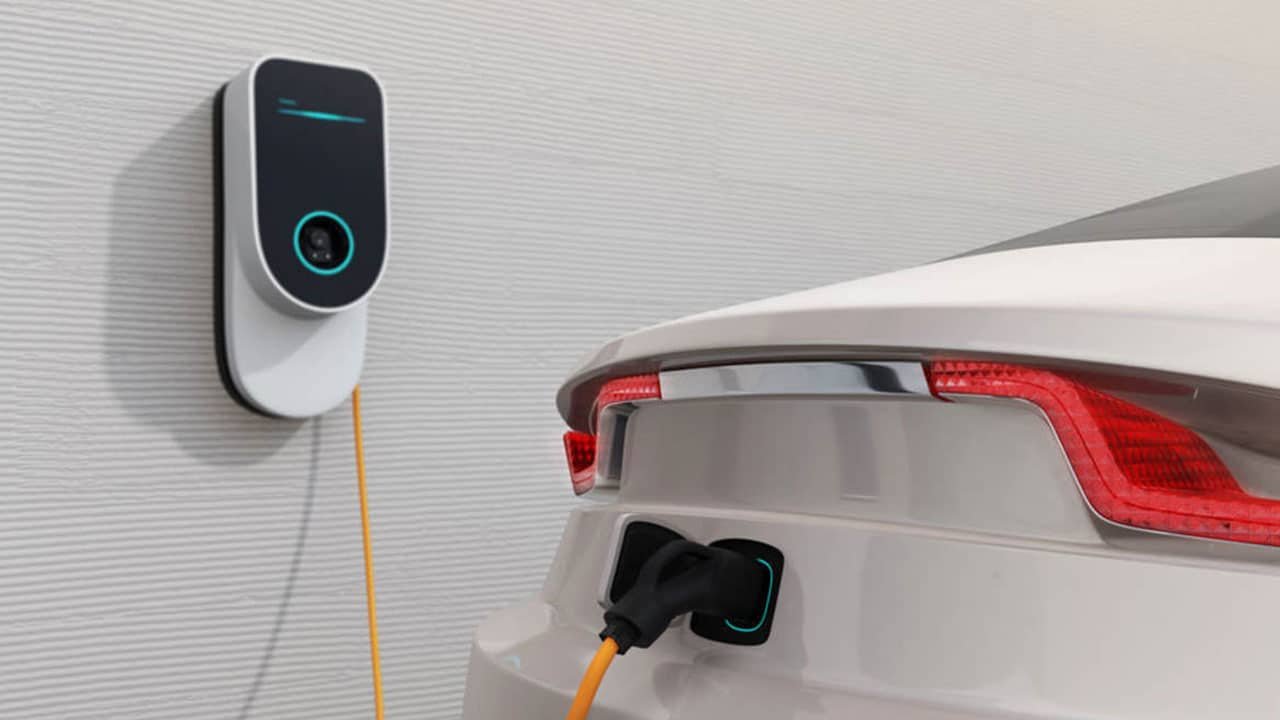
    As the worldwide competition to produce everything linked to EVs intensifies, LG Electronics has acquired AppleMango, a South Korean developer of electric car battery chargers.

    The acquisition, which was done in partnership with GS Energy, a producer of EV charging stations, and GS Neotek, a provider of IT services, will enable LG to take advantage of upcoming commercial prospects.

    According to Paik Ki-mun, senior vice president of LG Electronics, “the EV charging market is likely to increase significantly due to the surging demand for more environmentally friendly automobiles.”

    “We will provide specialised, integrated vehicle charging solutions for a variety of customers, boosting the competitiveness of our existing and assuring our preparation for future prospects,” the statement reads.

    In AppleMango, which will now be a subsidiary of LG Electronics, LG Electronics purchased a 60 per cent share, while GS Energy and GS Neotek acquired 34 and 6 per cent, respectively.

    The deal’s financial details were kept between the firms. The projected cost of the transaction is $7.8 million, according to rumours.

    In order to concentrate on its growing markets, such as electric cars, the internet of things (IoT), and B2B solutions, LG Electronics shut down its loss-making mobile business about a year ago.

    To make EV charging in South Korea a pleasant and simple experience for drivers, LG Electronics is prepared to take advantage of its experience in developing user-friendly interfaces.

    The company added that by entering the EV charging market, LG can increase the synergy between its work on EV batteries, energy storage systems, energy management solutions, and chargers.

    By the end of this year, the tech giant intends to establish an EV charger production line at LG Digital Park in South Korea with the goal of offering specialised EV charging options for private houses, retail establishments, lodging facilities, and public organisations.

    The acquired company brings to the acquisition a wide range of EV charging solution technologies, from slow chargers to rapid chargers for household and commercial use.

    LG did not specify whether it planned to continue selling AppleMango’s chargers.

  • Energy sector to get a massive portion of the Rs699 billion subsidy

    Energy sector to get a massive portion of the Rs699 billion subsidy

    The government has proposed allocating Rs699 billion to multiple sectors in order to provide relief to the masses during the new fiscal year 2022-23.

    According to budget estimates, the government plans to boost subsidies by Rs17 billion to Rs699 billion for the next fiscal year, up from Rs682 billion in the previous fiscal year.

    The government has reduced power sector subsidies by Rs26 billion to Rs570 billion for the next fiscal year, down from Rs596 billion in the previous fiscal year and proposed increasing the total subsidy for the power sector for PEPCO by Rs18 billion to Rs275 billion. The budget 2022-23 proposed reducing the subsidy amount for K-Electric by Rs5 billion to Rs80 billion.

    Moreover, subsidies for Independent Power Producers (IPPs) are slashed by Rs39 billion to Rs215 billion for the coming fiscal year.

    The amount of petroleum subsidy has been upped from Rs51 billion to Rs71 billion. During the next fiscal year, the Utility Stores Corporation (USC) will receive a Rs17 billion subsidy. PASSCO will also receive Rs7 billion subsidy.

    During the next fiscal year, Rs8 billion has been set aside for wheat subsidies to Gilgit-Baltistan. For the coming fiscal year, the subsidy for the metro bus service has been increased to Rs4 billion. Similarly, the fertiliser plant subsidy has been increased to Rs15 billion.

    Read more: Govt unveils Rs9.5 trillion budget 22-23, focused on sustainable growth

    The new government has reduced the Naya Pakistan Housing and Development Authority (NAPHDA) subsidy amount to Rs500 million for the next fiscal year, down from Rs30 billion in the previous fiscal year. NAPHDA’s markup subsidy has also been reduced, from Rs.3 billion to Rs.500 million for the coming fiscal year.

  • 17 female students from Pakistan to participate in Energy Scholars Programme in Qatar

    17 female students from Pakistan to participate in Energy Scholars Programme in Qatar

    The US Mission Pakistan has confirmed the commencement of the inaugural four-week Future of Women in Energy Scholars Programme of the US-Pakistan Women’s Council (USPWC). Beginning June 5, 17 outstanding Pakistani female university students will take part in this certificate programme to learn about working in the energy sector.

    By giving young women the chance to study energy issues and energy infrastructure at Texas A&M University’s Qatar campus, this programme will encourage women’s participation and leadership in Pakistan’s energy sector.

    Following their two-week programme in Qatar, the students will return to Pakistan for a two-week familiarisation trip to learn about Pakistan’s energy sector from key Pakistani public and private-sector organisations in Islamabad and Lahore.

    Enrolled Pakistani female students are presently pursuing bachelor’s degrees in science and engineering at private and public universities across the country.

    The US Mission is assisting Pakistani women in pursuing career opportunities in the energy sector and in developing networks for a prosperous future through this programme. “The USPWC Future of Women in Energy Scholars Program will give young women hands-on experience in the energy sector,” said USPWC Executive Director Radhika Prabhu.

  • 40-50 per cent hike expected in gas tariff

    40-50 per cent hike expected in gas tariff

    The government plans to hike the system gas tariff by up to 50 per cent as part of its efforts to gain access to the International Monetary Fund (IMF) bailout.

    The Ministry of Energy anticipates the Oil and Gas Regulatory Authority (OGRA) determining the revenue requirement for the coming fiscal year in June. As per The News, which cited sources, the tariff increase will take effect on July 1, 2022.

    Sui Southern Gas Company Limited (SSGC) and Sui Northern Gas Pipelines Limited (SNGPL), according to an Energy Ministry official, have suffered massive combined losses of Rs550 billion in recent years.

    Both are losing money since the system gas rate has not been raised in a long time. SNGPL is expected to lose Rs350 billion, while SSGC is expected to lose roughly Rs200 billion.

    OGRA will now calculate the system gas tariff under the modified OGRA statute. The IMF has encouraged the government to ensure that gas firms do not lose money as a result of the gas tariff’s stagnation, as well as to follow the modified OGRA law in its entirety.

    It’s worth noting that the government raised the price of petroleum goods by Rs30 per liter last week after the IMF stated that the bailout package would not be resumed unless the country ended petroleum product subsidies.

  • Pakistan’s energy crisis worsens, resulting in ten hours of load shedding

    Pakistan’s energy crisis worsens, resulting in ten hours of load shedding

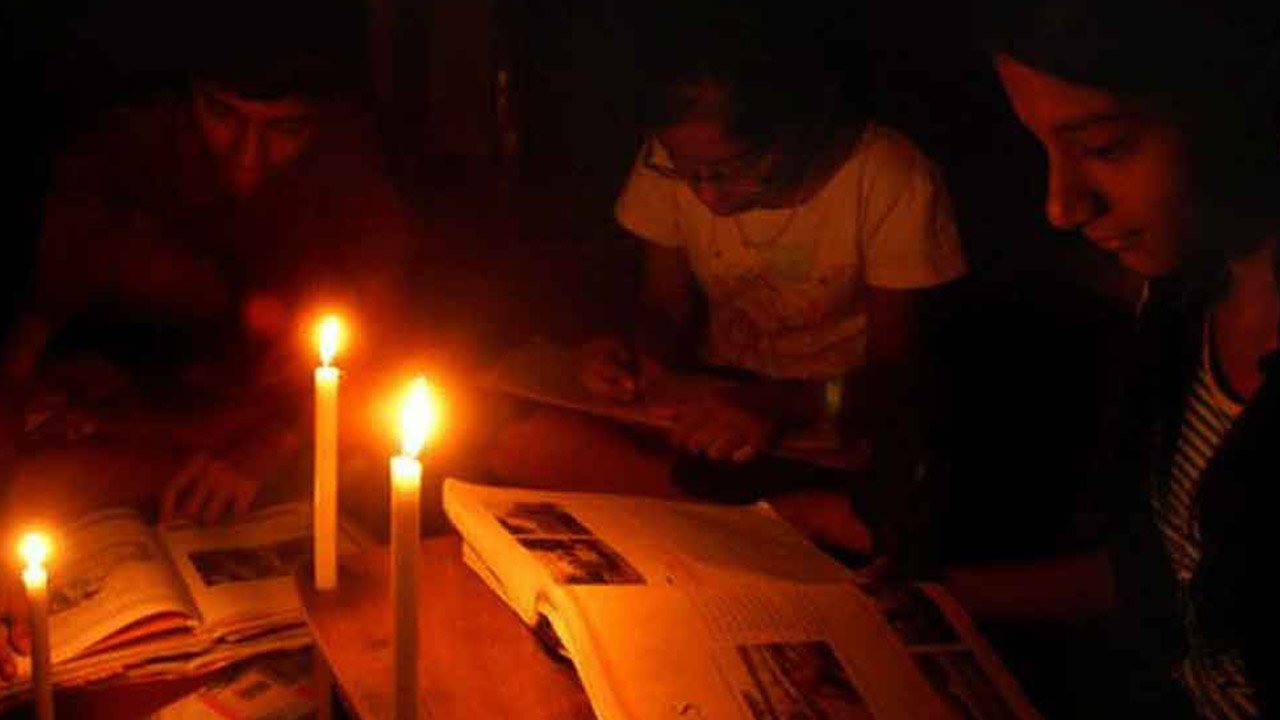
    Due to higher demand and reduced generation caused by fuel shortages, and reduced gas supplies to power plants, Pakistan is experiencing 6-10 hours of electricity load-shedding in various areas.

    As of April 25, generation was 17,976 MW, compared to demand of almost 21,000 MW, indicating a significant discrepancy between demand and generation. IPPs contributed 14,536 MW, Gencos contributed 837 MW, and Wapda hydel contributed 2,603 MW.

    LNG-powered facilities are only receiving 500 MMCFD RLNG against a demand of 690 MMCFD, forcing the system operator, the National Power Control Centre (NPCC), to run furnace oil-fired facilities, which are much more expensive to run than natural gas and RLNG. Due to a lack of gas, Nandipur is working, however, Bhikki is not operating at full capacity.

    Prime Minister (PM) Shahbaz Sharif and former Minister of Energy Hammad Azhar exchanged accusing remarks on Twitter.

    “Mian Nawaz Sharif’s government halted the worst load-shedding in five years,” the Prime Minister declared in a tweet. The PTI administration failed to procure fuel on schedule or fix power plants. As a result, present load shedding is in effect. Power generation costs the population Rs100 billion per month due to inefficient plants. “We’re working on it”.

    Former Energy Minister Hammad Azhar responded to Prime Minister, claiming that “there are only 5 power plants under repair, the most of them are in the private sector”.

    Read more: US launches $23 million project to enhance Pakistan’s power sector

    Two PML-N LNG contracts defaulted in the recent two weeks, resulting in a fuel deficit and prompt system gas diversions. This is a textbook case of poor management that could have been averted.

  • US launches $23 million project to enhance Pakistan’s power sector

    US launches $23 million project to enhance Pakistan’s power sector

    The United States (US) said on Friday that it will launch a four-year, $23.5 million initiative in Pakistan to improve energy sector performance.

    As per United States Agency for International Development (USAID) Mission Director Julie A Koenen, the project intends to boost the volume of green energy in Pakistan’s energy mix.

    The US government is collaborating with the Pakistani government to undertake a four-year $23.5 million power sector reform initiative to address climate change and enhance the amount of renewable energy in Pakistan’s energy mix, through USAID.

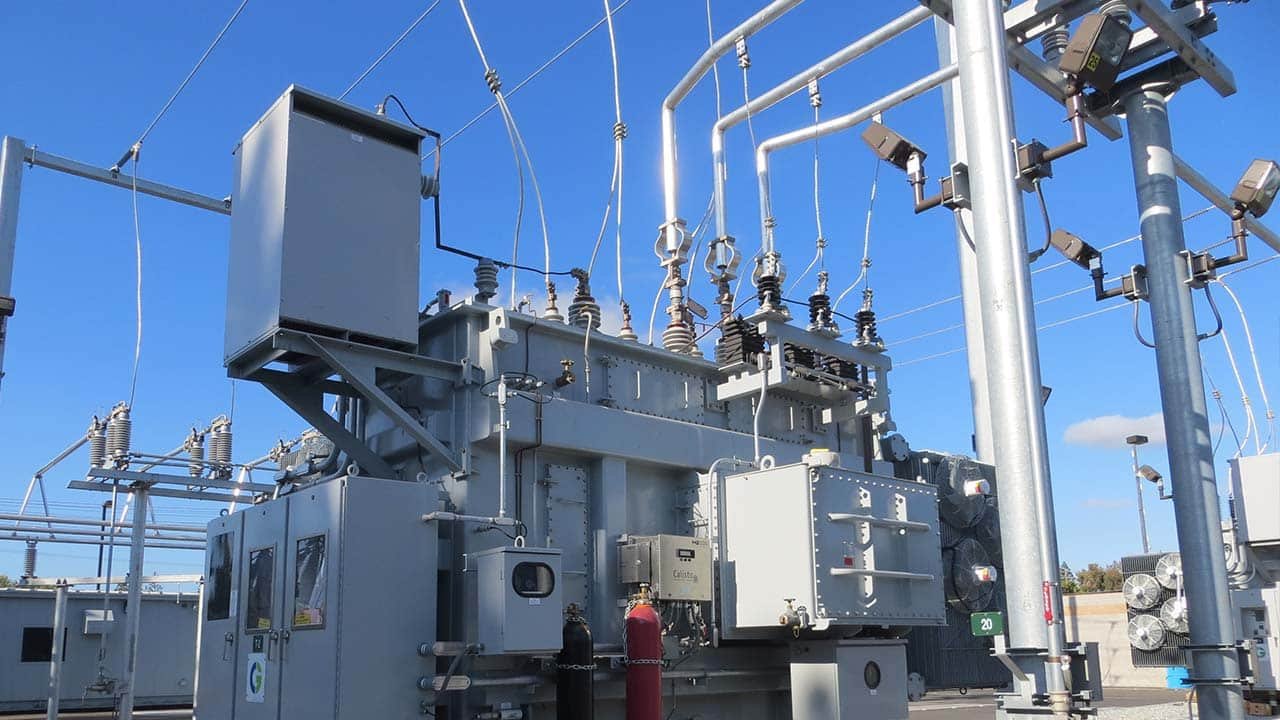
    It would also strengthen the management and operations of electricity transmission and distribution networks, boosting the financial viability, dependability, and affordability of Pakistan’s power system by providing technical support to the government and private sector.

    Read more: Pakistani rupee plunges by Rs1.05 against the US dollar

    To increase Pakistan’s energy supply, the US and Pakistan have built three dams: Gomal Zam dam in South Waziristan, Satpara dam in Gilgit Baltistan, and Golen Gol dam in Chitral, Khyber Pakhtunkhwa, adding 143 megawatts of electricity to the national grid and rehabilitated the Mangla and Tarbela dams and three thermal power plants, connecting up to 860 megawatts of commercially-funded wind and solar projects to the national grid.

  • Another hike of Rs4.9 per unit approved in power tariff

    Another hike of Rs4.9 per unit approved in power tariff

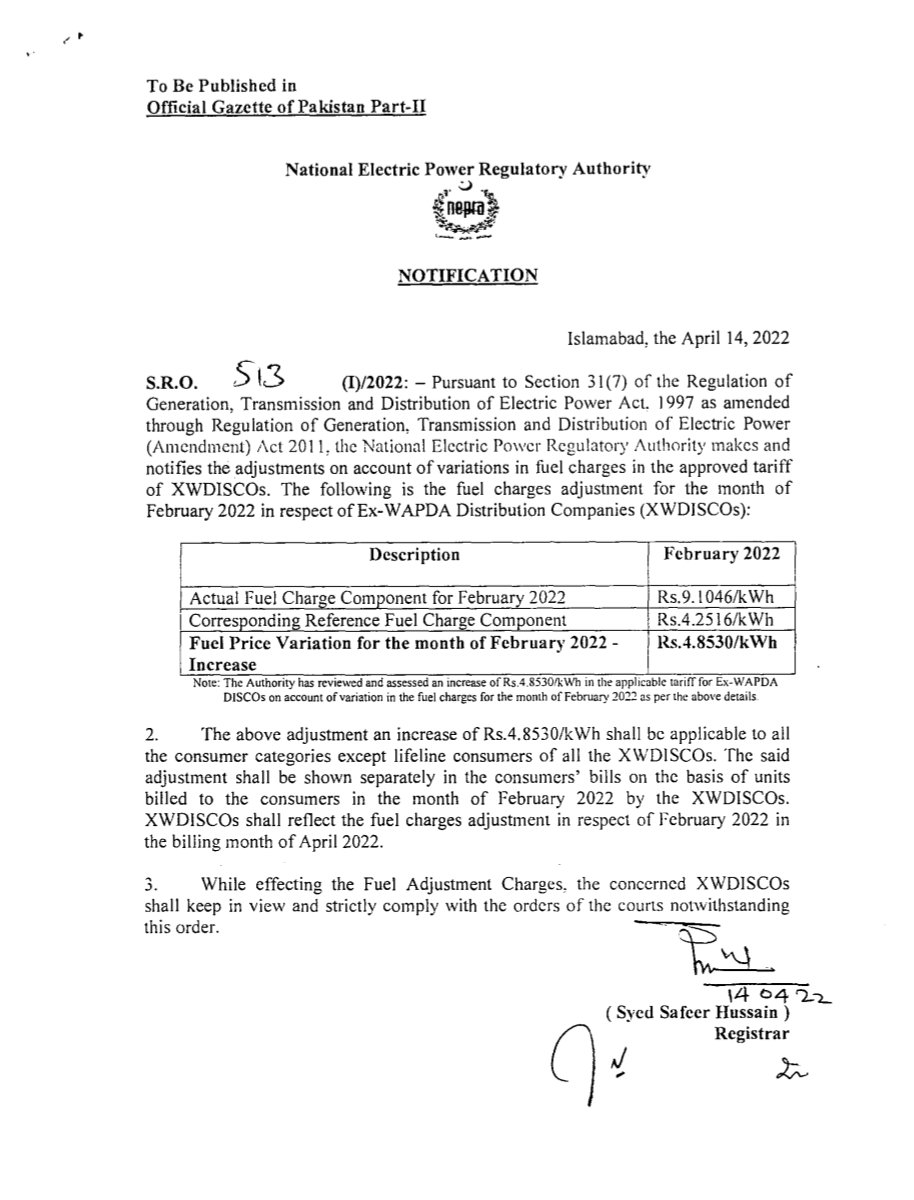
    Owing to the monthly Fuel Cost Adjustment (FCA) for February, the National Electric Power Regulatory Authority (NEPRA) on April 15 increased the price of electricity by Rs4.85 per unit.

    It has also announced an increase in the price of power, stating that the power output in February was more expensive than the previously set fuel price.

    According to the notice, the power distribution companies (DISCOs) will collect the amount from electricity consumers in the April bill. In addition, consumers will be hit with a charge of Rs37.7 billion, excluding general sales tax (GST). However, K-Electric and lifeline customers will be exempt from the hike.

    On March 31, the NEPRA held a hearing to determine the FCA but did not make a decision. The Central Power Purchasing Agency (CPPA) requested that the cost per unit be increased to Rs4.94 by the NEPRA.

    Following the monthly FCA, which only operates for one month, the administration had already hiked the power price to Rs5.95 per unit for the month of January.

    As per NEPRA’s data, the most expensive energy production sources, including High-Speed Diesel (HSD) and Residual Fuel Oil (RFO), were used more than average in the prior months, raising the overall cost of production.