Tag: enforced disappearances

  • ‘Submit report on all detention camps in the country’, Sindh High Court

    ‘Submit report on all detention camps in the country’, Sindh High Court

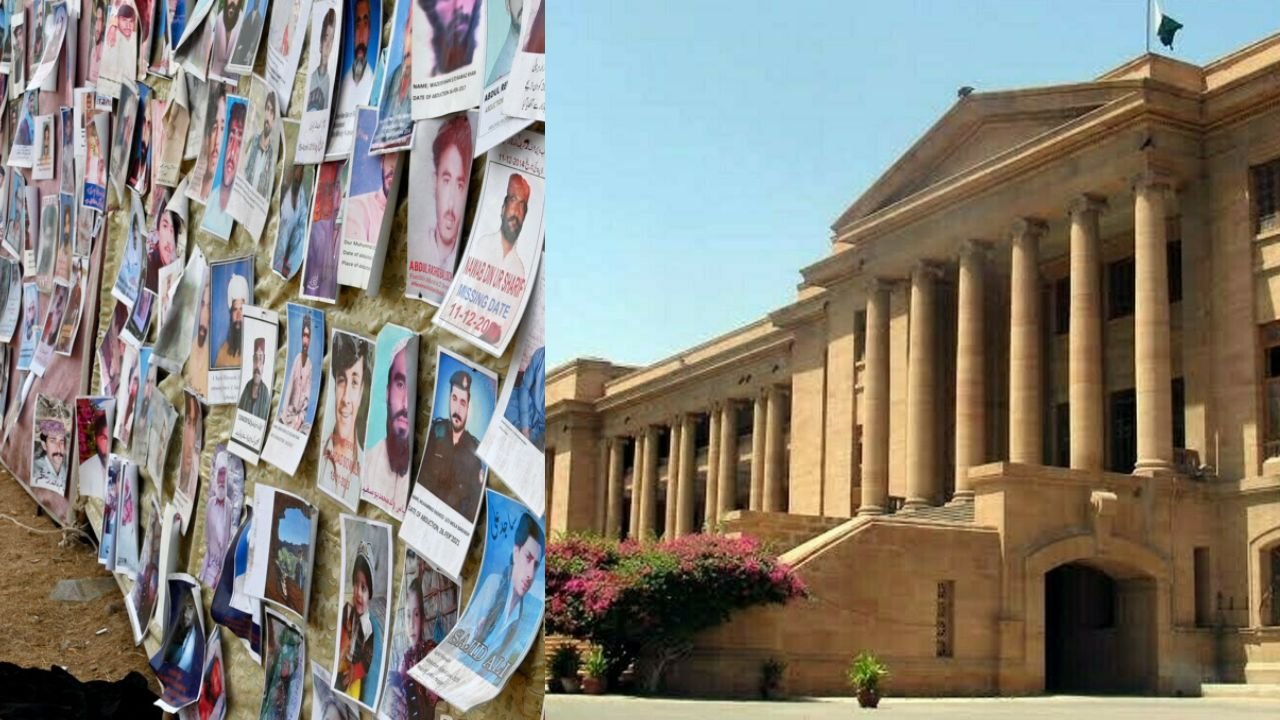
    In a significant development, the Sindh High Court (SHC) has granted a three-week deadline to the Federal Defence Ministry and the Sindh Home Department to submit a comprehensive report on all detention camps across the country.

    The directive came from a two-judge bench, with Justice Naimatullah Phulpoto presiding, during a hearing on Thursday concerning petitions related to the recovery of missing persons.

    The bench took cognizance of the case after one petitioner revealed that her husband, Tahir Rehan, had been missing since 2015, with no investigative action taken by the police.

    Expressing dissatisfaction with the public prosecutor’s claim of providing Rs500,000 in compensation, the petitioner asserted that she had not received any such compensation.

    The Sindh Home Department officially announced the suspension of compensation payments to families of missing persons, as revealed in a report submitted to the Sindh High Court.

    The court had directed the submission of a comprehensive report to federal authorities, including the Interior Secretary and Defense Secretary, concerning applications related to compensation for families of missing persons.

    In a proactive measure, the court ordered the publication of advertisements in both print and electronic media to aid in the search for Shahri Majid, missing since 2015.

    Additionally, the court directed the gathering of information on missing persons from jail authorities and various locations across the country.
  • Enforced Disappearance Bill never went missing, claims Chairman Senate

    Enforced Disappearance Bill never went missing, claims Chairman Senate

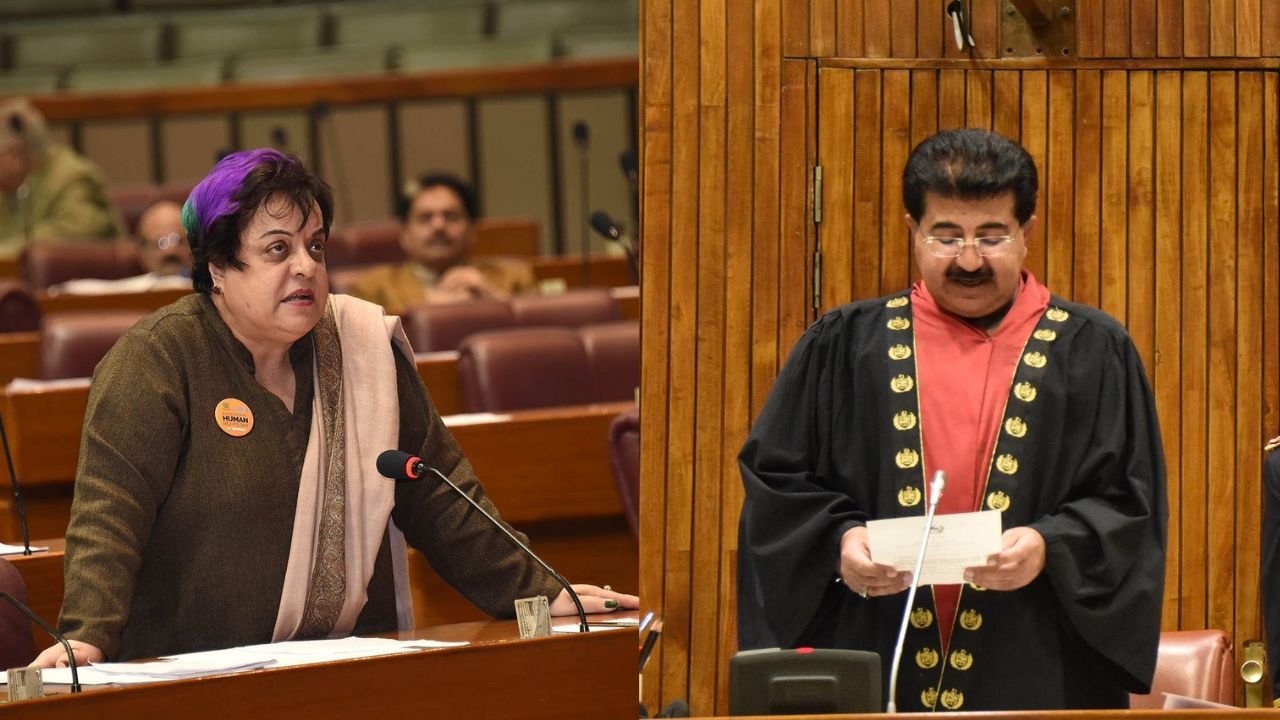
    In response to recent speculations surrounding the Criminal Law (Amendment) Bill 2021, the Senate Secretariat has issued a statement on Monday, debunking claims of the bill on enforced disappearances going “missing.”

    The Senate Secretariat clarified that the bill was duly passed by the National Assembly (NA) and subsequently returned to the NA after receiving approval from the Senate.

    https://twitter.com/OfficeSenate/status/1744311661509382327?s=20

    The Criminal Law (Amendment) Bill 2021, designed to introduce amendments to the Pakistan Penal Code (PPC) and Code of Criminal Procedure, received approval from the NA on November 8, 2021.

    Former human rights minister Shireen Mazari had previously voiced concerns about the bill’s status, suggesting that it had disappeared after being forwarded to the Senate.

    In its official statement, the Senate Secretariat refuted these claims, providing a detailed timeline of the bill’s progress. According to the Secretariat, the bill was initially introduced in the NA by the then-interior minister on January 7, 2021. After successfully passing the NA on November 8, 2021, the bill was transmitted to the Senate on November 10, 2021, adhering to constitutional and procedural requirements.

    Addressing the allegations raised by Shireen Mazari, the Senate Secretariat clarified that the bill was presented in the Senate on July 29, 2022. Subsequently, it was referred to the standing committee for a comprehensive consideration and report.

    “The Bill was passed by the Senate on 20th October, 2022 with some amendments. Accordingly, in pursuance of clause (2) of Article 70 of the Constitution of Pakistan, 1973 and rule 125 of the Rules of Procedure and Conduct of Business in the Senate, 2012, the Bill was returned to the originating House, i.e. the National Assembly of Pakistan on 20th October, 2022,” the statement said.

    The Secretariat underscored that, by Article 70 of the Constitution of Pakistan, 1973, and Rule 125 of the Rules of Procedure and Conduct of Business in the Senate, 2012, the bill was returned to its originating House, the National Assembly, on October 20, 2022, after securing approval in the Senate.

    The statement concluded by emphasizing that the bill was never missing, and it is not currently pending in the Senate Secretariat. Instead, it has been appropriately returned to the National Assembly after completing the required legislative process in the Senate. The Senate Secretariat reiterated its commitment to upholding constitutional and procedural standards in handling legislative matters.

  • ‘I am not a traitor’: Imran Riaz speaks up for first time after disappearance

    ‘I am not a traitor’: Imran Riaz speaks up for first time after disappearance

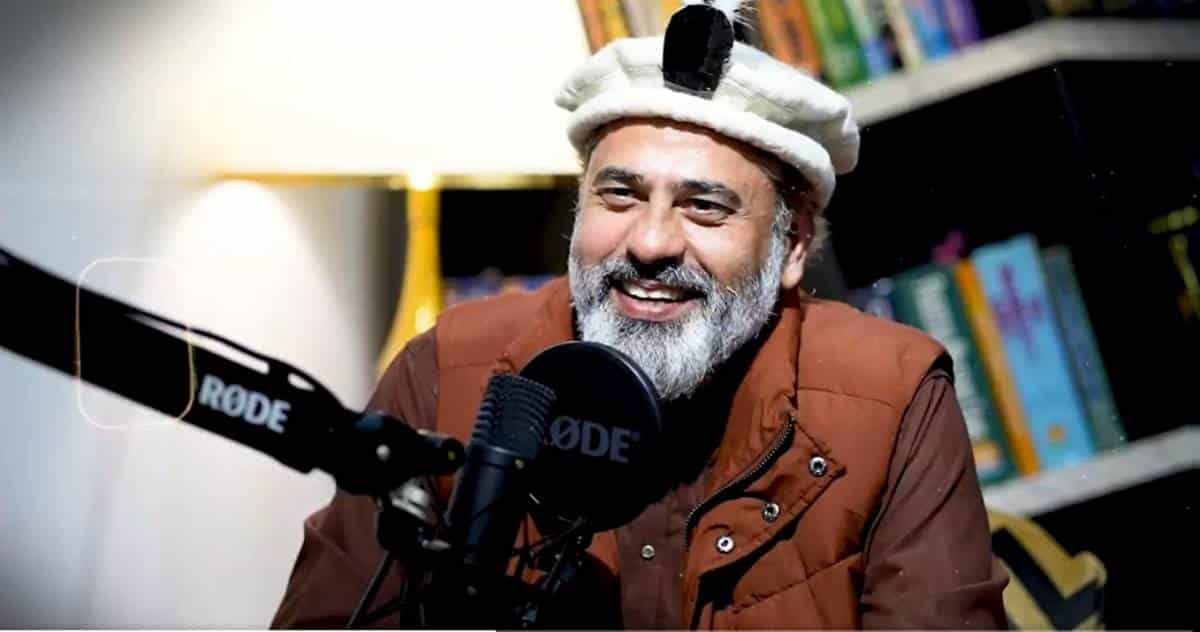
    Anchorperson and YouTuber Imran Riaz Khan has given an interview for the first time following his recovery after disappearing in May.

    “It is unfortunate if I ever thought that someone’s disappearance may be in the interest of the state”, he said when questioned about his previous stance when he advocated that missing persons are not innocent.

    During a podcast with his lawyer, Mian Ali Ashfaq, ‘Cross-Examination’, he said that “The pain is worse when you are tortured by your own people.”

    He however did not reveal his whereabouts during his disappearance, nor what conditions he was kept in.

    In response to the arrest of former Prime Minister Imran Khan on May 9, there were violent demonstrations in various cities of the country and attacks on military installations and buildings.

    The police arrested PTI leaders and activists besides Imran Riaz, who, according to the authorities, was allegedly trying to go abroad from Sialkot airport.

    After his release on May 11, according to police, he went missing outside the prison and returned home several months later in September.

    “I am not a traitor”

    Imran Riaz Khan asserted that he is not a traitor nor did he meet with any enemy of the state.

    “No one should be treated as if he is an enemy of the country,” he said.

    ‘Enforced disappearance is not justified’

    In the past, Imran Riaz Khan used to take on those who criticized the state institutions in the country.

    In one of his vlogs he criticised Gulalai Ismail, a social activist who supports the Pashtun Protection Movement (PTM), stating ‘She is one of those women who burns one’s own house to prove their own selves truthful… They do this to become famous in the west.”

    This was at a time when Gulalai had taken refuge in the United States.

    Similarly, Imran Riaz Khan pointed to one of the protests organised for the recovery of missing persons and said that “These people betray the country and attack the institutions.”

    Imran Riaz now admits that he did not feel the gravity of the issue as much as he does now.

    “I regret today that I ever thought in my life that if someone disappeared, it could be in the interest of the state,” adding that he apologises to all the people who he hurt.

    He asserted that there is no justification for enforced disappearances and that if a person is a criminal, they should be brought before the law.

    Nonetheless, Imran Riaz still supports the PECA law, under which journalists can be prosecuted for criticising state institutions in online content.

    He said that PECA should be applied to journalists too, adding that dragging issues through the mud is not journalism.
    “I am in favour of the strictness of the law but against its misuse,” he said.

  • ‘Fine line between enforced disappearances and self-disappearance’, says Sarfraz Bugti

    ‘Fine line between enforced disappearances and self-disappearance’, says Sarfraz Bugti

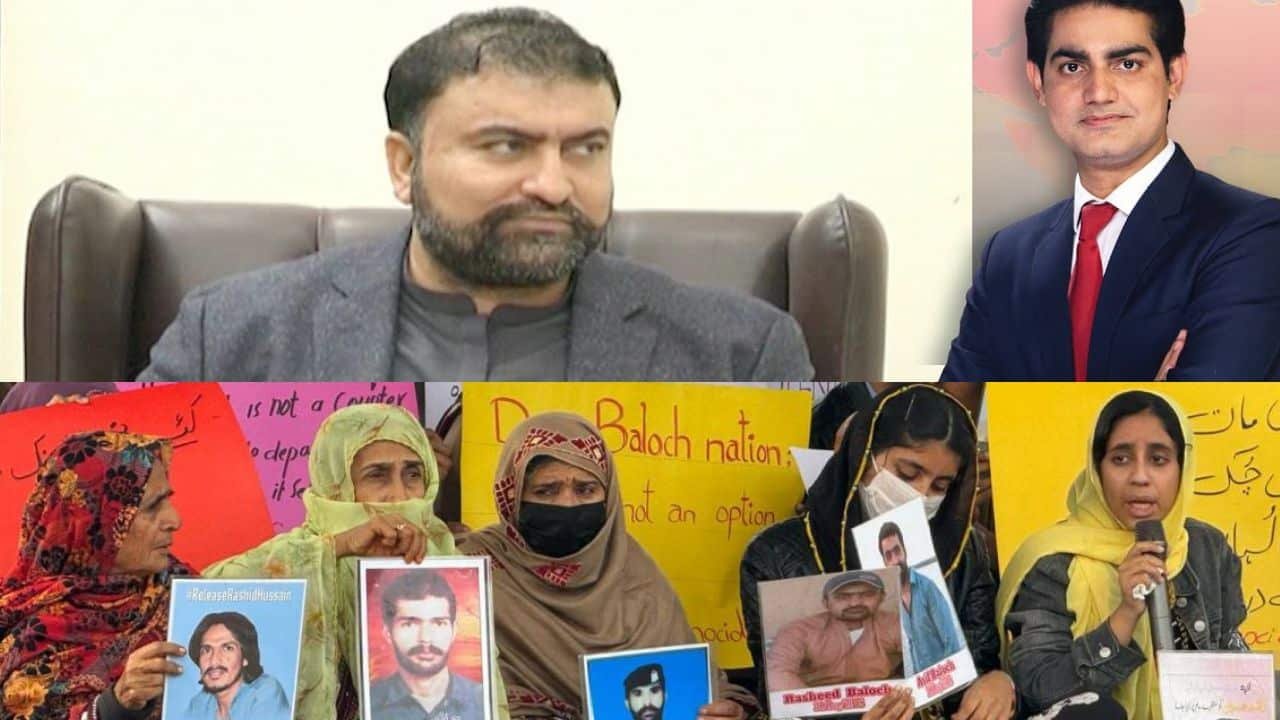
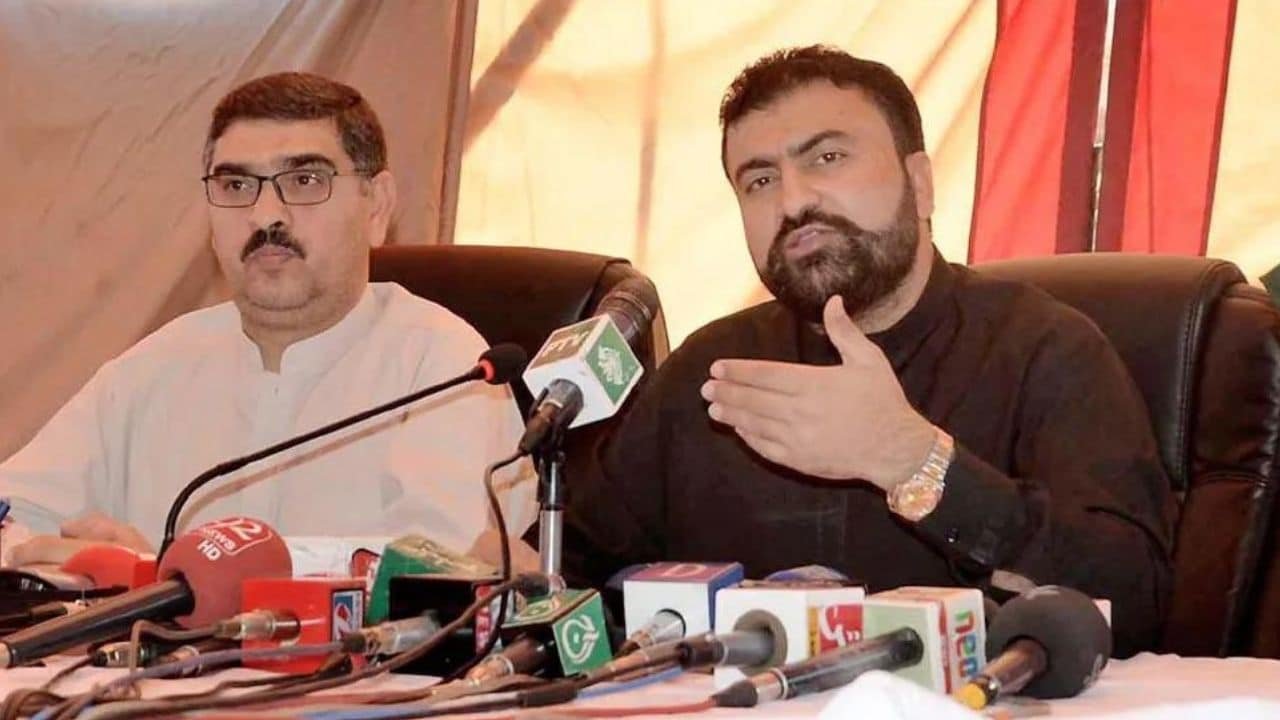
    Caretaker Interior Minister Sarfraz Bugti, while addressing the issue of missing persons in Pakistan, stated that the assemblies in the country represent “legitimate voices” for separatists expressing their perspectives.

    During an interview with DawnNewsTV program Doosra Rukh, Bugti delved into the complexities of missing persons cases, shedding light on the challenges faced in resolving them.

    Bugti’s comments come against the backdrop of an ongoing missing persons case being heard by the Islamabad High Court.

    On November 29, the court issued a warning that a case might be filed against the caretaker prime minister and others if they did not facilitate the reunion of missing Baloch students with their families.

    He also emphasized the delicate nature of the missing person issue, stating, “We have a commission on this matter, and it has resolved around 85 per cent of cases.”

    The commission was established in 2011 to trace missing persons and fix responsibility on the individuals or organizations responsible for it.

    In the interview aired on Friday, Minister Bugti pointed out the fine line between “enforced disappearances and self-disappearance”, highlighting that the commission had encountered cases with surprising details.

    “There were cases wherein people left their homes after a domestic dispute, and it transpired weeks later that they had left home themselves.”

    He also noted instances where individuals lost their lives in “encounters” with security forces.

    Minister added, “Then there are cases in which suspects are absconders required by a court, and their families submit pleas claiming their family member as missing to avoid court [action].”

    He remarked that such cases had been reported and documented.

  • ‘Balach’s murderers be punished’; Protests in Turbat enter eight-day

    The Balochistan government has put together a four-member committee to investigate the alleged extrajudicial killing of Balaach Mola Bakhsh in a clash with the Counter Terrorism Department (CTD) in Turbat.

    The committee, formed under Section 3(1) of the Balochistan Tribunal of Inquiry Ordinance 1969, will be led by Fisheries Secretary Imran Gichki and includes the Deputy Inspector General of Quetta police, Deputy Commissioner of Kech, and Gwadar SSP.

    The committee is mandated to complete its inq­uiry, determine the incident’s motives, and submit its report within 15 days.

    Balaach Mola Bakhsh’s funeral took place on Wednesday, and a subsequent sit-in at Fida Shaheed Chowk saw the family and organizers expressing their commitment to continuing protests until justice is served.

    The case

    On November 24, four men were killed in an alleged encounter by the Counter Terrorism Department (CTD). Among them, Mr Bakhsh, Shakoor Baloch, Saif Baloch were identified, while the identity of one person remains unknown.

    However, conflicting accounts emerged as the family refuted the CTD’s claims, asserting that Balaach was not involved in any unlawful activities and was picked up on October 29, leading to his alleged killing in a “fake encounter.”

    The ongoing protest, now in its eitht day, has garnered attention and renewed discussions on extrajudicial detentions and deaths, shedding light on concerns of police impunity in Balochistan province.

    Baloch’s killing has triggered outrage in cities across the Makran division, with a complete shutter-down strike observed in Turbat and other towns on Wednesday while roads leading from the area to Pakistan’s main business hub, Karachi, were blocked by protesters.

    Following a demand by Baloch’s family, a local court in Turbat had ordered the registration of a First Information Report (FIR), or police complaint, against the CTD team involved in the operation in which the 24-year-old was allegedly killed.

    “Now we are protesting because despite court orders, why are the authorities not registering an FIR against the people who killed my brother,” Balach’s elder sister Najma Baloch told Arab News.

    On the government’s inquiry tribunal, she said: “Neither do I know anything about the inquiry committee nor has anyone from the committee contacted us.”

    “Now hundreds of people have joined the protest and are demanding registration of FIR against the CTD team,” she added, saying her family’s “clear demand” was that Baloch’s murderers be punished.

  • FIR to be lodged against Anwaar-ul-Haq Kakar and Sarfraz Bugti : Islamabad High Court

    FIR to be lodged against Anwaar-ul-Haq Kakar and Sarfraz Bugti : Islamabad High Court

    The Islamabad High Court (IHC) has issued a directive to the federal government, ordering the recovery of all missing Baloch students.

    During a hearing related to the implementation of recommendations from the Commission of Inquiry on Enforced Disappearances, Justice Mohsin Akhtar Kayani warned that a case will be registered against the caretaker prime minister if the recovery of the students is not ensured.

    Attorney General for Pakistan (AGP) Mansoor Usman Awan told the court that 22 Baloch students had been recovered and reached home while 28 Baloch students were still missing and efforts will be made to recover all the missing persons.

    Referring to the missing persons, the senior judge wondered: “Are such things take place in a civilised society? Every missing person who is recovered says I don’t want to pursue the case.”

    If the missing persons are not recovered, the IHC judge said he will order the registration of a First Information Report (FIR) against caretaker Prime Minister Anwaar-ul-Haq Kakar and interim Interior Minister Sarfraz Bugti.

    “I am stating this in very clear words.”

    The judge’s warning follows the non-appearance of the caretaker prime minister, who failed to attend the court hearing on November 29 as summoned by the IHC. The caretaker PM cited foreign trips as the reason for his absence, indicating that he is currently on an official visit to the Middle East.

    Justice Kayani also held the defense secretary and the interior secretary responsible for the recovery of the Baloch students if it didn’t take place. He urged the authorities to present the missing persons in court, even if they are labeled as terrorists.

    The hearing of the case has been adjourned until January 10.

  • EU report highlights rights issues and corruption in Pakistan

    On Tuesday, the European Commission and the European External Action Service (EEAS) jointly revealed a monitoring report on Pakistan’s Generalised Scheme of Preference, or GSP Plus.

    The report expressed concerns about forced disappearances, torture, and limitations on media freedom in Pakistan, which are seen as violations of international treaties.

    It urged Pakistan to enforce laws protecting economic, social, and political rights and raised reservations about the misuse of anti-corruption rhetoric for political purposes.

    Despite civilian rule since 2008, the report highlighted the military’s disproportionate role in politics and the economy.

    Covering 2020–2022, it focused on the May 9 riots and subsequent trials in military courts, recognising legislative progress but emphasising the need for improved practical implementation.

    Furthermore, the report read that although initial measures have been undertaken to limit the application of the death penalty, additional steps are required to bring them in line with international standards.

    This entails introducing a comprehensive revision of the mercy petition procedure.

    “It has undeniably increased awareness of human rights at the grassroots level, of labour rights within businesses and export supply chains and of the significance of environmental considerations and good governance.

    However, the full potential of the GSP+ benefit can only be realised by diversifying Pakistan’s exports to include more value-added products”, remarked EU Ambassador to Pakistan H.E. Dr Riina Kionka about the report.

    Pakistan attained GSP Plus status in January 2014, following the ratification of 27 international conventions and a commitment to their implementation.

    The GSP Plus incentive provides Pakistan with zero-rated or preferential tariffs on nearly 66 per cent of tariff lines, thereby bolstering the country’s capacity to export to the EU market.

  • Pending missing persons cases is ’embarrassing’, says court

    Pending missing persons cases is ’embarrassing’, says court

    While hearing almost a dozen applications related to cases of missing persons, Chief Justice of Islamabad High Court, Amir Farooq, said that the court is ashamed of the matter that has been pending since the past several years.

    According to Dawn, the remarks were passed during a hearing of a case related to the disappearance of journalist Mudassar Naro, who went missing during a visit to the northern regions.

    Sadaf, Naru’s wife, filed a case in the Islamabad High Court almost five years ago. While waiting for her husband to come back, she too passed away.

    Mudassar Naru’s young son, Sachal, who was only a few months old when his father disappeared, is usually present in court during case proceedings.

    On Thursday, a division bench comprising Chief Justice Aamir Farooq and Justice Mian Gul Hasan Aurangzeb stated that cases of enforced disappearances are tarnishing Pakistan’s identity.

    The Attorney General of Pakistan was asked for help in solving the long-standing problem.

    Justice Gul Hasan Aurangzeb pointed out that a former prime minister had also spoken in court on the issue of enforced disappearances but he had not taken any action to stop it.

    Additional Attorney General Barrister Munoor Iqbal Dagal said that the government is serious about this issue and a committee has also been formed in this regard.

  • Pakistani citizen goes missing in Jeddah

    Pakistani citizen goes missing in Jeddah

    Pakistani citizen and UK resident Syed Hussain Ali has gone missing in Jeddah, Saudi Arabia, on August 28 while on a transit visa in the Kingdom.

    Ali’s father Syed Asim Ali told The Friday Times that he wrote a letter to the Saudi Ambassador to Pakistan and requested caretaker Prime Minister Anwaar ul Haq Kakar to probe into his son’s disappearance.

    Hussain departed from Lahore on Monday 28 August at 11:40am on Saudi Airlines SV735. He landed in Jeddah at 14:50 pm, local time.

    Hussain had an eighteen hour transit and obtained a visa at the airport to perform Umrah.

    He messaged via WhatsApp using the Wi-Fi of a restaurant and then travelled to Mecca to perform Umrah. He then talked to his parents via Messenger video call from McDonald’s restaurant opposite Haram. This, according to the father, was his last communication, between 12:30-1:00 am.

    Hussain wanted to spend a couple of more hours in the Holy Mosque before his flight from Jeddah to London which was scheduled for 9:05 am.

    According to the father, Hussain was only carrying his laptop, phone, wallet and a change of clothing in his laptop bag.
    “He had only $100 on him and the rest of the expenditures he would pay using his debit and credit card,” Asim said.
    Hussain never boarded his flight to London.

    Asim noted that “Normally he is very communicative. It is very unlike him to not be in touch especially when he may know that we are waiting to hear from him,”

    In the letter to the officials, Asim requested to file a missing persons report.

    However, Properganda has commented under the Instagram news of the disappearance that Hussain has been found. That comment, however, is no longer posted.

  • Reporter of Daily Jang returns home day after appearance

    Reporter of Daily Jang returns home day after appearance

    Senior reporter of the Daily Jang, Syed Muhammad Askari, returned home on Monday after going missing on Saturday night, Geo News has reported.

    Askari had been picked up by police and personnel dressed in plain clothes. The incident was reported to the Baloch Colony Police Station. The journalist’s wife filed a complaint, accusing police and personnel in plainclothes of “abducting” Askari for no reason.

    She also stated in her application that the personals had their faces covered and were in a white vehicle. It was also mentioned in the application that Syed Muhammad Askari was abducted at 1:15 a.m. on Sunday.

    Shazia had requested the immediate release of her husband.