Tag: environment

  • Air pollution linked to 135 million premature deaths: study

    Air pollution linked to 135 million premature deaths: study

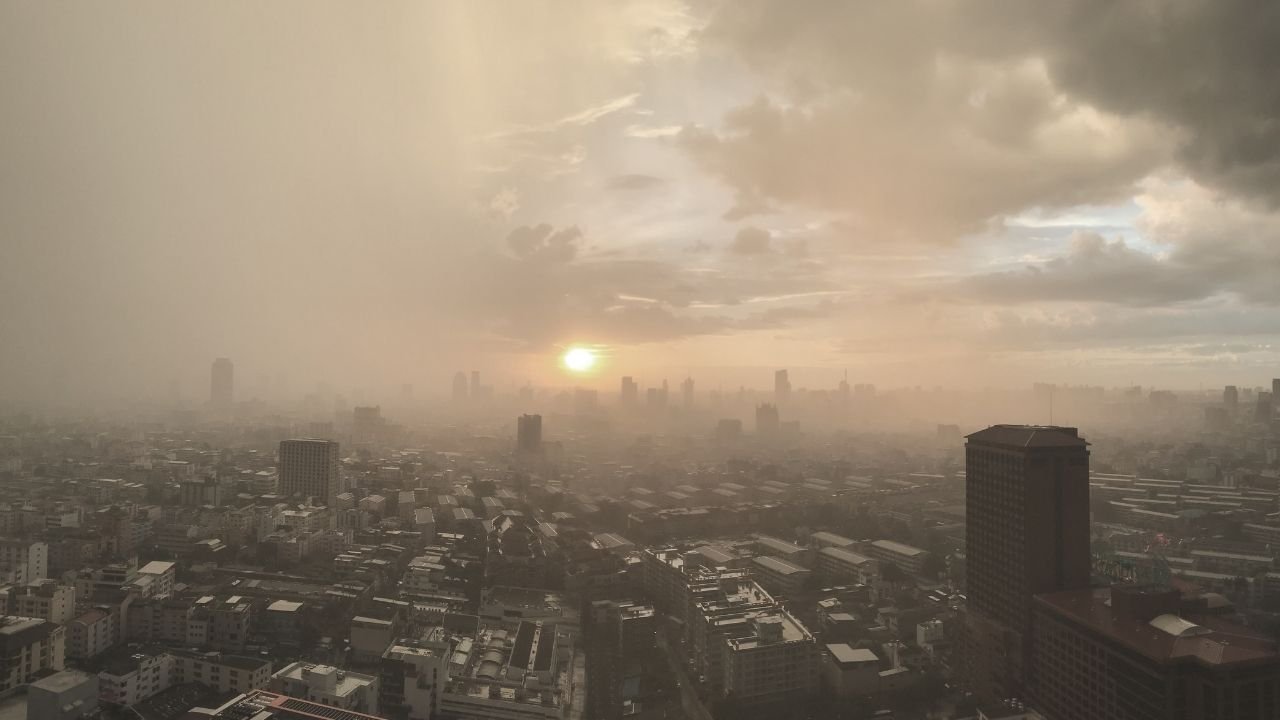
    Pollution from man-made emissions and other sources like wildfires have been linked to around 135 million premature deaths worldwide between 1980 and 2020, a Singapore university said Monday.

    Weather phenomena like El Nino and the Indian Ocean Dipole worsened the effects of these pollutants by intensifying their concentration in the air, Singapore’s Nanyang Technological University (NTU) said, unveiling the results of a study led by its researchers.

    The tiny particles called particulate matter 2.5, or “PM 2.5”, are harmful to human health when inhaled because they are small enough to enter the bloodstream. They come from vehicle and industrial emissions as well as natural sources like fires and dust storms.

    The fine particulate matter “was associated with approximately 135 million premature deaths globally” from 1980 to 2020, the university said in a statement on the study, published in the journal Environment International.

    It found that people were dying younger than the average life expectancy from diseases or conditions that could have been treated or prevented, including stroke, heart and lung disease, and cancer.

    Weather patterns increased the deaths by 14 percent, the study found.

    Asia had the “highest number of premature deaths attributable to PM 2.5 pollution” at more than 98 million people, mostly in China and India, the university said.

    Pakistan, Bangladesh, Indonesia and Japan also had significant numbers of premature deaths, ranging from 2 to 5 million people, it added.

    The study is one of the most expansive to date on air quality and climate, using 40 years of data to give a big-picture view of the effects of particulate matter on health.

    “Our findings show that changes in climate patterns can make air pollution worse,” said Steve Yim, an associate professor at NTU’s Asian School of the Environment, who led the study.

    “When certain climate events happen, like El Nino, pollution levels can go up, which means more people might die prematurely because of PM 2.5 pollution,” Yim added.

    “This highlights the need to understand and account for these climate patterns when tackling air pollution to protect the health of the global population.”

    The Singapore researchers studied satellite data from the US National Aeronautics and Space Administration (NASA) on the levels of particulate matter in the Earth’s atmosphere.

    They analysed statistics on deaths from diseases linked to pollution from the US-based Institute for Health Metrics and Evaluation, an independent research centre.

    Information on weather patterns during the period was taken from the National Oceanic and Atmospheric Administration in the United States.

    The study focused only on the effects of ordinary weather patterns on air pollution, Yim said, adding that the impact of climate change will be the subject of future studies.

    Researchers from universities in Hong Kong, Britain and China were also involved in the study.

    The World Health Organization has said the “combined effects of ambient air pollution and household air pollution” are associated with 6.7 million premature deaths worldwide every year.
  • 70% of environment journalists report attacks, threats, pressure: UN

    70% of environment journalists report attacks, threats, pressure: UN

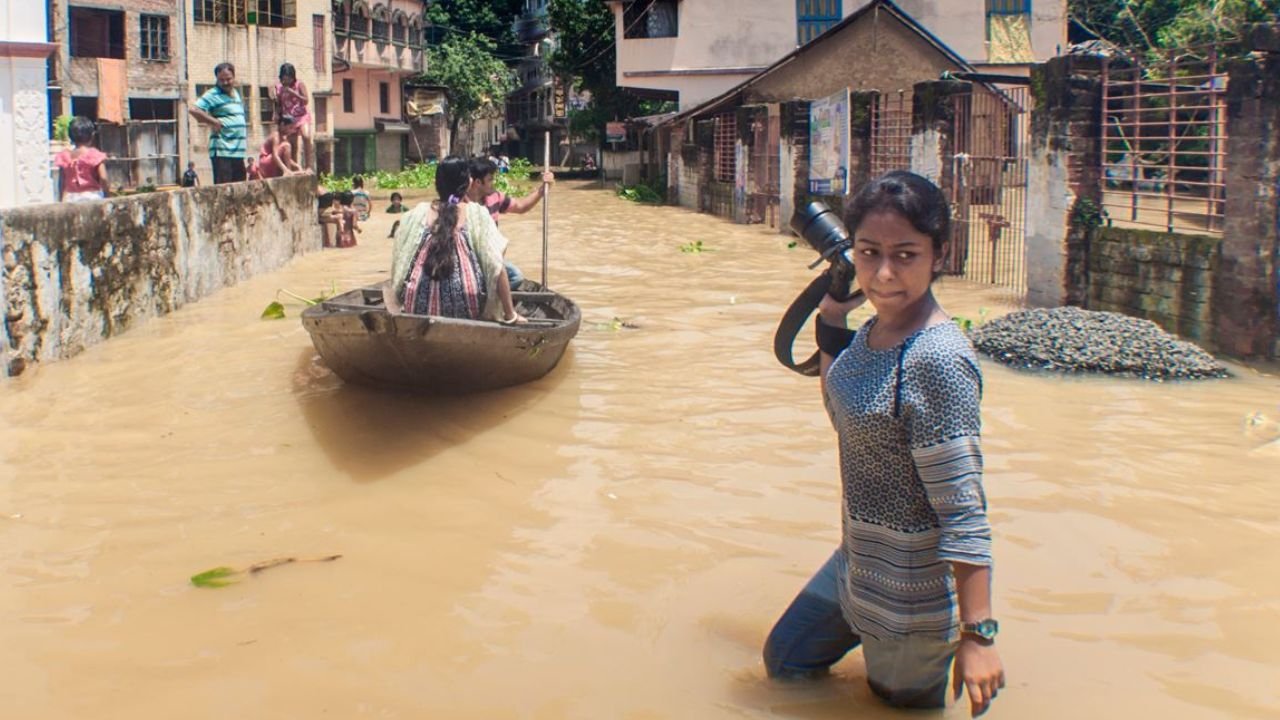
    Seventy percent of environmental journalists from 129 countries, polled in March, reported experiencing attacks, threats or pressure related to their job, UNESCO said Thursday.

    Of those, two in five subsequently experienced physical violence, it said in a report released on World Press Freedom Day. More than 900 reporters were questioned for the poll.

    The UN Educational, Scientific and Cultural Organization warned of an increase in violence against and intimidation of journalists reporting on the environment and climate.

    “Without reliable scientific information about the ongoing environmental crisis, we can never hope to overcome it,” UNESCO director general Audrey Azoulay said in a statement.

    “And yet the journalists we rely on to investigate this subject and ensure information is accessible face unacceptably high risks all over the world, and climate-related disinformation is running rampant on social media.”

    UNESCO said at least 749 journalists and news media outlets reporting on environmental issues were “targeted with murder, physical violence, detention and arrest, online harassment or legal attacks” between 2009 and 2023.

    More than 300 of those attacks occurred between 2019 and 2023 –- a 42 percent increase on the preceding five-year period.

    “The problem is global, with attacks taking place in 89 countries in all regions of the world,” the agency added.

    At least 44 environmental journalists have been killed for their work in the past 15 years, with convictions in only five cases, said the report.

    On top of hundreds of reported physical attacks, “a third of journalists surveyed said they had been censored,” it added.

    “Almost half (45 percent) said they self-censored when covering the environment due to fear of being attacked, having their sources exposed, or due to an awareness that their stories conflicted with the interests of concerned stakeholders.”

    At a press freedom conference in Chile this week, UNESCO will announce the launch of a grants program to provide legal and technical support to over 500 environmental journalists facing persecution, said the statement.

  • Report links H&M, Zara to environmental destruction in Brazil

    Report links H&M, Zara to environmental destruction in Brazil

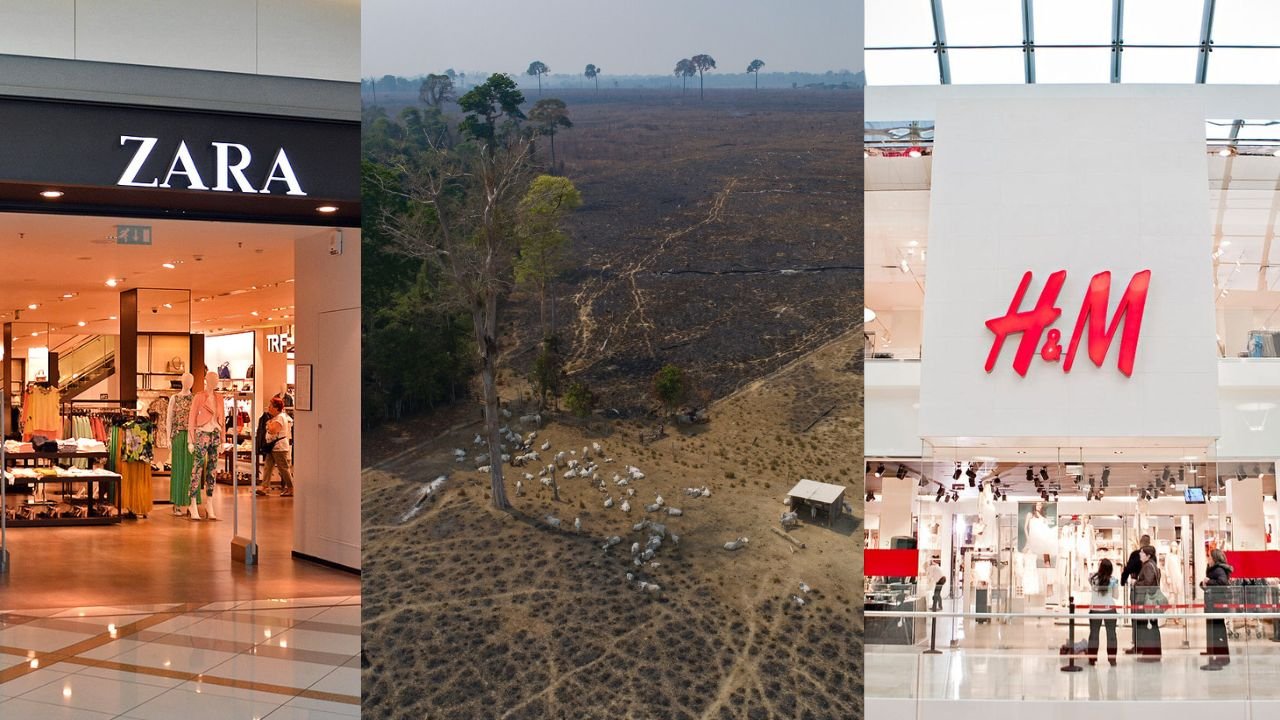
    Fast fashion giants H&M and Zara have used cotton from farms linked to massive deforestation, land-grabbing, corruption and violence in Brazil, a report by the environmental group Earthsight said Thursday.

    Based on satellite images, court rulings, shipment records and an undercover investigation, the report, titled “Fashion Crimes,” found the companies sourced “tainted cotton” farmed in the fragile Cerrado savanna by two of Brazil’s biggest agribusiness firms, SLC Agricola and the Horita Group.

    Despite abuses linked to its production, the cotton had been labeled as ethical by leading certification scheme Better Cotton, exposing “deep flaws” in the oversight program, said the British environmental group.

    The Cerrado, the most biodiverse savanna on Earth, has been disappearing at an accelerating rate as Brazil’s massive agribusiness industry has increasingly turned to the region in recent decades.

    Earthsight traced at least 816,000 tonnes of cotton exported from 2014 to 2023 to farms run by SLC and Horita, which “have a long record of court injunctions, corruption rulings and millions of dollars in fines related to clearances of around 100,000 hectares of Cerrado wilderness,” it said.

    The cotton in question was farmed in the northeastern state of Bahia and shipped to eight Asian clothing manufacturers whose clients include Sweden-based H&M and Spain-based Zara, the report said.

    Brazil, the world’s top exporter of beef and soybeans, has also emerged as a major cotton producer in recent years, now second only to the United States.

    But that has contributed to environmental destruction in the Cerrado, where “a ruinous mix of corruption, greed, violence and impunity has led to the blatant theft of public lands and dispossession of local communities,” Earthsight said.

    Better Cotton said in a statement it had conducted an independent audit of the “highly concerning issues raised” in the report, and that it would provide a summary of the findings.

    Zara parent company Inditex and H&M said they took the allegations seriously, and urged Better Cotton to release the auditors’ findings.

    The Brazilian Cotton Producers’ Association (ABRAPA) said it had worked with the growers in question to provide records and evidence countering the report’s allegations.

    “Unfortunately, these were largely disregarded,” it said in a statement.

    “ABRAPA unequivocally condemns any practices that undermine environmental conservation, violate human rights or harm local communities.”

  • Heatwaves to last longer amidst climate change

    Climate change is causing heat waves to slow to a crawl, exposing humans to extreme temperatures for longer than ever before, a study published in Science Advances said Friday.

    While previous research has found climate change is causing heat waves to become longer, more frequent and more intense, the new paper differed by treating heat waves as distinct weather patterns that move along air currents, just as storms do.

    For every decade between 1979 to 2020,  researchers found heat waves slowed down by an average of five miles (eight kilometers) an hour per day.

    “If a heatwave is moving slower, that means heat can stay in a region longer, so that has effects on communities,” senior author Wei Zhang of Utah State University told AFP.

    The researchers divided the world into three dimensional-grid cells and defined heat waves as a million square kilometer zones where temperatures reached at least the 95th percentile of the local historical maximum temperature. They then measured their movement over time in order to determine how fast the hot air was moving.

    They also used climate models to determine what the results would have looked like absent human-caused climate change, and found manmade factors loomed large.

    “It’s pretty clear to us that a dominant factor here to explain this trend is anthropogenic forcing, the greenhouse gas,” said Zhang.

    The changes have accelerated in particular since 1997 and in addition to human causes, weakening upper atmospheric air circulation may play a part, the paper said.

    The duration of heat waves also increased, from an average of eight days at the start, to 12 days during the last five years of the study period.

    “The results suggest that longer-traveling and slower-moving large contiguous heat waves will cause more devastating impacts on natural and societal systems in the future if GHG keep rising, and no effective mitigation measures are taken,” the authors wrote.

    Zhang said he was worried by the disproportionate impacts on less-developed regions.

    “In particular, cities that don’t have enough green infrastructure or not many cooling centers for some folks, in particular for the disadvantaged population, will be very dangerous,” he warned.

    la-ia/mdl

    © Agence France-Presse

  • Planet ‘on the brink’ with new heat records likely in 2024: UN

    Planet ‘on the brink’ with new heat records likely in 2024: UN

    Global temperatures “smashed” heat records last year, as heatwaves stalked oceans and glaciers suffered record ice loss, the United Nations said Tuesday — warning 2024 was likely to be even hotter.

    The annual State of the Climate report by the UN weather and climate agency confirmed preliminary data showing 2023 was by far the hottest year ever recorded.

    And last year capped off “the warmest 10-year period on record”, the World Meteorological Organization said, with even hotter temperatures expected.

    “There is a high probability that 2024 will again break the record of 2023”, WMO climate monitoring chief Omar Baddour told reporters.

    Reacting to the report, UN chief Antonio Guterres said it showed “a planet on the brink”.

    “Earth’s issuing a distress call,” he said in a video message, pointing out that “fossil fuel pollution is sending climate chaos off the charts”, and warning that “changes are speeding up”.

    The WMO said that last year the average near-surface temperature was 1.45 degrees Celsius above pre-industrial levels — dangerously close to the critical 1.5-degree threshold that countries agreed to avoid passing in the 2015 Paris climate accords.

    “I am now sounding the red alert about the state of the climate,” Saulo told reporters, lamenting that “2023 set new records for every single climate indicator”.

    The organisation said many of the records were “smashed” and that the numbers “gave ominous new significance to the phrase ‘off the charts’.”

    “What we witnessed in 2023, especially with the unprecedented ocean warmth, glacier retreat and Antarctic sea ice loss, is cause for particular concern,” Saulo said.

    One especially worrying finding was that marine heatwaves gripped nearly a third of the global ocean on an average day last year.

    And by the end of 2023, more than 90 percent of the ocean had experienced heatwave conditions at some point during the year, the WMO said.

  • France interested in Pakistan’s energy sector

    France interested in Pakistan’s energy sector

    A French delegation, led by its Deputy Head of Mission Guillaume Dabouis, showed keeness in investing in Pakistan’s energy sector in a meeting with Pakistan’s Minister of Energy, Musadik Malik in Islamabad, ARY news has reported.

    The French officials showed interest in investing in a number of domains of Pakistan’s energy sector, including LNG cargo provision, energy resource exploration, and projects aimed at improving energy trading, distribution, and transmission within the country.

    They also indicated interest in initiatives focused on lowering line losses and reviving Pakistan’s energy sector overall.

    The energy minister reaffirmed the government’s commitment to addressing the nation’s longstanding energy challenges. He emphasized the shift from piecemeal strategies and assured that the new government would present a thoroughly prepared plan to the International Monetary Fund (IMF).

  • Zargat forests in Balochistan still on fire after three days

    Zargat forests in Balochistan still on fire after three days

    It has been three days since the forest fire in Zargat mountain in Balochistan’s Musa Khel district started spreading but local authorities have failed to control it.

    On Thursday, fire ignited in the forests of the mountains. The fire is reportedly so intense that its flames can be seen 18 kilometers away from the city of Musa Khel, affecting olive groves and wildlife.

    The caretaker chief minister of Balochistan had given instructions for emergency measures to extinguish the fire on Thursday, but the residents of the area say that the fire could not be controlled till now.

  • Japan quake toll rises to 62 as weather hampers rescuers

    Japan quake toll rises to 62 as weather hampers rescuers

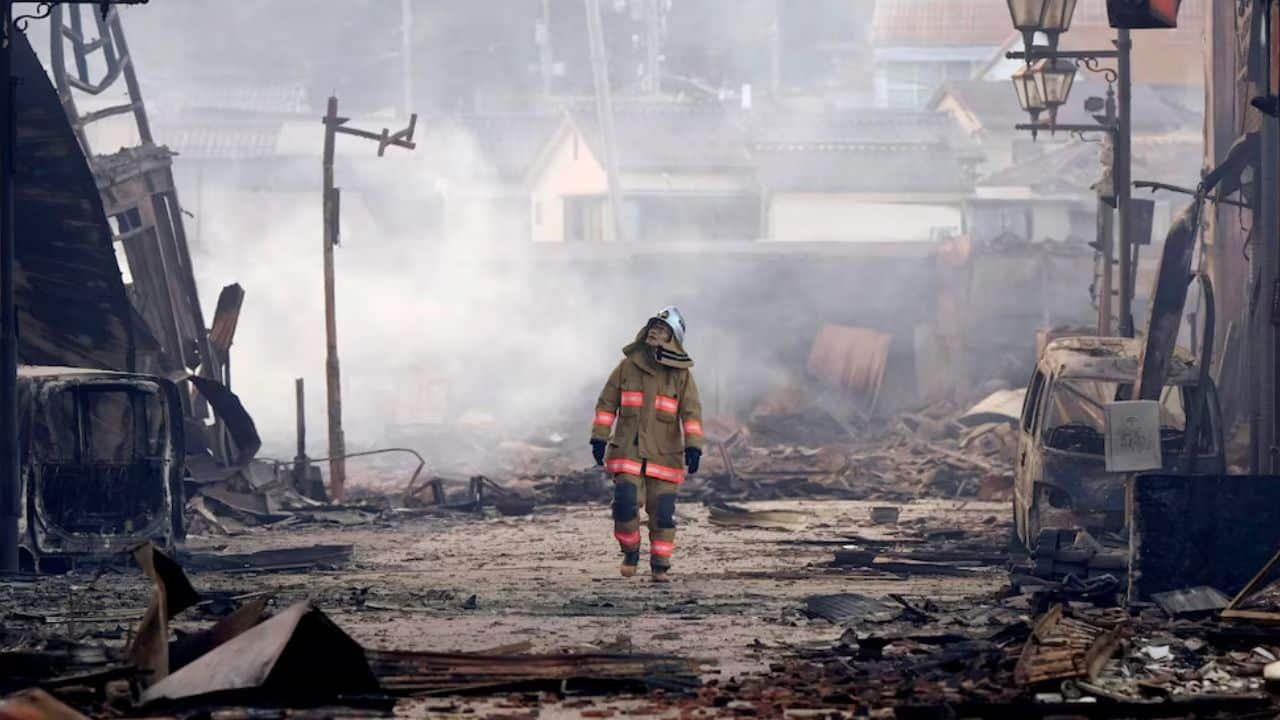
    Japanese rescuers scrambled to search for survivors on Wednesday (January 3) as authorities warned of landslides and heavy rain after a powerful earthquake that killed at least 62 people.

    The 7.5-magnitude quake on January 1 that rattled Ishikawa prefecture on the main island of Honshu triggered tsunami waves more than a metre high, sparked a major fire and tore apart roads.

    The Noto Peninsula of the prefecture was most severely hit, with several hundred buildings ravaged by fire and houses flattened in several towns, including Wajima and Suzu, as shown by before-and-after satellite images released on Wednesday.

    The regional government announced Wednesday that 62 people had been confirmed dead and more than 300 injured, 20 of them seriously.

    The toll was expected to climb as rescuers battle aftershocks and poor weather to comb through rubble.

    More than 31,800 people were in shelters, the government said.

    “More than 40 hours have passed since the disaster. We have received a lot of information about people in need of rescue and there are people waiting for help,” Prime Minister Fumio Kishida said Wednesday after an emergency task force meeting.

    “Rescue efforts are being made by the local authorities, police, firefighters and other operational units, while the number of personnel and rescue dogs is enhanced.

    “However, we ask you to remain fully mindful that we are in a race against time and to continue to do your utmost to save lives, putting people’s lives first,” Kishida said.

    The Japan Meteorological Agency (JMA) has issued a heavy rain warning in the area.

    “Be on the lookout for landslides until the evening of Wednesday,” the agency said.

    In the coastal city of Suzu, mayor Masuhiro Izumiya said there were “almost no houses standing”.

    “About 90 per cent of the houses (in the town) are completely or almost completely destroyed… the situation is really catastrophic,” he said, according to broadcaster TBS.

    A woman at a shelter in the town of Shika told TV Asahi that she “hasn’t been able to sleep” due to aftershocks.

    “I’ve been scared because we don’t know when the next quake will hit,” she said.

    Nearly 34,000 households were still without power in Ishikawa prefecture, the local utility said.

    Many cities were without running water.

    Shinkansen bullet trains and highways have resumed operations after several thousand people were stranded, some for almost 24 hours.

    The US Geological Survey said the quake had a magnitude of 7.5, while the JMA measured it at 7.6, triggering a major tsunami warning.

    The powerful quake was one of more than 400 to shake the region through Wednesday morning, the JMA said.

    Japan lifted all tsunami warnings after waves at least 1.2m high hit the town of Wajima and a series of smaller tsunamis were reported elsewhere.

    Japan experiences hundreds of earthquakes every year and the vast majority cause no damage.

    The number of earthquakes in the Noto Peninsula region has been steadily increasing since 2018, a Japanese government report said last year.

    The country is haunted by a massive 9.0-magnitude undersea quake off northeastern Japan in 2011, which triggered a tsunami that left around 18,500 people dead or missing.

    It also swamped the Fukushima atomic plant, causing one of the world’s worst nuclear disasters.

  • 2023 set to be hottest year on record: UN

    2023 set to be hottest year on record: UN

    Geneva (AFP) – This year is set to be the hottest ever recorded, the UN said Thursday, demanding urgent action to rein in global warming and stem the havoc following in its wake.

    The UN’s World Meteorological Organization warned that 2023 had shattered a whole host of climate records, with extreme weather leaving “a trail of devastation and despair”.

    “It’s a deafening cacophony of broken records,” said WMO chief Petteri Taalas.

    “Greenhouse gas levels are record high. Global temperatures are record high. Sea level rise is record high. Antarctic sea ice is record low.”

    The WMO published its provisional 2023 State of the Global Climate report as world leaders gathered in Dubai for the UN COP28 climate conference, amid mounting pressure to curb planet-heating greenhouse gas pollution.

    United Nations chief Antonio Guterres said the record heat findings “should send shivers down the spines of world leaders”.

    The stakes have never been higher, with scientists warning that the ability to limit warming to a manageable level is slipping through humanity’s fingers.

    The 2015 Paris climate accords aimed to limit global warming to well below two degrees Celsius above pre-industrial levels — and 1.5C if possible.

    But in its report, the WMO said 2023 data to the end of October showed that this year was already around 1.4C above the pre-industrial baseline.

    ‘Not just statistics’

    The agency is due to publish its final State of the Global Climate 2023 report in the first half of 2024.

    But it said the difference between the first 10 months of this year and 2016 and 2020 — which previously topped the charts as the warmest years on record — “is such that the final two months are very unlikely to affect the ranking”.

    The report also showed that the past nine years were the hottest years since modern records began.

    “These are more than just statistics,” Taalas said, warning that “we risk losing the race to save our glaciers and to rein in sea level rise”.

    “We cannot return to the climate of the 20th century, but we must act now to limit the risks of an increasingly inhospitable climate in this and the coming centuries.”

    The WMO warned that the warming El Nino weather phenomenon, which emerged mid-year, was “likely to further fuel the heat in 2024”.

    That is because the naturally-occurring climate pattern, typically associated with increased heat worldwide, usually increases global temperatures in the year after it develops.

    The preliminary report also found that concentrations of the three main heat-trapping greenhouse gases — carbon dioxide, methane and nitrous oxide — reached record high levels in 2022, with preliminary data indicating that the levels continued to grow this year.

    Carbon dioxide levels were 50 percent higher than the pre-industrial era, the agency said, meaning that “temperatures will continue to rise for many years to come”, even if emissions are drastically cut.

    ‘Climate chaos’

    The rate of sea level rise over the past decade was more than twice the rate of the first decade of satellite records (1993-2002), it said.

    And the maximum level of Antarctic sea ice this year was the lowest on record.

    In fact, it was a million square kilometres less than the previous record low at the end of the southern hemisphere winter, the WMO said — an area larger than France and Germany combined.

    Meanwhile, glaciers in North America and Europe again suffered an extreme melt season, with Swiss glaciers losing 10 percent of their ice volume in the past two years alone, the report showed.

    Dramatic socio-economic impacts accompany such climate records, experts say, including dwindling food security and mass displacement.

    “This year we have seen communities around the world pounded by fires, floods and searing temperatures,” UN chief Guterres said in a video message.

    He called on the leaders gathered in Dubai to commit to dramatic measures to rein in climate change, including phasing out fossil fuels and tripling renewable energy capacity.

    “We have the roadmap to limit the rise in global temperature to 1.5C and avoid the worst of climate chaos,” he said.

    “But we need leaders to fire the starting gun at COP28 on a race to keep the 1.5 degree limit alive.”

  • A school in India charges plastic bottles as fee

    A school in India charges plastic bottles as fee

    A school in India has adopted a unique means of educating underprivileged children while creating awareness about environmental concerns at the same time.

    In a remote village of the Indian state of Assam, plastic bottles are taken from children as fees.

    The school was started by a couple, Mazin Mukhtar and Parmita Sarma, in 2016 to reduce the growing pile of garbage in the village and to provide free quality education to the children.

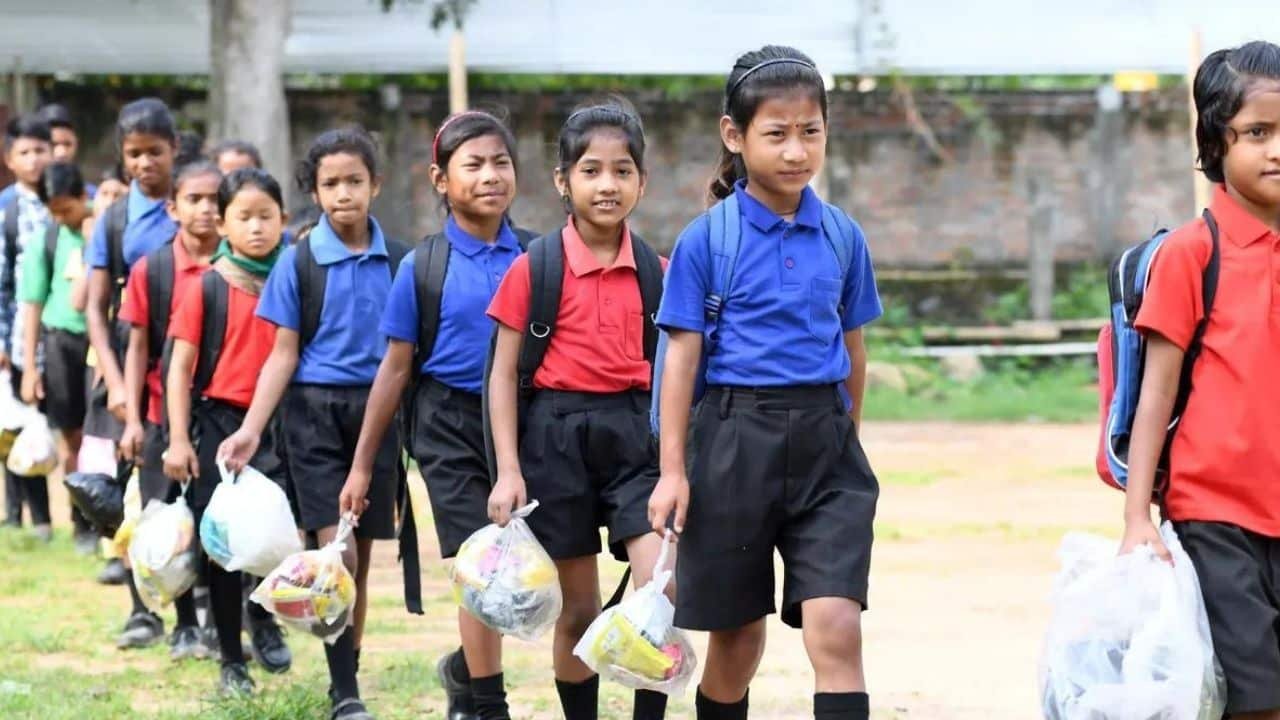
    While no fee is taken from the students, they have to deposit 25 plastic bottles full of waste to the school every week.

    By recycling these plastic bottles and the waste they contain, roads, bricks and toilets are made.

    Older students earn a living by teaching the younger children.

    Apart from education, children are taught different languages, recycling of plastics, carpentry and gardening.