Tag: equality

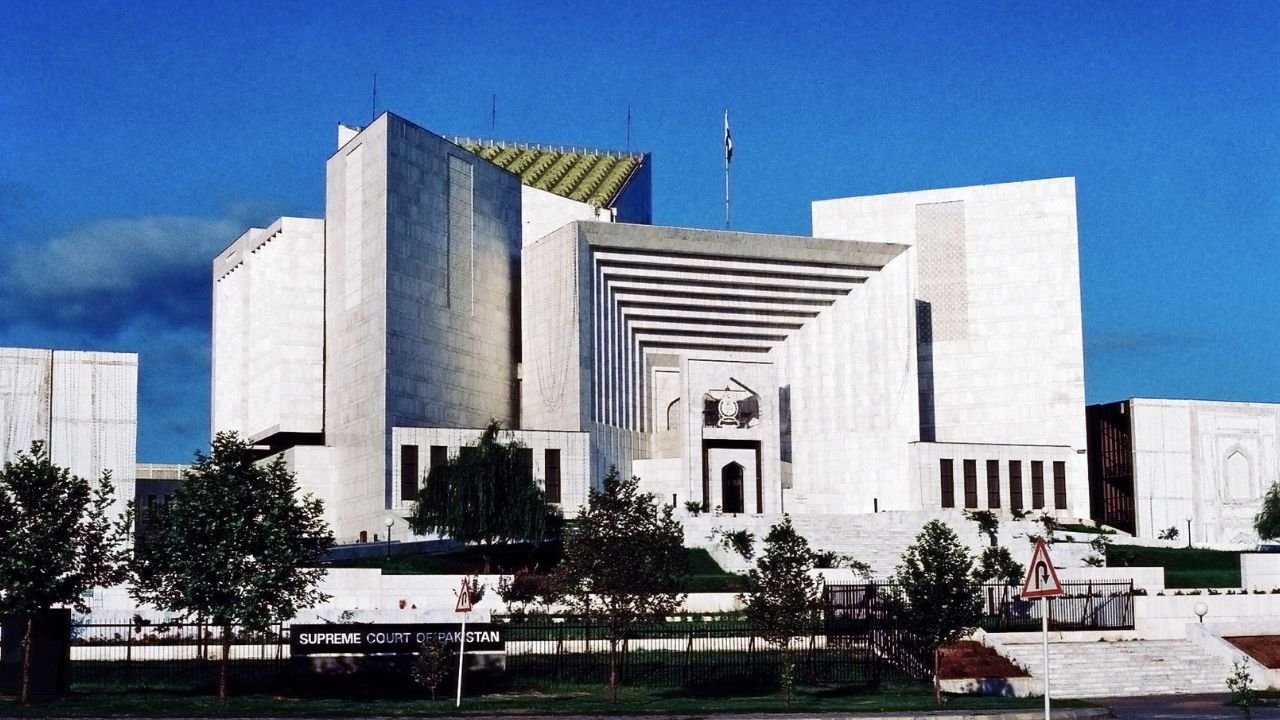
  • Out of 687 staff members, only 45 women are employed in the Supreme Court

    Out of 687 staff members, only 45 women are employed in the Supreme Court

    New details reveal that among the total staff members of 687 in the Supreme Court, only 45 are women.

    The information came to light as a judicial order directed Supreme Court Registrar Jazeela Aslam to give details on staff following a petition filed in 2019, appealing the Right of Access to Information Act 2017 and Article 19-A of the Constitution.

    The apex court reportedly has 894 sanctioned positions at the moment but 207 of them are vacant and 687 employees were working as of September 25.

    146 are employed on a daily wage basis.

    84 new positions have been created since January 2017.

    The details also reveal that out of all the 45 women working in the apex court, 33 hold regular positions while 12 are contingent employees.

    Additionally, only two people with disabilities and two transgenders are employed.

  • Claudia Goldin wins Nobel economics prize for work on women’s pay

    Claudia Goldin wins Nobel economics prize for work on women’s pay

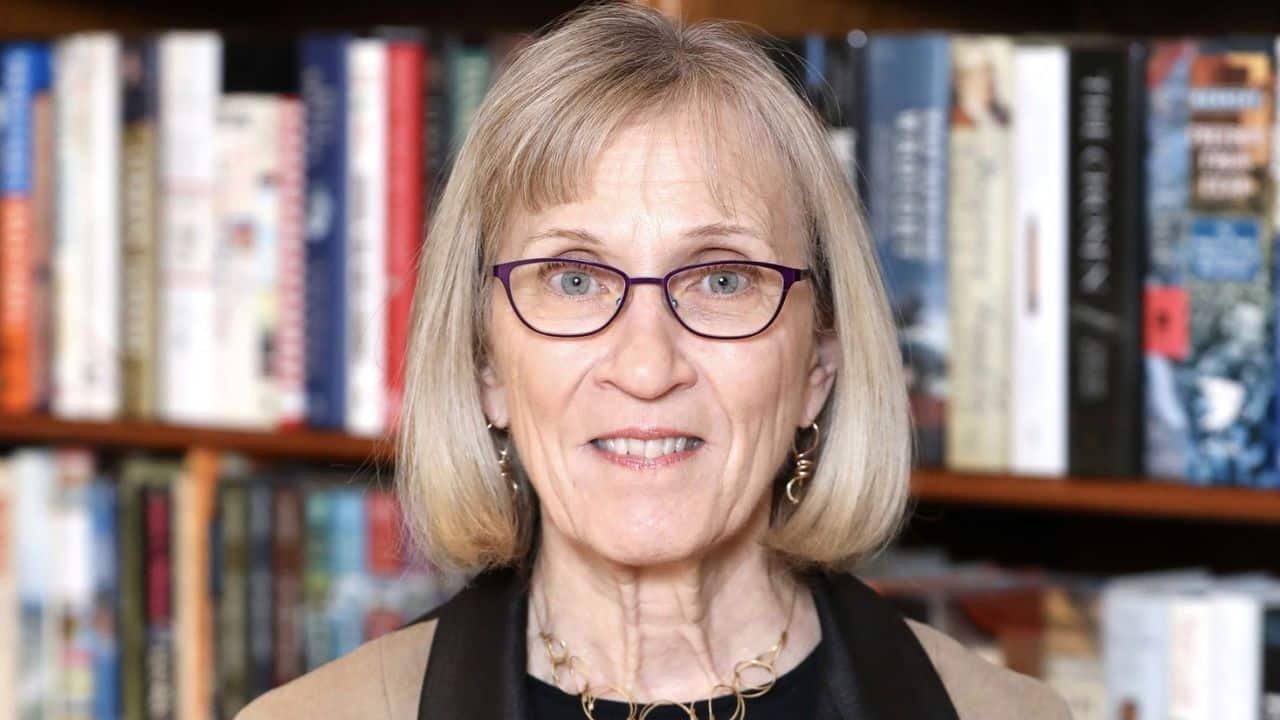
    An economic historian and Harvard professor, Claudia Goldin, has been awarded with the Nobel Prize in economics for her work examining the gender pay gap.

    Goldin’s unprecedented research highlights the fact that women, despite their higher academic qualifications, are paid less than men; and that mostly this difference arises after childbirth.

    “This year’s Laureate in the Economic Sciences, Claudia Goldin, provided the first comprehensive account of women’s earnings and labour market participation through the centuries,” the Royal Swedish Academy of Sciences said on Monday.

    “Her research reveals the causes of change, as well as the main sources of the remaining gender gap.”

    After Elinor Ostrom in 2009 and Esther Duflo in 2019, Goldin is the third woman to be awarded the Nobel Prize in economics — a category with the lowest number of female laureates.

    Goldin’s research examines data tracing 200 years of women’s participation in the workforce in the United States.

    As per her research, a woman’s role in the job market and her pay are, in part, decided by individual decisions, including educational choices, as well as broad social and economic changes.

    The prize committee highlights that while much of the earnings gap historically could be explained by differences in education and occupational choices, Goldin “has shown that the bulk of this earnings difference is now between men and women in the same occupation, and that it largely arises with the birth of the first child”.

  • Can democracy deliver? Pakistanis answer in new report

    Can democracy deliver? Pakistanis answer in new report

    Open Society Barometer conducted a survey on one question: Can Democracy Deliver?

    The survey is based on representative polling in 30 countries with a combined population of over 5.5 billion people, including Pakistan, to reflect on geographic, economic, and political diversity.

    The report surveyed 36,344 respondents aged 18 or older in each country

    According to the survey, 86 per cent of respondents have faith in democracy while only 20 per cent believe that authoritarian countries can deliver “what citizens want.”

    72 per cent believe that human rights have been a “force for good” in the world, and 71 per cent agree that “human rights reflect values that I believe in.”

    It is noteworthy that only 57 per cent of 18-35-year-olds prefer democracy to any other form of government, compared to 71 per cent of older respondents.

    Democracy and Pakistan
    The global average percentage of respondents who deem it important to live in a democratically governed country is 86 per cent while in Pakistan it is 79 per cent.

    Similarly, 56 per cent of Pakistanis preferred democracy over other form of governance in comparison to 62 per cent of the global average.

    The global average percentage of respondents who believe human rights have been a force for good in the world is 72 per cent while in Pakistan it is 81 per cent.

    Human Rights and Pakistan

    With the global average of 72 per cent respondents, 81 per cent Pakistanis believe human rights have been a force for good in the world.

    78 per cent of Pakistanis believe human rights reflect the values that they believe in in comparison to the global average of 71 per cent.

    The highest percentage of Pakistanis, i.e. 39 per cent, rank economic and social rights as the most important. This is followed by civil and political rights with 23 per cent, environmental rights with 16 per cent and digital rights with 12 per cent.

    Most importantly, 43 per cent of Pakistanis disagree with army rule as a “good way of running a country” in comparison to 33 per cent who agree.

    Likewise, 45 per cent of Pakistanis disagree with having a leader who “does not bother with parliaments or elections is a good way of running a country” while 33 per cent agree.

    Equity, justice and Pakistan

    73 per cent of Pakistanis fear that political unrest in their country could lead to violence next year in comparison to 58 per cent of the global average.

  • Khalifa nan-khatai lover, US Ambassador Donald Blome wants more women in the Pakistani workforce

    Khalifa nan-khatai lover, US Ambassador Donald Blome wants more women in the Pakistani workforce

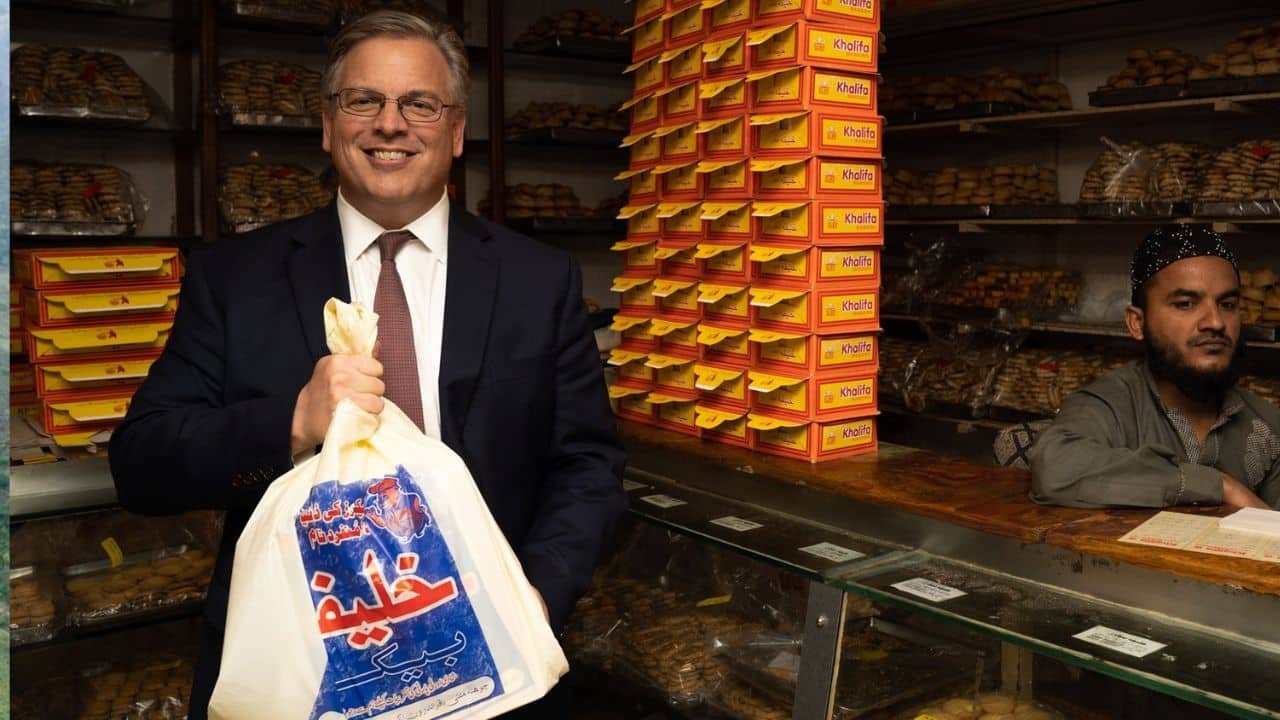
    US Ambassador to Pakistan, Donald Blome, visited Lahore from September 4-6 and The Current got the opportunity to sit down with him and have a little chat.

    And yes, you read it correctly. The ambassador is a lover of Khalifa nan-khatai. He told us that he discovered the biscuits last year when he came to Lahore. Later, during his February trip, he even stopped by Khalifa Bakers in the Walled City.

    Visit to Lahore
    Over the course of his latest tour, Ambassador Blome visited PepsiCo’s FritoLay Snack plant and NetSol Technologies Ltd. While the focus of the ambassador’s trip was to foster the economic ties between the United States (US) and Pakistan, special emphasis was placed upon the importance of human rights and inclusive workspaces — particularly in regards to women.

    “It is not just a matter of simply hiring — there are things you have to change, and ensure a welcoming environment for women with different needs and different requirements to excel in the workforce,” he pointed out.

    Playing a leading role in corporate social responsibility, American-based companies have not only created employability in Pakistan, but they endeavour to cater to the local communities through initiatives that actively work towards women’s empowerment as well as education, health, disaster relief, and skills development.

    Ambassador Blome cited a USAID programme in partnership with PepsiCo that aims its attention on women farmers of Pakistan who are working in one of the more difficult areas, toiling under a strenuous work environment.

    Cultural Barriers
    Taking into consideration the socio-domestic constraints that often restrict women from growing in their careers, Ambassador Blome believes that practical initiatives can make workplaces more inviting for women in Pakistan.

    “It is the simple things; like having child care facilities, providing safe transportation — beyond that is developing a culture that ensures that equal chance is given to women to advance within their jobs and careers, and that they are valued in the same way every other employee is valued.”

    He further stated that he hopes American firms like PepsiCo, which has advanced gender parity in managerial roles globally, are exemplary models providing a leadership structure for the local businesses.

    “A lot of things work through to get there. But many Pakistani companies are also trying to head in that direction,” Ambassador Blome acknowledged.

    Success stories
    While a number of US businesses have actively countered gender inequality, Ambassador Blome particularly highlighted the digital sector as a success. He mentioned that not only more women are being employed by IT firms but certain institutes have been accommodating by providing opportunities for flexible work like allowing to work partly at home, partly in office.

    NetSol Technologies, an American software company, is known for being an “equal opportunity employer with the largest concentration of female employees in Lahore”.

    This year, they took an initiative to encourage women back into workspaces — women who are married or left the job after having a baby. This was carried out by creating women-exclusive jobs which catered them through on-office facilities.

    Ambassador Blome, however, also hailed a number of “impressive” Pakistani women-led organisations that are in the lead when it comes to facilitating women.

    “It is a whole constellation of different issues that come together,” he underlined.

    “If companies are able to make that work [i.e. create inclusive workspaces], it would be incredibly effective because it brings unique talents and energy, and it is something badly needed for Pakistan. The participation of women in force is too low here and it hurts the country in many ways — to forgo this incredible resource the country has.”
  • ‘Cringe’: Nadia Jamil does NOT like Barbie at all

    ‘Cringe’: Nadia Jamil does NOT like Barbie at all

    Not your Barbie girl?

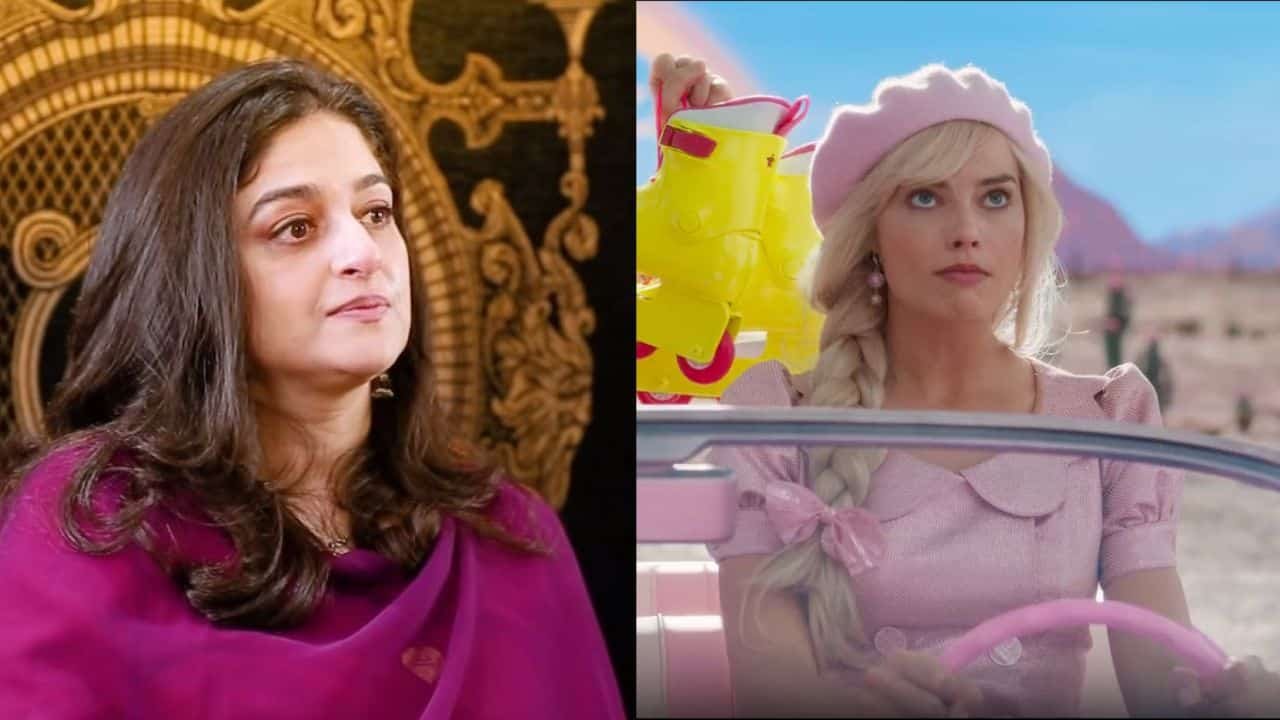
    While the rest of the world (completely excluding Punjab) is celebrating the release of Greta Gerwig’s Barbie, veteran actress Nadia Jamil seems to not share the same opinion. Jamil took to Twitter to share some of the problems she noticed in the film.

    In her Twitter post, the ‘Sitara Aur Mehrunisa’ actress shared that the film mocked a pregnant doll, who was only shown twice.

    “Being pregnant is the most natural thing in the world. Get over it. To encourage little girls to see it as something repulsive is an awful idea,” she wrote.

    She went on to write that the film also discouraged flat feet, calling them ‘beautiful’.

    “I have flat feet. They are beautiful. I dont know why everyone is puking over flat feet. Another unhealthy thing to teach little kids.”

    Nadia also shared the film was not interested in supporting equality because it encourages “bullying and domineering men”

    “The Barbie world is awful/cruel 2 the Ken’s & Barbies are never interested in equality. They are interested in bullying & domineering men,almost in revenge 4 the real world. Another s**** message 2 kids.”

    Read her complete post:

    Some Twitter users did not agree with Nadia’s take. One user wrote:

    “You missed the entire point. It’s a satirical take on beauty standards perpetuated by ‘Stereotypical Barbie,’ which is the Robbie’s character’s name. The OTT manner in which this is conveyed is to highlight the absurdity of these notions. Her entire journey is one of unlearning.”

    Another user pointed out that the film was a satire that was mocking the brand

  • ‘Mera Jism Meri Marzi’ doesn’t mean I want to rip off my clothes, says Mahira Khan

    ‘Mera Jism Meri Marzi’ doesn’t mean I want to rip off my clothes, says Mahira Khan

    Mahira Khan, in a recent interview, opened up and revealed why she attends the Aurat March every year and what are the three things she finds attractive in a man.

    Read more – We can’t show a woman being assaulted and falling in love with the same man, says Mahira Khan

    “I think it is necessary for me [to go to Aurat March] because I think when I do something, no matter how small it is, it leaves an impact,” said the actor. “So when I go to Aurat March, what I’m actually trying to say is ‘Look, if you like me and if you think what I say means something if you think I that I’m on the right side of history, or whatever you think of me, this is also what I believe in, this is why I’m here.’”

    Honestly, mere Aurat March jaane se itna ziada kuch nae hota siwaye iske ke it creates an impact,” added Mahira.

    Mahira also shared her thoughts on the Mera Jism Meri Marzi slogan saying: “It [the slogan] doesn’t mean that I want to rip off my clothes. It means that I’m a whole person. This is my body, and if you are looking at me and I’m not feeling comfortable about it, I have the right to say that don’t look at me. Or if you are trying to touch me I can report you, because yeh mera jism hai, aur yeh meri marzi hai [it’s my body, and I have complete right over it].”

    During the interview, Mahira also shared that while growing up her parents gave her the freedom to make her own judgments.

    Meanwhile, answering a question about three things she finds attractive in a man, Mahira said: “I find both men and women attractive when they are at complete peace with themselves.”

    “Secondly, I love sense of humour”, shared Mahira. “I like someone who makes me laugh and if someone is not making me laugh then I make them laugh.”

    “Thirdly I like it when a man truly respects a woman,” added the actor.

    Though Mahira keeps her personal life tightly under wraps, designer Hassan Sheheryar Yasin, in a quarantine live session accidentally revealed the name of Mahira’s beau and cajoled her into opening up about him.

    When HSY asked Mahira how she feels when she looks into his eyes, Mahira said: “There’s a line in Humsafar, which I thought was beautiful, where Ashar says to Khirad, ‘Pata nahi tum mujhe kis naiki kay badlay main milli ho.’ I think the same about him. I must have done something good in my life.”

    Meanwhile, Mahira has recently ventured into production with a web series titled Baarwan Khiladi. The actor has set up a production house Soulfry Films with her friend and producer Nina Kashif. Baarwan Khiladi will be their first project together.

  • Pakistani filmmaker wins gender equality award in Singapore

    Pakistani filmmaker wins gender equality award in Singapore

    Award-winning Pakistani filmmaker, Shehzad Hameed Ahmad was recently honored by the United Women of Singapore for supporting the cause of gender equality through his films.

    Over last 10 years, Shehzad has done significant work highlighting and supporting women causes and creating awareness for gender equality. Singapore-based Ahmad was awarded the Gender Equality Impact Change-maker (male individual) award.

    His work includes The Pakistani Four 2012, where he travelled across America to film the journey of four Pakistani American women, Flight of the Falcons 2015, were he filmed the inspiring journey of Pakistani school teacher and her two-room school in Gujranwala, where he highlighted the issues of girls’ education in rural areas of Pakistan.

    His work was being featured on TVF International, Toggle, Dawn News, National Geographic, TV Ontario, CAN and Crime and Investigation Channel, amongst others.

  • Aurat March 2020 receives backlash on social media

    The poster Aurat
    March was met with rape and death threats after it was upload on social media
    last week.   

    Aurat March
    (women march) calls for women, transgender, and other suppressed gender groups
    to raise voice against injustice and deeply embedded patriarchy in our society.
    Unfortunately, within an hour of upload – the post was bombarded with crushing
    sexist and misogynist comments

    While talking to
    Express Tribune, the organizers said that they can take little action against
    such response on social media.

    “The maximum we
    can do is to report it on Facebook,” said the organizers adding, “We’ll stand
    for the cause and call out this unjust treatment – those who’re posting threats
    will not get away with all this.”

    The Aurat March
    team said that they are partnering with legal teams to tackle bullying and
    threats. 

    It is ironic that
    these people are getting uncomfortable because suppressed genders are demanding
    equal rights and better treatment in society, whereas when people like Khadim
    Hussain Rizvi outrageously abused and curse publically – the only concern for
    people is the inconvenience in traveling and day to day life.