Tag: espionage

  • Man accused of murdering Indian spy critically wounded in attack

    Man accused of murdering Indian spy critically wounded in attack

    In 2013, Amir Sarfraz Tamba allegedly killed a convicted Indian Spy Sarabjit Singh in Kot Lakhpat prison, Lahore. Amir was at his residence in Lahore’s Islampura area when two armed men entered his home and shot him on April 14.

    Initially, media reports claimed that Amir succumbed to his injuries but Dawn confirmed that while he was indeed critically injured, he was still alive.

    The incident has raised serious concerns among authorities over foreign involvement.

    Interestingly, just a few days ago, The Guardian reported that the Indian government assassinated individuals in Pakistan as part of a wider strategy to eliminate “terrorists” living on foreign soil.

    A high-profile investigation has been launched to probe the motive behind the attack including finding out if there was Indian involvement.

    Amir Tamba and his accomplice were acquitted in 2018 after all witnesses retracted their statements. Sarabjit Singh was killed a few months after a Kashmiri freedom fighter Afzal Guru was hanged in Tihar Jail, Mumbai in 2013 for his role in the 2001 Indian parliament attack

    Sarabjit Singh was serving his death sentence awarded by the Supreme Court of Pakistan for his role in a series of bomb attacks in Lahore and Faisalabad in 1990.

  • Suspected Chinese spy pigeon released by India after 8 months of investigation

    A pigeon that spent eight months in Indian police custody has been released after it was finally cleared of being a suspected Chinese spy.

    The bird was caught at a port in the financial capital Mumbai with “messages written in a Chinese-like script” on its wings, the Times of India newspaper reported.

    “Initially, the police had registered a case of spying against the bird, but after completing their inquiry, they dropped the charge,” the report added.

    The unnamed bird was held under lock and key at a city hospital while police carried out an investigation.

    That probe took an “astonishing eight months”, the India office of the People for the Ethical Treatment of Animals (PETA) said in a Thursday statement.

    PETA India said police had granted “formal permission for the hospital to release the pigeon” on Wednesday.

    Local media reports said the bird fluttered away in good health.

    The pigeon is the latest of several detained by Indian authorities on suspicion of espionage.

    Border security officers took a pigeon into custody in 2016 after it was found carrying a threatening message to Prime Minister Narendra Modi close to India’s border with arch-rival Pakistan.

    In 2020, police in Indian-controlled Kashmir released a pigeon belonging to a Pakistani fisherman after a probe found that the bird, which had flown across the heavily militarized border between the nuclear-armed nations, was not a spy.

  • Russia detains Wall Street Journal reporter on suspicion of spying for Washington

    Russia detains Wall Street Journal reporter on suspicion of spying for Washington

    On Thursday, the Federal Security Service (FSB) of Russia announced that it had detained Evan Gershkovich, a US national who works as a reporter for The Wall Street Journal, on suspicion of espionage on behalf of the United States.

    The FSB has initiated a criminal investigation against Gershkovich, alleging that he gathered information classified as state secrets about a military factory. The FSB did not disclose the name or location of the factory but stated that Gershkovich was apprehended in Yekaterinburg, a city in the Urals, while attempting to obtain secret information. No evidence was provided to support the charges.

    The FSB asserted in a statement that Gershkovich was acting on behalf of the American side and had been collecting sensitive information on one of Russia’s military-industrial complexes. The detention of Gershkovich marks the most serious public move against a foreign journalist since Russia’s military intervention in Ukraine.

    Russia has implemented tighter censorship laws since its military operation in Ukraine began in February 2022. The Wall Street Journal and the US Embassy in Moscow did not respond immediately to requests for comment from Reuters. A US diplomatic source stated that the embassy had not been notified of the incident and was seeking information from Russian authorities about the case.

    Foreign journalists covering Russia expressed their support for Gershkovich online, contending that he was a professional journalist and not a spy. Andrei Soldatov, an author and an expert in Russia’s security agencies, who is currently outside the country, stated on social media that Gershkovich was an excellent and courageous journalist and not a spy. He further noted that the detention of Gershkovich represented a frontal attack on all foreign correspondents still working in Russia and that the FSB was off the leash.

    According to Russia’s Kommersant newspaper, Gershkovich will be transported to Moscow and detained in the Lefortovo prison, an FSB pre-trial detention facility. Gershkovich, who has covered Russia since 2017, previously worked at The Moscow Times and France’s Agence-France Presse news agency.

    In recent months, he had primarily reported on Russian politics and the Ukraine conflict. On Thursday, his mobile phone was unreachable, and according to the Telegram messenger service, he was last online on Wednesday at 1:28 pm Moscow time.

  • India reacts to Pakistan’s assertion, says ’embassy officials were caught red-handed while spying’

    India reacts to Pakistan’s assertion, says ’embassy officials were caught red-handed while spying’

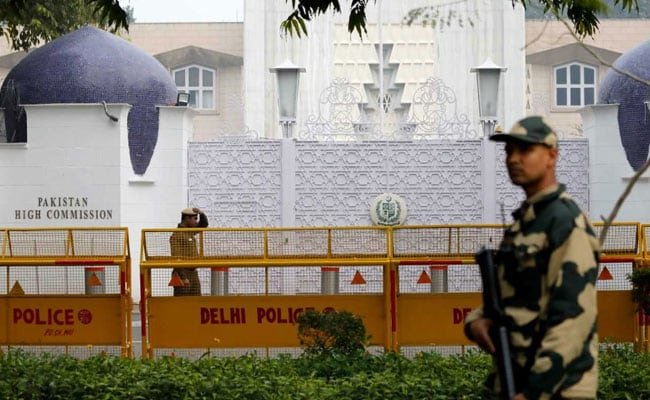
    India has rejected Pakistan’s contention that two high commission staffers were detained on unsubstantiated charges and tortured, people familiar with developments told Hindustan Times, adding that the officials “were caught red-handed while indulging in spying”.

    New Delhi on Sunday expelled two junior officials of the Pakistan High Commission after they were detained during an operation by the Delhi Police and Military Intelligence while allegedly trying to obtain classified documents on security installations.

    The officials were identified as Abid Hussain Abid, 42, an assistant in the Pakistani mission, and Mohammad Tahir Khan, 44, a clerk.

    Pakistan condemned India’s decision to declare the two officials persona non grata and to expel them, saying they were detained on false and unsubstantiated charges. A statement from Pakistan’s Foreign Office (FO) also contended that the two men were tortured and threatened to “accept false charges” despite identifying themselves as diplomatic staff.

    The FO said the Indian action was in clear violation of the Vienna Convention on Diplomatic Relations as well as the norms of diplomatic conduct.

    “The High Commission of Pakistan in New Delhi has always worked within the parameters of international law and diplomatic norms. The Indian action is clearly aimed at shrinking diplomatic space for the working of Pakistan High Commission,” it said.

    The FO said that the Indian ploy to heighten tensions would fail in diverting attention from the ongoing internal and external issues faced by the Bharatiya Janata Party (BJP) government or from the worsening situation and gross human rights violations being perpetrated by the Indian forces in occupied Jammu and Kashmir.

    It again called on the world to take note of the Indian designs and play its role in ensuring peace and security in South Asia.

    “The assertions of the Pakistan FO are false. The two officials were caught red-handed while indulging in espionage activities,” said one of the people cited above, speaking on condition of anonymity.

    “They did not disclose their identity that they were high commission officials. When they were taken into custody and questioned, they confessed to indulging in espionage and also informed that they were high commission officials,” the person added.

    The Pakistani mission was immediately informed and the two men were handed over, the person said.

    “They were never subjected to any torture. They have also undergone medical examinations. Pakistan appears to be making false accusations and possibly creating ground for some tit for tat reaction and torture of Indian officials in Islamabad,” they said.

  • ‘Neutral’ Switzerland helped CIA spy on Pakistan, others?

    ‘Neutral’ Switzerland helped CIA spy on Pakistan, others?

    Outraged commentators warned on Wednesday that the CIA and Germany’s intelligence service had for decades used a Swiss encryption company for spying, seriously damaging Switzerland’s cherished reputation for neutrality, AFP reported.

    Critics voiced particular concern that Bern may have been at least tacitly complicit in the secret operation. Switzerland, which takes pride in its neutral and non-aligned status, “was hosting a quasi ally intelligence agency,” the Tribune de Geneve daily said in an editorial.

    Swiss officials “very likely” knew what was going on but “closed their eyes” in the name of neutrality, it added. Home to the United Nations European headquarters and the International Committee of the Red Cross, Switzerland is recognised worldwide for its standing as an honest broker.

    But media revelations on Tuesday told how for decades the US and West German intelligence services raked in the top-secret communications of governments around the world. The Trojan horse they used was their hidden control of Swiss encryption company Crypto AG.

    The company supplied devices for encoded communications to some 120 countries from after World War II to the beginning of this century, including Iran, South American governments, and India and Pakistan.

    Unknown to those governments, Crypto was secretly acquired in 1970 by the US Central Intelligence Agency together with the then West Germany’s BND Federal Intelligence Service.

    Together they rigged Crypto’s equipment to be able to easily break the codes and read the government’s messages, according to reports by the Washington Post, German television ZTE and Swiss state media SRF.

    Citing a classified internal CIA history of what was originally called operation “Thesaurus” and later “Rubicon,” the reports said that in the 1980s the harvest from the Crypto machines supplied roughly 40 percent of all the foreign communications US code-breakers processed for intelligence.

    The spy agencies were thus able to gather precious information during major crises such as the hostage crisis at the US embassy in Tehran in 1979 the 1982 Falklands War between Argentina and Britain. They also got information on several political assassinations in Latin America.

    The Swiss government said on Tuesday it had named a retired federal judge to look into the matter, with his findings due out in June. But Carolina Bohren, a Swiss defence ministry spokeswoman, stressed the difficulties ahead. “The events in question began in 1945 and are difficult to reconstruct and interpret today,” she said.

    Bern also announced it had suspended export licenses for Crypto’s successor companies, until the situation has been “clarified”. But a number of political parties, insisting that far more needed to be done, on Wednesday called for a full-blown investigation.

    The Swiss Socialist Party wondered in a tweet whether the country’s own intelligence service was a “victim or an accomplice”, demanding “clarifications and a full investigation”. The Greens and Christian Democrats also suggested a parliamentary commission might be called for.

    Amnesty International’s Swiss chapter meanwhile raised questions about the Swiss authorities’ responsibility both for the espionage and for how the information gathered had been used.

    “Were our intelligence services and the government aware of the torture and the murders committed by military dictatorships in Chile and Argentina?” it asked in a tweet. “Did they take any measures? A full investigation must be carried out.”

    Switzerland has a centuries-old tradition of neutrality. It avoided being drawn into either of the World Wars and has stayed outside political and military alliances such as NATO.

    Several media reports noted on Wednesday that this reputation ended up providing excellent cover for the United States and Germany when they set up their spying operation there.

    Whether this was done “out of incompetence, because of a desire to cover for foreign secret service agents, or to profit from the information they uncovered, must now be clarified,” the Tages-Anzeiger daily insisted. “That is the only way to get out of this mess.”