Tag: EU

  • 10 easiest European citizenships

    10 easiest European citizenships

    Many people from developing countries aspire to acquire citizenship in European states. Some countries offer relatively straightforward paths to citizenship, while others present significant challenges. Sweden stands out as the easiest country in Europe for obtaining citizenship, whereas Estonia and Latvia are the most challenging.

    A recent study by CIS analysed Eurostat immigration data from 2009 to 2021 to identify which countries have the highest and lowest rates of non-EU residents acquiring citizenship.

    The analysis revealed that the nine most challenging countries to obtain citizenship are located in Central Europe. Estonia ranks as the most difficult country for non-EU citizens to naturalise, with the lowest average acquisition rate—approximately one in 200 residents. Additionally, the acquisition rate for men in Estonia is lower at 0.58 percent compared to 0.69 percent for women.

    Latvia, the Czech Republic, and Lithuania also have acquisition rates of less than 1 percent for non-Europeans, contrasting sharply with the average of 3.56 percent across European countries. Austria, Liechtenstein, Slovakia, Slovenia, and Germany follow, granting citizenship to about one in fifty non-EU residents. Denmark, outside Central Europe, presents the next highest hurdle with an acquisition rate of 2 percent.

    Over the past decade, six of the ten most challenging countries have seen an increase in citizenship grants year-on-year, particularly Denmark, which experienced a notable rise. Germany’s acquisition rate remained stable, while Latvia, Lithuania, and Slovenia saw declines.

    Many countries implement various programs aimed at attracting foreigners, including opportunities for investment, as well as citizenship and tax benefits.

    Individuals seeking migration often favour Golden Visa and Golden Passport routes, terms that are sometimes used interchangeably despite minor distinctions.

    10 Easiest European Countries to Get Citizenship

    According to the report, Sweden ranks as the easiest country, with nearly one in ten (9.3 Perce) non-EU residents obtaining citizenship—more than double the EU average.

    Sweden boasts the highest acceptance rates for both genders, with women experiencing a slightly higher acceptance rate of 10.02 percent compared to 8.66 percent for men.

    Norway, the Netherlands, Portugal, and Iceland follow as the second to fifth easiest countries to acquire citizenship, with an acquisition rate of one in 25 (4 percent).

    Data shows that northern European countries generally have the highest citizenship acquisition rates, with Sweden, Norway, Iceland, and Finland leading the pack.

    In southern Europe, Portugal emerges as the easiest, while the Netherlands, Ireland, and the United Kingdom are the most accessible Western European states for citizenship. The UK ranks eighth, with nearly three in 50 (3.2 percent) residents granted citizenship.

    Poland and Croatia are the easiest countries in Central Europe for changing nationality, with acquisition rates of 4 percent and 3.9 percent respectively. Northern and Western Europe present the most accessible regions for nationality changes, with an acquisition rate of 5.9 percent compared to 1.9 percent in Central Europe and 3.6 percent in the South.
  • Gaza world’s biggest ‘open-air graveyard’: EU’s Borrell

    Gaza world’s biggest ‘open-air graveyard’: EU’s Borrell

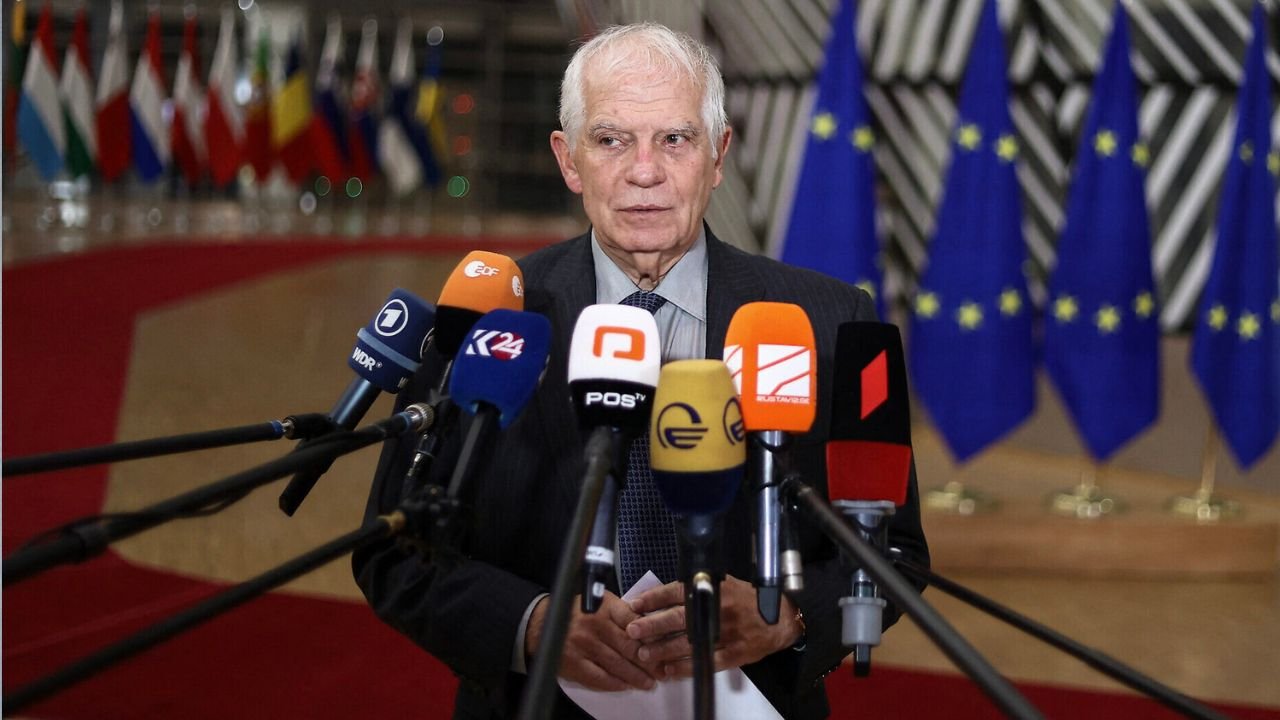
    EU foreign policy chief Josep Borrell said Monday that Israel’s military campaign in Gaza had turned the territory into the world’s biggest “open-air graveyard”.

    “Gaza was before the war the greatest open-air prison. Today it’s the greatest open-air graveyard,” Borrell said at a meeting of EU ministers in Brussels.

    “It’s a graveyard for tens of thousands of people and also a graveyard for many of the most important principles of humanitarian law.”

    Borrell on Monday also reiterated his accusation that Israel was using famine as a “weapon of war” by not allowing aid trucks into Gaza.

    “Israel is provoking famine,” he told a humanitarian conference.

    The Islamist militants also seized about 250 hostages, of whom Israel believes 130 remain in Gaza, including 33 who are presumed dead.

    Israel has carried out a relentless bombing campaign and ground offensive that Gaza’s health ministry says has killed at least 31,726 people, most of them women and children.

    The 27-nation EU has struggled to come up with a united response to the war in Gaza as some members firmly back Israel and others are more pro-Palestinian.

    EU ministers were set to discuss a proposal by Ireland and Spain to suspend a cooperation agreement with Israel, but that move was unlikely to get the support of all 27 countries.

    The bloc was however expected to agree on sanctions both against Hamas for sexual violence on October 7 and against violent Israeli settlers in the West Bank for attacking Palestinians.

    Britain and the United States have already imposed sanctions targeting a small number of “extremist” settlers.

  • EU will not send full observation team for upcoming elections

    EU will not send full observation team for upcoming elections

    The European Union (EU) has told the government of Pakistan that it will not be possible to send a full election observation mission to Pakistan as it did last time in the 2018 elections, The News has reported on Monday.

    The Election Commission of Pakistan (ECP) had invited an EU observation mission for upcoming election on February 8 next year. The EU observation mission has already monitored polls five times in the country.

    In 2018, a team of 10 observers and 60 analysts from the EU visited Pakistan. On Election Day, it deployed a total of 122 observers.

    After that, the mission shared its final report in October 2018 and provided 30 recommendations to make the election process better in the future. The eight recommendations were identified as priorities among  30.

    “Only a small mission of experts will visit Pakistan during the elections in 2024, while no recommendations or political assessments of the voting will be presented to the Pakistan government. The EU will not be sending a full-blown election observation mission. Those need several months in advance to plan and budget for,” EU Ambassador to Pakistan Ms Riina Kionka told The News.

    The ECP has encouraged the Foreign Office to take necessary steps to invite international observers to observe the transparency of the upcoming general elections.

    The ECP also said that it believes in an open-door policy and embraces the presence of an observation team during the forthcoming general elections.

  • EU report highlights rights issues and corruption in Pakistan

    On Tuesday, the European Commission and the European External Action Service (EEAS) jointly revealed a monitoring report on Pakistan’s Generalised Scheme of Preference, or GSP Plus.

    The report expressed concerns about forced disappearances, torture, and limitations on media freedom in Pakistan, which are seen as violations of international treaties.

    It urged Pakistan to enforce laws protecting economic, social, and political rights and raised reservations about the misuse of anti-corruption rhetoric for political purposes.

    Despite civilian rule since 2008, the report highlighted the military’s disproportionate role in politics and the economy.

    Covering 2020–2022, it focused on the May 9 riots and subsequent trials in military courts, recognising legislative progress but emphasising the need for improved practical implementation.

    Furthermore, the report read that although initial measures have been undertaken to limit the application of the death penalty, additional steps are required to bring them in line with international standards.

    This entails introducing a comprehensive revision of the mercy petition procedure.

    “It has undeniably increased awareness of human rights at the grassroots level, of labour rights within businesses and export supply chains and of the significance of environmental considerations and good governance.

    However, the full potential of the GSP+ benefit can only be realised by diversifying Pakistan’s exports to include more value-added products”, remarked EU Ambassador to Pakistan H.E. Dr Riina Kionka about the report.

    Pakistan attained GSP Plus status in January 2014, following the ratification of 27 international conventions and a commitment to their implementation.

    The GSP Plus incentive provides Pakistan with zero-rated or preferential tariffs on nearly 66 per cent of tariff lines, thereby bolstering the country’s capacity to export to the EU market.

  • IMF, EU officers ‘routinely’ visit Khan in jail, claims Pervez Elahi

    IMF, EU officers ‘routinely’ visit Khan in jail, claims Pervez Elahi

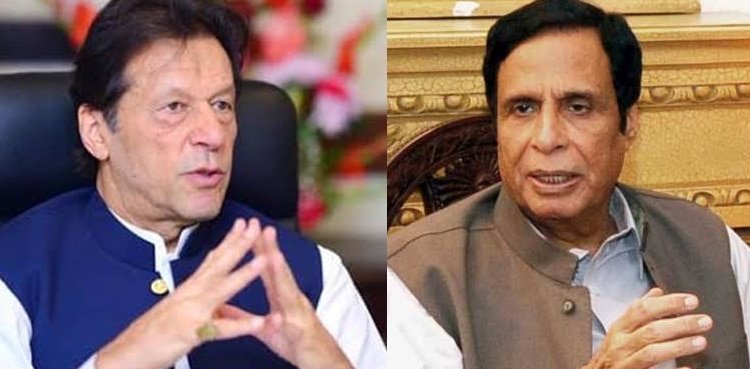
    The incarcerated Preside of Pakistan Tehreek-e-Insaf (PTI), Chaudhry Parvez Elahi, has claimed on Thursday that officers from the International Monetary Fund (IMF) and the European Union “routinely” visit party chief Imran Khan in Adiala jail in Rawalpindi.

    The claim was categorically rejected by the spokesman of Punjab prisons department, declaring it “baseless and against the facts”.

    Speaking to journalists in a courtroom in Lahore, the PTI president said that Imran Khan was locked up in a cell next to his in jail.

    “Representatives from the EU and the IMF [routinely] visit Imran,” he claimed.

    The former chief minister also said, while responding to a question about upcoming elections, that Khan will get unusual votes in the forthcoming polls.

    “There will be no rigging in this election,” he said, adding that the polls’ date was announced at the orders of the top court.

    Chaudhry Parvez Elahi further said that he is with Imran Khan and will continue to support the former prime minister.

  • EU parliament urges Indian PM Modi to protect minorities

    EU parliament urges Indian PM Modi to protect minorities

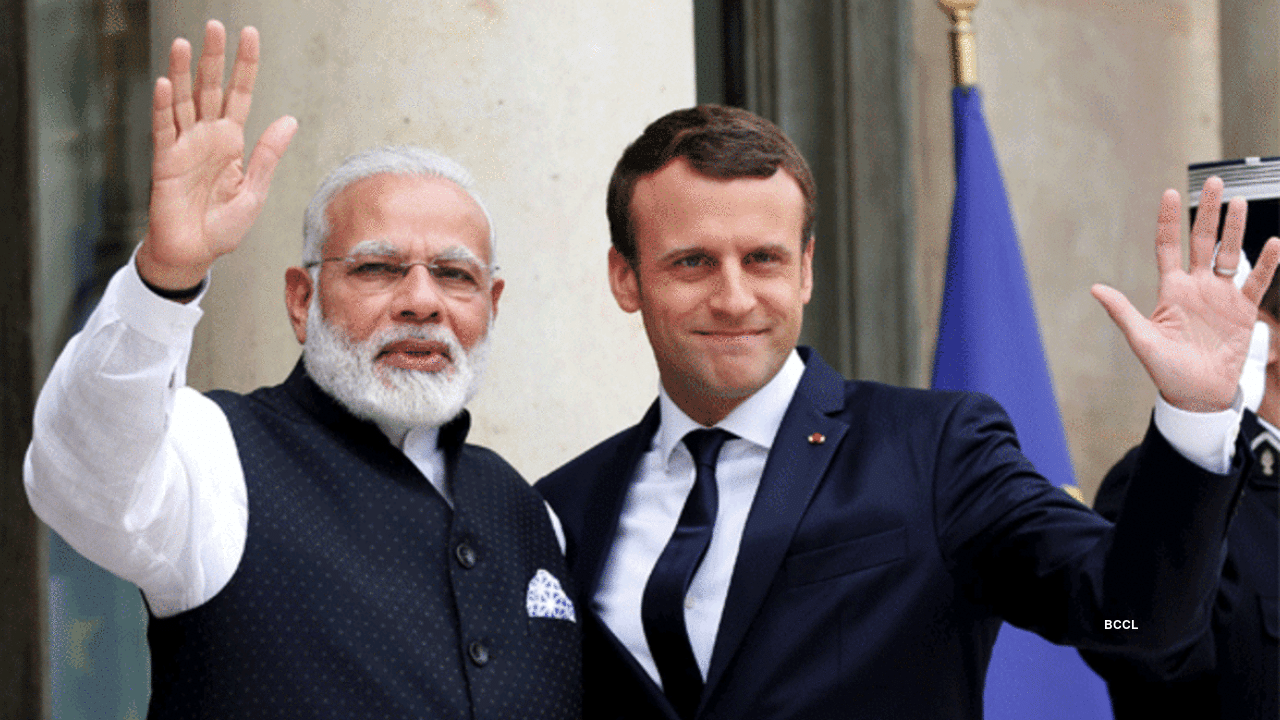
    On Thursday, the European Parliament urged Indian Prime Minister Narendra Modi to end ethnic violence in Manipur, and to do more to protect ethnic and religious minorities in India. Modi is currently on an official visit to France, having been invited to attend the country’s annual Bastille Day national festival as a guest of honour. 

    However, between the ceremony and the diplomatic courting, EU parliamentarians in Strasbourg approved a motion that urged India to end violence in the country’s northeastern Manipur state, and to protect the minorities there. 

    The motion also criticised the ‘national rhetoric’ of the local state government, run by Modi’s right-wing Bharatiya Janata Party (BJP). EU parliamentarian Pierre Larrouturou released a statement on his Twitter, with an accompanying video.

    In his tweet, Larrouturou stated that Modi and Macron can “pretend that everything is going well in India”,however, the EU parliament is recalling facts, and strongly condemns the human rights violations that take place in India.

    “Every day in India, thousands of Muslims, Christians, and members of ethnic minorities see their rights repressed,” the statement read. “To remain silent on the situation would have been a humiliation for all those who fight for their fights and suffer every day from the Hindu nationalism imposed by the Modi government.”

    In May, CNN reported how residents of Manipur say there has been a breakdown of law and order. This was after a spell of violence that left at least 58 dead and tens of thousands more homeless.

    In a speech to the public, Larrouturou went on to point out, “In Manipur, for the past two months, we have seen monstrous violence. Over 120 people have died and 1700 homes have been devastated, 250 churches have been destroyed, 40,000 people have fled for their lives.”

    Despite differences over the war in Ukraine, namely India’s continued support to Russia, as well as tensions over human rights violations in the country, Western democracies are courting Modi and what is currently the world’s most populous country, as a counterweight to China’s influence in Asia.

    India is also one of the largest global buyers of French arms. On Thursday, India approved in principle the purchase of 26 French marine Rafale jets and three Scorpene-class submarines, news agency ANI reported. 

    During Modi’s last visit to Paris in 2015, he announced a landmark deal for 36 Rafale fighter jets worth around €4 billion ($4.48 billion).

  • EU, UNAOC and OIC condemn act of burning Quran

    The European Union (EU), The Organization of Islamic Cooperation (OIC) and the UN Alliance of Civilisations (UNAOC) has condemned the heinous act of burning the Holy Quran in Sweden on on the occasion of Eid-ul-Azha.

    In a statement, the EU has condemned the act, terming it offensive.

    “It is even more deplorable that such act was carried out on the important Muslim celebration of Eid al Azha,” the statement said.

    The OIC in a statement said that such an act contradicted “international efforts to spread the values of tolerance, moderation, and renunciation of extremism.”

    Miguel Moratinos, UNAOC, official said that “such a ‘vile act’ is disrespectful to Muslims.”

    Salwan Momika, an Iraqi living in Sweden, set fire to a copy of the Quran in front of Stockholm’s central mosque

  • Apple may allow third-party app stores on iOS to make the iPhone more open

    Apple may allow third-party app stores on iOS to make the iPhone more open

    To meet EU standards outlined in the Digital Markets and Services Act, Apple intends significant improvements to iOS and other services.

    According to Mark Gurman from Bloomberg, Apple will redesign its platform to “open up key elements,” allowing users of the iPhone and iPad to download applications from third party app stores and websites.

    Only the 27 European Union member states are expected to experience the changes, which would pave the way for a potential expansion of the services to other areas.

    As corporations have time until 2024 to completely comply with the Digital Markets Act, plans for the changes are probably going to launch with iOS 17 in 2023. The implementation also includes adding new web browsing engines to iPhones and iPads as well as expanding access to the NFC chip, camera, Find My Network, and AirTag.

    Gurman noted that even if developers choose not to make their apps available through the App Store, Apple still intends to charge them.

    Both the Digital Markets Act and the Digital Services Act aim to enhance privacy protection, foster fair competition, and do away with some intrusive targeted advertising. The first act, which is meant to provide improved interoperability with less significant competing services, is where Apple’s activities mostly come under.

    Let’s say Cupertino chooses not to follow the regulation when it becomes effective on January 1, 2024. In that situation, regulators may impose a penalty equal to 10 per cent of the entire global turnover, up to 20 per cent for recurrent infractions.

  • Shehbaz meets with world leaders during climate change conference

    Shehbaz meets with world leaders during climate change conference

    Prime Minister (PM) Shehbaz Sharif on Monday attended the inaugural ceremony of the United Nations (UN) Climate Implementation Summit at the coastal city of Sharm El-Sheikh in Egypt.

    The “Sharm El-Sheikh Climate Implementation Summit” is part of the 27th UN Climate Change Conference (COP27).

    The premier separately met with the Presidents of Iraq, Tajikistan and Indonesia Abdul Latif Rashid, Emomali Rahmon, and Joko Widodo, respectively. He also conducted a meeting with Lebanese PM Najib Makati.

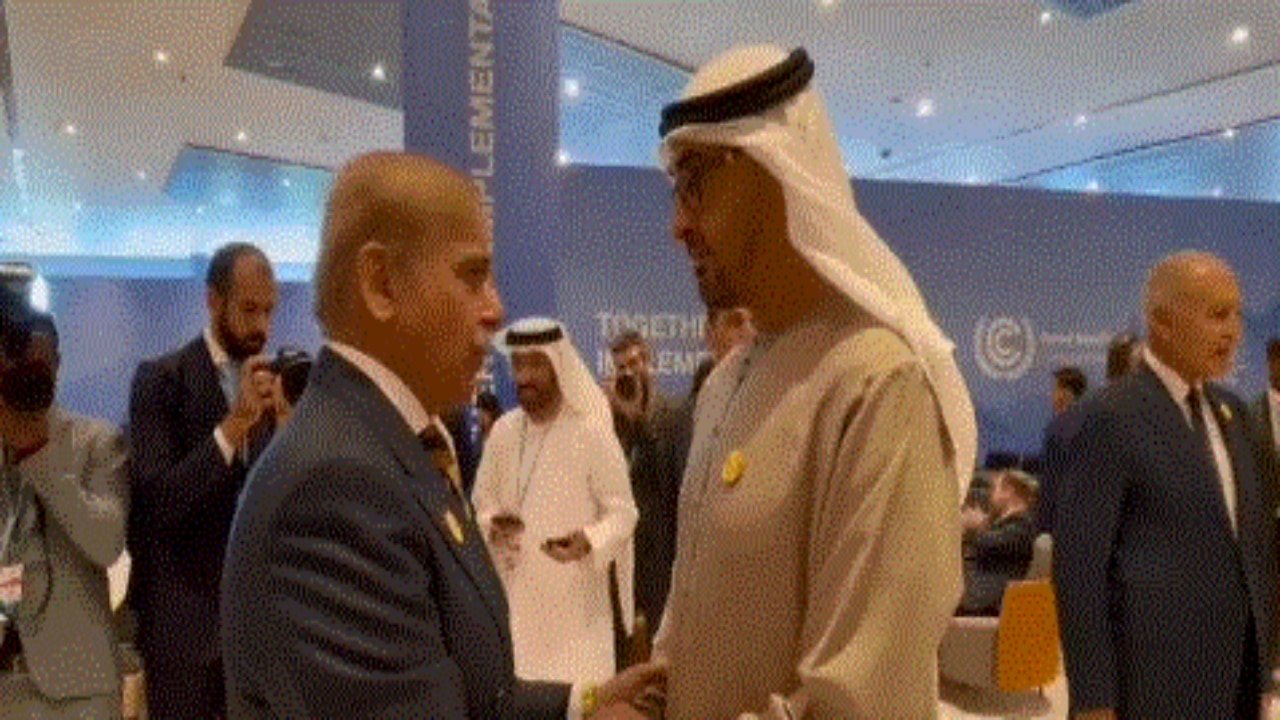
    In his meeting with the President of the United Arab Emirates (UAE) Sheikh Mohammed bin Zayed al-Nahyan, Shehbaz Sharif thanked him for the assistance sent as aid for flood victims.

    In his meeting with the European Union Commissioner Ursula von der Leyen, PM Shehbaz appreciated the spirit of EU nations for their support extended to the flood-hit population of Pakistan. The premier also met with UN chief Antonio Guterres.

    The PM arrived in Egypt on Sunday to participate in the conference that has drawn delegates from 197 countries.

    Before his departure, PM Shehbaz took to Twitter to say that he would raise the matter of the devasting effects of climate change in Pakistan.

    Last month, it was announced that PM Shehbaz would be the vice-chairperson for COP27.

    The conference is taking place at a time when millions of people in Pakistan, and millions more in other parts of the world, are facing severe adverse impacts of climate change.

    For the first time in the history of COP27, the members would discuss whether rich countries should compensate poor nations most exposed to the adverse effects of climate change.

  • Inflation in France hits record-high since 1990s

    Inflation in France hits record-high since 1990s

    Preliminary EU-harmonised statistics indicated that inflation in France surged more than projected in May to a new high, putting additional pressure on President Emmanuel Macron before upcoming legislative elections.

    Consumer prices rose 0.7 per cent in May, for a 12-month inflation rate of 5.8 per cent, up from 5.4 per cent in the last month and the highest rate since France started working on European Union methodology to generate the numbers in the early 1990s, as per the INSEE statistics.

    Inflation was predicted to grow to 5.6 per cent on average, considering a poll of eight economists in a report by Reuters.

    High inflation is at the top of France’s political agenda, and following the elections, Macron’s government has promised a new wave of measures to protect buying power.

    Apart from Malta, France has managed to maintain the inflation lower than the rest of the EU due to a 25 billion euro package of measures that includes, among other things, hefty price limits on gas and electricity.

    Annual inflation in France, as measured by the national consumer price index, climbed to 5.2 per cent in May from 4.8 per cent in April, reaching its highest level since September 1985, according to INSEE.

    This month, economists surveyed by Reuters projected an average growth rate of 5.0 per cent. In France, the national index is regularly monitored, whilst outside the country, the EU-harmonised index is used to assess inflation rates among euro-area nations.