Tag: Euro

  • PKR registers only 0.92% rise against US dollar since the onset of 2024

    PKR registers only 0.92% rise against US dollar since the onset of 2024

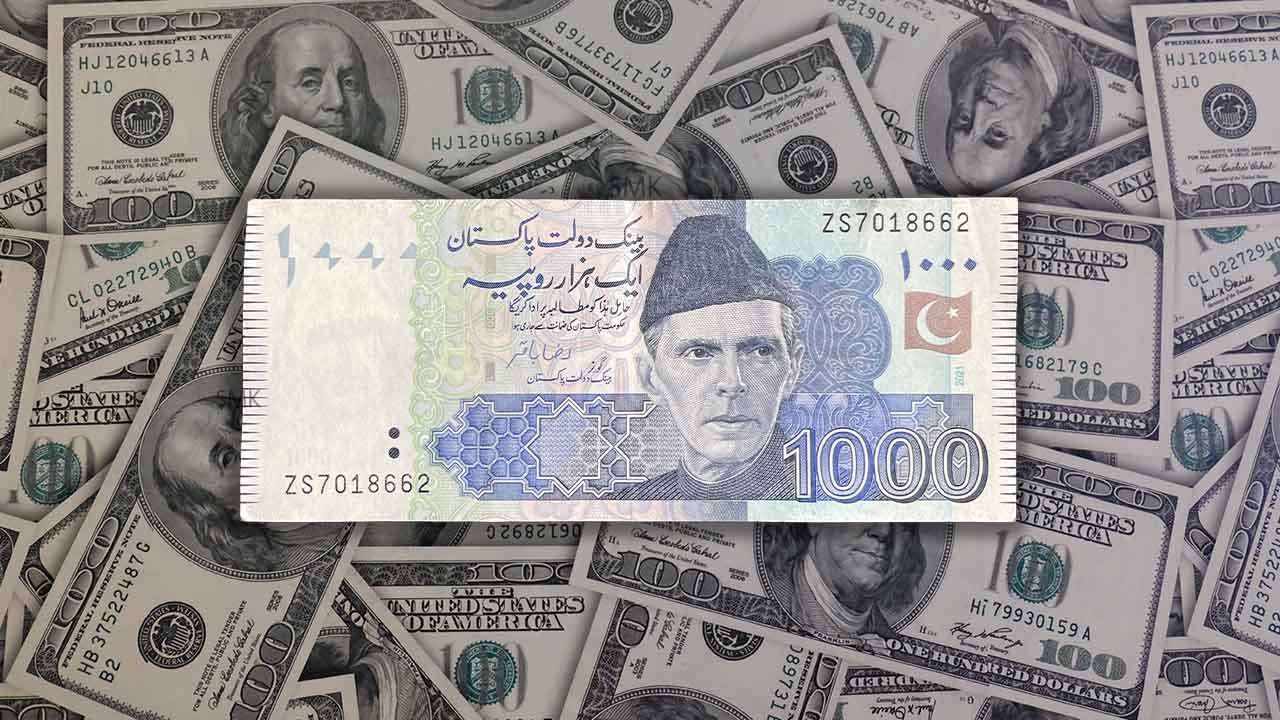
    The Pakistani rupee (PKR) maintained its upward trajectory for the 13th consecutive week, gaining 12.88 paisa against the US dollar and settling at PKR 279.28 per USD.

    This positive momentum marks a notable shift from the previous week’s closing rate of PKR 279.41 per USD.

    Analysing the broader financial trends, the PKR has appreciated against the US dollar by 6.71 rupees, or 2.4 per cent, during the current financial year. Looking at the calendar year, the PKR has shown a gain of 2.58 rupees, or 0.92 per cent.

    Friday’s trading session witnessed the PKR displaying strength as it appreciated by over 6 paisa. The intraday high (bid) reached 279.9, while the low (ask) touched 279.6, showcasing the currency’s resilience in the face of market fluctuations.

    In the open market, exchange companies quoted buying rates at 278.89 and selling rates at 281, contributing to the overall positive sentiment surrounding the PKR.

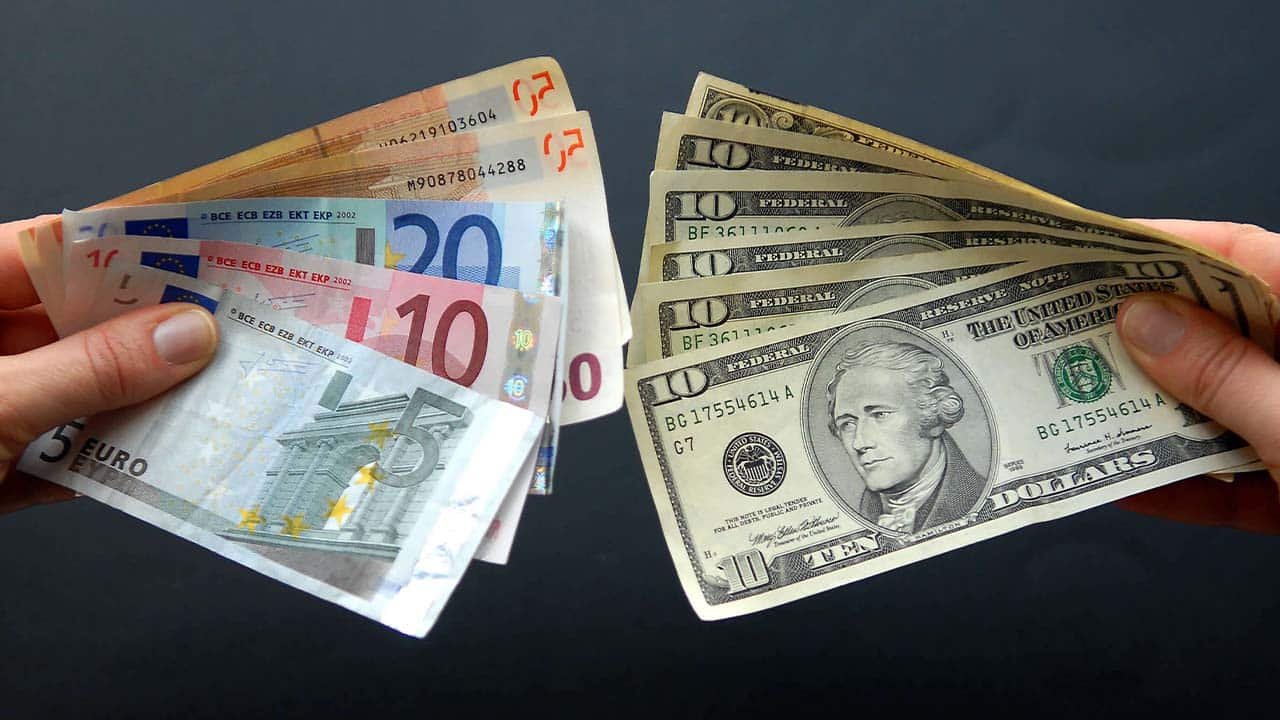
    Comparatively, against major currencies, the PKR experienced a marginal loss of 26.91 paisa against the Euro, closing at 300.87.

    Meanwhile, the British Pound became more affordable by 20.31 paisa, closing at 352.33. The Swiss Franc saw a decline of 1.59 rupees, closing at 318.89, and against the Japanese Yen, the PKR gained 1.71 paisa, closing at 1.8695.

    In the global currency market, the Chinese Yuan lost 0.4 paisa, closing at 38.82, while the Saudi Riyal closed at 74.47, experiencing a marginal loss of 1.43 paisa. The U.A.E. dirham also saw a decrease in value of 1.57 paisa, settling at 76.05.

    Shifting focus to the money market, the benchmark 6-month Karachi Interbank bid and offer rates experienced a 9 basis point increase, reaching 21.05 per cent and 21.3 per cent, respectively.

    This upward movement in yields follows the State Bank of Pakistan (SBP) maintaining the policy rate at 22 per cent for the fifth consecutive meeting, contributing to the evolving financial landscape.
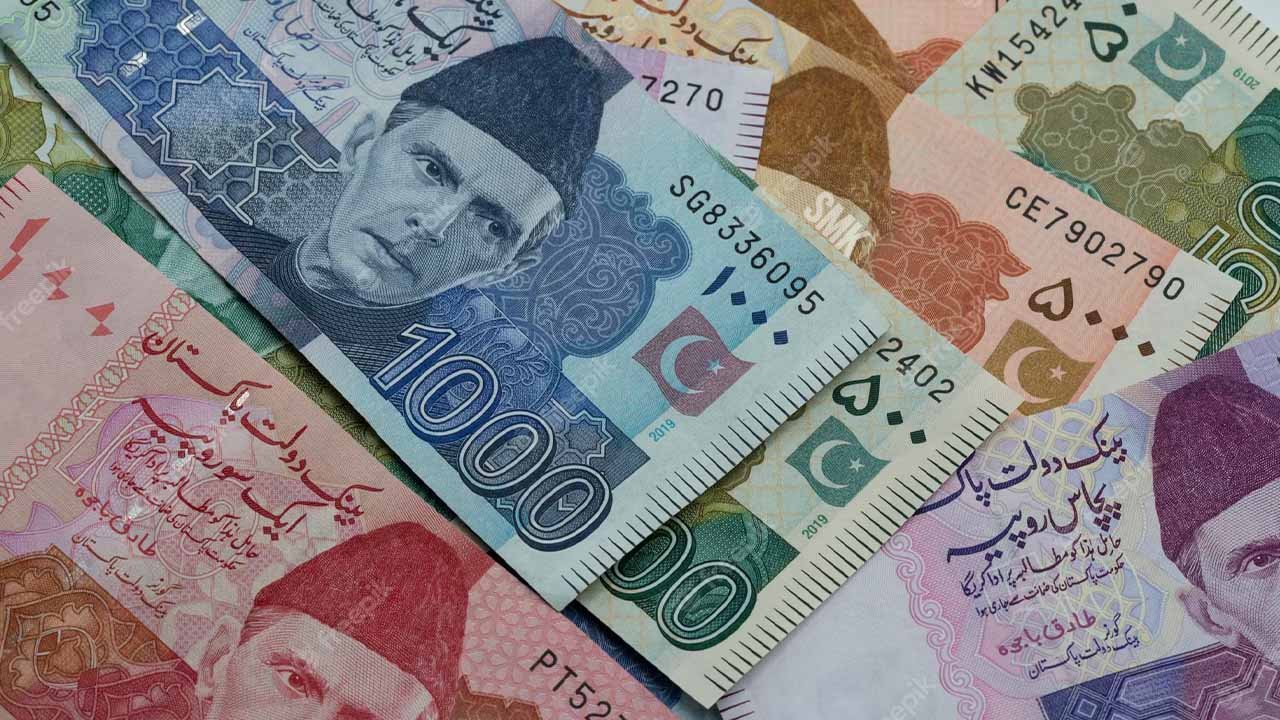
  • Pakistani rupee continues to gain ground against major currencies

    Pakistani rupee continues to gain ground against major currencies

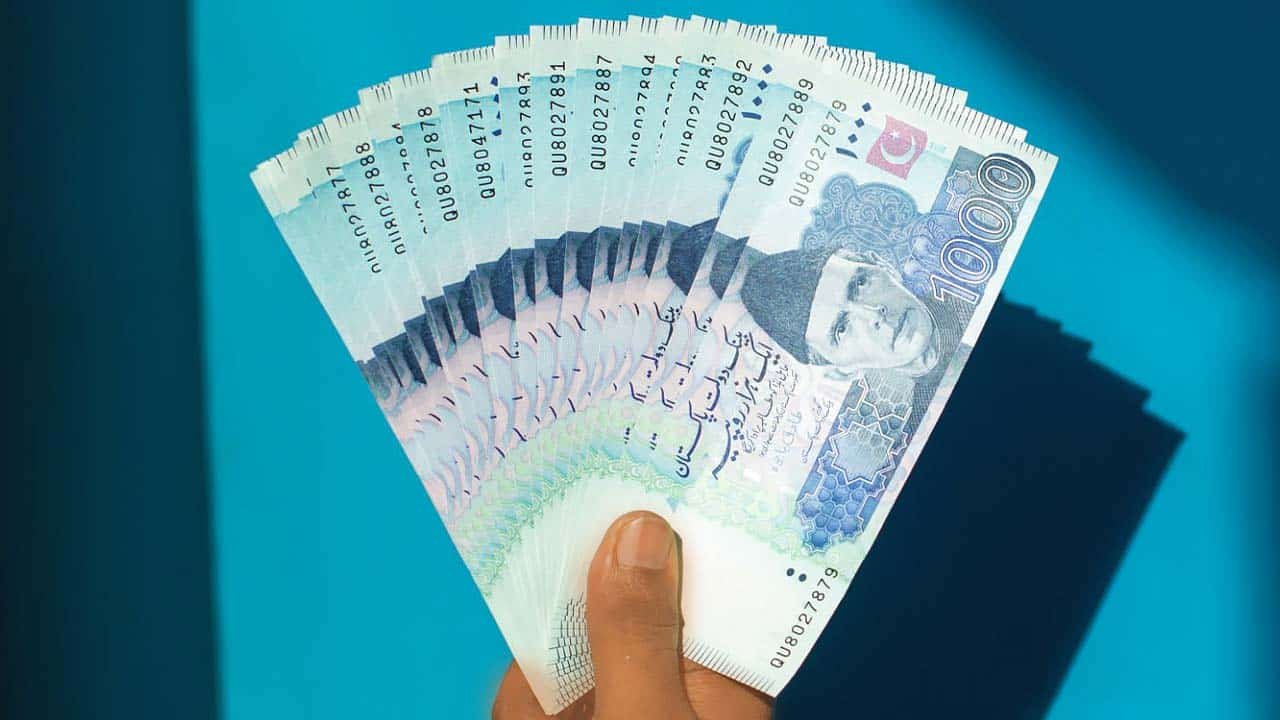
    In Tuesday’s interbank session, the Pakistani rupee (PKR) demonstrated resilience against the US dollar (USD), settling the trade at PKR 280.25 per USD.

    This maintained a stable position compared to the previous session’s closing rate of PKR 280.24 per USD.

    Throughout the day, the currency experienced an intraday high (bid) of Rs280.6 and a low (ask) of Rs280.1.

    In the open market, Exchange Companies quoted the US dollar at Rs279 for buying and Rs281 for selling.

    Notably, the PKR celebrated its 9th consecutive weekly victory, appreciating by 1.04 rupees against the US dollar last week.

    This positive trend can be attributed to various factors, including increased liquidity in the foreign exchange market, tighter enforcement of regulations, a reduction in the money supply, a balance of payments surplus due to low import demand, and a moratorium on Chinese debt repayments.

    In comparison to major currencies, the PKR exhibited strength by gaining 1.17 rupees against the Euro, closing at Rs305.92 in contrast to the previous value of Rs307.09.

    The British Pound became more affordable by Rs2.15, concluding at Rs355.06 compared to Rs357.21 from the previous day.

    The Swiss franc experienced losses of 2.48 rupees, closing at Rs326.23 as opposed to Rs328.71 in the previous session.

    Against the Japanese Yen, the PKR gained 0.96 paisa, closing at Rs1.9181 versus Rs1.9277 a day ago.

    Meanwhile, the Chinese Yuan saw a slight decline, losing 6 paisa and closing at Rs39.01 against Rs39.07 from the previous session.

  • PKR appreciates 15.82 paisa to close at Rs282.37 against USD

    PKR appreciates 15.82 paisa to close at Rs282.37 against USD

    In Tuesday’s interbank session, the Pakistani rupee (PKR) strengthened by 15.82 paisa against the US dollar (USD), concluding the trade at PKR 282.37 per USD—improved from the previous closing of PKR 282.53 per USD. 

    The Pakistani currency experienced intraday fluctuations, reaching a high bid of Rs282.8 and a low ask of Rs282.4.

    Within the open market, Exchange Companies quoted the dollar at Rs282 for buying and Rs284.8 for selling. 

    Against major currencies, the PKR depreciated by 46.13 paisa against the Euro, closing at Rs311.27, compared to the prior value of Rs310.81. 

    The British Pound became more affordable by 17.27 paisa, closing at Rs358.48, in contrast to Rs358.66 from the preceding day.

    The Swiss franc demonstrated gains of 4.63 paisa, concluding at Rs329.89, a slight increase from Rs329.84 in the previous session. 

    Against the Japanese Yen, the PKR gained 0.23 paisa, settling at Rs1.9841 as opposed to Rs1.9864 a day ago. 

    The Chinese Yuan experienced a decline of 3.37 paisa, closing at Rs39.52 compared to Rs39.55 in the previous session.

    The Saudi Riyal concluded at Rs75.27, indicating a loss of 4.32 paisa from its previous value of Rs75.31. 

    Simultaneously, the UAE Dirham decreased by 4.73 paisa, transitioning from Rs76.89 a day ago to Rs76.93.

  • Interbank closing: Pakistani rupee gains 10 paisa against US dollar

    Interbank closing: Pakistani rupee gains 10 paisa against US dollar

    The Pakistani rupee (PKR) demonstrated resilience for the third consecutive session against the US dollar (USD), marking a 0.04 per cent appreciation in the interbank market on Thursday, according to the State Bank of Pakistan (SBP).

    The PKR settled at Rs283.51 after an increase of Rs0.10. This positive trend follows Wednesday’s marginal gain, where the rupee settled at Rs283.61 against the USD.

    In contrast to major currencies, the local currency experienced a loss of Rs2.64 against the Euro, closing at Rs308.49 compared to the previous value of Rs305.85.

    The British Pound strengthened by Rs2.91, concluding at Rs357.96 in comparison to Rs355.05 from the preceding day.

    The Swiss franc also witnessed gain of Rs1.46, closing at 325.35 compared to Rs323.89 in the previous session.

    Against the Japanese yen, PKR lost 5.23 paisa, settling at Rs1.9972 versus Rs1.9449 a day ago.

    In the ongoing financial year, the PKR has appreciated against the dollar by Rs2.48, or 0.87 per cent.

    However, in the current calendar year, it has depreciated by Rs57.08, or 20.13 per cent.

    In a related development, the Asian Development Bank (ADB), in its latest report, Asian Development Outlook (ADO), highlighted that Pakistan’s overall recovery is still constrained by moderate confidence and high inflation eroding purchasing power.

    The ADB noted that Pakistan’s inflation rate averaged 28.5 per cent over July–October but is expected to ease amid fiscal consolidation, monetary tightening, and improved availability of food and key imported inputs.

  • One Euro is equal to one US dollar for the first time in 20 years

    One Euro is equal to one US dollar for the first time in 20 years

    The euro reached its lowest level in more than 20 years by 10:00 GMT on Tuesday, falling to $1.

    The stock markets declined as a result of the euro’s parity with the dollar and the possibility of additional central bank tightening as well as concerns over the global economy’s stability.

    Recent weeks have seen the US dollar soar to two-decade highs against a variety of other currencies, strengthening its position as the preferred currency for investors concerned about the economic outlook.

    A continuing rise in natural gas prices’ impact on the local economy as well as the conflict in Ukraine have made the euro particularly vulnerable. The European Central Bank has lagged behind competitors in increasing interest rates.

    The move towards parity, according to Mizuho analysts, is taking place as “the downturn in the eurozone is priced in,” and the overall environment does not appear to be improving risk sentiment.

    For the European Union, this is a “catastrophe,” according to SG Futures, as energy imports may become more expensive.

    “Energy supply is already unaffordable and as we head into winter it’ll likely get even worse,” it added on a tweet.

    The dollar index has been moving higher as a result of the euro’s weakness, as well as concerns about global economic growth as China, in particular, enforces strict zero-COVID policies to control new outbreaks.

    The presumption that the Federal Reserve will raise rates faster and further than peers is, however, arguably the main reason for the dollar’s increase.

  • International oil prices declined by 4%, crashing below $100 per barrel

    International oil prices declined by 4%, crashing below $100 per barrel

    Brent crude slid below $100 for the first time since March 16 amid plans to release huge amounts of petroleum and oil products from strategic storage, and also China’s prolonged coronavirus closure.

    Crude oil was down $4.1, or 3.99 per cent, at $98.68 per barrel. The price of US West Texas Intermediate (WTI) crude fell $4.28 a barrel, or 4.28 per cent, to $94.07 per barrel.

    The International Energy Agency (IEA) recently announced that member countries will release 60 million barrels over the next six months, with the United States matching that amount as part of its 180-million-barrel release announced in March.

    The actions are meant to make up for a shortfall of Russian crude after Moscow was extensively sanctioned for what it claims was a “special military operation” in Ukraine.

    As per JP Morgan analysts, the release of Strategic Petroleum Reserve (SPR) volumes will amount to 1.3 million barrels per day (BPD) over the next six months, enough to cover a 1 million BPD shortfall in Russian oil supplies.

    The release of strategic government oil reserves is projected to relieve some market tightness in the coming months, reducing the likelihood of oil prices rising and re-enforcing near-term supply constraints.

    While this is the largest release since the IEA stockpile was established in 1980, market participants believe it will fail to affect the principles of the oil market and will just delay further increases in production from crucial suppliers.