Tag: Exchange rates

  • Interbank closing: Pakistani rupee gains 10 paisa against US dollar

    Interbank closing: Pakistani rupee gains 10 paisa against US dollar

    The Pakistani rupee (PKR) demonstrated resilience for the third consecutive session against the US dollar (USD), marking a 0.04 per cent appreciation in the interbank market on Thursday, according to the State Bank of Pakistan (SBP).

    The PKR settled at Rs283.51 after an increase of Rs0.10. This positive trend follows Wednesday’s marginal gain, where the rupee settled at Rs283.61 against the USD.

    In contrast to major currencies, the local currency experienced a loss of Rs2.64 against the Euro, closing at Rs308.49 compared to the previous value of Rs305.85.

    The British Pound strengthened by Rs2.91, concluding at Rs357.96 in comparison to Rs355.05 from the preceding day.

    The Swiss franc also witnessed gain of Rs1.46, closing at 325.35 compared to Rs323.89 in the previous session.

    Against the Japanese yen, PKR lost 5.23 paisa, settling at Rs1.9972 versus Rs1.9449 a day ago.

    In the ongoing financial year, the PKR has appreciated against the dollar by Rs2.48, or 0.87 per cent.

    However, in the current calendar year, it has depreciated by Rs57.08, or 20.13 per cent.

    In a related development, the Asian Development Bank (ADB), in its latest report, Asian Development Outlook (ADO), highlighted that Pakistan’s overall recovery is still constrained by moderate confidence and high inflation eroding purchasing power.

    The ADB noted that Pakistan’s inflation rate averaged 28.5 per cent over July–October but is expected to ease amid fiscal consolidation, monetary tightening, and improved availability of food and key imported inputs.
  • State Bank of Pakistan maintains 22% policy rate in line with market consensus

    State Bank of Pakistan maintains 22% policy rate in line with market consensus

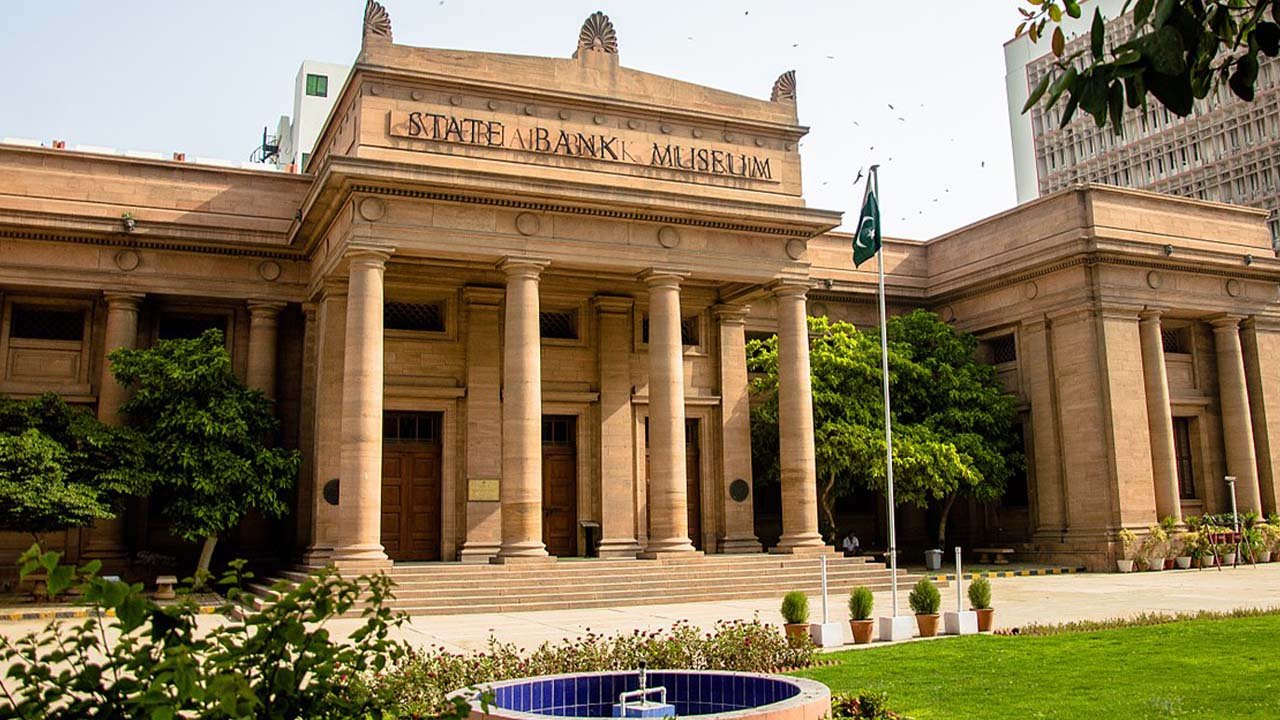
    Following the consensus in the broader market, the Monetary Policy Committee (MPC) of the State Bank of Pakistan (SBP) announced on Monday that it would maintain the key policy rate at 22 per cent, as stated in their press release.

    The Committee recognised that headline inflation, as expected, increased in September 2023 but anticipates a decline in October, followed by a sustained decrease, particularly in the latter half of the fiscal year.

    While the MPC acknowledged potential risks to the FY24 inflation outlook and the current account due to recent global oil price volatility and forthcoming gas tariff increases in November 2023, they also identified mitigating factors.

    These factors include targeted fiscal consolidation in the first quarter, enhanced availability of crucial commodities in the market, and the alignment of interbank and open market exchange rates.

    The MPC emphasised that the real policy rate, looking forward over a 12-month horizon, remains significantly positive.

    This is deemed appropriate to achieve the medium-term inflation target of 5-7 per cent by the end of FY25, contingent upon the sustained fiscal consolidation and timely realisation of planned external inflows, as articulated in the MPC statement.

  • Pakistani rupee declines by 48 paisa, closing at Rs280.57 against US dollar

    Pakistani rupee declines by 48 paisa, closing at Rs280.57 against US dollar

    In the financial markets this week, the Pakistani rupee (PKR) experienced a depreciation of 1.78 rupees against the US dollar (USD), closing the week’s trade at PKR 280.57.

    This marks a significant shift from the previous week’s closing rate of PKR 278.8 per USD.

    During today’s trading session, the local currency saw a decline of 48.1 paisa. The intraday high (bid) was recorded at Rs280.5, while the low (ask) reached Rs280.15 against the US dollar.

    In the open market, exchange companies quoted the US dollar at Rs279.5 for buying and Rs292.8 for selling, indicating a loss of 50 paisa compared to the previous closing rates of Rs279 for buying and Rs282 for selling.

    This decline against the US dollar signifies the second consecutive weekly decrease for the Pakistani rupee. In comparison to other major currencies, the PKR experienced fluctuations as well.

    Against the Euro, the PKR depreciated by 64.78 paisa, closing at Rs296.17 compared to the previous value of Rs295.53.

    The British Pound became more expensive by 1.21 rupees, closing at Rs339.94 in contrast to Rs338.73 from the previous day.

    PKR lost 0.69 paisa against the Japanese yen, closing at Rs1.869 versus Rs1.862 the previous day.

    The UAE dirham also increased in value by 12.89 paisa from Rs76.257 to Rs76.386.

    It’s noteworthy that during the current financial year, the PKR has appreciated against the dollar by Rs5.42, or 1.93 per cent.

    However, in the current calendar year, PKR has depreciated by 54.14 rupees, or 19.3 per cent.

    This dynamic market movement reflects the ongoing economic fluctuations in the country.

  • Pakistani rupee finally ends 28-day winning streak, loses against US dollar

    Pakistani rupee finally ends 28-day winning streak, loses against US dollar

    The Pakistani rupee’s remarkable 28-day winning streak against the US dollar came to an end today, as it recorded losses following an initial trade opening at Rs278.5 in the interbank market.

    In the morning, the rupee had steadied, maintaining a level of Rs276 against the greenback. Subsequently, between 1:00 PM and 2:35 PM, the interbank rate dipped to Rs278 before settling at Rs277 for the rest of the day. 

    Open market rates, observed across various currency exchange counters, ranged from Rs277 to Rs279 throughout the day.

    At the close of the trading day, the PKR experienced a depreciation of 0.07 per cent, concluding at Rs277.03 after losing 20 paisas against the US dollar.

    Despite today’s setback, it is noteworthy that the disparity between interbank and open market rates has significantly decreased by Rs60 since September 4th. The rates have fluctuated between as low as Rs277 and sporadic spikes up to Rs280 today.

  • Pakistani rupee appreciates by Rs5.07 against US dollar in five days 

    Pakistani rupee appreciates by Rs5.07 against US dollar in five days 

    The Pakistani rupee (PKR) showed a notable increase in value against the US dollar (USD), appreciating by 5.07 PKR in five days to reach a closing rate of 277.62 PKR per USD on Friday. This stands in contrast to the previous week’s closing rate of 282.69 PKR per USD.

    In today’s interbank trading session, the local currency exhibited a gain of 96 paisa. It reached an intraday high (bid) of 278.5 PKR and a low (ask) of 287.55 PKR.

    In the open market, exchange companies adjusted their rates, with the rupee strengthening by 1 PKR. These companies quoted the dollar at 274 PKR for buying and 277 PKR for selling, as opposed to the prior rates of 275 PKR for buying and 278 PKR for selling.

    This increase in the value of the rupee can be attributed to several factors. Notably, there has been a concerted effort, backed by the military, to curtail illegal outflows of US dollars from the country.

    Additionally, the government has implemented various measures aimed at bolstering the local currency.

    Addressing concerns related to Afghan transit trade, Pakistan’s Ministry of Commerce recently took a significant step by imposing a ban on 212 items that were previously imported into Afghanistan through Pakistan under the Afghan transit trade agreement.

    This move, enacted through a Statutory Regulatory Order (SRO) issued on October 3, was executed in accordance with the authority granted by the Imports and Exports (Control) Act of 1950.

    Furthermore, the Federal Board of Revenue (FBR) has imposed a 10% processing fee on five key categories of Afghan transit commercial goods imported into Afghanistan via Pakistan.

    In parallel, the State Bank of Pakistan has introduced recent reforms aimed at consolidating and redefining various types of exchange companies into a single category. These changes come with well-defined mandates and higher capital requirements, ultimately contributing to a more transparent financial landscape.

  • SBP reports $112 million increase in workers’ remittances

    SBP reports $112 million increase in workers’ remittances

    In September 2023, Pakistan experienced a notable surge in workers’ remittances, marking a 5.3 per cent increase compared to August 2023.

    This uptick can be primarily attributed to a crackdown on the informal money transfer systems known as hawala and hundi.

    According to the State Bank of Pakistan (SBP), the country received remittances amounting to $2.206 billion in September 2023, up from $2.094 billion in August 2023, equating to a $112 million rise.

    The majority of remittance inflows for September 2023 were derived from several key sources, with Saudi Arabia contributing $538.2 million, the United Arab Emirates $400 million, the United Kingdom $311.1 million, and the United States of America $263.4 million.

    This increase in remittances can be linked to the fact that a substantial number of Pakistani expatriates resorted to using the Hawala/Hundi channels during the initial two months of the fiscal year, largely due to a significant disparity between official and unofficial exchange rates.

    Subsequently, strict enforcement measures against illegal currency dealers have curbed this volatility, leading to a gradual appreciation of the Pakistani rupee in both the interbank and open currency markets.

    In the last month, the rupee has rebounded by 9 per cent, recovering from its record low of 307.1 against the dollar on September 5. The crackdown on these illicit currency dealers has also contributed to the 5 per cent month-on-month increase in remittances for September.

    However, when examining the entire first quarter of fiscal year FY24, the overall home remittances to Pakistan have experienced a sharp decline of 20 per cent, totalling $1.57 billion. Home remittances for the July-September period of FY24 amounted to $6.33 billion, a decrease from $7.90 billion during the same period in the previous fiscal year, FY23.

    During this initial quarter, remittances from all major sources displayed a downward trajectory. Specifically, home remittances from Saudi Arabia decreased by 22 per cent to $1.516 billion for July–September in FY24, down from $1.946 billion in the equivalent period in FY23.

  • US dollar hits six-month low against Pakistani currency 

    US dollar hits six-month low against Pakistani currency 

    The Pakistani rupee (PKR) has been on an upward trajectory, with the US dollar (USD) experiencing its lowest value in six months.

    This development follows a concerted effort to combat dollar smuggling, resulting in a decrease of Rs5.50 in interbank trading this week. The greenback concluded the week at Rs282.69.  

    In the open market, the US dollar saw a significant drop of 6.50 rupees, closing at Rs281.50, down from Rs288.

    This decline has been a consistent trend in recent weeks, starting from the beginning of September, when the US currency has been steadily losing ground against the Pakistani rupee.  

    Notably, other foreign currencies have also seen a decrease in their value within the currency market. Over the past week, the Euro fell by 8 rupees, going from Rs306 to Rs298. Similarly, the British Pound Sterling lost Rs5, reaching a rate of Rs248 from its previous Rs253.

    The Saudi Riyal experienced a modest decrease of one rupee, moving from Rs76.20 to Rs75.20, while the Emirates dirham shed Rs2.60 to settle at Rs77.20, down from its previous rate of Rs79.80 over the weekend.  

    This strengthening of the Pakistani rupee against the US dollar in the open market has occurred while maintaining a narrow gap with the interbank market, aligning with the limits stipulated by the International Monetary Fund (IMF).  

    This positive trend in the rupee’s value against the dollar can be attributed to a nationwide crackdown on illegal currency operations carried out by law enforcement agencies. 

  • Pakistani currency strengthens amid crackdown on smuggling

    Pakistani currency strengthens amid crackdown on smuggling

    The Pakistani rupee continued its upward trajectory against the US dollar, registering a 0.6 per cent appreciation in the inter-bank market on Monday.

    At precisely 2:15 pm, the rupee was quoted at Rs301.10, marking a notable increase of Rs1.85 within the inter-bank market.

    In the preceding week, the rupee exhibited a 0.83 per cent gain, concluding at 302.95 in its exchange rate against the US dollar within the inter-bank arena. However, this performance is only part of a larger narrative, as the gap between the inter-bank and open market rates underwent a substantial reduction.

    This shift occurred in conjunction with reported measures taken to combat smuggling and speculative activities, leading to a remarkable turnaround for the currency after it had reached a record low just the previous Tuesday.

    The State Bank of Pakistan’s (SBP) initiative to fortify controls over Exchange Companies, coupled with reports of the army chief’s intervention and the deployment of law-enforcement personnel at currency dealer outlets, played pivotal roles in the rupee’s resurgence.

  • Open market: PKR gains Rs30 against US dollar in just four days

    Open market: PKR gains Rs30 against US dollar in just four days

    The Pakistani rupee (PKR) has shown remarkable strength, appreciating by 4 rupees against the US dollar (USD) in the open market, with current quotes at 301/305 around noon. In just four days, the PKR gained an impressive 30 rupees (9.97 per cent), moving from PKR 331 to PKR 301 against the USD.

    Simultaneously, in the interbank market, PKR appreciated by 2 rupees in today’s session, quoted at 302.74/302.84, following a similar gain in the previous interbank session, reducing the gap between the interbank and open market to 0.57 per cent.

    This surge in the local currency is attributed to reforms by the State Bank of Pakistan (SBP) in the exchange companies sector. These reforms aim to consolidate exchange companies into a single category with a well-defined mandate and higher capital requirements, also encouraging banks to establish wholly owned exchange companies.

    An ongoing crackdown against speculators, hoarders, and smugglers has further boosted sentiment, reducing the disparity between the open market and interbank rates below the IMF’s recommended threshold.

    The black market for Hawala/Hundi has also seen a significant decline in dollar rates. Previously, rising demand for dollars due to speculation and smuggling had widened the gap between open market and interbank rates, exceeding IMF recommendations.

    The government’s initiatives effectively curb speculative activities in the open market without interbank intervention. Further improvements are expected if similar measures are taken against gold smuggling, as individuals may opt for smuggled gold investments in the absence of dollar access.

  • Pakistani rupee declines to new historic low of Rs299 per US dollar

    Pakistani rupee declines to new historic low of Rs299 per US dollar

    The Pakistani rupee continued its downward trend on Tuesday, closing at an all-time low of Rs299.0070 against the US dollar. This represents a decline of 0.63 per cent or Rs1.873.

    On Monday, the rupee continued to struggle against the US dollar, closing at Rs297.13. This drop in value is due to several reasons. One is the country’s current account deficit, which has widened because it’s now easier to open letters of credit. This change has affected the availability of foreign exchange, putting pressure on the rupee’s value in the local market.

    Another factor is the lack of foreign exchange coming into the country. This shortage has also contributed to the rupee’s decline.

    Experts say that the increase in import payments is tied to the International Monetary Fund’s (IMF) demand to remove import restrictions. This has led to a higher demand for the US dollar.

    Political uncertainty is also playing a role in the rupee’s decline. There are concerns that the general elections might be delayed. This delay could also mean a hold-up in fulfilling promises made to the IMF and other international lenders. With a caretaker government in place, questions arise about who will invest in and lend money to the country.

    To add to these challenges, there’s a need to bridge the gap between the rates in the inter-bank and open markets, which has been getting wider lately.