Tag: Exchange rates

  • Remittances to Pakistan decline by 19.3% to $2 billion in first month of fiscal year

    Remittances to Pakistan decline by 19.3% to $2 billion in first month of fiscal year

    Pakistan has experienced a notable decline in remittances during the first month of the current fiscal year, as data released by the central bank reveals a year-on-year drop of 19.3 per cent, amounting to $2 billion. This concerning trend was further accentuated by a month-on-month reduction of 7.3 per cent.

    In the month of July, remittance inflows from Pakistanis residing abroad amounted to $2.2 billion. The distribution of these remittances showed that Saudi Arabia held the top spot with a contribution of $486.7 million, followed by the United Arab Emirates with $315.1 million. The United Kingdom and the United States of America followed closely with $305.7 million and $238.1 million, respectively.

    Economic analysts anticipated this decline in remittances for the month of July, given the post-Eid ul Adha period. The reduction was expected, as Pakistani expatriates tend to increase their cash transfers back home during festive seasons. Interestingly, it seems that some of these remittance inflows have been diverted to the grey market due to more favourable exchange rates for dollars.

    Samiullah Tariq, the head of research at Pak-Kuwait Investment Company, shed light on this shift: “In my view, as this was the month after Eid ul Adha, flows were relatively subdued. Some Pakistanis are opting for unofficial channels to transfer money.” The continuous devaluation of the Pakistani currency is also impacting investment sentiment among overseas Pakistanis, discouraging them from contributing more significantly to the economy.

    The recent release of these remittance statistics coincides with the International Monetary Fund’s (IMF) approval of a $3 billion bailout package for Pakistan. The nation’s economy had been teetering on the edge of default due to mounting debt obligations. Governor Jameel Ahmad of the State Bank of Pakistan (SBP) reassured that the SBP remains committed to upholding its obligations, including maintaining a controlled difference between the interbank and open market exchange rates, as specified in the agreement with the IMF.

    Fahad Rauf, the head of research at Ismail Iqbal Securities, voiced his concern over the decline in remittances: “The extent to which remittances have declined is indeed worrying. Unofficial channels offering higher rates have played a role in this scenario.” He also highlighted the SBP’s efforts to attract more remittances through proposed changes in incentive schemes, including a 50 per cent increase in the reimbursement rate for Saudi Riyal conversions.

    The SBP’s latest monetary policy statement forecasts the current account deficit for fiscal year 2024 to range between 0.5 per cent and 1.5 per cent of the gross domestic product. This projection takes into account both evolving domestic and global economic conditions. The SBP remains optimistic about the prospects of multilateral and bilateral inflows following the IMF’s stand-by arrangement, which is expected to bolster external buffers and address short-term external financing requirements.

    As the nation navigates through these challenges, the market-determined exchange rate will continue to play a pivotal role as the first line of defence against external shocks, further supporting the buildup of reserves. With a cautious eye on global commodity prices and a moderate domestic economic recovery, Pakistan aims to manage its imports and strengthen its economic stability.
  • US dollar surges against Pakistani rupee for eighth consecutive day in interbank market

    US dollar surges against Pakistani rupee for eighth consecutive day in interbank market

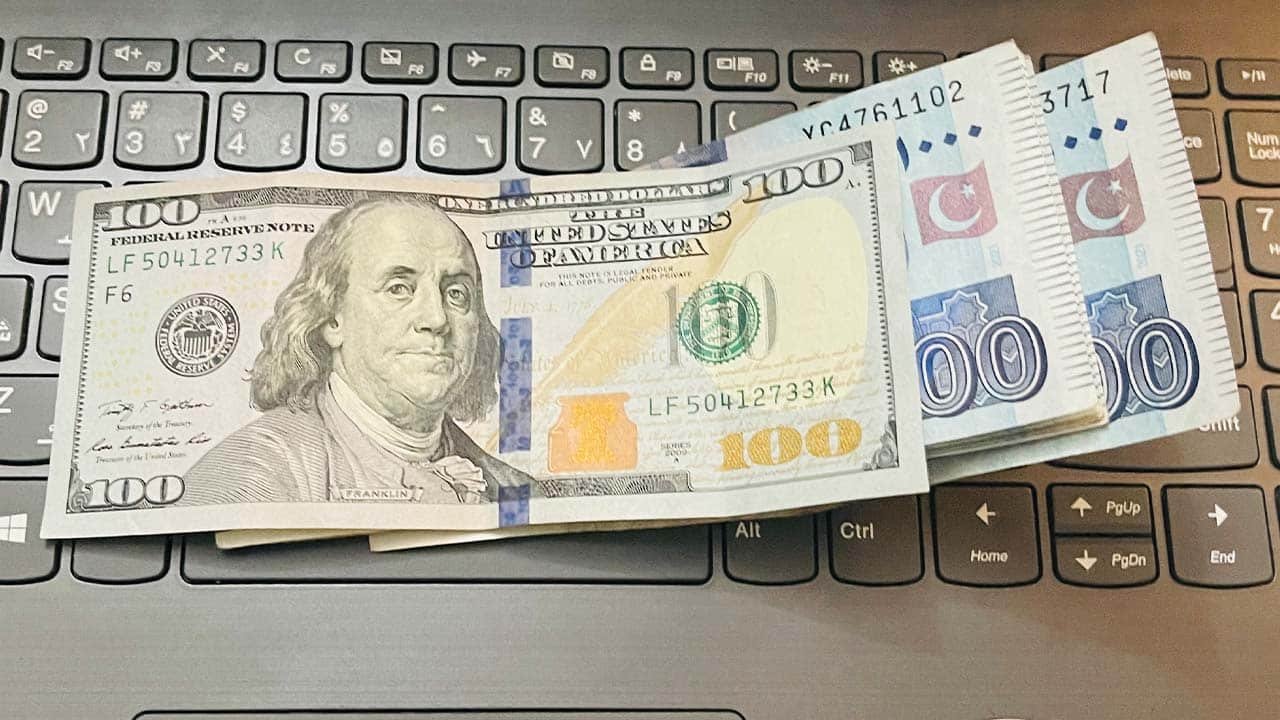
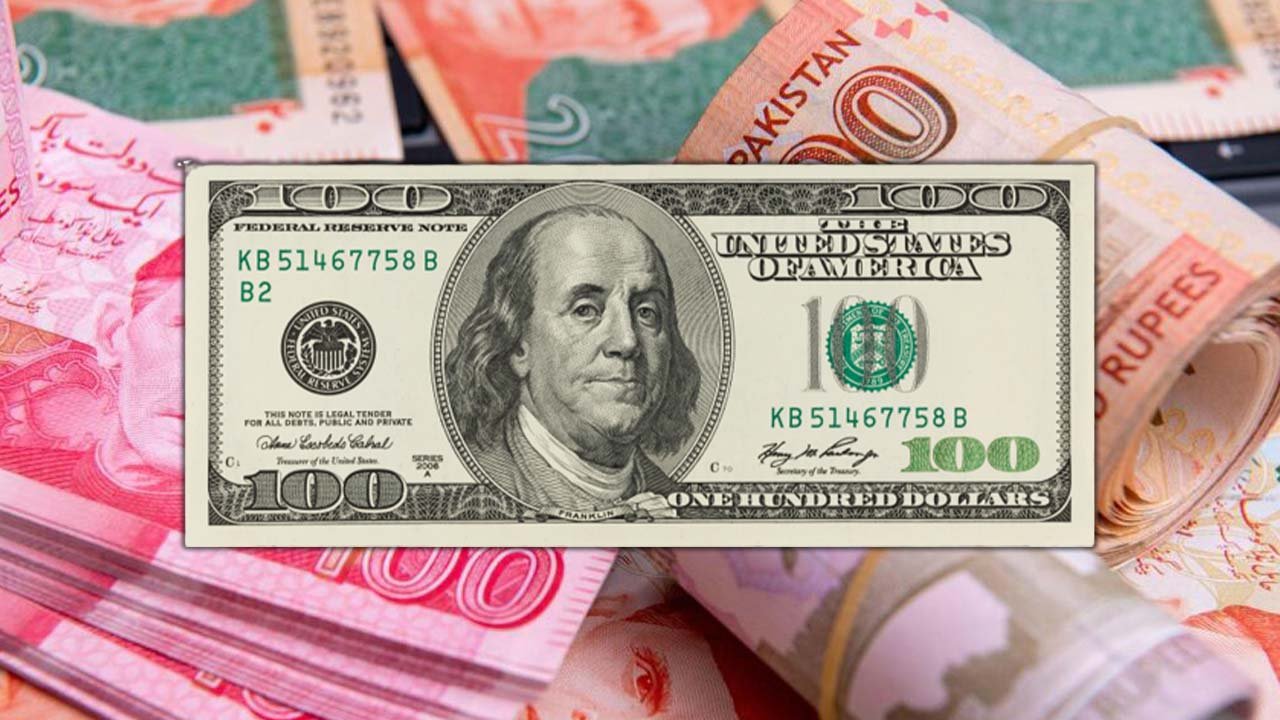
    The US dollar has been steadily appreciating against the Pakistani rupee for eight consecutive days, showing a continued upward trend in its value. On Tuesday, the currency further strengthened in the interbank market.

    At the start of the daily trading session in the interbank market, the American currency gained Rs1.8, reaching a value of Rs289 against the local currency. Over the course of the last eight days, the US dollar has gained Rs12.50 against the rupee in the interbank market.

    Interestingly, on Monday, despite receiving financial support from the International Monetary Fund (IMF) and other friendly countries, the Pakistani rupee depreciated even further against the US dollar.

    According to the State Bank of Pakistan (SBP), the dollar’s rate increased by Rs1.1 on Monday, with a closing rate of Rs287.92. In comparison, it had closed at Rs286.81 on Friday, showing a 0.39 per cent decline in the value of the rupee against the US dollar.

  • Pakistani rupee closes at Rs277.41 as US dollar recovers by nearly Rs2 in interbank trade

    Pakistani rupee closes at Rs277.41 as US dollar recovers by nearly Rs2 in interbank trade

    The US dollar appears to have bounced back on Wednesday at the opening of interbank trade, as it gained 31 paisas. The American currency closed at Rs277.41 after gaining Rs1.97 against the local unit. The dollar was exchanged for Rs275.75 at the start of the trading session on Wednesday.

    However, later the greenback gained even more value with Rs1.31 in interbank trade and was being traded at Rs276.75. In just a short while, the currency gained even more strength with Rs1.56 and was traded at Rs277.

    Owing to the strengthening of the dollar in the interbank trade, the currency’s value stopped falling in the open market also. Its value remained stable at Rs280 in the open market. On Tuesday, the greenback had lost a massive Rs10 in the interbank market.

    On the other hand, the Pakistan Stock Exchange continued its bullish trend. The shares of energy, oil and gas, and refinery companies were shared in the market.

    The stock exchange retained its limit of 44,000 points on Wednesday morning. The KSE-100 index rose with 472 points to 44,030 points. At the start of the trading session, the index gained 200 points to reach 43,770 points.

  • Pakistani rupee maintains winning streak against dollar for third day to close at Rs286.73

    Pakistani rupee maintains winning streak against dollar for third day to close at Rs286.73

    The Pakistani rupee continued its upward trend against the US dollar for the third consecutive session in the inter-bank market on Thursday, appreciating by 0.09 per cent. According to the State Bank of Pakistan (SBP), the currency settled at Rs286.73 at the close, showing an improvement of Rs0.25 compared to the previous day’s rate of Rs286.98.

    In a significant development, Finance and Revenue Minister Ishaq Dar met with US Ambassador to Pakistan Donald Blome on Wednesday to discuss the economic ties between Pakistan and the United States, as well as the International Monetary Fund (IMF) loan program.

    This meeting took place following the IMF’s criticism of Islamabad’s budget proposals for the fiscal year 2023-24. Esther Perez Ruiz, the IMF’s Resident Representative for Pakistan, expressed dissatisfaction with the budget proposals, describing them as a missed opportunity to broaden the tax base. She also criticised the new amnesty scheme, stating that it sets a damaging precedent.

    Separately, Prime Minister Shehbaz Sharif stated on Wednesday that the immediate goal, with the assistance of the Special Investment Facilitation Council (SIFC), is to increase Foreign Direct Investment (FDI) in the country to $5 billion.

    On the international front, the US dollar remained close to a one-month low against a basket of currencies on Thursday. This followed Federal Reserve Chair Jerome Powell’s testimony, where he maintained his usual stance and offered little room for surprise.

    Powell’s comments to lawmakers on Capitol Hill aligned with the central bank’s previous policy meeting, indicating that further rate increases are likely if the economy continues its current trajectory. As a result, the greenback depreciated by nearly 0.5 per cent against six major peers in the previous session.

    Meanwhile, oil prices slightly declined on Thursday. Market expectations of further interest rate hikes were balanced by potentially bullish US oil inventory data, which indicated a decrease in stocks.

  • Pakistani rupee gains ground as State Bank eases cross-border transaction rules

    Pakistani rupee gains ground as State Bank eases cross-border transaction rules

    In a significant turn of events, the Pakistani rupee experienced a notable appreciation against the US dollar in the open-market on Thursday.

    The value of the US dollar dropped to the range of Rs295-300, compared to the previous day’s rate of Rs314. This shift can be attributed to recent changes implemented by the State Bank of Pakistan (SBP) to facilitate cross-border transactions.

    Currency dealers consulted by Business Recorder acknowledged that the supply of US dollars remains limited in the market, as customers are not actively selling their currency. This scarcity could be a contributing factor to the rupee’s recent surge in value.

    According to experts, the recent development is a direct result of the SBP’s decision to allow credit card payments through banks. The SBP, on Wednesday, permitted banks to purchase US dollars from the interbank market for settling card-based cross-border transactions with International Payment Schemes (IPSs).

    Previously, the SBP guidelines only permitted authorized dealers to purchase US dollars from exchange companies for settling card-based cross-border transactions with IPSs such as Visa and MasterCard.

    However, in response to stakeholder feedback, the SBP opted to extend this privilege to banks, allowing them to source dollars from the interbank market for such transactions.

  • Pakistani rupee sinks to record low of Rs308 against US dollar in open market

    Pakistani rupee sinks to record low of Rs308 against US dollar in open market

    On Tuesday, the Pakistani currency experienced a significant decline, reaching a new record low of Rs308 against the US dollar in the open market. This marked a 1 per cent decrease, or Rs3, from the previous day’s closing rate, as reported by the Exchange Companies Association of Pakistan.

    Consequently, the disparity between the exchange rates in the open market and the inter-bank market widened considerably, reaching a historic high of Rs21 to a dollar. Just a couple of months ago, this difference was in the range of Rs1-3.

    In inter-bank transactions, the central bank stated that the rupee continued its downward trend for the fifth consecutive working day, dropping by 0.21 per cent, or Rs0.59, to a 12-day low at Rs287.15 against the US dollar.

    There has been speculation in the market that the rupee is facing mounting pressure due to the expanding gap between the demand and supply of the US dollar in the currency market.

    In the meantime, Pakistan’s foreign exchange reserves have been consistently depleting and have now reached a critically low level of $4.3 billion. This is concerning because the country requires a comparatively large amount of foreign currency to cover import expenses and repay foreign debt.

    By the end of June 2023, Pakistan has to repay $3.7 billion in foreign debt. Additionally, it needs another $3.7 billion each month to ensure smooth importation of essential goods.

    Currency dealers in the open market have revealed that commercial banks are purchasing dollars in the informal market (kerb market) to settle international payments made through their clients’ credit cards. Furthermore, individuals are acquiring Saudi riyals and US dollars to cover expenses during the Hajj and Umrah pilgrimages.

    Experts strongly emphasize that the government must persuade the International Monetary Fund (IMF) to resume its $6.7 billion loan programme. Additionally, they urge friendly countries to provide fresh financing, which will help mitigate the risk of defaulting on external debt obligations.

    The resumption of the IMF programme will not only assist Pakistan in averting an imminent default but will also enable the country to attract financing from other global lenders and friendly nations. This new financing will bolster the foreign exchange reserves and aid in the reopening of the partially closed economy.

  • Pakistan sees increase in LPG prices following petrol price hike

    Pakistan sees increase in LPG prices following petrol price hike

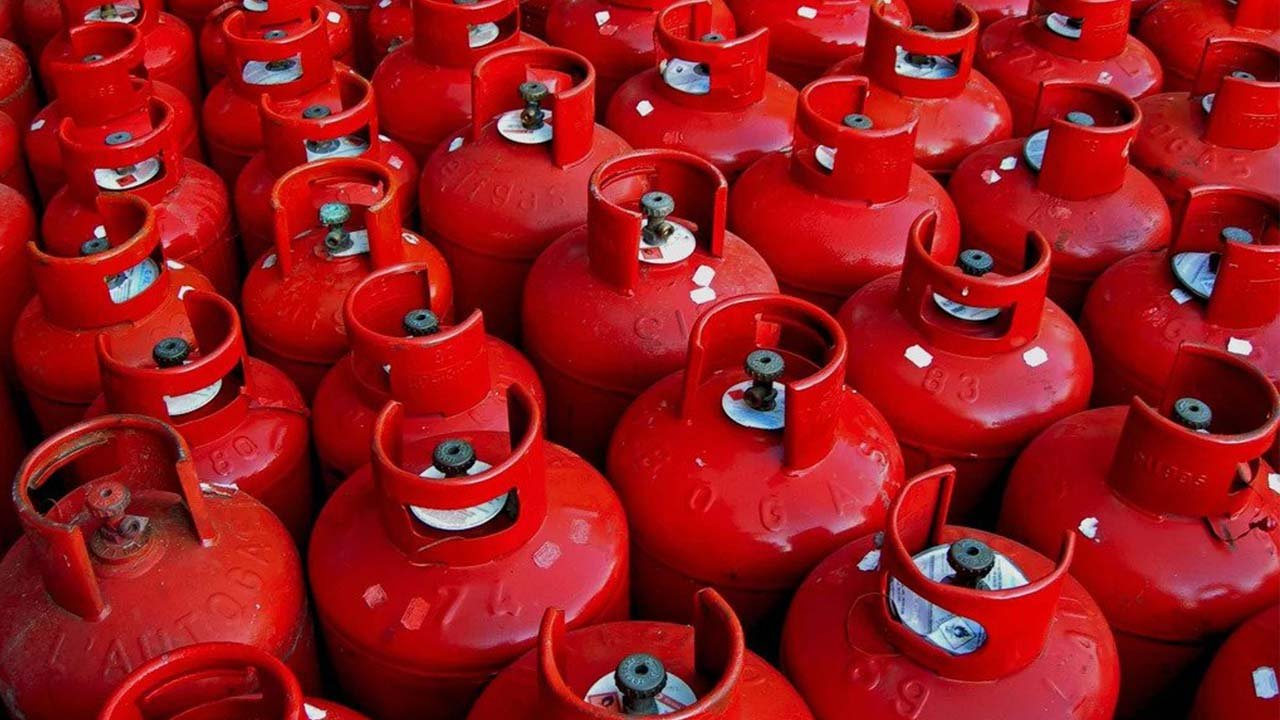
    The Oil and Gas Regulatory Authority (OGRA) has announced an increase in the price of Liquefied Petroleum Gas (LPG) in Pakistan, following the recent hike in petrol prices. As per the notification, the price of LPG has been increased by Rs10 per kilogramme, with the new price per kilogramme set at Rs229.

    Moreover, the price of domestic and commercial cylinders of LPG has also been raised. The price of a domestic cylinder has been increased by Rs120, whereas a commercial cylinder will now cost Rs450 more than the previous rate.

    In addition, the federal government recently increased the petrol price by Rs10 per litre for the next two weeks. During a televised speech, the finance minister explained that the hike was due to the rise in international petroleum prices and exchange rate fluctuations.

    As a result, the new petrol price has been fixed at Rs282 per litre, while the rates for high-speed diesel (HSD) and light diesel oil have remained unchanged at Rs293 per litre and Rs174.68 per litre, respectively.

    Furthermore, the government has also raised the price of kerosene oil by Rs5.78 per litre, pushing it up from Rs180.28 per litre to Rs186.07 per litre.

  • Pakistani banks start charging dollar transactions at open market rates

    Pakistani banks start charging dollar transactions at open market rates

    Pakistani banks have announced that they will settle debit and credit card transactions made with foreign retailers and websites at the open market exchange rate for the US dollar.

    The conversion rate for the transactions would be calculated by the open market rate in place at the time, which might not match the rate listed on the foreign merchant’s website.

    Customers were advised by the banks in a statement that they could only settle debit or credit card purchases with foreign retailers or websites by buying dollars on the open market. As a result, the conversion rate for these transactions will be determined by the current open market rate.

    The statement, according to bankers, was made in response to several client concerns over the increased exchange rate.

    On Friday, the Pakistani rupee lost Rs0.02 to the US dollar in the interbank market, continuing its downward trajectory.

    The State Bank of Pakistan (SBP) reported that the exchange rate of the local currency for the dollar was Rs227.12. Which shows a 0.01 per cent decline from the close of Rs227.12 on Thursday.

    According to SBP, the Pakistani rupee is valued at Rs227–228 against the dollar. However, in the open market, the greenback is priced above Rs250 and goes as high as Rs275.

  • PKR remains largely stable after Pakistan receives $500 million

    PKR remains largely stable after Pakistan receives $500 million

    Strangely, the Pakistani rupee (PKR) did not increase or decrease at the time of closing on Tuesday. The PKR’s closing rate was Rs223.95 and showed no change from its previous closing rate of Rs223.95.

    The local currency only declined by one paisa on Monday.

    After falling for four straight days, the rupee’s slide against the US dollar came to an end today. The market confidence was bolstered by the Finance Division’s earlier confirmation of receiving $500 million from the Asian Infrastructure Investment Bank (AIIB).

    What do Pakistanis think of the current dollar exchange rate?

    Some Twitter users claim that the government is controlling exchange rates, which will harm the economy in the long run since exporters are reluctant to accept payments made through banking channels and question why they should sell dollars to banks for less when the open market price is more than Rs250.

    The daily dollar rate announcement from SBP, according to a Twitter user, has lost all relevance because “the rate is controlled and not determined by market forces. The hefty difference between the interbank rate and the open market rate proves the point.”

  • 4th consecutive decline: PKR drops by 46 paisas to Rs218.89

    4th consecutive decline: PKR drops by 46 paisas to Rs218.89

    The Pakistani Rupee (PKR) lost ground against the US Dollar (USD) today, reversing last week’s gains.

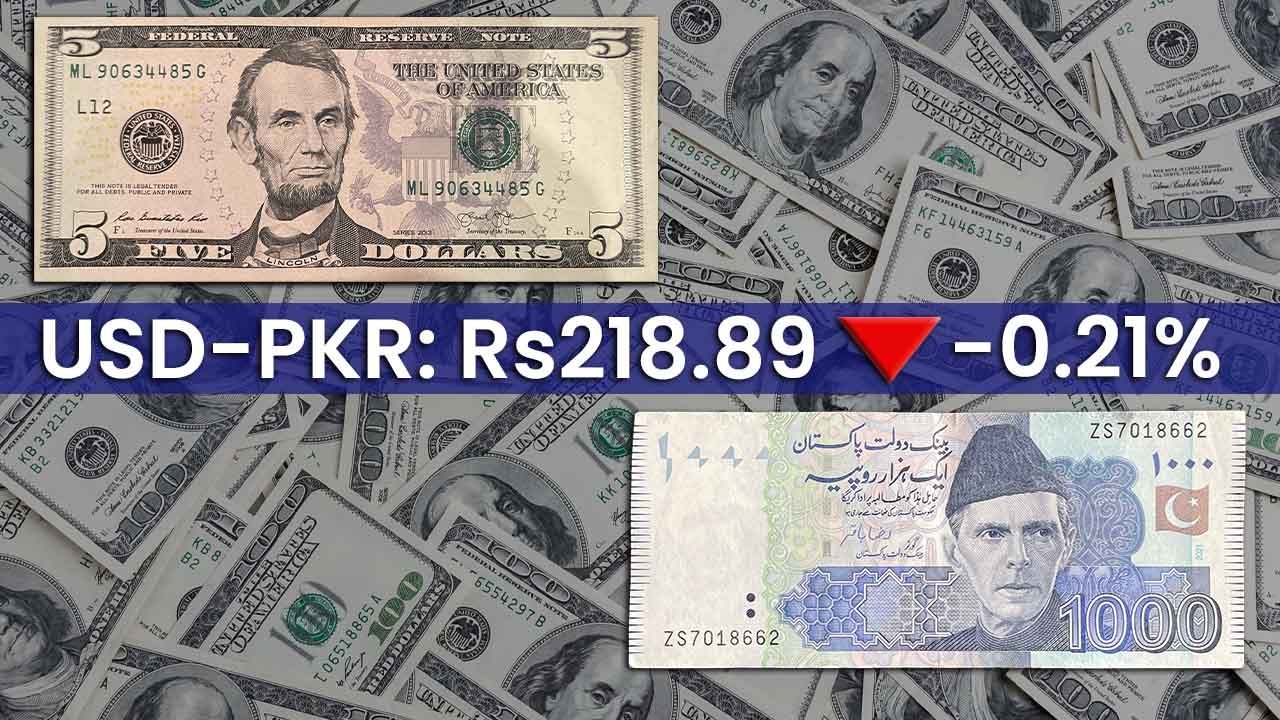
    The local unit fell 0.21 per cent against the US dollar today, closing at Rs218.89 after losing 46 paisas in the interbank market. During today’s open market session, the rupee hit an intraday low of Rs219.500 against the US dollar.

    When trade resumed against the greenback, the local unit was all red and opened trade at Rs219.00 in the open market. By midday, the dollar had risen to Rs219.25 against the rupee. After 2 pm, the local currency remained in the red and remained at Rs218 against the top foreign currency before the interbank close.

    Today was the fourth consecutive day that the rupee fell against the US dollar. Money changers are sceptical of a PKR recovery unless the government enacts stringent policies to combat the forex slowdown.

    According to one regular trader, the market is also reacting to Imran Khan’s Pakistan Tehreek-e-Insaf (PTI) winning six National Assembly seats in a by-election on Sunday, which was viewed as a direct contest between the former ruling party and the current ruling coalition.

    While the market watches for any changes in monetary policy, the local unit is expected to fall further against the dollar. The State Bank of Pakistan (SBP) has begun clearing importers’ letters of credit (LCs), but money changers say the process could be put on hold if another shortage hits the dollar aisle in the coming days.