Tag: export growth

  • Pakistan’s cement exports jump by 78.23% to over $32 million in May 2024

    Pakistan’s cement exports jump by 78.23% to over $32 million in May 2024

    Pakistan’s cement exports have experienced a significant increase of 40.46 per cent during the first eleven months of the financial year 2023-24, compared to the same period last year.

    According to the Pakistan Bureau of Statistics (PBS), cement exports reached US $236.797 million from July to May 2023-24, up from US $168.583 million during the corresponding period of 2022-23.

    The volume of cement exports also saw a substantial rise, surging by 66.78 per cent. The exported quantity increased from 3,707,427 metric tonnes to 6,183,117 metric tonnes over the same period.

    In a year-on-year comparison, cement exports for May 2024 showed a remarkable increase of 78.23 per cent, totalling US $32.251 million, compared to US $18.095 million in May 2023.

    Additionally, on a month-on-month basis, cement exports grew by 28.62 per cent in May 2024, rising from US $25.074 million in April 2024, as reported by the PBS.

    These figures highlight a robust growth trajectory for Pakistan’s cement industry, indicating strong demand and a positive outlook for the sector.
  • Understanding GSP+ status: What it means for Pakistan’s trade relations

    Understanding GSP+ status: What it means for Pakistan’s trade relations

    The Pakistan Tehreek-e-Insaf (PTI) has vehemently dismissed accusations levelled by Federal Information Minister Attaullah Tarar, labelling them as unfounded and baseless.

    In a statement issued today, the PTI refuted claims made by Tarar, asserting that they are nothing but a concoction of falsehoods and rhetoric aimed at maligning the party’s reputation.

    Earlier, Tarar had accused the PTI of plotting to undermine Pakistan’s Generalised Scheme of Preferences Plus (GSP+) status.

    He alleged that the party’s spokespersons were actively engaged in activities detrimental to the country’s interests under the directives issued from confinement.

    Understanding GSP+ and its significance for Pakistan’s economy

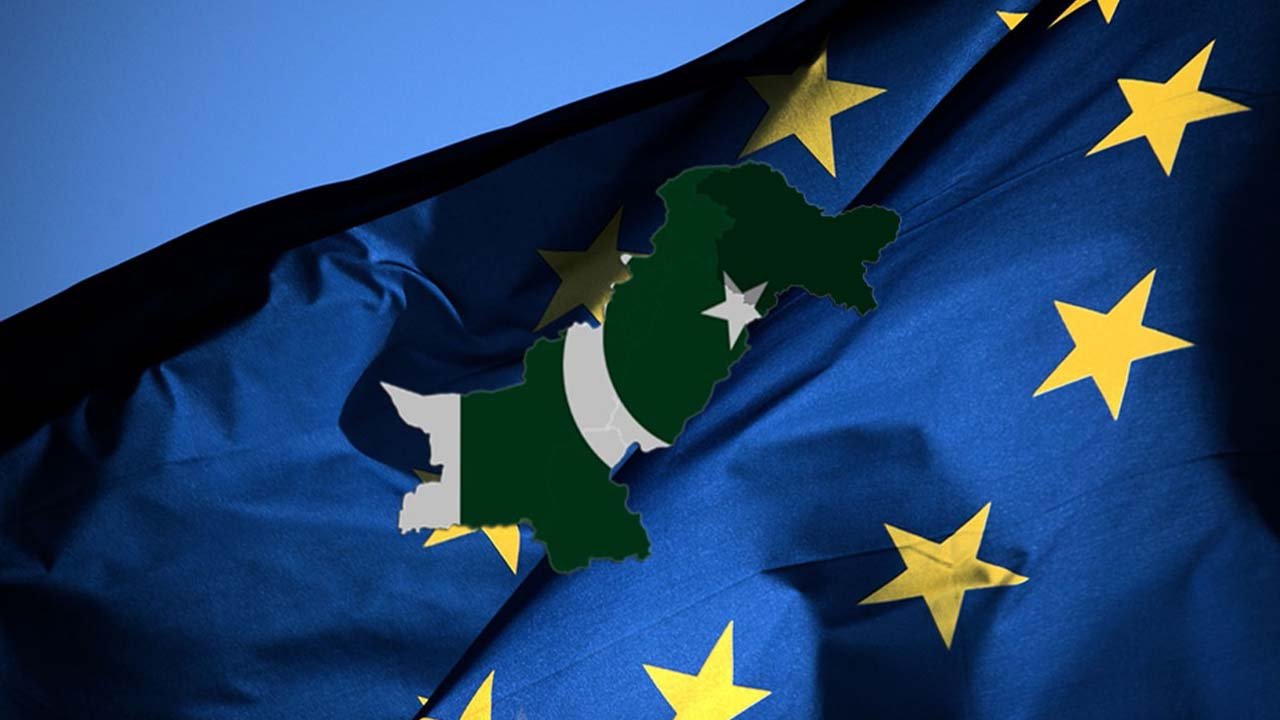
    The GSP+ status, a cornerstone of Pakistan’s trade relations with the European Union (EU), holds significant importance for the nation’s economy.

    Under this scheme, selected developing countries, including Pakistan, receive extensive trade concessions aimed at fostering sustainable development and good governance practices.

    The European Union’s GSP+ Scheme is founded on the effective implementation of 27 United Nations conventions covering various aspects such as human rights, labour rights, climate change, narcotics control, and corruption.

    Once granted GSP+ status, beneficiary countries are subject to rigorous monitoring to ensure compliance with the stipulated conventions and reporting requirements.

    The dialogue on GSP+ compliance involves various stakeholders, including international monitoring bodies, civil society, trade unions, and businesses.

    Regular monitoring visits are conducted by the EU to assess the progress of beneficiary countries in addressing the outlined issues.

    The significance of GSP+ for Pakistan’s economy cannot be overstated, particularly for its textile industry and workforce.

    Over the past decade, Pakistan has witnessed a notable increase in exports to the EU, accompanied by a surge in EU imports, owing to the preferential treatment offered under the GSP+ scheme.

  • Pakistan’s trade deficit shrinks by over 30% in November

    Pakistan’s trade deficit shrinks by over 30% in November

    In the initial five months of the fiscal year 2024, Pakistan’s trade performance has witnessed notable enhancements, marking a positive stride towards economic stability, as articulated by Dr Gohar Ejaz, the Federal Minister for Commerce and Industries, in a communication on X (formerly Twitter).

    The minister conveyed his unwavering confidence in Pakistan’s trajectory towards economic recovery, emphasising the commitment to diligent efforts aimed at job creation, economic growth, and the overall betterment of citizens’ lives.

    It is noteworthy that Pakistan’s exports experienced a year-on-year increase of 1.93 per cent, reaching $12.17 billion in the aforementioned five-month period, while imports exhibited a substantial decrease of 17.32 per cent to $21.55 billion.

    Consequently, the trade deficit contracted to $9.38 billion, registering a noteworthy decline of 33.59 per cent compared to the corresponding period in the preceding year.

    Zooming in on November’s performance, Pakistan’s exports demonstrated a robust year-on-year growth of 7.66 per cent, totaling $2.57 billion, whereas imports saw a decline of 13.47 per cent to $4.46 billion.

    This translated into a trade deficit of $1.89 billion for November, marking a notable reduction of 31.72 per cent compared to November 2022.

  • More imports, less exports: Pakistan’s trade gap grows in October

    More imports, less exports: Pakistan’s trade gap grows in October

    Recent trade data for Pakistan reveals a monthly trade deficit increase of $0.6 billion, primarily driven by an $0.8 billion surge in imports.

    However, on an annual basis, the trade deficit is gradually shrinking at a modest rate of 4 per cent.

    This is not necessarily negative news, as import restrictions have been lifted as part of the İnternational Monetary Fund (IMF) programme while the economy is experiencing an uptick in demand.

    The encouraging aspect lies in the positive signs displayed by the export sector. The Pakistani rupee (PKR) has depreciated by approximately 35 per cent year-on-year, falling from PKR 220/USD to PKR 280/USD.

    Last year, exporters faced challenges in importing raw materials, machinery, and intermediate goods.

    Consequently, the 14 per cent year-on-year growth in exports, rising from $2.4 billion to $2.7 billion, is a heartening development, provided this trajectory continues.

    Recent measures by the State Bank of Pakistan (SBP) aimed at promoting exports, including competitive gas rates for exporters, reflect a positive intent.

    While industries reliant on gas may require more regionally competitive energy rates, the direction is favorable.

    Moreover, the alignment of open market and interbank exchange rates may encourage a shift from official channels.

    To address Pakistan’s economic challenges, two key corrections are imperative, among many others: increasing tax revenues and enhancing value-added exports.

    Depreciation of the currency alone cannot serve as the sole remedy for stimulating growth.

    To achieve a comprehensive economic framework, it is essential to boost the exports-to-GDP ratio beyond the current 8 per cent.

    This should encourage capitalists to prioritise exports and foreign direct investment (FDI) over property, fixed income, currency, and trading, ensuring sustained double-digit growth over the next five years.

  • Pakistan’s exports surge by 22.45% in FY23-24’s first two months, crossing Rs1.27 trillion mark

    Pakistan’s export sector has demonstrated remarkable growth, achieving a substantial 22.45 per cent increase, reaching the noteworthy milestone of Rs1.27 trillion during the initial two months of the fiscal year 2023-24 (FY23-24).

    According to data released by the Pakistan Bureau of Statistics (PBS), exports from July to August 2023 stood at Rs1.27 trillion, marking a remarkable 22.45 per cent surge compared to the Rs1.04 trillion recorded during the corresponding period the previous year.

    In a year-on-year analysis, exports in August 2023 surged by an impressive 26.75 per cent, reaching Rs695.1 billion, as opposed to the Rs548.4 billion recorded in August 2022. Furthermore, on a month-to-month basis, exports surged by 19.62 per cent when juxtaposed with the Rs581.1 billion recorded in July 2023. The textile and knitwear sector emerged as the most substantial export contributor, accounting for an impressive Rs117.8 billion.

    In contrast, imports during July and August of the fiscal year 2023-24 experienced a modest decline of 2.42 per cent, totaling Rs2.3 trillion. This is in contrast to the imports recorded at Rs2.4 trillion during the corresponding period the previous year. Of note, Pakistan’s imports in August 2023 included Rs180.6 billion worth of petroleum products, followed by crude oil and liquefied natural gas (LNG) valued at Rs119.4 billion and Rs89.8 billion, respectively.

    When analyzed on a year-on-year basis, imports into Pakistan in August 2023 displayed a marginal 0.5 per cent decrease when compared to August 2022. On a month-on-month basis, imports into the country saw a significant uptick of 27.79 per cent in August 2023 when compared to the Rs1.04 trillion worth of imports in July 2023.

    According to Geo, this surge in exports is indeed promising as it holds the potential to bolster Pakistan’s diminishing foreign exchange reserves, a much-needed development in light of the challenging economic situation stemming from the depreciation of the Pakistani rupee