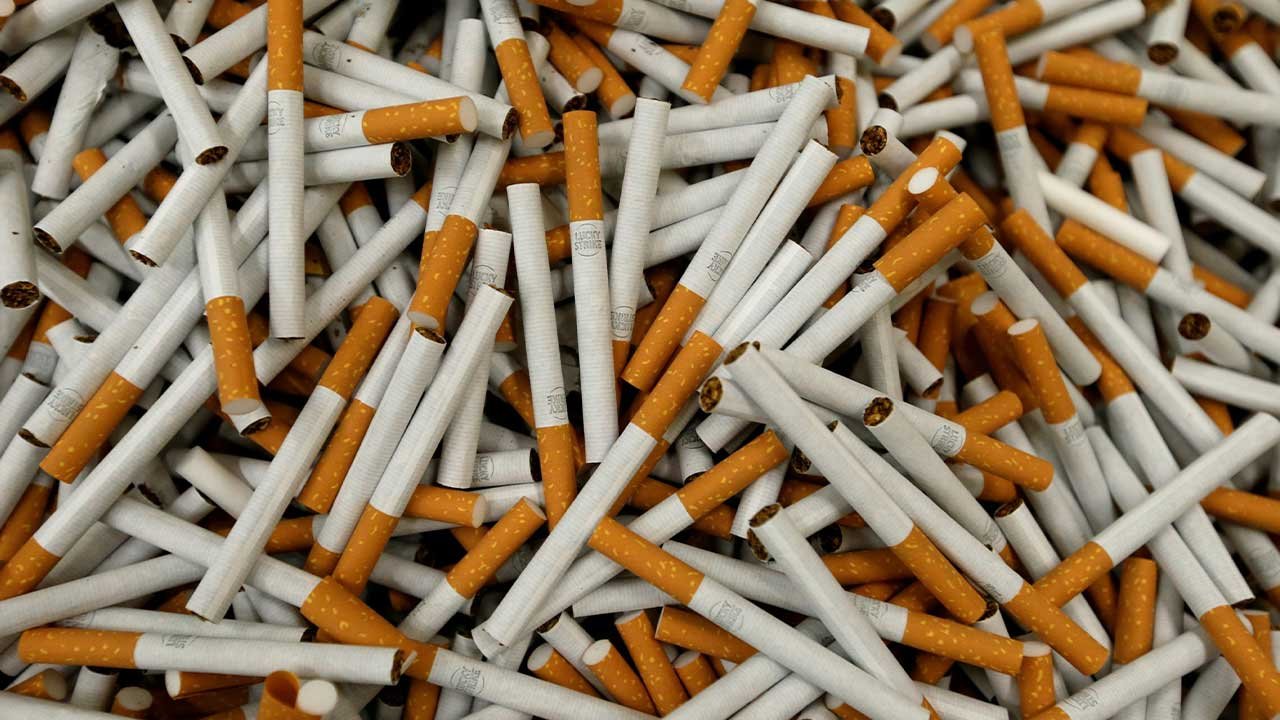
Pakistan National Heart Association (PANAH) has proposed that the government increase tariffs on unnecessary and harmful tobacco products. Increased tobacco-related levies will lessen diseases and healthcare expenses while also helping to generate tax revenue.
Sanaullah Ghumman, PANAH’s General Secretary, announced this at a news conference held by the Pakistan National Heart Association on Wednesday at a local hotel.
Smoking, according to Sanaullah Ghumman, is not healthy for human health in any aspect, and it is the first step toward addiction. Health experts and civil society groups have also urged the Prime Minister to increase tobacco goods taxes.
A significant number of health experts and civil society representatives attended the event. Tobacco kills 8 million people worldwide each year, according to a global study, and more than 1.5 million individuals in Pakistan lose their lives each year owing to smoking.
On World Food Safety Day, PANAH proposed that tariffs on sugary drinks be increased as well, as these beverages are harmful to children and cause a variety of health problems.
Sanaullah Ghumman spoke at the event, urging a 30 per cent rise in tobacco product taxes to protect minors from tobacco usage.
“This will be a win-win situation for us,” he continued, “since it will lower the health burden while also dramatically increasing revenue”. PANAH, he claimed, had been educating the public about a variety of dangerous diseases, including heart disease and its causes, for 39 years.
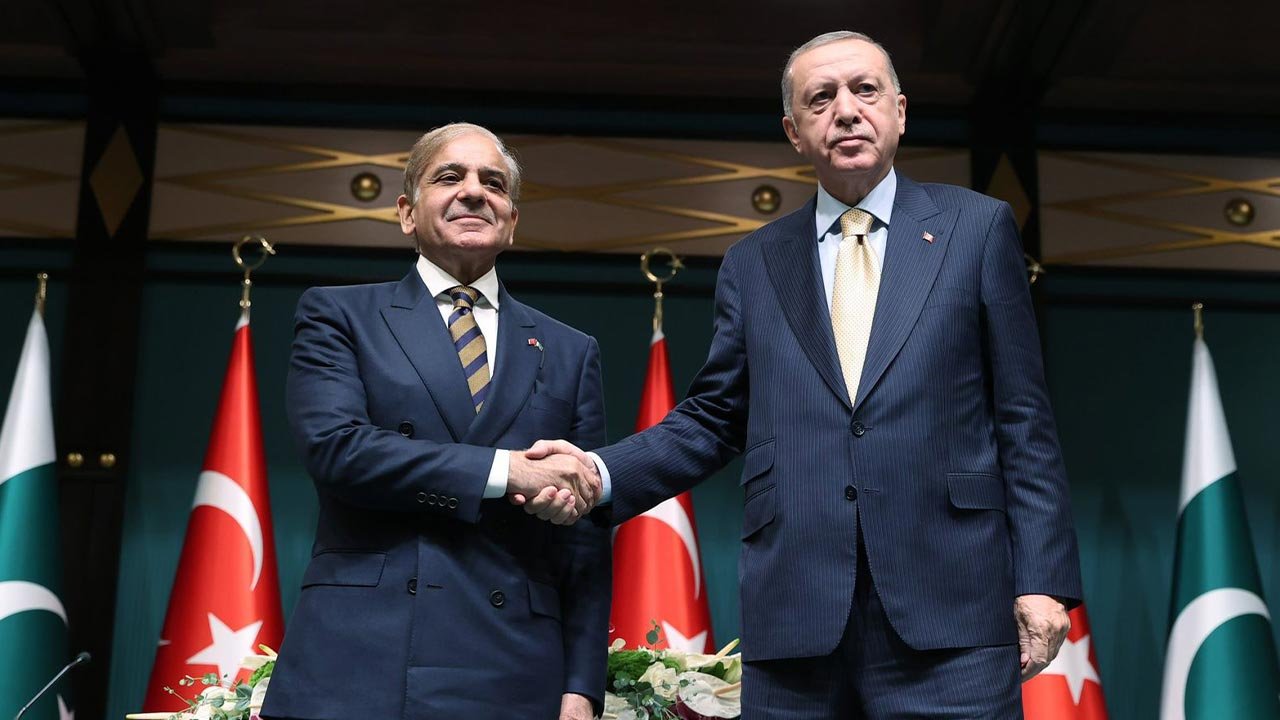
Prime Minister (PM) Shehbaz Sharif’s formal visit to Turkey, according to Turkish Foreign Minister Mevlut Cavusoglu, will bring bilateral ties a “new dimension”.
After a meeting in Ankara, he made the remarks, “On the 75th anniversary of our diplomatic ties, we hosted my beloved brother Shehbaz Sharif, Prime Minister of the Islamic Republic of Pakistan. We are prepared to further develop Türkiye-Pakistan relations in light of the two nations’ shared history, friendship, and potential,” Cavusoglu stated on Twitter.
On the 75th anniversary of our diplomatic ties, we hosted my beloved brother Shehbaz Sharif, Prime Minister of the Islamic Republic of Pakistan.
We are prepared to further develop Türkiye-Pakistan relations in light of the two nations’ shared history, friendship, and potential. pic.twitter.com/ARufdll9A0
PM Shehbaz arrived in Istanbul on Tuesday for a three-day official visit, his first since becoming the PM of Pakistan in April.
According to a Foreign Ministry statement, the premier stressed the significance of growing bilateral trade volume to $5 billion over the next three years.
“The Prime Minister noted that the bilateral relations were exceptionally warm as the people of the two countries shared special bonds that dated back centuries,” the ministry said in a statement.
He also emphasised the two countries’ shared interests on a number of regional and international issues, according to the report.
He said Islamabad aimed to strengthen bilateral trade and cultural ties with Ankara in his address to the Turkey-Pakistan Business Council on Tuesday evening.
In a recent meeting with Federal Minister of Commerce and Investment Syed Naveed Qamar, German Minister of State for Foreign Affairs Dr Tobias Lindner expressed his hope that Germany and Pakistan would further strengthen and expand bilateral relations, particularly in trade and investment.
Both countries discussed multiple aspects of bilateral ties, along a great emphasis on improving trade and financial collaboration to sustain economic growth in a post-Covid pandemic world. The duo agreed to exchange business envoys to look into the prospect of B2B cooperation in renewable power, farming, food security, autos, and technical assistance.
The Commerce Minister praised Germany for its constant support for Pakistan’s GSP Plus scheme. He emphasized the importance of GSP Plus in widening bilateral trade and offering Pakistan a level playing field in the European segment.
He also clarified that the scheme has served as a precursor for essential progressive social changes, particularly those relating to women’s empowerment. The German Minister convinced his nation’s continued and forthcoming assistance for the GSP Plus Scheme.
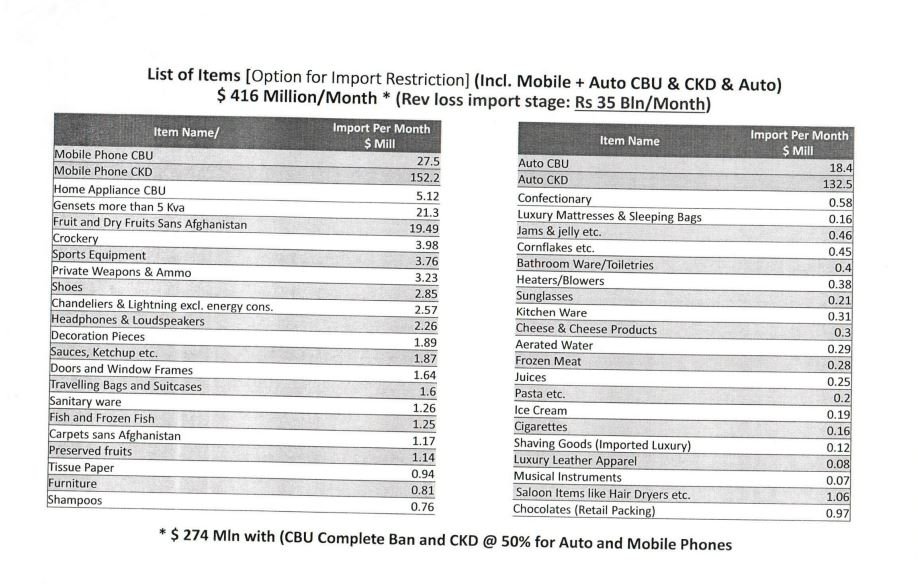
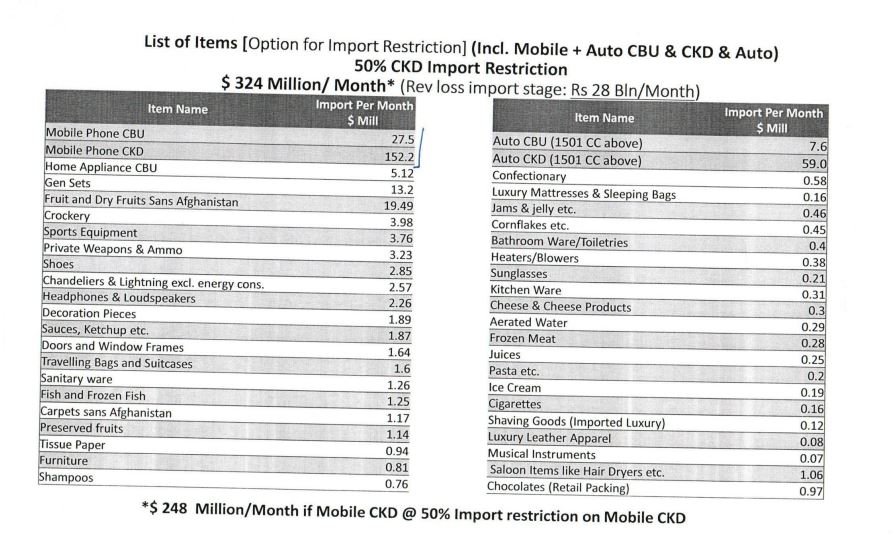
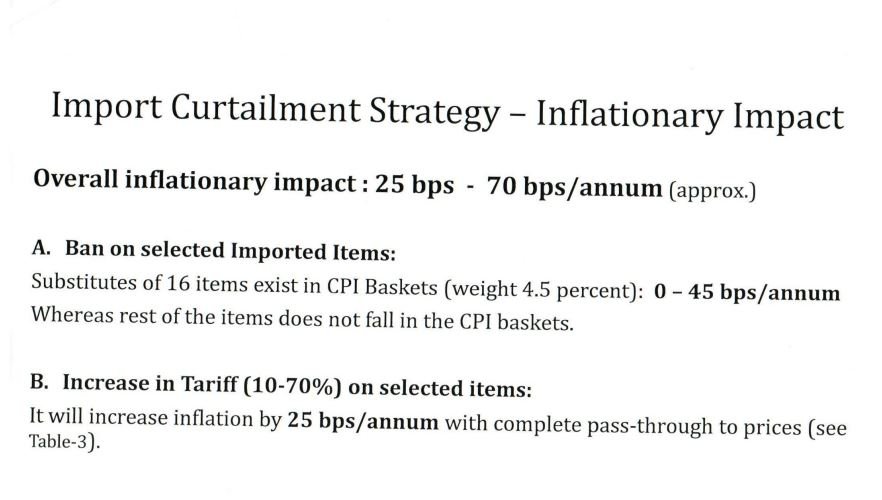
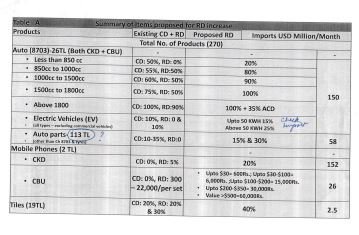
On Thursday, May 19th, 2022, the federal cabinet issued a list of 41 items which will be banned from being imported for two months. This is in an attempt to address the current account deficit. The list of products is banned from being imported into the country, which means that essentially any shops or restaurants which rely on using these products will be forced to find local alternatives.
These products will be banned regardless of what branding or packaging they use and only on the basis of whether the specific product is imported or not. Even products which are imported from abroad but packaged locally, will now be banned.
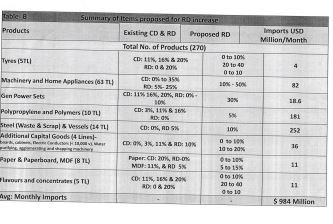
Officially released list of imported non-essential luxury items
Economists, university professors and business journalists took to Twitter to analyze and assess the merits and demerits of this decision. The discussion around luxury products and the fact that a lot of products which are labelled as “luxury items” are actually essential. Sanitary imports, valued at $16.4m are wrongly categorized as non-essential and although local alternatives also exist but it is definitions like these which disallow such decisions to be founded in research and expertise.
The valuation of these imports which was published by the Pakistan Bureau of Statistics, was being quoted to ridicule the decision by many. What’s interesting to note is that most brands which appear to be entirely local, import a major chunk of their supply and will now be forced to smuggle goods instead.
I don’t know who needs to hear this, but someone clubbed animal feed ($68m) with pet food ($5m) — and now suddenly we may have a feed crisis, b/c animal feed isn’t really a luxury and is used as a key agri input. Someone somewhere needs to amend the SRO.
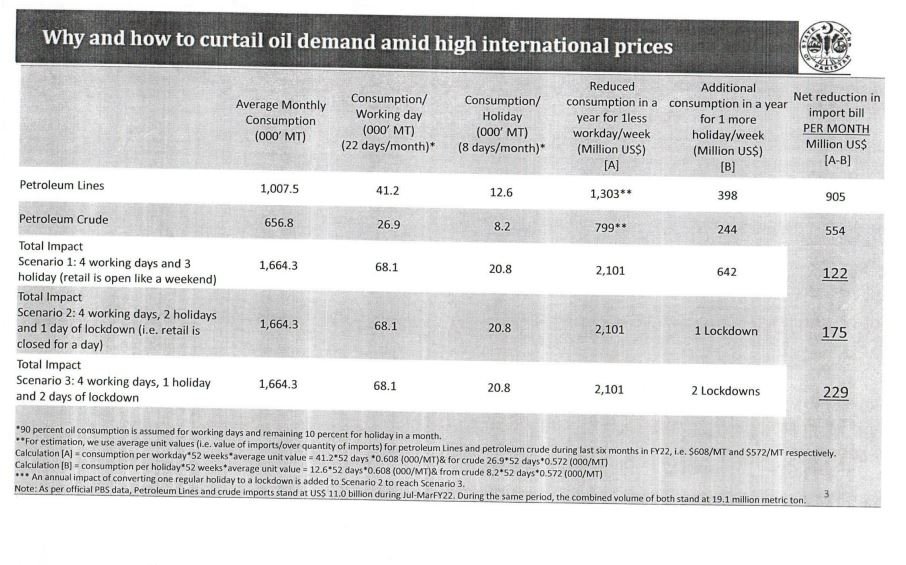
Only from the data shared by PBS it becomes clear that for the fiscal year 2022, June to March, the total value of petroleum imports was $11 billion, while the total value of banning all these non-essential “luxury” items is a total $984 million, which forms only about 8.9% of the total value of petroleum imports.
In conversation with Profit Magazine’s Ariba Shahid, she clarified that this would still prove to be a largely fruitless move since the most significant chunk of the import bill is still being used up to run the energy sector without any thought being given to the humongous fuel subsidies . “For a very long time the State Bank of Pakistan has been talking about how if we remove the oil component from it, the current account deficit is improving, which is true and basically means that people are not spending money to buy other items and most of the import bill is petrol and soy bean oil.”
This is patchwork economics, and unlikely to work
It is important to understand the deeper sources of structural imbalances
For example, one major source is unproductive sectors generating demand for foreign goods https://t.co/5bv5q2kKqS
Economists Ammar Khan and Atif R Mian also took to Twitter to analyze this decision of “patchwork economics”. Commenting on this unsustainable gap in Pakistan’s balance of payment, on April 15th, 2022 during a discussion on Pakistan’s economy at Princeton University, he explains that for Pakistan to grow it is a necessary condition for Pakistan to deal with this problem and digs deeper into the structure of the economy. He particularly takes apart urban land reforms, the necessity to levy a capital gains tax on speculative real estate transactions and analyzes how Pakistan is not even economically stable enough to grow at the rate of India and Bangladesh and it is primarily due to the elite capture of the economy that disallows the economy to attempt to fix its loopholes.
Echoing similar sentiments, Ariba Shahid explained that due to a weaker economy, the import bill is not as significantly high due to a reduced demand pull because of a lowered purchasign power and hence banning these products will be insignificant and might barely make a dent in the current account deficit. “The need of the hour is to reverse the fuel subsidy,” says Shahid, “This decision will swell up the grey market economy and smuggling will increase.”
Pakistan Telecommunication Authority (PTA) revealed that domestic plants produced 9.72 million mobile devices in the first four months of 2022, contrasted to 0.86 million acquired internationally.
In April 2022, local manufacturing plants developed 2.56 million mobile devices, compared to 0.25 million imported from other countries.
According to Brecorder, 5.69 million 2G smartphones and 4.03 million 3G and 4G phones are among the 9.72 million mobile handsets developed or assembled locally. 53 per cent of mobile devices on the Pakistan network are 3G and 4G smartphones, while 47 per cent are 2G.
Despite the growth in local mobile phone production, Pakistan acquired $1.810 billion worth of cellphones in the first ten months of 2021-22, contrasted to $1.684 billion in the same period the previous year, a 7.43 per cent increase, as per the Pakistan Bureau of Statistics (PBS).
Total telecommunications imports into the country climbed by 14.05 per cent during the review period (July-April) 2021-22, rising from $2.116 billion in July-April 2020-21 to $2.413 billion in the same period last year.
According to PTA data, the local manufacturing tendency indicates a favourable response to the PTA’s Mobile Device Manufacturing (MDM) Authorization regulatory system.
Pakistan has a substantial Rs615 billion annual deficit owing to diseases caused by smoking and overall tobacco usage, with only Rs120 billion earning in tax revenue from the product.
The government is expected to improve revenue by raising the tax on cigarettes by 30 per cent according to The Nation.
This was voiced by speakers at a major symposium held in Islamabad on May 18. The Pakistan National Heart Association (PANAH) held a seminar on the theme ‘Harms of Tobacco Products and the Importance of Tax Policy,’ which was presided over by Patron General (R) Ashraf Khan and hosted by General Secretary Sana Ullah Ghumman.
As per the speakers at the event, tobacco usage is a major cause of serious heart, lung, and cancer diseases in the country. A fact sheet on the health and economic costs of cigarette usage was released by the Social Policy and Development Centre (SPDC).
According to the survey, tobacco is used by 31 million persons over the age of 15. More than 260,000 people are predicted to start smoking in the country if tobacco taxes are not raised in the budget for 2022-23.
Engineer Iqbal Zafar Jhagra, the former governor of KP and a senior PML-N leader, was the special guest at the event. Nisar Cheema, a member of the National Assembly, was also present.
PANAH Patron General (R) Ashraf Khan congratulated the attendees and informed them of the organization’s goals and objectives.
Smoking was declared the primary cause of deaths from non-communicable diseases (NCDs) such as heart, cancer, respiratory, and chronic diseases, according to participants, with an estimated 163,360 persons dying in 2017.
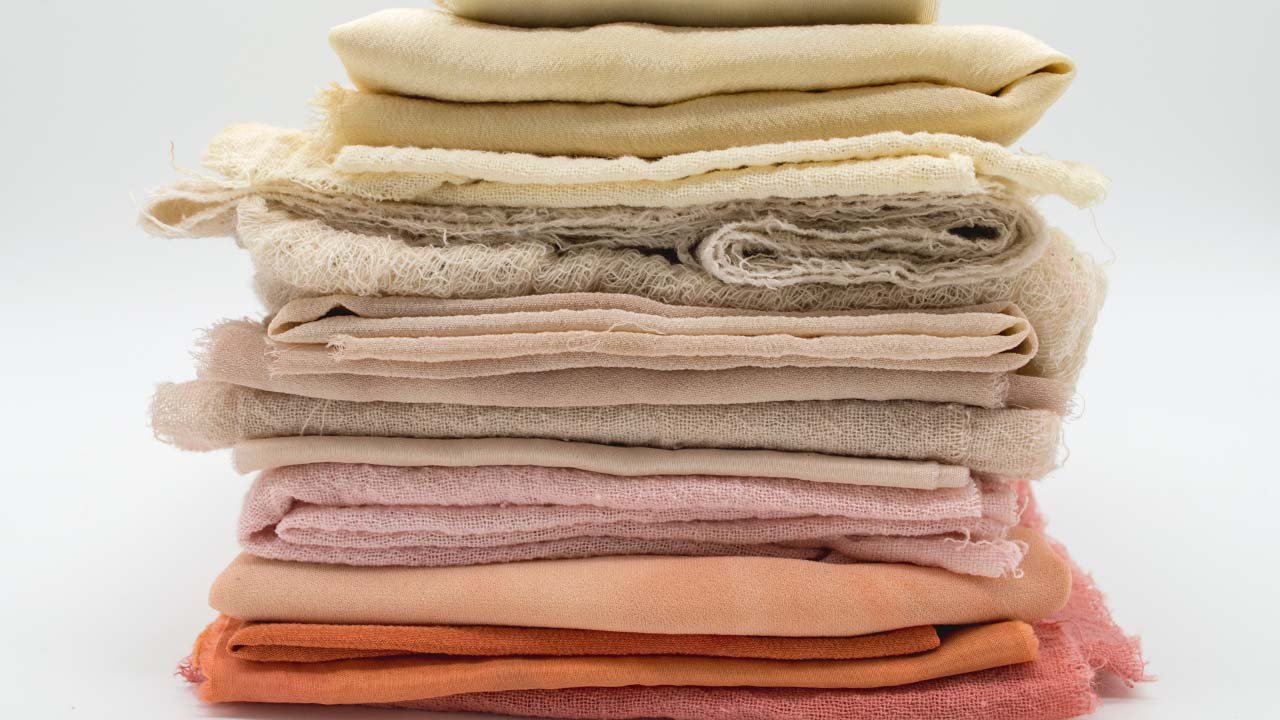
Pakistan Bureau of Statistics (PBS) reported that Pakistan’s textile group exports in July-April 2021-2022 reached a new high of $15.981 billion, up from $12.688 billion in the same period last year, a 25.96 per cent rise.
Exports of the textile group climbed by 7.01 per cent month over month to $1.739 billion in April 2022, compared to $1.625 billion in March 2022. Textile group exports increased by 30.50 per cent year over year in April 2022, compared to $1.332 billion in April 2021.
Cotton yarn exports increased by 22.11 per cent from July to April 2021-22 to $1.006 billion, compared to $823.952 million in the same period the previous year, and declined by 4.95 per cent in April 2022 to $97.655 million, compared to $102.736 million in the same month the previous year.
The country’s overall exports from July to April 2021-22 were $26.247 billion, up from $20.905 billion in the same time last year, a 25.55 per cent rise. Pakistan’s exports in the last month (April 2022) were $2.897 billion, up 4.32 per cent from $2.777 billion in March 2022 and up 30.61 per cent from $2.218 billion in April 2021.
Major export goods
Knitwear: Rs90,096 million
Readymade garments: Rs64,669 million
Bed wear: Rs51,398 million
Cotton cloth: Rs38,763 million
Towels: Rs19,974 million
Cotton yarn: Rs18,016 million
Made-up articles: Rs15,277 million (excluding towels and bedwear)
Samsung does not like surrendering its position as the world’s leading smartphone manufacturer. Even though Apple temporarily dethroned it, the firm has fought back and reclaimed what it considers to be its rightful position.
1st quarter of 2022 According to data from market research organisations Canalys and Counterpoint, Samsung is the global leader in smartphone shipments. Apple did well as well, but it was only able to finish second to the Korean behemoth.
Samsung’s Galaxy S22 series has contributed to the company’s strong performance in the first quarter of this year. Many Galaxy Note fans were enticed back to Samsung with the Galaxy S22 Ultra in particular.
According to Canalys, worldwide smartphone shipments hit 311.2 million units in the first quarter of 2022, down 11 per cent year on year. While Samsung regained the lead, delivering 73.7 million units, the company saw a 43 per cent drop in sales.
Xiaomi came in third place in the ‘top 5 shipping’ list, with 39.2 million units shipped, a 20 per cent decrease. Oppo shipped 29 million units, a decrease of 27 per cent, and Vivo’s growth slowed by 30 per cent.
Oil prices increased on April 20, swamped by fears about tightening supply as the European Union (EU) considers a possible ban on Russian oil imports, which would further impede global oil commerce.
After reaching a high of $109.80, Brent oil futures finished up $1.53 to close at $108.33 a barrel. After earlier reaching a high of $105.42, U.S. West Texas Intermediate (WTI) crude futures ended up $1.60, or 1.6 per cent, at $103.79.
Consumers also reacted to continued disruptions in Libya, where blockades at major fields and export terminals have resulted in a loss of about 550,000 barrels per day of oil supply.
Brent has climbed about 8 per cent in the last seven days of trading, but the advance has been calm and steady, unlike the frenzy that surrounded Russia’s invasion of Ukraine in late February and again in mid-March.
Last week, US crude exports increased to more than 4 million barrels per day, slightly countering Russian crude losses caused by US and European bans.
The oil market is still constrained, with the Organization of Petroleum Exporting Countries and its affiliates, led by Russia, striving to achieve output commitments and US crude inventories plunging dramatically in the week ending April 15.
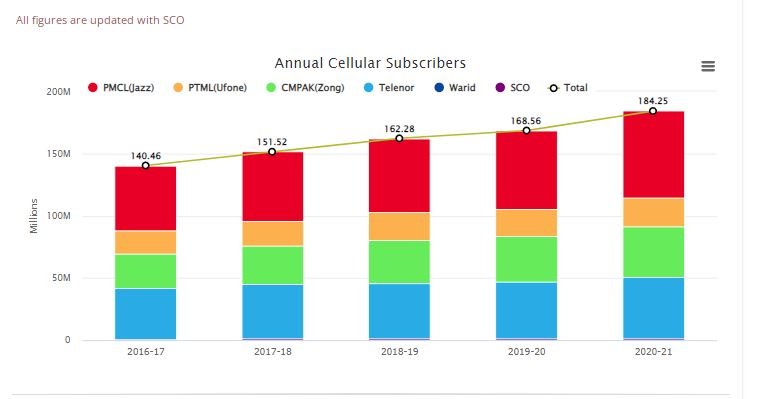
The latest stats from Pakistan Telecommunication Authority (PTA) show that the number of 3G and 4G customers in Pakistan increased by 1.73 million to 113.11 million by the end of March 2022, up from 111.38 million at the end of February 2022.
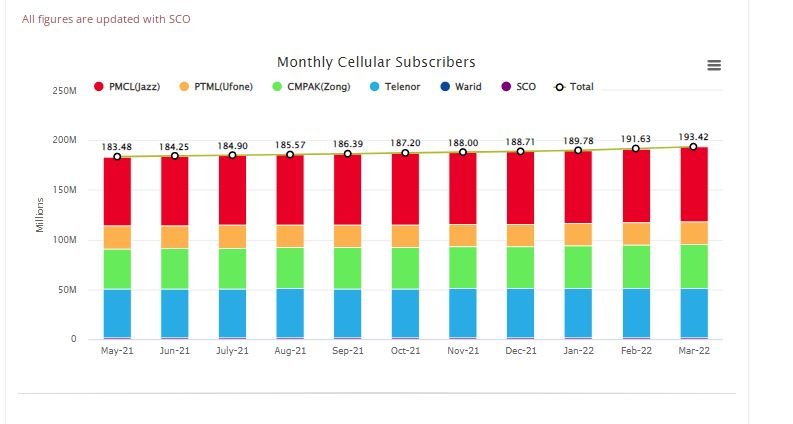
By the end of March 2022, the number of mobile users in Pakistan had risen by 1.79 million to 193.42 million, up from 191.63 million at the end of February 2022. The cellular population climbed from 87.17 per cent in February 2022 to 87.95 per cent in March 2022.
The entire teledensity had risen to 89.09 per cent, up from 88.31 per cent in February.
The overall number of Jazz 3G users was 6.489 million at the end of March, down from 6.607 million at the end of February 2022, a fall of 0.118 million. By the end of March, the number of Jazz 4G users had risen from 35.822 million to 36.518 million.
The number of Zong 3G customers fell from 3.501 million in February to 3.447 million in March, while the amount of 4G users increased from 27.483 million in February to 28.033 million in March.
Telenor’s 3G users totaled 3.911 million at the end of March, which was the same as at the end of February. The graph, however, shows a downward trend. Its 4G subscribers increased from 20.801 million at the end of February to 21 million by the end of March 2022.
By the end of March, there were 3.809 million Ufone 3G users, up from 3.873 million at the end of February. Ufone’s 4G user base expanded from 8.099 million in February to 8.6 million by the end of March 2022, a 0.501 million growth in the time period under consideration.